 Published on and written by Cyril Jarnias
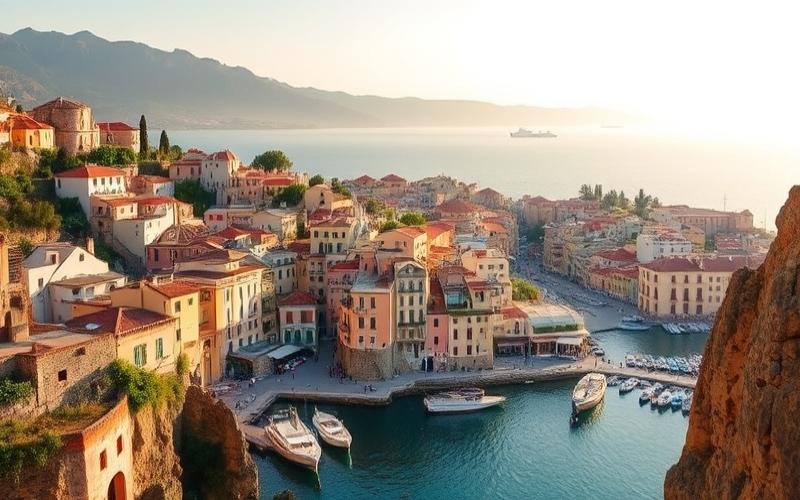
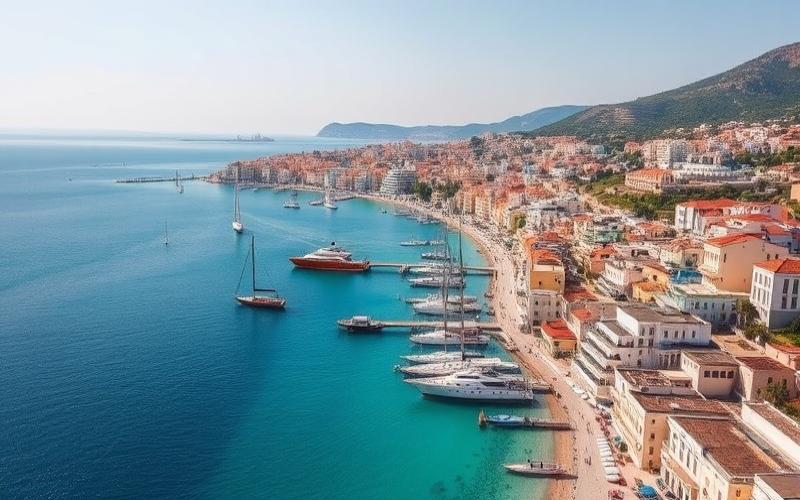
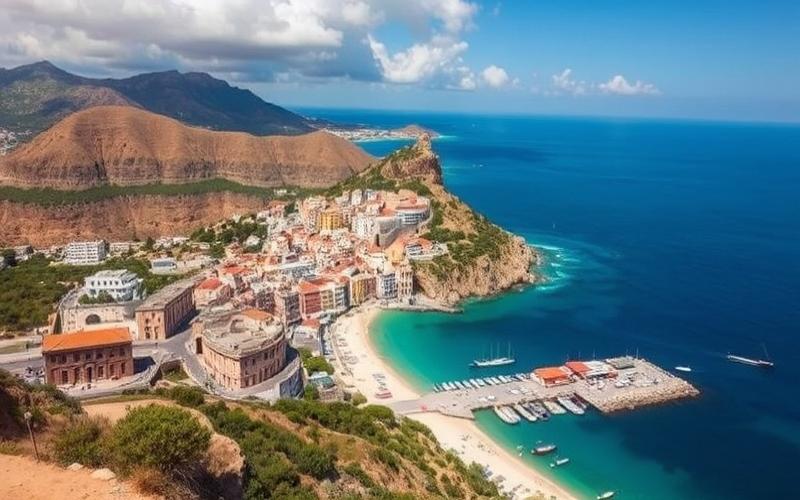
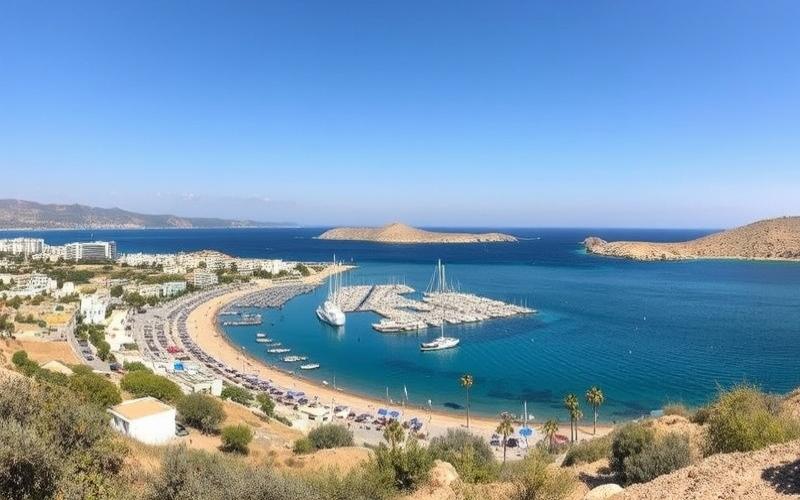
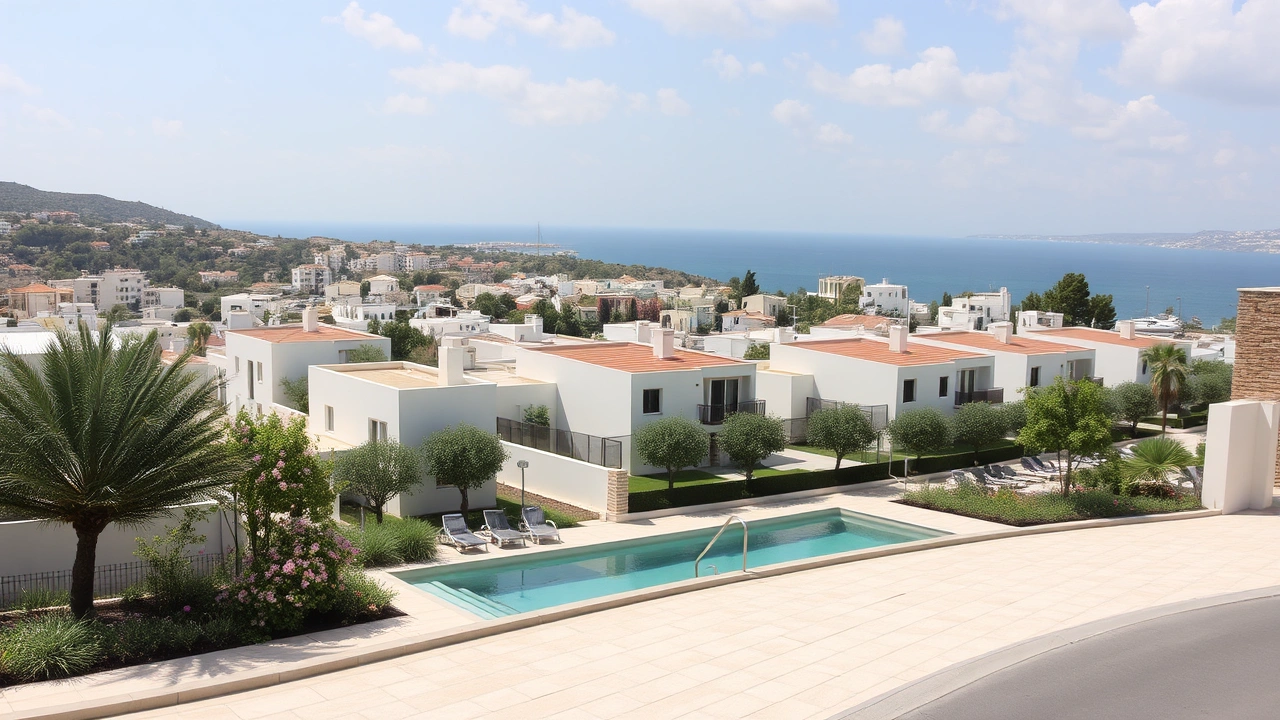
Located on the southern coast of Cyprus, the city of [Limassol] alone accounts for more than 40% of the country’s real estate transactions and over €1.3 billion in annual sales. As the island’s second-largest city, its de facto economic capital, and a stronghold for finance, tech, and shipping, it has established itself as Cyprus’s most expensive but also most dynamic real estate market.
Limassol offers three major advantages: a fast-growing real estate market, high rental yields for the Mediterranean region, and a legal framework very favorable to foreigners, which can lead to obtaining permanent EU residency.
This guide provides a detailed dive into the [Limassol] real estate market, its key neighborhoods, prices, yields, risks, as well as the tax and legal framework governing an investment.
One of the Most Dynamic Markets in the Mediterranean
[Limassol] is described by professionals as Cyprus’s most globalized real estate market. The city attracts both Cypriot families, well-paid expatriates, tech entrepreneurs, financial executives and international investors from Israel, Lebanon, the Middle East, Western Europe, Russia, and Central Asia.
This diverse demand translates into sustained price growth and constant rental pressure.
Sustained Price Increases Over Several Years
Recent data shows a very clear underlying trend: prices are rising, quickly, and are already starting from high levels for the island.
In 2025, the average residential price in [Limassol] is around €3,200/m², up 7.4% year-on-year. Over the last five years, apartment values have climbed by approximately 45%, with some periods of annual increases exceeding 10%. In 2024, apartments there surged by 20.6% to reach an average of €558,230, while houses increased by over 30% to approach €696,000.
This is the projected average annual increase in real estate prices in Limassol between 2025 and 2030.
A simple example illustrates this dynamic: a two-bedroom apartment near the Marina bought for €400,000 in 2019 was listed for around €560,000 in 2024, representing an increase close to 7% per year.
Transaction Volume and Weight of Foreign Buyers
The dynamism is not just about prices. In terms of volume, [Limassol] accounts for over 40% of the country’s transactions and about 2,800 apartment sales per year, in addition to nearly 1,200 house sales. From January to April 2025, approximately 1,756 transactions were recorded, a 12% increase compared to a year earlier, with a notable acceleration in February and April.
This is the share of foreign buyers in real estate transactions in Limassol, exceeding 50% at the national level.
The most liquid segments are in the €400,000 to €900,000 range, with strong appetite for 2-3 bedroom units of 65 to 90 m². Furnished properties, ready to rent, typically sell in 2 to 3 months, while older, poorly located, or properties needing renovation can stay on the market for 3 to 6 months.
A Supportive Macro and Tax Environment
The market’s appeal is based on factors beyond real estate alone: Cyprus’s economic growth, falling public debt, controlled inflation, low unemployment and favorable taxation.
Corporate tax is limited to 12.5%, one of the lowest in the EU. There is no wealth tax, inheritance tax, or annual national property tax (Immovable Property Tax abolished since 2017). The combination of a stable, transparent common law legal environment and numerous double tax treaties with over 60 countries enhances clarity for foreign investors.
Prices, Rents, and Yields: What the Numbers Say
To assess the appeal of an investment, two parameters dominate: how much the property costs, and how much it yields. In [Limassol], the answer varies significantly depending on the neighborhood, property type, and rental type (long-term or seasonal).
Price Levels: From Studio to Luxury Villa
The table below provides a rough estimate of the budgets required for different types of residential properties in the city of [Limassol].
| Property Type | Typical Budget in [Limassol] |
|---|---|
| Studio / 1 bedroom | €150,000 – €300,000 |
| 2 bedroom apartment | €300,000 – €600,000 |
| “Luxury” apartment (tower, marina) | €600,000 – €1,200,000 (and above) |
| Standard house / villa | €500,000 – €1,200,000 |
| High-end / waterfront villa | €1,000,000 – €2,000,000 and beyond |
Prices per square meter, on the other hand, vary depending on location and quality:
| Area / Sector Type | Average Prices (Purchase) |
|---|---|
| City average (all sectors) | ≈ €3,200/m² |
| Central & peri-central apartments (resale) | €2,600 – €4,500/m² |
| “Classic” waterfront (excl. Marina) | €6,000 – €8,000/m² |
| Coastal towers / Ultra-luxury Marina | €8,200 – €10,000/m², or more |
| Agios Tychonas (prestige) | ≈ €7,500/m², villas > €2.5M frequent |
| Emerging neighborhoods (Kato Polemidia, Omonia) | €2,500 – €2,600/m² |
This hierarchy places [Limassol] clearly above other Cypriot cities in terms of prices, but still below markets like London or Amsterdam.
Rental Market: High Rents and Deep Demand
[Limassol] is also the most expensive city in the country to rent in, a direct consequence of the presence of international companies and a very solvent expatriate community. The average monthly rents for long-term leases fall within the following ranges:
| Housing Type | Average Monthly Rent |
|---|---|
| 1 bedroom apartment | ≈ €1,600 |
| 2 bedroom apartment | ≈ €2,500 |
| 3 bedroom apartment | ≈ €3,200 |
| 2 bedroom house | ≈ €1,700 |
| 3 bedroom house | ≈ €2,700 |
| 4 bedroom house | ≈ €5,000 |
| 5 bedroom house | ≈ €8,900 |
In the center, a 1-bedroom rents for around €1,330 per month, while in the immediate outskirts, it drops to about €1,090. For a 3-bedroom, expect around €2,280 in the center and €1,700 outside.
Furnished accommodations rent for up to 40% more on average than unfurnished ones, but require a higher security deposit. This market primarily targets students, young professionals, digital nomads, and executives on assignment.
Rental demand is fueled by local families, foreign workers, students, and investors who obtained residency through real estate. The annual occupancy rate often exceeds 90% in the most sought-after neighborhoods (Germasogeia, Neapolis, Mesa Geitonia).
Yields: Where Does [Limassol] Stand Compared to the Rest of Cyprus?
At the national level, the average gross yield is around 4.8% in Q1 2025. [Limassol] outperforms this indicator, with an average of 5.29% for apartments, and higher peaks in certain segments.
Numbers by typology illustrate this reality well, showing the distribution or impact of different categories within a dataset. For example, in a sales analysis, it could reveal the market share of each product type.
| Typology (City of [Limassol]) | Average Purchase Price | Average Monthly Rent | Annual Gross Yield |
|---|---|---|---|
| 1 bedroom apartment | €260,000 | €1,300 | 6.00% |
| 2 bedroom apartment | €410,000 | €1,900 | 5.56% |
| 3 bedroom apartment | €697,000 | €2,500 | 4.30% |
Other studies, on properties around ten years old, confirm this pattern: approximately 7.8% gross for an older 1-bedroom (50 m², value €200,000, rent €1,300), 6.85% for a 2-bedroom (80 m², €280,000, rent €1,600), and 5.45% for a 3-bedroom house (180 m², €550,000, rent €2,500).
Net yields, after deducting expenses, management, maintenance, and taxes, are typically 1.5 to 2 percentage points lower. A properly structured and well-managed portfolio can reasonably target 3.5 to 5% annual net yield, in addition to capital appreciation (4 to 6% per year on trend).
Choosing the Right Neighborhood in [Limassol]
The city is extremely segmented. Each area has its own logic, tenant profile, and price levels. Investing in the city of [Limassol] requires thinking neighborhood by neighborhood.
Marina, Waterfront and Seafront Districts: The Ultra-Prime Segment
The Marina and the strictly waterfront neighborhoods concentrate the highest prices and some of the most interesting rental yields… at the cost of a very high entry ticket and high-end competition.
Properties in the Marina, comprising ultra-luxury apartments with direct views of the yachts, often trade between €8,200 and over €10,000/m². The most exclusive units far exceed this ceiling, with overall prices starting from €600,000 climbing to several million euros. Gross yields are typically between 6 and 7%, mainly through furnished, sometimes seasonal, rentals to a high-end international clientele.
Other seafront areas in the city show prices of €6,000 to €8,000/m² for new developments, with yields of a similar order (6–7% gross) when properties are operated as long-term furnished rentals or short-term lets during the tourist season.
These micro-markets are for investors seeking more of a signature asset combining lifestyle and yield, rather than a pure “cash-flow” strategy.
Germasogeia: The Highly Sought-After Compromise
East of the center, Germasogeia — and in particular its tourist area Potamos Germasogeias — is one of the neighborhoods most cited by analysts for a balanced investment. It offers a mix of modern towers, more classic-style buildings, a sandy beach (Dasoudi), a high concentration of shops, restaurants, hotels, clinics, and schools, including leading international institutions.
Real estate prices in this area vary significantly, from €3,000 to €8,000 per square meter. This variation depends mainly on proximity to the sea and the quality level of the properties. This neighborhood is often considered a more accessible option than the luxury coastal areas, while still offering the advantage of being only minutes from the city center and having excellent access to the highway.
The rental clientele is very international (expats, families, tech executives, Russian and English-speaking communities), ensuring occupancy rates close to 95% and gross yields in the 5.5–6.5% range.
Agios Tychonas and Agios Athanasios: Prestige, Views and Villas
Agios Tychonas, on the hills and coastline east of the city, is considered one of the most prestigious areas of [Limassol]. It is home to a large number of luxury villas, sometimes over €20,000/m² for ultra-prime properties, as well as high-end residences associated with five-star hotels.
The average value exceeds €7,500/m², with many properties above €2.5M. The clientele is almost exclusively international, with investors seeking second homes, luxury retirement villas, or income from high-end seasonal rentals.
Agios Athanasios, more inland, combines contemporary villas, recent residential complexes, and very good family infrastructure (schools, parks). Demand is strong here, both for purchase and rental, especially from 30-45 year old families. It’s one of the most dynamic areas in the medium to long term for those prioritizing quality local demand.
Mesa Geitonia and Neapolis: The Practical and Profitable Heart
Mesa Geitonia, a central suburb, has more contained prices, around €2,800 to €5,500/m², with an average around €2,900/m² for some property types. The neighborhood is very popular with families and young professionals for its schools, services, central location, and good transport network. Rental demand is very strong, allowing for gross yields around 5.5–6.5%.
Neapolis is a central, vibrant district, close to the beach, the business district, the university, and the new casino-resort. It offers a mix of residential and office buildings, with prices per m² between €3,000 and €5,600. The rental clientele is very diverse (students, young professionals, families, executives) and the infrastructure (wide roads, facilities) is well developed. This area is therefore particularly suited for a long-term rental investment, offering a good balance between price and yield.
Zakaki and Kato Polemidia: The City’s New Frontier
To the west, Zakaki is one of the most talked-about emerging hotspots. The neighborhood is now home to the gigantic City of Dreams Mediterranean resort, the My Mall shopping center, a water park, as well as the port and an industrial area. Numerous residential complexes are under construction there, with prices still contained (around €3,000 to €4,500/m² for modern developments), but already rising.
Zakaki is set to become a major entertainment and business hub. Rental investment there mainly targets apartments for medium-term rentals (casino employees, company executives, extended-stay tourists). The potential for capital appreciation is significant if urban transformation continues at the same pace.
Kato Polemidia, on the western outskirts, remains more affordable, around €2,600/m² for residential property. The neighborhood is in full development phase, with a clientele of young households and intermediate-budget investors. It’s a bet more oriented towards long-term appreciation than immediate profitability.
Analysis of the Kato Polemidia Real Estate Market
Parekklisia, Villages and the Green Belt
Parekklisia, a village on the edge of [Limassol], 4 km from the sea, illustrates these peri-urban areas where large villas with views and a quieter pace of life can be found. It even has a marina and residential projects like Blue Coral Homes. The area attracts retirees, people seeking space, and, to a lesser extent, seasonal tenants.
Beyond Parekklisia, other villages or areas like Ypsonas or Erimi offer lower prices per square meter and a more family-friendly environment. They are more suited for strategies oriented towards “primary or secondary residence” than purely rental investments.
Old Town and Historic Center
The historic center, from the old port to the Molos promenade, combines ancient streets, renovated buildings, boutiques, restaurants, bars, and a very lively waterfront. One can find coexisting small renovated buildings, charming hotels and high-end projects.
Tourist demand is strong year-round, paving the way for investments in aparthotels, boutique hotels, or small furnished residences for short-term stays. In return, the purchase price and competition are high, and management constraints are heavier than for long-term rentals.
Safety, Infrastructure and Quality of Life: Parameters That Matter for Value
A solid real estate investment also depends on the quality of the urban environment. On this point, [Limassol] stands out positively, while showing some weaknesses.
A Generally Good Level of Safety
Crime indices remain moderate, around 40, with a low level of violent crime (indices 27-29) and crimes mainly related to property (indices 45-46). Family neighborhoods like Agios Athanasios, Mesa Geitonia or Germasogeia get the best safety ratings, with safety scores over 81 during the day and around 58 at night.
However, local perception mentions a feeling of increasing crime over the last five years, and concern about corruption (index around 68). This feeling has not yet translated into a collapse in real estate demand, a sign that the situation is still deemed acceptable by residents and investors.
A Vast Infrastructure Plan Underway
The Cypriot government and the municipality of [Limassol] have embarked on a heavy strategy to improve infrastructure: over €490M has been invested in 79 projects over ten years, and new plans totaling over €1.3B are scheduled at the national level, of which €310M is specifically allocated to urban infrastructure for 2025-2027.
For Limassol, we can mention:
– over €250M dedicated to traffic relief, with a northern ring road, interchanges, an €8.5M intelligent traffic management system, and a sustainable urban mobility plan integrating park-and-ride, bike lanes, and a new central bus station;
– the transformation of arteries like Anexartisias Street into green pedestrian streets, with widened sidewalks, shade, and modernized lighting;
– two major “green corridors” of 20 km each, punctuated with bike lanes, pedestrian paths, 10,000 trees, rest areas, and public facilities;
– the creation of about 25 new neighborhood parks, including playgrounds, sports and cultural facilities;
– a program of museums and cultural spaces (carnival museum, sports museum, rehabilitation of Lady’s Mile beach, redevelopment of Heroes Square, etc.).
Urban development projects (parks, traffic-calmed streets, transport hubs) structure a city’s future value. A home located near such infrastructure benefits, all else being equal, from an advantage in terms of demand and price.
Water Management, Risks, and Mobility
The municipality and SALA (Limassol–Amathus Sewerage Board) are also investing in flood protection (over €23M for two major projects), as well as a new wastewater treatment plant for the west of the city (€31M construction and €14M operation over ten years).
In parallel, sustainable mobility plans are being deployed across six municipalities and eleven communities, covering over 225 km² and 205,000 inhabitants. The stated goal is to offer by 2030 a more fluid, less congested city, better connected by bus and more welcoming for cyclists.
For an investor, these elements reduce climate and logistical risks and strengthen long-term residential attractiveness.
Holding Costs and Taxation: What to Anticipate
To calculate a realistic profitability, one must integrate all costs: purchase price, acquisition taxes, annual charges, taxes on rents and on any capital gain.
Purchase Costs
Acquiring a property in [Limassol] involves various cost items:
– VAT: 19% for new properties, except for a primary residence meeting the criteria (reduced rate to 5% on part of the surface / value, under ceilings);
– property transfer fees: between 3% and 8% depending on value brackets, usually with a 50% reduction if the property is not subject to VAT (resale) and a total exemption if VAT has been paid;
– contract of sale registration fees: stamp duty calculated in brackets (0% up to €5,000, 0.15% from €5,001 to €170,000, 0.20% above, capped at €20,000);
– notary and legal fees: about 1% of the sale price;
– miscellaneous fees (translations, cadastre registration, etc.).
Cost difference between a residential and commercial purchase of €300,000, mainly due to the applicable VAT rate.
Annual Charges and Management Fees
Once an owner, several recurring costs are added:
– commonhold / municipal fees: often between €30 and €100/month for apartment buildings, more for residences with pool, security, spa, or maintained gardens;
– municipal and service taxes (lighting, waste collection): generally €85 to €500 per year, calculated on the 2013 cadastral value;
– sewerage tax: 0.05% to 0.3% of the 2013 value for properties connected to a sewer network;
– home insurance: about €200 to €350/year for a standard apartment, more for high-end villas;
– routine maintenance: often estimated at €1,000 to €2,000/year for an apartment, or more for a house (garden, pool, etc.);
– minimum consumption (water, electricity, internet) between tenants: €100 to €200/month if the property is not entirely cut off from services.
A typical €400,000 investment can thus bear annual holding costs representing 1.2 to 1.9% of the property’s value, before taxation on rents.
Taxation of Rents and Capital Gains
Rents received in [Limassol] are taxed under the Cypriot income tax. The scale is progressive:
– 0% up to €19,500;
– 20% from €19,501 to €28,000;
– 25% from €28,001 to €36,300;
– 30% from €36,301 to €60,000;
– 35% above €60,000.
A standard deduction of 20% of gross rents is automatically applied for expenses. Therefore, only 80% of the rent is subject to the tax scale. Concurrently, specific expenses such as repairs, agency fees, insurance, and legal fees can be deducted individually in addition to this standard deduction.
Additionally, “domiciled” Cypriot tax residents are liable for a Special Defence Contribution on rents, equivalent to 3% on 75% of gross rent, i.e., an effective rate of 2.25%. However, non-domiciled residents or non-residents are not subject to it, which is often the case for foreign investors recently established.
In parallel, everyone contributes to the public health system (GeSY) at a rate of 2.65% of income, including rents, up to an income ceiling.
Upon resale, the capital gain is taxed at 20%. Its calculation includes the purchase price adjusted for inflation and allowable expenses (fees, renovations, professional fees). Lifetime allowances apply: €17,086 for any real estate property and up to €85,430 for the primary residence, subject to occupancy duration conditions.
Using a Cypriot Company to Invest
Many investors structure their assets through a Cypriot company (Ltd). In this case, net rents, after deduction of expenses, are taxed at 12.5% under corporate tax. The latent capital gain may, under certain conditions, be partially or fully exempt from capital gains tax, unless the company’s main activity is property development.
This approach also facilitates transfers or partial portfolio sales, while benefiting from the double tax treaties signed by Cyprus.
It is recommended to seek assistance from a local specialized lawyer to optimally structure this setup, depending on one’s original country of tax residence.
Permanent Residency and EU Passport: Real Estate as an Entry Point
One of the major attractions of real estate investment in [Limassol] is the possibility of obtaining permanent residency in the EU through a Cypriot “golden visa” type program.
The Permanent Residency by Investment Program
The scheme, governed by the Aliens and Immigration Regulation 6(2), is aimed at nationals of third countries (outside the EU). It allows obtaining permanent residency of indefinite duration with a minimum investment of €300,000.
Four investment categories are eligible:
Several investment options are eligible to obtain permanent residency in Cyprus. Each pathway requires a specific financial commitment and must comply with the applicable legal criteria.
Acquisition of one or two new homes (first sale) from licensed Cypriot real estate developers.
Investment in commercial real estate properties (offices, shops, hotels, etc.), whether new or resale.
Subscription to the capital of an active Cypriot company, employing at least five people and having a physical presence in the country.
Subscription to approved Cypriot investment funds (AIF, AIFLNP, RAIF).
Funds must originate from abroad. The investor must also demonstrate a minimum net annual income of at least €50,000 (foreign income for the residency formula), increased by €15,000 for the spouse and €10,000 for each dependent child. Eligible income includes salaries, dividends, annuities, pensions, rents, interest, etc.
The permit covers the spouse and dependent children, including unmarried students aged 18 to 25. The beneficiary must visit Cyprus at least once every two years and maintain the investment to retain their status.
Towards Cypriot Citizenship
Permanent residency can then pave the way for naturalization. To apply for citizenship, the investor must normally have legally resided in Cyprus for eight years within the last ten, including one year of continuous residence before the application (with tolerances for short absences). They must also demonstrate proficiency in the Greek language (B1 level), good knowledge of the socio-political context, a clean criminal record, and the intention to settle permanently.
French nationality entails specific obligations, such as compulsory military service for men aged 18 to 26. It also confers European citizen rights, notably freedom of movement, work, and establishment within the European Union.
For an investor aiming for both asset diversification and a “passport insurance“, [Limassol] thus offers a double lever: real estate yield and international mobility strategy.
Opportunities, Risks, and Investment Strategies
Even in a city attractive to capital, not everything is rosy. [Limassol] presents a very favorable situation but also signals that call for caution.
Real Opportunities
Several elements speak in favor of the city:
– a market in continuous growth for several years, with double-digit annual increases in some periods for apartments;
– gross rental yields for apartments higher than in other major Cypriot cities (5.29% on average, compared to 4.78% in Nicosia or 4.25% in Paphos);
– deep rental demand, fueled by a network of international companies, schools, universities, and quality infrastructure;
– a strong pipeline of projects (residential towers, mixed complexes, golf resorts, business centers) led by known developers, often with a green and technological dimension (smart energy management, recycled water, etc.);
– a central place in public infrastructure programs, which strengthens the long-term value of well-connected neighborhoods.
For an investor oriented towards “yield + appreciation”, small and medium-sized units (1-2 bedrooms) in central and para-central neighborhoods (Mesa Geitonia, Neapolis, Germasogeia, certain areas of Agios Athanasios or Kato Polemidia) seem to offer the best compromise.
Properties located on the waterfront (seafront) or in a marina have high appreciation potential and showcase value, but their value is particularly sensitive to international economic cycles in the luxury market.
Risks Not to be Ignored
At the same time, several signals call for vigilance:
– the absolute price level in [Limassol], already very high by local standards, makes the market inaccessible to a growing portion of young Cypriot households, creating social tension and the beginnings of a political debate on affordability;
– local voices mention the possibility of overheating, pointing to partially empty luxury towers and a dependence on sometimes volatile foreign investor flows (changes in migration policies, geopolitical tensions, etc.);
– rising construction costs (about +18% since 2021), which increase the cost of new projects and can weigh on developers’ and investors’ margins;
These elements do not disqualify [Limassol] as an investment destination, but require carefully selecting the product and investment horizon.
Possible Strategies According to Investor Profile
A cautious investor, prioritizing stability, could target 2-bedroom apartments of medium size (65–90 m²) in recent buildings in well-served intermediate neighborhoods (Mesa Geitonia, Neapolis, Germasogeia away from the waterfront), operated as furnished long-term rentals to families or executives. The goal: 5–6% gross, 3.5–4.5% net, with regular capital appreciation.
An opportunistic investor, accepting higher risk, can target pre-sale developments in transforming areas like Zakaki or Kato Polemidia. This strategy bets on the property’s revaluation as new infrastructure (casino, golf, roads, parks) materialize. Although initial rental yield may be slightly lower, it is compensated by strong long-term capital appreciation potential.
An investor oriented towards “lifestyle + yield” may favor a seafront or Marina property, aiming for mixed use (personal use part of the year, high-end rental the rest of the time). This scenario, however, requires professional rental management and good anticipation of vacancy periods.
In all cases, the key remains a deep knowledge of the local market, support from a lawyer and a licensed agent, and the use, if necessary, of a property management company to optimize occupancy and income.
In Summary
The city of Limassol combines the characteristics of a prime real estate market: the island’s business center, a regional crossroads between Europe, the Middle East and Africa, continuously improving infrastructure, large-scale residential and commercial projects, strong international presence, rental yields above the Cypriot average, and still robust medium-term price growth prospects.
This dynamism comes at a price: record per square meter values for the country, a higher cost of living than elsewhere in Cyprus, and an increasingly segmented real estate environment, where quality new properties stand out from the rest of the market.
For a Francophone investor, investing in real estate in Limassol requires a methodical approach: detailed analysis by neighborhood, thoughtful choice of property type, rigorous integration of costs and Cypriot taxation, anticipation of regulatory changes, and, for non-EU nationals, examination of possibilities for obtaining a permanent residency permit.
With a clear strategy and competent local support, [Limassol] remains today one of the most interesting entry points for those wishing to combine real estate yield, exposure to the Eastern Mediterranean, and access to the European space.
Disclaimer: The information provided on this website is for informational purposes only and does not constitute financial, legal, or professional advice. We encourage you to consult qualified experts before making any investment, real estate, or expatriation decisions. Although we strive to maintain up-to-date and accurate information, we do not guarantee the completeness, accuracy, or timeliness of the proposed content. As investment and expatriation involve risks, we disclaim any liability for potential losses or damages arising from the use of this site. Your use of this site confirms your acceptance of these terms and your understanding of the associated risks.

Cyril Jarnias is an independent expert in international wealth management with over 20 years of experience. As an expatriate himself, he is dedicated to helping individuals and business leaders build, protect, and pass on their wealth with complete peace of mind.
On his website, cyriljarnias.com, he shares his expertise on international real estate, offshore company formation, and expatriation.
Thanks to his expertise, he offers sound advice to optimize his clients' wealth management. Cyril Jarnias is also recognized for his appearances in many prestigious media outlets such as BFM Business, les Français de l’étranger, Le Figaro, Les Echos, and Mieux vivre votre argent, where he shares his knowledge and know-how in wealth management.