
French People Abroad October 2026 Cyril JARNIAS
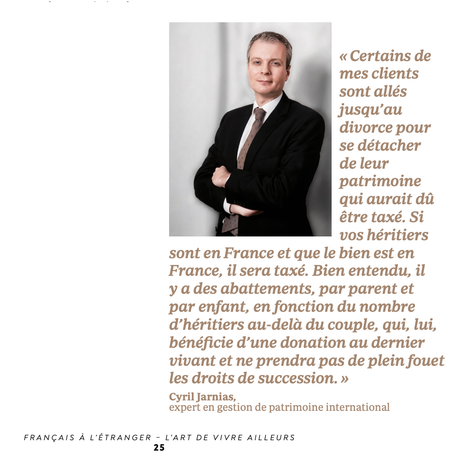
Panama, Cayman Islands, offering a “golden visa”
Article in Les Echos Cyril JARNIAS Guide on the golden visa and real estate taxation abroad:
Many countries offer residence permits in exchange for investments, often in real estate. These programs attract wealthy individuals, but beware—they do not automatically guarantee tax advantages.
Anne-Lise DEFRANCE
In a context of growing internationalization, many individuals can no longer—or no longer wish to—limit their lives and their professional and personal interests to their country of origin alone. But whether it means settling permanently in another country or spending only a few days there each year, as foreigners on the territory they regularly find themselves obliged to renew their visa or other residence permit.
To eliminate these administrative constraints and facilitate their integration on the ground, around a hundred countries now offer them residence-by-investment programs, also known as “golden visas.”
The idea is simple: to offer people with a certain level of income the possibility of living, working, studying, and receiving healthcare under the same conditions as their nationals in exchange for injecting capital into the country in the form of asset investments, with amounts varying by destination. In short, obtaining a resident card. Example: New Zealand requires a minimum investment of 3 million New Zealand dollars (2.5 million euros) in managed funds or directly in the capital of companies approved by New Zealand Trade and Enterprise (NZTE), or 10 million New Zealand dollars in a broader range of options including stocks, bonds, managed funds, real estate development, and philanthropy.
For some of these countries, a simple real estate investment is a key to accessing this type of program.
These countries where investing can earn you citizenship
Minimum real estate investment
- Antigua & Barbuda: 300,000 US dollars.
- Grenada: 270,000 US dollars.
- Saint Kitts and Nevis: 325,000 US dollars.
- Turkey: 400,000 US dollars.
Caribbean passport — Sources: Henley & Partners Group
Thus, anyone aspiring to obtain a residence visa in the United Arab Emirates can do so in exchange for purchasing a property with a minimum value of 1 million Emirati dirhams (approximately 234,000 euros) if they are at least 55 years old, or 2 million Emirati dirhams (468,000 euros) regardless of age. But beware—this residence permit is not permanent. In the first case, it is a renewable five-year visa, and in the second, a ten-year visa.
Do not confuse residency rights with taxation
Same thing in Panama, where a real estate purchase worth at least 300,000 dollars (258,000 euros) grants access to permanent resident status as long as the property or properties thus purchased are kept for at least five years.
In Mauritius as well, purchasing a residential property with a minimum amount of 375,000 dollars (322,500 euros) allows you to obtain permanent residence for as long as the property in question is retained.
As for the Cayman Islands, a real estate investment of at least 2.4 million US dollars (2.06 million euros) grants permanent residence in the archipelago.
Purchases of residential properties for a lower amount (100,000 US dollars, or approximately 258,000 euros) may also be sufficient to qualify for a long-term residence certificate, provided that the overall investment in the islands is at least 600,000 US dollars (516,000 euros) and that the applicant for the golden visa program receives a minimum annual income (77,400 euros) from sources outside the Cayman Islands, or opens an account in the archipelago and maintains a minimum deposit there of at least 430,000 euros in assets.
“For French people, for example, Saint Kitts and Nevis appears to be one of the most attractive options in the Caribbean, because it does not offer a residency right but directly citizenship to people investing at least 325,000 US dollars (279,000 euros) in real estate on the island. With, as a bonus, if they reside there for most of the year, all the tax advantages that citizen status offers,” explains Romain Ligault, advisor to private families within the Henley & Partners group, a world leader in residence and citizenship planning.
Because beware, warns Cyril Jarnias, an expert in international wealth management, “while these programs are appealing when it comes to obtaining a residence permit in a number of countries, they are not necessarily all interesting from a purely tax or asset-management perspective.”
Making a real estate investment abroad in a golden visa state with the goal of geographically diversifying one’s assets and without intending to settle permanently in the country or acquire citizenship there makes little sense. The golden visa is not a tax optimization tool.
“Just because an individual obtains a residency right abroad does not mean they automatically become a tax resident of that country and therefore benefit from local tax advantages,” confirms Romain Ligault.
Residency rights and taxation must indeed not be confused. “To claim the often advantageous tax regime of golden visa countries, holding a long-term residence permit is not enough in the eyes of the French administration. Taxpayers who want to obtain non-resident tax status in France are required to meet certain criteria, both in France and in the host country. And to do so, they very often need to reorganize their assets,” explains Cyril Jarnias.
Why? Individuals are considered tax residents of France, subject to international tax treaties, if they spend more than 183 days of the year on national territory, carry out a professional activity there (whether salaried or not), or have the center of their economic interests there. That is, if they have their main investments there, derive most of their income from there, or have established the seat of their business or professional activities there.
“As a result,” emphasizes Cyril Jarnias, “unless they truly want to change their lives by transferring a large part of their assets abroad and remaining there for most of the year, individuals who invest in real estate in a country with more favorable taxation than France in order to generate supplementary income are obliged to pay in France the difference in tax on the income they derive from renting their property or properties, in accordance with the tax treaties of the targeted country. And this is true whether or not they have chosen a golden visa country.”
Conditions that can change without notice
Hence the importance of clearly defining one’s objectives and not choosing one’s investment country based on tax criteria alone. Especially since the countries concerned can change the terms of their residency programs at any time (investment amount, holding period, minimum number of days of annual stay, etc.).
“Some states sometimes loosen them, as Dubai recently did, while others, on the contrary, tighten them. This can pose a problem when the long-term residence permit granted expires and must be renewed,” specifies Romain Ligault.
“Nothing is set in stone, and an investor may see the rules applied to them changed without notice,” continues Cyril Jarnias.
Another point of vigilance for individuals tempted to become property owners in these countries: their financial stability. Some may indeed experience significant fluctuations in their local currency against the euro, leading to a loss of assets for investors over time.
Finally, be careful, concludes Cyril Jarnias, “to carefully study the precise conditions of each program as well as the specific features of the real estate legislation in force in the country, at the risk of experiencing certain disappointments. The case of Malaysia bears witness to this, where most properties are sold to foreign investors only with leases of a maximum of ninety-nine years.”
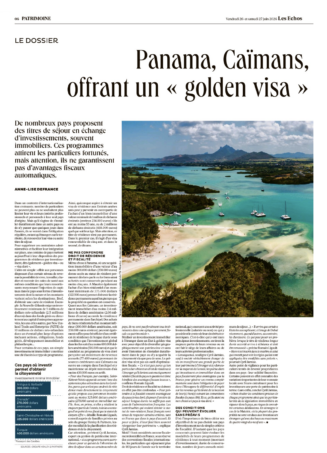
A quote in an article on the best countries for expatriation (in Mieux Vivre Votre Argent)
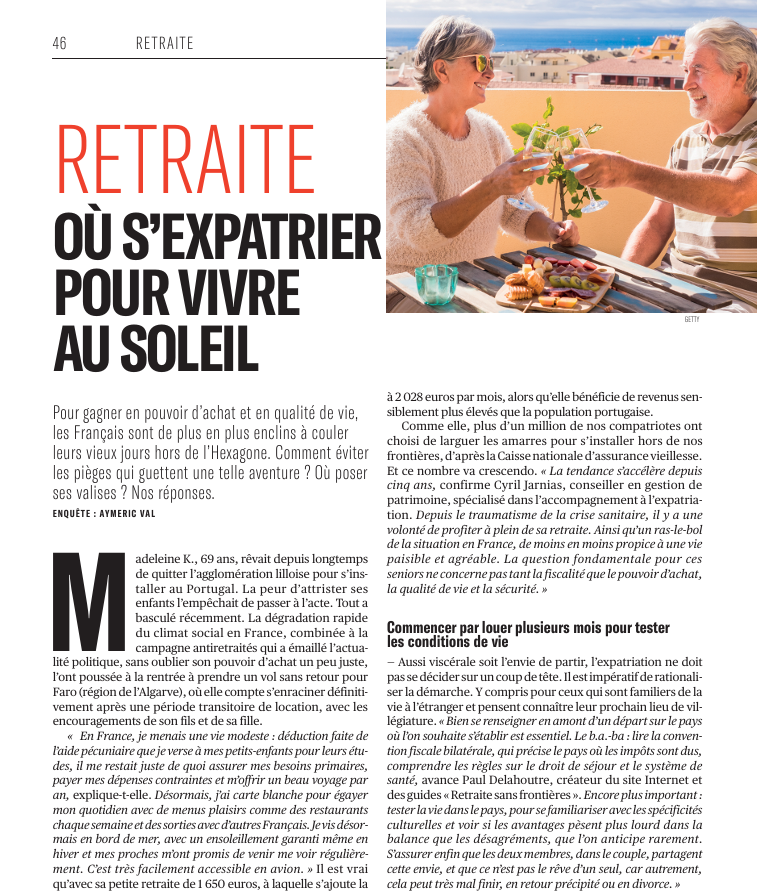
A quote in Capital France magazine (December 2025)

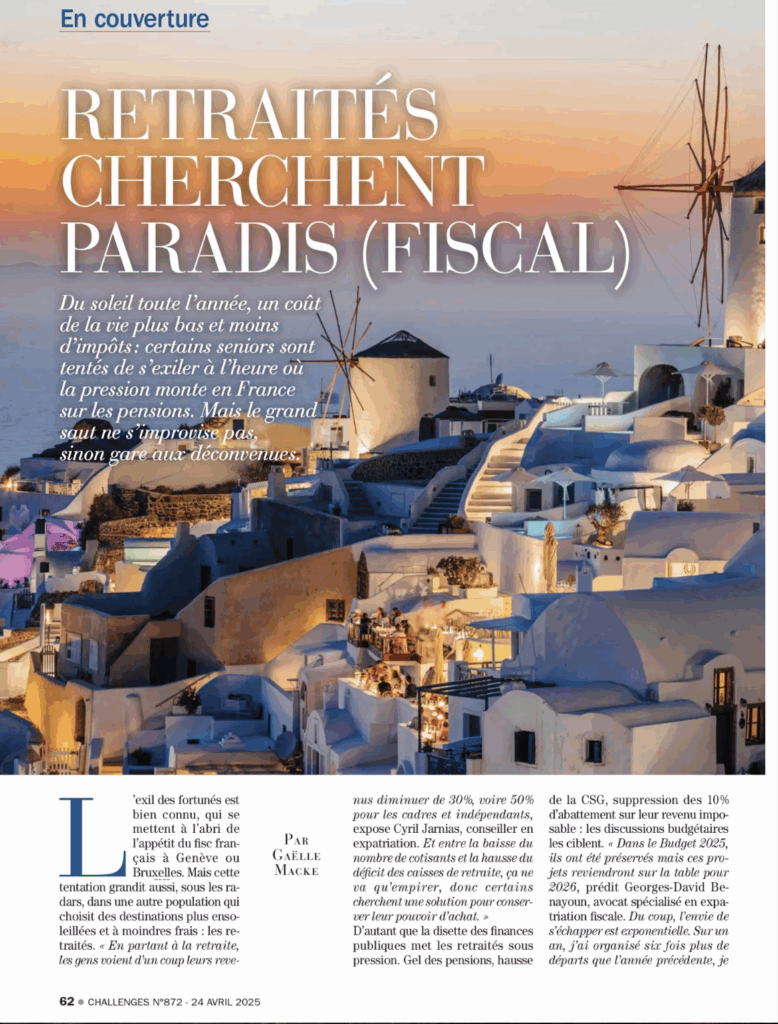
My expertise is featured in an article published in Challenges
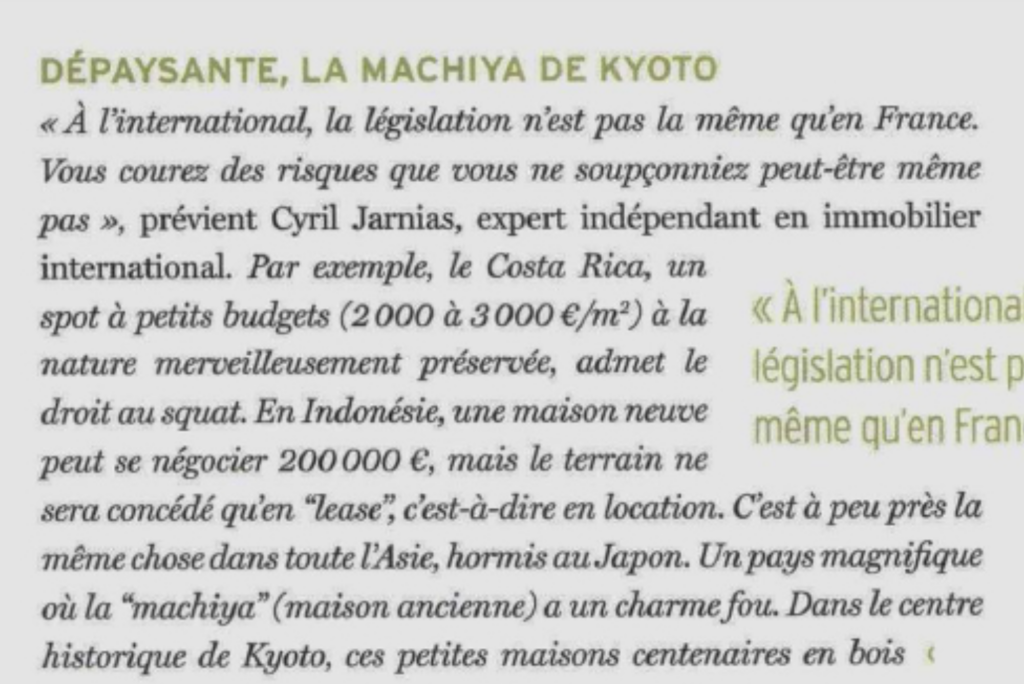
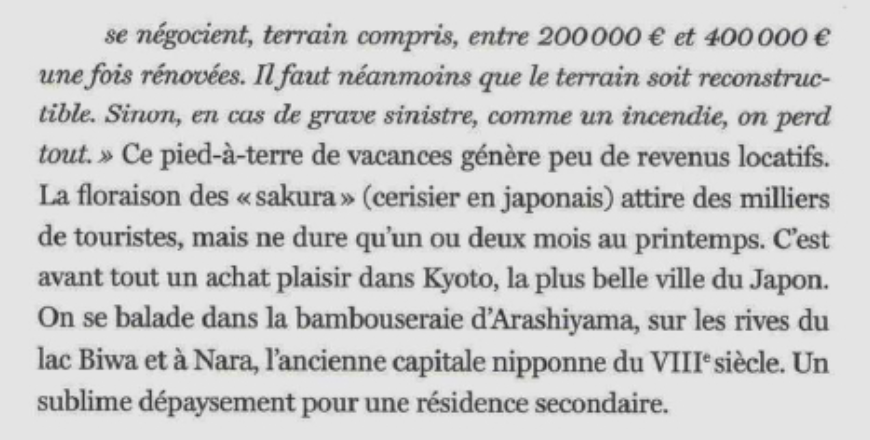
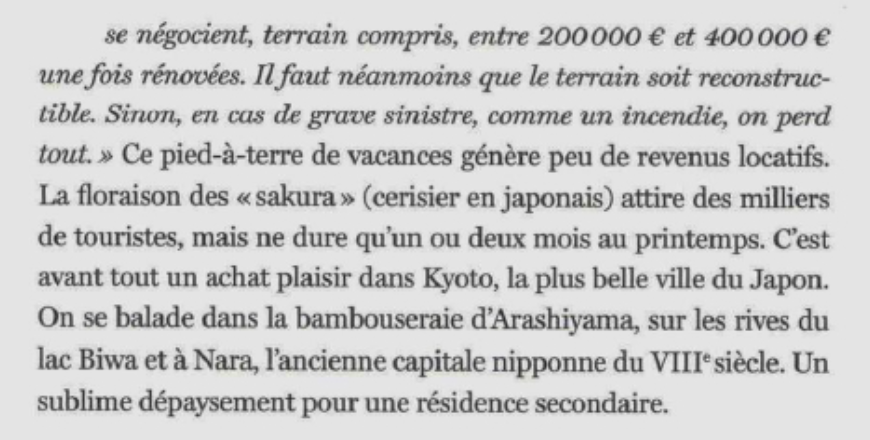
A quote in Le Figaro Demeures / Summer 2024:
Article in Français à l’étranger (in May 2025):
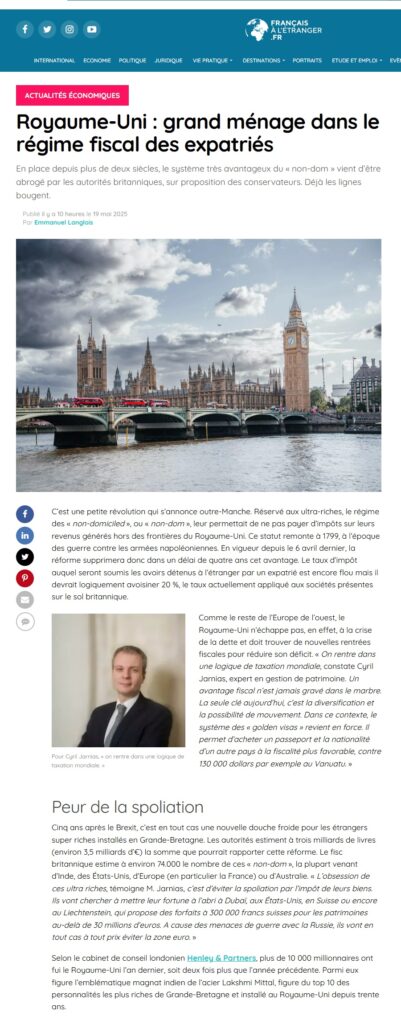
You can view this article by clicking here

Capital (July 2023):
Discover my contribution in the July 2023 issue of Capital France magazine. The article explores the opportunities and challenges related to buying second homes abroad, with a focus on popular destinations such as Portugal, Greece, Mauritius, and Bulgaria. It addresses the legal, tax, and practical aspects of these investments, highlighting the attractive tax advantages in certain countries, such as Portugal (ten-year tax exemption) or Mauritius (tax capped at 15%).
You can access the document by clicking here.

Français à l’étranger:
Discover my article on the Français à l’étranger website. The Français à l’étranger article of September 30, 2022 highlights the expertise of Cyril Jarnias, a wealth manager specializing in international real estate. He explains current market trends, including the enthusiasm for destinations such as Portugal, Spain, and Greece, where tax advantages and attractive prices appeal to French investors.
You can access the document by clicking here.

My contribution in Mieux Vivre Votre Argent of November 8, 2021:
Discover my article by clicking here