
 Published on and written by Cyril Jarnias
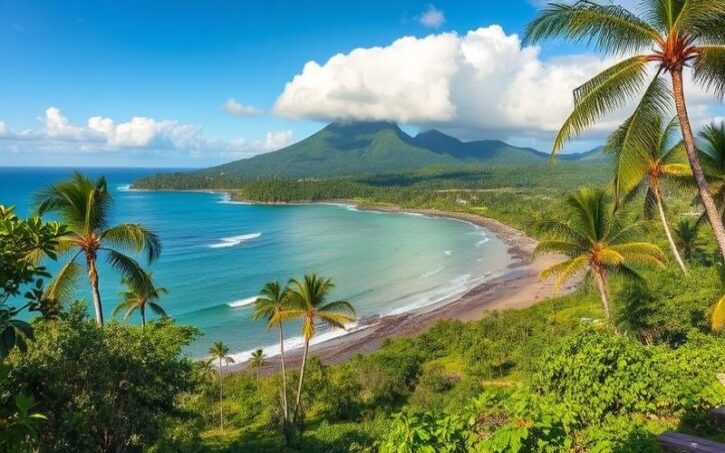
Costa Rica, with its exotic beaches, lush biodiversity, and pleasant climate, is increasingly establishing itself as a top destination for real estate investors seeking attractive returns and economic stability.
However, investing in this tropical paradise requires an understanding of the unique opportunities offered by the local real estate market, as well as a thorough analysis of the prevailing economic and legal dynamics.
While some coastal regions and tourist towns are experiencing rapid growth and increased demand, other rural areas offer untapped potential that can turn out to be hidden gems for savvy buyers.
This article will guide you through the main considerations to maximize your investment while navigating the Costa Rican real estate landscape.
Why Choose Costa Rica for Your Real Estate Investments?
Political and Economic Stability
- Costa Rica is recognized as one of the most stable democracies in Latin America, with strong institutions and a tradition of peaceful governance.
- Economic growth is steady: GDP grew by 4.3% in 2024 and is expected to remain around 3.1% for 2025 and 2026, supported by domestic consumption and employment.
- Inflation is under control and the fiscal situation has improved, ensuring a favorable business climate.
Tax Benefits for Foreign Investors
- No capital gains tax for foreign residents when reselling real estate purchased as an investment.
- Specific tax incentives for international investors, including special regimes in free zones, exemptions on certain transfer fees, and facilities for importing personal goods.
Attractiveness of the Local Real Estate Market
- Strong increase in demand for luxury and eco-friendly properties, especially in coastal and mountain regions.
- The influx of remote workers, expatriates, and foreign retirees is stimulating the market, with particular attention paid to sustainability and construction quality.
Concrete Examples:
- Growth in sales of eco-villas and high-end condominium residences on the Pacific Coast.
- Development of residential projects integrating green spaces and eco-friendly technologies.
Diversity of Real Estate Opportunities
| Property Type | Main Characteristics |
|---|---|
| Beachfront Properties | Villas, luxury apartments, hotel complexes |
| Mountain Homes | Panoramic views, temperate climates, eco-lodges |
| Building Lots | Proximity to beaches, forests, or national parks |
| Urban Housing | Apartments, rental buildings, coworking spaces |
Natural Beauty and Quality of Life
- Costa Rica captivates with its exceptional biodiversity: beaches, rainforests, volcanoes, and national parks.
- Healthy living environment, safety, access to quality healthcare, and modern services.
- Attractiveness to expatriates, investors, and remote workers, fostered by a peaceful lifestyle and preserved environment.
Comparative Real Estate Costs
| Destination | Average Price per m² (USD) | Current Trends |
|---|---|---|
| Costa Rica | 2,000 – 3,500 | Rising, but lower than Miami or the Bahamas |
| Miami (USA) | 6,000 – 10,000 | High prices, strong demand |
| Caribbean (e.g., Bahamas) | 4,000 – 8,000 | Luxury market, high costs |
| Mexico (Playa del Carmen) | 2,500 – 4,000 | Rapid growth, increased competition |
Infrastructure and Connectivity
- Notable improvements in the road network and international airports (San José, Liberia).
- Deployment of fiber optics, high-speed internet, and 5G mobile networks in main regions.
- Facilitated remote property management thanks to digital services and enhanced connectivity.
Future Economic Outlook and Development Projects
- Launch of the Jaguar Law to accelerate investments and simplify administrative procedures, although the text is still under debate.
- Major ongoing projects: new eco-friendly residential complexes, tourism infrastructure, free zones dedicated to innovation and new technologies.
- The government and private sector are betting on sustainable development and international attractiveness to strengthen the long-term value of the real estate market.
Thus, Costa Rica offers a secure, fiscally advantageous, and particularly attractive environment for diversified real estate investments, driven by growing demand and strong appreciation potential.
Good to Know:
Costa Rica offers an attractive real estate investment environment thanks to its political stability and steadily growing economy. As a stable democracy in Latin America, the country provides interesting tax incentives for foreigners, including the absence of capital gains tax on real estate. The local market, characterized by growing demand for luxury and eco-friendly properties, offers a diversity of options ranging from beachfront villas to mountain residences. Furthermore, Costa Rica’s exceptional natural beauty ensures a high quality of life, attracting expatriates and investors seeking destinations that combine comfort and a preserved environment. Compared to other attractive markets, the cost of real estate remains competitive, and recent improvements in transportation and communication infrastructure further facilitate investments. Finally, economic prospects and government and private development projects increase the potential value of future investments.
Overview of Real Estate Prices in Costa Rica
Current Real Estate Price Trends in Costa Rica
The Costa Rican real estate market is showing clear progress in 2025, with a national average housing price increase from $877/m² (2023) to $1,021/m². In major cities, the average price is around €2,475/m², fluctuating between €1,555 and €4,579 depending on the city and period. This rise is particularly evident in tourist regions such as Nosara ($3,298/m²), Tamarindo ($2,725/m²), and Playas del Coco ($2,113/m²), where international demand and the appeal of the seaside are driving prices upward.
| Region | Average Price (USD/m²) | Recent Trend |
| Nosara | 3,298 | Sharp Increase |
| Tamarindo | 2,725 | Marked Increase |
| Playas del Coco | 2,113 | Increase |
| National Average | 1,021 | Continuous Increase |
In some peripheral areas or those less exposed to international tourism, such as Grecia or San Ramón, price stabilization is observed, or even a slight slowdown compared to coastal areas.
Economic and Social Factors Influencing Prices
- Tourist Influx:
- The dynamism of the tourism sector strongly stimulates demand on the northern Pacific coast (notably Guanacaste).
- Seasonal rentals offer excellent rental yields.
- Foreign Investment:
- Relative tax attractiveness and the country’s stable image favor the arrival of North American and European investors.
- Recent Government Policies:
- Maintenance of a policy favorable to foreign investment without drastic ownership restrictions.
- Land Shortage in the Greater Metropolitan Area (GAM):
- The depletion of available land in urban areas boosts values in these sought-after neighborhoods.
Sought-After Property Types & Price Ranges
- Luxury Beachfront Villas:
Between $800,000 USD for a well-located modern villa up to several million for exceptional properties in Nosara or Santa Teresa. - Modern Condos:
Starting from $250,000–400,000 USD depending on location, amenities & proximity to beach/city center. - Traditional Single-Family Homes:
From $150,000 USD in emerging areas up to $600,000 USD near popular urban centers or renowned beaches.
National/International Comparison
In international comparison:
- The Costa Rican square meter remains lower than the French level (approximately –58%) while staying competitive against other major beach tourist destinations like Hawaii or certain European Mediterranean regions.
- Investors frequently cite an excellent price-quality ratio compared to the United States or neighboring Mexico for a similar level of natural/tourist infrastructure.
“American buyers are primarily looking for legal security, political stability… but also rental profitability on Airbnb,” says Ana Jiménez, a real estate agent based in Tamarindo.
“We are observing a gradual shift towards small mountain towns where it is still possible to acquire a spacious family home for under $200k,” reports José Vargas, a local investor specializing in the central west.
Thus, the Costa Rican real estate market combines coastal tourist dynamism, growing urban scarcity around San José/Escazú/GAM, and the gradual emergence of secondary rural hubs – offering a wide range of opportunities suited to both modest budgets and high-end buyers.
Good to Know:
Real estate prices in Costa Rica are currently trending upwards, particularly in tourist regions such as Guanacaste and the Nicoya Peninsula, where the influx of visitors increases demand for luxury villas and beachfront properties, the latter sometimes trading around $500,000 to $2 million. In urban areas like San José, prices have remained relatively stable, while condos are attracting the attention of expatriates and investors, with price ranges from $200,000 to $600,000. Recent government policies aimed at favoring foreign investment, as well as infrastructure development, fuel this appeal for the country. A local real estate agent notes that, compared to markets like Panama or Mexico, Costa Rica offers an excellent price-quality ratio, encouraged by a stable legal framework and high quality of life. Investors are also attracted by the country’s political stability and its commitment to sustainable development, which is an asset for eco-friendly projects.
Main Attraction Zones for Investing in Costa Rica
Costa Rica attracts numerous real estate investors, mainly in areas offering strong tourist appeal, good infrastructure, recognized political stability, and a favorable economic context. The flagship regions are San José, Guanacaste, and the Pacific Coast, each presenting specific assets for investment.
Main Geographic Zones and Their Assets
| Region | Main Assets | Flagship Cities/Regions | Sought-After Property Types | Indicative Prices |
|---|---|---|---|---|
| San José | Economic center, access to services, urban growth, political stability | Escazú, Santa Ana, San Pedro | Apartments, townhouses, offices | Starting from 250,000 USD for a modern house on the outskirts |
| Guanacaste | Renowned beaches, tourist infrastructure, international airport (Liberia), rapid development | Tamarindo, Playa Flamingo, Nosara, Playa Avellanas | Villas, condos, land, hotels, lots | Land starting from 59,000 USD, villas from 250,000 USD |
| Pacific Coast (Puntarenas) | Preserved nature, surfing, eco-tourism, strong rental demand, proximity to San José via highway | Dominical, Jacó, Ojochal, Santa Teresa | Houses with views, rental properties, second homes | Houses starting from 295,000 USD |
Factors Explaining the Popularity of These Regions:
- Tourist Attractiveness: internationally renowned beaches, biodiversity, pleasant climate year-round.
- Accessibility: presence of two international airports (San José and Liberia), modernized roads connecting coastal areas.
- Economic Growth: influx of tourists, increase in expatriates, investments in tourist and residential infrastructure.
- Political Stability: stable democracy, legal security for foreign investors.
Market Trends and Return on Investment Potential
- Sustained Rental Demand in beach regions, especially for seasonal rentals like Airbnb, with high occupancy rates in peak season.
- Development Projects: numerous new subdivisions, gated communities, hotels, and shopping centers, particularly in Tamarindo, Playa Flamingo, and Jacó.
- Price Evolution: gradual increase, but opportunities still exist with land starting from 12 USD/m² or second homes accessible from 250,000 USD.
- Diversity of Offerings: from building lots to luxury villas, including serviced residences.
Points for Investors to Monitor:
- Fluctuation of demand according to the tourist season.
- Differences in taxation and regulation depending on the province.
- Upcoming infrastructure projects that can strongly influence valuation (new road axes, shopping centers, improvements in public services).
Examples of Highly Sought-After Towns or Sectors:
- Tamarindo (Guanacaste): dynamic beach resort, many properties for sale, strong rental yield.
- Nosara (Guanacaste): destination favored by expatriates and yoga/surf enthusiasts, varied offer of villas and land.
- Dominical/Ojochal (South Pacific Coast): more authentic atmosphere, properties with ocean views, potential for capital gains with the development of ecotourism.
- Escazú/Santa Ana (San José): high-end urban living, close to international services, strong long-term residential demand.
Key Takeaway: The real estate market in Costa Rica remains dynamic, driven by international appeal, the country’s stability, and the diversity of opportunities, both for primary residence, rental investment, or land speculation.
Good to Know:
San José, Guanacaste, and the Pacific coast strongly attract real estate investors in Costa Rica due to their tourist appeal, well-developed infrastructure, and the country’s economic and political stability. San José, the capital, offers high return on investment potential thanks to its constant rental demand and relatively affordable real estate prices. Guanacaste, renowned for its paradise beaches and sunny climate, benefits from hotel and ecological development projects stimulating local economic growth. The Pacific coast, prized for its spectacular landscapes and water sports possibilities, is experiencing an increase in seasonal rental demand, with real estate prices rising depending on locations. This dynamism, combined with favorable taxation and an expanding market, makes these regions wise choices for diversifying a real estate portfolio.
Acquiring Property in Costa Rica for Foreigners: What You Need to Know
Regulations and Laws on Property Purchase by Foreigners in Costa Rica
Foreigners can buy and own property in Costa Rica with the same rights as local citizens. There are no general restrictions; the law applies to everyone.
Types of Properties Accessible to Foreigners
| Property Type | Accessibility for Foreigners | Main Remarks |
|---|---|---|
| Titled Property | Yes | Full ownership registered with the national registry |
| Concession Property | Partially (under conditions) | Mainly in the maritime zone; restrictions for non-residents |
| Maritime Zone | Not directly (for some cases) | Requires Costa Rican residency or majority local company |
Step-by-Step Purchase Process
Tip: Technical inspection is not mandatory but highly recommended.
Important Legal & Administrative Procedures
Visas Required for Real Estate Investors
Taxes and Fees Related to Real Estate Acquisition
| Nature of Fees | Indicative Amount |
|---|---|
| Tax duties & notary fees | Approximately 4.2 % of the purchase price |
| Technical inspection fees | ~0.1 % optional |
| Escrow/trust deposit | ~0.35 % |
| Annual property tax | 0.25 %/year of official fiscal value |
Other potential costs:
Best Regions to Invest Based on Current Trends
Indicative list based on tourist attractiveness/rentability/long-term rental:
Factors considered: transport/airport accessibility – growth potential – legal security/clear titles.
Practical Tips & Essential Precautions
Must Do Imperatively:
Absolutely Avoid:
For any secure transaction: prioritize total transparency documents-funds-lawyer; never rush under commercial pressure nor pay a direct deposit before complete verifications!
Good to Know:
Foreigners can acquire properties in Costa Rica without restrictions, including land and residences, but must ensure all properties, especially coastal ones, are correctly registered with the National Registry. The purchase process generally involves legal steps such as verifying the property title by a notary lawyer and drafting a purchase contract. Real estate investors do not need a specific visa for the purchase, but a residency visa like the Investor (Inversionista) visa can be considered for large investments, offering tax benefits. Transactions include transfer taxes of approximately 1.5% and registration fees. Popular regions such as the Central Valley, Guanacaste, or the Pacific Coast attract for their rental potential and infrastructure growth. To avoid pitfalls, it is advisable to collaborate with local professionals, prefer transactions in colones to avoid currency fluctuations, and conduct thorough due diligence to secure the investment.

Cyril Jarnias is an independent expert in international wealth management with over 20 years of experience. As an expatriate himself, he is dedicated to helping individuals and business leaders build, protect, and pass on their wealth with complete peace of mind.
On his website, cyriljarnias.com, he shares his expertise on international real estate, offshore company formation, and expatriation.
Thanks to his expertise, he offers sound advice to optimize his clients' wealth management. Cyril Jarnias is also recognized for his appearances in many prestigious media outlets such as BFM Business, les Français de l’étranger, Le Figaro, Les Echos, and Mieux vivre votre argent, where he shares his knowledge and know-how in wealth management.





