
 Published on and written by Cyril Jarnias
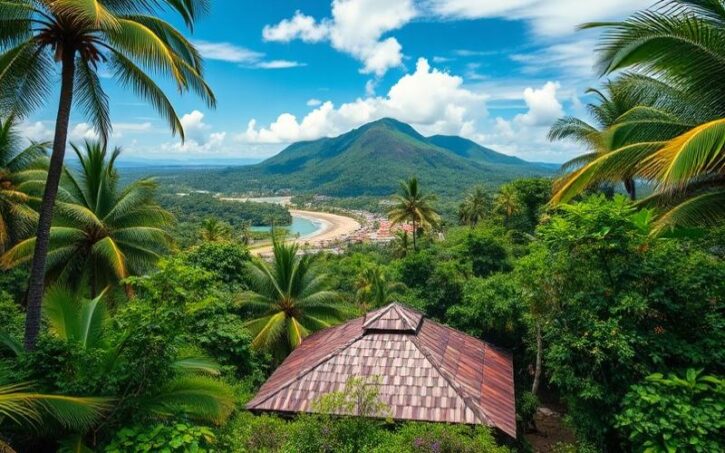
Costa Rica, globally recognized for its breathtaking landscapes and exceptional biodiversity, has become a top destination for many tourists, consequently driving significant expansion in its real estate market. The steady influx of visitors and the search for a tropical haven have led not only to increased demand for second homes but also to major economic and social repercussions for local communities. This growing interest raises questions about how the tourism boom influences the evolution of real estate prices, housing availability, and even social dynamics in this Central American country.
The Rise of Tourist Areas in Costa Rica
The rise of tourist areas in Costa Rica can be explained by a combination of several major factors:
- Exceptional Natural Environment: Costa Rica is known for its national parks, beaches, volcanoes, and tropical forests that are home to more than 5% of the world’s biodiversity.
- Remarkable Biodiversity: This biological richness attracts ecotourism enthusiasts and travelers seeking authentic nature experiences.
- Sustainable Development Initiatives: The country has made sustainable tourism a central focus, with policies aimed at preserving the environment while promoting local economic development. The regular organization of international events on sustainable tourism illustrates this commitment.
- Active Government Support: Costa Rican authorities have implemented incentive strategies (tax benefits, investments in tourist infrastructure, international promotion) to stimulate the arrival of foreign visitors.
These elements have enabled continuous growth in the number of international tourists for two decades (excluding the COVID period), positioning Costa Rica as a regional model in ecotourism.
Table – Recent Growth in the Tourism Sector
| Year | Tourist Spending (USD) | Annual Change (%) |
|---|---|---|
| 2017 | 3.76 billion | -0.48 |
| 2018 | 4.07 billion | +8.38 |
| 2019 | 4.28 billion | +5.13 |
| 2020* | 1.48 billion | -65.46 |
*The sharp drop observed in 2020 is linked to the pandemic; a sustained recovery has been underway since then.
The regions that have experienced the fastest tourist development are mainly:
- The coastal province of Guanacaste (North Pacific beaches)
- The central region around Arenal/La Fortuna (volcano and forests)
- Manuel Antonio/Puntarenas
These areas now concentrate a large portion of recent tourist infrastructure: high-end international hotels and certified sustainable ecolodges; beachfront residential complexes; new airports or extensions of existing terminals; modernized roads connecting major natural attractions.
List – Infrastructure Developed to Support the Tourist Influx
- Construction or renovation of roads to major natural sites
- Increase in hotel offerings catering to all market segments
- Creation of cultural or ecological centers highlighting local identity
- Development of regional airports facilitating direct access to popular destinations
Consequences on the Real Estate Market
The rise of international tourism exerts strong pressure on the local real estate market:
- Marked price increases in certain sought-after coastal and ecological areas
- Strong demand for second homes purchased by foreigners or expatriates
- Accelerated establishment of boutique hotels and residential resorts aimed at foreign investors
Table – Real Estate Impact in Key Regions
| Region | Average Real Estate Price Increase (%) | Dominant Property Type |
|---|---|---|
| Guanacaste | +12%/year over the last five years | Villas & resorts |
| Puntarenas | +10%/year | Second homes |
| Central Valley/Arenal | +8%/year | Ecolodges |
Socio-Economic Analysis:
List – Challenges Associated with the Tourism Boom
- Increased risk of displacement or marginalization of local residents due to rising land/housing costs
Some villages see their identity altered under the effect of this real estate pressure
- Growing pressure on local resources: limited drinking water during seasonal peaks; complex waste management in some rural municipalities
Local plans must be strengthened to ensure that growth remains compatible with environmental preservation
The major challenge therefore remains achieving a balance between international economic attractiveness and maintaining the local social fabric, along with effective preservation of natural heritage.
Good to Know:
In Costa Rica, the rise of tourist areas has been favored by an exceptional natural environment including tropical forests, pristine beaches, and impressive biodiversity, supported by sustainable development initiatives and pro-tourism government policies. This has led to a notable increase in the number of visitors, reaching approximately 3.1 million in 2022, transforming regions like Guanacaste and the central valley into attractive tourist zones. To accommodate this influx, infrastructure such as eco-hotels and residential complexes has been developed, stimulating the real estate market with rising prices and strong demand for second homes. However, this growth raises socio-economic challenges, including the potential displacement of local residents due to real estate pressure and strain on natural resources, requiring balanced management to preserve community harmony and the environment.
Rising Prices: A Side Effect of Tourism
The increase in tourist numbers in Costa Rica has profoundly transformed the real estate market, particularly in sought-after beach areas such as Tamarindo and Jacó. The heightened demand for tourist accommodations and foreign investments has resulted in a notable price increase, affecting both residential and commercial real estate.
Recent Evolution of Real Estate Prices:
| Year | Average House Price (USD/m²) | Average Apartment Price (USD/m²) | Estimated Annual Change |
| Mid-2025 | 1,929 | 2,298 | +8 to 10% (tourist areas) |
| Jan. 2024 | — | — | — |
In high-demand regions like Tamarindo or Jacó, pressure from international purchases for tourist rentals has driven up prices per square meter by 8 to 10% over one year. Beachfront properties saw an additional jump, with demand increase estimated at +15% in 2024, notably fueled by investors seeking high rental yields.
Additional data:
- Observed gross rental yields between 5.3% and up to 17% depending on location.
- The luxury market remains dynamic with high-end villas and golf complexes in demand.
- Despite a temporary national correction (-41% on the national median price in early 2025), these declines are less pronounced or absent in highly touristy coastal areas where land pressure persists.
Consequences for the Local Population:
- Residents face a drastic reduction in access to affordable housing; many are forced to leave their original neighborhoods due to soaring rents.
- Local young professionals now struggle to become homeowners near the coast or even in some central neighborhoods close to beaches.
- Urban infrastructure is under pressure: seasonal traffic congestion, stress on water/electricity networks, and partial saturation of essential public services.
Summary list of impacts:
- Rapid increase in housing costs
- Forced displacement inland for many residents
- Growing social tensions around local “exodus”
Foreign investments play a driving role in this real estate inflation: massive acquisition by non-residents who convert houses/apartments into short-term rentals (Airbnb & co.), further reducing the available stock for Costa Rican families while artificially boosting land value.
Government Measures & Local Responses:
Several initiatives are emerging to regulate this dynamic:
- Progressive regulation on short-term tourist rentals in some municipalities (specific requirements to obtain a license).
- Pilot projects aimed at reserving a portion of new housing stock for permanent residents via quotas or targeted subsidies.
- Planned improvement/extension of urban infrastructure to absorb seasonal population peaks without lasting harm to historical residents.
Despite these nascent efforts, there are few truly binding national policies that can quickly reverse this inflationary trend; most measures remain local or experimental.
Persistent increase, heightened social pressures, and regulatory challenges thus outline the current landscape of the Costa Rican real estate market under international tourism influence.
Good to Know:
The tourism boom in Costa Rica, especially in sought-after areas like Tamarindo and Jacó, has significantly increased demand in the real estate market, leading to a notable rise in prices. According to recent data, residential and commercial real estate prices have climbed by nearly 30% in these regions over the past five years, making housing access increasingly difficult for local residents. This trend is largely fueled by foreign investments in properties intended for tourist rentals, exacerbating strains on urban infrastructure and further reducing the availability of affordable housing for the local population. Facing this challenge, some government initiatives have been introduced, such as housing subsidies for residents and higher taxes on foreign real estate purchases, aiming to better regulate this phenomenon and protect local interests.
Rental Investment: A Growing Opportunity
The tourism boom in Costa Rica has profoundly stimulated rental investment, making the country a prime destination for real estate investors, particularly in coastal areas and major tourist cities.
Main Drivers of Increased Rental Investments:
- The steady growth of tourism, driven by Costa Rica’s ecological reputation and political stability, attracts more and more foreign investors seeking seasonal rentals or second homes.
- In 2024, foreign investment in Costa Rican real estate jumped by over 18%, with even stronger expansion prospects for 2025.
- Expatriates, retirees, and remote workers contribute to the rising demand, especially for beachfront properties and environmentally friendly housing.
Most Attractive Regions for Rental Investment:
| Region / City | Major Assets | Sought-After Property Types |
|---|---|---|
| Guanacaste (Tamarindo, Nosara, Playas del Coco) | Renowned beaches, constant tourist flow, surf and wellness vibe | Villas, condos, ecovillas |
| Puntarenas (Jacó, Santa Teresa) | Proximity to San José, nightlife, surf, digital nomads | Apartments, vacation homes |
| Limón (Puerto Viejo) | Wild nature, Caribbean ambiance, eco-responsible tourism | Lodges, eco-projects |
| Central Valley (San José, Escazú) | Urban centers, expatriates, access to services | Apartments, penthouses |
Impact on Prices and Property Availability:
- Real estate prices saw an average increase of 10 to 15% in the most sought-after coastal areas between 2023 and 2025.
- Increased demand reduces the supply of available properties for rent, especially during the high tourist season, favoring high profitability for investors.
- Construction projects for eco-friendly housing (ecovillas) are multiplying to meet the dual requirement of sustainability and profitability.
Recent Data on Supply and Demand:
- Properties intended for rental (villas, condos, eco-lodges) represent a growing share of the market, with supply increasing by over 12% in 2024, but demand still outstripping it in key tourist areas.
- Occupancy rates for seasonal rentals frequently exceed 80% in coastal regions during the dry season.
- Average purchase prices for a beachfront condo reach 3000-4000 USD/m² in the most sought-after locations.
Examples of Successful Real Estate Projects:
- Nosara Eco-Residences: development of eco-responsible villas with an annual occupancy rate exceeding 85%.
- Las Catalinas in Guanacaste: planned beach village combining high-end accommodations and green spaces, highly sought after by North American investors.
- Santa Teresa Green Condos: apartment project combining modern design and ecological certifications, over 90% sold during pre-sales.
Return on Investment Opportunities and Government Incentives:
- Gross rental yields in tourist areas can reach 8 to 12% per year, depending on location and property standard.
- The Costa Rican government encourages foreign investment through tax incentives for ecological projects and simplified acquisition procedures for non-residents.
- Green certification programs and tax reductions exist for sustainable constructions, enhancing the attractiveness of eco-responsible investment.
Rental investment in Costa Rica thus establishes itself as a growing opportunity, driven by tourism dynamism, international demand, and a regulatory framework favorable to both profitability and sustainability.
Good to Know:
The sustained growth of tourism in Costa Rica has significantly stimulated rental investment, particularly in coastal regions like Guanacaste and the Nicoya Peninsula, as well as in key tourist cities like Tamarindo and Santa Teresa. This trend has not only contributed to a notable increase in real estate prices but also to stronger demand for rental properties, pushing investors to show greater interest in real estate projects in these areas. For example, residential complexes such as “Las Catalinas” have seen their value increase in correlation with the influx of visitors. For foreign investors, Costa Rica offers opportunities for high returns, supported by tax incentives such as property tax deductions and relief for eco-friendly constructions, making rental investments even more attractive.
Disclaimer: The information provided on this website is for informational purposes only and does not constitute financial, legal, or professional advice. We encourage you to consult qualified experts before making any investment, real estate, or expatriation decisions. Although we strive to maintain up-to-date and accurate information, we do not guarantee the completeness, accuracy, or timeliness of the proposed content. As investment and expatriation involve risks, we disclaim any liability for potential losses or damages arising from the use of this site. Your use of this site confirms your acceptance of these terms and your understanding of the associated risks.

Cyril Jarnias is an independent expert in international wealth management with over 20 years of experience. As an expatriate himself, he is dedicated to helping individuals and business leaders build, protect, and pass on their wealth with complete peace of mind.
On his website, cyriljarnias.com, he shares his expertise on international real estate, offshore company formation, and expatriation.
Thanks to his expertise, he offers sound advice to optimize his clients' wealth management. Cyril Jarnias is also recognized for his appearances in many prestigious media outlets such as BFM Business, les Français de l’étranger, Le Figaro, Les Echos, and Mieux vivre votre argent, where he shares his knowledge and know-how in wealth management.





