
 Published on and written by Cyril Jarnias
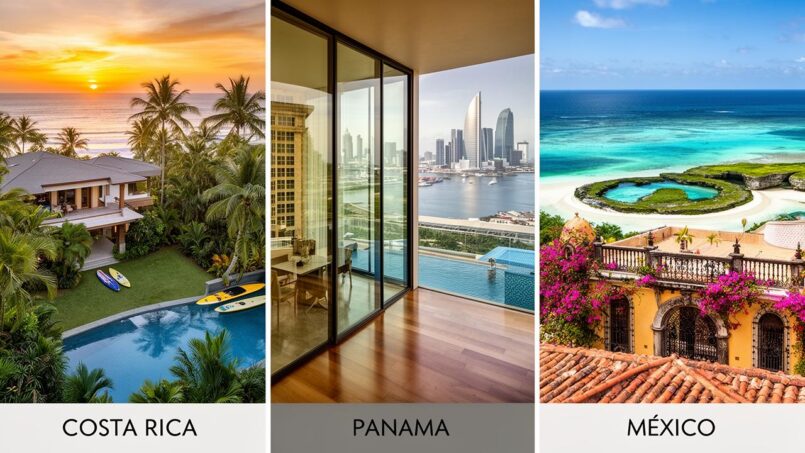
As investors look to secure both their capital and quality of life, three destinations consistently come up in discussions: Costa Rica vs. Panama vs. Mexico – where to invest in real estate in 2026? Each plays a different tune when it comes to rental yield, stability, taxation, tourism, and lifestyle. For a French-speaking buyer looking ahead to 2026–2030, the choice is no longer just about a dream beach, but about numbers, regulations, and long-term trends.
This article analyzes for each country the yields, price per square meter, market trends, taxation, property rights, and residency programs to help you choose the market best suited to your investor profile.
Three markets, three real estate DNA profiles
Each country positions itself differently along three major axes: yield, potential growth, and risk level. The comparative data available for 2026 already allows us to sketch out a ranking.
Here is a data-driven summary of the basic characteristics of the three markets:
| Country | Average gross yield | Estimated annual growth | Overall risk | Political stability | Main currency | Market verdict |
|---|---|---|---|---|---|---|
| Panama | 6–9% (8–12% on certain segments) | 4–6% | Very low | Very high | USD (dollar) | Best (5★) |
| Mexico | 5–7% (6–9% in tourist corridors) | 4–6% | Medium | Acceptable | Peso (volatile) | Good (3★) |
| Costa Rica | 5–6% (7.8% national average gross) | 3–5% | Very low | Very high | Colón + USD widely used | Good (3★) |
Behind this simplified grid, the reality is more nuanced. Panama dominates on the yield + stability combination and benefits from the dollar; Mexico plays the volume tourism card and deep short-term rental markets, while Costa Rica positions itself on legal security, high-end lifestyle, and gradual property appreciation.
Panama: The dollar cash-flow machine
Panama is often described by analysts as the current best compromise between yield, macroeconomic stability, and capital protection. In 2026, Panama City is entering one of its most dynamic phases in the last decade after nearly fifteen years of stagnant prices.
Yields, prices, and market dynamics
The numbers speak for themselves. Gross rental yields nationwide hover around 7%, with higher peaks in certain urban segments.
| Indicator | 2025–2026 value (Panama average) |
|---|---|
| Average gross yield (all properties) | ~7.0% (6.94–7.07% depending on source) |
| Gross yield city center | 7.1–8.7% depending on dataset |
| Gross yield outside center | Up to 9.6% |
| Typical long-term net yield | 4–5%, up to 6% on efficient small lots |
| Average price per m² (Panama City) | ~$1,850 |
| Price per m² premium areas (Punta Pacífica, Costa del Este) | $2,700–$3,500 |
Well-located studios sometimes exceed 9% gross, especially when rented short-term with robust occupancy rates. Conversely, luxury high-rise towers in the city center tend to sit around 5% gross, with the prestige premium eating into part of the yield.
Prices, meanwhile, remain below major regional capitals: premium areas of Panama City cost roughly 50 to 60% less than comparable neighborhoods in Miami, and 30 to 40% below high-end sectors of Mexico City, for similar construction and amenity standards.
Appreciation prospects are considered solid but reasonable: the expected increase for 2026 is between 4 and 6%, continuing a trend of 3–5% per year in premium areas already observed. Far from a speculative boom, the market advances at the pace of its fundamentals: canal, services, logistics, infrastructure, and foreign capital inflows.
A dollarized economy, near-zero currency risk
On the monetary front, Panama plays in a league of its own in Latin America. The country has been dollarized since 1904: the balboa is pegged 1:1 to the dollar, and in practice, 100% of circulating banknotes are US dollars. This almost completely eliminates exchange rate risk for an investor thinking in USD or related currencies.
Panama’s dollarization leads to low and stable inflation. It has a direct impact on real estate credit: when the US Federal Reserve cuts rates, local loan costs automatically decrease. Authorities expect improved credit accessibility in 2026, which should boost domestic demand and resales.
Real estate taxation: One of the most attractive systems in the region
Panama’s other massive advantage for the investor is its tax framework, designed to attract capital without fiscal aggression.
For rental income, the regime is territorial: only rents generated within the country are taxable. Real estate income is taxed at 15% of gross, with the option to apply a standard 15% deduction for expenses without receipts. Capital gains on real estate or financial assets are also taxed at 15%.
On the property tax side, the “Impuesto de Inmueble” system is based on progressive brackets, but with very favorable rates and exemptions, especially for primary residences.
| Property type | Value bracket | Annual property tax rate |
|---|---|---|
| Primary residence (Vivienda Principal / Patrimonio Familiar Tributario) | $0 – $120,000 | 0% (total exemption) |
| $120,001 – $700,000 | 0.5% | |
| > $700,000 | 0.7% | |
| Other property (rental, secondary) | $0 – $30,000 | 0% |
| $30,001 – $250,000 | 0.6% | |
| $250,001 – $500,000 | 0.8% | |
| > $500,000 | 1.0% |
Two additional elements reinforce the system’s appeal. First, the tax base is fixed at the cadastral value declared upon registration in the public registry: the tax does not automatically rise with market appreciation. Second, many new developments benefit from 3-to-20-year property tax exemptions from the date of the occupancy permit, under earlier incentive laws.
The combination of real estate transfer costs in Panama is 2%, well below the 5–10% range seen in Mexico.
Property rights and political climate
Legally, the country is a model student. Foreigners have the same property rights as citizens for titled land, with only a few exceptions in border areas or certain archipelagos. There is no trust-type structure interposed between the owner and the property: you hold the title directly, in your own name or through a Panamanian company.
A specific law (Law 54 on legal stability of investments) guarantees that the regulatory framework and tax benefits granted to an investor will remain unchanged for ten years from the investment, reducing the risk of sudden rule changes. Over more than a century, the country has enjoyed remarkable pro-business political continuity.
Finally, Panama was recently removed from the FATF gray list, strengthening confidence among financial institutions and major international players.
Tourism, rental demand, and micro-markets
Unlike many neighbors, Panama has historically never depended on tourism as a main pillar of its GDP. The canal, financial services, logistics, and regional headquarters of multinationals drive most of the growth. Yet tourism is advancing briskly: in the first quarter of 2026, the country welcomed nearly one million international visitors, a year-over-year increase of more than 17%, generating over $2 billion in activity.
The most active sectors include downtown Panama City due to business tourism, beachfront areas near the capital, and hubs like Playa Bonita, Pedasí, or Playa Venao. The long-term rental market is fueled by a rising number of multinational executives, North American retirees, and digital nomads attracted by the territorial tax regime.
In the capital, the most liquid neighborhoods for an investor are Costa del Este, San Francisco, El Cangrejo, and the banking corridor around Calle 50. Areas like Betania, El Dorado, Vía Argentina, or Bella Vista offer a particularly interesting mix of still-reasonable entry prices and above-average yields, often between 8 and 9% gross on well-optimized small units.
Residency by investment: Windows of opportunity
Panama has positioned itself as one of the world’s most aggressive countries in attracting residency applicants.
Two main schemes dominate:
– The Friendly Nations program, which allows citizens from about fifty countries (including most of Western Europe, Canada, and the United States) to obtain expedited residency via notably a real estate purchase of at least $200,000;
– The Qualified Investor visa (often called Golden Visa), which offers immediate permanent residency in exchange for an investment of at least $300,000 in real estate, $500,000 in securities listed on the local stock exchange, or $750,000 in a bank time deposit.
Key point: the $300,000 threshold for the real estate route is temporary and is set to rise to $500,000 after October 2026 if no extension is voted. For an investor considering combining a dollar rental investment with a Plan B residence, the 2024–2026 window is therefore strategic.
What type of investor is Panama best suited for?
The typical profile that should prioritize Panama is the cash flow– and capital preservation-oriented investor, sensitive to currency risk, who may also want fast residency in a politically stable country. The trade-off is a very urban market, where exits can sometimes be slow on certain oversaturated condo segments, and where micro-markets must be chosen carefully to avoid illiquid products.
Mexico: Tourist depth and capital appreciation potential
Mexico stands out first and foremost for the size and depth of its real estate market. Around 40,000 acquisitions by foreigners occur every year, especially in major beach resorts and certain colonial cities or regional capitals.
A “stable but mature” market
Observers describe the Mexican market as “stable but mature”. GDP growth hovers around 1.8% recently, with inflation around 3.6% and unemployment at 2.9%. Real estate is emerging from a post-pandemic speculative frenzy and entering a growth phase more driven by the real economy and infrastructure.
National prices rose 8.2% in the first quarter of 2026 according to the Federal Mortgage Society, and projections for the full year are around 8–9%, continuing the 7–9% increase anticipated for 2025. Over five years, the market is expected to reach a valuation of about $175 billion.
The breakdown by segment shows contrasting dynamics: entry-level properties experience the strongest pressure with 7–10% annual increase, mid-market moves at 6–8%, while luxury slows to around 3–5% after several years of heavy stock creation in tourist areas.
Yields: strong short-term depth
On the rental front, Mexico does not offer the highest gross yields in the region, but it has the deepest and most structured short-term rental market, especially along the Riviera Maya – Cancún – Playa del Carmen – Tulum corridor, and in Los Cabos or Puerto Vallarta.
| Zone / City | Average m² price (MXN) | Gross rental yield | Annual growth | Typical buyer profile |
|---|---|---|---|---|
| Riviera Maya | 5,160 | 6.2% | +17% | International ultra-wealthy |
| Los Cabos | 4,128 | 7.5% | +16% | HNWI lifestyle |
| Puerto Vallarta | 3,440 | 8.5% | +7% | Investors, expats |
| Mexico City (Polanco) | 2,752 | 7.1% | +4% | Growth investors |
Nationwide, gross yields are around 5–7%, with 6–9% in the most touristy areas like Riviera Maya or Los Cabos, especially when operating condos as short-term rentals via Airbnb or similar platforms. In Playa del Carmen, net yields in the best-positioned areas like Coco Beach or northern Quinta Avenida can range between 8 and 12%, evidence of the demand depth.
In Tulum, values have increased by 8 to 15% per year in recent years, sometimes outperforming Cancún or Playa del Carmen. In neighborhoods like Aldea Zama or Selva Zama, strategies combining capital appreciation and seasonal rentals have generated total annual returns of 21 to 31%.
Prices, geography, and infrastructure effects
At the national level, the average price per square meter is about $1,625, with wide disparities. The southeastern regions, notably Quintana Roo and Yucatán, show the strongest value increases: +12.2% for Quintana Roo and +10.1% for Yucatán in the first quarter of 2026. Within these states, municipalities like Cancún (Benito Juárez +12.8%), Playa del Carmen (Solidaridad +11.1%), or Mérida (+10.2%) stand out.
This dynamic is fueled by several major infrastructure projects: the Maya Train, modernization and opening of airports such as Tulum or Mérida, new road corridors, and urban developments. The country also benefits from a relocation of industry (“nearshoring”) toward hubs like Monterrey or Querétaro, creating skilled jobs, new solvent households, and increased demand for primary residences – with a spillover effect on the high-end vacation home market.
Risks and maturity: A market to select carefully
The weight of tourism is a double-edged sword. It provides a nearly inexhaustible pool of short-term renters, but exposes to seasonality, climate risks (hurricanes on the coasts), and regulatory changes on Airbnb-type rentals. Some micro-markets already show signs of slowing after years of double-digit growth, such as Tulum (from +15% to roughly +4–7%) or Los Cabos (from +12% to +3–6%).
National data for 2026 indicate inventory up about 15% compared to 2025, average selling times of 120 to 180 days (versus 90–150 previously), and frequent negotiations of 5 to 12% below asking price. In other words, the country overall leans toward a neutral to slightly buyer-friendly market, except in certain coastal hotspots that remain seller-dominated.
The other major risk is monetary. The peso remains a volatile currency, typically trading in a 17–20 peso range per dollar, with sensitive movements depending on interest rate differentials and the political climate. Part of your investment’s value in hard currency therefore depends on this factor. Unlike Panama, which almost eliminates this risk, a purchase in Mexico in pesos requires thinking both in terms of local yield and exchange rate trajectory.
Legal framework: The fideicomiso and the “restricted zone”
A key element for a foreigner is the famous “restricted zone”: any strip of 50 km along the coasts and 100 km along the borders. In these areas, which cover virtually all beach resorts (Riviera Maya, Los Cabos, Puerto Vallarta, etc.), a non-Mexican cannot directly hold a residential title in the strict sense. They must use a fideicomiso, a bank trust with a term of 50 years, renewable.
In this scheme, the bank holds the title while the foreigner is the beneficiary with rights to use, rent, sell, and inherit, but every transaction goes through the trustee, incurring opening fees, annual management fees, and paperwork. Outside the restricted zone, the foreigner can hold the property in full ownership directly in their name.
Transactions are strictly regulated: mandatory notary public, registration, a specific visa to acquire in the restricted zone, a declaration to the Ministry of Foreign Affairs, and a contractual commitment to consider oneself as Mexican for that property and to renounce diplomatic intervention from one’s home country, under penalty of confiscation.
This system is perfectly functional and well-practiced – tens of thousands of foreign transactions occur each year – but it requires accepting an additional layer of complexity compared to Panama or Costa Rica, where direct full ownership is the near-universal norm.
What type of investor does Mexico make sense for?
Mexico is particularly well-suited for investors looking to maximize capital appreciation potential and seasonal income in easily accessible global destinations, while accepting a higher currency risk and a slightly more complex legal framework in coastal areas. Typical profiles are North American retirees, teleworkers seeking a sun base, and investors familiar with emerging markets.
Costa Rica: Legal security, nature, and gradual appreciation
Costa Rica attracts with an entirely different pitch: a strong green country image, exemplary political and legal stability, and a quality of life that appeals to high-income individuals seeking a second home base. In real estate terms, it is a market with medium to good yields, but above all, capital appreciation over the long term in the best locations.
Yields, prices, and market structure
On the rental front, the figures are surprisingly competitive. Various sources for 2025–2026 converge on a national average gross yield around 7.8%, with levels close to 8–8.2% both in city centers and outside. One study even details urban gross yields above 8.1% for certain neighborhoods in San José, Heredia, or Santa Ana.
| Indicator | 2025–2026 value (Costa Rica) |
|---|---|
| National average gross yield | ~7.8% (7.2–7.84% depending on dataset) |
| Average net yield (all segments) | ~4% |
| National average m² price (apartments) | ~$2,040 |
| M² price Guanacaste beachfront | Up to $3,000 |
| Price growth 2023–2025 | ~20% cumulative |
| Annual increase 2025–early 2026 | ~7% in dollars |
Pockets offer even higher yields: Heredia records around 8.4% gross, some areas of the south coast (Uvita, Dominical, Osa) generate 8–12% net on short-term rentals like Airbnb, driven by rapid gentrification and a positioning on sustainable luxury. Conversely, ultra-prestigious villages like Nosara/Guiones see yields compress to around 5.9% on 3-bedroom villas, as prices have climbed so much.
The market remains highly segmented. Properties sell slowly: on average 360 to 420 days from listing to signing, with about 80–85% of transactions closed below the asking price and typical discounts of 5–12%. New projects account for roughly 20–30% of listings, more in the Greater Metropolitan Area (San José and its periphery) than in already dense beach resorts.
Macro environment and price trajectory
On the macroeconomic front, Costa Rica operates in a fairly healthy framework: GDP growth around 4%, controlled inflation, reference interest rate near 3.5%. Between 2023 and 2025, real estate prices rose by about 20% nationally, with an additional 10–15% in the most sought-after coastal areas.
For 2026, projections indicate an average price increase of around 4–7% nationwide, with 5–8% in premium coastal hubs and up to 9–14% in certain particularly tight sub-markets, subject to favorable conditions (low rates, sustained tourism, foreign buyer confidence).
Signals of national overheating are considered limited, even if some segments – notably a few surf towns or the very high end of the capital – seem disconnected from local incomes. The strongest corrections have already occurred: in several overbuilt coastal stretches, prices dropped 15 to 30% from their 2023 peaks, allowing a rebalancing. Analysts believe 2026 represents a strategic entry point, after this “recalibration” and with a new wave of demand approaching.
The analysts
Tourism, land pressure, and gentrification effects
Costa Rica is undergoing a profound transformation of its real estate fabric under the effect of international tourism and the arrival of “slow-mads” – nomads who stay 30 days or more, seeking a functional home with resort services. Air tourism figures show the country has recovered and exceeded its pre-pandemic levels, with more than 2.37 million arrivals by air between January and November 2025 and continued growth in 2026.
This dynamic is particularly visible in Pacific beach resorts like Tamarindo, Jacó, Nosara, Santa Teresa, or the Costa Ballena. In some of these markets, residential and commercial prices have risen nearly 30% in five years, with annual increases of 8–10% in price per square meter in the most sought-after areas. On the waterfront, demand increased by about 15% in 2024, driven by investors seeking strong seasonal rental yields.
This boom has a downside: rising rents for locals, displacement of residents to peripheral areas, pressure on public services (energy, waste management, water), and transformation of the social fabric of some villages. The country, known for its eco-tourism image, has nevertheless seen the emergence of large “all-inclusive” resorts, with accompanying heavy infrastructure (roads, airports, hydroelectric dams), not always designed in close consultation with local communities.
Infrastructure: Metropolitan train, airports, and roads
A major driver of land value appreciation for the coming years lies in infrastructure projects.
Around San José, the biggest catalyst is the electric passenger train (RPT) of the Greater Metropolitan Area: a project of about 32 miles, financed with $800 million and approved by the Legislative Assembly in 2026. Twenty-six stations are planned along the Alajuela and Cartago axes. Land within roughly 1 km of future stations is already experiencing significant speculation, with pre-sales and anticipated annual increases of about 15%.
Real estate values near improved sections of Route 32 in Costa Rica increased by 10 to 12% thanks to the modernization of this road connecting San José to Limón.
In the northwest, the province of Guanacaste benefits from two combined forces: the constant expansion of Liberia International Airport (LIR), which welcomed nearly 1.9 million passengers in 2024, and massive investments in water (the PAACUME project at $425 million to secure supply for over 700,000 residents) as well as roads and bridges. Properties near delivered infrastructure sell with premiums of 10–20%, and prices have already risen by 4–7% between early 2025 and early 2026, with forecasts of +5–8% more for 2026.
Legal framework: Broad full ownership, but tightly regulated maritime zones
The great comfort of Costa Rica for a foreign investor lies in the simplicity of titled property (“fee simple”): a tourist with a simple 90-day stamp can legally acquire a titled property and hold it in their name or through a local company (S.A. or S.R.L.). Rights are identical to those of nationals: sell, rent, mortgage, bequeath, with access to courts for any dispute. The country maintains no list of “banned” or privileged nationalities.
The major exception lies in the “maritime zone”: a 200-meter strip from the high tide line on both coasts. The first 50 meters are inalienable – public domain. The next 150 meters can only be subject to concessions granted by the state, not full ownership titles. These concessions are heavily regulated for foreigners: impossibility for a non-resident to directly hold more than 49% of a concession-holding company, requirement for more than 50% Costa Rican capital for companies holding these concessions, and a requirement of five years of residence before being eligible as an individual concessionaire.
In other words, no full ownership title exists within 200 meters of the shore. For those who absolutely want titled beachfront, this may be a frustration; for those who prioritize legal security and control of speculation, it is a guarantee.
Taxation and residency by investment: A window until 2026
Costa Rica also operates on a territorial taxation regime: only locally generated income is subject to income tax. Net rents are taxed at 15% after deducting eligible expenses. Annual property tax is modest: 0.25% of the declared value of the property. There is no wealth tax, nor inheritance or gift taxes of general scope.
Real estate capital gains are not taxed for individuals as long as they carry out a maximum of three sales per year. Beyond that threshold, the activity is considered professional and becomes taxable.
The major novelty is Law 9996, adopted in 2021 and fully in effect since 2023, aimed at attracting investors, rentiers, and retirees. It lowered the investment threshold for the “Inversionista” status from $200,000 to $150,000 (in real estate, business, or qualified assets), for a period of five years that is set to end in July 2026 unless extended by legislation.
This law includes a series of benefits:
– One-time exemption from duties and import taxes on household goods and personal effects (furniture, appliances, décor);
– Exemption for importing two vehicles (land, sea, air) for personal or family use, whereas import duties on cars can exceed 50% of the value;
– Possibility to import tax-free certain professional or scientific equipment, provided proof of its link to the activity;
– 20% reduction in transfer taxes on the property acquired during a 10-year window;
– Favorable tax environment for income earned abroad (pensions, remote salaries).
In practice, for a couple moving with two cars from North America or Europe, the exemption on vehicles alone can represent savings of $20,000 to $50,000. The Inversionista status grants a renewable temporary residence, convertible to permanent residency after three years.
Who is Costa Rica the best choice for?
Costa Rica suits investors looking above all for a combination of legal security, gradual asset appreciation in rare locations (sea views, surf and wellness villages, central neighborhoods of San José), and exceptional quality of life. The country is clearly positioned for nature lovers, families seeking a Plan B life, and “patient capital” investors who accept long selling times and sometimes more modest yields on ultra-prestigious segments, in exchange for appreciation prospects over 5–10 years.
Comparing Costa Rica vs. Panama vs. Mexico: A framework for 2026
To choose between Costa Rica vs. Panama vs. Mexico – where to invest in real estate in 2026 – you need to align your risk profile, holding horizon, and ancillary objectives (residency, taxation, lifestyle). Comparative data on yields, growth, stability, and accessibility help structure this thinking.
| Key criterion | Panama | Mexico | Costa Rica |
|---|---|---|---|
| Currency | USD (near-zero currency risk) | Volatile peso | Floating colón + massive USD use |
| Average gross yield | 6–9% (up to 12% on some) | 5–7% (6–9% tourist areas) | 5–6% (7.8% average gross, pockets 8–12%) |
| Price growth | 4–6% expected | 8–9% expected in 2026 (national) | 4–7% national, more in coastal hubs |
| Political stability | Very high | Acceptable | Very high |
| Property rights | Full ownership for foreigners | Fideicomiso in coastal/restricted zone | Full ownership outside maritime zone |
| Residency by investment | From $200–300k (Friendly Nations / Golden Visa) | Options, but more complex framework | From $150k (Inversionista, Law 9996) |
| Property taxation | Very favorable, many exemptions and deductions | Variable, generally heavier | 0.25% of cadastral value |
| STR market depth | Growing but moderate | Deepest (Cancún, Playa, Tulum, Cabo) | Strong on certain coastal corridors |
| Transaction costs | Lower than Mexico | 5–10% closing costs | 1.5% transfer tax + miscellaneous fees |
Three positionings emerge:
Analysis of investment profiles in Panama, Mexico, and Costa Rica: yield, taxation, and legal security
Investment in dollars, highly optimized taxation, and strong legal security, ideal for high rental yield.
Powerful but volatile beachfront real estate, reserved for investors who master local risks.
Legal security, gradual appreciation, and decent yields, especially in areas with booming infrastructure.
How to arbitrate in practice between these three markets?
The final decision will depend on several questions to honestly ask yourself.
If the absolute priority is protection against currency risk and the search for predictable rental income with clear tax rules, Panama takes the lead. The combination of dollarization + territorial regime + capped property tax with generous exemptions makes it a highly efficient base for building a dollar portfolio, especially if you exploit urban micro-markets with high rental tension.
To optimize capital appreciation and seasonal income, Mexico is a solid choice thanks to its mature Airbnb ecosystem and massive tourist base. Key destinations are Riviera Maya, Los Cabos, Puerto Vallarta, or Mérida. Caution: you need to choose the location well, avoid saturated areas like certain parts of Tulum, and monitor local regulations on short-term rentals.
If you are looking above all for an exceptional living environment, top-tier political stability, maximum legal security, and continuous upscaling of certain niche markets (surf, wellness, eco-tourism, slow-mad), Costa Rica stands out. It’s a market where you invest as much for a life project as for a return, with the added bonus of a particularly favorable tax and migration window until 2026 thanks to Law 9996.
To succeed in the region, work neighborhood by neighborhood, meticulously verify land titles (especially counterparts of ejidos or communal lands), factor in infrastructure, and avoid overpaying for marketing products. The region offers excellent yield/stability ratios, but only investors with precise numbers and a five-to-ten-year vision will fully benefit.
A wealth project or a question? Contact us now to speak with a wealth management expert.
Disclaimer: The information provided on this website is for informational purposes only and does not constitute financial, legal, or professional advice. We encourage you to consult qualified experts before making any investment, real estate, or expatriation decisions. Although we strive to maintain up-to-date and accurate information, we do not guarantee the completeness, accuracy, or timeliness of the proposed content. As investment and expatriation involve risks, we disclaim any liability for potential losses or damages arising from the use of this site. Your use of this site confirms your acceptance of these terms and your understanding of the associated risks.

Cyril Jarnias is an independent expert in international wealth management with over 20 years of experience. As an expatriate himself, he is dedicated to helping individuals and business leaders build, protect, and pass on their wealth with complete peace of mind.
On his website, cyriljarnias.com, he shares his expertise on international real estate, offshore company formation, and expatriation.
Thanks to his expertise, he offers sound advice to optimize his clients' wealth management. Cyril Jarnias is also recognized for his appearances in many prestigious media outlets such as BFM Business, les Français de l’étranger, Le Figaro, Les Echos, and Mieux vivre votre argent, where he shares his knowledge and know-how in wealth management.





