
 Published on and written by Cyril Jarnias
Moving to Cuba means entering a country where people talk about food almost as much as music, baseball, or politics. In a difficult economic context, the dining table remains a space of generosity, resourcefulness, and cultural pride. For an expatriate, understanding what’s really on Cubans’ plates—and how they get that food—is essential for fitting in, eating well, and avoiding a few pitfalls.
This guide explores contemporary Cuban cuisine, covering its history, ingredients, and rituals. It also addresses the rationing system and provides the best references for discovering it: paladares (private restaurants), markets, and casas particulares (guesthouses). Finally, it covers the blind spots of this gastronomy, from coffee to cocktails and street food.
Understanding the context: Eating in Cuba today
Before talking about iconic dishes, we must first set the scene. Cuba is the largest island in the Caribbean, with about 9.8 million inhabitants, and is experiencing a prolonged recession marked by high inflation, a shortage of foreign currency, chronic shortages of fuel and many food products.
Over 80% of the food consumed in the country is imported and, according to various studies, Cuba has lost more than two-thirds of its national food production. The agricultural sector lacks machinery, fertilizer, seeds, fuel, and above all autonomy: a state-owned company, Acopio, monopolizes the purchase and resale of agricultural products, limiting producers’ initiative.
For an expatriate, the result translates concretely into a highly contrasted food supply. On one hand, private restaurants and a few well-stocked stores for those with foreign currency. On the other, a majority of families for whom the primary daily concern remains simply “what are we going to eat today?”
Observer of the expatriate situation
The World Food Programme (WFP) supports over a million people, particularly the most vulnerable, and most Cubans still rely on a rationing system inherited from the 1960s. In this context, local gastronomy is not a folkloric backdrop: it tells the story of economic difficulties, but also of the inventiveness and resilience of Cuban society.
The origins of Cuban cuisine: A great culinary melting pot
Cuban cuisine is a pure product of blending. It was built over several centuries, based on three main pillars – Taíno, Spanish, and African – with added Chinese, French, Italian, and Caribbean touches.
The Taíno people, before Christopher Columbus arrived in 1492, cultivated cassava (yuca), corn, and sweet potatoes, and were already grilling meats on a wooden device that gave rise to the word “barbacoa.” Their cooking techniques remain simple – boiling, roasting – but they are responsible for basics like casabe (cassava flatbread) and the idea of a large stew of roots and corn that would later inspire ajiaco.
Spanish settlers introduced ingredients like rice, pork, citrus, onions, garlic, olive oil, paprika, bay leaf, and cumin, as well as cooking techniques (braising, stewing). They popularized the combination of rice and beans, and symbolic dishes like ‘Moros y Cristianos,’ where the mix of white rice and black beans evokes the Reconquista.
The slave trade brought millions of Africans who introduced plantains, yams, okra, malanga, Guinea fowl, frying, long cooking, strong marinades, and a way of generously seasoning dishes. Even today, about a third of the population claims African ancestry, and many iconic dishes – tostones, fufú de plátano, hearty stews – bear this imprint.
In the 19th century, the arrival of Chinese workers introduced wok stir-frying, intensive use of rice and soy sauce, and the ‘caja china’ technique for roasting pork. At the same time, French settlers fleeing Haiti brought pastry techniques, certain stews, and contributed to the development of coffee cultivation, especially in the Sierra Maestra.
Later, Italy left its mark in some pasta preparations and notably in the Tampa version of the Cuban sandwich, enriched with Genoa salami. North American influences would be felt much later in the use of some industrial products and forms of street food like the “frita,” the Cuban-style burger.
The result is not a spicy cuisine in the “hot” sense of the word – Cubans are rather hostile to “picante” – but a powerfully flavored cuisine, focused on garlic, onion, bell pepper, cumin, oregano, bay leaf, and citrus.
The basics of the Cuban pantry
For an expatriate, knowing how to recognize basic ingredients allows for better reading menus, cooking at home, and decoding what happens in the markets.
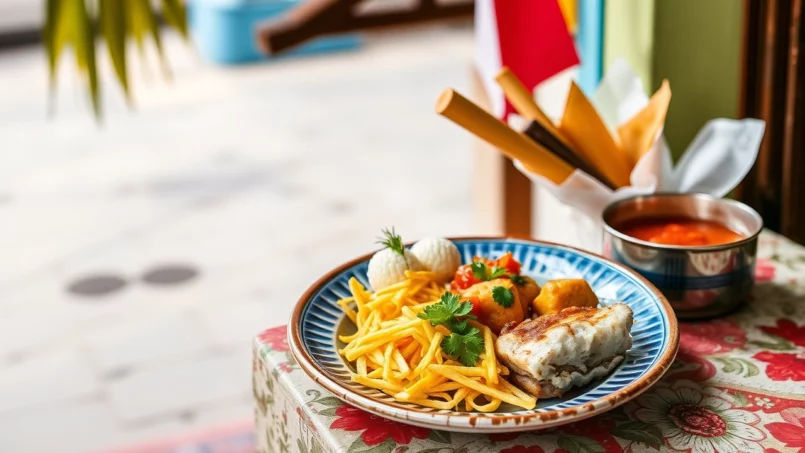
The heart of the plate is the combination of rice + beans + viandas (tubers and plantains), complemented by a bit of meat or eggs and a simple salad.
You almost always find white rice, cooked separately, or mixed with beans in dishes like Moros y Cristianos or congrí. Regarding legumes, black beans dominate, but you also find red beans, chickpeas, lentils, or black-eyed peas, depending on the season and shipments.
Viandas (yuca, malanga, sweet potato, yam, plantain) constitute the energetic base of dishes. They are generally consumed boiled or fried. Green plantain is used for tostones (twice-fried and salted rounds), while ripe plantain yields plátano maduro frito, a sweet and caramelized side.
Pork is the king of meats, far ahead of beef, which is rare and expensive, and often reserved for the tourist circuit. Chicken and eggs complete the protein supply, with a major role for imported chicken: imports of chicken from the United States alone exceeded $300 million in 2024 and today represent the main source of protein for the population.
Number of types of fresh vegetables still available in Cuba through agricultural markets, albeit seasonally and unevenly.
Tropical fruits abound in theory (mangoes, pineapples, papayas – called “fruta bomba,” guavas, bananas, avocados, citrus, mamey, coconut), but here again, their availability is very seasonal and depends on logistics. For example, mango is found mainly from May to August, avocado more between August and September.
To accompany all this, the Cuban aromatic trinity – garlic, onion, green bell pepper – forms the famous sofrito, base of many saucy dishes. They add cumin, oregano, bay leaf, cilantro or parsley, and especially citrus, particularly sour orange and lime, which are part of the mojo, the great national sauce/marinade made of garlic, citrus, oil, and salt.
The rationing system: What Cubans really have in their cupboards
To understand why certain ingredients are omnipresent and others almost impossible to find, we must say a word about the libreta de abastecimiento, the rationing booklet in effect since 1962.
Each household has a booklet indicating family members and their rights to certain subsidized products: rice, white and raw sugar, dried beans, oil, eggs, bread, pasta, coffee (often mixed with peas or soybeans), salt, sometimes a few hygiene products. Quantities vary but remain very modest: historically around 5 to 6 pounds of rice per month per person, 1 to 1.5 pounds of beans, a few eggs, a little oil, a small daily bread. Meat sometimes comes in rotation, in the form of chicken or ground meat, but here too quantities are limited.
State-subsidized products are sold at a symbolic price, but monthly allocations cover only 10 to 15 days of needs. For the rest of the month, the population must resort to other means: agricultural markets, budget-friendly paladares (private restaurants), street food, direct purchases from small producers, family support, or remittances from abroad.
For an expatriate, this system has two major consequences. First, awareness that the relative abundance observed in some private restaurants does not reflect the reality of Cuban refrigerators. Second, the need to adapt to a highly fluctuating supply, even when paying in foreign currency: menus change based on shipments, an announced dish may be unavailable, some products (milk, butter, yogurt, cheese, flour) are simply absent for weeks.
Paladares, casas particulares, and markets: Where and how to eat
The dining options in Cuba rely on several types of places, with distinct logics and clienteles. For an expatriate, knowing how to navigate these different circuits is the key to eating well without breaking the bank.
Paladares are private restaurants, often set up in remodeled houses or apartments. Legally authorized for the first time in 1993, heavily restricted then favored again after 2010, they are today the heart of the Cuban gastronomic scene. You find both creative high-end tables and simpler places, but almost always with more careful cuisine than in state-run restaurants.
Discover a selection of restaurants and farm-restaurants representative of Cuban culinary diversity, from Havana to the provinces.
Notable addresses: La Guarida, Doña Eutimia, El del Frente, O’Reilly 304, El Cocinero, and Ajiaco Café in Cojímar, famous for its traditional dish.
Farm-restaurants like Finca Agroecológica El Paraíso in Viñales and Vista Hermosa near Havana, directly connecting the garden to the plate.
Casas particulares – rooms in people’s homes – are another important pillar. Besides lodging, they almost always offer breakfast, and often dinners by reservation. In the morning, they typically serve toast, butter and jam, eggs, fresh fruit, Cuban coffee; in the evening, complete menus with soup, rice, beans, viandas, meat or fish, dessert, and coffee. This is often where you taste the daily cuisine closest to what families with some means eat: no sophisticated display, but hearty, well-seasoned plates with the products available at the moment.
Agricultural markets (mercaditos, agros) are the ideal place to buy ingredients in Cuban pesos (CUP). You find fruits, vegetables, tubers, sometimes eggs and a bit of meat. Supply and prices are variable, but these markets well reflect seasonality and local production.
To summarize these three worlds, we can draw up a comparative table useful for an expatriate.
| Place | What you find there | Advantages for an expatriate | Main limitations |
|---|---|---|---|
| Paladares | Reimagined traditional dishes, seafood, cocktails | Careful cuisine, service, ease of payment | High prices for Cubans, heavy dependence on imports |
| Casas particulares | Breakfast, complete family meals | Authenticity, moderate prices, contact with hosts | Offer limited to daily menu, need to reserve |
| Agropecuarios markets | Fruits, vegetables, viandas, sometimes eggs and pork | Fresh products, immersion in local daily life | Strong fluctuations, shortages, payment only in CUP |
Becoming “aplatánado”: Table codes and rituals
In Cuba, food is inseparable from social connection. It’s readily said that a foreigner who adopts local customs becomes “aplatánado” – literally, “plantain-ized,” that is, Cubanized through the table and daily life.
Meals, particularly the main lunch, are collective moments gathering several generations. The classic ‘comida criolla’ formula systematically combines rice, beans, meat (often pork or chicken), viandas, plantains, and a small cabbage and tomato or cucumber salad. Generosity manifests first in the abundance of servings.
Being invited to eat at someone’s home is a strong sign of esteem. Refusing offered coffee, a proposed plate, or eating very little can be interpreted as a lack of interest or distance. Compliments on the meal, however, are greatly appreciated: culinary pride is immense, even when means are minimal. In a context of shortage, making a good dish with little is almost an art.
One expression summarizes this mentality: “sin comida no hay fiesta” – without food, there’s no party.
Cuban festive mentality
For an expatriate, respecting these codes involves accepting dinner invitations, bringing when possible a small, valuable supplement (oil, coffee, spices, chocolate, powdered milk…), not wasting, and understanding that a simple dish can represent a huge financial effort for the hosting family.
The great classics of the Cuban table
Now let’s move to what interests the palate: the iconic dishes to know, to taste, and sometimes to learn to cook yourself.
Ropa vieja, considered the national dish, is a stew of shredded beef cooked long in a tomato sauce flavored with bell peppers and onions. Its name – “old clothes” – comes from the look of the meat fibers. The dish has Spanish and Sephardic roots, but it’s mentioned as a Cuban specialty as early as the mid-19th century. Served with Moros y Cristianos or congrí, fried plantains and yuca con mojo, it’s the archetype of a celebratory lunch. Many paladares in Havana, like El Rum Rum de la Habana or Doña Eutimia, offer very careful versions.
Picadillo a la habanera is the Cuban version of ground beef hash. It’s simmered with tomatoes, onions, garlic, cumin, oregano, olives, capers, and sometimes raisins. Originally, it was an economical dish, designed to give flavor with little meat. Today, it remains a staple, both in family meals and on restaurant menus.
Ajiaco, often presented as a metaphor for Cuban culture by anthropologist Fernando Ortiz, is a large stew mixing different meats, corn, tubers (yuca, malanga, sweet potato, yam), plantains, and sweet peppers. It draws from Taíno roots and evolved over centuries. In some restaurants like Ajiaco Café in Cojímar, it’s revived in generous and characterful versions.
Lechón asado and its cousin cochinillo asado are the kings of big occasions. Pork is marinated long in a mojo of sour orange, garlic, cumin, oregano, and salt, then roasted slowly, sometimes in a caja china, sometimes on a spit. In the west of the country, around Viñales, they master this art to perfection. Places like Finca El Paraíso or Balcón del Valle have made it their specialty.
Among more urban dishes, arroz con pollo is a kind of simplified paella. It mixes rice, pieces of chicken, bell peppers, peas, sometimes beer or white wine, and a set of spices that give it a character both Spanish and very Cuban.
The sides also have their stars. Moros y Cristianos (white rice cooked with black beans and aromatics) or congrí (variant often associated with red beans) form the indispensable base of almost every meal. Yuca con mojo, boiled cassava topped with a garlic and citrus sauce, offers a melting texture and a simple but addictive taste. Tostones and maduros complete the picture on the plantain side, with the salty-crispy contrast on one hand, sweet-melting on the other.
Around these fundamentals gravitates a constellation of dishes: vaca frita (shredded beef marinated then fried until crispy), fricase de pollo (chicken stew), rabo encendido (spicy but not burning oxtail), tamales (corn dough and pork cooked in corn husks), croquetas, empanadas, and other fried foods.
Street food, sandwiches, and snacks
Outside of big meals, daily Cuba also feeds on very cheap street food, often sold at windows (ventanas), on carts, or bikes loaded with pastry boxes.
The pan con lechón – small bread stuffed with roast pork, sometimes garnished with tomato, a drizzle of lime, and, the ultimate luxury, crispy pork skin – is one of the best sandwiches to enjoy in the street, when you find it. Its more sophisticated cousin is the Cuban sandwich or mixto, elongated bread filled with roast pork, ham, cheese, pickles, mustard, then pressed and grilled. The nocturnal, softer version, medianoche, is served on a slightly sweet brioche bread.
In Havana, Cuban pizzas are typically sold from neighborhood windows. They are distinguished by a thick and soft dough, simple toppings (tomato sauce and Gouda-type cheese), and served very hot on a folded piece of cardboard. Many expatriates have their favorite “window” for a quick pizza late at night.
Fried foods also play a central role: churros along the Malecón, frituras de maíz (corn fritters) crispy outside and soft inside, chiviricos (thin sweet-salty fried dough), fried malanga, mariquitas (plantain chips), tostones, peanuts (maní) sold in paper cones.
For a sweet break, pastelitos de guayaba (guava pastries, sometimes with cheese) are a classic, often sold out by morning. In Baracoa, considered the gourmet capital, you find specialties like the cucurucho, a palm leaf cone filled with grated coconut, guava, pineapple, honey, and sometimes almonds.
The advantage of this street food is its price in national currency, very affordable for an expatriate. The disadvantage is the sometimes precarious hygiene conditions and the instability of supply: what’s very good and abundant one day may be impossible to find the next, for lack of ingredients.
It’s impossible to talk about Cuban gastronomy without dwelling on coffee, a true backbone of social life, on par with rum.
Coffee was introduced in the 18th century and flourished with significant plantations in the mountains of Sierra Maestra, Escambray, Nipe-Sagua-Baracoa, or Guaniguanico. The landscapes of these former plantations are even classified as UNESCO World Heritage. Production declined sharply after the Revolution and the collapse of the Soviet bloc, but coffee remains a strong identity product.
Cafecito, or Cuban coffee, is a very short, strong, and sweet espresso, prepared in a cafetera (Moka-type pot) with finely ground, dark-roasted coffee. Its specificity is the espumita: the first drops of coffee are whipped with cane sugar to create a creamy foam, giving a syrupy and characteristic note.
There are many forms: the simple cafecito, served in a tiny cup; the colada, “to share” version, a large container of espresso accompanied by small plastic cups to distribute to colleagues or friends; cortadito, where a dash of hot milk is added; café con leche, milkier, often at breakfast; alcoholic variations like sopa de gallo (coffee-rum mix).
Offering coffee to a visitor at home is a fundamental gesture of hospitality, and refusing it is very poorly perceived. In the Cuban diaspora, especially in Miami, this tradition continues and socializes in “ventanitas,” small outdoor coffee counters. These places function as public squares where you drink an espresso standing, exchange news from the country, and maintain social and family networks.
A few local brands like Cubita or Serrano circulate on the island, while “Cuban-style” versions produced abroad (Café Bustelo, La Llave, Pilon) dominate in the diaspora.
Despite shortages, Cubans double their tricks: coffee mixed with roasted chickpeas to stretch the few grams of beans, reused grounds, small marbles in the filter to concentrate flavor. Offering a packet of good coffee or a bit of quality sugar to a host remains a highly appreciated gift… and very political, in a country where the official coffee ration covers only a small part of the month.
Rum and cocktails: The other liquid pillar
If coffee paces the day, rum accompanies evening conviviality. A direct legacy of sugar monoculture, it’s at the center of the great Cuban cocktails known worldwide.
The mojito mixes rum, sugar, lime, soda water, and mint (yerbabuena). Its origins go back to medicinal blends based on sugarcane and alcohol consumed by sailors to protect against scurvy, before becoming a festive cocktail. La Bodeguita del Medio in Havana claims modern paternity and lines its walls with celebrities’ signatures.
Daiquiri was born in the late 19th century in the village of Daiquiri, near Santiago de Cuba, created by an American engineer. Its frozen version was popularized by the El Floridita bar in Havana, made famous by Ernest Hemingway. Classically composed of rum, lime juice, and syrup, it also exists in fruity variations (strawberry, pineapple, etc.).
Cuba Libre, finally, combines rum, cola, and lime, and was born in the context of American occupation after 1898, when cola entered the island. To these classics add piña colada (rum, pineapple, coconut), El Presidente, or coco loco (fresh coconut doused with rum).
For an expatriate, these cocktails are omnipresent in tourist-frequented bars – from El Floridita to El Del Frente via beach “ranchones” – but they coexist, in homes, with a more rustic consumption: glass of straight rum, sometimes mixed with coffee (sopa de gallo), or with guarapo (freshly pressed sugarcane juice).
Water, hygiene, and food safety: Essential points of vigilance
Living in Cuba also means dealing with aging infrastructure, a hot and humid climate, and real health risks, even though most travelers and expatriates spend years without major problems.
Tap water is treated with chlorine but circulates in very old pipe networks, with possible infiltration of sewage or agricultural residues. It’s not recommended for direct consumption, just like ice cubes of uncertain origin. Cubans themselves, when they can, prefer bottled, boiled, or filtered water.
Bottled mineral water can be rare or expensive, especially outside tourist areas. For an expatriate, it’s advised to invest in a good quality filtering water bottle, first checking that the filtration system is adapted to local water quality. Also, some guides recommend, when invited to someone’s home, to bring bottled water for specific uses like preparing coffee or washing fruits.
On the food front, the rule “boil it, cook it, peel it or forget it” remains a good guideline: what’s well cooked is generally safe (stews, rice, beans, boiled viandas, well-grilled meat), while raw salads, sauces with undercooked eggs, unpasteurized dairy, or raw fish present risks. Hot streets, scarcity of well-functioning refrigerators, and frequent power outages don’t help.
Street food shouldn’t be completely avoided, but it must be selected carefully. Prioritize very busy stands, as high product turnover guarantees freshness. Opt for foods cooked at high temperature, like a pizza coming out of a burning charcoal oven or a corn fritter freshly fried in clear oil. Finally, observe hygiene conditions and food handling closely. Avoid products, like a sandwich, exposed to the sun for a long time without protection.
For expatriates with particular vulnerabilities (pregnancy, immunodeficiency, young children), attention must be doubled: prioritize reputable paladares, careful casas particulares, and, if possible, home cooking with control over water and cooking times.
Special diets: Vegetarians, vegans, gluten-free, kosher, halal
Cuba wasn’t designed to cater to special diets, but the situation is gradually evolving under the effect of tourism and a growing sensitivity to “healthy” cuisine.
Vegetarians can generally manage, especially in the most touristic cities like Havana, Viñales, or Trinidad. Rice, beans, viandas, plantains, fruits, and a few vegetables allow for composing complete plates, and some paladares or specialized restaurants – like El Romero in Las Terrazas or Camino al Sol in Havana – offer explicitly vegetarian menus. Many casas particulares agree to prepare meatless meals on request.
Being vegan is very complicated because substitutes like plant milk or tofu are rare locally, and many neutral dishes contain lard or meat broth. A more realistic approach is to adopt a plant-based diet while occasionally accepting eggs or dairy, or plan to bring some basic products like peanut butter, dried fruits, or seeds.
For those gluten-intolerant, the good news is that the traditional base – rice, beans, viandas, meats, and eggs – is naturally gluten-free. The main problem comes from bread, omnipresent at breakfast and in street food, and risks of cross-contamination in kitchens that use flour and breadcrumbs for breading meats. Bringing your own bread or crackers, and clearly explaining the nature of your intolerance, remains the best option.
Following a strict kosher or halal diet is very difficult in Cuba. The supply is limited and traceability fragile, despite a few isolated initiatives like a B&B in Havana and possibly halal chicken in supermarkets. For practitioners, the safest solution relies on home cooking, a mostly vegetarian diet, and personal import of non-perishable products.
Money, prices, and inequalities on the plate
The gastronomic question cannot be separated from the monetary question. Since the disappearance of the CUC, the Cuban peso (CUP) is the only official currency, but the real economy functions on a complex mix of CUP and “hard” currencies (dollars, euros, etc.), called MLC (moneda libremente convertible).
On the informal Cuban market, one US dollar can be exchanged for over 350 Cuban pesos (CUP), compared to about 110 to 120 CUP at the official rate.
In practice, high-end private restaurants willingly charge the equivalent of $10 to $25 USD for a complete meal, an affordable sum for an expatriate but astronomical for a Cuban whose average monthly salary is around $20–30 at the parallel market rate. Agricultural markets and street food, paid in CUP, remain very cheap in foreign currency, but not necessarily accessible to the majority of the local population, especially when inflation reaches high levels.
For an expatriate, the ethics of the table then consist of using this financial capacity to support the local economy – by choosing paladares, leaving fair tips (at least 10% at restaurants, a few dollars for household staff, guides, musicians), buying from small producers – while being aware that this relative abundance is a privilege.
Immersion and learning: Classes, farms, and culinary circuits
Finally, discovering Cuban gastronomy isn’t limited to sitting in a restaurant: it’s also seizing opportunities to get hands-on and understand the system from the inside.
Several local and foreign agencies offer culinary circuits combining market visits, cooking classes in paladares, farm meals, cocktail workshops, and rum and cigar tastings. Places like Finca Agroecológica El Paraíso in Viñales or Vista Hermosa near Havana allow seeing how urban and peri-urban farms – organopónicos – emerged from the 1990s crisis, based on compost, manure, waste recycling, and minimal use of chemical inputs.
To integrate and understand Cuban culture, an expatriate can participate in various activities: enroll in a cooking class with a local chef, accompany a neighbor to the agropecuario market, learn to prepare real Cuban coffee in a traditional cafetera, or take part in a big day of roast pig preparation in a village. These experiences are entry points to becoming “aplatánado” – a person who knows not only what to eat, but also why and with whom, thus adopting local social and cultural codes.
In the end, Cuban gastronomy is neither that of postcards, nor that of shortages alone: it’s a vast living ajiaco, where colonial history, revolution, embargo, daily ingenuity, and a deep conviction that, even in difficulty, one should be able to share a steaming dish, a burning coffee, and, if possible, a bit of laughter around the table are mixed.
Disclaimer: The information provided on this website is for informational purposes only and does not constitute financial, legal, or professional advice. We encourage you to consult qualified experts before making any investment, real estate, or expatriation decisions. Although we strive to maintain up-to-date and accurate information, we do not guarantee the completeness, accuracy, or timeliness of the proposed content. As investment and expatriation involve risks, we disclaim any liability for potential losses or damages arising from the use of this site. Your use of this site confirms your acceptance of these terms and your understanding of the associated risks.

Cyril Jarnias is an independent expert in international wealth management with over 20 years of experience. As an expatriate himself, he is dedicated to helping individuals and business leaders build, protect, and pass on their wealth with complete peace of mind.
On his website, cyriljarnias.com, he shares his expertise on international real estate, offshore company formation, and expatriation.
Thanks to his expertise, he offers sound advice to optimize his clients' wealth management. Cyril Jarnias is also recognized for his appearances in many prestigious media outlets such as BFM Business, les Français de l’étranger, Le Figaro, Les Echos, and Mieux vivre votre argent, where he shares his knowledge and know-how in wealth management.





