
 Published on and written by Cyril Jarnias
Long considered outside the mainstream of “classic” vacation home destinations, Serbia is carving out a place on the European second-home map. With its mountains, wine regions, historic towns, and dynamic regional capitals, the country is now attracting the diaspora, Europeans in search of affordable prices, and a new generation of rental investors alike.
The sector’s momentum is supported by a strong economy, a market stabilizing after a period of sharp price increases, relatively flexible acquisition conditions for foreign investors, and competitive rental yields, particularly for tourist residences and seasonal rentals.
An Economic and Real Estate Climate Conducive to Second Homes
The Serbian second-home market can only be understood by first looking at the overall dynamics of the residential real estate market. In recent years, the country has shown several positive signals: economic growth, sustained foreign investment inflows, rising incomes, and improved sovereign credit indicators.
Projected annual growth rate for the Serbian economy in the medium term, according to the latest projections.
This macroeconomic environment, combined with the “Leap into the Future – Serbia EXPO 2027” project which represents some 17.8 billion euros in announced investments, fuels sustained demand for residential property. Infrastructure (roads, highways, railway modernization, airports) is improving, reducing travel times to tourist areas and enhancing the appeal of second homes used for both vacations and seasonal rentals.
In Q3 2024, apartment prices increased by 4.69% year-over-year.
This stabilization in price increases, coupled with a cost of living still significantly lower than in Western Europe, creates an interesting window for second-home purchases: the market is no longer overheated, but remains clearly on an upward trend.
Where to Buy a Second Home in Serbia? Overview of Key Areas
The Serbian second-home market is structured around several main types of locations: urban hubs (Belgrade, Novi Sad, Niš, Kragujevac), mountain resorts (Kopaonik, Zlatibor, Stara Planina), certain historic or wine-producing towns, and a string of small rural municipalities where prices remain very low but the “country house” aspect dominates over investment yield logic.
Belgrade: An Expensive, Dynamic Market Heavily Focused on Investment
For urban second homes, Belgrade remains the focal point. The average price there is around €2,990/m² in mid‑2025, but this average hides enormous disparities. In the most sought-after neighborhoods – Savski Venac, Stari Grad, Vračar – prices far exceed €4,000/m², with peaks well above that for some luxury developments.
The capital accounts for over half of the total value of all apartment transactions in the country in the first nine months of 2024. For an investor wanting to combine personal use (city stays, remote work, cultural life) with short-term rentals for the rest of the time, Belgrade is an obvious choice. Rental demand there is driven by:
– Expatriates (notably Russians, Ukrainians, Israelis following recent geopolitical shocks),
– Digital nomads and IT sector workers,
– The student community,
– Rapidly growing urban tourism.
In December 2024, the average listed monthly rent for a studio in a traditional long-term lease was around €500.
Novi Sad: The Festival City Attracting Investors and Leisure Buyers
The country’s second-largest city, capital of Vojvodina, and a tech hub, Novi Sad is establishing itself as a pivotal market for second homes. The average price is around €2,483/m² in mid‑2025, with new apartments in the best locations starting at around €2,000/m², and more peripheral areas around €1,200 to €1,400/m².
Novi Sad combines several advantages for a vacation home purchase:
– Proximity to Belgrade,
– The presence of the EXIT Festival (over 200,000 visitors and 120 countries represented in 2023),
– A pleasant historic center,
– Neighborhoods along the Danube where second homes are perfectly suited for seasonal rentals.
Rental yields for apartments there fluctuate around 4 to just over 4% on average, but well-located properties, especially near universities or in tourist areas, can do better, particularly by combining short and medium-term rentals.
Niš, Kragujevac, Subotica: The Triangle of “Affordable” Cities
Beyond the two main hubs, other regional cities are holding their own. Niš, a major historic city in the south, shows prices around €1,661/m² on average, with new downtown apartments around €1,700/m². Kragujevac, boosted by the automotive industry and heavy industrial investment, is around €1,478/m². Subotica, near the Hungarian border, hovers around €1,304/m².
In some Serbian cities, a second home is often an apartment used by the family on weekends or in summer, then rented out to students, industry employees, or tourists for the rest of the year. This practice is facilitated by lower rents than in Belgrade and Novi Sad, making access to the real estate market more affordable.
Mountain Resorts and Countryside: The Heart of the Vacation Home Market
The other major pillar of the Serbian second-home market is the mountains. Kopaonik, Zlatibor, and Stara Planina form a veritable “triangle” of mountain tourism, with a luxury ecosystem valued at several hundred million, or even over a billion euros for Kopaonik alone, if investments and tourism spin-offs are combined.
These resorts attract a clientele ready to invest heavily in tourist residence apartments, chalets, or small houses for short-term rental. In these areas, seasonal yields can reach 12 to 15% during peak occupancy, especially in winter and certain summer periods. For a second-home buyer, this means the possibility of financing a substantial part of the investment through tourist bookings.
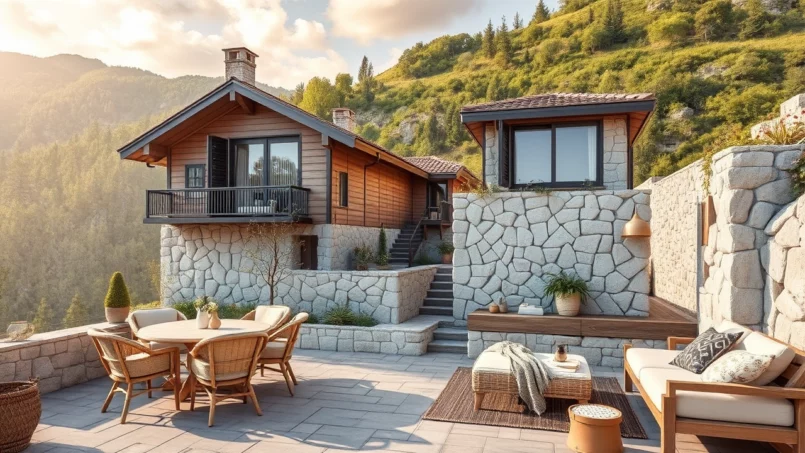
At the same time, a growing number of rural villages and picturesque towns – sometimes less than a two-hour drive from Belgrade or Novi Sad – offer houses (“kuća”) starting from €20,000 to €30,000 in some areas, or even less, with a garden, barn, or orchard. These properties, often requiring renovation, are typically purchased by:
The rural real estate market in Serbia mainly attracts three types of buyers: Serbian expatriates wanting to maintain a connection with their country of origin, city dwellers (especially from Belgrade or Novi Sad) seeking a weekend home, and a few foreigners charmed by the countryside and very attractive purchase prices.
For now, these rural second homes remain primarily personal retreats, although the rise of green tourism and rental platforms could gradually turn them into investment products.
Focus: Kosjerić, a Rural Laboratory for Short-Term Rentals
An interesting example of a very rural second-home market, already heavily connected to platforms like Airbnb, is the municipality of Kosjerić in central Serbia. There are a handful of properties available for short-term rental, almost exclusively entire houses, with 1 or 2 bedrooms, accommodating on average 4 to 6 people, often available for much of the year.
Data shows highly dispersed monthly revenues: the top 10% of properties exceed $2,500 in monthly income, while the median is around $336 and the bottom quartile around $148. Occupancy rates range from 12% for the lowest-performing properties to over 85% for the best, with a median average nightly price of about $48, and over $110 for the high-end.
Kosjerić illustrates a broader trend: even in a micro‑destination almost unknown internationally, a handful of very well-positioned, well-equipped, and well-promoted second homes can generate comfortable revenues, especially in the high season (November, October, December in this specific case).
Price Levels: From Premium Downtown Apartments to Country Houses
Second-home buyers in Serbia face an extremely wide price spectrum depending on location, property type, and standard. Nevertheless, a useful guide can be drawn from available data.
Price Comparison in Major Cities
The table below summarizes average prices per square meter in several key cities, all apartment types combined, around mid‑2025.
| City | Average Apartment Price (€/m²) | Main Comment |
|---|---|---|
| Belgrade | ~2,990 | Capital, strong demand pressure |
| Novi Sad | ~2,483 | Tech hub, festival, strong rental demand |
| Niš | ~1,661 | Historic southern city, catching-up market |
| Kragujevac | ~1,478 | Automotive hub, demand surging |
| Subotica | ~1,304 | Near Hungary, solid rental yields |
Within Belgrade itself, the gap between neighborhoods is considerable. Municipalities like Savski Venac, Stari Grad, or Vračar show values above €4,000/m², while some more peripheral sectors can still offer properties below €2,000/m², even close to €1,350/m² for the cheapest older apartments sold recently.
Price Ranges for Leisure Properties
For a second home, the most common property types and their price ranges are as follows (excluding very high-end exceptions):
| Property Type | Typical Location | Indicative Price Range (€/m²) |
|---|---|---|
| New 1-/2-Bedroom Apartment in Downtown Belgrade | Vračar, Stari Grad, Savski Venac | 3,000 – 4,500 (well above for ultra-luxury) |
| 1-/2-Bedroom Apartment on Belgrade’s Periphery | Novi Beograd, Zemun, Rakovica | 1,600 – 2,700 |
| New Apartment in Novi Sad | Liman, Danube, central neighborhoods | 1,800 – 2,800 |
| Apartment in a Secondary City (Niš…) | City center and main boulevards | 1,300 – 2,200 |
| Apartment in a Mountain Resort | Kopaonik, Zlatibor | 2,000 – 3,500 depending on the residence |
| Village House (“kuća”) | Countryside, small municipalities | From €20,000 – €30,000 per property |
These ranges do not account for potential renovation costs, which can vary from €500 to €2,000/m² depending on the scale of work, materials chosen, and location. A very cheap house at purchase can therefore ultimately represent a total budget close to that of a new apartment in a medium-sized city.
Rental Yields and Mixed-Use of Second Homes
For many buyers, a second home in Serbia is not just a vacation house: it is also a revenue-generating asset, particularly through short-term rental platforms. The country already has nearly 32,000 vacation apartments available for nightly rent, with rates starting around €20-€25 per night in some areas.
Overall Rental Yields and Yields by City
Available data indicate still attractive gross yields for residential investments, even if normalization is expected.
| Location / Segment | Estimated Average Rental Yield | Expected Trend |
|---|---|---|
| Major Cities (Belgrade, Novi Sad) | ~4 – 4.4% | Stabilization toward 5% in the medium term |
| Principal Cities outside the Capital | ~4 – 4.5% | Slightly higher potential |
| Mountain Resorts (peak season) | 12 – 15% (during peak periods) | Highly seasonal, tourism-dependent |
| National Market (Residential) | >7% in some past cases | Normalization expected around 5% |
For a second home operated for seasonal rental, the dominant strategy involves combining several periods: peak tourist season (summer, festivals, ski), one-off events (concerts, major matches, trade shows), and possibly medium or long-term rentals for the rest of the year.
In major cities like Belgrade, short-term rental prices can triple during major events (concerts, sports competitions). For example, a 2-bedroom apartment in Vračar, rented for €700–€800 per month on a long-term lease, can generate €1,200 to €1,500 per month via Airbnb during the high season, reinforcing the appeal of the mixed-use model for owners.
Weight of Seasonal Rentals: Key Figures
In 2025, over 14,000 people in Serbia declared short-term rental activity, generating tax obligations exceeding 315 million dinars. In Belgrade, about 5,000 Airbnb listings were active in autumn 2024, with a median occupancy rate of around 64% and an average daily revenue of about fifty dollars.
In micro-markets like Kosjerić, the best second homes can achieve occupancy rates above 80% in the high season. This demonstrates that a well-positioned property, even far from major centers, can become a veritable mini rental business.
Foreign Access: Legal Framework, Restrictions, and Possibilities
For a non‑resident wishing to buy a second home in Serbia, the legal framework is relatively favorable, but is based on a key principle: reciprocity. Specifically, a foreigner can acquire a home (apartment or house) if Serbian citizens can themselves buy under similar conditions in the buyer’s country.
In practice, this does not pose a difficulty for most citizens of the European Union, the United States, the United Kingdom, Canada, Australia, or even Russia. However, for countries without a reciprocity agreement or practice, it is necessary to use a Serbian company to purchase.
What Foreigners Can and Cannot Buy
The framework is quite simple to summarize:
Foreign individuals can buy apartments, houses, and commercial premises, often including the attached land. The acquisition of agricultural, forestry, bare land, or land in sensitive areas (borders, military sites) is generally prohibited for them. However, a Serbian company owned by foreigners can, within the framework of its declared activity, acquire any type of property, including agricultural land.
This distinction plays a strong role in the segment of rural second homes. A foreign city dweller dreaming of buying a large agricultural plot and a farm will often need to set up a limited liability company (DOO) to circumvent the restriction. Conversely, for a vacation apartment in Belgrade, Novi Sad, or Kopaonik, a direct purchase is usually sufficient.
Purchase Procedure and Timelines
The standard process for a foreigner resembles that for a local buyer, but with a few additional steps:
The acquisition of real estate in Serbia by a foreigner involves several mandatory steps: verifying reciprocity (if necessary) with authorities such as the Ministry of Justice or Foreign Affairs, obtaining a Serbian tax number, opening a local bank account, signing the sales contract before a notary (with a sworn interpreter if the buyer does not speak Serbian), payment through the banking system (cash transactions being prohibited for these amounts), and finally registering the transaction with the real estate cadastre.
The entire process generally takes 30 to 60 days between agreeing on the price and the effective registration of ownership. It is possible to handle almost the entire procedure remotely via a duly apostilled and translated power of attorney.
Additional Costs and Taxation of Second Homes
Beyond the purchase price, a second home in Serbia involves a bundle of costs: transfer taxes, notary and lawyer fees, annual property taxes, and potentially taxation on rental income. Overall, these costs remain competitive on a European scale, but are not negligible.
Transaction Cost: 7.6 to 10% of the Price
For a purchase of an existing property (resale), the buyer must pay a 2.5% property transfer tax on the value of the property. For new builds, this tax is replaced by VAT: 10% for residential, 20% for commercial.
In addition to this:
– Notary fees: approximately 0.1 to 0.5% of the price, often between €300 and €500 for a standard property, but can climb to a ceiling of around €6,000,
– Lawyer fees: in practice, 1 to 3% of the price for full handling (due diligence, contracts…),
– Agency commission: typically 2% (often shared between buyer and seller),
– Cadastre and “clausula intabulandi” (registration consent) fees: on the order of a few tens of euros.
Percentage of the acquisition price representing the transaction costs for a real estate buyer.
Annual Taxes and Taxation of Rental Income
In the long term, a second-home owner must account for:
– An annual property tax: up to about 0.4% of the tax value of the property for residential, with a system of brackets and local deductions,
– A tax on rental income: for individuals, rental income is taxed at 20% on a taxable base corresponding to 75% of the gross rent (a flat 25% deduction covering expenses). In other words, the effective levy corresponds to 15% of the gross rent,
– A capital gains tax: for a non‑resident who sells, the capital gain is taxed at 15% (20% in some cases for structures), unless there is a double taxation treaty that limits or adjusts this rate.
Serbian residents selling their primary residence, held for more than ten years, may benefit from a capital gains tax exemption. This tax provision does not apply to foreign investors using the property as a second home.
Financing and Interest Rates
For non‑resident foreigners, access to mortgage loans in Serbia remains possible but regulated. Several banks require resident status or local employment, but some – like API Bank, and more broadly subsidiaries of European groups – agree to grant loans to non‑residents with stricter criteria:
– Down payment often 30 to 50% of the price,
– Loan term rarely exceeding 20 years,
– Interest rates, in mid‑2025, in a range of 4.5 to 7% per annum.
In parallel, the domestic market benefits from specific conditions: rates capped by the National Bank, subsidized loan programs for first-time buyers under 35 with rates that can go down to 3.5%. This duality means many foreign second-home buyers opt for “cash” financing or financing from their country of origin, rather than taking on local debt.
Second Home and Residence Permit: The “Residency Card” Option
A not insignificant advantage of buying a second home in Serbia is the possibility of using it as a basis for obtaining a residence permit. The country does not offer “immediate citizenship” by investment, but a path of residence-then-citizenship is provided for real estate investors.
The purchase of a residential property allows one to apply for a temporary residence permit (valid for up to 3 years, renewable), authorizing living, working (with a permit), and studying in Serbia. After several years of continuous residence (often 5 years), it is possible to apply for permanent resident status, and, after additional years, citizenship, subject to integration conditions (language, social life).
For many second-home buyers, especially from non-EU countries, this combination of vacation home, rental investment, and potential migration backup option is an additional argument in favor of Serbia.
Structural Trends: From Rustic House to Eco-Efficient “Smart Home”
The Serbian second-home market is not immune to the major trends sweeping global real estate. Two of them stand out particularly: the quest for energy efficiency and the rise of “connected” homes.
Projections mention a rise of at least 30% in demand for eco-efficient houses by 2025. Already, a large majority of buyers are interested in smart homes or residences integrating home automation, energy management, and connected security systems. New residential developments, whether in cities or mountain resorts, therefore highlight:
Discover the key amenities to add value to your property, improve your comfort, and optimize its energy performance.
Improve your property’s insulation and obtain an advantageous energy certification to enhance your asset’s value.
Control your heating or air conditioning system remotely for optimal comfort and energy savings.
Enhance your home’s security with an intelligent access control and video surveillance system.
Future-proof your home by installing a dedicated infrastructure for electric vehicle charging.
For a second-home owner who often lives abroad, these features have a dual interest: reducing the energy bill and allowing fine management of the property – remote access for tenants, consumption monitoring, optimized maintenance. They also explain why new builds generally sell for 10 to 15% more than older ones: the premium for modernity and energy efficiency is clearly integrated into prices.
At the other end of the spectrum, traditional village houses retain strong emotional and heritage value, especially for the diaspora. But their valuation and ability to generate rental income largely depend on the owner’s ability to renovate them to the standard expected by tourists (efficient heating, fast internet, good plumbing, comfortable bedding).
Risks and Points of Caution for a Second-Home Buyer
Despite its advantages, the Serbian second-home market carries several specific risks that a foreign investor cannot afford to ignore.
The first concerns the legal security of property titles. The country’s recent history – nationalizations, privatizations, unauthorized constructions – has left a stock of poorly registered or disputed properties. It is therefore crucial to conduct rigorous due diligence: verification of the title at the cadastre, any existing mortgages or easements, building permit compliance, absence of inheritance disputes. Using a specialized lawyer is not a luxury but an essential safeguard.
The tax system for rentals is moderate but complex, with distinct rules for long-term leases and seasonal rentals (treated as services). This multiplicity, added to local taxes, makes reporting obligations strict. A lack of knowledge, especially regarding the declaration and categorization of seasonal rentals with the authorities, can lead to penalties.
The third is linked to the volatility of the rental market in certain areas. Mountain resorts, small tourist towns, or rural micro-markets like Kosjerić are highly sensitive to seasonality, events, and more broadly to the tourist economic climate. A property may show excellent results one year and perform less well the next. The second-home owner must therefore anticipate significant income fluctuations, even slack periods lasting several months.
The Serbian real estate market, especially for second homes, presents a significant risk of dependence on foreign buyers and the diaspora. In some segments and regions, this clientele accounts for up to 40% of purchases. Price dynamics therefore largely depend on their fund transfers and their willingness to return to the country. An economic slowdown in their host countries could directly impact this market.
Where Will the Serbian Second-Home Market Be Tomorrow?
All projections converge toward a scenario of continued growth, but at a more measured pace. The Serbian real estate market, after withstanding a wave of increases between 2021 and 2022 and a major geopolitical shock related to the war in Ukraine (influx of new residents), seems to be entering a phase of maturity.
For second homes, this translates into several major trends:
Main developments and expected outlooks for the real estate sector in Serbia, highlighting price dynamics, growth segments, and the transformation of supply.
Strengthening role of Belgrade and Novi Sad as leading markets, with prices expected to continue outperforming the national average.
Growing strength of mountain resorts and nature destinations, boosted by domestic and international tourist demand.
More structured seasonal rental supply, with more professional managers, analytical tools, and services.
Medium-term tightening of gross yields around 5% in mature segments, a level remaining competitive in the European context.
Continued progress of a more ecological and technological new supply, driving demand in the high-end segment.
In this context, the Serbian second-home market appears as a unique compromise in Europe: prices still accessible compared to the western part of the continent, real rental potential – provided the location is well chosen –, an increasingly clarified legal framework, and, in the background, the prospect of gradual integration into the European market via the EU accession trajectory.
Serbia presents an interesting opportunity to combine a second home, asset appreciation, and rental income, thanks to a market that is still accessible. To succeed, a rigorous approach is essential: precise analysis of locations, understanding of local regulations, and support from experienced professionals on the ground.
Disclaimer: The information provided on this website is for informational purposes only and does not constitute financial, legal, or professional advice. We encourage you to consult qualified experts before making any investment, real estate, or expatriation decisions. Although we strive to maintain up-to-date and accurate information, we do not guarantee the completeness, accuracy, or timeliness of the proposed content. As investment and expatriation involve risks, we disclaim any liability for potential losses or damages arising from the use of this site. Your use of this site confirms your acceptance of these terms and your understanding of the associated risks.

Cyril Jarnias is an independent expert in international wealth management with over 20 years of experience. As an expatriate himself, he is dedicated to helping individuals and business leaders build, protect, and pass on their wealth with complete peace of mind.
On his website, cyriljarnias.com, he shares his expertise on international real estate, offshore company formation, and expatriation.
Thanks to his expertise, he offers sound advice to optimize his clients' wealth management. Cyril Jarnias is also recognized for his appearances in many prestigious media outlets such as BFM Business, les Français de l’étranger, Le Figaro, Les Echos, and Mieux vivre votre argent, where he shares his knowledge and know-how in wealth management.





