
 Published on and written by Cyril Jarnias
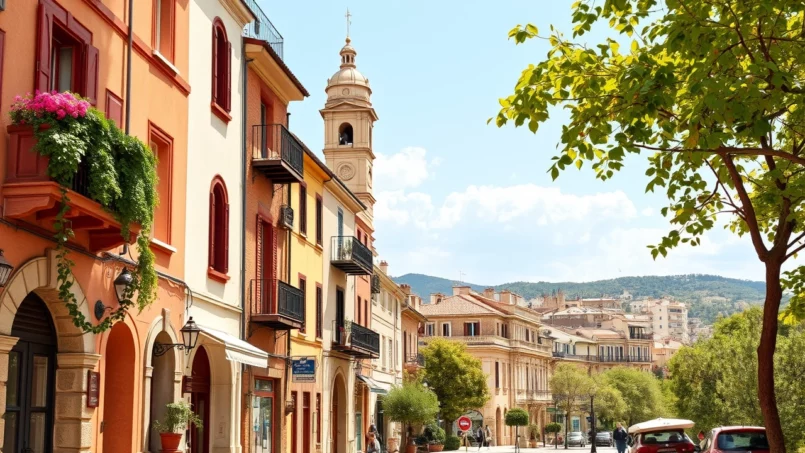
Located on the Adriatic coast in southern Montenegro, the city of [Bar] is attracting increasing numbers of real estate investors seeking a compromise between a seaside location, still reasonable prices, and potential for value appreciation. Far from the bling of Budva or the postcard-perfect scenes of Kotor, [Bar] plays a different tune: that of a major port undergoing a tourist transformation, with a real estate market still considered “undervalued” by many specialists.
This article details the practical aspects of a real estate investment in Bar, including current price levels, rental yields, applicable taxation, neighborhoods, ongoing projects, anticipated costs, and the most suitable investor profiles.
[Bar], a Port City at a Tourism Turning Point
For a long time, [Bar] was seen primarily as a transit point: the country’s main port, the railway terminus to Belgrade, a stopover to Italy. In 15 to 20 years, the scenery has changed. The municipality has made tourism and agriculture (notably olive growing and wine) the two priorities of its development strategy, with a direct impact on real estate.
The Bar Riviera stretches over 44 kilometers of coastline.
The city boasts several structural advantages for an investor:
As Montenegro’s largest port, Bar hosts cruise ship stops (already three cruise ships and 15,000 tourists in a recent season, with about fifteen stops scheduled). Its connectivity is strong: coastal road, train to Belgrade, ferry to Italy, and Podgorica International Airport is about 45 minutes away. The Mediterranean climate offers dry, hot summers (up to 86°F/30°C) and mild winters (around 41°F/5°C). The natural environment is varied: sea, nearby mountains, Skadar Lake National Park, and about 200 km of marked trails for canyoning, hiking, or mountain biking. Its tourism positioning is on the rise but remains less focused on luxury and less saturated than the Bay of Kotor.
On a macro level, the country itself is buoyed by a sustained tourism boom. Montenegro has recorded an average annual increase of 6.6% in tourist arrivals since 2007. In 2023, 2.6 million visitors were recorded, and projections mention around 3.4 million arrivals by 2028. [Bar] is one of the four most visited coastal destinations along with Budva, Ulcinj, and Herceg Novi.
A Sharply Rising Montenegrin Real Estate Market… but [Bar] Remains Affordable
Nationally, the real estate market has experienced a surge in recent years. Prices for new homes climbed by over 20% in one year (approximately 21.4% year-on-year in Q2 2024, reaching an average of €1,821/m²). On the coast, the increase is even more pronounced: approximately €2,107/m² on average in Q2 2024, nearly 50% higher than a year earlier, a record historical level.
Despite this general tension, the [Bar] region still stands out with milder prices than the country’s star resorts. Available data allows for the following comparison.
Average Price Per Square Meter: [Bar] Versus Other Cities
| City / Region | Property Type | Indicative Price Range (€/m²) |
|---|---|---|
| Podgorica (capital) | Apartments | 1,700 – 2,000 |
| Budva (premium coast) | Apartments | 2,700 – 5,000 |
| Kotor (premium coast) | Apartments | 2,250 – 3,900 (up to 5,000+ waterfront) |
| Tivat (luxury developments) | Apartments | 3,500 – 5,700 (up to 7,200+ in some projects) |
| Montenegrin Coast (average) | New Homes | ≈ 2,107 (Q2 2024) |
| [Bar] – New Buildings | Apartments | 1,600 – 2,500 |
| [Bar] – Secondary Market | Apartments | From around 1,400 |
| Bar Riviera – Apartments | Upscale Apartments | 1,400 – 3,000 |
| Bar Riviera – Houses/Villas | Houses, Cottages, Villas | 1,200 – 3,500 |
In practice, it’s still possible to find studios and small 2-bedroom apartments under construction in [Bar] for between €800 and €1,700/m² depending on location and project phase. Conversely, an 89 m² apartment directly on the waterfront, in a residence with a private beach, pool, playground, fireplace, and underfloor heating, recently sold for €290,000 – slightly above €3,000/m², a price still below that of equivalent luxury properties in Budva or Tivat.
Bar is still significantly undervalued relative to its location, infrastructure, and development momentum. Data already indicates an increase of about 20% in residential prices over the last two years, driven by infrastructure works, hotel projects, and the influx of foreign buyers.
Local Experts
Local Dynamics: Major Investments and Urban Planning
One of the key elements to understanding [Bar]’s potential is the volume of announced or ongoing investments. Nearly €200 million is committed in the municipality, primarily to increase hotel capacity and modernize the tourist offer.
Among the cited projects:
Key initiatives and projects to modernize and expand hotel offerings and transportation infrastructure in the Bar region and surrounding areas.
Development on the ‘Pearl Coast’ in Čanj and Maljevik, as well as a new hotel by the Akor group in downtown Bar.
Renovation of existing complexes like Korali and Inex Zlatna Obala to modernize the offering.
Development near Skadar Lake with establishments like Hotel De’Andros (50 rooms, spa, sky-bar, 40 local jobs).
Proposal for a cable car link between the Adriatic and Skadar Lake to connect the coast and the hinterland.
Plan for a boulevard between Sutomore and Šušanj, and improvements to the Bar–Sukobin and Virpazar–Sutorman–Bar roads.
The municipality also stands out for its stated desire to contain uncontrolled residential urbanization on its coastline. [Bar] is presented as the only municipality that has truly managed to protect its tourist zone from being fragmented by residential buildings, which is an important point for the future value of tourism-oriented properties: the waterfront supply will remain structurally limited.
New Iconic Residential Projects in [Bar]
Two developments illustrate the new generation of urban projects in the city:
| Project | Location | Main Features | Estimated Completion |
|---|---|---|---|
| Residence “375” | [Bar] – Centar | Modern building 700 m from the sea, well-connected central neighborhood, apartments of various sizes, contemporary finishes, walking access to schools, shops, and services. | Scheduled for January 2027 |
| KO Novi Bar Mixed Complex | KO Novi Bar | Mixed residential/commercial building > 32,000 m², 2 basements + ground floor + 10 floors, two towers (A & B) with 105 apartments, shopping center, hotel, 22 commercial apartments, garage for 202 vehicles, outdoor parking, green spaces. | Demolition of existing buildings planned, concept validated |
Other programs target a more premium segment in the city center, like a complex next to the covered market in [Bar], with a 55.29 m² 2-bedroom apartment for sale, a 520 m² spa & wellness area with pool and gym, playground, café-pastry shop, private courtyard, and 24/7 reception. Planned delivery: end of 2025. The buyer is exempt from the 3% property transfer tax as they are buying directly from the developer (VAT is already included in the price).
For an investor, an off-plan sale (VEFA) in the tourism sector combines two financial levers: the potential capital gain realized between the purchase price on plan and the market value of the property upon completion, and the possibility of generating rental income thanks to a dual clientele, both local (for long-term rentals) and tourist (for short-term rentals).
Rental Levels in [Bar]: Long-Term and Seasonal
Market data provides a fairly precise idea of the rental levels applied, both in the local long-term rental market and in seasonal rentals like Airbnb.
For the long term, a portal listed 62 rental ads in the [Bar] region, with properties distributed between the city itself and its suburbs (Šušanj, Sutomore, Bjelishi, Dobra Voda, Ilino, Utjeha, Ulcinj, Čeluga…).
Examples of Monthly Rents in the [Bar] Region
| Location | Size / Type | Monthly Rent (approx.) |
|---|---|---|
| Šušanj | 130 m² Apartment, 4 bedrooms | €600 |
| Downtown [Bar] | Modern Apartment, 100 m from the sea | €850 |
| [Bar] – near school | Apartment | €450 |
| Ilino | New 38–51 m² | €450 – €550 |
| Dobra Voda | 100 m² with private courtyard | €950 |
| Šušanj | 1 Bedroom, sea view | €600 |
| Bjelishi | 58 m² | €600 |
| Downtown [Bar] | 75 m² | €800 |
| Dobra Voda (gated residence) | 119 m², pool | €950 |
| Downtown [Bar] | Ground floor 64 m² | €500 |
| Bjelishi | 75 m², terrace | €700 |
| Šušanj | 3 rooms, 100 m from the sea | €650 |
| Downtown [Bar] | New Apartment | €400 |
| Sutomore | 27 m² | €300 |
| Čeluga | Loft 120 m² in modern building, pool | €1,300 |
| Downtown – near school | 2 bedrooms, 2 terraces | €1,000 |
These figures are consistent with cost of living statistics: a 40 m² 1-bedroom in the city center is around €300–€600/month, an 80 m² 3-bedroom in the center between €900 and €1,500/month, and slightly less outside the center.
Approximately 900 vacation homes are listed in the Bar area. Prices per night start at around ten dollars before taxes and vary depending on location, amenities, and season.
– about 190 “family-friendly” properties;
– nearly 220 accommodations accepting pets;
– about sixty properties with a pool.
Case Study: Profitability of a Luxury Waterfront Apartment
To concretely illustrate the potential yield, let’s take the very detailed example from the data: an 89 m² apartment, two bedrooms and two bathrooms, sold for €290,000 furnished, directly on the waterfront, with private beach and pool, playground, fireplace, underfloor heating, and a guaranteed parking space.
Property management is entrusted to a specialized company managing over 100 properties across Montenegro. Projections for seasonal rental, from May to October, are as follows:
| Month | Estimated Occupancy Rate | Average Price / Night (€) |
|---|---|---|
| May | 65 % | 130 |
| June | 80 % | 180 |
| July | 95 % | 200 |
| August | 95 % | 200 |
| September | 80 % | 180 |
| October | 65 % | 130 |
The “shoulder seasons” (May, June, September, October) are gaining strength with the rise of tourism, smoothing out income beyond the strict summer.
The management company charges:
– a 30% commission for full service (promotion, check-in/out, cleaning);
– and an additional 15% deducted from each booking, which accounts for platform fees and other costs.
Factoring in these elements and costs (including a condo fee of €1/m², i.e., €100/month for the 89 m² apartment), the pre-tax net yield is estimated at around 4.5% per year, on a prudent basis. The investor retains flexibility to use it themselves for two months a year (e.g., April and November).
Note: for a long-term rental, the prudent estimate given was €700/month for a four-month rental, i.e., €2,800 in annual income, a scenario clearly underutilized compared to the seasonal option.
National Rental Yields: Where Does [Bar] Stand?
Montenegro shows fairly attractive gross yields on apartments. Statistics report an average gross yield of 5.62% in the second quarter of 2025 (5.61% in Q3 2024). Net yields are generally 1.5 to 2 points lower, depending on costs, taxes, and agency fees.
By city, available figures give:
| City | Average Gross Rental Yield (Apartments) |
|---|---|
| Podgorica | ≈ 6.39 % |
| Budva | ≈ 5.85 % |
| Kotor | 6 – 7 % (up to 10% for some exceptional properties) |
| Tivat | ≈ 4.64 % |
| Coast (overall, including [Bar]) | 4.4 – 7.1 % depending on location and type |
Even though [Bar] does not have an isolated statistic in these sources, everything indicates that its yields fall within the high end of the coastal range, due to lower acquisition prices than Budva, Kotor, or Tivat for rental prices (seasonal and annual) that are rather close.
Studios and 2-bedroom apartments are generally the most profitable, especially in the city or by the sea. Luxury apartments and villas, while capable of generating very high rates in summer, require a higher initial investment and are more susceptible to vacancy in the off-season.
Operating Costs and Taxation: What an Investor Must Budget For
To assess an investment, one must look beyond the purchase price. Montenegro has a reputation for moderate taxation, but in 2024 it introduced a more progressive property tax system, with higher rates on expensive properties. Available data allows for a clear overview.
1. Transaction Costs on Purchase
When buying on the secondary market, the purchaser pays a progressive Real Estate Transfer Tax (RETT):
| Property Value | Transfer Tax (RETT) |
|---|---|
| Up to €150,000 | 3% of price |
| €150,001 – €500,000 | €4,500 + 5% of portion above €150,000 |
| Over €500,000 | €22,000 + 6% of portion above €500,000 |
This tax must be paid within 15 days of signing the contract, under penalty of fines (0.03% interest per day for late payment).
When buying new directly from a developer, 21% VAT applies (generally already included in the advertised price). In this case, the transfer tax does not apply.
Additional costs include:
– notary fees (approximately 0.01% of property value);
– translation fees (approximately €20/page for contracts);
– cadastral registration (0.5% of cadastral value);
– attorney fees (generally between €1,200 and more depending on complexity);
– standard deposit (10% of price) upon signing the preliminary agreement.
The buyer’s total added costs are in practice around 4 to 5% of the purchase price, excluding VAT where applicable. Agency commissions (generally between 2 and 5%) are most often borne by the seller, but it is essential to verify this point case by case in the contract.
2. Annual Property Taxes
Every owner, resident or not, pays an annual municipal property tax. The base rate for residential properties varies between 0.25% and 1% of the market or cadastral value, with adjustment factors depending on:
– location (coastal and tourist areas like [Bar] are rather at the higher end);
– property type (residential use, tourism, commerce…).
For certain tourist or commercial assets (e.g., hotels), the rate can climb to 5.5%. In practice, for a standard residential apartment in [Bar], budget around 0.5 to 1% per year, unless a special status applies (primary residence, elderly owners, etc., which may qualify for reductions).
3. Taxation of Rental Income
Rental income is taxed at a flat rate of 15% on net income, after deduction for expenses:
Standard tax deduction applicable on gross rent for a long-term lease.
Non-residents are subject to the same taxation, often with a 15% withholding tax at source. The country also applies moderate taxes on income (9–15%), corporations (9–15%), and capital gains (15%).
4. Recurring Costs of an Apartment in [Bar]
Cost of living data, cross-referenced with specific information from the case study apartment, provide realistic orders of magnitude:
– condominium fees in residences with services: often charged per m² (in the example, €1/m²/month i.e., €100/month for 89 m²);
– routine maintenance (minor repairs, common area cleaning, etc.): €1 to €2/m²/month, i.e., €40 to €100/month for an average 2–3 bedroom;
– electricity, water, heating, garbage for 80–90 m²: €80 to €150/month depending on season and usage (cited examples range from about €50 for a studio to €61 for 85 m² in some cases, but actual ranges, including heating and A/C, are wider);
– high-speed internet: €20 to €30/month (average speed around 26 Mbps in [Bar]);
– home insurance and other miscellaneous expenses: to be estimated, but generally moderate compared to Western Europe.
Combining, an investor can roughly anticipate, for a 60–80 m² apartment, about €150 to €250 in monthly recurring costs (excluding tax and property management).
Cost of Living and Salaries in [Bar]: An Asset for the Long Term
Investing for rental assumes that tenants can afford to pay. From this perspective, [Bar] benefits from a lower cost of living than many European cities, attracting not only retirees and foreign families but also remote workers (the country offers a two-year “digital nomad” visa, subject to proof of resources of around €1,600/month).
Cost of living indices for [Bar] are revealing:
| Index / Ratio | Value in [Bar] |
|---|---|
| Cost of Living Index | 57 |
| Rent Index | 37 |
| Groceries Index | 55.6 |
| Restaurant Price Index | 57.4 |
| Cost of Living + Rent Index | 48.3 |
| Local Purchasing Power | 88.4 |
| Property Price to Income Ratio | 12.9 |
| Climate Index | 95.7 |
| Quality of Life Index | 64 |
The average monthly net salary is around €600–€900, with the median salary covering about 0.7 months of expenses at an average standard of living. This means a large part of the local rental demand focuses on affordable properties, especially outside the most central neighborhoods and outside the high season.
Despite a generally challenging market, significant demand persists for more expensive apartments in the city center or by the sea. This clientele, mainly composed of expatriates, digital nomads, and foreign families, focuses on specific property types: well-appointed 1-2 bedroom apartments, comfortable 3-bedroom apartments, and modern residences.
Monthly expenses for a resident (excluding rent) often range between $500 and $1,000, depending on comfort level. For an investor, this relatively moderate cost of living base favors the development of the long-term rental market, and thus resale liquidity if the next buyer is an end-user.
Profile and Investment Strategy Suited for [Bar]
Who is [Bar] primarily for, and with what strategy?
1. “Value” Investor Seeking Capital Appreciation
For those wanting to play the capital revaluation card, [Bar] is often cited among the “undervalued gems” of southern Montenegro, alongside Ulcinj and some mountain towns. The combination of several factors creates favorable ground:
– current prices lower than in premium areas (Budva, Kotor, Tivat);
– increase already observed of about 20% in two years on housing in [Bar];
– increasing scarcity of coastal land on a generally short coast (295 km of coastline, 72 km of beaches for the entire country);
– major infrastructure projects (Bar–Boljare highway, road improvements, possible cable car to Skadar Lake, marina enhancement);
– progress in Montenegro’s EU accession bid, with gradual alignment of standards and facilitation of financial flows (including planned automation of bank transfers with the EU from October 2025).
Potential percentage of value appreciation for an off-plan purchase between launch and project completion on the best locations.
2. Yield-Oriented Investor
To maximize yield, the classic strategy is to target studios and 2-bedroom apartments in recent or well-renovated buildings, close to the sea or the center, suitable for rental both:
– long-term to residents, foreign workers, remote workers;
– and seasonally to tourists (families, retirees, seasonal remote workers) during summer and shoulder seasons.
Given national average gross yields (5–6% for apartments), the growing tourist demand in [Bar], and rents observed on the ground, aiming for 4 to 6% net before tax is realistic in good locations, with rigorous management.
Neighborhoods like Šušanj, Dobra Voda, or Utjeha offer tranquility and sea views. The city center is ideal for proximity to shops, schools, and services. The old town, with its historic charm, is more suited to renovation projects than purely profitable rental investments.
3. “Mixed” Buyer: Second Home + Rental
[Bar] lends itself particularly well to a hybrid model: buying a property usable two or three months a year, and renting it out the rest of the time to cover all or part of the costs.
The pleasant climate in the shoulder seasons (spring and autumn), the contained cost of living, and the presence of modern infrastructure (shops, cafes, train station, port, access to Podgorica) make it an interesting base for Northern Europeans seeking sun, without aiming for Tivat or Kotor prices.
In this scheme, the gross yield may be a bit lower than that of a “pure yield” investment, but the investor also gains significant personal use, making it a lifestyle product as much as an investment.
Risks and Points of Caution
Montenegro is often described as an “open” and attractive market, but also as an imperfectly structured market. [Bar] is no exception. A few points of caution deserve highlighting:
The Montenegrin real estate market has important specificities: the widespread absence of a single agent represents an inefficient market with duplicate listings. Risks exist regarding property titles or construction regularity for some older properties. The country has over 100,000 vacant or underused homes, indicating both opportunities and potential fiscal tensions. Progressive taxation now applies to the most expensive properties (over €150,000 and €500,000). Finally, the tourist seasonality on the coast remains marked, with a low winter season for rentals.
To limit these risks, sources emphasize the importance:
For a safe real estate investment in Montenegro, it is crucial: to conduct a complete legal audit (property title, easements, debts, urban planning compliance, request for legalization if applicable) with an independent attorney; to verify all technical documents (permits, plans, energy certificate, installation compliance) especially for older buildings; to compare several neighborhoods and projects to assess the price/size ratio and future maintenance costs; to budget accurately for all taxes and fees (transfer, notary, attorney, registration, condominium, maintenance, rental taxation); to rely on a solid local agency, accustomed to working with foreigners, for property selection and management (rental, maintenance).
Medium-Term Market Outlook
Aggregating national and local trends, analyst consensus is that real estate prices in Montenegro should continue to rise, but at a more moderate pace than the surge of 2024–2025. Projections mention annual increases on the order of 3 to 7% in the coming years, with the overall market growing about 5.7% between 2024 and 2029.
Several structural forces support this trajectory:
Main factors reinforcing the country’s attractiveness and economic stability.
Progress towards European Union accession is a major confidence factor for investors.
Continued investment in highways, airport modernization, and marina development (e.g., Porto Montenegro, Luštica Bay), beneficial for the entire coast.
Steady rise in international tourism with market diversification: strong increase in visitors from Germany, the UK, France, Israel, and China.
Advantageous tax system for income, corporations, and capital gains, with moderate property taxes compared to Western Europe.
In this context, [Bar] positions itself as a “secondary” market that could gradually close its valuation gap with the country’s flagship destinations. The combination of its port function, beaches, lakeside hinterland, hotel projects, and its effort to control coastal urbanization makes it a natural candidate for progressive revaluation.
For an investor capable of selecting the right projects, thinking medium/long term, and managing rentals intelligently (or relying on a local manager), investing in real estate in Bar allows for portfolio diversification, capturing still upward growth, and benefiting from a Mediterranean base at a reasonable entry cost.
Disclaimer: The information provided on this website is for informational purposes only and does not constitute financial, legal, or professional advice. We encourage you to consult qualified experts before making any investment, real estate, or expatriation decisions. Although we strive to maintain up-to-date and accurate information, we do not guarantee the completeness, accuracy, or timeliness of the proposed content. As investment and expatriation involve risks, we disclaim any liability for potential losses or damages arising from the use of this site. Your use of this site confirms your acceptance of these terms and your understanding of the associated risks.

Cyril Jarnias is an independent expert in international wealth management with over 20 years of experience. As an expatriate himself, he is dedicated to helping individuals and business leaders build, protect, and pass on their wealth with complete peace of mind.
On his website, cyriljarnias.com, he shares his expertise on international real estate, offshore company formation, and expatriation.
Thanks to his expertise, he offers sound advice to optimize his clients' wealth management. Cyril Jarnias is also recognized for his appearances in many prestigious media outlets such as BFM Business, les Français de l’étranger, Le Figaro, Les Echos, and Mieux vivre votre argent, where he shares his knowledge and know-how in wealth management.





