
 Published on and written by Cyril Jarnias
Short-term rental in Serbia, locally known as “Kratkoročni najam” or more simply “Apartmani”, is reaching a new scale. Driven by the growth of tourism, major platforms like Airbnb and Booking.com, and real estate that remains affordable by European standards, the country is establishing itself as an interesting playground for travelers… and also for investors and property owners, both local and foreign.
The market’s dynamism is explained by numbers, regulations, and marked contrasts between cities (Belgrade, Novi Sad) and mountain regions (Kopaonik, Zlatibor), all within a favorable national economic context. A detailed analysis, beyond the usual enthusiastic narrative, is necessary to understand the current reality.
A dynamic national market, yet still undersaturated
At the national level, the short-term rental market already shows a certain maturity, while still leaving significant room for growth.
There are approximately 15,000 active listings for short-term rentals in Serbia, with an average occupancy rate of 41% and a RevPAR (Revenue per Available Rental) around €24. This places Serbia in a middle zone: the market is active but far from certain European tourist hotspots where occupancy rates regularly exceed 70%.
Number of vacation apartments listed on rental platforms in the country, according to some aggregators.
The success of this model is not limited to supply. Demand is following: in 2023, short-term rentals generated significant tax revenue for the Serbian state and helped consolidate Serbia’s position as a full-fledged tourist destination. More than 14,000 people are reportedly employed in this segment, with tax obligations exceeding 315 million dinars.
To give an idea of price ranges, national data indicates:
| Indicator (Serbia, national average) | Approximate Value |
|---|---|
| Average price per night (all regions) | $48 |
| Average weekly price | $334 |
| Average capacity per rental | 4 people |
| Average size | 40 m² |
| Most expensive month (e.g., August) | $52 / night |
| Least expensive month (e.g., October) | $47 / night |
Here again, seasonal variations remain modest on a national scale, but they widen significantly in certain urban or mountain hotspots. This is where opportunities appear – and risks too.
Belgrade: Epicenter of short-term rental in Serbia
It’s difficult to discuss short-term rental in Serbia without starting with Belgrade, the country’s top tourist, economic, and academic hub. The capital alone concentrates the largest share of supply, revenue… and regulatory tensions.
Market Size and Performance
Belgrade is ranked as the #1 Airbnb market in Serbia. Depending on sources and counting methodologies, we find:
– 3,306 active Airbnb listings over 12 months, with an average rate of $81 per night and an occupancy rate of 37.5%, for an average annual revenue of about $8,511 per listing.
– Another database lists 5,556 listings, this time with an occupancy rate of 60%, an average rate of $57, and an average annual revenue of $12,707.
A third source (AirROI) mentions 3,089 properties generating on average about $760 per month, with an ADR (Average Daily Rate) close to $77 and an occupancy rate of about 41%.
Belgrade offers a short-term rental yield of about 12.3% and benefits from a regulatory environment described as flexible, indicating an active but not yet saturated market for investors.
We can summarize some key indicators in the following table:
| Indicator (Belgrade) | Approximate Value |
|---|---|
| Number of listings (range) | 3,000 – 7,700 |
| Occupancy rate (range) | 37.5% – 60% |
| ADR (Average Daily Rate) | $57 – $81 |
| Average annual revenue per listing | $8,500 – $12,700 |
| Short-term rental yield | 12.3% |
| Estimated RevPAR (country) | €24 (national average) |
The price for a week’s rental in Belgrade is around $508, while a full month is approximately $2,177. Another important point: vacation rentals in Belgrade are on average 37% cheaper than hotels, a gap that partly explains the appeal of the model for budget-conscious travelers.
Housing Profile and Uses
The housing stock offered for short-term rental in Belgrade is very homogeneous in some aspects:
Analysis of the main attributes and composition of listings available on the platform.
About 93% are entire homes/apartments, compared to only 7% private rooms and 1% shared rooms.
Small spaces dominate: 77% of listings are for one-bedroom apartments, 18% for two bedrooms, and larger units (3 bedrooms and more) represent only a minority.
Internet and Wi-Fi are present in 99% of listings, air conditioning in 95%, kitchen in over 90%. Standards are almost systematic.
Data on length of stay is revealing: nearly 44.7% of rentals have a minimum stay of 30 nights, which shifts a significant portion of the stock towards medium or long-term rental for digital nomads, students, or employees on assignment. Conversely, barely 1.6% of listings allow a single night’s stay.
Fine-Tuned Pricing: Days of the Week and Seasonality
Pricing in Belgrade is highly segmented:
| Price Variable (Belgrade) | Average Value |
|---|---|
| Average weekday price (Sunday–Thursday) | $46 / night |
| Average weekend price (Friday–Saturday) | $55 / night |
| Cheapest night (Thursday) | $24 / night |
| Most expensive night (Sunday) | $71 / night |
| Average vacation week | $508 |
| Average vacation month | $2,177 |
More surprisingly, the low season is in July, with an average price drop of 55%, while the high season is observed in April, where rates climb by 116%. This inversion of the classic “summer = high season” pattern is due to the clientele profile: festivals, conferences, cultural or sports events concentrated in spring, while Serbs tend to go to the mountains or the sea in summer.
The average length of stay for vacation rentals in Belgrade, a high figure for a European capital.
Neighborhoods and Target Clientele
The most in-demand neighborhoods are unsurprisingly the city center, Stari Grad and Savski Venac, where tourism, nightlife, and cultural offerings mix. The Novi Beograd (New Belgrade) neighborhood is presented as particularly suitable for families, with modern residences, parks, and good accessibility.
At the other end of the spectrum, the Rakovica district is cited as the most affordable area, with about fifty units at around $60 per night. For an investor, these divisions show that the city is not monolithic: yield can remain interesting in less “postcard-perfect” but well-structured sectors.
On the traveler side, the most sought-after amenities in Belgrade are swimming pools, 24/7 reception, air conditioning, and parking. About 16% of rentals are pet-friendly, a ratio that is not negligible but leaves room for more targeted niches (stays with pets, family + car, etc.).
Novi Sad: Second Hub and Laboratory for Demand Peaks
The second city and second short-term rental market after Belgrade, Novi Sad offers a different profile, marked by its calmer pace… and by an event that reshuffles the deck every summer: the EXIT festival.
A More Compact but Profitable Market
Novi Sad has about 1,101 listings for short-term rentals in one of the databases studied, and 789 active Airbnb listings in another, depending on the period and criteria considered.
The market’s key figures are as follows:
| Indicator (Novi Sad) | Approximate Value |
|---|---|
| Number of Airbnb listings | 789 – 1,101 |
| Average occupancy rate | 32% – 55% |
| ADR (Average Daily Rate) | $45 – $60 |
| Average annual revenue per listing | $4,639 – $9,214 |
| Rental yield (short-term) | 12.3% (source AirROI) |
| Regulatory regime | “flexible” |
The supply structure differs from Belgrade: there is a high proportion of studios and small apartments, suited for couples, students, and solo travelers. Large units (entire houses) are rarer, which sometimes limits the capacity to host groups during major events.
The EXIT Effect: A Case Study of Price Peaks
The EXIT festival, often presented as the largest music festival in the region, transforms Novi Sad each summer into an extreme laboratory for short-term rental.
The collected data is telling:
The collected data
– For four people, a rental can be charged around €1,000 for 5 days during the festival.
– For two people, just before the main weekend, rates were seen around €200 per night.
– The “more reasonable” offers were between €500 and €600 for 5 days.
– An extreme case: a house offered at €3,200 for 5 festival days.
After a major event like a festival, rental prices typically drop back to a range of €20–€40 per night. There is then a significant risk of vacancy for much of the summer, in the absence of other events of comparable scale to attract visitors.
For property owners, this means two things:
– The potential for occasional gain is considerable, with prices potentially tripling.
– But this strategy assumes managing a high risk of under-occupancy the rest of the time, in a market where costs (maintenance, taxes, management) don’t disappear between peaks.
In other words, short-term rental in Novi Sad rewards flexibility, real-time price optimization, and the ability to play the event card – but it doesn’t forgive approximations on scheduling or pricing positioning.
Mountains, Lakes, and Countryside: The Other Face of Short-Term Rental in Serbia
While Belgrade and Novi Sad structure the urban market, a good part of Serbia’s potential lies outside cities: in ski resorts, mountains, national parks, lakes, and a dense network of rural villages.
Resorts and Mountains: Kopaonik, Zlatibor, Tara, and Others
Serbia positions itself as both a winter destination and a summer nature destination. In terms of short-term rental, this translates into products very different from city-center apartments: chalets, mountain houses, boutique hotels, rural cottages, renovated farms.
Among the most important hubs:
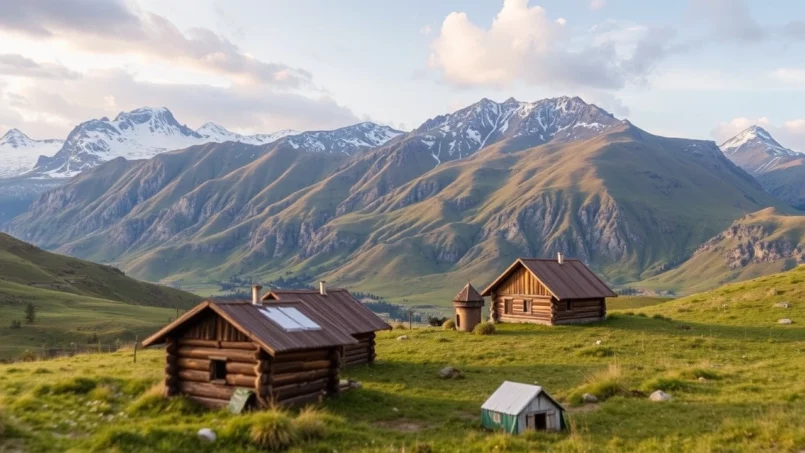
The Serbian market offers several distinct mountain destinations. Kopaonik, the main ski area, offers well-maintained slopes and modern lifts, with strong potential for chalet and apartment rentals in residences, often featuring large living rooms and ski storage space. Rental yields in high season can exceed 12-15% there. Zlatibor is a four-season resort focused on hiking, horseback riding, and wellness, offering many apartments with balconies. The Tara National Park & Mokra Gora region is characterized by dense forests, lakes, and rustic cottages, bolstered by the family-friendly tourist attraction of the Šargan Eight railway. Other areas like Divčibare, Zlatar, Stara Planina, and Rtanj complete the offering with a mix of traditional lodgings and individual rentals.
In these regions, prices vary enormously depending on the season, proximity to slopes, lakes, or trails, and the presence of a sauna, jacuzzi, fireplace, or pool. We also find many family or group rentals, with houses that can accommodate 8 to 10 people, often rented by the week.
Rurality and “Seoski Turizam”: A Huge but Still Underutilized Reserve
About 90% of Serbian territory is considered rural. For about fifteen years, rural tourism – accommodation in village houses, farms, “ethno-houses”, small wine estates – has seen notable growth.
We generally distinguish several types of infrastructure:
Discover the different forms of traditional and ethno-touristic accommodations you can find in Serbia, for an authentic immersion into local heritage.
A characteristic rural house, sometimes modernized for comfort, often located in the heart of an orchard or peaceful garden.
A house built or restored in a specific folkloric style, designed to showcase the architecture and lifestyle of the past.
A coherent set of several houses or chalets, forming a village dedicated to ethnographic tourism, like in Sirogojno or Drvengrad (Mokra Gora).
These accommodations are located in rural clusters: around Fruška Gora, in the Banat, in the Tara–Zlatibor–Zlatar triangle, or on the slopes of Stara Planina. They cater to very varied segments: families seeking authenticity, travelers looking for peace, cycling enthusiasts (with specific requirements: secure bike parking, possibility of staying just one night, adapted breakfast, tools).
The challenge here is not just to open a room, but to build a complete experience offer: wine tasting, participation in farm work, discovery of local cuisine, guided walks, craft workshops. For many rural households, these rentals now constitute an essential source of income, especially in a context where agriculture alone is no longer sufficient.
A Generally Supportive Economic Framework for Short-Term Rental
Beyond tourism, Serbia offers a macroeconomic environment that partly explains the rush towards short-term rental.
In 2025, the country’s economic growth is estimated at around 3.8%, with an unemployment rate of about 8.9%. The country is investing heavily in infrastructure (highways, airports, EXPO 2027 in Belgrade), and its trajectory towards future European Union membership fuels expectations of real estate price appreciation.
Average prices remain competitive on a European scale.
| Real Estate Indicator (Serbia, 2025) | Approximate Value |
|---|---|
| Average new-build price (national) | €1,970 / m² |
| Average price all types (order of magnitude) | €1,700 / m² |
| Annual growth in key areas | ~7.2% |
| Traditional residential rental yield | 3–4% |
| Targeted yield in tourist areas (peak) | 12–15% (short-term) |
Belgrade has high-end segments that can go up to €3,500 / m², while in secondary cities like Kragujevac, apartments are more often negotiated between €1,500 and €2,000 / m².
For a foreign investor considering positioning themselves in short-term rental in Serbia, the ” acquisition price / potential income ” pairing remains attractive, particularly in developing urban neighborhoods (Novi Beograd, certain sectors of Novi Sad) and in the most prominent mountain resorts.
An Open but Complex Legal Framework for Foreigners
Legally, Serbia is rather welcoming towards foreigners wishing to purchase a property for short-term rental.
Ownership and Residence
The main lines are as follows:
Foreigners can purchase apartments, houses, and commercial premises in Serbia, enjoying rights similar to Serbian citizens subject to the principle of reciprocity. The purchase of agricultural land, forests, or undeveloped land is generally restricted for foreign individuals but can be done by establishing a Serbian company (DOO). No residence or visa is required for the purchase, but ownership can serve as a basis for applying for a temporary residence permit (valid for up to 3 years, renewable), potentially opening the path to permanent residency after 5 years of legal residence. Serbia thus offers a relatively flexible and less expensive real estate investment residency procedure compared to many European Union countries.
Rental Taxation: Short vs. Long Term
Taxation is one of the key points to understand, as it clearly distinguishes classic long-term rental from touristic short-term rental.
For long-term rental (classic residential lease), the scheme is as follows:
– Rental income is taxed at 20%, after applying a flat-rate deduction of 25% meant to cover expenses (i.e., effective taxation on 75% of collected rent).
– It is possible to opt for deduction of actual expenses (renovation, repairs) if documented.
– Non-residents are also taxed on their Serbian-source property income at 20%.
For short-term rental (stays of less than 30 days, assimilated to accommodation services), taxation takes another form:
Income from short-term rentals is considered a para-hotel activity. The tax is set at 20% on a flat-rate basis calculated according to the number of beds and local tourist coefficients, equivalent to a lump-sum tax. Hosts must mandatorily register their property, obtain a categorization certificate from local authorities, declare their income, and collect a tourist tax per night per person, the amount of which varies by municipality.
Penalties for non-declaration are not symbolic: fines can reach 150,000 dinars for an individual. In practice, the boundary between the formal and informal market remains blurred in some regions, but the trend is clearly towards strengthened controls and digitalization (the eTourist system, online guest registration, etc.).
Evolving Regulation: Increased Control, Quotas, and Tensions in Buildings
While the general framework remains relatively lenient for short-term rentals, Serbia is preparing to tighten some regulatory aspects, drawing inspiration from major European cities.
Several developments are already underway or under discussion:
A series of measures is being considered to regulate the sector: mandatory declaration of all apartments rented by the day to combat the gray economy, possible introduction of quotas by zone, increase in specific taxation, strengthening of declarations via the eTourist system (even for one night), and mandatory registration as a business for multi-property owners or those exceeding a certain income threshold.
Within buildings themselves, tensions are emerging: in Belgrade, some condominium associations have outright banned short-term rentals to preserve the peace and security of residents. The legal basis for these bans is contested, fueling new disputes between landlord owners and permanent occupants.
Fundamentally, the Serbian debate resembles that of Barcelona, Amsterdam, or Paris: how to benefit from the economic spinoffs of tourism without deteriorating the quality of life for residents or skyrocketing long-term rents? Already, experts note an upward pressure on rents and real estate prices in major cities, partly attributed to the rise of short-term rentals.
Well-Established Data and Revenue Management Tools
The rise of short-term rental in Serbia has not escaped the notice of data and revenue management players. For owners and managers who want to professionalize their approach, several solutions exist:
Discover the main platforms providing market data and dynamic pricing solutions to optimize the management of your vacation rentals.
Provides detailed market data (occupancy rates, ADR, RevPAR, seasonality) on cities like Belgrade or Novi Sad, based on Airbnb and other platform listings.
Publish rankings of the most promising markets, with tracking of supply, regulations, and rental performance.
A solution born in 2014 in Chicago, specialized in dynamic pricing: over 450,000 listings are priced daily in more than 150 countries. Automatically adjusts prices based on the day of the week, season, local events (like EXIT), or demand fluctuations.
For an investor in Serbia, access to this data transforms short-term rental into a data-driven activity, rather than one based on intuition. In markets where occupancy can go from 20% off-season to over 80% in the heart of winter or during a festival, this fine-tuning of prices becomes a decisive lever to achieve expected yields.
Traveler Profiles and Expectations: From Backpacker to Digital Nomad
The success of short-term rental in Serbia also stems from the diversity of its clientele.
The main segments identified by national tourism strategies include:
Serbia attracts diverse traveler profiles: **DINKS** (double-income, no-kids couples) prioritize urban and cultural experiences in Belgrade or Novi Sad; **families with young children** turn to mountain resorts and lakes; **families with teenagers** are sensitive to festivals and stays combining city and nature; **”Golden Oldies”** (active seniors) seek spa resorts (Vrnjačka Banja, etc.); **backpackers** opt for budget accommodations in Belgrade or Niš; finally, the **MICE** (professional events) clientele is hampered by the **20% VAT on hotel services**, affecting the country’s competitiveness for large conferences.
To this are added digital nomads, remote workers, and temporary expatriates, who benefit from:
Serbia offers a moderate cost of living. Internet connectivity is good in urban centers. For housing, there is a significant supply of monthly or longer rentals, notably in Belgrade and Novi Sad, where nearly half of the listings impose a minimum stay of 30 nights.
The typical profile of these travelers explains the high demand for accommodations with:
– Equipped kitchen (to limit dining-out costs).
– Workspaces or at least a desk area.
– Good Wi-Fi connection.
– Washing machine for stays of several weeks.
– Flexible booking and cancellation policies.
Indeed, over 55% of Belgrade listings adopt a flexible cancellation policy, and nearly 34% a moderate policy, with only about 11% remaining strict.
An Unfinished but Essential Digital Transformation
On the institutional side, Serbia has belatedly recognized the potential of digitalization in tourism. The country has adopted a Tourism Development Strategy until 2025, complemented by a Strategic Marketing Plan, and modernized its Tourism and Hospitality Laws in 2019.
The national tourism register is finalized, and the e-Turista (or eTourist) system, inspired by Croatia, is intended to:
– Register accommodations and their categorization.
– Centralize host declarations.
– Better control taxation and combat the informal economy.
This represents the total cumulative number of subscribers on the Facebook and Instagram social networks of the National Tourism Organization of Serbia.
For short-term rental operators, this transformation means two things:
– Increased visibility possible through official channels and promotional campaigns.
– But also a rise in compliance requirements (registration, declaration, quality standards).
Opportunities and Risks: What It Really Means to Launch into Short-Term Rental in Serbia
If we assemble all these elements, the picture that emerges of short-term rental in Serbia is rich in opportunities, but far from being a constraint-free El Dorado.
The Serbian Market’s Strengths
Several factors favor the country:
The Serbian real estate market offers an attractive entry cost, with prices per m² often below €2,500 in major cities. Gross rental yields can reach 5% in classic rentals and exceed 10–12% in short-term rentals, notably in Belgrade, Novi Sad, and mountain resorts. Tourist demand is diversified (culture, nature, wellness, festivals, business), reducing dependence on a single clientele. Tourism is a priority sector supported by public investment in infrastructure. The legal framework is open to foreign investors, with simplified taxation on rental income (fixed rate of 20%, with a deduction or flat-rate base depending on the regime).
The Main Challenges Not to Underestimate
Conversely, several points of vigilance clearly appear:
The short-term rental market is subject to evolving regulations and social pressures, with marked seasonality and increased competition. It requires professional management to optimize profitability and navigate tax complexity, especially for non-residents.
Conclusion: A High-Potential Market to Approach Methodically
Serbia today ticks many boxes that attract travelers and investors: cultural heritage, varied landscapes, moderate living costs, growing connection to Europe, still affordable real estate. Short-term rental has found fertile ground here, both in Belgrade and Novi Sad and in the mountains of Kopaonik or the valleys of Tara.
The numbers clearly show that the “Kratkoročni najam / Apartmani” model is more profitable than long-term rental in the most touristic sectors, while being more demanding in terms of management, compliance, and risk control.
For an owner – Serbian or foreign – considering launching or strengthening their presence in the short-term rental market in Serbia, several key points emerge:
To succeed in short-term rental, it is crucial to choose the right segment (urban, mountain, rural) and understand its real seasonality. Decisions must be based on concrete market data (occupancy rates, average nightly price, local events) rather than vague projections. It is also necessary to anticipate regulatory developments and integrate taxation into the business plan from the start. Working on the quality of the guest experience (amenities, cleanliness, responsiveness, local storytelling) is essential. Finally, it is important to leverage digitalization, booking platforms, and revenue management tools, and go beyond a simple availability logic.
In this context, short-term rental in Serbia appears less as an easy windfall than as a real profession – but a profession that, well-practiced, can offer prospects for yield and value creation that are hard to find elsewhere in Europe at this entry price level.
Disclaimer: The information provided on this website is for informational purposes only and does not constitute financial, legal, or professional advice. We encourage you to consult qualified experts before making any investment, real estate, or expatriation decisions. Although we strive to maintain up-to-date and accurate information, we do not guarantee the completeness, accuracy, or timeliness of the proposed content. As investment and expatriation involve risks, we disclaim any liability for potential losses or damages arising from the use of this site. Your use of this site confirms your acceptance of these terms and your understanding of the associated risks.

Cyril Jarnias is an independent expert in international wealth management with over 20 years of experience. As an expatriate himself, he is dedicated to helping individuals and business leaders build, protect, and pass on their wealth with complete peace of mind.
On his website, cyriljarnias.com, he shares his expertise on international real estate, offshore company formation, and expatriation.
Thanks to his expertise, he offers sound advice to optimize his clients' wealth management. Cyril Jarnias is also recognized for his appearances in many prestigious media outlets such as BFM Business, les Français de l’étranger, Le Figaro, Les Echos, and Mieux vivre votre argent, where he shares his knowledge and know-how in wealth management.





