
 Published on and written by Cyril Jarnias
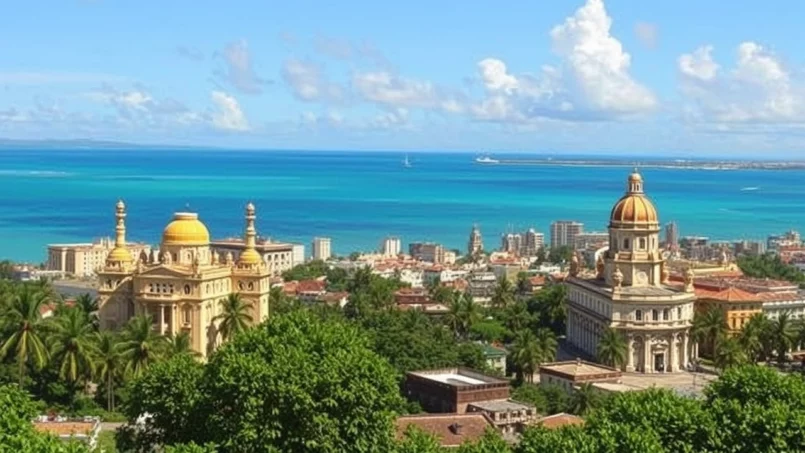
Traveling to Cuba means stepping into a postcard setting where turquoise beaches, colonial cities frozen in time, UNESCO-listed tobacco valleys, and a cultural scene of rare vitality are layered. Beyond the clichés of shiny vintage American cars and frosty mojitos lies a complex country, where history, nature, and the daily life of Cubans can be read in every square, every peeling façade, and every paladar.
This article provides a comprehensive overview of Cuba’s must-see tourist sites, connecting the major destinations – Havana, Viñales, Trinidad, the beaches of Varadero and the cays, the Bay of Pigs, Cienfuegos, Santiago de Cuba… – with what makes up the heart of the Cuban experience today: its private restaurants (paladares), its casas particulares (private homestays), and its major cultural events.
Understanding Cuba Before You Go
Discovering Cuba’s iconic sites also means adapting to a country where tourist infrastructure remains limited, shortages are frequent, and travel is still largely done with cash in hand. The dry season, from November to April, is the best time to explore the island, with temperatures generally between 68°F and 81°F, more bearable air, and a sea that is always warm, between 75°F and 84°F.
The wet season, from May to November, is characterized by heavy heat, frequent showers, and an increased risk of storms, particularly in September and October during the peak of the hurricane season. For a good balance between weather and crowds, the months of April and October are often recommended. For tighter budgets, May, June, and September are generally the most advantageous.
The following table summarizes the climate in Havana over a year, useful for planning visits to cities and natural sites.
| Month | Average Temp. (°C) | Min (°C) | Max (°C) | Average Rain (mm) | Main Remark |
|---|---|---|---|---|---|
| January | 21 | 17 | 26 | 51 | Dry, cooler |
| February | 25 | 17 | 25 | 50 | Pleasant, little rain |
| March | ~24 | 19 | 28 | 40 | Ideal for exploring |
| April | 24–29 | 20 | 29 | 60 | Start of the heat |
| May | ~25–30 | 21 | 30 | 110 | Beginning of the rainy season |
| June | 27 | 22 | 31 | 200 | Very hot and humid |
| July | 32 | 23 | 32 | 140 | Frequent heatwaves |
| August | 32 | 23 | 32 | 150 | Very warm sea |
| September | 26 | 23 | 31 | 190 | Possible hurricanes |
| October | 25 | 22 | 30 | 180 | Rainiest month |
| November | 23 | 20 | 33 | 60 | Return of drier weather |
| December | 22 | 18 | 32 | 50 | Mild winter |
Beyond the weather, Cuba imposes a few practical realities. Power outages are frequent, Wi-Fi access remains slow and paid, tap water is not drinkable, and pharmacies often lack basic medicines. The country operates mostly on cash, with the Cuban peso (CUP) as the official currency, but foreign cards, especially American ones, are not reliable and ATMs are rarely accommodating. It’s better to arrive with enough cash, kept safely, and accept traveling in an environment where resourcefulness is part of daily life.
Havana, Beating Heart and Open-Air Museum
The capital concentrates a large part of the country’s iconic sites. Between the cobblestone streets of La Habana Vieja, the seafront of the Malecón, the broad avenues of Vedado, and the villas of Miramar, each neighborhood paints a different face of Cuba.
La Habana Vieja, a UNESCO-Listed Historic Center
The old center of the capital, La Habana Vieja, is the largest colonial ensemble in Latin America inscribed on the UNESCO World Heritage list. Founded in 1519 around a strategic bay for Spanish galleons, the city was fortified early after the 1555 sack by French corsair Jacques de Sores. Today, visitors walk through a network of pedestrian streets where restored buildings, decrepit façades, and flowered balconies coexist in a unique atmosphere.
The neighborhood is organized around five large colonial squares, each having a specific role: military, commercial, social, or religious.
| Main Square | Dominant Historical Function | Major Tourist Features |
|---|---|---|
| Plaza de Armas | Military then administrative | Fortress, city museum, used bookstore |
| Plaza de la Catedral | Religious | Baroque cathedral, aristocratic palaces |
| Plaza Vieja | Social and commercial | Colorful architecture, cafes, microbrewery, Camera Obscura |
| Plaza de San Francisco | Commercial and port-related | Basilica, old stock exchange, cruise terminal |
| Plaza del Cristo | Urban, neighborhood | Local vibe, paladares frequented by Havana locals |
Around these squares, the façades tell centuries of history: Baroque palaces turned into museums, former aristocratic mansions become bars or paladares, churches repurposed as concert halls. The restoration, launched in the 1980s under the authority of the City Historian’s Office, coexists with decay, offering a permanent contrast that also contributes to the charm of the neighborhood.
Plaza de la Catedral and the Hemingway Myths
Plaza de la Catedral is probably the most photogenic. Originally a drained swamp in the 18th century, it gradually became framed by the mansions of great merchant families. The Catedral de San Cristóbal, with its Baroque façade and two asymmetrical bell towers, dominates the space. Inside, the style becomes more sober and neoclassical. For a time, relics attributed to Christopher Columbus were kept there before being transferred to Spain.
The palaces surrounding a square are open for visits, both for their architectural value and their new function. For example, a former palace may now house a museum, an art gallery, or a cultural center, allowing visitors to appreciate both its history and its contemporary use.
– The Palacio de los Condes de Casa Bayona houses the Museum of Colonial Art, with its shaded patios and period furniture.
– The Casa del Conde de Lombillo recalls that it hosted the city’s first post office.
– The Palacio de los Marqueses de Aguas Claras is now occupied by the restaurant El Patio.
– The Casa de los Condes de Peñalver houses the Wifredo Lam Center of Contemporary Art, focused on current creation.
A few steps away, on Calle Empedrado, a small crowd gathers in front of La Bodeguita del Medio, a cult bar associated with the mojito and Ernest Hemingway. His name is engraved everywhere on the walls, even if the historical reality of his loyalty to the place ultimately matters less than the myth he embodies. Nearby, one can also find the paladar Doña Eutemia, which has become a key address for tasting refined Cuban cuisine in an intimate setting.
Plaza Vieja, Urban Laboratory and Square of Cafes
Plaza Vieja, first called Plaza Nueva in 1559, is the first planned extension of the colonial city. Long the main market, disfigured in the 20th century by an underground parking lot, it regained its original appearance after the demolition of that structure in the 1990s.
The buildings that surround it tell the story of superimposed styles:
– La Casa del Conde Jaruco, built in the 18th century, displays its typical colorful stained-glass windows (the mediopuntos).
– The Palacio Cueto, with its Art Nouveau ornaments, is being transformed into a luxury hotel.
– The Camera Obscura, installed in a tower, projects a real-time panoramic view of the city thanks to a rare optical device in the world.
The El Escorial square is an ideal spot to sit on a terrace. You’ll find Café El Escorial, famous for its strong coffee often accompanied by street music, as well as the microbrewery Factoria (La Casa de la Cerveza), very popular with craft beer enthusiasts. At golden hour, the light enhances the ochre and pastel façades of the buildings, offering beautiful reflections in the glasses and creating a perfect setting for photographers.
Plaza de Armas, Cradle of the City and Colonial Memory
Plaza de Armas is Havana’s oldest urban square. This is where the first mass and the first municipal council were held. First dedicated to military maneuvers, it became a favorite promenade spot for the elite in the 18th century.
The monuments surrounding it constitute a condensed version of Cuban history:
– El Templete, a small neoclassical temple, marks the symbolic location of the city’s founding. In front, a kapok tree (ceiba) is the subject of a ritual: walking around it three times while making a wish.
– The Palacio de los Capitanes Generales, the former residence of colonial governors and then the seat of the presidency, is now the Museum of the City. On its façade, the street paved with wood was designed so that hooves and wheels would not disturb the sleep of the authorities.
– The Castillo de la Real Fuerza, a stone fortress built in the 16th century, houses a museum dedicated to navigation and shipwrecks. Its bronze weather vane, La Giraldilla, has become one of Havana’s symbols.
– The Palacio del Segundo Cabo and the current Hotel Santa Isabel complete this monumental ensemble.
The sale of second-hand books, once located on the square, now takes place in the ruins of a former judicial building, a few meters away. This market remains a privileged meeting place for literature enthusiasts and old revolutionary newspapers.
Plaza de San Francisco, Maritime Gateway
Facing the old port area, the Plaza de San Francisco de Asís was long the commercial heart of the city. Ships came to fetch fresh water and unload their goods. Fully restored, it now presents a more polished face, dominated by the Basilica San Francisco de Asís and its belltower overlooking the roofs.
The Fountain of the Lions, a marble copy of an Alhambra motif, stands in the center, while the Lonja del Comercio, the old stock exchange, testifies to past prosperity. Nearby, the statue of El Caballero de París, a marginalized character turned popular figure, is now caressed all day long: touching his beard is said to bring good luck.
Malecón, Vedado, Miramar: Havana Beyond the Walls
Leaving the historic center means walking along the Malecón, the seawall-road that borders the city for over seven kilometers. At sunset, the low walls fill with couples, fishermen, young people listening to music on their phones, despite the fumes from the old cars speeding along the roadway.
Further south, the Vedado neighborhood concentrates wide avenues, modernist buildings, bars, and cultural venues. The Hotel Nacional de Cuba, a symbol of an era when American stars and gangsters came to gamble and dance, now neighbors mythical cabarets like the Tropicana, still famous for its open-air shows. This area also hosts concerts, dance festivals, or events like the international salsa meeting Ritmo Cuba.
Miramar and Playa, more residential, host embassies, villas with gardens, and modern facilities like the Cira García International Clinic. Here you can also find some large paladares installed in former mansions, showing how far Cuban culinary creativity can go when given the freedom.
Viñales, Tobacco Valley and Postcard Landscapes
About 112 to 124 miles west of Havana, the village of Viñales and its UNESCO-listed valley offer a stunning natural setting. Limestone mogotes (karst hills) emerge from fields of tobacco, coffee, and sugarcane. The region, with a population of less than 30,000, still lives largely to the rhythm of traditional agriculture.
The valley was recognized by UNESCO for its cultural landscapes, where ancestral methods of tobacco cultivation and drying are still employed. Visitors can get there in several ways, but most choose the tourist bus or private taxis.
A comparative overview of options available for traveling between the Cuban capital and the famous Viñales Valley.
Maximum flexibility to explore at your own pace. Allow about 2.5 hours drive. Requires an international license and advance booking.
Economical and typical solution. Sharing the vehicle with other travelers. Departures from specific points in Havana.
Air-conditioned and comfortable bus service. Reservation recommended. Fixed schedules and direct route.
Guided tour often including stops at tourist sites along the way. Round-trip transportation and sometimes meals included.
The most comfortable and fastest, but also the most expensive. Price negotiation recommended before departure.
| Transportation Mode | Approximate Duration | Indicative Cost (one way) | Main Advantages | Major Drawbacks |
|---|---|---|---|---|
| Viazul Bus | 3 h 30 min to 4 h 10 min | 16–23 USD | Comfortable, air-conditioned, direct | Few departures, tickets to be reserved, state-owned company |
| Private Taxi | 2 h 30 min to 3 h | ~100–180 USD / car | Flexible, door-to-door, possible stops | Higher cost, depends on gas availability |
| Shared Taxi (colectivo) | ~4 h 40 min | 25–30 USD / person | Cost-sharing, local vibe | Irregular departures, variable comfort, frequent detours |
| Camiones + local colectivos | ~7 h | 3–8 CUC approx. | Very economical, total immersion | Long, uncomfortable, not easy for a first-time traveler |
Once there, discovery is done on foot, by horse, bike, or via a local tourist bus that serves the main points of interest for a modest fee. Trails cross fields to caves like the Cueva del Indio, where you board a small boat, or the Cuevas de Santo Tomás, more extensive. Giant murals, like the Mural de la Prehistoria, cover some slopes of the mogotes, testifying to a long tradition of mural art, whether you like the style or not.
Farmers must deliver a share of their tobacco harvest to the state, the rest being sold directly to visitors.
Accommodations are mostly in casas particulares, these government-regulated rooms in private homes, signaled by a small blue logo. Meals there are hearty, often better than in many state-run restaurants, with typical dishes like moros y cristianos (rice and black beans), roast pork, or grilled fish.
Trinidad, Colonial Gem and Ideal Base Between Sea and Mountains
A UNESCO World Heritage site, Trinidad gives the impression of being frozen in the 19th century. Its cobblestone streets, brightly colored houses, wooden balconies, and wrought-iron grilles compose an almost intact setting. The former wealth from the sugarcane plantations of the neighboring Valle de los Ingenios can be read in the palaces converted into museums.
The Plaza Mayor, surrounded by historical buildings, serves as the central point. It provides access to museums such as the Palacio Cantero and the Museo Romántico, illustrating the life of wealthy families in colonial times. From the bell tower, there is a panoramic view over the city’s rooftops, the sea, and the surrounding mountains.
At nightfall, the city changes face. The steps near the Casa de la Música transform into an open-air dance floor, filled with salsa, son, and timba. Club Ayala, a disco installed in a cave on the outskirts, adds a surreal touch to the nightlife experience.
The city of Trinidad serves as an ideal starting point to discover two iconic Cuban landscapes: the nearby mountainous terrain and the beaches of the region.
To the north, the Topes de Collantes massif and parks like El Cubano or Vegas Grande offer hikes leading to waterfalls such as Salto del Caburní or El Nicho, where you can swim in natural freshwater pools after walking through the forest.
To the south, Playa Ancón, about nine miles away, unfurls a light-sand beach that rivals some more famous resorts, but with a calmer atmosphere and a less built-up coastline. You can get there by taxi, bus, or even by bike from Trinidad.
Cienfuegos and the Bay of Pigs, Architecture and Memory
Further west of Trinidad, Cienfuegos, the “Pearl of the South,” is distinguished by its spacious urban planning and French influences. The Parque José Martí, with its richly adorned Tomás Terry Theater façade, the cathedral, and the administrative buildings, form a harmonious ensemble. On the waterfront, the Palacio de Valle, an eclectic building with neo-Moorish touches, is now a place for dining and contemplating the bay.
Nearby, the Ciénaga de Zapata and the Bay of Pigs (Playa Larga, Playa Girón) combine historical interest and natural wealth. Local museums revisit the failed 1961 landing, a major episode of the Cold War, while the coasts offer snorkeling spots like the Cueva de los Peces, a freshwater cenote connected to the sea, where tropical fish swim among corals.
Cienaga de Zapata and Bay of Pigs
Santiago de Cuba, Capital of the Oriente and Great Festivals
At the other end of the island, Santiago de Cuba embodies another face of the country. Closer to Jamaica than to Havana, the city is known for its deeply marked Afro-Cuban heritage, its musical traditions, and its popular festivals. The Santiago Carnival, in July, is one of the oldest and most spectacular on the island, with floats, congas, and comparsas that take over the streets for several days.
The city possesses a significant revolutionary and colonial historical heritage, visible notably at the El Morro fortress guarding the bay and at sites linked to figures of the armed struggle. It also serves as an access point to the Sierra Maestra mountains, home to Pico Turquino, the highest point in Cuba.
The Great Beaches: Varadero and the Cays
For many travelers, a stay in Cuba wouldn’t be complete without a few days of relaxation. The island has more than 3,540 miles of coastline, and a large part of its tourist appeal rests on white-sand beaches and translucent sea.
Varadero, the Most Famous Beach Resort
Located on a long peninsula about two hours’ drive from Havana, Varadero is the name that comes up most often when talking about Cuban beaches. For about 12 to 14 miles, a succession of hotels, all-inclusive complexes, and a few casas particulares line a shore where the sea takes on a shade of blue some travelers call “energy drink” blue.
The resort offers numerous excursions: catamaran trip to Cayo Blanco, day trip to Havana, visit to Matanzas or the Bellamar Caves. Golf enthusiasts can enjoy a seaside course. Nightlife is lively, with clubs, bars, and concerts sometimes until dawn. A hop-on-hop-off tourist bus runs the length of the peninsula for a modest price, making it easy to move between hotels, downtown, and beaches.
In winter, the wind can make swimming more choppy, but temperatures remain pleasant for visitors seeking sun.
The Cays, Isolated Paradises of Jardines del Rey
In contrast to Varadero, the cays – these small islands connected to the mainland by causeways over the sea (pedraplén) – offer a beach retreat atmosphere, almost cut off from the world. They belong to the vast Jardines del Rey archipelago, on the north coast.
Cayo Santa María
Cayo Santa María, a small island about 10 miles long by 1.2 miles wide, is the closest to Havana among the major tourist cays. Access is usually via Santa Clara airport, then by a road of nearly 30 miles that crosses the sea. The journey to the hotels takes about two and a half hours.
The beaches are renowned for their fine sand and tranquility. Most of life takes place within the all-inclusive complexes, some very high-end, popular with honeymooners. Outside the hotels, a tourist market, Pueblo La Estrella, concentrates shops, bars, and some entertainment. Outings are often limited to organized bus trips to Santa Clara, Cienfuegos, or Remedios.
Cayo Coco and Cayo Guillermo
Cayo Coco, Cuba’s fourth-largest island, is distinguished by its mangrove vegetation, lagoons, and the presence of birds like white ibises or pink flamingos. The beaches, with very white sand and clear turquoise water, are among the most photogenic in the country. A single road axis serves the different hotel complexes, and the feeling of isolation is even stronger than in Varadero.
Cayo Guillermo is connected by road to Cayo Coco and is home to the famous Playa Pilar, often ranked among Cuba’s most beautiful beaches. Its powdery sand and shallow lagoon attract families and lovers of pristine landscapes. A day trip is possible by taking a tourist bus from Cayo Coco.
Cayo Largo del Sur
Further south, Cayo Largo del Sur stands out for its direct exposure to the Caribbean Sea, earning it a reputation as one of the country’s best beach destinations. Its beaches, like Playa Sirena or Playa Paraíso, are often sparsely crowded, at the cost, however, of greater difficulty of access and an almost total dependence on local tourist infrastructure.
Varadero or the Cays: Two Atmospheres
To help choose between these two major beach options, we can summarize their respective advantages.
| Criterion | Varadero | Cays (Cayo Coco, Santa María, Guillermo, Largo) |
|---|---|---|
| Accessibility from Havana | 2–2.5 h by road | Road trip + often domestic flight |
| Life outside hotels | Town, bars, restaurants, markets | Almost non-existent, activity centered on resorts |
| Atmosphere | Lively, family-friendly, festive | Calm, isolated, conducive to rest |
| Beauty of beaches & water | Very beautiful turquoise water, white sand | Colors often considered “even more unreal” |
| Cultural excursions | Easy to Havana, Matanzas, caves | More limited, often day-trip organized tours |
| Budget | Wide range of prices | Mostly all-inclusive, higher budget |
Many travelers combine both experiences in one trip, ending with a few days on a cay after a more cultural journey.
Old Havana and Cultural Life: Music, Arts, Festivals
Throughout the country, Cuban culture is experienced as much in the street as in institutions. In Havana, grand theaters – Gran Teatro, National Theatre – coexist with Casas de la Música, casas de cultura and hybrid venues like the Fábrica de Arte Cubano, a former factory turned into a gallery, club, and concert hall.
The Cuban capital is home to several major heritage sites, including El Capitolio, a neoclassical building inspired by the U.S. Capitol; the Museo de la Revolución, located in the former presidential palace; the Colón Cemetery, famous for its monumental tombs; and the Plaza de la Revolución, a vast esplanade dominated by a stylized representation of Che Guevara and a monument dedicated to José Martí.
The schedule of events</strong is dense throughout the year. Festivals like the Havana Jazz Festival in January, the Biennial of Contemporary Art, the Festival of New Latin American Cinema in December, or major dance and music gatherings attract international audiences. In Santiago, the Festival del Caribe and the July carnival transform the city into a long procession of drums and floats. In Remedios, the Parrandas at the end of December mix religious traditions and pyrotechnic competitions.
Paladares, Casas Particulares, and Everyday Gastronomy
Understanding Cuban tourist sites also means looking at where and how you eat. The country suffers from chronic food shortages and complex logistics, but one sector has developed particularly since the economic reforms launched in the early 2010s: that of paladares, private restaurants.
What Paladares Are and Why They Matter
Born in the 1990s, initially limited to a few tables in a family living room, paladares took off after the relaxation of rules in 2010–2011. They then gained the right to occupy dedicated premises, increase the number of covers, and hire non-family staff. While still subject to tax, they are distinctly different from state-run restaurants.
This is the amount, in dollars, that the official monthly salary in Cuba rarely exceeds.
The counterpart is a price level that far exceeds what most Cubans can afford. A bill for two with main courses, dessert, coffee, and wine in a good paladar can easily approach or exceed a few dozen dollars, when a meal in a small restaurant frequented by locals costs only a few dollars.
A Handful of Iconic Paladares
In Havana, several paladares have acquired fame beyond borders: La Guarida, installed in a dilapidated building immortalized by the film “Strawberry and Chocolate,” has seen dignitaries and celebrities pass through; San Cristóbal, frequented by heads of state like Barack Obama, mixes a décor loaded with knick-knacks with Creole-inspired cuisine; Ivan Chef Justo or Al Carbón, installed in an 18th-century building, reinterpret local classics.
Others like 304 O’Reilly, El Del Frente, Mas Habana, El Cocinero or Vistamar have found a balance between Cuban dishes and international touches, with creative cocktails and trendy atmospheres. Not far from the squares of Old Havana, El Chanchullero de Tapas (near Plaza del Cristo) or Doña Eutemia (behind the Cathedral) have become “must-visits” for many.
Over the years, many more addresses have been added, in all neighborhoods: Los Nardos facing the Capitol for generous portions at a reasonable price, El Biky, La Fontana, La Cocina de Lilliam, La Esperanza, Mediterraneo, Otramanera, Rio Mar, Santy Pescador… The names multiply but the logic remains the same: to offer better than state establishments, within the limits imposed by supply.
What You Really Eat in Cuba
Cuban cuisine draws from several sources – Spanish, African, Taíno, Chinese – but it is traditionally not spicy. The basis of many meals consists of a portion of meat or fish accompanied by white rice and black beans, often dressed with a simple mixture of oil, salt, and vinegar. Side dishes include fried plantains, cassava (yuca), sweet potato, or cucumber and tomato salad when available.
Among the emblematic dishes, you’ll find *ropa vieja* (shredded stewed beef), *arroz con pollo* (chicken and rice), roast pork, or *picadillo* (ground beef cooked with vegetables and sometimes raisins). In coastal areas, fish and seafood play an important role, particularly snapper, mahi-mahi, or lobster.
Street pizzas, very popular, are prepared on thick bases with a sweet tomato sauce and often gouda cheese, sometimes topped with pineapple or chorizo. Sold for one to a few dollars, they are an accessible snack.
For sweets, flan, tres leches, small guava turnovers (pastelitos, cangrejitos) or rice pudding are among the most common. Everything almost always ends with a cafecito, a strong, sweet espresso, sometimes served in tiny cups to share.
For drinks, the country highlights its rum – Havana Club, Santiago de Cuba, or newer brands like Black Tears – in now-universal cocktails like the mojito or the daiquiri. La Bodeguita del Medio and El Floridita, respectively associated with these two classics, claim to be their birthplaces, with photos of Ernest Hemingway as proof.
Where to Stay: State Hotels or Casas Particulares?
Across the territory, accommodation oscillates between large public hotels, all-inclusive complexes, and casas particulares. The latter, rented out by families, have become the preferred accommodation mode for many independent travelers. They offer better value for money, allow direct contact with locals, and often offer hearty meals as an option.
This is the price in dollars per night for a double room with private bathroom in Cuban cities outside the most touristy areas.
State hotels offer a more standardized experience but sometimes suffer from maintenance issues, slow service, or water and power cuts despite generators in large structures. In some beach areas, especially the cays, they remain the only realistic option.
Practical Tips to Get the Most Out of Cuban Sites
Traveling to Cuba’s must-see tourist sites requires some extra precautions compared to other Caribbean destinations. The rail infrastructure is slow and unreliable, the local bus network is uncomfortable, and the roads, although relatively clear due to a lack of cars, are often degraded and poorly lit. Tourist buses like Viazul or private transfers organized by agencies and casa owners often represent the best compromise between cost, safety, and comfort.
Visitors must anticipate their medical and hygiene needs by bringing their own medicines, toiletries, sunscreen, and mosquito repellent, as diseases like Dengue, Zika, or chikungunya are present on the island. It is also advisable to bring a filter bottle or purification tablets, as bottled water can be scarce in some places.
In cities, small scams and commercial harassment exist, notably in the form of “spontaneous guides” or “off-circuit” cigar sellers who claim to offer unbeatable deals. Remaining polite but firm, avoiding black-market transactions, and using official exchange offices helps reduce these risks.
Finally, one should not underestimate the impact of power cuts on site visits. Some museums or monuments may close earlier, restaurants may operate on a tight margin, and electronic payment systems may fail. Traveling to Cuba means accepting this element of unpredictability, which is as much a part of the country as its colonial squares or its beaches.
Building Your Itinerary Around the Must-See Sites
With so many places to see, a first trip to Cuba requires some choices. A classic two-week circuit generally combines:
– Havana and its historic squares, museums, paladares, and musical evenings.
– Viñales and its tobacco valley, caves, and plantations.
– Trinidad, between colonial heritage, mountain waterfalls, and Playa Ancón beach.
– Cienfuegos and the Bay of Pigs for architecture and recent history.
– Ending the trip with your feet in the sand, in Varadero or on a cay.
The more curious then extend their trip to Santiago de Cuba and the far Oriente, or to Baracoa, more isolated, to discover yet another face of the country.
Throughout this journey, the essential thing is probably to alternate must-sees, sometimes very crowded, with quieter parentheses – a village, a casa particular in the countryside, a lesser-known small beach – that allow a glimpse of the daily life of Cubans away from organized tours.
It is in this balance between grand squares, classified valleys, dream beaches, guesthouses, and imaginative paladares that the true richness of Cuba’s must-see tourist sites lies. A country where every peeling façade, every bowl of rice and beans, every trumpet note on a square brings a fragment of history and present, far beyond the postcard alone.
Disclaimer: The information provided on this website is for informational purposes only and does not constitute financial, legal, or professional advice. We encourage you to consult qualified experts before making any investment, real estate, or expatriation decisions. Although we strive to maintain up-to-date and accurate information, we do not guarantee the completeness, accuracy, or timeliness of the proposed content. As investment and expatriation involve risks, we disclaim any liability for potential losses or damages arising from the use of this site. Your use of this site confirms your acceptance of these terms and your understanding of the associated risks.

Cyril Jarnias is an independent expert in international wealth management with over 20 years of experience. As an expatriate himself, he is dedicated to helping individuals and business leaders build, protect, and pass on their wealth with complete peace of mind.
On his website, cyriljarnias.com, he shares his expertise on international real estate, offshore company formation, and expatriation.
Thanks to his expertise, he offers sound advice to optimize his clients' wealth management. Cyril Jarnias is also recognized for his appearances in many prestigious media outlets such as BFM Business, les Français de l’étranger, Le Figaro, Les Echos, and Mieux vivre votre argent, where he shares his knowledge and know-how in wealth management.





