
 Published on and written by Cyril Jarnias
Investing in real estate in Batoumi is stepping onto one of the most dynamic coastlines of the Black Sea basin. A seaside resort, tourist hub, and logistical crossroads between Europe and Asia, the city combines steady price increases, high rental yields, and a surprisingly simple legal framework for foreigners. But behind the image of the “Las Vegas of the Black Sea,” the market is becoming more complex, projects are multiplying, and the risk of overdevelopment is growing. In other words, it’s no longer enough to buy “anywhere, anyhow” to get a good deal.
Good to know:
This article provides a detailed analysis of Batoumi’s real estate market, covering the economic context, prices by neighborhood, potential profitability, and taxation. It also addresses the major ongoing projects, the real risks to consider, and the essential criteria for selecting a good investment.
A Market Driven by Tourism and Foreign Capital
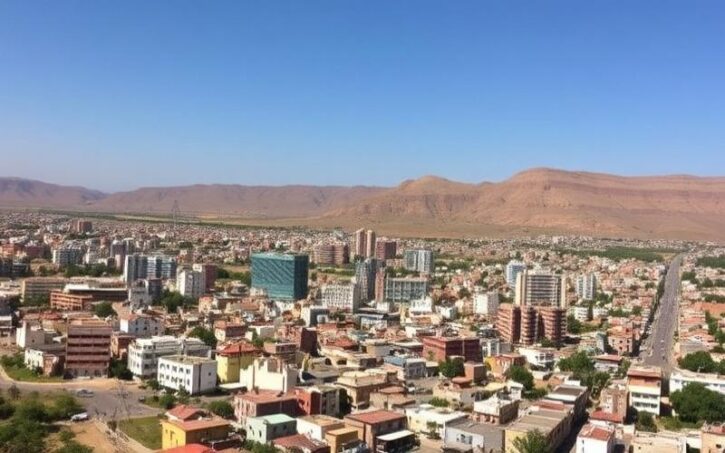
Batoumi has become, in just a few years, one of the most dynamic real estate markets in the Caucasus. The transformation is spectacular: from a small seaside town, the city has turned into a resort metropolis packed with skyscrapers, casinos, international hotel chains, and luxury apartments.
4.4
Georgia generated a record-breaking $4.4 billion in tourism revenue in 2024.
This dynamic directly fuels the real estate market. Hotel occupancy rates in [Batoumi] have significantly improved, around 52.5% in 2024 for hotels, while Airbnb-type listings now exceed 11,000 active units, with a marked increase in booked nights and nightly rates. In parallel, the international airport is breaking passenger records and undergoing a massive expansion program.
Caution:
In 2024, over 80% of residential transactions in Batoumi involved international investors, with rates reaching up to 90% according to some studies. Buyers primarily come from Russia, Israel, Poland, Turkey, Ukraine, Germany, and the United States. This phenomenon contrasts with Tbilisi, where the majority of buyers are Georgian.
This “internationalization” partly explains the gradual rise in prices per square meter but also the sophistication of the offerings: branded residences (Radisson, Wyndham, Novotel, Hyatt Centric…), complexes with hotel services, pools, spas, integrated property management, possible payment in cryptocurrency, etc.
Real Estate Prices in Batoumi: Where Does the Market Stand Today?
Overall, Batoumi remains cheaper than many European resorts, but the phase of “super discount” is clearly in the past. The trend is one of steady increase.
In 2018, the average price per square meter was around $727. In 2023, it was nearing $998, and by 2025 studies converge on a range of $1,130–$1,185/m² for new projects, with an annual increase of about 11–14% depending on the segment. Older apartments remain slightly below, around $1,100–$1,169/m², but their percentage growth is sometimes faster.
40.5
Share of apartments sold below $1,000/m² in 2025, down over 50%.
Price Comparison by Neighborhood in Batoumi and its Region
The market is highly segmented geographically. The following figures provide an order of magnitude for minimum prices per square meter in different sectors of the city and its surroundings.
Batoumi: Main Neighborhoods
| Neighborhood of [Batoumi] | Price Starting From (USD/m²) | Total Indicative Price From (USD) |
|---|---|---|
| Old Town (Old City) | $3,100 /m² | $91,430 |
| Downtown | $1,859 /m² | $35,010 |
| Batumi Boulevard | $1,713 /m² | $33,285 |
| Rustaveli | $2,308 /m² | $47,430 |
| Bagrationi | $1,172 /m² | $35,010 |
| Javakhishvili | $1,239 /m² | $40,545 |
| Khimshiashvili | $1,778 /m² | $43,918 |
| Aghmashenebeli | $866 /m² | $25,935 |
| Tamar | $2,026 /m² | $30,900 |
| Kakhaberi | $1,350 /m² | $67,504 |
| Airport District | $1,401 /m² | $27,900 |
Around Batoumi, some coastal towns are also gaining value, sometimes at levels comparable to or higher than the city’s best neighborhoods.
Seaside Resorts Near Batoumi
| Coastal Locality | Price Starting From (USD/m²) | Total Indicative Price From (USD) |
|---|---|---|
| Gonio | $2,091 /m² | $29,000 |
| Kvariati | $2,300 /m² | $56,639 |
| Makhinjauri | $1,246 /m² | $29,463 |
| Chakvi | $1,339 /m² | $23,270 |
| Kobuleti | $1,321 /m² | $28,800 |
Gonio–Kvariati clearly stands out as a new “hotspot”: the area shows an annual increase of about 5.7% in 2025, with average prices at $1,715/m² but a range from $1,150 to $5,800/m² for the most luxurious projects.
What Rental Yield Can You Expect in Batoumi?
Rental profitability is Batoumi’s main selling point. Various cited studies converge on average gross yields of around 8–9% per year, significantly above many European cities: around 8.6–8.8% in Batoumi, compared to 5.5% in Budva, 5.9% in Lisbon, or 4.6% in Nice. Some well-positioned and well-managed scenarios go much higher.
Some articles cite average rental yields of 10–13%, even 12–20% for highly optimized seasonal rentals. But it’s necessary to distinguish marketing talk from realistic figures: for most investors, a gross yield between 7 and 10% in hard currency remains a reasonable baseline, provided the location, property quality, and management are carefully chosen.
Numerical Example: Small Tourist Apartment
A frequently referenced scenario involves a studio of about 30 m², purchased for $18,000 (i.e., $600/m², a level that corresponds more to very early-stage purchases or “black frames” in less central areas). The estimated daily rent is $60 in high season (June–October) and $30 in low season, with about 24 rented days per month in season and 11 days for the rest of the year. Additionally, a monthly rent of $300/month for a few months of long-term rental off-season is added.
6700
Net annual income generated, representing over 37% of the initial purchase price in this extreme case.
Based on budgets more in line with current levels (studio between $25,000 and $35,000, apartment of $70,000–$80,000 in a seafront complex), realistic projections place typical gross profitability between 7 and 13% depending on:
Example:
In Nice, prices and rental demand vary based on several criteria. The neighborhood is decisive: the Old Town and the New Promenade are more sought-after and expensive than the outskirts. The rental model also differs, with seasonal offerings (short stays, high rates) versus long-term leases (more stable rents). The level of services plays a role, contrasting managed residences like aparthotels (services included) with standard buildings (fewer services). Finally, seasonality impacts occupancy rates, especially in winter when demand can fluctuate based on tourist appeal.
Yield by Neighborhood: A Very Heterogeneous Market
Yield studies by zone show significant gaps. The Bagrationi neighborhood, for example, combines still relatively affordable purchase prices and sustained rents, making it a favored playground for yield-oriented investors.
Bagrationi: Example of Yields (Q3 2023 Data)
| Property Type | Average Price (EUR) | Monthly Rent (EUR) | Estimated Gross Annual Yield |
|---|---|---|---|
| Studio | €40,674 | €426 | 12.57% |
| 1 Bedroom | €56,754 | €473 | 10.00% |
| 2 Bedrooms | €89,388 | €615 | 8.26% |
| 3 Bedrooms | €110,670 | €946 | 10.26% |
Other key sectors like Khimshiashvili (New Boulevard), the airport district, or the old town offer slightly lower but still high yields for European markets, often between 6.5 and 9% depending on the property type.
An important point emerges from this data: the studio market is already heavily saturated. While micro-apartments sometimes show the best gross yields, more spacious apartments (2–3 rooms) generally have better liquidity for resale and attract more interest from families and long-term residents.
Understanding Different Segments: Black Frame, White Frame, Turnkey
Prices cited on platforms and by developers in Batoumi can seem very attractive, but it is imperative to check the property’s delivery condition. Three main categories dominate:
– Black frame: the raw shell. Concrete structure, without finishes, sometimes without plumbing or electrical systems installed. It is the cheapest (studios/1 bedroom between $12,000 and $30,000), but additional work can easily add $10,000 for a small studio.
– White frame: the interior structural work is done (plastered walls, poured floors, window frames installed), but all interior finishing (kitchen, bathroom, painting, furniture) remains to be funded. Prices for this level generally range between $20,000 and $38,000 for small units.
Tip:
A turnkey apartment is completely finished and furnished, ready to be rented or occupied. In hotel-type residences, this often includes appliances, bedding, sometimes even dishes and curtains. For this level of finish, the cost is generally between $25,000 and $50,000 for a studio and can be much higher in branded complexes or on the seafront.
The choice between these options depends on the investor’s profile. Those seeking quick yield and remote management will favor turnkey with integrated management, at the cost of a higher entry ticket. More “hands-on” profiles or those with a local network might be interested in black frames, but the price gap with the current market is narrowing as construction costs rise.
Neighborhoods and Strategies: Where to Invest in Batoumi?
Neighborhood choice is decisive for rental performance… and for the risk profile. Each zone of [Batoumi] corresponds to a different strategy.
New Boulevard: The Sales Engine
The New Boulevard concentrates a large part of new construction. In the first half of 2025, this district was the sales champion with over 4,000 units sold, an increase of nearly 22% year-over-year. Prices there have climbed to around $1,445/m² on average, with an 11.7% progression in one year.
This is a modern sector, relatively quiet compared to the old town, with shopping centers, schools, proximity to the airport, and urbanization designed for year-round living. The offerings range from studios in 20 to 40-story buildings to upscale residences with pools, spas, gyms, and hotel services.
For an investor, the New Boulevard is an interesting compromise:
– high liquidity,
– excellent rental demand,
– solid appreciation prospects thanks to continuous development,
– ease of management with many on-site services.
Old Town / Old Boulevard: The Historic High-End
The historic center, with its narrow streets and renovated European-inspired buildings, falls within the high price bracket, often between $1,800 and over $3,100/m² depending on the street and building type. Seasonal rents there are high: $60 to $100 per night for a 1+1 in summer, $25 to $40 in winter, $700 to $900 per month for medium-term leases.
Good to know:
The market benefits from steady demand year-round, driven by tourism and business travelers. Average yields are 8 to 10%, but the initial investment is high and new supply is limited. This sector is ideal for acquiring a prestigious property with good resale liquidity.
Gonio–Kvariati: The Premium Seaside Bet
A fifteen-minute drive from the center, Gonio is establishing itself as one of the most ambitious projects on the Georgian coast. More preserved environment, beaches reputed for their cleanliness, unobstructed sea views, and the arrival of major international players.
Several strategic projects are underway or announced there:
Real Estate Developments in Gonio
Discover the main large-scale projects currently underway or planned in the Gonio area, combining tourism, luxury residential, and leisure.
A 260-hectare project led by EMAAR/Eagle Hills, including a marina, luxury residences, shopping centers, chain hotels, and marinas.
A vast ‘all-inclusive’ resort offering over 100 amenities: aquaparks, spa, restaurants, and kids’ clubs.
Series of residences (Radisson, Wyndham Grand, Green Side) on the seafront, with pools, private beach, spa, restaurants, and underground parking.
Prices there start around $2,091/m², with upscale units easily exceeding $5,000/m² in the best positions. Rental profitability is generally between 7 and 10% per year, with a peak in summer income. It’s a bet both on the scarcity of seaside land and on the destination moving upmarket.
Airport District & Inland Areas: Entry-Level with Potential
The airport district and inland areas offer the most moderate prices per square meter in the city, often between $866 and $1,401/m². These are developing neighborhoods, with still many ongoing works and sometimes lagging infrastructure (schools, shops).
6–8
Gross yields achievable in these sectors, targeting long-term residents with moderate rents.
Green Periphery: Makhinjauri, Chakvi, Kobuleti
North of Batoumi, Makhinjauri and Chakvi attract more “eco” projects, with greenery, panoramic views, and lower building density. Prices there fluctuate around $1,000–$1,300/m², with an estimated annual rental yield of 6–8%. The risk profile is different: demand there is very seasonal, but medium-term appreciation prospects are good, especially in Makhinjauri where the eco-responsible trend could support increases of 7–10% per year.
Kobuleti, further north, also offers holiday resort projects with prices near $1,281/m². Again, the key lies in the right choice of location and developer.
Major Projects That Could Reshape the Market
One element not to be underestimated when investing in Batoumi is the multiplier effect of major infrastructure projects and mega real estate developments.
Among the most notable:
– Ambassadori Island Batumi: development on 84 hectares of artificial islands and peninsulas north of the city, led by Ambassadori Group. The project envisions villas, skyscrapers, shopping centers, a yacht club, promenades, water parks, schools, hotels, and residences. The first sector (about 25 hectares) is in the phase of gradual opening. Ultimately, this program could redraw the northern waterfront and attract a very high-end clientele.
Good to know:
The Gonio Marina resort complex, developed by EMAAR and Eagle Hills with a $6 billion investment, includes a marina, branded residences, shopping centers, and luxury hotels. This project is considered the most structuring development for the Gonio–Kvariati sector and, by extension, for Batoumi’s entire real estate market.
– Cube Tower: a 260-meter tower announced as Georgia’s tallest building, reinforcing the city’s vertical skyline image.
– Expansion of Batumi International Airport: a project of over 12.5 million GEL just for 2025, including passenger terminal enlargement, runway refurbishment, expansion of aircraft parking (up to nine medium-sized aircraft simultaneously), improvement of passport control areas. In 2024, the airport already welcomed nearly 945,000 passengers, an increase of over 50% compared to the previous year.
Good to know:
The Batoumi bypass road is now in service, and the East-West highway connecting Tbilisi to the coast is nearing completion, reducing the journey to under three hours. This strategic corridor consolidates the city’s role in the modern Silk Road and improves access for tourists.
– Massive Public Investments: over 7 billion GEL in infrastructure spending nationwide in 2024, with a portion targeted at tourist areas like [Batoumi]. The government also plans over one billion GEL for tourist infrastructure by 2028.
For an investor, these projects represent both an opportunity (increased flows, prestige, price hikes in affected areas) and a signal to analyze: some sectors could be oversupplied with tourist accommodations by the end of the decade.
A Legal Framework Surprisingly Favorable to Foreigners
One of Georgia’s major assets, and thus Batoumi’s, is the legal simplicity for non-resident investors.
Foreigners have the same rights as Georgian citizens to buy and hold residential and commercial properties in full ownership (“freehold”), transferable by inheritance. The only real restriction is on agricultural land, inaccessible directly to foreigners (except via a Georgian company).
Good to know:
No residency permit or local ID is required to purchase. Property transfer is digital: the Public Registry, accessible 24/7 and blockchain-based since 2017, registers a property in 1 to 4 days (24 hours express). All encumbrances, mortgages, and disputes are publicly viewable.
The typical purchase process unfolds in a few steps:
Tip:
Purchasing real estate in Georgia follows a structured process. First, define your strategy (short-term rental, long-term lease, or personal residence). Then, property search can be done via specialized platforms, local agencies, or portals like Korter.ge or Avezor. Legal due diligence is essential: a local lawyer must verify ownership, absence of mortgages, and urban planning compliance. The sale contract, bilingual (Georgian and the buyer’s language), is signed before a notary or at the Public Service. Payment is typically made by bank transfer in GEL or foreign currency, with some transactions accepting cryptocurrencies. Finally, title registration at the Public Registry is mandatory, with a fixed fee of 50 to 200 GEL depending on the desired timeframe.
Foreigners can appoint a representative via a notarized power of attorney to handle everything remotely, including opening a bank account, signing contracts, and registration in the public registry.
Taxation: A Light Environment But One to Master Well
Real estate taxation in Georgia is among the most attractive in Europe, provided procedures are followed.
– There is no transfer tax or stamp duty on purchase between private individuals.
– Property registration fees remain symbolic (50–200 GEL).
– Annual property tax is effectively zero for most individual investors whose income in Georgia does not exceed 40,000 GEL per year. Beyond that, the tax is progressive but capped at 1% of the property’s market value, with effective rates often around 0.5–0.8%.
5
Minimum holding period to benefit from tax exemption on the resale of a property in France
– If a residential property is resold more than two years after purchase, there is no capital gains tax;
– if sold within two years, the capital gain is taxed at 20% (for individuals outside specific schemes).
For rental income, two main regimes:
– Registered landlord for residential rental: flat rate of 5% on gross rents, no deduction of expenses, provided rents are declared monthly;
– standard income tax regime: taxation at 20% on net income (after deduction of documented expenses).
Caution:
Beyond 100,000 GEL in annual rental income, VAT registration (at 18%) becomes mandatory for certain forms of operation deemed commercial activity.
Several additional schemes exist (“small business” status at 1% of turnover up to 500,000 GEL, micro-enterprise regime at 0%, etc.), but they mostly apply to investors structuring their activities via a local company.
Finally, real estate investment can open the door to a residency permit:
– for property with a market value over $100,000, a short-term residence permit, renewable annually;
– above $300,000, an investor residence permit, which can lead to permanent residency after 5 years of holding.
How to Finance Your Purchase in Batoumi?
Several financing options are open to foreigners:
Good to know:
Three main options exist: cash purchase in hard currency (simplest and fastest solution), mortgage loan from local banks (up to 70% of value, 30% down payment, rates ~7%, strict conditions for non-residents), and developers’ installment payment plans (often interest-free, 20-30% down, spread over 12 to 60 months). Caution: for the latter, legal ownership is only transferred after full payment, with a risk of losing payments in case of default.
Some projects, like SUMMER 365, even accept payment in cryptocurrency, further broadening the range of possible financing for international investors.
Management Costs, Fees, and Net Profitability
While gross yields in Batoumi are appealing, a serious calculation must include possession and operating costs.
Available estimates provide the following orders of magnitude:
– condominium/HOA fees: generally $2–$3/m² per month for standard complexes, 1.5–3 GEL/m² for residences with pools and services (i.e., $20–$60 per month for a studio or small 2-bedroom);
– water, electricity, gas, and internet bills: about $50 per month for a studio, slightly more for a larger apartment;
– optional home insurance: $100–$300 per year, plus possibly $50–$150 for civil liability;
– various taxes (waste, small local fees): 20–50 GEL per year.
3000
Annual ownership costs for a rental property can reach up to $3,000 for intensive operation with numerous services.
For property management, aparthotel-type complexes typically take 30–40% of gross income in exchange for full-service handling (marketing, check-in, cleaning, maintenance). Specialized agencies for Airbnb and short-term platforms charge comparable commissions.
Including these costs and taxation (5% on gross rents in the most favorable case), the net profitability of a good investment in [Batoumi] is more likely in a range of 5–9%, depending on the risk level and the degree of personal involvement in management.
The Risks of a Very Attractive Market
The overall picture is positive, but Batoumi is not a risk-free El Dorado. Several points call for caution.
Risk of Overdevelopment and Pressure on Rents
Projections indicate over 58,000 new apartments to be built between 2025 and 2029 in [Batoumi], of which more than 46,000 are considered “investment properties.” Nearly 98% of these units fall within the $1,000–$2,000/m² bracket, mostly studios and small apartments intended for the tourist rental market.
The number of short-term rentals is expected to double by 2029. However, sale prices are rising faster than rents: average yields have already slightly declined, and analysts expect yields to remain in a 7–10% range rather than the 12–15% highlighted by some developers.
Caution:
A massive influx of new hotel rooms, without an equivalent increase in tourist demand, could lead to a decline in occupancy rates and downward pressure on prices. Projections for 2029 indicate that yields could then drop, potentially between 3.4% and 7.4% depending on the evolution of tourist flows.
Legal Risks and Developer Quality
Another frequent pitfall concerns issues with property titles, urban planning disputes, or struggling developers. In such a bubbling market, not all construction companies are equal. Some very aggressive price offers mask incomplete permits, chronic delays, or even fragile financial structures.
The belief that “buying directly from the developer is always safer and cheaper” is misleading. Standard contracts from some developers strongly limit penalties for delays and restrict buyer termination rights. Marketing brochures, meanwhile, sometimes embellish the future reality of infrastructure (pool never built, limited sea access, roads not completed).
Hence the importance:
Tip:
For a secure real estate investment in Andorra, it is crucial to systematically check the land status and encumbrances in the Public Registry, select developers with a solid track record (like Alliance, Orbi, Next, Horizon, or Wyndham Grand), and be assisted by an independent local lawyer, particularly for purchases off-plan or with installment payment plans.
Macroeconomic and Geopolitical Volatility
Georgia shows robust economic growth (around 5% per year), a clear strategy of rapprochement with the European Union, and a very pro-investor tax policy. But the country remains exposed to regional tensions, the volatility of the lari against the dollar or euro, and the vagaries of the global economy.
A decline in tourist demand due to an international crisis, travel restrictions from certain source countries, or a geopolitical shock could impact, even temporarily, occupancy rates and the profitability of tourist-oriented properties.
Investor Profile: Who is Batoumi Suitable For?
Given all these elements, investing in real estate in the city of Batoumi is particularly suitable for several profiles:
Example:
The Portuguese coastal real estate market attracts different investor profiles, notably: the investor focused on rental income, willing to accept some seasonality in exchange for above-average European yields; the individual seeking a second home by the sea, likely to self-finance through seasonal rentals; the temporary resident or digital nomad wanting to reduce living costs while capitalizing long-term on price appreciation; and finally, the wealth-building investor aiming for moderate but steady capital gains (5–10% per year in prime zones) and appreciating the security of a simple and transparent legal framework.
On the other hand, [Batoumi] is not necessarily suitable for those seeking immediate liquidity (resale remains a process that takes time), a guaranteed yield, or purely residential exposure without a tourist component.
How to Structure an Investment Approach in Batoumi?
To turn theoretical appeal into a concrete project, several steps are necessary.
First, clarify your primary objective: yield, capital appreciation, personal use, or a mix of the three. An investor focused on cash flow will prioritize areas like Bagrationi, the airport district, or parts of the New Boulevard, with projects offering integrated management. A profile oriented toward prestige and future resale will rather target Gonio, the old town, or branded residences on the seafront.
Tip:
To establish precise pricing, it’s essential to thoroughly research actual prices and rents, by neighborhood and property type. Use detailed numerical tables from market studies as a starting point, then supplement this data with an on-site visit, interviews with local managers, and consultation of platforms like Airbnb. This approach provides an updated and concrete view of occupancy rates and nightly rates being charged.
Then, carefully select projects. Large complexes under construction (Calligraphy Towers, Alliance Centropolis, OKTO ART HOUSE, Blue Sky Tower Holiday Inn, etc.) often offer attractive payment plans and strong marketing dimensions. Already completed projects, on the other hand, allow verification of construction quality, homeowners association functioning, and rental reality firsthand.
Finally, legally and fiscally frame the operation: choice between direct ownership or via a company, possible registration as a landlord to benefit from the 5% rate on rents, anticipation of documents needed for a future residence permit, systematic use of a lawyer for due diligence.
In Conclusion: A Promising Market, But One That Now Demands a Professional Approach
Investing in real estate in the city of Batoumi remains, at this stage, one of the most accessible ways to obtain a tangible seaside asset, in a light-tax jurisdiction, with rental yields above those of many European capitals. The fundamentals – growing tourism, influx of foreign investors, major infrastructure projects, pro-private property legal framework – remain solid.
Good to know:
The rental real estate market is entering a mature phase: prices have already increased significantly and competition for seasonal rentals is strong, with a risk of overproduction in certain segments. The success of an investment will now depend on a thorough analysis of the neighborhood, property type, developer, tax strategy, and management quality.
For investors ready to do this work, to surround themselves with local professionals, and to adopt a medium-to-long-term vision, [Batoumi] still offers a rare field of opportunity in Europe: the possibility to combine a seaside lifestyle, capital appreciation potential, and robust rental income in a single operation.
Disclaimer: The information provided on this website is for informational purposes only and does not constitute financial, legal, or professional advice. We encourage you to consult qualified experts before making any investment, real estate, or expatriation decisions. Although we strive to maintain up-to-date and accurate information, we do not guarantee the completeness, accuracy, or timeliness of the proposed content. As investment and expatriation involve risks, we disclaim any liability for potential losses or damages arising from the use of this site. Your use of this site confirms your acceptance of these terms and your understanding of the associated risks.

Cyril Jarnias is an independent expert in international wealth management with over 20 years of experience. As an expatriate himself, he is dedicated to helping individuals and business leaders build, protect, and pass on their wealth with complete peace of mind.
On his website, cyriljarnias.com, he shares his expertise on international real estate, offshore company formation, and expatriation.
Thanks to his expertise, he offers sound advice to optimize his clients' wealth management. Cyril Jarnias is also recognized for his appearances in many prestigious media outlets such as BFM Business, les Français de l’étranger, Le Figaro, Les Echos, and Mieux vivre votre argent, where he shares his knowledge and know-how in wealth management.





