
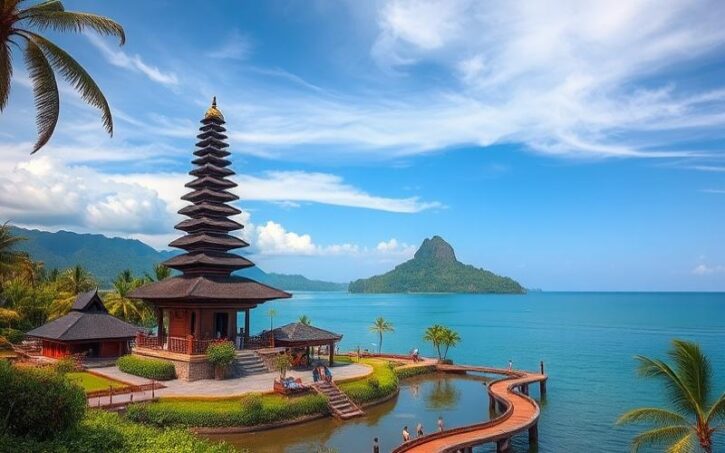
 Published on and written by Cyril Jarnias
In the enchanting tropical setting of Bali, real estate investment seems like a dream within reach, but behind the paradisiacal panoramas sometimes lie subtle yet costly disappointments.
While white sand beaches and magnificent sunsets serve as the backdrop for promotional ads, potential buyers must be aware of the deceptive phenomenon of retouched photos. These often enhanced images can mask important details that are only discovered during an on-site visit, thus turning the acquisition of one’s dream property into a disappointing experience.
By analyzing these common practices in the Balinese real estate market, this article highlights tricks for spotting digital modifications and making an informed investment, thereby avoiding the pitfalls of a market as attractive as it is complex.
Understanding the Real Estate Market in Bali
The real estate market in Bali is experiencing sustained growth in 2025, driven by the tourism boom, increased interest from foreign investors, and the development of new attractive hubs on the island. Areas such as Canggu, Uluwatu, and Pererenan continue to see prices climb while Kedungu emerges as a new hotspot for real estate investments.
Types of Available Properties
- Villas: Varied styles (Mediterranean, Greek, Moroccan), often sought for tourist or residential rentals.
- Apartments: Less common but on the rise in urban areas or near beaches.
- Vacant Land: Highly sought after for custom construction projects or long-term investment.
| Property Type | Primary Use | Popular Areas |
|---|---|---|
| Villa | Rental / Residence | Canggu, Seminyak |
| Apartment | Rental / Residence | Denpasar, Kuta |
| Land | Investment/Construction | Ubud, Kedungu |
Demand vs Supply
Supply has significantly increased in recent years with the proliferation of real estate projects in all major tourist regions. However, demand remains higher than supply in certain key areas where land is limited (notably Canggu), maintaining upward pressure on prices.
Factors Influencing Prices
- Location: Proximity to beach/tourism = higher value (e.g., Canggu vs East Bali).
- Tourism: Growth in visitor numbers fuels rental profitability and boosts demand.
- Local Regulations: Restrictions on direct acquisition by foreigners; necessity to use certain legal structures (leasehold/Hak Pakai).
Specific Challenges for Buyers/Investors
- Complex Legal Framework:
- Foreigners cannot hold a “Hak Milik” land title but must resort to long-term lease (“leasehold”) or local companies (“PT PMA”).
- Legal risks if local procedures are not followed.
- Local Customs:
- Importance of dialogue with village communities (“banjar”), especially for purchases outside urban areas.
- Respect for traditional Balinese rules regarding family land.
Digitalization and Market Perception
Digitalization is transforming the market through:
- Real estate platforms offering virtual tours and high-quality professional photography
- Enhanced showcasing via social media and specialized websites
This can create a “showcase effect” where some properties appear more attractive than they actually are in situ; it becomes crucial to visit physically before any purchase decision.
Future Prospects
Bali is expected to continue attracting both local and international investors thanks to:
- Its unique tourism positioning
- Ongoing development of hotel and digital infrastructure
- Rental profitability that can reach 15% annually even outside ultra-touristic zones
However, this dynamic also comes with vigilance regarding speculative risks in certain highly sought-after micro-zones as well as regulatory frameworks that may evolve rapidly under government or social pressure.
Bali therefore remains a privileged but demanding destination for any real estate project—success here rhymes with meticulous legal/cultural as well as financial preparation.
Good to Know:
The real estate market in Bali is characterized by growing demand for villas, apartments, and land, with notable popularity of luxurious tourist villas. Prices are strongly influenced by location, a booming tourism sector, and protective regulations for Balinese people but restrictive for foreigners seeking to acquire properties. Foreign buyers must navigate a complex legal landscape where direct ownership is often not possible, requiring long-term lease agreements. Digitalization also brings its challenges, notably through the proliferation of retouched photos online that can skew investor and buyer expectations. Faced with planned future developments, such as the extension of tourism infrastructure, Bali’s real estate market presents opportunities but also risks, encouraging a meticulous approach when examining properties.
The Dangers of Retouched Photos in Listings
Impact of Retouched Photos on Potential Buyers’ Expectations
Retouched photos are frequently used by real estate agents in Bali to attract attention and enhance property value online. This practice, while increasing the number of virtual visits, often creates a gap between reality and what potential buyers perceive. During physical visits, many find themselves confronted with a property that does not match their initial expectations: less bright rooms, smaller spaces, or hidden defects. This phenomenon leads to frustration and wasted time for the buyer.
Common Retouching Techniques Used in Bali
Real estate agents use several techniques to visually enhance their listings:
- Artificial increase in brightness
- Color correction or saturation to make the space more welcoming
- Digital removal of imperfections (stains on walls, visible cables)
- Modification of the exterior landscape (adding an ocean view or lush vegetation)
- Visual widening of rooms using wide-angle lenses
| Technique | Desired Effect | Associated Risk |
|---|---|---|
| Increased Brightness | Warm ambiance | Spaces appearing too bright |
| Landscape Retouching | Enhanced exterior view | Unrealistic expectations |
| Defect Removal | New/well-kept appearance | Intentional masking of imperfections |
| Wide Angle | Impression of open spaces | Disappointment with actual dimensions |
These methods sometimes contribute to creating a misleading perception of the real estate property.
Legal and Ethical Implications
In Bali as elsewhere, publishing excessively modified photos can constitute deceptive practices. Legally, if a buyer believes they have been misled by a false advertisement (notably through abusive use of photomontage), they can claim compensation or even take legal action against the seller or agency. Ethically, this calls into question the professional transparency expected in the Balinese real estate sector where competition is strong.
Tips for Spotting Retouched Photos and Avoiding Disappointment
To limit risks related to manipulated images:
- Scrutinize each shot carefully: watch for anomalies in straight lines (distortions due to wide angle), inconsistent shadows, or abnormally sharp elements.
- Systematically request a live video tour before traveling.
- Be wary if all windows overlook a perfect landscape.
- Compare several similar listings to assess what constitutes the local standard.
It is essential to always conduct a physical visit before any contractual commitment to avoid unpleasant surprises.
Anecdotes & Testimonials from the Balinese Real Estate Market
Several buyers report their disillusionment after discovering that their future villa bore little resemblance to its listing: actual absence of an ocean view despite its presence in all promotional photos; pool appearing spacious but ultimately tiny during the visit; cracked walls digitally masked then discovered on site.
One agent explains that he regularly received negative feedback during physical visits: “Clients always expected better… we end up losing their trust whereas an honest presentation fosters more loyalty.”
Key Takeaway
The excessive or even abusive use of photographic retouching in the Balinese real estate sector harms both immediate and long-term interests: it generates distrust and permanently damages professional reputation among both local and international investors.
Good to Know:
In Bali’s real estate market, retouched photos can strongly mislead potential buyers by offering enhanced images that do not reflect reality, often causing disappointment during physical visits. Real estate agents in Bali frequently employ retouching techniques that improve brightness, modify surrounding landscapes, and mask major defects, thus creating a misleading perception of properties. Although such practice may seem advantageous for attracting attention, it raises legal and ethical questions, particularly regarding false advertising. It is therefore crucial for buyers to develop a critical eye to identify signs of retouching such as unrealistic uniformity of shadows or colors. In-person visits remain indispensable to verify the truthfulness of listings, a lesson illustrated by a couple’s testimony who, after marveling at online images, discovered to their great dismay a much duller reality during the on-site visit.
How to Avoid Scams Through Meticulous Verification
To avoid scams when purchasing real estate in Bali, meticulous verification is essential. Here are the essential steps and tips to protect against fraud:
- Systematically verify the property title with a competent notary, to ensure that the seller is indeed the owner of the property and that all legal documents are in order.
- Prefer reputable real estate agents and request a written contract specifying all conditions, particularly those related to security deposits and reservations.
- Be wary of offers that are too attractive or procedures where you are asked not to declare certain taxes or avoid normal administrative processes.
Physical Property Visit
When possible, it remains essential to organize an on-site visit. A physical inspection not only allows verification of the property’s actual condition but also its immediate environment (neighborhood, access, compliance with permits).
Reliable Organization of a Virtual Tour
If you cannot travel:
- Use recognized platforms to organize a live video conference with a local agent or independent expert who can conduct the visit for you.
- Ask the person to film the interior and exterior from different angles in real time; thus it will be more difficult to hide certain defects.
Signs Indicating Retouched Photos
Be attentive to the following clues during your analysis of received photos:
| Suspicious Clue | Explanation |
|---|---|
| Inconsistencies in Lighting | Impossible shadows or unnatural lighting |
| Strange Perspectives | Abnormal distortions (curved walls, twisted lines) |
| Total Absence of Imperfections | Uniform surfaces without stains or usual traces |
Always ask for:
- Additional images taken at different times (morning/evening) or from various angles
- Panoramic videos made without cuts
Engaging a Local Expert
Consult a recognized professional on site (independent notary, property inspector) to obtain an impartial evaluation of the property. This significantly limits the risk related to fake owners and ensures that all local formalities are respected.
Useful Digital Tools for Detecting Photo Retouching
You can use:
- Free applications such as FotoForensics allowing analysis of an image’s digital structure to spot any suspicious modification
- The “reverse search” function via Google Images which helps identify if certain photos come from generic image banks rather than being original
At each step of the process: document your exchanges in writing and demand total transparency before any financial payment.
Good to Know:
To avoid real estate scams in Bali due to retouched photos, it is essential to conduct meticulous verification. Physically visiting the property is the safest method to ensure its actual condition. If this is not possible, organize reliable virtual tours, preferably live via video conferencing tools, to verify the accuracy of provided images. Be attentive to signs indicating that photos may have been retouched, such as lighting inconsistencies or strange perspectives. Do not hesitate to request additional images from various angles and to call upon local experts for an impartial evaluation. Use digital tools or applications to detect image modifications, and be wary of overly perfect photos that sometimes mask significant defects. These steps will offer more security and protect you against common pitfalls in the Balinese real estate market.
Virtual Tours: A Tool for a Realistic Experience
Virtual tours offer an immersive and realistic experience for potential buyers of real estate in Bali, allowing them to explore every room of the property without physically traveling. Unlike retouched photos that can hide defects or artificially enhance a property’s appearance, virtual tours provide access to a faithful and complete representation of the place, thus limiting unpleasant surprises.
The technologies used primarily rely on assembling high-definition photographic shots taken at 360 degrees using specialized cameras. These images are then processed and grouped to form an interactive journey that allows users to explore each space from all angles. Some solutions also integrate 360° video or interactive floor plans to enhance realism.
Main Advantages:
- Transparency: Complete 360-degree visualization reduces the risk of deception associated with traditional photo retouching.
- Detail: Ability to inspect each room, zoom in on architectural or decorative details.
- Free Exploration: Interactive navigation allowing virtual movement through all accessible areas of the real estate property.
- Time Saving: Visit possible from anywhere in the world, without prior physical travel.
- Increased Confidence: Buyers feel reassured by the possibility of examining the property in detail themselves before any decision-making.
Concrete Examples:
| Platform | Special Feature |
|---|---|
| Bali Home Immo | Large catalog with integrated virtual tours |
| HD Media | Professional creation of immersive 360° experiences |
| Previsite | Customizable interactive journeys |
Buyer Testimonials:
“Thanks to the virtual tour offered by my Balinese agency, I was able to explore several villas in a few hours from home before my trip. I quickly identified the one that perfectly matched my expectations and secured my investment upon my first visit on site.”
“The immersive experience allowed me not only to verify the general condition of the property but also its actual layout; no photo could give me as much precise information in so little time!”
By combining transparency, accessibility, and advanced technology, virtual tours establish themselves as an essential tool for securing real estate purchases in Bali while bypassing classic traps related to embellished photos.
Good to Know:
Virtual tours have become an indispensable tool to bypass the pitfalls of retouched photos in Balinese real estate, allowing potential buyers to discover properties realistically. Thanks to advanced technologies like 360-degree photography and 3D modeling software, virtual tours offer a complete and immersive visualization of properties. This not only allows exploration of each room in detail but also evaluation of the layout and general ambiance of a property, thereby increasing transparency and confidence. Popular platforms in Indonesia, such as Matterport and My360, are often used to create these enriching experiences. Buyers have shared their satisfaction at having secured their real estate investment in Bali after using these virtual tours, stating that it gave them a clear vision of their future property without unpleasant surprises.
Disclaimer: The information provided on this website is for informational purposes only and does not constitute financial, legal, or professional advice. We encourage you to consult qualified experts before making any investment, real estate, or expatriation decisions. Although we strive to maintain up-to-date and accurate information, we do not guarantee the completeness, accuracy, or timeliness of the proposed content. As investment and expatriation involve risks, we disclaim any liability for potential losses or damages arising from the use of this site. Your use of this site confirms your acceptance of these terms and your understanding of the associated risks.

Cyril Jarnias is an independent expert in international wealth management with over 20 years of experience. As an expatriate himself, he is dedicated to helping individuals and business leaders build, protect, and pass on their wealth with complete peace of mind.
On his website, cyriljarnias.com, he shares his expertise on international real estate, offshore company formation, and expatriation.
Thanks to his expertise, he offers sound advice to optimize his clients' wealth management. Cyril Jarnias is also recognized for his appearances in many prestigious media outlets such as BFM Business, les Français de l’étranger, Le Figaro, Les Echos, and Mieux vivre votre argent, where he shares his knowledge and know-how in wealth management.





