
 Published on and written by Cyril Jarnias
Real Estate Investment in the Indian Ocean: Seychelles vs Neighboring Countries
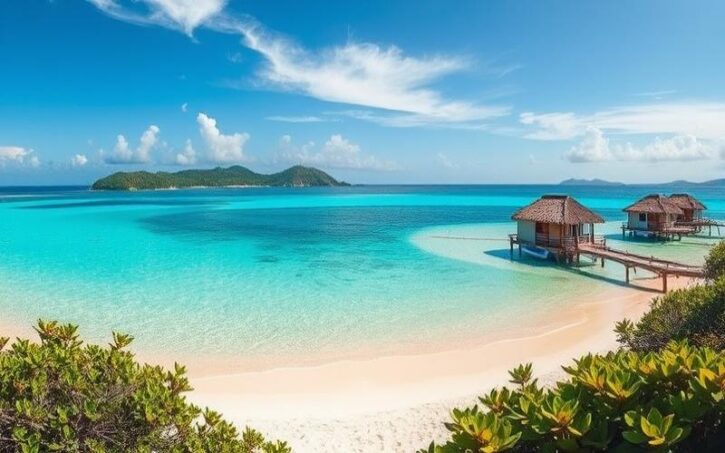
Real estate investment is a crucial strategic choice for anyone looking to secure and grow their financial assets. When exploring opportunities in the beautiful Indian Ocean region, two options frequently emerge: the Seychelles, with their paradise-like setting and attractive tax policies, and their neighboring countries, each offering distinct advantages in terms of cost of living and profitability potential.
This article provides an in-depth comparative analysis, examining key differences in regulations, return prospects, and quality of life, to guide potential investors in choosing between these dream destinations.
Good to Know:
The Seychelles offers a favorable tax framework with no capital gains tax on real estate or rental income, making it particularly attractive for international investors.
Real Estate Market Situation in Seychelles and Neighboring Countries
Economic Context and Market Dynamics
Seychelles, Mauritius, Tanzania, Kenya, and Madagascar exhibit contrasting economic dynamics but are generally marked by post-pandemic recovery. In 2024, regional growth in Sub-Saharan Africa reached 4%, exceeding expectations due to improved economic policies, lower inflation (median of 4.5% in early 2025), and stabilized public debt (median below 60% of GDP). However, a slowdown is anticipated in 2025 (3.8%) due to an uncertain global context: weak external demand and stricter financial conditions. Madagascar shows stable growth (4.2% in 2024), with a slight acceleration expected until 2027, driven by the textile, mining, and service sectors, as well as recent structural reforms aimed at improving the investment climate.
Real Estate Price Trends
| Country | Residential Trend | Commercial Trend | Recent Indicators |
| Seychelles | Moderate Increase | Stability/Increase | Market focused on high-end |
| Mauritius | Strong Increase | Steady Growth | Sustained foreign demand |
| Tanzania | Slow Progression | Moderate Growth | Gradual urbanization |
| Kenya | Significant Increase | Positive Dynamics | Nairobi main driver |
| Madagascar | Low Progression | Stagnation/Slow Increase | Shallow market |
Price pressure is intensifying in attractive tourist or urban areas (Victoria in Seychelles; Port-Louis/Mauritius; Nairobi/Kenya).
Foreign Investment
- Seychelles: Foreign investors benefit from targeted incentives in certain high-end or tourist real estate segments. The country stands out for its low financial risk at the continental level.
- Mauritius: Very open policy with special schemes for non-residents favoring property purchase through dedicated programs (IRS/PDS/RES).
- Tanzania & Kenya: Partial openness with restrictions depending on property types; fluctuating policies depending on the government.
- Madagascar: Limited attractiveness for foreign investors outside the hotel/tourism sector.
Summary of Incentives/Barriers
- Significant tax incentives in Mauritius.
- Restrictive or complex regulations in Tanzania/Madagascar.
Supply and Demand
Supply remains constrained by:
- In Seychelles/Mauritius: limited land availability – high pressure in coastal/tourist areas.
- In Kenya/Nairobi & Tanzania/Dar es Salaam: rapid development but insufficient focus on affordable housing relative to urban population growth.
High-demand areas:
- Seychelles/Victoria
- Mauritius/North-West Coast
- Nairobi/Dar es Salaam
Factors influencing demand:
- International tourism
- African diaspora investing in residential property
- Local economic development
Regulations and Legislation
Comparative regulations for non-resident property purchase:
| Country | Direct Purchase Access | Main Restrictions |
| Seychelles | Limited | Depends on specific authorizations; luxury segments favored |
| Mauritius | Yes via dedicated schemes | Fund origin verification; adapted taxes |
| Tanzania | No except leasehold | Direct ownership prohibited except for agricultural/hotel exceptions |
| Kenya | Yes under conditions | Restrictions on property size/location; mandatory ministerial approval |
| Madagascar | Very limited/not authorized | Access mainly indirect via local companies |
Main advantages for international buyers: attractive taxation especially in Mauritius/Seychelles;
Main obstacles: restricted land access elsewhere.
Urbanization and Infrastructure Development
Rapid urbanization in Kenya/Tanzania boosts the urban residential segment, while major road/transport projects structurally shape these markets. In Mauritius/Seychelles,
the focus is more on port/airport modernization and the creation of premium public facilities suited to high-end tourism. In Madagascar,
the infrastructure deficit still hinders broad real estate market growth despite some targeted improvements around Antananarivo.
Future Outlook
- Growing ecological trends: green certifications/sustainability valued, especially in Seychelles/Mauritius;
- Planned investments mainly oriented towards luxury/tourist residential segments;
- Major urban projects expected, especially in Kenya/Nairobi;
- Persistent risks related to global economic volatility but medium-term upside potential where the regulatory environment remains favorable;
In Summary
The Seychelles real estate market remains more exclusive—high-end—and legally secure than its immediate neighbors,
while Mauritius benefits from a controlled openness allowing a steady influx of international investors.
Conversely,
Kenya’s dynamics rely primarily on its galloping urban demographics, whereas in Madagascar/Tanzania,
potential remains hampered by restrictive regulations or persistent structural flaws.
Good to Know:
The Seychelles benefits from a stable economy with a dynamic real estate market, largely supported by tourism, unlike Mauritius where economic diversification energizes the real estate sector. In Tanzania and Kenya, rapid economic growth also stimulates the market, although real estate prices remain lower than in the Seychelles due to a broader supply. Madagascar is marked by economic challenges, limiting market growth but offering less costly opportunities. The Seychelles attract foreign investment through incentive policies, although restrictions for non-residents exist, similar to Mauritius. Unlike the Seychelles, Kenya and Tanzania favor greater foreign participation. Growing urbanization and improved infrastructure fuel demand in the region, but the Seychelles, with their more limited resources, see a more direct impact on supply. Outlooks show continued demand growth, especially in Seychelles and Mauritius, driven by sustainable development projects and favorable legislation, while long-term market development in Madagascar heavily depends on political stability.
Analysis of Tax Regulations in Different Countries
| Country | Property Taxes | Real Estate Transaction Taxes | Tax Exemptions | Maintenance Costs Related to Taxation | Implications for Foreign Investors |
|---|---|---|---|---|---|
| Seychelles | No annual property tax | Transfer tax: 5% of purchase price | No inheritance tax; no capital gains tax on real estate; double taxation treaties with several countries | Main cost: one-time tax upon acquisition. Absence of major recurring taxes. | Purchase possible by foreigners in certain designated zones without major restrictions. Very attractive tax regime (low rates, no recurring taxes), maximizing rental yield and facilitating wealth transfer. |
| Mauritius | Variable local property tax depending on municipality (generally low) | Registration Duty: 5% + notary fees; possible Land Transfer Tax depending on property type and seller status | Several attractive schemes for non-residents under specific programs (IRS, RES, PDS): possible exemption or reduction on certain purchase taxes or for investments above a set threshold. | Moderate annual municipal taxes; standard administrative and maintenance fees. | Foreigners can purchase under IRS/RES/PDS schemes, granting residency permits under financial conditions. Generally favorable taxation but less flexible than Seychelles outside specific schemes. |
| Madagascar | Mandatory but low property tax | Registration fees: about 5% of price + potential VAT | Few or no specific exemptions for foreign investors except approved projects in SEZs (Special Economic Zones) | Annual payments required (property tax). Sometimes burdensome administrative procedures. | Direct acquisition limited for non-nationals: frequent use of long-term leaseholds (>30 years). Lower attractiveness due to legal restrictions and perceived fragile legal security. |
| Comoros | Existing property tax but very low rates | Fixed notary fees + modest proportional fees | Some possible occasional exemptions via local incentive projects | Low annual tax pressure due to reduced rates; limited local charges. | Restricted real estate market, foreign access legally underdeveloped; environment still embryonic in terms of incentives compared to Seychelles/Mauritius. |
Synthetic Comparison
- Seychelles: ultra-attractive regime with almost no recurring taxes and broad openness to non-residents in certain zones.
- Mauritius: secure environment, open via dedicated programs with targeted tax benefits.
- Madagascar: moderate taxation but significant barriers for international investors.
- Comoros: low tax pressure but poorly structured market.
Key Elements Influencing Attractiveness
The total or near-total absence of annual property tax is a strong argument in favor of the Seychelles.
Facilitated access to foreign ownership—subject to geographic restrictions—makes this country particularly competitive compared to its neighbors.
Mauritius remains popular due to its schemes granting permanent residency after significant real estate investment.
Madagascar offers lower legal security for international buyers despite gentle taxation.
In Comoros, low fiscal costs hardly compensate for the current lack of regulatory infrastructure suited for major investments.
Updated Figures
- Seychelles: real estate transaction taxed at 5%, rental income tax around 15%, no property tax, no capital gains tax, no significant inheritance taxes
- Mauritius: standardized registration duty around 5%, variable municipal taxes
- Madagascar & Comoros: fixed/proportional fees also around ~5%, minimal annual taxes
For a foreign investor seeking maximum administrative simplicity, high tax security, and optimized net profitability without heavy annual charges, the Seychelles clearly stand out among these regional destinations.
The situation evolves regularly; it remains essential that any project be validated by specialized local counsel to incorporate any recent reforms that may impact these key parameters.
Good to Know:
In the Seychelles, foreign investors benefit from a relatively attractive real estate tax system with a reduced property tax rate compared to its neighbors, Mauritius and Comoros, where these rates are higher. In the Seychelles, real estate transactions are subject to a value-added tax that may be lower than in Madagascar, where transaction fees are also higher. However, Mauritius offers interesting tax exemptions for real estate investments under certain residency programs, making the island competitive despite a more substantial property tax. Maintenance costs related to taxation, such as local taxes, are generally lower in Comoros but lack transparency, increasing risk for foreign investors. Furthermore, the Seychelles do not impose a global income tax or capital gains tax on real estate for non-residents, which can be a key factor for international buyers looking to maximize their return on investment.
Advantages and Disadvantages of Buying in Seychelles Compared to Neighboring Countries
Specific Advantages of Acquiring Real Estate in Seychelles
- Political and Economic Stability: Seychelles benefits from institutional stability that secures investments, with a favorable macroeconomic environment for several years.
- Exceptional Quality of Life: The archipelago offers a preserved natural setting, high security, and a peaceful atmosphere sought by international investors looking for tranquility or a high-end retirement location.
- Attractive Legislative Framework for Foreigners: The government encourages foreign investment in the real estate sector; it is possible for a non-resident to purchase land from the private sector or lease public land through regulated but accessible procedures. There is no imposed minimum capital to start a real estate activity.
- Major Tourism Potential: With over 350,000 tourists per year (for a local population under 100,000), demand for high-end tourist accommodations remains strong, enhancing the rental yield and asset value of acquired property.
- Incentive Taxation: Several tax measures aim to attract foreign capital and facilitate the reinvestment of income from investments.
Regional Comparison — Seychelles vs Mauritius, Madagascar, Comoros
| Criterion | Seychelles | Mauritius | Madagascar | Comoros |
|---|---|---|---|---|
| Political Stability | High | High | Medium/Unstable | Low |
| Quality of Life | Very High | High | Variable | Low |
| Foreigner Access | Controlled but possible | More flexible (investor residency programs) | Restricted | Very Limited |
| Cultural Offerings | Limited | Diverse | Rich | Modest |
| Tourism Potential | High-end | Developed | Growing | Modest |
| Real Estate Cost | High | Competitive (wider range) | Low | Very Low |
| Real Estate Market | Restricted | Dynamic | Limited | Limited |
Major Differences
- Costs: Prices per square meter are among the highest in the Indian Ocean in Seychelles. In Mauritius, the market offers more affordable or intermediate options while maintaining a dynamic luxury segment.
- Accessibility: Obtaining residency status through investment is easier in Mauritius thanks to its dedicated programs. In Seychelles, certain restrictions exist on the size and type of properties that can be acquired by a foreigner.
- Cultural Offerings: Mauritius stands out for its cultural diversity (Indian, European, African communities), thus offering more cultural activities than Seychelles, which are primarily oriented towards beach tourism.
Potential Disadvantages in Seychelles
- High prices both for purchase and property maintenance;
- Restricted market sometimes limiting liquidity upon resale;
- Restrictive legislation on certain types/land properties reserved exclusively for nationals;
Comparatively:
In Madagascar, low costs but chronic political instability strongly hinders any secure asset project; legislation poorly protective for foreign investors.
In Comoros, numerous administrative barriers and deficient infrastructure make any investment risky despite very attractive prices.
Comparative Summary
The Seychelles position themselves as a premium destination favoring legal/political security and environmental quality, sometimes at the expense of the cultural or commercial dynamism offered elsewhere in the region like Mauritius. The high entry ticket, however, guarantees exclusivity and serenity rarely matched locally.
Good to Know:
Buying real estate in the Seychelles offers notable advantages such as strong political stability, an attractive legislative framework for foreign investors, and an exceptional lifestyle thanks to paradise-like landscapes and tourism potential that can quickly increase property values. These advantages may surpass those of neighboring countries like Mauritius, Madagascar, or Comoros, where costs may be more moderate but at the price of lower political stability or a less favorable regulatory framework. However, the Seychelles present disadvantages like very high purchase prices and a relatively restricted real estate market. Furthermore, legislative restrictions exist for non-residents, contrasting with Mauritius, which offers greater accessibility with robust foreign investment regimes and diverse cultural offerings, although prices there are also considerable. Comparatively, Madagascar and Comoros, although more affordable and displaying a rich cultural mix, generally require a cautious approach due to more fluctuating economic conditions and less defined frameworks for foreign investors.
Disclaimer: The information provided on this website is for informational purposes only and does not constitute financial, legal, or professional advice. We encourage you to consult qualified experts before making any investment, real estate, or expatriation decisions. Although we strive to maintain up-to-date and accurate information, we do not guarantee the completeness, accuracy, or timeliness of the proposed content. As investment and expatriation involve risks, we disclaim any liability for potential losses or damages arising from the use of this site. Your use of this site confirms your acceptance of these terms and your understanding of the associated risks.

Cyril Jarnias is an independent expert in international wealth management with over 20 years of experience. As an expatriate himself, he is dedicated to helping individuals and business leaders build, protect, and pass on their wealth with complete peace of mind.
On his website, cyriljarnias.com, he shares his expertise on international real estate, offshore company formation, and expatriation.
Thanks to his expertise, he offers sound advice to optimize his clients' wealth management. Cyril Jarnias is also recognized for his appearances in many prestigious media outlets such as BFM Business, les Français de l’étranger, Le Figaro, Les Echos, and Mieux vivre votre argent, where he shares his knowledge and know-how in wealth management.





