
 Published on and written by Cyril Jarnias
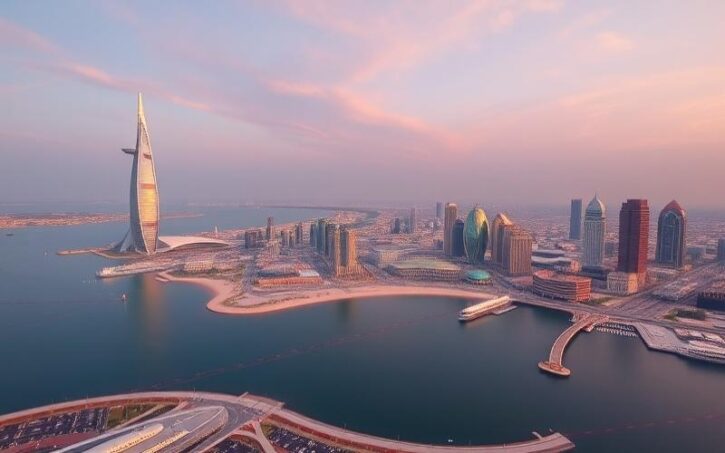
Qatar, a small emirate in the Persian Gulf, continues its spectacular transformation with a series of ambitious urban development projects that promise to redefine its landscape and real estate market. As the country capitalizes on the momentum generated by the 2022 World Cup, new large-scale construction sites are emerging, offering enticing opportunities for savvy investors. Let’s dive behind the scenes of this urban metamorphosis shaping tomorrow’s Qatar.
Megaprojects Pushing the Boundaries of Innovation
Qatar doesn’t do things by halves when it comes to urban development. Several monumental projects are currently underway, each aiming to push the boundaries of architectural and technological innovation.
Lusail City: The City of the Future Takes Shape
Located 15 km north of Doha, Lusail City is undoubtedly the flagship project of Qatari urban development. This smart city, designed to accommodate up to 450,000 residents, embodies Qatar’s futuristic vision. With a massive investment of $45 billion, Lusail City stands out for its holistic approach to urban development.
The project includes 19 distinct districts, each with its own identity and function. Notable features include:
- The Marina business district, with its ultramodern skyscrapers
- Qetaifan artificial island, dedicated to luxury tourism
- Fox Hills residential district, offering a green living environment
- Lusail Stadium, an architectural gem inherited from the 2022 World Cup
The focus is on sustainability, with innovative public transportation systems, abundant green spaces, and cutting-edge smart city technologies. Lusail City positions itself as a model for 21st-century urban development.
Msheireb Downtown Doha: The Renaissance of the Historic Heart
In the heart of the capital, the Msheireb Downtown Doha project aims to revitalize the historic city center while preserving Qatari cultural heritage. This $31 billion development across 31 hectares skillfully blends traditional architecture with modern technologies.
The project includes:
- Luxury residential neighborhoods
- High-end office and commercial spaces
- 5-star hotels
- Museums and cultural centers
Msheireb Downtown Doha stands out for its commitment to sustainable development. The district incorporates smart energy and water management systems, as well as innovative mobility solutions like a wireless tramway.
The Pearl-Qatar: The Ever-Expanding Artificial Island
Although already partially completed, The Pearl-Qatar artificial island continues its expansion with new ambitious projects. This luxury destination, spanning nearly 4 million square meters, is welcoming new development phases:
- Giardino Villas: A luxury villa residential complex inspired by Venetian architecture
- La Piazza: A new commercial and residential district at the heart of the island
- Corinthia Yacht Club: An exclusive nautical club with world-class facilities
These new developments complement The Pearl-Qatar’s already rich offerings, strengthening its status as a premier destination for wealthy residents and high-end tourists.
Good to Know:
These megaprojects demonstrate Qatar’s ambition to position itself as a world-class urban hub, combining modernity, sustainability, and cultural heritage preservation.
A Booming Real Estate Market
The impact of these urban development projects on Qatar’s real estate market is significant. We’re observing positive momentum translating into several notable trends.
Growing Demand for Luxury Real Estate
New developments like Lusail City and Msheireb Downtown Doha are creating significant supply of high-end real estate properties. This supply meets growing demand from both local residents and foreign investors. According to Property Finder Qatar data, luxury apartment prices in Doha increased by an average of 15% during 2024.
Rental Market Diversification
The arrival of new residential neighborhoods contributes to diversifying rental offerings. We’re seeing increased options in the mid to high-end segment, with rents remaining relatively stable despite the influx of new units to the market. This stability indicates sustained demand for quality housing.
Office Market Boom
New business districts, particularly in Lusail City and Msheireb Downtown Doha, are stimulating the office space market. There’s a trend toward more flexible and technologically advanced workspaces, meeting the needs of modern businesses. Class A office occupancy rates in Doha reached 85% in 2024, a figure up from previous years.
Hospitality Sector Boom
Urban development projects are accompanied by significant expansion in the hospitality sector. New luxury establishments are opening, strengthening Qatar’s tourist appeal. According to Qatar Tourism Council figures, the number of hotel rooms in the country is expected to increase by 30% by 2027.
Good to Know:
The Qatari real estate market is experiencing sustained growth, driven by these major development projects. This dynamic offers interesting opportunities for investors while meeting the needs of an expanding and increasingly demanding population.
Enticing Opportunities for Savvy Investors
Urban development projects in Qatar are paving the way for numerous investment opportunities for both local and international players. Here are some particularly promising avenues:
Luxury Residential Real Estate: A Growing Sector
New high-end residential neighborhoods, like those in Lusail City or The Pearl-Qatar, offer interesting prospects for investors. Luxury properties in Qatar show attractive rental yields, often exceeding 6% annually. Furthermore, growing demand for this type of property suggests long-term capital appreciation.
Commercial Real Estate: Opportunities in New Business Districts
Office and commercial spaces in developing areas like Msheireb Downtown Doha or the Marina business district in Lusail City represent potentially lucrative investments. With the influx of international companies attracted by Qatar’s favorable business environment, demand for modern workspaces should remain strong.
Hospitality Sector: Capitalizing on the Tourism Boom
Investment in the hospitality sector, whether through hotel room acquisition or participation in hotel development projects, can prove particularly profitable. Qatar aims to attract 6 million visitors annually by 2030, which should stimulate demand for quality accommodations.
Infrastructure Projects: Opportunities for Major Players
Major infrastructure projects related to urban development offer opportunities for companies specializing in construction, engineering, or smart city technologies. The Qatari government actively encourages public-private partnerships in this field.
Rental Market: A Stable Long-Term Option
For investors seeking regular income, the Qatari rental market remains attractive. With a significant and growing expatriate population, demand for quality housing remains strong. Average rental yields in Qatar range between 5% and 7%, depending on areas and property types.
Good to Know:
Qatar offers a favorable environment for foreign investors, with relaxed regulations allowing 100% ownership in many sectors. However, it’s crucial to thoroughly research local market specifics and surround yourself with experienced professionals before getting started.
Conclusion: A Promising Urban Future, Between Ambition and Challenges
Urban development projects in Qatar are outlining the contours of a country in full transformation, resolutely turned toward the future. From Lusail City to Msheireb Downtown Doha, through the continued expansion of The Pearl-Qatar, these ambitious initiatives are transforming the country’s urban and real estate landscape.
For investors, these developments offer a range of enticing opportunities, whether in luxury residential real estate, commercial spaces, or the hospitality sector. The Qatari real estate market, driven by these major projects, shows positive momentum that should continue in the coming years.
However, it’s important to remain vigilant about potential challenges. The market’s capacity to absorb the influx of new properties, the long-term sustainability of these developments in a climate change context, and the need to maintain balance between economic growth and cultural identity preservation are all issues to monitor.
Despite these challenges, Qatar appears well-positioned to realize its vision of a modern, sustainable, and attractive urban hub. The ongoing development projects are just the beginning of a transformation that promises to redefine the country’s and region’s urban future.
Good to Know:
Although prospects are promising, it’s essential for potential investors to conduct thorough due diligence and consult local experts before committing to the Qatari real estate market.
Disclaimer: The information provided on this website is for informational purposes only and does not constitute financial, legal, or professional advice. We encourage you to consult qualified experts before making any investment, real estate, or expatriation decisions. Although we strive to maintain up-to-date and accurate information, we do not guarantee the completeness, accuracy, or timeliness of the proposed content. As investment and expatriation involve risks, we disclaim any liability for potential losses or damages arising from the use of this site. Your use of this site confirms your acceptance of these terms and your understanding of the associated risks.

Cyril Jarnias is an independent expert in international wealth management with over 20 years of experience. As an expatriate himself, he is dedicated to helping individuals and business leaders build, protect, and pass on their wealth with complete peace of mind.
On his website, cyriljarnias.com, he shares his expertise on international real estate, offshore company formation, and expatriation.
Thanks to his expertise, he offers sound advice to optimize his clients' wealth management. Cyril Jarnias is also recognized for his appearances in many prestigious media outlets such as BFM Business, les Français de l’étranger, Le Figaro, Les Echos, and Mieux vivre votre argent, where he shares his knowledge and know-how in wealth management.





