
 Published on and written by Cyril Jarnias
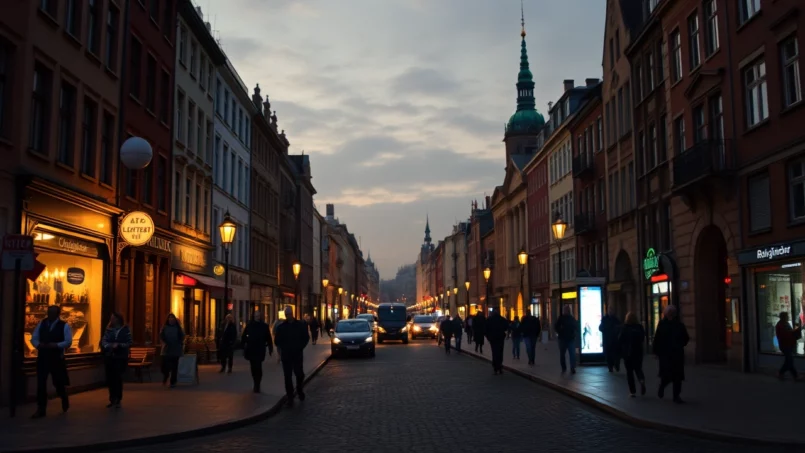
The German night is not merely an extended after-work hangout. In big cities, lights stay on until the early hours, subways run almost all night on weekends, and you can go from a jazz gig in a basement, to a legendary techno club, then to a currywurst at sunrise. Nightlife in Germany is both highly codified (dress codes, selective door policies, beer rituals) and surprisingly free, inclusive, and creative.
Every major German city has its own nocturnal identity: Berlin for clubbing, Munich for beer halls and biergärten, Hamburg for the Reeperbahn, Cologne for Kölsch and Brauhäuser, Frankfurt for a blend of finance and techno, and Heidelberg for its medieval student vibe. This diversity is supported by efficient night transportation, a deeply rooted beer culture, and a multitude of venues to suit all tastes.
Understanding Night Culture in Germany
The typical German evening rarely starts early. Many groups of friends first meet up at someone’s place around 7:30 p.m. for a “pre-game” with a few beers or wine, before actually heading out around 10–11 p.m.. In big cities, bars stay open late, and clubs don’t really fill up until after midnight, sometimes around 2 or 3 a.m. In Berlin or Hamburg’s techno scenes, some parties simply continue… until the next afternoon.
Most federal states (Länder) do not impose strict closing times for bars and clubs. This allows venues to stay open as long as there are customers. Some clubs even organize extended “afters,” where you can dance well after sunrise.
The country is attached to a certain social etiquette: you are expected to be punctual if you have a reservation, quiet in lines, respectful of others’ personal space. Germans appreciate directness more than excessive politeness and effortless “coolness” over flashiness.
Germany is generally safe, but major cities see more petty crime, especially on night transport and in party districts. It’s recommended to keep an eye on your belongings and your drink, and to use public transport or official taxis for late returns.
Drinking in Germany: Rules, Costs, and Tipping
Beer largely structures German evenings, whether around a Kneipe counter, in a Munich biergarten, or a Cologne Brauhaus. Legislation remains quite liberal, with alcohol consumption permitted from age 16 for beer and wine, and 18 for spirits.
Prices vary from city to city, but the general ranges are comparable:
| Drink / Expense | Typical Price Range* |
|---|---|
| Beer (standard bar) | €3–5 |
| Glass of wine | €4–7 |
| Classic cocktail | €8–12 |
| Cocktail in an upscale bar | €12–18 |
| Club entrance fee | €5–15, more for headliners |
| Taxi ride (city center, short distance) | €10–20 |
Prices can vary depending on the city, neighborhood, and venue’s standing.
For a reasonable evening at a bar or small club, expect to spend €30 to €50 per person. A very “lifestyle” night with sophisticated cocktails, a reputable club, and multiple trips easily climbs past €100.
Tipping is not automatic to the same extent as in the United States, but it’s well-regarded to leave about 5 to 10% of the bill in bars and restaurants, or to round up to the nearest amount. It’s also customary to look your table companions in the eye when clinking glasses, saying “Prost!” (or “Zum Wohl!”).
Dress Codes and Selective Doors
German clubs and bars cultivate a rather minimalist style: understated, often dark clothing, well-cut pieces rather than an accumulation of accessories. In major cities, however, dress codes can be very different depending on the scene.
For techno clubs in Berlin or Hamburg, go for a black, discreet, comfortable, and slightly alternative look. For more “mainstream” clubs in Munich or upscale districts of Berlin and Frankfurt, opt for smart casual, even semi-formal style: shirt or polo for men, polished outfits for women, and quality closed-toe shoes.
Purely sportswear (sweatpants, soccer jerseys, baseball caps, flip-flops) is almost always frowned upon in clubs, as are flashy items, plastered with logos, or frankly touristy (souvenir t-shirts, giant banana bags across the chest). The important thing is to project an impression of ease in your style, impeccable hygiene, and coherence with the venue.
Some highly reputed venues, especially in Berlin and Hamburg, practice a strict selection at the door. Behavior in line often counts as much as the outfit: speak calmly, don’t film or take selfies, appear sober and self-assured, come in small, mixed groups rather than a large all-male pack.
Berlin: World Capital of Partying
Berlin is arguably Germany’s most mythical city for nightlife. Since the fall of the Wall, factories, warehouses, and abandoned buildings have been transformed into clubs and bars. The city has over 4,500 of them across all categories, and has become a global hotspot for techno, as well as queer and alternative cultures.
A Very Spread-Out Nighttime Geography
Berlin partying is not concentrated in a single neighborhood. Each district has its own vibe.
Friedrichshain, around Warschauer Straße and the RAW Gelände complex, lines up clubs, alternative bars, repurposed former workshops, open-air parties in summer, all in a raw industrial setting. It’s one of the epicenters of techno. Kreuzberg, long a bastion of counterculture, mixes graffiti, bohemian bars, international restaurants, and clubs installed along the Spree river towards Schlesisches Tor.
Mitte, central and chic, concentrates cocktail bars, electro clubs, and artistic venues (Alexanderplatz, Hackescher Markt). Neukölln, multicultural, offers intimate small bars, concert cellars, underground parties, and a vibrant LGBTQ+ scene. Prenzlauer Berg, now gentrified, retains relaxed bistros, small concert halls, and café-bars (Kastanienallee, Kollwitzplatz).
Schöneberg has embodied for decades the historic heart of Berlin’s queer nightlife. Around Nollendorfplatz, Motzstraße, and Fuggerstraße, you’ll find numerous LGBTQ+ bars, clubs, and party venues.
Iconic Clubs and Never-Ending Nights
Berlin’s international reputation was built around a few clubs that have become living legends. Berghain, housed in a former power plant in Friedrichshain, is often described as the world’s most famous techno club. Marathon weekend-long parties, a formidable door policy, a total ban on photos, an impressive sound system: the place is as mythologized as it is difficult to get into.
invested an old industrial site to make acid, electro, and industrial sounds resonate there.
Tresor, pioneer of Berlin techno
Queer parties play a central role in Berlin nightlife. Events like Room 4 Resistance or parties by queer and feminist collectives mix techno, electro, 80s glam rock, and performances, with particular attention paid to inclusivity, diversity, and safety for non-white, queer, non-binary, or trans people.
Discover the specifics of Berlin nights, famous for their duration and unique atmosphere, as well as available transportation options.
Clubs rarely fill up before 2 or 3 a.m., and parties can last until the end of Sunday transport service, or even longer.
On weekends, subways (U-Bahn) and commuter trains (S-Bahn) run all night to facilitate travel.
On weeknights, a network of night buses and trams takes over to ensure continuous service.
Spätis, Pre-Parties, and “Anti-Glamour”
A particular feature of Berlin nights is the place of “Späti” (Spätkauf or Spätverkauf), these small shops open late, even 24/7. You buy beers, cigarettes, snacks, sometimes a bit of groceries, and often hang out on the sidewalk or benches to drink with friends before heading to a club. These little shops, frequently run by immigrant families, especially Turkish or Vietnamese, have become essential social landmarks in neighborhoods of the former East.
Berlin’s most respected clubs have a very “anti-commercial” approach to partying: reasonable entrance fees compared to other capitals, dress codes that value authenticity over ostentatious luxury, a ban on filming to protect privacy and atmosphere. The implicit message: the night belongs to those who come for the music and community, not to stage themselves on social media.
Hamburg: The Reeperbahn, from Rock to Techno
On the banks of the Elbe, Hamburg has forged an image as a European party capital, driven by its port, maritime past, and a long tradition of nighttime entertainment. The St. Pauli district, and particularly the Reeperbahn, concentrates this explosive mix of clubs, bars, cabarets, and alternative nightlife.
The Reeperbahn, “Mile of Sin”
The Reeperbahn, about 930 meters long, is often described as the “haunt” of German night owls: bars crammed together, discos, concert halls, restaurants, cabarets, sex shops, theaters, galleries. It’s also one of Europe’s most famous red-light districts, in a country where the sex industry is legal and regulated. An adjacent street, Herbertstraße, is off-limits to women and minors.
It was in the early 1960s that the Beatles forged their legend playing in the clubs of St. Pauli, Hamburg.
The night in St. Pauli rarely gets going before midnight, but after that, bars and clubs stay open very late. Many partygoers even end their night at the famous Sunday morning fish market, which opens as early as 5 a.m., in a surreal atmosphere of breakfast among people still in evening wear.
Clubs, Rock, Techno, and Jazz
On the Reeperbahn and its side streets, you can find everything: from student bars to prestigious concert halls, including small gay clubs, glamorous discos, and punk cellars.
Große Freiheit 36 and Gruenspan are among the major concert venues: they’ve hosted international artists from Robbie Williams to Coldplay, and also organize salsa, electro, or rock parties. Molotow champions a more indie and underground line, and remains a reference for seeing bands before they break big.
On the dance-oriented club side, Baalsaal, HALO, or Neidklub program house, techno, electro, and hip-hop in very different atmospheres, sometimes rather chic, sometimes more raw. Farther out, venues like Uebel & Gefährlich, located in a WWII bunker, or Südpol, in a former industrial wasteland, embody the alternative techno scene, with multiple dancefloors, open-air events, and queer parties like “Queerpol“.
Hamburg hasn’t forgotten jazz and live music either: the Cotton Club, founded in 1959, is the city’s oldest jazz venue, renowned for having hosted international musicians since the 70s.
The city hosts major events like the Reeperbahn Festival, a large annual gathering dedicated to contemporary music, which transforms the district into a giant showcase for emerging bands and headliners.
Munich: Beer Halls, Biergärten, and Urban Clubs
Munich isn’t just the city of Oktoberfest, even if this gigantic beer festival partly defines its image abroad. All year round, the Bavarian capital offers a dense nightlife scene, where historic beer halls rub shoulders with traditional biergärten, sophisticated cocktail bars, and respected techno clubs.
The Kingdom of Beer: Beer Halls and Biergärten
Munich evenings often start in a beer hall or Wirtshaus (inn). The Hofbräuhaus, founded in 1589 in the heart of the old town, is arguably the most famous of the beer halls: large vaulted rooms, live Bavarian music, wooden benches to share with strangers, waiters in traditional attire, and liter-sized (Maß) steins of blonde beer.
Discover Munich’s six great historic breweries, each with its own taverns, gardens, and iconic beers.
Very popular with locals, it serves its beers in places like the massive Augustiner Keller (biergarten open since the early 19th century) or the Augustiner Bräustuben, on the site of the old brewery.
One of the historic breweries making up Munich’s famous ‘Big 6’, with its own taverns and gardens.
One of the historic breweries making up Munich’s famous ‘Big 6’, with its own taverns and gardens.
One of the historic breweries making up Munich’s famous ‘Big 6’, with its own taverns and gardens.
One of the historic breweries making up Munich’s famous ‘Big 6’, with its own taverns and gardens.
One of the historic breweries making up Munich’s famous ‘Big 6’, with its own taverns and gardens.
Biergärten are an institution in their own right. In the English Garden, the Chinesischer Turm, Seehaus, or Aumeister allow you to drink a beer in the shade of chestnut trees, sometimes bringing your own picnic, a custom allowed in this type of place. Hirschgarten, a massive city garden set in a former hunting estate, is one of Munich’s largest. Others, like Waldwirtschaft, Menterschwaige, or Zum Flaucher, combine views of nature, jazz, royal history, or riverfront.
In the center, the Viktualienmarkt also houses a small biergarten where the city’s different major breweries take turns at the tap according to a schedule, allowing you to taste Hofbräu, Paulaner, Löwenbräu, or Spaten in turn.
Cocktails and Urban Clubs
Behind this very “beer and pretzel” facade, Munich has developed a fine cocktail bar scene. Zephyr Bar, Curtain Call, Bar Gabanyi, Barroom, or Jaded Monkey play the card of original creations, advanced techniques (up to the use of liquid nitrogen), and worked-on decor, with cocktails often above €10–12. Addresses like Boilerman Bar specialize in highballs, while Negroni American Bar or Boulevardier pay homage to Campari-based classics.
Wine lovers head to Weinhaus Neuner, the city’s oldest wine house, or to bars like GRAPES in a design hotel downtown.
On the clubbing side, the city offers a varied selection. Harry Klein is a well-rated electronic club, which, for example, dedicates an entire month each year to a 100% female DJ lineup. Blitz, housed in a building of the Deutsches Museum, bans phone use on the dancefloor to encourage immersion. Rote Sonne offers techno/house programming in a raw setting, while more mainstream venues like Milchbar focus on EDM and themed nights.
The districts of Glockenbach and Gärtnerplatz host a high concentration of bars and clubs, often queer-friendly and very lively, while Maxvorstadt (university quarter) lines up affordable bars frequented by students. Schwabing combines neighborhood bars and more upscale addresses, and the area around Ostbahnhof concentrates several clubs in former industrial wastelands.
Cologne: Kölsch Culture and Brauhäuser
In Cologne, the night revolves around one very specific drink: Kölsch. More than just a light blonde beer, it’s a true identity symbol, linked to the local language, humor, and an entire service ritual.
Kölsch, a Culture in Its Own Right
Kölsch is a clear, refreshing beer, warm-fermented but cold-stored, with an alcohol content around 4–5%. It has protected geographical status: to have the right to be called Kölsch, it must be brewed within a radius of about 50 km around Cologne, according to rules set by the “Kölsch Convention” signed in 1986 by local breweries.
Kölsch is a beer originating from an old local cloudy beer called Wiess. It is traditionally served in small 0.2-liter cylindrical glasses called ‘Stangen’. The service is provided by waiters called Köbes (or their female counterparts), who circulate with crown-shaped trays (Kranz) that can hold about ten glasses. They automatically replace your empty glass until you place the coaster on the glass to signal you’re finished.
Their service is legendary: blue apron, leather wallet, direct, even biting humor, which is part of the game. They keep track of your consumption by making marks on the coaster, which then serves as the bill.
Brauhäuser of the Old Town
Cologne’s old town (Altstadt), at the foot of the Gothic cathedral, concentrates a large part of the traditional breweries for going out at night. Each Brauhaus has its own history, atmosphere, and its own interpretation of Kölsch.
Früh am Dom serves nearly 2.5 million visitors a year.
Most of these Brauhäuser also serve hearty food: Rhineland sauerbraten, pork knuckles, schnitzel, sausages, flammekueche, etc. Some have hosted famous guests: Bill Clinton dined at Malzmühle in the late 1990s, humorously declaring “Ich bin ein Kölsch”.
After leaving these breweries, you can continue the evening in the student district of Belgisches Viertel (Belgian Quarter), packed with bars and cafés, or in the many Irish pubs, cocktail bars, and concept cafés scattered throughout the city.
Frankfurt: Skyline, Techno, and Cocktails
Frankfurt, the country’s financial capital on the Main River, isn’t just about glass towers and suited bankers. The city played a key role in the rise of German techno and today hosts a very varied nightlife scene, from traditional cider taverns to internationally renowned electro clubs.
Frankfurt’s Nightlife Districts
The Main River cuts the city into several banks and neighborhoods, each with its own nocturnal color. Sachsenhausen, on the south bank, is famous for its Apfelwein (local cider) taverns and Kneipen. By day, cafés, museums, and restaurants give a relaxed vibe. At night, streets like Klappergasse or Frankensteiner Straße transform into a ribbon of bars, clubs, and discos. Alt-Sachsenhausen, with its cobbled alleys and half-timbered houses, hosts institutions like Apfelwein Wagner or Adolf Wagner, where cider is drunk in stoneware pitchers and you eat in a very regional atmosphere.
The Bahnhofsviertel, formerly a red-light district near the main train station, has become a trendy hub. It now offers a lively scene of inventive cocktail bars (like Jambo Bar, Plank Café, Barhundert, and the speakeasy The Kinly Bar), stylish clubs such as Gibson, and a diversity of international restaurants. The atmosphere is a unique mix of urban grit and coolness.
Bornheim, sometimes nicknamed “the bohemian quarter,” lines up relaxed bars, pubs, small concert venues, and live music spots. Westend and the Innenstadt (downtown) concentrate more elegant bars, cocktail lounges, and rooftops like Logenhaus or Bar auf dem Dach at Gekko House, where you can enjoy a drink facing the skyline.
Clubs, Jazzkeller, and Culture
Frankfurt is often cited as one of the birthplaces of German techno, and continues to cultivate a fine club offering. Tanzhaus West, in Seckbach, has established itself as a bastion of techno and house. Clubs like Velvet Club, Silbergold, Karlson, or Zoom cover a spectrum from techno to hip-hop, including indie and pop. Robert Johnson, on the other bank in Offenbach, enjoys a huge reputation in the electronic scene for its musical standards.
For rock, indie, or themed party lovers, Batschkapp, located in the Seckbach district, is an essential concert and event venue. For a different vibe, Yachtclub is a floating club on the Main River offering parties with varied themes, often leaning towards 80s, garage, or retro music.
The city also maintains a solid jazz tradition. Kleine Bockenheimer Straße is nicknamed Jazzgasse (“Jazz Alley”), and Jazzkeller, a cellar opened in 1952, has hosted jazz and blues concerts for decades in an intimate atmosphere. Splendor or other bars also offer stages for up-and-coming artists.
For a more cultural night, the Alte Oper (the 19th-century former opera house, rebuilt) presents operas and classical concerts in large halls like the Großer Saal (2,500 seats) or the Mozart-Saal. Schauspiel Frankfurt, the city’s major theater, or the English Theatre Frankfurt, which stages plays and comedies in English, extend the evening with integrated bars and sometimes even film screenings.
Between drinks, you can also go up the Main Tower, a 56-story skyscraper with a panoramic viewing platform on the 54th floor, open in the evening, allowing you to see the city sparkle.
Heidelberg: Small Town, Big Student Energy
With its ruined castle overlooking the Neckar River, its colorful façades, and its university founded in the 14th century, Heidelberg could be just a romantic postcard. Yet, its very large student population gives it a surprisingly dense nightlife for a city of its size.
Altstadt and Untere Straße, the Beating Heart of the Night
The old town (Altstadt), and notably the long pedestrian Hauptstraße, is the center of gravity for evenings out. But the real “pub street” is Untere Straße, nicknamed the “Pub Mile“, which runs parallel to Hauptstraße between the Church of the Holy Spirit (Heiliggeistkirche) and the vicinity of the university.
The street is animated by a succession of bars, pubs, and small clubs, including Kaiser, Betreutes Trinken, Destille (with its famous acacia tree and art exhibitions), Reichsapfel, Jinx, Lafé, Mohr!, Eckstein, and Mels. Many have sidewalk terraces. Smoking policies vary: some establishments are non-smoking, while others still allow cigarettes, creating very contrasting atmospheres.
Beyond this artery, Maxbar on the market square, Drug Store, Karl, Vater Rhein, or the Dubliner further widen the choice, from cocktail bars to Irish pubs, including regional breweries like Vetter’s Alt Heidelberger Brauhaus or Kulturbrauerei Heidelberg, which brew their own beer according to the purity law.
Clubs, Jazz Cellars, and Cultural Centers
Heidelberg can’t rival Berlin or Hamburg in number of clubs, but it compensates with the character of its venues. Cave 54 (Cave) is a historic jazz club where Louis Armstrong or Ella Fitzgerald have played, which continues to organize concerts and parties. Halle02, in a former industrial hall, hosts concerts, electro parties, festivals like the Deathfest, and other major events.
The city offers a dynamic cultural program in the evening. The Karlstorbahnhof schedules concerts, theater, cinema, slam poetry nights, and alternative events. The Theater & Orchester Heidelberg presents plays, operas, ballets, and musicals, including very popular summer performances at the castle.
Students regularly organize pub crawls to discover the Altstadt’s nightlife, with mandatory stops at the Old Bridge (Alte Brücke) to admire the illuminated castle.
Prices remain relatively affordable: a beer in a student bar often costs €3 to €5, a cocktail in a fancier bar €8 to €12, and club entrance around €5 to €15. A full evening out can thus fit within a budget of €30 to €60.
Späti, Büdchen, Trinkhalle: The Kiosks of the Night
Beyond the big names of clubs and breweries, the German night is also lived through a multitude of small shops open late, dotting sidewalks and crossroads. In Berlin, they’re called Späti; in Cologne, you’d rather say Büdchen; in the Ruhr or Rhine regions, Trinkhalle or Kiosk.
Originally, many of these night shops appeared in the GDR in the second half of the 20th century to serve shift workers, or as late branches of state-owned chains. After reunification, the model privatized and multiplied in big cities, becoming a central element of neighborhood life, especially in Berlin’s Kieze (districts).
These shops mainly sell alcohol (beers, wines, spirits), cigarettes, snacks, and some everyday products. They sometimes offer additional services like internet access or postal points. Set up with a few benches or makeshift chairs, they provide an improvised space for socializing. Many are run by families of Turkish or Vietnamese origin.
These kiosks sometimes clash with opening hours regulations, notably on Sundays, when laws theoretically limit the sale of most products. In Berlin, several waves of inspections have led to significant fines and even the closure of some Spätis, sparking support petitions (#RettetdieSpätis) and political debates about their status.
Despite these difficulties, Späti, Büdchen, and Trinkhallen remain key landmarks of German nights, starting or ending points of an evening, and objects of cultural curiosity, to the point that some are integrated into guided tours or artistic projects.
Getting Around and Staying Safe at Night
Whether you’re going out in Berlin, Hamburg, Munich, Cologne, Frankfurt, Heidelberg, or elsewhere, a few common points of reference make nightlife in Germany easier.
Public transportation is generally reliable and extensive. In the largest metropolitan areas, subways, S-Bahn, trams, and buses run all night on weekends, and night lines take over on weeknights. It’s still prudent to check schedules in advance, especially in case of strikes.
For your safety, keep an eye on your drink, don’t consume drinks offered by strangers, stay in well-lit and frequented areas, and prioritize returning in a group or by taxi during late hours. In case of need, dial 112 for emergency services or the fire department, and 110 for the police.
Germany remains a society very attached to respect for consent and protecting marginalized people, especially in queer and techno scenes. Many clubs clearly communicate their house rules, prohibiting sexist, racist, homophobic, or transphobic behavior, and have “awareness” teams responsible for intervening in case of problems.
Despite modernization, Germany remains a country where cash payments are very common. It’s advisable to always have cash on you, as some establishments like bars, clubs, or concert halls don’t always accept bank cards, or only authorize them above a certain purchase amount.
—
Nightlife in Germany thus unfolds as a mosaic of scenes, habits, and rituals, from the silent queue in front of a Berlin club to the tireless rounds of the Köbes in a Cologne Brauhaus, from the benches of a Munich biergarten to the packed crowd on the Reeperbahn. By navigating these worlds, one measures how deeply the night is at the heart of German urban culture, between asserted freedom, respect for tacit rules, and passion for music, beer, and conviviality.
Disclaimer: The information provided on this website is for informational purposes only and does not constitute financial, legal, or professional advice. We encourage you to consult qualified experts before making any investment, real estate, or expatriation decisions. Although we strive to maintain up-to-date and accurate information, we do not guarantee the completeness, accuracy, or timeliness of the proposed content. As investment and expatriation involve risks, we disclaim any liability for potential losses or damages arising from the use of this site. Your use of this site confirms your acceptance of these terms and your understanding of the associated risks.

Cyril Jarnias is an independent expert in international wealth management with over 20 years of experience. As an expatriate himself, he is dedicated to helping individuals and business leaders build, protect, and pass on their wealth with complete peace of mind.
On his website, cyriljarnias.com, he shares his expertise on international real estate, offshore company formation, and expatriation.
Thanks to his expertise, he offers sound advice to optimize his clients' wealth management. Cyril Jarnias is also recognized for his appearances in many prestigious media outlets such as BFM Business, les Français de l’étranger, Le Figaro, Les Echos, and Mieux vivre votre argent, where he shares his knowledge and know-how in wealth management.





