
 Published on and written by Cyril Jarnias
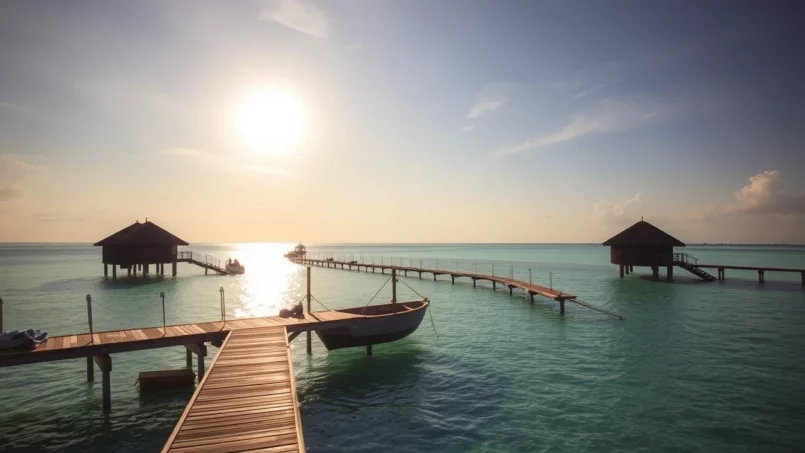
A postcard archipelago lost in the middle of the Indian Ocean, the Maldives captivate with their translucent lagoons, pristine sandbanks, and stilted villas. But behind the image of an overpriced honeymoon destination now lies a seasonal rental market far more extensive and nuanced than one might imagine, with real opportunities for both travelers and investors.
The short-term rental supply is growing rapidly, encompassing guesthouses on inhabited islands, apartments in Malé, private villas, overwater bungalows, and residences within resorts. This expansion is driven by tourism on ‘local islands’, platforms like Airbnb or Booking.com, and a regulatory framework that governs guesthouses and permits foreign investment via leasehold.
This article provides an in-depth overview of these seasonal rental opportunities in the Maldives: where to rent, at what price, how the market works, the legal framework, and the prospects for interested owners—whether private individuals or institutional investors.
A Seasonal Rental Market Taking Off
Seasonal rental is no longer a marginal phenomenon in the Maldives. According to recent data from specialized analysts, the country has approximately 2,500 short-term rental listings across all channels. In Malé alone, the studied market shows 210 to 207 active listings depending on the analysis period.
For a country of 557,500 inhabitants spread across 26 atolls and over 1,000 islands, these figures reflect a profound shift in the model: alongside 176 resorts offering more than 21,000 rooms, guesthouses, apartments, and private villas now occupy a visible place in the tourism landscape.
Number of international visitors who stayed in the Maldives in 2024
The Rise of Local Islands and Guesthouses
The opening of inhabited islands to tourism began in earnest in 2010 with the first guesthouse on Maafushi. Since then, the phenomenon has expanded: by the end of 2021, there were 797 registered guesthouses, with 13,410 beds. Maafushi, Huraa, Hulhumalé, Guraidhoo, Dhigurah, Gan, Fuvahmulah, Dharavandhoo, and Hanimadhoo are among the islands that have embraced this path.
Guesthouses offer two main advantages: a significantly more affordable rate than private resorts and a more direct immersion into local life. They also help avoid costly seaplane transfers, which substantially increase the budget for a stay at a remote resort. Many travelers use public ferries or shared speedboats to reach these islands, which significantly reduces the total travel cost.
For Maldivian owners, this type of accommodation has become a real economic activity. The state has even integrated it into the legal framework for tourism, with a specific set of regulations that strictly governs the opening and operation of these accommodations.
Platforms and Accommodation Types: A Highly Diverse Offering
Seasonal rentals in the Maldives cover a very wide range of formats, accessible via most major travel platforms: Airbnb, Booking.com, Expedia, VRBO, KAYAK, Tripadvisor, as well as specialized comparators like Likibu and local sites such as Boahiyaa.com, which connects owners and renters in Malé, Hulhumalé, or Vilimale’.
These platforms feature urban apartments, townhouses, private villas with pools, beach bungalows, stilted cabins, as well as more atypical accommodations like houseboats, lodges, luxury tents, or eco-designed camps.
Overview of Available Property Types
Among the most frequent categories in the seasonal rental offerings:
– apartments and condos in town (notably in Malé, Hulhumalé, Villingili)
– vacation homes and entire villas on inhabited islands
– guesthouses and small beachfront inns
– overwater cabins and bungalows integrated into resorts or mixed developments
– studios and private rooms in homestays
– boutique hotels and small independent hotels operating on a short-term rental model
In Malé, apartments or condominiums represent about 61.4% of real estate listings, overwhelmingly dominating the market.
The standard configuration is a one-bedroom unit – nearly 45% of listings – or two bedrooms. Together, one and two-bedroom units account for over 65% of the Malé market. The average accommodation capacity is around 3.2 people, with a majority of listings designed for 2 or 3 travelers.
Concrete Examples of Rentals
Listings provided by various platforms give a good idea of the diversity of the offering:
Discover a selection of accommodations in the Maldives, ranging from luxury villas to more affordable options, for all types of travelers.
Overwater cabin with a private pool, garden, and access to a fitness center. Located in the Raa Atoll. $401 per night for 4 people.
Stilted villa with a pool and panoramic views. Located in the Kaafu Atoll. $1,137 per night for 2 adults and 2 children.
Small house equipped with a kitchen and a jacuzzi. Located in Dhangethi. Starting from $39 per night.
Hotel with a pool, jacuzzi, kitchen, and eco-designed garden. Located in Addu City. $24 per night.
Modern 2-bedroom apartments for 4 people, steps from the beach. Example: $118 per night.
6-bedroom villa for 12 people, with a private pool, sauna, garden, and 24/7 concierge. Over $25,000 per night.
At the other end of the spectrum, properties like « Coral Crown Hotel And Spa » or « Fehivilla Residence » show that you can stay in the Maldives for a few dozen dollars a night, especially in southern islands (Addu City) or lesser-known localities.
Increasingly Comprehensive Services and Amenities
Travelers renting short-term accommodations in the Maldives seek the same comfort standards as in other destinations. The top-rated listings offer:
– air conditioning and Wi-Fi as standard;
– equipped kitchens (refrigerator, microwave, oven, stovetop, even dishwasher) for family accommodations;
– balconies, patios, or terraces, often with sea views;
– direct beach access, sometimes private beach;
– private or shared pools, including infinity pools on rooftops or by the lagoon;
– airport transfers, sometimes included or optional;
– concierge services, excursions, organization of diving or snorkeling trips.
Some properties go further, offering butler service, fitness rooms, on-site spas, or remote work amenities (desk space, high-speed Wi-Fi, self check-in), catering to the growing demand for longer stays or hybrid work-vacation trips.
Pricing, Seasonality, and Booking Strategy
Contrary to the image of a uniformly expensive destination, the seasonal rental market in the Maldives is highly segmented. Price differences can be considerable, depending on location (Malé, local islands, prestigious atolls), property type (simple guesthouse or overwater villa), and of course the season.
Observed Price Ranges
Combined data from several platforms provides some reference points:
– the average price per night for a seasonal rental in the Maldives is around $108;
– for a week, the average cost is about $753;
– some villas rent for between $118 and $1,107 per night on generalist portals, with an average of $341 for weekend villa stays;
– for a summer stay in July or August, the average weekly cost drops to about $638, with a per-night price around $91, or 15% below the annual average;
– conversely, January is shown as the most expensive month, with an average of $116 per night, about 8% more than the average.
Market analyses like AirROI, focused on Malé, also detail the revenue structure for hosts:
| Performance Level | Average Monthly Revenue in Malé | Average Occupancy Rate | Indicative ADR (Average Daily Rate) |
|---|---|---|---|
| Top 10% | ≥ $3,343 | ≥ 72% | ≥ $404 |
| Top 25% | ≥ $1,933 | ≥ 51% | ≥ $224 |
| Median | ~ $870 | ~ 27% | ~ $119 |
| Bottom 25% | ~ $368 | ~ 12% | ~ $65 |
Nationally, the seasonalized RevPAR (Revenue per Available Room) is around $80 with an estimated average occupancy rate of 25% for rentals, which remains below hotel occupancy (over 70%), but leaves optimization potential for well-positioned players.
High Season, Low Season: When to Go and at What Price?
Climatically, the Maldives are divided into a dry season (December to April) and a wet season linked to the monsoon (May to November). In tourism terms, this translates to:
The destination has three distinct periods: a very expensive high season from December to April (peak during the holidays), a rainy low season from May to October with 30-50% discounts on accommodations, and “shoulder season” periods in April, October, and November offering a good weather-price compromise.
Price data shows that June and July are among the cheapest months for a seasonal rental stay, despite coinciding with major European holidays. On a weekly scale, Friday stands out as the most economical night, while Thursday is conversely the most expensive.
For a stay in Malé specifically, seasonal cycles are also clearly apparent:
| Season in Malé | Average Monthly Revenue | Average Occupancy | Average ADR |
|---|---|---|---|
| Peak (Dec.–Jan.–Feb.) | ~ $2,167 | ~ 41.5% | ~ $214 |
| Shoulder Season | ~ $1,315 | ~ 32.1% | ~ $193 |
| Low Season (May, Sept., Nov.) | ~ $946 | ~ 28.5% | ~ $188 |
For budget-conscious travelers, the low season is an opportunity to enjoy higher-end accommodations – such as villas with pools or overwater bungalows – at much more affordable rates than from December to April. For hosts, the challenge is to adjust pricing and minimum stay policies to maintain a good occupancy rate.
Booking Window and Stay Durations
Statistics for Malé indicate an average booking lead time of about 32 days before arrival, with variations by month (46 days for November stays, only 20 days for May stays). More than half of listings adopt a one-night minimum stay, and over 80% accept very short stays (1 to 2 nights), which favors last-minute bookings.
Nearly 12% of properties are occupied 181 days or more per year, often by remote workers, expatriates, or NGO staff.
Nationally, the average vacation length in the Maldives is increasing: about 8.8 days in 2020‑2021 compared to 6.3 days in 2019. Rentals – more economical and flexible than resorts – benefit directly from this trend toward longer stays.
Where to Invest, Where to Rent? Map of Opportunities
While Malé remains the primary short-term rental market in terms of volume, other areas show attractive performance for both investors and travelers looking for good deals.
Malé and Greater Malé: Urban Hub and Gateway
The capital concentrates the majority of international arrivals via Velana Airport and serves as a base for many travelers before transferring to a more remote atoll. The main assets for seasonal rental in Malé and its periphery (Hulhumalé, Vilimale’, Villingili) are:
– a near-constant demand, particularly from transit tourists and business travelers;
– an urban environment with museums, fish market, historic mosque, restaurants, and services;
– rapidly evolving infrastructure (airport expansion projects, Greater Malé Connectivity Project, development of Hulhumalé).
Performance comparisons of the country’s different micro-markets highlight Malé’s central role:
| Market (Airbnb/STR) | Number of Listings | Average Monthly Revenue | Average ADR | Average Occupancy | Regulation |
|---|---|---|---|---|---|
| Malé | ~207 | ~$957 | ~$215 | ~29.6% | Low |
| Thulusdhoo | ~46 | ~$505 | ~$143 | ~26% | Low |
| Maafushi | ~37 | ~$386 | ~$170 | ~22% | Low |
| Dhangethi | ~21 | ~$291 | ~$90 | ~29% | Low |
As can be seen, Malé dominates in revenue and average price per night, but other islands offer more balanced occupancy-price combinations, especially for investors targeting a mid-range rather than urban premium positioning.
Iconic Local Islands: Maafushi, Thulusdhoo, Dhigurah, Thoddoo
Several islands have emerged as hubs for seasonal rental outside Malé:
Several local islands illustrate the diversification of the Maldivian tourism offering. Maafushi, a pioneer of guesthouses, attracts a clientele seeking a compromise between price, water activities (sandbanks, sports, excursions) and local atmosphere. Thulusdhoo is popular with surfers thanks to spots like Chicken Island, with a highly seasonal rental offering correlated to the waves (best from June to September). Dhigurah attracts with its long beaches and whale shark excursions, via a market of small family-run operations. Finally, Thoddoo, an agricultural island, combines plantations, beaches, and snorkeling to develop a more “slow” tourism.
For an investor looking to enter the market with a moderate entry ticket, these local islands can prove strategic, provided they comply with the conditions set by the Ministry of Tourism and the Island Councils.
Prestige Atolls: Baa, Kaafu, Raa, Noonu…
The atolls renowned for their nature reserves or iconic resorts – starting with Baa, a UNESCO-designated biosphere reserve – concentrate the most high-end offerings.
It is in these zones that you find ultra-luxury villas, often integrated into resorts but sold on a leasehold basis to private individuals or investment funds, sometimes under an international brand (Marriott, Hilton, Park Hyatt, Fairmont, etc.).
Luxury real estate sector in tourist zones
Here too, seasonal rental can take several forms:
– villas in private residences managed as rental units by the resort;
– overwater bungalows rented nightly via standard hotel distribution channels;
– residential projects like “Coral Residences” presented as the new benchmark for “island living,” aiming for an internal return of over 10% over ten years.
The price per square meter and rental rates here are obviously incomparable with guesthouses on local islands. Branded residences – Bulgari, Baccarat, etc. – target a very elite segment, with high rental yields but hefty entry costs.
A Specific Regulatory Framework for Tourist Accommodations
It’s impossible to discuss opportunities without addressing the legal aspect. The Maldives have gradually built a regulatory arsenal aimed at governing the explosion of guesthouses and ensuring minimum standards for seasonal rentals.
Tourism Law and Guesthouse Regulation
The cornerstone is the Maldives Tourism Act (Law 2/99), updated several times. The specific regulation for guesthouses, initially adopted in 2009, has been revised notably by a fourth amendment to the guesthouse operating regulations in late 2021 and, more recently, by a sixteenth amendment to the tourism law, ratified and published in the Official Gazette in 2025.
Some key principles for guesthouses and homestays:
– every guesthouse or homestay must be registered with the Ministry of Tourism and obtain an operating license;
– the registration fee for a guesthouse is 5,000 Maldivian rufiyaa;
– the license is issued for five years, renewable, and must be displayed visibly on the premises;
– operating without a license exposes the owner to fines of up to 1 million rufiyaa, plus daily penalties of 100,000 rufiyaa as long as the violation persists.
Homestays, which involve hosting tourists in a residence occupied by its owner, are subject to particularly strict regulation.
– they must be located in residential units (house or apartment) actually inhabited by the owner;
– the number of rooms is limited to 5 per establishment;
– each room must offer at least 120 square feet of space;
– a manager must be reachable at all times by guests;
– liability insurance covering risks related to tourists is mandatory;
– a guest register must be maintained according to the rules.
Furthermore, islands and towns must meet certain conditions to host homestays: presence of restaurants open at usual hours (including during Ramadan), laundry services on the island, an emergency plan established by the local council, designation of an Island Manager to oversee tourist activity, etc.
Taxation and Reporting Obligations
Guesthouse operators are responsible for collecting and remitting the national tourism tax. This tax is set at $8 USD per tourist per night, payable to the tax authority (MIRA). Payment must be made before the 15th of the month for stays from the previous month, under penalty of sanctions (fines per registered bed and, potentially, license revocation).
The list of resident clients for the month must be submitted to the Department of Inland Revenue before the 8th of each month. Delay or omission triggers penalties, making rigorous reporting management essential for operators.
Sanctions and Quality Control
The Ministry of Tourism has extensive inspection powers over all tourist structures – resorts, guesthouses, hotels – and can:
– inspect establishments to verify compliance with construction, safety, hygiene, and service standards;
– impose fines of up to 1 million rufiyaa for non-compliance;
– suspend or revoke licenses if service levels fall persistently below standards.
A detailed appendix to the guesthouse regulations (Annex 6) lists precisely the required facilities and services to obtain administrative approval, while another (Annex 7) governs the responsibilities of Island Tourism Desks, these tourist counters set up on islands to liaise with authorities.
Investing in Seasonal Rental in the Maldives: How and in What Forms?
For foreigners, the key question is ownership. Maldivian law does not allow non-citizens to own land outright. However, it opens a channel via long-term leases (leasehold), typically for 50 years, extendable up to 99 years.
Leasehold, Integrated Residences, and Rental Management
Leasehold gives the holder the right to use, inhabit, build on the land, and rent the property to third parties. It is the preferred model for luxury villas, serviced residences, hotel units, and some “branded residence” projects attached to major hospitality names.
Costs associated with this type of acquisition include:
Main costs and taxes associated with renting or acquiring a property in the Maldives.
Lease registry and stamp duty fees required for official registration of the contract.
Maldivian GST (Goods and Services Tax) applicable to property-related transactions and services.
An annual ground rent payable to the government or the original landowner for use of the land.
Legal and brokerage fees for advisory and facilitation services.
In return, the investor can entrust rental management to the resort operator or a specialized management company. Many resorts offer turnkey management programs, sometimes guaranteeing a minimum revenue or sharing rental income according to a pre-established formula. Ultra-luxury residences often command selling prices 20-30% higher than comparable unbranded properties, in exchange for greater commercial visibility and an international distribution network.
According to a 2025 comparative table, the Maldives show an average gross rental yield for residential property of about 11.17%.
Local Players in Short-Term Rental Management
Alongside major resorts, a network of local operators has structured itself to manage portfolios of apartments and houses for seasonal rental. The example of “Maldives Holidays” is revealing:
– in one year, its portfolio of listings grew by over 12%;
– its average rating on Airbnb is 4.9/5;
– customer reviews praise “flawless” organization and smooth communication, with a service level similar to a hotel.
Other multi-property hosts, like “Maldives Experiences” (nearly 60 properties, over $580,000 in annual revenue on Airbnb) demonstrate that seasonal rental can be managed on a quasi-professional scale, with significant revenues, especially in well-connected areas (Malé, Hulhumalé, nearby islands).
Ecology, Renewable Energy, and the Appeal of Rentals
For a growing portion of the clientele, sustainability is no longer a “plus” but a decisive selection criterion. The Maldives, particularly vulnerable to rising sea levels and coral bleaching, have seen a generation of resorts and accommodations focused on eco-responsibility: zero plastic, solar power, recycling, reef restoration, etc.
Eco-resorts, although mostly operating on a hotel model, influence the entire accommodation market. Their selling points, such as on-site bottled water production, composting, kitchen gardens, or conservation activities, are now being adopted by private villas and small structures to differentiate themselves.
When Sustainability Becomes a Commercial Argument
Structures like Six Senses Laamu, Gili Lankanfushi, Soneva Fushi, LUX* South Ari, or Anantara Kihavah have implemented sophisticated programs:
– hydroponic farms, organic gardens, and banana plantations to reduce “food miles”;
– solar power plants covering a significant portion of energy needs, sometimes up to 40% or more;
– desalination plants and wastewater treatment systems for irrigation;
– marine biology centers, coral nursery programs, coral adoption by guests;
– zero-plastic policies (glass bottles, paper straws, refillable amenities).
For a seasonal rental, it’s possible to integrate sustainable practices without major investment. This includes: offering filtered water in carafes or reusable bottles instead of plastic, installing a few solar panels for lighting, composting organic waste, promoting local products, and organizing educational diving trips on reef protection with a partner.
These efforts, even modest, improve a property’s image on platforms, at a time when travelers are increasingly attentive to environmental practices. They can also translate into a better average rating and higher occupancy, especially among a European audience sensitive to these issues.
Traveler Profile and Expectations for Seasonal Rentals
Data from the Malé market provides interesting insight into the typical clientele for Maldivian seasonal rentals.
A Mostly International, Very Young Clientele
Nearly 92% of travelers booking via Airbnb in Malé are foreigners, with domestic travelers accounting for just over 8% of stays. Key source markets include countries like Germany and the United States, but also China and India on a national scale. The languages most spoken by guests are overwhelmingly English, followed by German.
Half of the clients belong to the post‑2000 generation (Gen Z / Alpha).
– connectivity (fast Wi‑Fi, possibility to work remotely);
– flexibility (fairly flexible cancellation policies, self check‑in);
– authentic experiences (contact with the local population, food streets, excursions…) rather than standardized “all inclusive”;
– good digital presentation (well-curated photos, precise descriptions, quick communication via messaging).
What Renters Are Looking For
The most frequent search criteria on platforms for rentals in the Maldives include:
Essential elements to look for in your Maldives stay, from comfort to practicality.
Direct beach access or guaranteed sea view to fully enjoy the idyllic setting.
Air conditioning and high-speed Wi-Fi included for a pleasant and connected stay.
Private pools or access to at least one shared pool for swimming anytime.
Airport shuttles or proximity to Velana International Airport (MLE) for easy transfers.
‘Adults-only’ options for couples, or family accommodations with 2-3 bedrooms and equipped kitchen.
Self check-in options, barbecue, fitness room, or workspace suitable for laptops.
Listings that combine these points tend to rank better in terms of revenue and occupancy, as shown by the performance of “best‑in‑class” properties in Malé with ADRs above $400 per night.
For an owner looking to optimize revenue, it is therefore crucial to invest in a few key amenities (good bedding, efficient air conditioning, reliable Wi‑Fi, pleasant outdoor area) and to highlight proximity to the beach, snorkeling spots, or cultural points of interest.
Practical Issues: Visas, Transfers, Cultural Constraints
Seasonal rentals do not develop in a vacuum. Visa rules, inter-island transport costs, and the cultural specificities of the Maldives directly influence how hosts welcome their guests and write their listings.
Visas and Length of Stay
The Maldives grants a tourist visa on arrival to all nationalities, free for a duration of 30 days. It can be extended for an additional 60 days (for a fee of 750 rufiyaa), bringing the maximum stay to 90 days. In practice, few tourists use this extension, but remote workers or long-term travelers renting apartments or villas for several weeks sometimes do.
Owners of homestay accommodations must provide, upon request, a valid booking confirmation containing a specific reference, as required by regulations for guest immigration procedures.
Cost and Complexity of Transfers
A structuring factor that favors inhabited islands near Malé is the cost of transfers. To reach isolated resorts, carriers often charge high amounts for seaplane or private speedboat transfers: between $400 and $600 per person for a seaplane round-trip, sometimes more (over $700 for ultra-high-end brands).
Conversely, islands like Maafushi, Thulusdhoo, Gulhi, or Fulidhoo are accessible by public ferry or speedboat at much more reasonable rates. For budget-conscious travelers, renting a guesthouse or apartment on a local island an hour from Malé thus allows reducing the transport bill and allocating more budget to accommodation, activities, or dining.
Local Culture, Alcohol, and Dress Codes
The Maldives is a Muslim country. On inhabited islands, the rules are strict:
Alcohol is strictly prohibited and is only available on resorts on private islands or on cruise ships. Bikinis are only permitted on designated tourist beaches, hotel islands, sandbanks, or on excursion boats. In local villages, visitors are expected to cover their shoulders and knees, and avoid overly public displays of affection.
For a seasonal rental on a local island, the host therefore has every interest in clearly explaining these points in their listing and in preliminary communications. Some owners set up permitted “bikini beaches” for tourists, or arrange daily excursions to nearby sandbanks where codes are more relaxed.
Opportunities and Challenges for Investors
All this data paints a landscape rich in opportunities, but also with constraints.
Strengths of the Maldivian Seasonal Rental Market
Several factors support investing in seasonal rental in the Maldives:
An analysis of investment opportunities in tourist accommodation in the Maldives, based on economic indicators and consumption trends.
With 1.88 million visitors and projected long-term tourism growth, the Maldives is a solidly established global destination.
A high level of spending per stay (over $4,000), leaving room for mid- or high-end accommodations.
Growing strength of guesthouses and independent rentals, complementing an offer long monopolized by resorts.
Growing demand for more authentic experiences and fewer “hotel bubbles,” in line with the offerings of rentals on local islands.
A strict but clear legal framework (license duration, insurance rules, clear taxes) opening the door to leasehold for foreign investors.
Combined with potentially gross yields exceeding 10%, the country is appearing on the radar of more and more international investors, both funds and individuals.
Risks and Points of Caution
Conversely, several elements call for caution:
The economy is extremely dependent on tourism, making it vulnerable to external shocks. The country faces critical environmental vulnerabilities. The regulatory framework is complex and evolving, especially for certain types of establishments. The constitution prohibits foreign land ownership, requiring mastery of long-term leases. Non-compliance with regulations can result in heavy fines and damage reputation.
For any significant investment project, working with a local law firm, a well-established real estate agent, and an experienced residence manager is not an option, but a necessity.
Underlying Trends: More Flexibility, More Sustainability, More Data
In the background, three major trends structure how seasonal rentals are developing in the Maldives.
Towards More Flexibility in Accommodation
The boundary between resort, hotel residence, and seasonal rental is blurring. More and more resorts are selling villas to individuals and integrating them into their rental inventory, while professional hosts on platforms are moving closer to hotel standards (digital check‑in, ancillary services, organized excursions, airport transfers).
For travelers, this means a range of choices from the budget studio in Addu City to the overwater villa with 24/7 concierge, all bookable in a few clicks.
The Growing Weight of Sustainability
The environmental awareness of tourists, combined with the physical reality of threats to the archipelago, is pushing the entire sector to green its practices. The flagship initiatives of major eco‑resorts (renewable energy, zero plastic, advanced recycling, scientific research on reefs, educational programs) serve as both idea labs and showcases.
Small operators can gain a real competitive edge by integrating, even partially and on a modest scale, good practices into their business model.
Professionalization Through Data
Finally, the use of market analysis tools (AirROI, Airbtics, PriceLabs) is changing the game for hosts. In Malé, insights into ADR by season, quarterly occupancy levels, or booking behavior by month now allow fine-tuning pricing, minimum stay policies, and even identifying niches (long-term stays, weekend offers, etc.).
This professionalization is already leading to a market segmentation between:
– a base of new or occasional hosts, managing one or two listings with rather modest revenues;
– a “middle market” of semi‑professional hosts, optimizing their properties but remaining limited in volume;
– a handful of truly professional players capable of managing dozens of properties with six-figure revenues.
Conclusion: An Archipelago of Opportunities, But Not for Improvisation
The opportunities for seasonal rental in the Maldives are real, multiple, and expanding. From the traveler’s perspective, they open the door to a more flexible and affordable discovery of the country, far from the single cliché of the $1,000+ per night resort. From the investor’s or local owner’s perspective, they offer a channel to monetize tourist real estate – through guesthouses, urban apartments, or villas integrated into a resort – with high-yield potential.
The archipelago imposes a rigorous approach for guesthouses, with a structured legal framework, the leasehold system, specific tourist taxation, cultural constraints on inhabited islands, high environmental sensitivity, and strong competition. It is essential to do thorough research and rely on serious partners.
Well-managed, seasonal rental in the Maldives can nonetheless become a powerful lever, both to diversify an international real estate investment strategy and to accompany the transition from an exclusively resort‑centered model towards a more diversified, more local, and, hopefully, more sustainable tourism.
Disclaimer: The information provided on this website is for informational purposes only and does not constitute financial, legal, or professional advice. We encourage you to consult qualified experts before making any investment, real estate, or expatriation decisions. Although we strive to maintain up-to-date and accurate information, we do not guarantee the completeness, accuracy, or timeliness of the proposed content. As investment and expatriation involve risks, we disclaim any liability for potential losses or damages arising from the use of this site. Your use of this site confirms your acceptance of these terms and your understanding of the associated risks.

Cyril Jarnias is an independent expert in international wealth management with over 20 years of experience. As an expatriate himself, he is dedicated to helping individuals and business leaders build, protect, and pass on their wealth with complete peace of mind.
On his website, cyriljarnias.com, he shares his expertise on international real estate, offshore company formation, and expatriation.
Thanks to his expertise, he offers sound advice to optimize his clients' wealth management. Cyril Jarnias is also recognized for his appearances in many prestigious media outlets such as BFM Business, les Français de l’étranger, Le Figaro, Les Echos, and Mieux vivre votre argent, where he shares his knowledge and know-how in wealth management.





