
 Published on and written by Cyril Jarnias
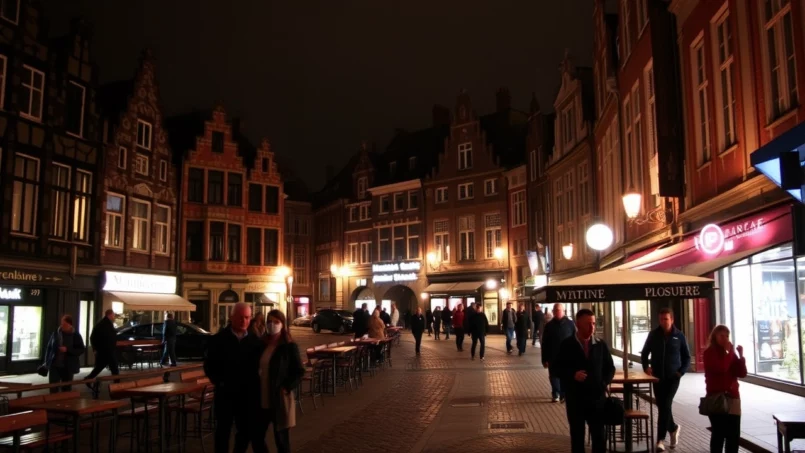
Belgium may be a small country, but its nights are anything but modest. Between mythical beer bars, electro clubs set up in old cinemas, century-old jazz clubs, and fry stands open until the wee hours, the Belgian nightlife scene is one of the densest and most varied in Europe. From major cities like Brussels, Antwerp, Ghent, or Leuven to the ports of Liège or Ostend, each city has its own way of staying up late.
This guide proposes an itinerary through Belgium after dark, highlighting authentic places and events. It describes their unique atmospheres and highlights, while providing practical advice to fully enjoy the experience without difficulty.
Understanding the Belgian Night
Nightlife in Belgium rests on three pillars: beer culture, the presence of major university hubs, and a marked taste for live music and clubs. Brussels, Antwerp, Ghent, Leuven, and Liège concentrate most of the offerings, but smaller cities like Bruges, Ostend, or Namur also hold their own with more intimate vibes.
Beer is central in Belgium, with a culture inscribed on UNESCO’s intangible cultural heritage list. Cities offer bars with hundreds of references, traditional ‘brown’ cafés, estaminets serving rare Trappist beers, and even a giant museum dedicated to beer, the Belgian Beer World, housed in the former Brussels Stock Exchange.
Another common trait: nights are heavily influenced by the student calendar. Both Flanders and Wallonia have large universities. As a result, Thursdays are often as lively as Fridays, especially in Ghent, Leuven, or Liège.
Finally, Belgium loves music. Jazz, rock, electro, hip-hop, intimate concerts or large venues, you can find it all, everywhere, and often in places with strong character: former train stations, orangeries, repurposed churches, abandoned cinemas.
Brussels: Capital of Bars, Clubs, and Cultural Outings
Brussels is the most natural gateway to explore Belgian nightlife. The city doesn’t have the flashy reputation of a Berlin or Barcelona, but it combines a pretty exceptional density of venues, a laid-back side, and real diversity of crowds: Eurocrats, students, expats, families, tourists, African and Maghreb communities, a very visible LGBTQ+ scene…
Neighborhoods for going out in Brussels
The Brussels night is first read on a map. Each neighborhood has its specialty, its crowd, its rhythm.
Around the Grand-Place and the historic center, you navigate between traditional estaminets, spectacular beer bars, and tourist spots. The Saint-Géry district, around the Saint-Géry Halls, concentrates a host of bars frequented by thirty-somethings, lots of terraces, and places that switch to club mode late at night. Towards Sainte-Catherine, the vibe becomes more “bobo” and gastronomic, with wine bars, cocktails, and fish restaurants.
Heading up towards the Dansaert district, you enter a mix of concept stores, hip bars, and trendy spots. This is where you’ll find BBP Dansaert, the craft beer bar from Brussels Beer Project, or Café Walvis, perfect for combining Belgian cuisine and local pints.
To the south, Ixelles and its sub-districts (Flagey, Saint-Boniface, Cimetière d’Ixelles) offer one of the city’s liveliest faces: students, young professionals, families, cocktail bars, packed terraces around the pond, clubs in former churches, historic jazz clubs. Saint-Gilles, more bohemian, completes the picture with neighborhood cafés, squares lined with terraces (Parvis de Saint-Gilles), and a real neighborhood life until late.
Add to this more targeted zones: Saint-Jacques, epicenter of the LGBTQ+ scene around Rue du Marché au Charbon, the area near Place du Luxembourg (Euro-bubble after-work), Place Fontainas, and the more upscale neighborhoods of Avenue Louise.
To find your way, a comparative table is useful:
| Neighborhood / zone | Main vibe | Dominant type of venues | Majority crowd |
|---|---|---|---|
| Grand-Place / center | Touristy, beer-focused, lively | Beer bars, pubs, traditional taverns | Tourists, groups, mixed locals |
| Saint-Géry / Sainte-Catherine | Trendy, urban, terraces | Bars, cocktails, pubs, restaurants | Thirty-somethings, expats, creatives |
| Dansaert | Design, arty, hip | Craft bars, cafés, cocktail bars | Hipsters, creatives, foodies |
| Ixelles (Flagey, St-Boniface, Cimetière d’Ixelles) | Student, local, festive | Bars, cafés, clubs, cheap eats | Students, young professionals |
| Saint-Gilles | Bohemian, “village-like” | Neighborhood cafés, terraces, alternative bars | Artists, neighborhood residents |
| Saint-Jacques | LGBTQ+, eclectic | Gay bars, clubs, karaoke | LGBTQ+ community, night owls |
| Avenue Louise / Louise | Chic, sophisticated | Lounges, selective clubs, hotel bars | Upper-middle class, “dress code” nightlife |
The great beer bars of Brussels
It’s hard to talk about Belgian nightlife without starting with beer bars. Brussels has several institutions, some ranked among the best in the country.
The Delirium Café in Brussels officially offers over 2,000 beer references, with some sources even mentioning 3,000 different varieties.
Not far away, À La Mort Subite, a historic brewery with old mirrors and stained glass, plays the Brussels tradition card: lambics, gueuzes, krieks, beers from the Mort Subite house, served in a preserved art deco setting. It’s the ideal address to get initiated into spontaneously fermented beers.
La Porte Noire, set in the former vaulted kitchens of a 16th-century convent, offers a fine selection of beers and whiskies in a rock atmosphere, sometimes with concerts. Another institution, Moeder Lambic (two addresses: the Original and the Fontainas version) stands as a temple of craft beer with about forty taps and over 300 bottles, often focused on gueuze, lambic, and small independent breweries.
Other bars are worth the detour: Poechenellekelder, facing the Manneken Pis, covered in puppets; Au Bon Vieux Temps, tucked away in an alley with its 17th-century walls; Beer Mania, a shop-bar listing over 400 types of beer; Bier Circus or even Beer Capital Brussels, open from 11 am to 5 am, a good spot to end (or start) very late.
Some of these addresses also feature in the personal pantheon of beer enthusiasts who regularly cite Brussels among the best beer cities in the world. A €90 million museum, Belgian Beer World, has moreover just opened in the former Stock Exchange, with a Beerlab on the roof to conclude the visit with a tasting and a view.
Clubs and dancefloors: electro, hip-hop, queer
On the clubbing side, Brussels has a dense network of venues that have far surpassed the country’s borders in the electronic scene.
Fuse, established since 1994 in a former cinema on Rue Blaes, is considered one of Europe’s techno cathedrals. It features a large room, a 360° bar, a sharp techno lineup, and legendary LGBTQ+ parties like ‘La Démence’. For a more recent and underground vibe, C-12, located above Central Station, combines techno nights, art installations, and an art gallery.
In a more generalist vein, Spirito, a club set in a former church in Ixelles, mixes gilding, gigantic chandeliers, mezzanines, and a smart dress code; people come as much for the decor as for the vibe. Bloody Louis, also in Ixelles, is the capital’s big hip-hop/R&B machine, often with international headliners, and a pre-sale policy is recommended.
Other clubs like Mirano, Zodiak, Le You Night Club, or Red Line complete the picture, with vibes ranging from commercial to cutting-edge. In the Saint-Jacques district, Zodiak and FLASH Club play a central role for the LGBTQ+ scene, with very inclusive dancefloors.
Jazz, concerts, and nighttime shows
In the evening, Brussels doesn’t just make people dance: it listens. The city has a jazz tradition dating back to the 1930s.
L’Archiduc, an art deco bar opened in 1937, once hosted legends like Nat King Cole or Miles Davis. You still enter by ringing the bell, concerts take place in subdued lighting, often on weekends. Sounds Jazz Club, in Ixelles, has been running since 1986: free jam sessions on Wednesday nights, concerts on Thursday and Friday, gypsy jazz late into the night. Jazz Station, set in a former train station, combines concerts, artist residencies, exhibitions, and talks.
The Music Village, a stone’s throw from the Grand-Place, is the other great jazz house in Brussels: over 250 to 300 concerts per year, six days a week, in an intimate setting dating from the 17th century.
For rock, pop, rap, or electro concerts, the main venues are the Ancienne Belgique (AB) and Le Botanique. The AB, historic, has programmed artists like The White Stripes before their international success. Other venues like Bozar, Flagey, or Forest National host events ranging from classical music to megastars. At night, many bars like Bonnefooi allow you to extend the evening with DJ sets and jam sessions, often with no fixed closing time.
Different outings: karaoke, comedy, rooftops, and night museums
Brussels nightlife isn’t limited to bars and clubs. BOA Karaoké Room and KaraFun Bruxelles offer private rooms right in the center, perfect for groups. English Comedy Brussels programs English-language stand-up not far from the center.
On the rooftops, Soko Rooftop, about forty minutes from the center by public transport, offers a terrace with a view of the Forêt de Soignes, while 1040: The Roof, on the Sofitel Brussels Europe hotel, serves cocktails and an urban view from 5 pm to midnight.
On the culture side, several events extend museum openings. Museum Night Fever transforms, once a year, about thirty Brussels museums into a nighttime playground, with performances, DJs, workshops, and afterparties at Botanique and C12. The ticket (€17 to €31 depending on options) includes special shuttles and access to some late-night openings until the end of November. In spring, the Brussels Museums Nocturnes allow you to visit several museums each Thursday evening until 10 pm, often with concerts, guided tours, or original workshops.
Eating late in Brussels: fries, kebabs, and late-night restaurants
After the bars, the fry stands take over. Brussels friteries serve twice-fried fries, in a paper cone, with an impressive collection of sauces (mayonnaise, andalouse, samouraï, etc.) and a series of typically Belgian fried snacks: frikandel, Bicky Burger, and other croquettes.
Around the Grand-Place, Saint-Géry, Flagey, or Châtelain, kebabs, pizzerias, Asian snacks, and international brasseries stay open until late, sometimes 2 or 3 am. In the center, a simple glance at the lines when bars close helps identify the good spots. The same logic applies in student neighborhoods: Cimetière d’Ixelles, Flagey, Place du Luxembourg.
Delivery apps (Deliveroo, Uber Eats, Takeaway.com) operate until midnight or even 1 am on weekends. However, keep in mind that some small establishments only accept cash.
Ghent: The student city that (almost) never sleeps
Ghent is often cited by Belgians themselves as the best city in the country for partying. Industrial port, major university, spectacular historic center: the cocktail works wonderfully.
The Ghent night is structured around a few key axes. Overpoortstraat, the big student street, lines up more than 35 bars and clubs side by side. On Thursday, “student night,” you mainly encounter students, affordable pints in hand, moving from one establishment to another until the early morning.
Discover the emblematic squares of the Ghent night, each offering a distinct vibe and addresses for all tastes.
A small cobbled square, epicenter of the night for a broad crowd. You’ll find places like the Charlatan, a large alternative bar-club with concerts and DJ sets, as well as cafés open very late.
Hosts more “stylish” addresses, including Club 69, a small club known for its sharp and selective music programming.
By the water, Graslei and Korenlei offer a more tranquil version of the Ghent night: terraces lined up facing the medieval houses, local beers in hand, postcard atmosphere. The city is also known for its festivals, notably the Gentse Feesten, a gigantic ten-day street party in July, and a light festival that illuminates the monuments, often enhanced by a nighttime route.
On the beer front, Ghent doesn’t lag behind: bars like De Trollekelder, Brouwbar Gent, Bier Central, or urban breweries like Dok Brewing Company or Gentse Gruut multiply styles, from saison to IPA. De Trollekelder is notably known for serving its beers accompanied by celery salt cheese as a snack.
Bars and breweries of Ghent
For eating late, the fry stands and kebabs around Overpoortstraat, Korenmarkt, and Vrijdagmarkt cover the basics. Deliveries via Takeaway.com, Uber Eats and the like complete the offering, very popular with students.
Antwerp: Cocktails, techno clubs, and brown cafés
Antwerp, the country’s second city and major port, displays a nightlife worthy of its dynamic reputation. More “bling” than Ghent, more club-oriented than Brussels, it attracts both students, fashionistas, and an international clientele.
The Zuid district (Het Zuid), along Vlaamsekaai and Waalsekaai, concentrates many trendy bars and clubs. The old docks (“Eilandje”) now mix quayside restaurants, the rooftop of the MAS (Museum aan de Stroom) open until midnight in summer for a free night view, and spots for a drink by the Schelde river. Marnixplaats or Dageraadplaats, squares lined with terraces, offer a more relaxed atmosphere.
The iconic Antwerp clubs range from the techno temple to the gay-friendly address. Café d’Anvers, in the red-light district, long stood as one of the high places of house/techno, open weekends from 11 pm to nearly 7:30 am. Ampere, an eco-designed club under the central station, recovers heat from dancers to power the building and programs mainly house and techno.
The Red Light District, Schipperskwartier, combines regulated windows, pubs, and clubs. Places like Red & Blue have marked the gay scene, while others, like Café Local, focus on salsa nights and Latin dances. For live music, Trix and De Roma host rock, electro, hip-hop concerts, and more alternative events.
Number of different beers offered on the menu at the Kulminator bar in Antwerp, including a vast cellar of old vintages.
For cooler nights, cafés like De Muze (live jazz), Via Via (a travelers’ bar where you can also book trips), or De Echo (student pub) allow for a mix of conversations, concerts, and Belgian beers.
Bruges: Medieval charm and characterful cafés
Bruges isn’t the wildest city in the country: clubs really only run on Friday and Saturday, and many restaurants close their kitchens around 9:30 or 10 pm. But the atmosphere is unique. Walking at night around the Markt, the Burg, or the Rozenhoedkaai, along the canals, is an experience in itself; the illuminated Gothic facades, the carillon of the belfry, and some street musicians compose a very cinematic setting.
Bruges is home to iconic establishments for connoisseurs. ‘t Brugs Beertje, opened in 1983 in a historic house, offers over 300 beers, including five on tap, and allows you to discover almost the entire Belgian range with expert advice. De Garre, hidden in an alley, serves about 200 beers, notably its famous Garre Tripel (over 11% alcohol), accompanied by pieces of cheese.
De Trappiste, set in a vaulted cellar, offers twelve rotating taps and over 100 bottles, with a house beer (Abbott) also brewed by Van Steenberge. ’t Poatersgat, another iconic cellar, completes this trio of Bruges beer spots. The De Halve Maan brewery, in the heart of the city, combines a visit to the historic brewery, tasting of Straffe Hendrik and Brugse Zot, and a restaurant.
After 11pm, fry stands are the most common establishments for food, offering fricandelles, Bicky Burgers, fries, but also kebabs, pizzas, and Asian snacks. The most reliable neighborhoods for finding food late at night are around the Concertgebouw (‘t Zand), near the Markt, Steenstraat, Simon Stevinplein, and around the train station.
Leuven: The “longest bar in the world”
Leuven, the quintessential university city, is nicknamed “Europe’s largest cafeteria” for a simple reason: its Oude Markt. This large rectangular square, bordered by cafés squeezed next to each other, is often described as “the longest bar in the world”. Each facade houses a bar, brewery, or pub on the ground floor, with sometimes radically different vibes between two doors.
On weekdays, the bars on the Oude Markt generally stay open until 2 or 3 am, and until 4 or 5 am on weekends. Students move from terrace to terrace, enjoying happy hours, themed nights, and prices often lower than in big cities. You’ll also find specialized bars like The Beer Capital or Café Belge.
Outside the Oude Markt, the city of Leuven offers a varied nightlife: De Blauwe Kater and STUK Café for jazz and concert lovers, Rumba & Co for clubbing, Bar Nine for cocktails, and cafés like Fakir or Leuven Cliché for quieter evenings. On the outskirts, the Kokorico discotheque attracts electronic music fans with its large dance floor.
Budget-wise, a typical evening in Leuven revolves around €5 to €10 per drink, with club entry between €5 and €15. The crowd is overwhelmingly student, but the city remains very welcoming to visitors, including solo ones.
For eating late, fry stands, pizzerias, and kebabs are legion, often open until 2 or 3 am on weekdays and later on weekends. Delivery platforms are particularly popular among students.
Liège, Ostend, Mons, Namur: Other scenes not to be overlooked
While Brussels, Antwerp, Ghent, Bruges, and Leuven often steal the spotlight, other Belgian cities are worth the detour for their nights.
Liège, on the Walloon side, is famous for its Carré, a maze of small cobbled streets filled with affordable bars. On Thursday and Friday, this student district transforms into a party village, with places like Le Pot au Lait or L’Escalier, highly appreciated for their laid-back atmosphere. Around it, craft beer bars, concert halls, and clubs complete the offering.
Ostend, a dynamic seaside resort, offers varied nightlife, between the pleasures of the sea and the festive atmosphere of the city center.
Enjoy beach bars, seaside clubs like Le Dôme, Boccaccio Life, Club LIC, and Cocoon Club, the casino, and nighttime strolls on the dike.
Langestraat concentrates most of the cafés, which transform into lively party spots after nightfall.
Mons and Namur offer more compact but friendly scenes: the place du Marché aux Herbes in Mons, for example, gathers a large part of the city’s bars. Namur features bars, cafés, and clubs on a human scale, perfect for those wanting to avoid big crowds.
Safety, transport, and costs: Preparing your nights well
Overall, Belgium is a safe country, ranked high on peace indices. Serious crime remains rare, and city centers are very populated and well-monitored in the evening. The main risk remains petty crime (pickpocketing, bag or phone theft), especially in very touristy areas or train stations (Brussels-Midi, Brussels-Central, Antwerpen-Centraal). A few neighborhoods around certain stations (Gare du Nord in Brussels, red-light zones) require more vigilance late at night.
Some useful benchmarks:
| Theme | Key information |
|---|---|
| General safety | Globally safe country, violent crime rare, terrorist threat at “serious” level (3/4) |
| Petty theft | Present especially in train stations, metros, tourist areas; vigilance recommended |
| Police / emergency | 112 for all emergencies, 101 for police, 100 for fire/ambulance |
| Night transport | STIB/MIVB network (Brussels) late on weekends, Noctis night buses; taxis and Uber readily available |
| Average drink prices | Beer: €4–7, glass of wine: €6–10, cocktail: €8–14 (more in upscale clubs) |
| Club entry | From €0 (some clubs) to €15, sometimes with drink included |
| Dress code | Smart casual accepted almost everywhere; some clubs impose a stricter dress code |
| Legal age | 18 for alcohol (16 for beer/wine in some legal texts, but 18 often applied) |
Public transport is a precious ally early and mid-evening. In Brussels, metros, trams, and buses run late, especially on weekends, with a Noctis night bus network between midnight and 3 am on Fridays and Saturdays. The Museum Night Fever ticket, for example, includes access to special shuttles and Noctis. Between cities, the train remains the best option, with excellent connections between Brussels, Antwerp, Ghent, Bruges, Leuven, Liège…
After public transport closes, getting around is handled by taxis, ride-hailing services (like Uber or Heetch), and free-floating bike or scooter services. For your safety, it is highly recommended to only use official taxis or recognized ride-hailing apps.
Eating after midnight: The Belgian snack culture
It’s impossible to talk about the night without mentioning what often ends it: the snack stop. Everywhere in the country, a few classics come back.
Fries, first. Belgian fry stands, often signaled by small huts or lit counters, serve a cone of crispy fries with a sometimes crazy choice of sauces. They also offer frikandel (fried minced meat sausage), Bicky Burgers (cult sandwich based on a burger, mix of sauces, and onions), burgers, cheese croquettes, or meatballs.
Kebabs occupy second place on the podium of the most popular nighttime foods.
For vegetarians, options are multiplying: veggie burgers, falafels, meatless pizzas, cheese croquettes, wraps, and salads. And if everything is closed, some convenience stores or gas stations (especially on the outskirts) remain accessible, but it then becomes tricky to find “real” hot food.
A Belgian night, a thousand ways to live it
What makes the strength of nightlife in Belgium is its ecosystem: the possibility, in the same evening, to start with a sunset on a rooftop overlooking the forest, follow up with a gueuze tasting in a 17th-century cellar, head to a jazz or rock concert in a century-old venue, finish in a techno club under a station or in a repurposed church, then eat a cone of fries dripping with samouraï sauce.
Brussels offers the greatest diversity, Antwerp the power of clubs and exceptional beer bars, Ghent the student energy and conviviality, Bruges an irresistible medieval charm, Leuven a concentrated student life, Liège a more raw and festive atmosphere, Ostend the salt of the sea. And everywhere, that same mix of seriousness when it comes to beer, relaxation in human interactions, and tolerance in the way of living the night.
Belgian cities
For those interested in Nightlife in Belgium: where to go out in the evening, the best approach is often to think in scenes rather than cities: traditional beer scene, craft scene, techno scene, jazz scene, LGBTQ+ scene, student scene. Most major Belgian cities today have their version of each of them.
One thing is sure: whatever city you choose, you never lack a place to extend the evening, a beer to discover, or a piece of sidewalk on which to finish your cone of fries, thinking that in Belgium, the night is decidedly a very serious matter.
Disclaimer: The information provided on this website is for informational purposes only and does not constitute financial, legal, or professional advice. We encourage you to consult qualified experts before making any investment, real estate, or expatriation decisions. Although we strive to maintain up-to-date and accurate information, we do not guarantee the completeness, accuracy, or timeliness of the proposed content. As investment and expatriation involve risks, we disclaim any liability for potential losses or damages arising from the use of this site. Your use of this site confirms your acceptance of these terms and your understanding of the associated risks.

Cyril Jarnias is an independent expert in international wealth management with over 20 years of experience. As an expatriate himself, he is dedicated to helping individuals and business leaders build, protect, and pass on their wealth with complete peace of mind.
On his website, cyriljarnias.com, he shares his expertise on international real estate, offshore company formation, and expatriation.
Thanks to his expertise, he offers sound advice to optimize his clients' wealth management. Cyril Jarnias is also recognized for his appearances in many prestigious media outlets such as BFM Business, les Français de l’étranger, Le Figaro, Les Echos, and Mieux vivre votre argent, where he shares his knowledge and know-how in wealth management.





