 Published on and written by Cyril Jarnias
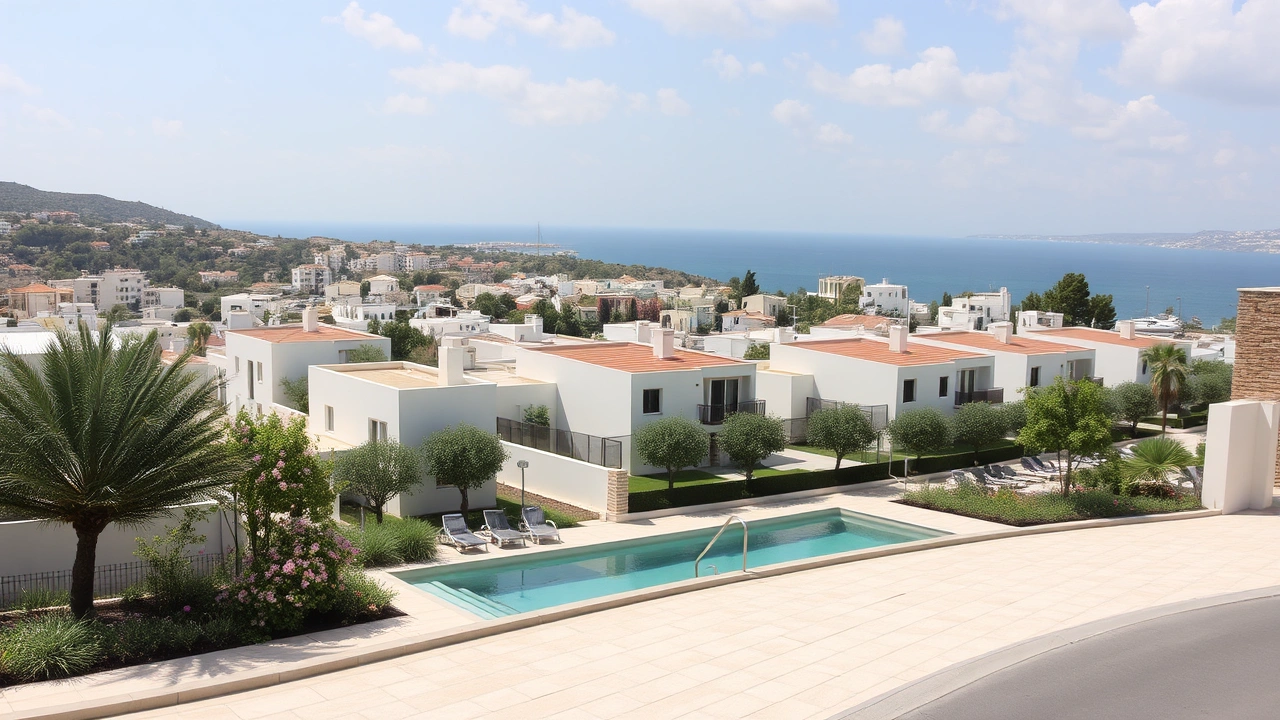
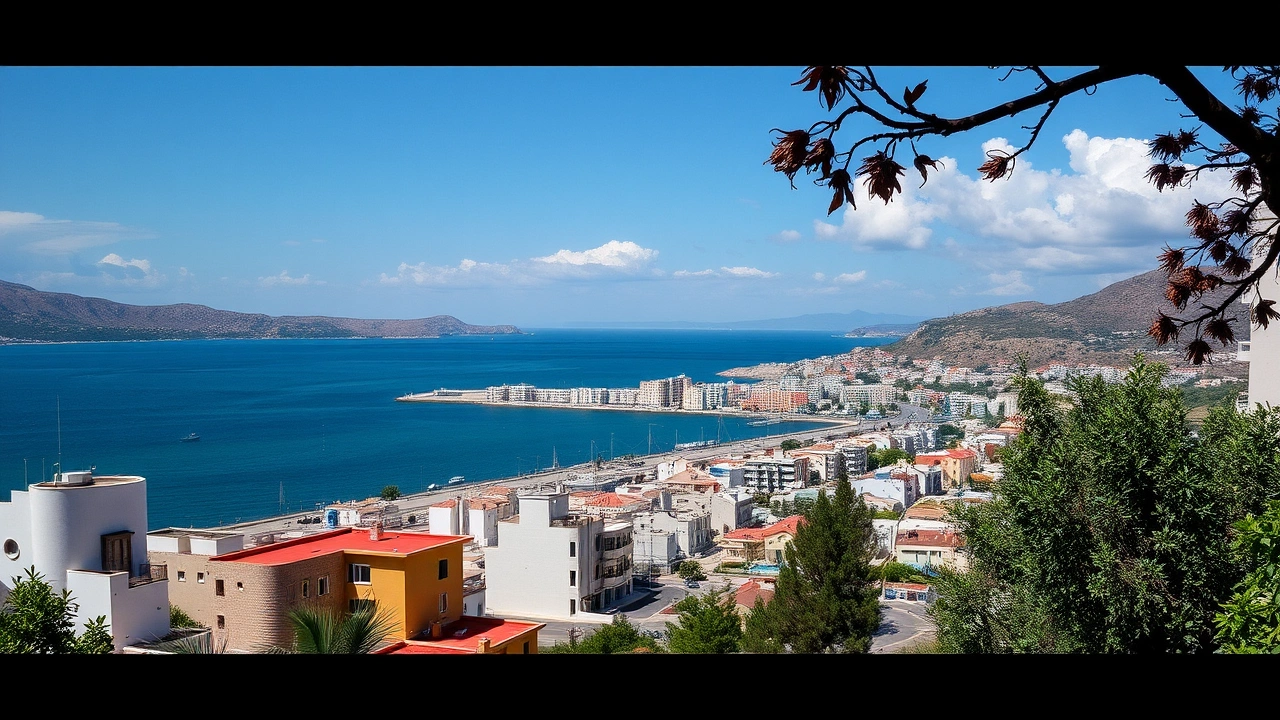
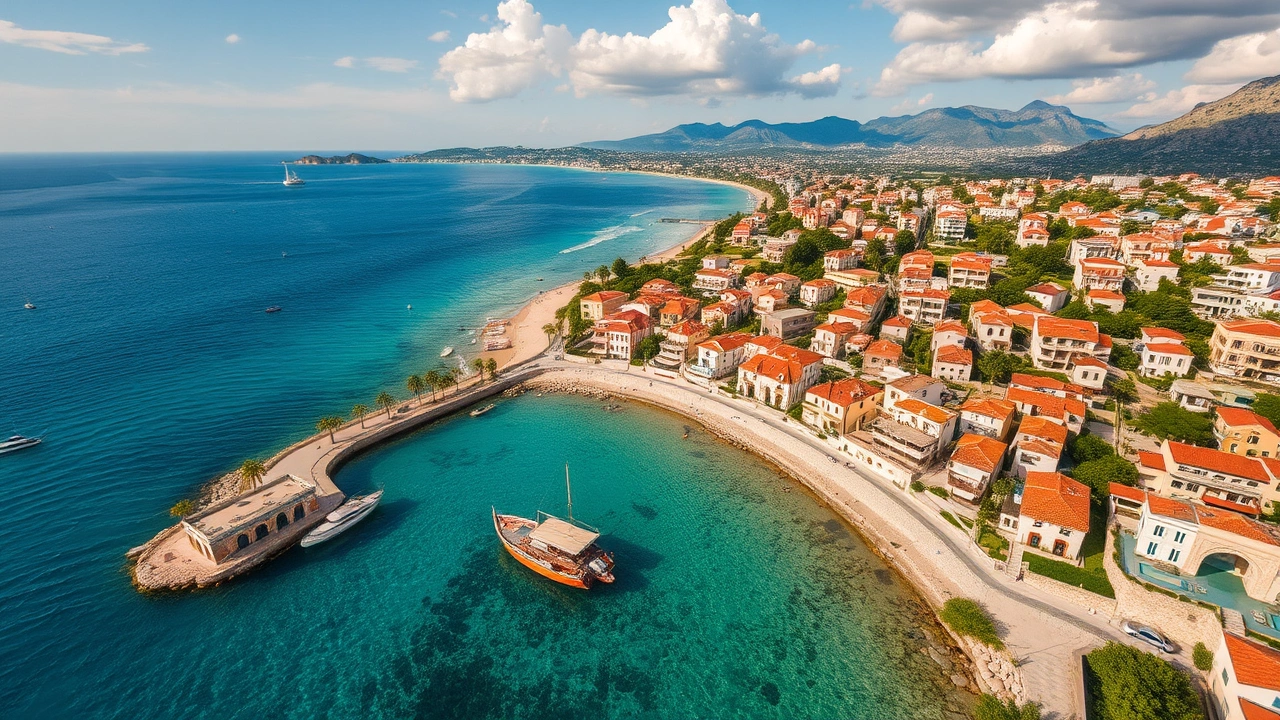
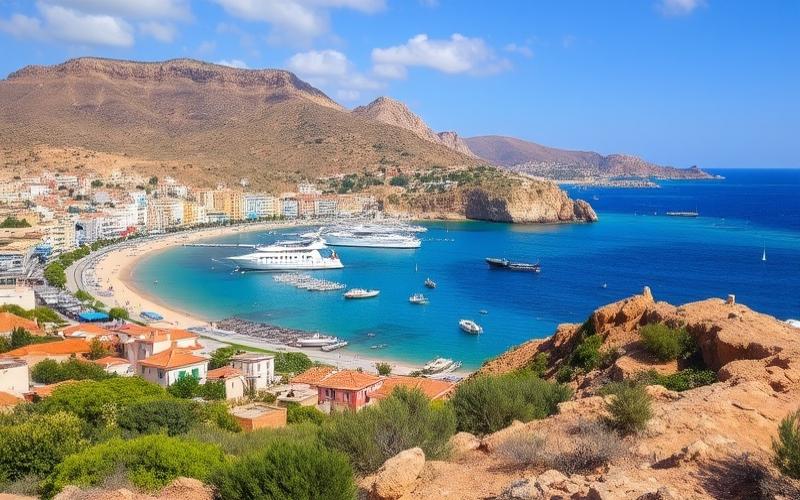
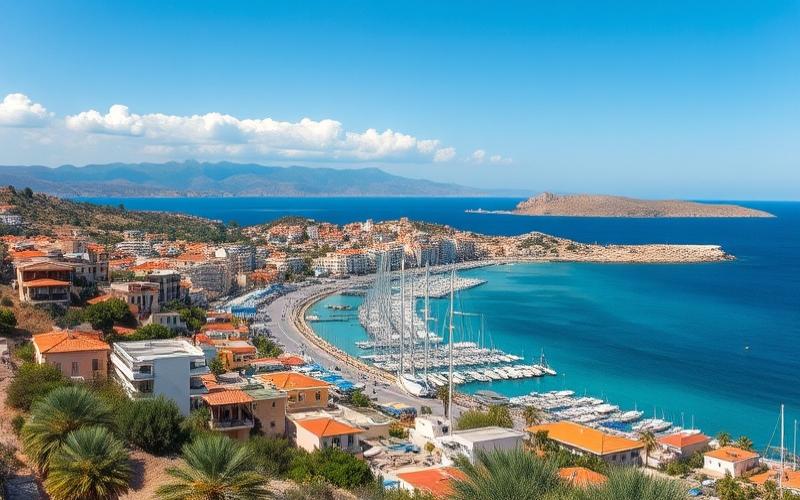
Nestled on the southwest coast of Cyprus, Paphos ticks almost all the boxes for a sound Mediterranean real estate investment. A coastal town, UNESCO World Heritage site, over 300 days of sunshine per year, international airport, favorable taxation, a booming market, and, not insignificantly, one of the safest destinations on the island.
The Paphos real estate market is dynamic and attractive, driven by international demand and sustained tourism. Prices are rising sharply, rental yields are solid, and advantageous permanent residency programs target non-European investors. Furthermore, major public projects are helping to transform the area.
This article provides a comprehensive, data-driven, and practical overview of real estate investment in Paphos: price trends, yields, best neighborhoods, taxation, residency programs, and infrastructure projects that could boost your property’s value in the coming years.
One of Cyprus’s Most Dynamic Markets
Paphos is no longer just a resort for British retirees. The city has transformed into an international hub, attracting families, remote workers, entrepreneurs, and students alike. This upgrade is clearly reflected in the market data.
The median property price in Paphos was around €420,000 in 2024.
For the majority of properties, however, per-square-meter prices fall within a broader range of €2,500 to €3,500, with the most sought-after coastal areas exceeding €4,000/m². Resale two-bedroom apartments typically trade between €200,000 and €300,000, while three-bedroom villas start around €250,000, averaging €450,000 to €500,000 in the villa segment.
Annual anticipated price growth for Paphos real estate for 2025‑2026, with varying dynamics depending on the area.
The main price levels and growth rates can be summarized as follows:
| Key Indicator | Recent Level in Paphos |
|---|---|
| Median property price | ≈ €420,000 |
| Median asking price (houses + apts.) | ≈ €600,000 |
| Average price per m² range | €2,500 – €3,500 |
| Premium areas (coastal) | > €4,000/m² |
| 2024 house price increase | ≈ +13.4% |
| 2024 apartment price increase | ≈ +12.1% |
| Projected annual growth 2025‑26 | +3% to +5% |
| Share of foreign buyers | > 60% of transactions |
This momentum is not limited to volume. In 2024, the Paphos district recorded approximately 2,710 residential transactions with a value around €430 million. In early 2025, the number of sales increased further (+11% year-on-year), with the first quarter showing nearly 829 sale contracts for a total amount of €199 million.
Foreign buyers fuel the bulk of this demand: over 60% of deeds, and up to 80% in some recent months, are signed by non-Cypriots, often motivated by permanent residency, yield objectives, or a combination of both.
Rental Yields That Support Investment
A rising market is not enough to justify an investment if it is not backed by solid rents. From this perspective, Paphos remains competitive, with a rental level that supports prices.
Gross rental yields typically range between 4% and 7.5% depending on location, property type, and strategy (long-term or seasonal rental). For well-located and “rent-ready” properties, gross yields hover around 6% to 7.5%. The average monthly rent of around €1,280–€1,300 gives an order of magnitude for the market.
Aggregated data shows the following levels by property type:
| Property Type | Typical Purchase Price | Current Monthly Rent | Estimated Gross Yield |
|---|---|---|---|
| Studio / 1 bedroom | €120,000 – €180,000 | €600 – €900 | 6% – 7.5% |
| 2-bedroom apartment | €180,000 – €300,000 | €850 – €1,300 | 5% – 6.5% |
| 3-bedroom villa | €250,000 – €450,000 | €1,200 – €1,800 | 4.5% – 6% |
| Coastal luxury property | €450,000 – €650,000+ | €1,800 – €3,000+ | 4% – 5.5% |
It is clear that small apartments in the center or near the coast offer the best gross yields, while large prestige villas are more about capital appreciation and personal use, with slightly lower yields.
A zone-by-zone analysis allows for an even more refined understanding of yields.
| Area of Paphos | Dominant Demand Type | Average Annual Gross Yield |
|---|---|---|
| Kato Paphos | Tourist short-term | 6.5% – 8.5% |
| Tombs of the Kings | Mixed short/long-term | 6% – 7.5% |
| Geroskipou / Peyia | Long-term rental | 5.5% – 6.5% |
| Coral Bay | High-end, very seasonal | 4% – 6% |
| City Center (global average) | Urban mix | ≈ 6.46% |
| Out of Center (global average) | Diffuse residential | ≈ 7.33% |
The tourist heart that is Kato Paphos, with its harbor, waterfront, and archaeological sites, allows for targeting rents well above average during the high season through short-term rentals. A well-located two-bedroom can then rent for €1,800 to €2,200 per week in summer, even more for high-end products with a tourist license.
The trade-off is more active management (cleaning, check-ins/outs, online marketing, review management) and marked seasonality, with lows from November to February. Many investors thus combine high-season vacation rentals and low-season long-term rentals to smooth out income.
Overview of Main Investment Neighborhoods
The strength of Paphos also lies in its diversity of micro-markets: lively waterfront, hilltop villages offering cool summers, central residential neighborhoods, university fringes, or up-and-coming areas around the future marina. Each sector has its own price profile, clientele, and yield.
Kato Paphos: The Tourist Hotspot
Kato Paphos concentrates the harbor, the castle, the UNESCO-listed archaeological park, developed beaches, bars, and restaurants. It is the city’s calling card, and unsurprisingly one of the most expensive real estate markets.
Modern one to two-bedroom apartments there typically sell for between €220,000 and €350,000, with an average price around €3,200/m², even more on the waterfront. An older studio can sometimes start around €150,000, but the bulk of the tourist stock consists of recent residences with pools, parking, and “resort” amenities.
For an investor, the main interest lies in seasonal rentals. A furnished property with a tourist accommodation license, well-rated on platforms, can generate a gross yield of 6.5% to 8.5% per year, provided high-season rates are optimized and management is handled well.
In return, one must accept the very lively side of the neighborhood, with noise and crowds in summer, and factor in the risk of increased competition from new complexes.
Universal: Practical and Profitable Residential Area
Behind Kato Paphos, the Universal sector was designed as a modern residential neighborhood. It features many 4 to 5-story buildings, with large communal pools, gyms, landscaped gardens, underground parking, often favored by expatriates and long-term tenants.
Prices are around €3,000/m², which corresponds to the upper average for the city and reflects construction quality as well as proximity to services (shopping malls, hospitals, schools). This sector is particularly attractive for “buy-to-let” investors targeting expatriates, digital nomads, and families.
Yields are less spectacular than on the purely tourist coast, but more consistent: often aiming for 5.5% to 6.5% gross in long-term rentals, with a lower vacancy risk.
Coral Bay and Sea Caves: The High-End Coastal Address
Coral Bay and the Sea Caves area, about twelve kilometers north of Paphos, represent the chic coastal address of the region. Sandy beaches, clear waters, contemporary villas with infinity pools and panoramic sea views, hotel and golf projects… everything is designed for a wealthy international clientele.
Prices per square meter generally exceed €3,800/m² for residential properties and can climb much higher in the most exclusive sectors. Individual villas often trade between €500,000 and €1.2 million, while waterfront properties or those with large plots can cross the million-euro threshold, even €1.5 million for the most prestigious estates.
Seasonal rentals are extremely profitable there during the summer months, with weekly rents of €1,800 to €2,500 (and more) for villas with pools, but the market is highly seasonal and dependent on high-end tourism. The focus here is more on long-term appreciation, reinforced by structuring projects like the future Paphos marina at Potima Bay, located nearby.
Peyia: Sea Views, Softer Budget, and Growth Potential
Perched on the hills just above Coral Bay, Peyia offers an interesting compromise between price and quality of life. Many British and European residents have acquired villas with sea views there, at price levels lower than on the waterfront. The price per square meter starts around €2,000, with three-bedroom villas listed from €300,000, and very high-end properties beyond a million in the Sea Caves sector.
This vast, rolling territory is primarily accessible by car. It benefits from a slightly cooler microclimate in summer and has good infrastructure including supermarkets, administrative services, schools, and tavernas.
Investment-wise, Peyia is benefiting from a new wave of residential projects, encouraged by still affordable land prices. Price growth forecasts there are above the district average (4% to 5% per year expected in the coming years), with long-term rental yields around 5.5% to 6.5%. In season, villas near Coral Bay also benefit from tourist demand.
Tala, Konia, Kissonerga: The Residential Hills
Tala and Konia, two elevated villages, have established themselves as residential refuges for those seeking peace, open views, and milder temperatures. Tala stands out for its prestigious image, its restored village center, and its new design villa projects, sometimes equipped with the latest technology (low-energy homes, home automation, electric car charging stations). A modern three-bedroom house there is acquired for around €400,000 to €500,000.
Konia, east of Paphos, benefits from quick access to the center, the road to Limassol, and international schools. Villas there start around €300,000 and go up to €1.8 million for exceptional properties.
Situated between Paphos and Peyia, Kissonerga retains a village atmosphere amidst banana plantations. Prices for new apartments range from €170,000 to €350,000. The emergence of projects with sea views, especially near the future Potima Bay marina, suggests a gradual revaluation of the area.
Geroskipou, Chloraka, Mesogi, Emba: The Family Alternative
Geroskipou, a few minutes east of the center, illustrates the profile of “emerging” sectors well. A district experiencing rapid growth, combining traditional architecture, beaches (notably near Rico beach), and new residential complexes, it has starting prices around €2,100/m², making it an interesting entry point for medium budgets.
Chloraka, on the road to Coral Bay, attracts with its strong international community (British, Scandinavian, Chinese), its amenities, and sea views, while remaining more accessible than ultra-touristic neighborhoods. New apartments there are offered between €230,000 and €450,000. It is an area appreciated for year-round rentals, especially among expatriates.
Mesogi, Emba, or Tremithousa complete this picture with a more village-like profile, lower prices than the center, and good acceptance by local families or expatriates seeking a quieter daily life.
University Areas and Commercial Heart
Around the campus of the American University of Beirut (AUB Mediterraneo) and other higher education institutions, a residential micro-market is emerging, driven by the housing needs of students, teachers, and researchers. This sector, close to schools and clinics, fuels strong demand for long-term rentals and supports interest in modern, modestly sized apartments.
Around the Kings Avenue Mall and the central commercial district, demand combines students, young professionals, civil servants, and families seeking proximity to shops and public services. Here too, recent apartments with parking and elevators are the most sought-after products, generating yields comparable to those in Universal, with the advantage of high liquidity upon resale.
Property Typology and Entry Price Points
The Paphos market is highly segmented, from small investor studios under €150,000 to multi-million euro seaside villas. Budgets can be roughly broken down as follows:
| Acquisition Budget | Typical Property Types | Common Locations |
|---|---|---|
| < €150,000 | Studios, small older 1‑2 room apartments, small houses | Kissonerga, Peyia (parts), Chloraka, villages |
| €150,000 – €300,000 | Modern 2‑3 room apartments, residences with pools | Universal, Kato Paphos (second row), center |
| €300,000 – €500,000 | Villas / townhouses 3‑4 bedrooms, sometimes with pool | Peyia, Tala, Konia, Geroskipou, outskirts |
| €500,000 – €750,000 | Premium villas, large plots, sea views | Coral Bay, Sea Caves, Tala, Konia, Kissonerga |
| €750,000 – €1,500,000 | Ultra-luxury, penthouses, waterfront villas | Coral Bay, Sea Caves, premium Kato Paphos |
| > €1,500,000 | Exceptional estates, extensive parcels, hotel or mixed-use projects | Premium coastline, Sea Caves, large historic properties |
This structure is consistent with current investor appetite: the most liquid price zone is between €250,000 and €600,000, where purchases linked to permanent residency programs are also concentrated.
New apartments are generally offered, excluding VAT, in the following approximate price ranges in Paphos:
| Type of New Property (indicative) | Price Range (excl. VAT) |
|---|---|
| Studio | €140,000 – €160,000 |
| 1 bedroom | €170,000 – €250,000 |
| 2 bedrooms | €250,000 – €400,000 |
| 3 bedrooms | €300,000 – €450,000 |
| Townhouse 2 bedrooms | €250,000 – €400,000 |
| Villa 3 bedrooms with pool | €400,000 – €650,000 |
| Luxury villa (3 bedrooms or more) | From €600,000 |
The additional cost of new construction, boosted by an estimated increase of about 17% in labor and material costs since 2022, tends to push up the value of well-maintained resale properties, which can appear more competitive.
Costs, Taxation, and Legal Framework: What an Investor Must Factor In
One of Cyprus’s, and therefore Paphos’s, major assets is a legal environment modeled on Anglo-Saxon law and relatively light real estate taxation.
Purchase Process and Additional Fees
European Union nationals can purchase freely. Non-Europeans must obtain authorization from the Council of Ministers (or the District Officer), a procedure that is most often routine, with a theoretical limit of two properties and 4,000 m² of land in total.
The standard process involves several steps: property search, negotiation, signing a reservation agreement with a small deposit, signing the sale contract and registering it with the cadastre (District Land Registry, within six months), paying a more substantial deposit (20% to 40%), obtaining authorizations for non-EU buyers, then transferring the title deed with payment of the balance and taxes.
The main cost items are: Transfer fees (stamp duty), lawyer’s fees, VAT (on new builds), notary and translator fees, and surveyor’s report fee.
Purchasing a property in Cyprus incurs several mandatory fees and taxes: lawyer’s fees (typically 1% to 2% of the price + VAT) for legal verification and the contract; stamp duty (0.15% on amounts between €5,001 and €170,000, then 0.20% above, with exemption on the first €5,000); property transfer fees (progressive scale from 1.5% to 4%, currently reduced by 50% in most cases); VAT (19% on new builds, or 5% for a new primary residence under certain conditions); as well as notary, possible translation, and surveyor fees (about €500 for a report).
Taking these elements and various additional expenses (bank statements, travel, administrative fees) into account, it is prudent to add 10% to 15% to the “bare” purchase price to obtain the total budget.
Current Taxation: Virtual Absence of Property Taxes
Since 2017, the national immovable property tax has been abolished. Only municipal and community taxes (refuse, lighting, sewerage) remain, generally between €90 and €300 per year for a standard home, more for large properties, but nothing compared to other European countries.
For a property owner-landlord in Cyprus, rental income received is taxable according to a progressive scale. The first €19,500 of annual income is exempt. Beyond this threshold, taxation applies in brackets. The owner can benefit from deductions for loan interest related to the property acquisition, for the property’s depreciation, and for certain expenses.
A particularity to note: the so-called “Special Defence Contribution” tax which in principle applies to certain passive income, including 3% on 75% of gross rents. However, non-domiciled tax residents in Cyprus can be largely exempt, which is a strong advantage for expatriates highly taxed in their home country.
In case of resale with a capital gain, a 20% tax applies to the profit, after deduction of expenses (loan interest, notary fees, etc.). Each person benefits from a lifetime allowance of €17,086 on real estate capital gains. For the sale of a primary residence (under conditions), an allowance of up to €85,430 is applicable, with the total exemptions not exceeding the latter amount.
There is no wealth tax, no inheritance tax, and no general gift tax in Cyprus, which enhances the patrimonial appeal of an investment in Paphos.
Recur Operating Costs
Beyond taxes, a rental property involves operating expenses that must be factored into yield calculations:
– Electricity: €50 to €200 per month depending on the size of the home, air conditioning, and presence of a pool;
– Water: €25 to €30 per month on average;
– High-speed internet: €30 to €40 monthly;
– Common expenses (communal fees) in a building: often €1 to €1.5 per m² per month (approximately €1,700 per year for a standard apartment, €2,900 for a villa with shared facilities);
– Multi-risk home insurance: around €1.5 to €2 per €1,000 of insured value per year.
After deducting these costs and taxes, net yields are typically 1.5 to 2 percentage points below gross yields, often around 3% to 5% net depending on the property profile and rental strategy.
Permanent Residency and “Golden Visa”: A Powerful Driver of Demand
For non-European investors, real estate in Paphos is not just about a simple investment. Cyprus offers a permanent residency by investment program that starts at €300,000 for a new residential property, plus VAT.
Nationals from non-EU/EEA countries can obtain a permanent right of residence for themselves and their family in Cyprus. The conditions are: an investment of at least €300,000 (excluding VAT) in new real estate and proof of a stable annual income of €50,000 from abroad for the main applicant, with an additional amount for the spouse and dependent children.
The process remains relatively fast for this type of scheme: once the complete file is submitted to the Civil Registry and Migration Department, the decision generally comes within two months. The permit does not impose permanent residence on the island, only a visit at least every two years, provided the investment is maintained and a clean criminal record is kept.
Cyprus’s “golden visa” attracts investors toward quality new-build real estate programs, between €300,000 and €600,000 in sought-after areas like Paphos. Demand is also strong for “turnkey” apartments with amenities suited to international families: pool, proximity to private English or Russian-speaking schools, and easy airport access.
For those wishing to go further, permanent residency can serve as a basis for an application for Cyprus citizenship by naturalization, in case of prolonged effective residence in the territory (roughly eight years over a ten-year period).
Infrastructure Projects and Public Development: A Lever for Appreciation
Beyond the classic play of real estate supply and demand, Paphos benefits from an unprecedented volume of public investment that should transform the urban and regional landscape in the coming years.
The Cypriot state has indeed announced a plan of more than 75 projects for the Paphos district alone, with a budget exceeding €230 million. After decades of complaining about being neglected compared to Limassol and Nicosia, the city is now in catch-up mode.
The Future Paphos Marina at Potima Bay
The flagship project, the Paphos marina at Potima Bay, is set to become a tourist and economic pivot. Planned on an area of approximately 165,000 m², it is expected to host nearly 1,000 pleasure boats, hotels, residences, and commercial spaces.
The project’s location between Coral Bay, Peyia, and Kissonerga aims to position Paphos in the big yacht segment of the Eastern Mediterranean. The private sector and local chambers of commerce see it as a tool to attract a wealthy clientele and increase the value of the surrounding coastline.
Even if the project’s history is marked by delays and controversies, the launch of the concession tender procedure and renewed political will suggest this project finally has a serious chance of being completed within the current decade. For investors, adjacent areas – Potima Bay, Kissonerga, parts of Peyia – therefore present significant revaluation potential in the medium term.
Roads, Hospital, Schools, Water: A Better Connected and Equipped Territory
The development plan also includes the construction of a Paphos‑Polis highway, the creation of road bypasses to the west of Paphos and north of Geroskipou, the widening of key arteries (Emba Avenue, Apostolou Pavlou Avenue), the completion of bridges, and network improvements in several peripheral villages.
Significant investments are being made at Paphos General Hospital, including the extension of the emergency department, creation of a day hospitalization unit, strengthening of pediatrics and gynecology, and the opening of a pulmonology clinic. In education, several primary and secondary schools are being expanded or rebuilt, and the concept of “all-day schools” is being extended, improving the region’s attractiveness for families.
Finally, the installation of a mobile desalination unit in Kissonerga, the creation of breakwaters on the southwest coast, and the development of a sustainable management plan for the Akamas National Park demonstrate a willingness to anticipate environmental challenges and secure the water supply, a crucial point for a real estate market heavily oriented toward villas with pools and tourist complexes.
In aggregate, these projects have a dual effect: they concretely improve local quality of life (less travel time, better access to care, more security), while strengthening the argument for property value appreciation in the medium term.
Opportunities and Risks: How to Approach Paphos as an Investor
It would be misleading to present Paphos as an Eldorado without drawbacks. Like any fast-growing market, the city has points for caution.
On the asset side, there is a rare combination: price growth above the European average, solid rental yields, moderate taxation, permanent residency program, competitive cost of living (about 19% lower than the UK), quality Mediterranean lifestyle, and a rental market supported by a dual engine, tourism and expatriation.
On the risk side, several elements deserve attention:
Rising construction costs increase new-build prices and may encourage over-density in tourist areas, with a risk of oversupply. The market remains partly dependent on international tourism, notably British, and thus exposed to geopolitical and economic uncertainties. Marked seasonality in some neighborhoods concentrates rental income over a few months. Compliance with regulations for short-term rentals (EOT license, VAT, safety) is imperative to avoid penalties and resale difficulties. A gradual market stabilization is expected, with growing new supply and a likely slowdown in the price surge.
For a savvy investor, the key is to calibrate one’s strategy:
For a successful real estate investment in Cyprus, prioritize proven locations, well-served and close to services (like Kato Paphos, Universal, Tombs of the Kings, or Geroskipou) to secure resale. Balance rental yield against appreciation potential: apartments are often preferable for yield, while waterfront villas offer long-term capital gain. Do not underestimate the real cost of the operation, which includes 10% to 15% in purchase fees, annual charges, and management costs if delegated. To limit vacancy periods, consider mixing long-term and seasonal rentals. Finally, it is imperative to be assisted by an independent lawyer to verify title deeds, permits, and any existing mortgages or planning violations.
For those considering regular stays or a more permanent move, buying often proves more pertinent than renting after three to five years, especially in a context of rising rents driven by university demand, new arrivals, and the growth of the furnished rental market.
Conclusion: Paphos, a Market to Approach with Method Rather than Euphoria
Paphos now stands as one of the most attractive real estate markets in the Mediterranean for a private investor. The fundamentals are solid: sustained price growth, flows of foreign buyers, rental yields above the European average, moderate taxation, a clearly defined permanent residency program, rapid infrastructure improvement, and economic diversification (tourism, education, technology, renewable energy).
At the same time, the city does not escape the classic logic of booming tourist markets: rising construction costs, occasional price tensions, the need to carefully choose one’s micro-location, and to comply with an increasingly structured regulatory framework.
To succeed in a Paphos real estate investment, it is essential to map the different neighborhoods, accurately calculate cash flows (rents, expenses, taxation), and be accompanied by serious local professionals. This methodical approach allows for acquiring a tangible asset in an enviable living environment, generating regular income in the short term and offering a reasonable probability of long-term capital appreciation.
The challenge is not to be seduced solely by the promise of a “hot market”, but to transform this effervescence into a structured strategy, adapted to one’s horizon, risk tolerance, and objectives – whether purely financial, patrimonial, or linked to a life project under the Cypriot sun.
Disclaimer: The information provided on this website is for informational purposes only and does not constitute financial, legal, or professional advice. We encourage you to consult qualified experts before making any investment, real estate, or expatriation decisions. Although we strive to maintain up-to-date and accurate information, we do not guarantee the completeness, accuracy, or timeliness of the proposed content. As investment and expatriation involve risks, we disclaim any liability for potential losses or damages arising from the use of this site. Your use of this site confirms your acceptance of these terms and your understanding of the associated risks.

Cyril Jarnias is an independent expert in international wealth management with over 20 years of experience. As an expatriate himself, he is dedicated to helping individuals and business leaders build, protect, and pass on their wealth with complete peace of mind.
On his website, cyriljarnias.com, he shares his expertise on international real estate, offshore company formation, and expatriation.
Thanks to his expertise, he offers sound advice to optimize his clients' wealth management. Cyril Jarnias is also recognized for his appearances in many prestigious media outlets such as BFM Business, les Français de l’étranger, Le Figaro, Les Echos, and Mieux vivre votre argent, where he shares his knowledge and know-how in wealth management.