 Published on and written by Cyril Jarnias
In the current context of globalization and increased competition, Bulgaria’s hospitality sector is undergoing significant developments that deserve particular attention. As the country attracts more and more international tourists, supported by a rich cultural heritage and breathtaking landscapes, Bulgarian hospitality market trends show continuous adaptation to the new demands of modern travelers. With the rise of eco-friendly establishments and new technologies, the Bulgarian hotel industry appears to be transforming rapidly to meet the expectations of a diverse clientele while promoting sustainable tourism.
Recent Developments in Bulgaria’s Hospitality Market
Tourism Boom and Economic Recovery
The Bulgarian hotel industry experienced remarkable growth in 2024, setting new records. The country welcomed 10.7 million foreign visitors between January and September, surpassing pre-pandemic figures. This increase can be explained by several key factors:
- Bulgaria’s integration into the Schengen airspace, resulting in a 7% increase in European tourist arrivals
- The country’s accession to the Schengen area on January 1, 2025, expected to generate an additional 300 million leva annually
- The signing of a cooperation memorandum with the Japan Tourism Agency, opening new perspectives in the Asian market
Tourism revenue is expected to reach 7 billion euros by year-end, demonstrating the sector’s vitality.
Evolution of Consumer Demand
Traveler preferences in Bulgaria have significantly evolved in recent years:
Tourists are increasingly seeking unique and authentic experiences, fueling the rise of boutique hotels and eco-friendly accommodations. Demand for all-inclusive stays and budget options remains strong, reflecting a desire for convenience and value for money.
Black Sea resorts like Varna, Golden Sands, and Sunny Beach recorded high occupancy rates, while ski resorts like Bansko and Borovets are expected to welcome around 3.2 million visitors this winter, a significant increase compared to the previous year.
Impact of Technology and New Platforms
The Bulgarian hotel industry has embraced digital transformation, adopting new technologies to enhance the customer experience:
- Increased use of mobile applications for bookings and concierge services
- Integration of artificial intelligence to personalize offers
- Adoption of contactless and mobile payment methods
These technological innovations have enabled Bulgarian hotels to remain competitive in the international market and meet growing traveler expectations for convenience and personalization.
Investments and Expansions
The Bulgarian hotel sector has attracted significant investments, both local and foreign. New hotel openings and expansions by major chains marked 2024, strengthening the country’s accommodation capacity.
Tourism Minister Evtim Miloshev emphasized the importance of supporting the sector through policy reforms, including advocating for a permanent and differentiated 9% VAT rate for tourism services. Plans to create a Tourism Guarantee Fund are also being developed to enhance consumer protection.
Growth Prospects
Despite challenges posed by the COVID-19 pandemic, the Bulgarian hotel industry shows promising growth prospects. The Bulgarian hotel market is expected to grow by 3.57% between 2025 and 2029, reaching a market volume of 563.90 million euros in 2029.
Efforts to modernize tourism infrastructure, improve accessibility, and promote Bulgaria’s unique cultural and natural assets are essential priorities to support this long-term growth.
Good to Know:
In Bulgaria, the hospitality market is undergoing a notable transformation, driven by sustained economic growth and an increasing tourist influx thanks to improved tourism infrastructure and promotional campaigns. Consumer demands show a growing preference for personalized stays and authentic experiences, supported by technology and online booking platforms like Booking.com and Airbnb, which facilitate access to accommodations. Since the COVID-19 pandemic, recovery has been dynamic, with annual visitor growth reaching 20% according to Statista, although workforce remains a challenge according to the World Tourism Organization report. Major international hotel chains, such as Marriott and Accor, have announced new openings and expansions, reflecting an optimistic investment climate. However, experts, like Ivan Makarski of the Bulgarian Tourism Chamber, emphasize that digital innovation and sustainability will be critical factors in maintaining this growth momentum long-term.
Hotel Investments: Focus on New Opportunities
Hotel Investments: Focus on New Opportunities
The Bulgarian hotel sector is experiencing a period of remarkable growth and transformation, attracting significant investments that stimulate the local economy. Sofia, Varna, and Plovdiv are emerging as the epicenters of this expansion, capturing the attention of national and international investors.
In Sofia, the capital, there is a notable increase in upscale hotel projects. Marriott International, for example, is set to open the city’s tallest hotel in 2025, a 232-room project that demonstrates the confidence of major international chains in the Bulgarian market. This trend is reinforced by the recent opening of the first InterContinental Hotels & Resorts in the country, highlighting Sofia’s growing appeal to luxury brands.
Varna, on the Black Sea coast, is attracting investments in the all-inclusive resort segment. The TUI Group, for example, launched direct flights from France and opened the Riu Astoria, a 500-room seaside hotel, illustrating the growing interest in Bulgarian beach tourism.
Plovdiv, a former European Capital of Culture, is seeing increased investment in boutique hotels, capitalizing on its rich historical heritage and cultural appeal.
Factors Attracting Investments
Several factors contribute to Bulgaria’s appeal for hotel investors:
- Tourism Growth: The country welcomed over 12 million international visitors in 2024, with strong demand from Romanian, German, British, and Turkish markets.
- Favorable Government Policies: The Bulgarian government amended its tourism law to facilitate investments and improve establishment quality.
- Strategic Position: Bulgaria serves as a gateway to Eastern Europe, attracting both business and leisure travelers.
- Competitive Operating Costs: The country offers some of Europe’s lowest labor and operating costs, increasing appeal to investors.
New Trends Influencing Investments
Evolving consumer preferences are shaping hotel investments in Bulgaria:
Sustainability: More hotels are adopting eco-friendly practices, responding to growing demand for responsible travel. Investors are turning to projects integrating energy-saving technologies and sustainable materials.
Technology: Integration of advanced technological solutions, such as contactless check-ins and AI-based concierge services, is becoming a priority for new hotel developments.
Local Experiences: Investors are betting on hotel concepts that showcase Bulgarian culture and gastronomy, meeting the growing demand for authentic experiences.
Future Outlook and Opportunities
The Bulgarian hotel sector offers promising opportunities for savvy investors. Mountain regions like Bansko and spa towns like Velingrad present significant growth potential for wellness and winter sports tourism.
However, investors should be aware of potential challenges, such as tourism seasonality in certain regions and increasing competition from neighboring countries. To succeed, it is crucial to adopt a diversified approach, combining different market segments and investing in staff training to ensure quality service.
Innovation and differentiation will be key to success in an increasingly competitive market. Investors who can anticipate emerging trends, such as health tourism or remote work stays, will be well-positioned to capitalize on the continued growth of the Bulgarian hotel sector.
Good to Know:
Recent investments in Bulgaria’s hotel sector have significantly boosted the local economy, with regions like Sofia, Varna, and Plovdiv leading the expansion. Developers are focusing on international chains and boutique hotels, attracted by tourism growth, favorable government policies, and Bulgaria’s strategic position as a gateway to Eastern Europe. Consumer preferences are evolving, highlighting the importance of sustainability and technology in the hotel experience, thus influencing investment types. Future prospects for investors are promising, although challenges like market saturation and regulations may arise. To succeed, investors must adapt to emerging trends and diversify their offerings to meet changing customer expectations.
The Rise of Beach Tourism in Bulgaria and Its Impact
The Rise of Beach Tourism in Bulgaria
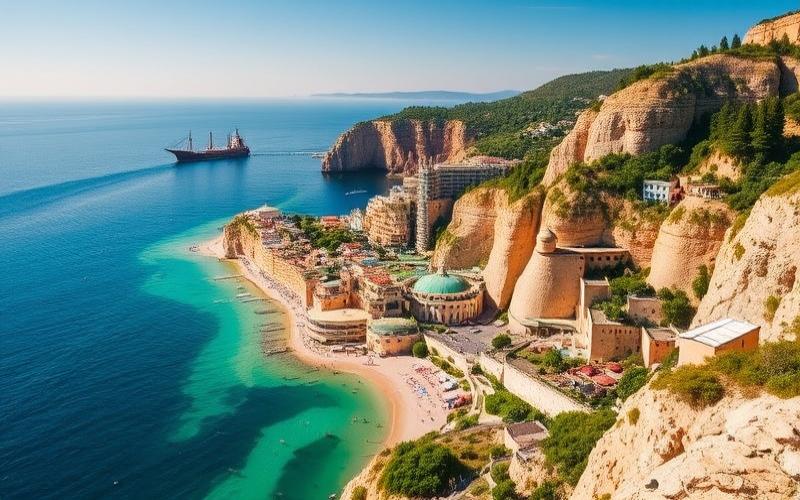
The Bulgarian Black Sea coast has become a popular tourist destination, attracting millions of visitors each year. Beach resorts like Sunny Beach, Golden Sands, and Varna have established themselves as summer tourism hotspots, offering fine sandy beaches, turquoise waters, and vibrant nightlife.
Sunny Beach, nicknamed the Bulgarian Ibiza, has developed as a true paradise for party-goers. Located in a 9 km bay known as the Sunny Coast, it enjoys excellent sunshine and pleasant water between May and October. The resort features numerous hotels, restaurants, bars, and nightclubs that make it a flagship destination for young tourists seeking entertainment.
Further north, Golden Sands has established itself as the largest beach resort on the northern coast. Renowned for its pristine beaches and natural park, it offers a more family-friendly setting while providing numerous activities. The resort features a water park and multiple water sports opportunities.
As for Varna, Bulgaria’s third-largest city, it has established itself as the country’s maritime capital. With its rich historical heritage, museums, maritime garden, and bustling port, Varna attracts over two million visitors annually. The city serves as an ideal starting point for exploring surrounding beach resorts.
Factors Driving Beach Tourism Growth
Several factors have contributed to the spectacular rise of beach tourism in Bulgaria:
- Major investments in tourism infrastructure, with construction of modern hotel complexes and transport development
- Government initiatives to promote the destination, including marketing campaigns targeting European markets
- Bulgaria’s integration into the Schengen area, which facilitated access for European tourists
- Competitive prices compared to other Mediterranean destinations, attracting budget-conscious vacationers
- Diversification of tourist offerings, combining beaches, cultural heritage, and nature
These efforts have paid off as the number of foreign visitors reached a record 10.7 million between January and September 2024, surpassing pre-pandemic figures.
Economic Impact on the Hotel Sector
The beach tourism boom has had major repercussions on Bulgaria’s hotel sector:
Construction of new hotels has accelerated, particularly in resorts like Sunny Beach and Golden Sands. These now host hundreds of establishments across all categories to meet growing demand.
The hospitality job market has expanded significantly, creating numerous opportunities for the local population. However, the sector faces recruitment and training challenges to maintain high quality standards.
Accommodation prices have increased, reflecting the destination’s growing attractiveness. However, they remain competitive compared to other European countries, which is an asset for Bulgaria.
Hotel services have diversified and improved to meet the expectations of an international clientele. Many establishments now offer all-inclusive packages, spas, and varied activities.
Environmental and Social Challenges
The rapid development of beach tourism also raises environmental and social challenges:
Pressure on coastal ecosystems has intensified, with risks of pollution and beach degradation. Some areas like Sunny Beach have experienced intensive urbanization that has altered the landscape.
Waste and water management have become major concerns, particularly during peak tourist season when beach resort populations explode.
The massive influx of tourists impacts local communities, with changes in traditional lifestyles and rising living costs in some regions.
To address these challenges, initiatives have been implemented:
- Creation of protected areas along the coast to preserve biodiversity
- Implementation of environmental certification programs for hotels, like the “Green Lodge” label
- Awareness campaigns for tourists to promote responsible behavior
- Investments in water treatment and waste management infrastructure
- Development of off-season tourism to better distribute visitor flows
These measures aim to reconcile the economic development of the tourism sector with environmental preservation and the well-being of local communities. Bulgaria’s challenge is to maintain its tourist attractiveness while ensuring sustainable development of its coastline.
Good to Know:
Beach tourism in Bulgaria, with popular destinations like Sunny Beach, Golden Sands, and Varna, has experienced rapid expansion thanks to major investments in infrastructure and government efforts to attract foreign visitors. This growth has stimulated the local economy, leading to a proliferation of hotel construction and the creation of numerous jobs in the hospitality sector. However, this tourism increase has also generated environmental and social challenges, such as pressure on beaches and ecosystems. In response, measures have been implemented to manage the tourist influx while preserving natural resource quality, including strict construction regulations and promotion of sustainable tourism.
Disclaimer: The information provided on this website is for informational purposes only and does not constitute financial, legal, or professional advice. We encourage you to consult qualified experts before making any investment, real estate, or expatriation decisions. Although we strive to maintain up-to-date and accurate information, we do not guarantee the completeness, accuracy, or timeliness of the proposed content. As investment and expatriation involve risks, we disclaim any liability for potential losses or damages arising from the use of this site. Your use of this site confirms your acceptance of these terms and your understanding of the associated risks.

Cyril Jarnias is an independent expert in international wealth management with over 20 years of experience. As an expatriate himself, he is dedicated to helping individuals and business leaders build, protect, and pass on their wealth with complete peace of mind.
On his website, cyriljarnias.com, he shares his expertise on international real estate, offshore company formation, and expatriation.
Thanks to his expertise, he offers sound advice to optimize his clients' wealth management. Cyril Jarnias is also recognized for his appearances in many prestigious media outlets such as BFM Business, les Français de l’étranger, Le Figaro, Les Echos, and Mieux vivre votre argent, where he shares his knowledge and know-how in wealth management.