 Published on and written by Cyril Jarnias
Dubai, this city-state of the United Arab Emirates that captivates the world with its rapid development and monumental projects, has a much older and richer history than one might imagine. Let’s dive together into the past of this city that has become one of the world’s most sought-after destinations in just a few decades.
Millennial Roots: Dubai Before Dubai
Dubai’s history dates back much further than its official founding in the 19th century. Archaeological excavations in the region have revealed traces of human occupation dating back more than 5,000 years. Around 3000 BCE, the area where modern Dubai is located was covered by a vast mangrove forest, which gradually dried up.
Around 2500 BCE, nomadic herders settled in the region, particularly in the areas of Al-Qusais, Hatta, and Jumeirah. They developed prosperous agriculture, transforming the landscape into a lush palm grove. The local population then lived mainly from date cultivation, livestock farming, and fishing, especially pearl fishing, which would later become a major economic activity.
Good to know:
The earliest traces of civilization in Dubai date back more than 5,000 years, long before its official founding as a city.
From Antiquity to the Middle Ages: A Region at the Crossroads of Civilizations
For centuries, the Dubai region remained a place of passage and exchange between different civilizations. Its strategic position made it a junction point between trade routes linking India, Mesopotamia, and East Africa.
In the 7th century, Islam spread throughout the region, bringing profound cultural and social changes. The area that would later become Dubai gradually developed, benefiting from growing trade exchanges in the Persian Gulf.
In 1095, the first written mention of Dubai appeared in the “Book of Geography” by the Andalusian-Arab geographer Abu Abdullah Al Bakri. At that time, Dubai was still a modest fishing village, but its reputation for the quality of its pearls began to spread.
Good to know:
Dubai was first mentioned in a geographical work as early as 1095, although the city was not officially founded until several centuries later.
The Birth of Dubai: The Emergence of a New Power
The modern history of Dubai truly begins in 1833. That year, about 800 members of the Bani Yas tribe, led by the Al Maktoum family, left Abu Dhabi due to internal conflicts and settled near the Dubai Creek, known today as Dubai Creek.
Maktoum bin Butti, the founder of the Al Maktoum dynasty that still rules Dubai today, established his camp in the Shindagha district, at the mouth of the creek. He declared Dubai’s independence, marking the official birth of the emirate.
In the following decades, Dubai developed rapidly thanks to its natural port favorable to trade. The city became an important center for pearl fishing and gold trade, attracting merchants from throughout the region.
Good to know:
The Al Maktoum family, which founded Dubai in 1833, still rules the emirate today, ensuring remarkable continuity in the governance of the city-state.
Under British Protection: An Era of Stability and Growth
In the 19th century, the Persian Gulf region was the scene of numerous conflicts and acts of piracy. To secure its trade routes, the United Kingdom intervened and established treaties with the various emirates in the region.
In 1892, Dubai signed an exclusive protection agreement with the United Kingdom, thus becoming a British protectorate. This agreement guaranteed Dubai protection against external threats, particularly the Ottoman Empire, in exchange for British control over its foreign policy.
This period of stability allowed Dubai to develop economically. In 1894, Sheikh Saeed Al Maktoum made a crucial decision by granting tax exemptions to foreign traders. This policy attracted many merchants, particularly Indians and Persians, who settled in Dubai and contributed to its commercial growth.
Good to know:
The status of British protectorate, which lasted from 1892 to 1971, offered Dubai a period of stability conducive to its economic development.
The Oil Era: The Turning Point That Changed Everything
The discovery of oil in the 1960s marked a decisive turning point in Dubai’s history. Although the emirate’s reserves were less significant than those of its neighbors, they were enough to initiate a radical transformation.
In 1966, oil was discovered in Dubai, and exports began as early as 1969. The revenues generated by black gold allowed Sheikh Rashid bin Saeed Al Maktoum, who had been ruling Dubai since 1958, to launch ambitious infrastructure projects.
- The dredging of Dubai Creek to allow access for large ships
- The construction of Jebel Ali Port, one of the largest artificial ports in the world
- The erection of the World Trade Center, Dubai’s first skyscraper
- The development of road, electrical, and telecommunications networks
Good to know:
Contrary to popular belief, Dubai’s oil reserves are relatively limited. It was the long-term vision of its leaders that allowed the emirate to diversify and prosper.
Independence and the Creation of the United Arab Emirates: Dubai Enters a New Era
December 2, 1971, marks a crucial date in Dubai’s history. On that day, the United Kingdom ended its protectorate over the emirates of the region, and the United Arab Emirates were officially created. Dubai joined this federation alongside Abu Dhabi, Sharjah, Ajman, Umm Al Quwain, and Fujairah. Ras Al Khaimah would join them the following year.
This independence paved the way for a new era of development for Dubai. The emirate, under the visionary leadership of Sheikh Rashid bin Saeed Al Maktoum, and then his son Mohammed bin Rashid Al Maktoum from 2006, undertook a spectacular transformation.
The 1970s and 1980s saw unprecedented demographic and urban expansion. Dubai grew from a population of about 59,000 in 1968 to over 550,000 in 1990. This growth was accompanied by rapid modernization of the city, with the construction of numerous infrastructures and the diversification of the economy.
Good to know:
Although part of the United Arab Emirates, Dubai retains broad autonomy in managing its internal affairs and economic development.
Modern Dubai: From Desert City to Global Metropolis
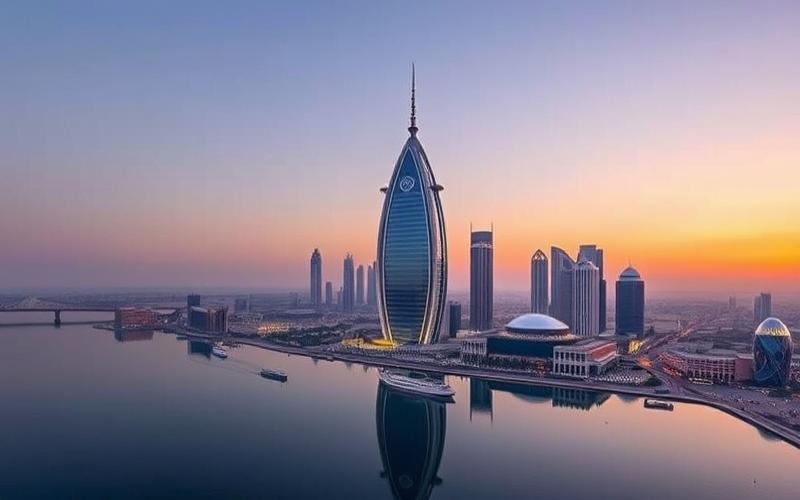
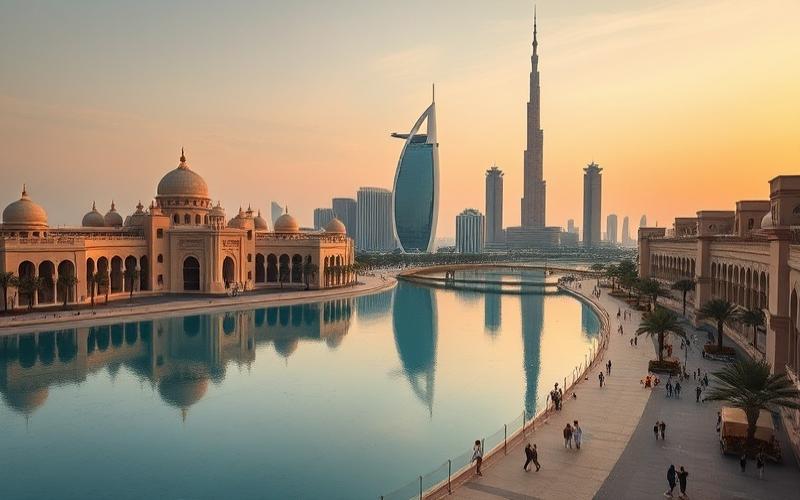
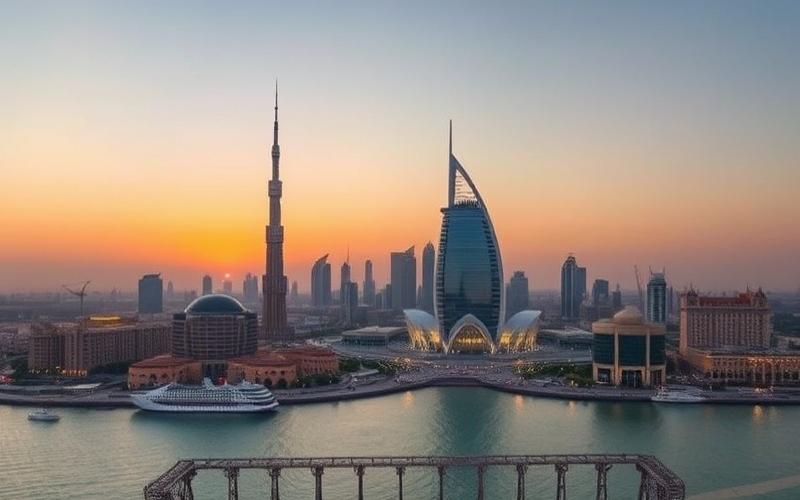
From the 1990s onward, Dubai accelerated its transformation to become a leading tourist and commercial destination. The emirate launched a series of ambitious projects that would shape its image as a futuristic city:
- The construction of Palm Jumeirah, an artificial archipelago shaped like a palm tree
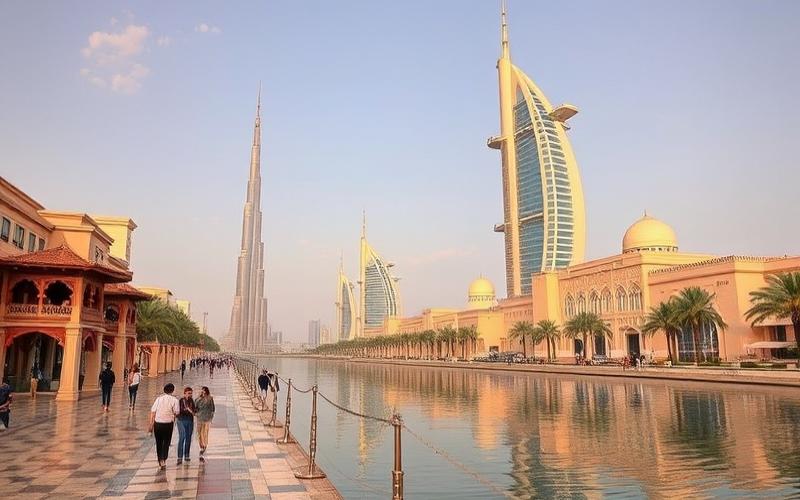
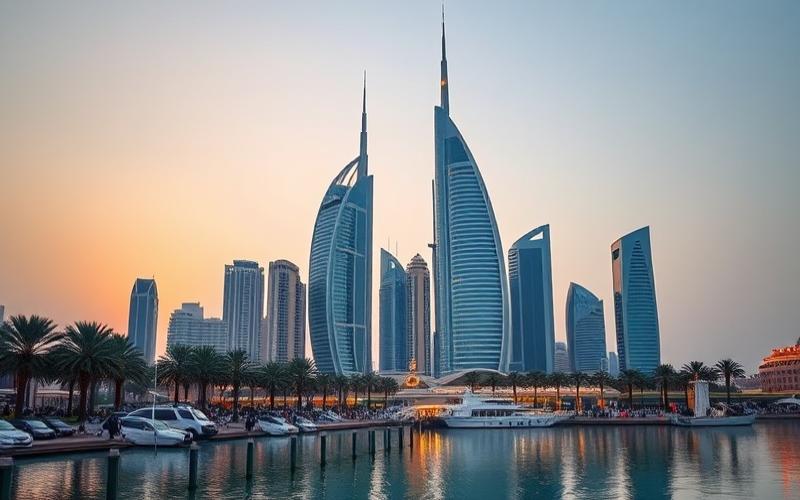
- The erection of the Burj Al Arab, an iconic hotel shaped like a sail
- The development of Dubai Marina, an ultramodern waterfront district
- The creation of free zones like Dubai Internet City and Dubai Media City
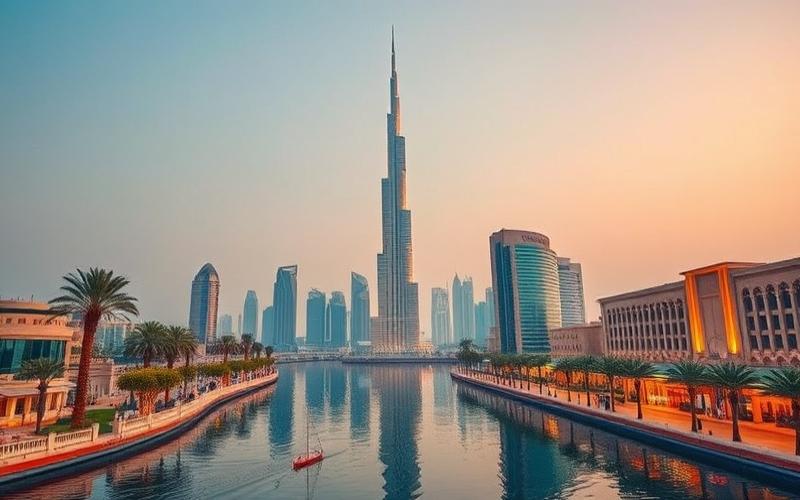
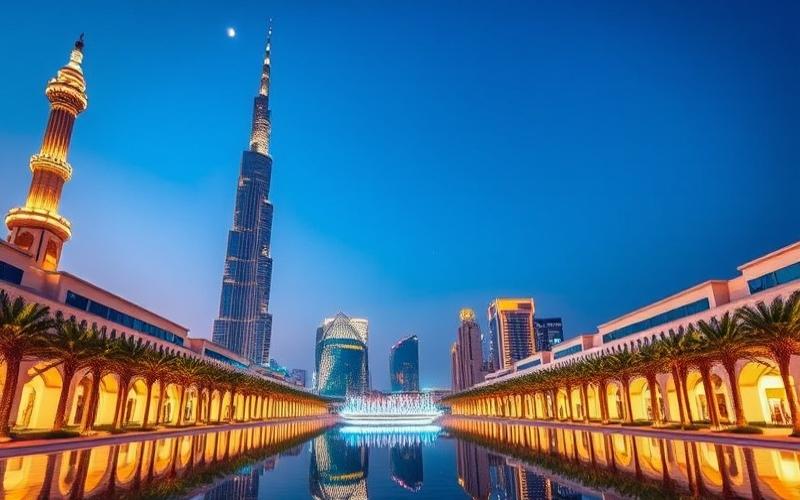
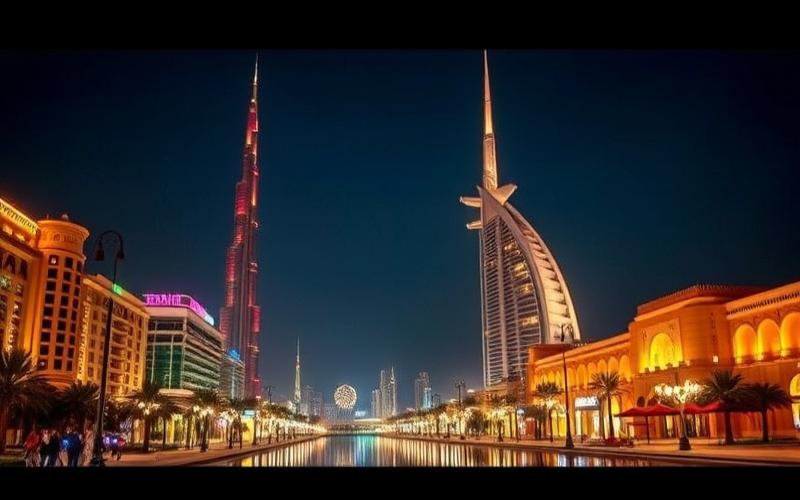
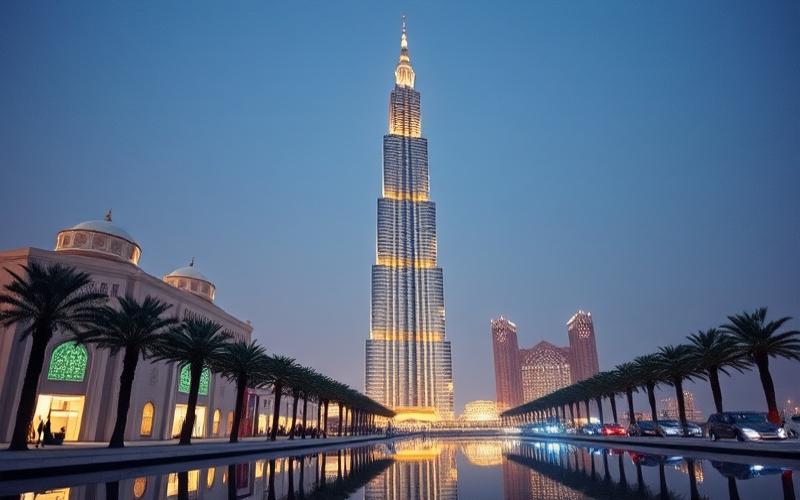
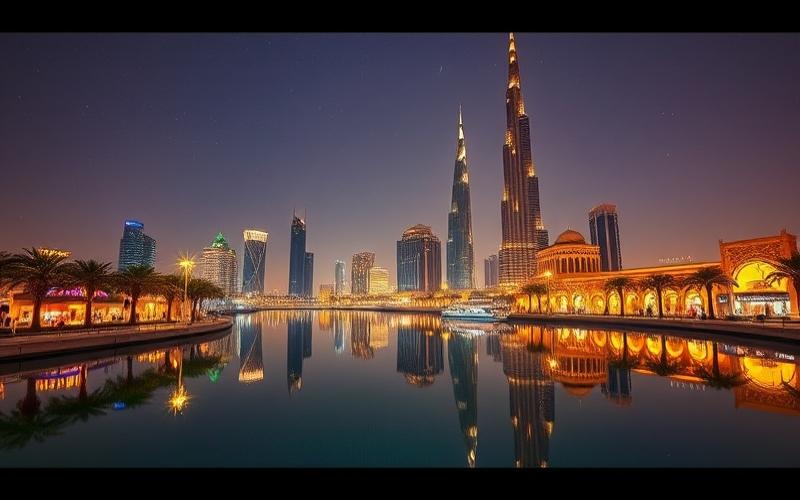
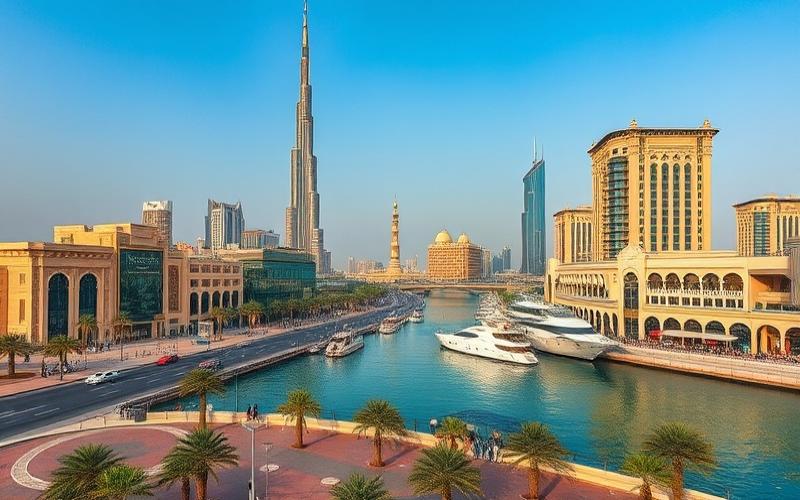
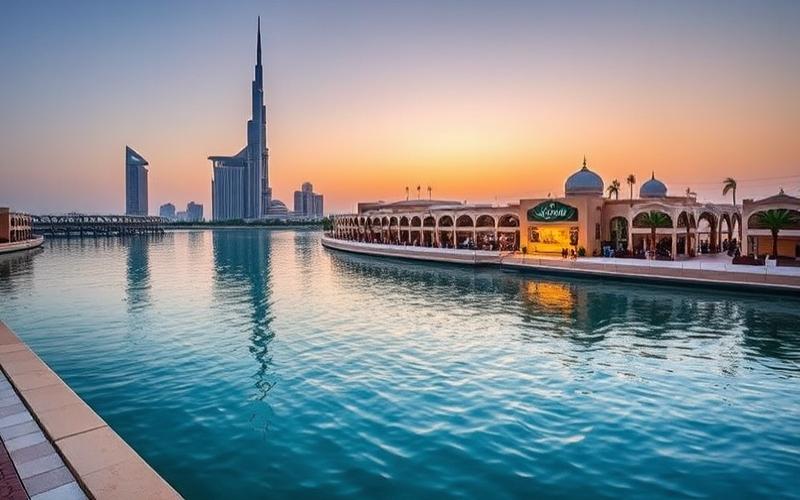
- The inauguration in 2010 of the Burj Khalifa, the world’s tallest skyscraper
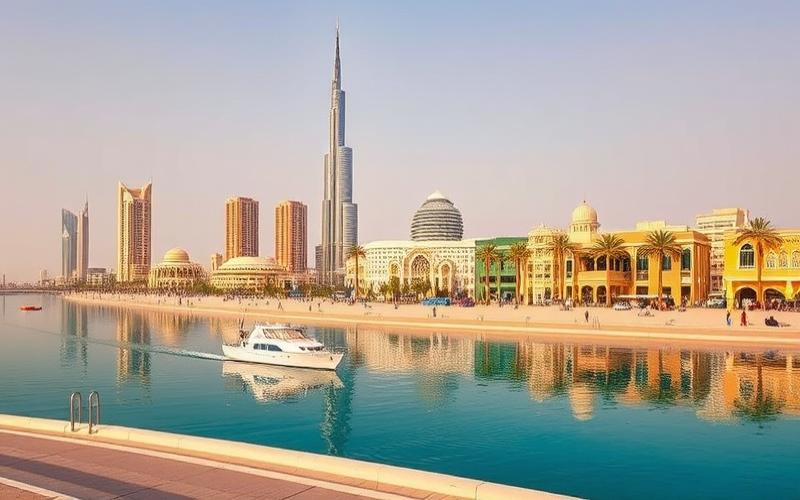
Today, Dubai has become a cosmopolitan metropolis of over 3.5 million inhabitants, attracting expatriates from around the world. The emirate continues to reinvent itself, with ever more ambitious projects and a declared intention to become a global leader in fields like technology, finance, and sustainable development.
Good to know:
Despite its striking modernity, Dubai strives to preserve its cultural heritage, as evidenced by the restoration of the historic Al Fahidi district.
Conclusion: Dubai, A Desert Miracle in Perpetual Evolution
The history of Dubai is one of extraordinary transformation, from a modest fishing village to a futuristic metropolis and global economic center in just a few decades. This rapid evolution testifies to the bold vision of its leaders and their ability to adapt to the challenges of the modern world.
As Dubai continues to develop and push the boundaries of urban innovation, it remains deeply rooted in its history and culture. It is this unique blend of tradition and modernity that makes Dubai such a fascinating destination for expatriates and visitors from around the world.
Disclaimer: The information provided on this website is for informational purposes only and does not constitute financial, legal, or professional advice. We encourage you to consult qualified experts before making any investment, real estate, or expatriation decisions. Although we strive to maintain up-to-date and accurate information, we do not guarantee the completeness, accuracy, or timeliness of the proposed content. As investment and expatriation involve risks, we disclaim any liability for potential losses or damages arising from the use of this site. Your use of this site confirms your acceptance of these terms and your understanding of the associated risks.

Cyril Jarnias is an independent expert in international wealth management with over 20 years of experience. As an expatriate himself, he is dedicated to helping individuals and business leaders build, protect, and pass on their wealth with complete peace of mind.
On his website, cyriljarnias.com, he shares his expertise on international real estate, offshore company formation, and expatriation.
Thanks to his expertise, he offers sound advice to optimize his clients' wealth management. Cyril Jarnias is also recognized for his appearances in many prestigious media outlets such as BFM Business, les Français de l’étranger, Le Figaro, Les Echos, and Mieux vivre votre argent, where he shares his knowledge and know-how in wealth management.