Published on and written by Cyril Jarnias
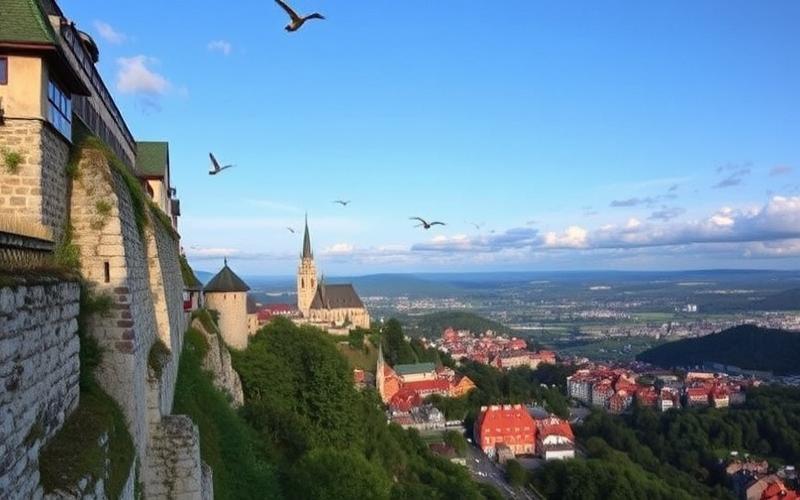
Located in the heart of Central Europe, Poland stands out for its astonishing geographical diversity that blends vast plains, dense forests, and majestic mountains.
Bordered by the Baltic Sea to the north, it offers picturesque coastlines and fascinating landscapes that enrich its maritime coast.
The country is traversed by the majestic Carpathian Mountain range, not to mention the Sudetes massif that extends to the west.
Poland is also known for its rich river network, dominated by the powerful Vistula, considered a vital artery.
Surrounded by seven countries, Polish geography tells a story influenced by cultural and economic exchanges, revealing a nation at the crossroads of European influences.
Poland’s Geolocation
Poland is located in Central Europe, at the heart of the vast European plain, between Germany to the west and the Baltic Sea to the north, and extends to the Carpathians in the south.
Approximate Geographic Coordinates:
- Latitude: between 49° and 55° north
- Longitude: between 14° and 24° east
Neighboring Countries and Border Lengths:
| Country | Direction | Length (km) |
|---|---|---|
| Germany | West | 467 |
| Czech Republic | Southwest | 790 |
| Slovakia | South | 541 |
| Ukraine | Southeast | 529 |
| Belarus | East-Northeast | 416 |
| Lithuania | Northeast | 104 |
| Russia (Kaliningrad) | Northeast | 210 |
- Total land border length: approximately 3,511 km
- Baltic Sea coastline: approximately 440 km
Notable Geographic Features:
Topography:
Most of the country is a large plain, especially in the north and center.
In the south, the main mountain ranges are:
- The Carpathians (including the Tatra Mountains, highest point at Mount Rysy, 2,499 m)
- The Sudetes (up to 1,603 m)
- The Beskids
- Holy Cross Mountains
Main Rivers:
- Vistula (Wisła): longest river in the country, flows through Poland from south to north, empties into the Baltic Sea.
- Oder (Odra): natural border with Germany to the west.
- Warta, Bug.
Lakes:
Concentrated in the northeast (Masurian Lake District), with numerous glacial water bodies.
Forests:
Białowieża Forest (UNESCO site), one of Europe’s last primeval forests.
Position Relative to Major Geographic Landmarks:
- To the north: bordered by the Baltic Sea, providing strategic maritime access.
- To the south: protected by the Carpathian and Sudetes mountain ranges.
- Located between Western and Eastern Europe, Poland is a natural crossroads between several major geographic regions.
Influence of Geographic Position on Climate and Ecology:
Climate:
- Temperate continental type, with cold winters and moderately warm summers.
- Oceanic influences from the west (Atlantic winds) blend with continental influences from the east.
- The plain from north to south facilitates the penetration of air masses, leading to marked climatic variations from year to year.
Ecological Framework:
- Great diversity of landscapes: plains, lakes, forests, mountains.
- Varied wildlife, including rare species like the European bison, wolf, and brown bear.
- Numerous national parks and nature reserves, particularly in forested and mountainous regions.
Poland, a land of plains traversed by great rivers, stretches from the Baltic beaches to the southern mountains, at the crossroads of Western and Eastern Europe. Its geographic position gives it a temperate climate, great ecological richness, and a role as a natural crossroads between different European regions.
Good to Know:
Poland is located in Central Europe, between approximately 49° to 55° north latitude and 14° to 24° east longitude, bordered by Germany, the Czech Republic, Slovakia, Ukraine, Belarus, Lithuania, and Russia, with over 3,500 km of borders; its geographic position, adjacent to the Baltic Sea to the north and traversed by the Vistula, gives it a temperate climate and varied landscapes with the Carpathians to the south.
Main Geographic Regions
| Historical Region | Geographic Characteristics | Cultural and Economic Contributions | Population and Urban Centers | Major Tourist Sites |
|---|---|---|---|---|
| Masovia | Central plain, oak and pine forests, traversed by the Vistula. | Political center, administrative heart (Warsaw). Rich traditional culture, folklore, architectural heritage. | Approximately 5.4 million inhabitants. Warsaw (capital and largest city of Poland), Płock, Radom. | Royal Castle in Warsaw, Wilanów Palace, Kampinos Forests. |
| Silesia | Plateaus, coal basin, Sudetes (gentle mountains, rock formations). | Strong industrialization (coal, steel), multicultural heritage (German, Czech, Polish). | Approximately 4.5 million inhabitants. Katowice (industrial center), Gliwice, Częstochowa. | Jasna Góra Monastery, Błędów Desert, Sudetes National Park. |
| Lesser Poland | Varied relief: highlands, Carpathian foothills, river valleys. | Historical cradle of Poland, university and artistic traditions, craftsmanship. | Approximately 3.4 million inhabitants. Kraków (former capital), Tarnów, Nowy Sącz. | Kraków Old Town (UNESCO), Wieliczka Salt Mine, Auschwitz-Birkenau. |
| Greater Poland | Fertile plain, lakes, forests, Warta River valley. | Cradle of the Polish state, key sites of national history, agri-food industry. | Approximately 3.5 million inhabitants. Poznań (economic center), Gniezno, Kalisz. | Gniezno Cathedral, Lake Gopło, Poznań Museum. |
Other Notable Regions and Geographic Areas
Tatra and Carpathian Mountains
Tatra Mountains: Highest mountain range in Poland (2,499 m at Mount Rysy), alpine landscapes, glacial lakes (Morskie Oko).
Carpathians: More extensive range, alternating mountains and valleys, dense forests.
Tourist importance: Zakopane (mountain resort), winter sports, hiking, Tatra National Park.
Cultural contribution: Mountain traditions, wooden architecture, Goral craftsmanship.
Vistula River Basin
Vistula: Main Polish river (1,047 km), historical and economic axis.
Economic importance: Navigable waterway, irrigation, urban development (Kraków, Warsaw, Toruń).
Ecological value: Wetlands, nature reserves, remarkable biodiversity.
Baltic Sea Coastline
Characteristics: 528 km of coastline, shifting dunes (Łeba), lagoons, peninsulas (Hel, Vistula).
Economic Activities
- Fishing, shipyards (Gdańsk, Gdynia, Szczecin)
- Seaside tourism (resorts of Sopot, Kołobrzeg, Międzyzdroje)
- Maritime trade (major ports: Gdańsk, Gdynia, Świnoujście)
Natural sites: Słowiński National Park (moving dunes), Wolin Island.
List of Main Urban Centers by Region
- Masovia: Warsaw, Płock, Radom
- Silesia: Katowice, Gliwice, Częstochowa
- Lesser Poland: Kraków, Tarnów, Nowy Sącz
- Greater Poland: Poznań, Gniezno, Kalisz
Must-See Tourist Sites
- Kraków (UNESCO, historic center)
- Wieliczka Salt Mine
- Zakopane and the Tatra Mountains
- Baltic Coast (Łeba, Sopot, Hel)
- Jasna Góra Monastery in Częstochowa
Total population of Poland: approximately 38 million inhabitants, concentrated in major urban areas and along river corridors.
Good to Know:
The Masovia region, dominated by Warsaw, is the economic and political center of Poland, while Silesia is known for its mining industry and mountain landscapes. Lesser Poland, with Kraków, offers a rich cultural heritage, and Greater Poland, the cradle of the Polish state, combines history and modernity; the strategic Baltic coastline for maritime trade greatly influences the local economy.
Largest Cities and Urban Centers
| City | Population (2024-2025) | Economic Role | Historical and Cultural Importance | Geographic and Demographic Characteristics | Notable Facts / Recent Developments |
|---|---|---|---|---|---|
| Warsaw | 1,799,451 | Political, economic, technological, and financial center of the country; main hub for foreign investment, major center for tech and finance, headquarters of major corporations and government institutions | Capital of Poland, city rebuilt after World War II, numerous museums and monuments, modern cultural heart | Strong demographic growth, most populous city, crossroads of internal and international migration, high student concentration (260,000 students, 50,000 graduates/year) | 3rd place among large European cities for investment potential; rapid growth in IT sector (over $1 billion invested since 2020), very low unemployment rate (2.7%); record investments in green economy and infrastructure |
| Kraków | ~800,653 | Center for business services (especially SSC/BPO), innovation, tourism, major university city | Former royal capital, World Heritage site (UNESCO), medieval heritage, living cultural traditions, renowned festivals | Major university city, strong appeal for Polish and foreign talent, young and cosmopolitan population | 1st place in “human capital and lifestyle”; 83% of FDI from Western Europe; growth in service sector and tourism, development of innovative districts |
| Łódź | ~660,000 | Historic textile industry, transitioning to logistics, creative culture, and ICT; important industrial and distribution center | Former heart of textile industry, industrial architecture, city of Polish cinema, cultural festivals | Characterized by rapid economic transformation, slightly declining population but increasing diversification | Major urban transformation (New Center of Łódź), investments in logistics and startups, new cultural spaces |
| Wrocław | ~650,000 | “Polish Silicon Valley”: IT hub, advanced technologies, attractiveness for foreign investors (over $10.8 billion in 5 years) | Multicultural city, history marked by German, Austrian, and Polish influences, rich heritage, European Capital of Culture (2016) | Strong demographic growth, internal and international migration, significant student community | 1st place among European medium-sized cities for investment potential; explosion of technology investments, new innovation hubs |
| Poznań | ~540,000 | Industrial and commercial center, strong agricultural and agri-food tradition, international fairs | University city, historical cradle of the Polish state, rich architectural and cultural traditions | Stable population, dynamic city, high quality of life, diverse socio-economic fabric | Development of modern industrial zones, SME dynamism, growth in logistics sector and international fairs |
Warsaw plays a central role in Poland’s socio-economic structure due to its demographic weight, economic diversity, and position as political capital. It attracts the highest level of foreign direct investment in the country, accelerating infrastructure modernization, economic digitalization, and skilled job creation.
Kraków stands out for its exceptional historical and cultural heritage, while establishing itself as a center of innovation and business services, particularly in shared services and IT.
Łódź embodies Poland’s post-industrial transition, moving from a textile center to a city of logistics, culture, and innovation, supported by ambitious urban projects.
Wrocław is recognized as one of the most dynamic technology ecosystems in Central Europe, attracting major investments and international talent.
Poznań combines industrial tradition and modernity, actively contributing to the country’s agricultural, industrial, and commercial competitiveness.
Polish cities shape national development through their roles as economic engines, cultural hubs, innovation crossroads, and centers for training a highly skilled workforce. Their demographic dynamism, ability to attract investment, and international openness strengthen Poland’s integration into the European economy.
Good to Know:
Warsaw, Poland’s central hub, has nearly 1.8 million inhabitants and stands out for its economic and political dynamism, while Kraków, with approximately 770,000 inhabitants, is recognized for its unique cultural and historical heritage. Wrocław, Poznań, and Łódź, all exceeding 600,000 inhabitants, play key roles in the country’s industrial and academic development.
Poland’s Neighboring Countries
| Neighboring Country | Border Length (km) | Geographic Characteristics | Diplomatic and Economic Relations | Cultural Exchanges and Border Crossings |
|---|---|---|---|---|
| Germany | 467 | Border marked mainly by the Oder and Neisse rivers, crossing plains and the Szczecin region. | Major economic partner, EU and Schengen member. Strong cooperation in trade and energy. | Numerous border crossings, particularly at Frankfurt an der Oder, Görlitz, Słubice. Intense cultural exchanges, Polish and German minorities on both sides. |
| Czech Republic | 796 | Southern border established along mountain ridges (Sudetes, Moravia), passages through the Moravian Gate. | Stable relations, EU and Schengen members. Partnership in industry, transport, and tourism. | Important border crossings: Cieszyn, Kudowa-Zdrój. Cultural cooperation, cross-border festivals. |
| Slovakia | 541 | Border along Carpathian and Tatra ridges, mountainous terrain difficult to cross, source of Mount Rysy. | Friendly relations, growing economic exchanges, shared tourism in the Tatras. | Main crossing at Zakopane-Štrbské Pleso, cooperation in sports and culture. |
| Ukraine | 535 | Eastern border following the Bug and San rivers, landscapes of plains and valleys, watershed area. | Complex relations (EU, security, migration), Polish aid to Ukraine, agricultural and industrial exchanges. | Major border crossings: Medyka, Dorohusk. Strong presence of Ukrainian diaspora in Poland. |
| Belarus | 418 | Border along hydrographic network, forests, little natural relief, low urbanization. | Strained relations, strengthened controls, limited exchanges, restricted border traffic. | Border crossings: Terespol, Bobrowniki. Limited cooperation, reduced cultural exchanges. |
| Lithuania | 104 | Short border, lake and forest landscapes, area marked by the glacial period. | Friendly relations, EU and Schengen members, trade exchanges, Polish and Lithuanian minorities. | Main crossing at Budzisko. Cooperation in education and culture. |
| Russia (Kaliningrad) | 210 | Northeastern border with the Kaliningrad exclave, plain, marshy area, irregular relief from glacial moraines. | Fluctuating relations, limited trade, local cooperation, geopolitical issues related to NATO and EU. | Border crossings: Grzechotki, Bezledy. Existence of local visas for border residents. |
List of Main Characteristics by Country:
- Germany: Main trading partner, river border facilitating exchanges. Szczecin region important for transport.
- Czech Republic: Mountains, natural corridors, strong cross-border cooperation.
- Slovakia: Tatras, mountain tourism, shared culture.
- Ukraine: Sensitive border, migration, humanitarian aid, agricultural exchanges.
- Belarus: Strict controls, few border crossings, low population density.
- Lithuania: Forests and lakes, minorities, dynamic cultural exchanges.
- Russia (Kaliningrad): Strategic enclave, geopolitical tensions, limited trade exchanges.
Major Border Crossing Points:
- Frankfurt an der Oder (Germany)
- Cieszyn (Czech Republic)
- Zakopane (Slovakia)
- Medyka (Ukraine)
- Terespol (Belarus)
- Budzisko (Lithuania)
- Grzechotki (Russia/Kaliningrad)
Poland, at the crossroads of Central Europe, shares its borders with seven countries, with a total length of approximately 3,582 km, which shapes its geographic, historical, and cultural identity, and conditions its diplomatic and economic relations.
Good to Know:
The border between Poland and the Czech Republic extends approximately 796 km and is marked by the Sudetes, a mountain range ideal for hiking; Lithuania and Poland share a common history within the Polish-Lithuanian Commonwealth and currently have strong diplomatic and economic relations.
Disclaimer: The information provided on this website is for informational purposes only and does not constitute financial, legal, or professional advice. We encourage you to consult qualified experts before making any investment, real estate, or expatriation decisions. Although we strive to maintain up-to-date and accurate information, we do not guarantee the completeness, accuracy, or timeliness of the proposed content. As investment and expatriation involve risks, we disclaim any liability for potential losses or damages arising from the use of this site. Your use of this site confirms your acceptance of these terms and your understanding of the associated risks.

Cyril Jarnias is an independent expert in international wealth management with over 20 years of experience. As an expatriate himself, he is dedicated to helping individuals and business leaders build, protect, and pass on their wealth with complete peace of mind.
On his website, cyriljarnias.com, he shares his expertise on international real estate, offshore company formation, and expatriation.
Thanks to his expertise, he offers sound advice to optimize his clients' wealth management. Cyril Jarnias is also recognized for his appearances in many prestigious media outlets such as BFM Business, les Français de l’étranger, Le Figaro, Les Echos, and Mieux vivre votre argent, where he shares his knowledge and know-how in wealth management.