 Published on and written by Cyril Jarnias
Calling Belgium a “small country” is accurate on a map but misleading for the traveler. Between perfectly preserved medieval cities, battlefields that shaped Europe, a lively coastline, deep forests, and UNESCO-listed heritage, the territory packs an incredible density of sights to see. Traveling here means going by train in just minutes from a silent beguinage to a bustling market square, from a windy coast to a deep valley in the Ardennes, from a Van Eyck masterpiece to a panorama over the dunes.
This article proposes a method for discovering Belgium’s must-see sites, suggesting how to combine them efficiently over a few days or across several trips, without missing the essentials.
Brussels, Belgium’s Showcase and Open-Air Capital
Brussels is not only the political capital of Belgium and the European Union, it’s also one of the most logical gateways for discovering the must-see tourist sites in Belgium. Within a few streets, it concentrates a series of places that summarize the country’s identity: the power of architecture, a taste for art, a passion for comics, and a cult of chocolate and beer.
The Grand-Place, listed as a UNESCO World Heritage Site, is the beating heart of the city. Lined with richly decorated old guildhalls, framed by the Gothic Town Hall and the King’s House, it is one of those places whose ambiance changes with every hour of the day. A few alleys away, the Manneken Pis – tiny yet world-famous – recalls the typically Brussels humor, extended by Jeanneke Pis and Zinneke Pis in the maze of old streets.
Around the Sablon, with its Notre-Dame du Sablon church, antique dealers, and chocolatiers, the route leads to the Royal Museums of Fine Arts and the Magritte Museum, essential for Belgian painting. Nearby, the Mont des Arts offers a breathtaking view and the Royal Galleries of Saint-Hubert embody 19th-century Brussels chic.
The Atomium, a Futuristic Icon Become a National Symbol
It’s hard to mention must-see tourist sites in Belgium without talking about the Atomium, the metallic silhouette dominating the north of the city. Built for the 1958 World’s Fair, this modernist building represents a unit cell of an iron crystal magnified 165 billion times. Its nine spheres, 18 meters in diameter, connected by tubes 3 meters wide, culminate at a height of 102 meters.
The time in seconds it takes the Atomium elevator to reach the panoramic sphere.
The other spheres house a permanent exhibition on Expo 58 and the monument’s history, as well as temporary exhibitions often dedicated to contemporary art or popular culture. The visit involves going up and down more than two hundred steps via long escalators, which is why only the panoramic sphere is truly accessible for people with reduced mobility.
An entrance ticket also grants access to the neighboring Design Museum Brussels, focused on design—especially plastic—from the 1950s to today. For families, it’s possible to combine the Atomium and Mini-Europe with a joint ticket sold on-site.
Museums, Comics, Chocolate and Beer: Culture in Daily Life
In Brussels, culture is found on every floor. Comic book enthusiasts will find at the Belgian Comic Strip Center a deep dive into the world of Tintin, Spirou, and friends, while the Musical Instruments Museum or Autoworld (dedicated to cars) complete the palette.
The city concentrates museums tracing the 5,000-year history of cocoa and offers hands-on workshops to learn how to make pralines, truffles, or chocolate bars.
For beer, Brussels Beer World and renowned cellars like the Delirium Café—which boasts over 2,000 varieties—remind you why the country is a brewing superpower. Tours combining beer and chocolate tastings have become a signature city experience.
Bruges, Medieval Postcard and “Venice of the North”
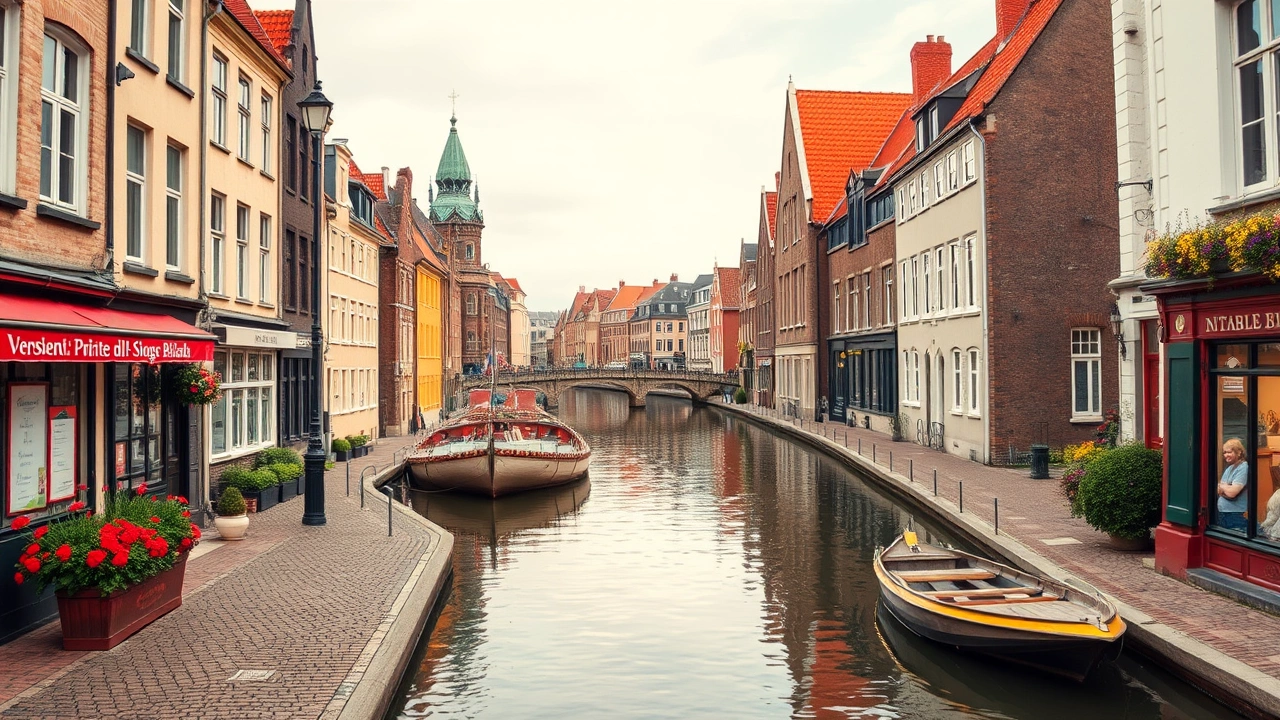
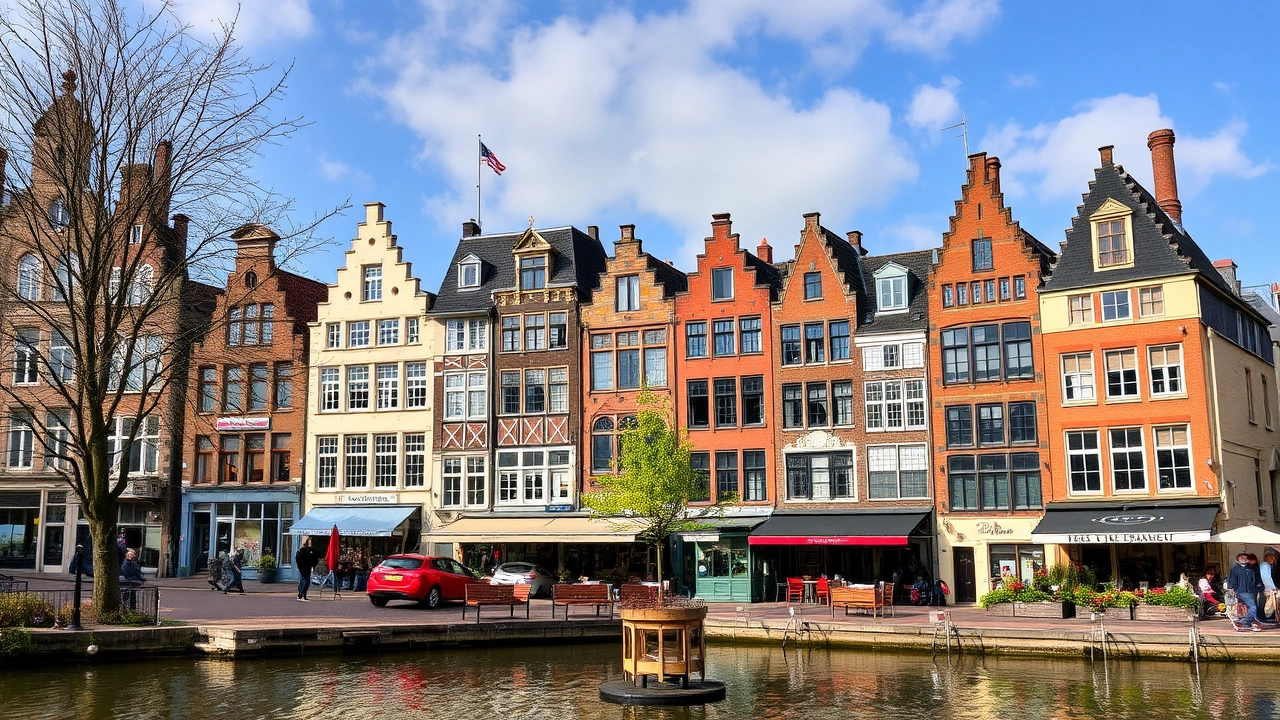
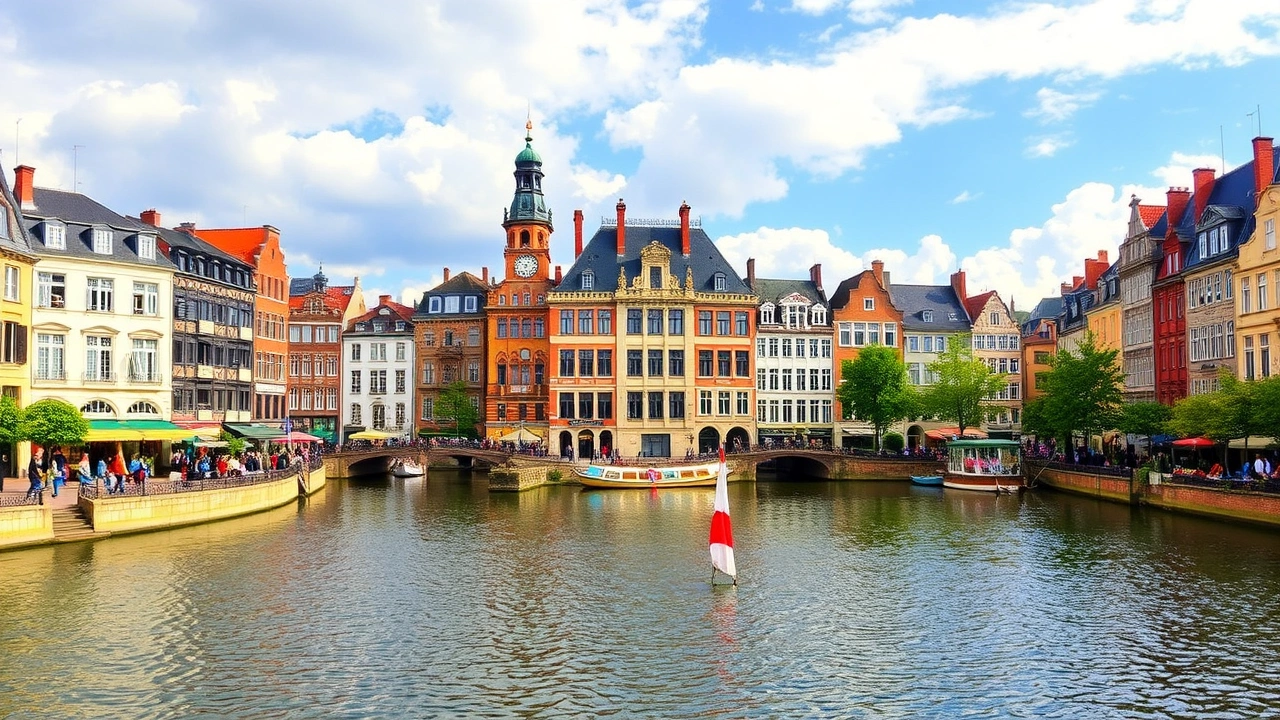
The historic center of Bruges is also inscribed as a UNESCO World Heritage Site, and it’s likely one of the images most immediately associated with must-see tourist sites in Belgium. Narrow canals, gabled houses, stone bridges, a belfry overlooking the Markt square: everything evokes the Flemish Golden Age.
For a complete immersion in Bruges’ historic center, start at the Markt, dominated by its medieval belfry. Courageous visitors can climb its 366 steps to enjoy a circular view over the city’s rooftops. Nearby, the Burg groups together the Basilica of the Holy Blood (housing a venerated relic), the Gothic-style Town Hall, and old buildings of power. Finally, a stroll along the Rozenhoedkaai and Dijver quay will offer you the most famous postcard views, immortalized by cinema.
The Begijnhof Ten Wijngaerde, a listed beguinage, and the Lake of Love (Minnewater) add a touch of romanticism to the picture. Bruges also cultivates its artistic heritage at the Groeningemuseum, rich in paintings by the Flemish Primitives, and in its numerous churches, including the Church of Our Lady which houses a sculpture by Michelangelo.
Discover the city’s tourist facets, from its quirky museums to its picturesque walks, as well as tips to fully enjoy your stay.
Explore surprising thematic museums like the Frietmuseum, dedicated to fries, or Choco-Story.
Discover the canals by boat and wander the alleys by horse-drawn carriage for a more theatrical experience.
To avoid the dense crowds, opt for an overnight stay to enjoy the calm mornings and peaceful evenings.
Bruges or Ghent? Two Complementary Visions of Flanders
Many travelers hesitate between Bruges and Ghent to limit their itinerary. The two cities, about thirty kilometers apart and well-connected by train, actually offer two complementary experiences. Bruges offers the most homogeneous medieval setting, almost frozen in time. Ghent combines historical heritage with a very active contemporary life.
To summarize their profiles:
| City | Dominant Vibe | Major Asset | Recommended For |
|---|---|---|---|
| Bruges | Romantic, very touristy, calm in the evening | UNESCO medieval center, canals, belfry | First-time visitors, couples’ getaway |
| Ghent | Student, creative, more “local” | Castle, Van Eyck’s triptych, nightlife | Longer stays, culture lovers |
Ideally, when time allows, it is obviously best to combine the two to grasp the diversity of must-see tourist sites in Belgium on the Flemish side.
Ghent, a Lively City Around a Medieval Castle
Ghent isn’t just a beautiful old town: it’s a university city, inventive, as alive by day as by night. The largely pedestrianized center concentrates the main monuments.
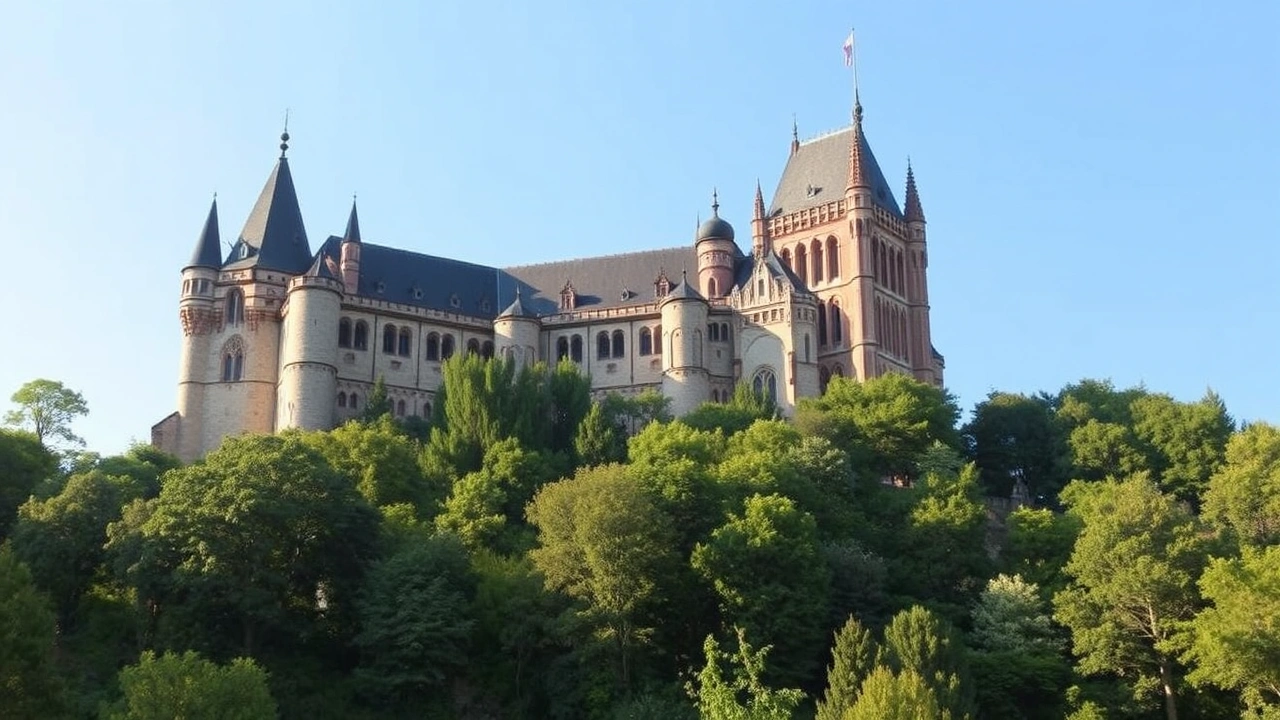
At its heart, the Castle of the Counts (Gravensteen) impresses with its fortress appearance still turning its machicolations towards the city. All around, three bell towers structure the skyline: that of Saint Bavo’s Cathedral, which houses the famous polyptych of the Mystic Lamb by the Van Eyck brothers, a masterpiece of Western painting; that of Saint Nicholas’ Church; and the Ghent Belfry, inscribed as a World Heritage site along with other belfries of Belgium and France.
The Graslei and Korenlei quays, lined with guild houses, invite you to sit on a terrace by the River Lys, especially on fine days. The medieval Patershol district, the Vrijdagmarkt square, or the famous graffiti street (Werregarenstraat) bear witness to the diversity of atmospheres, from the most historical to the most alternative.
Ghent Tourism Office
On the museum front, Ghent boasts a solid trio: the MSK (Museum of Fine Arts), the SMAK (Contemporary Art), and the STAM, the city museum, which helps understand urban evolution. Add to that a dynamic culinary scene, very vegetarian-friendly, and a nightlife driven by students, and you get an ideal city for a few days.
Every summer, the Gentse Feesten, a major music and theater festival, literally transforms the city into an open-air stage, confirming its place among the must-see tourist sites in Belgium for those who love large-scale cultural events.
Antwerp, Capital of Diamonds, Rubens, and Design
On the banks of the Scheldt, Antwerp holds several titles: world diamond capital, fashion stronghold, major port, but also city of Rubens. Its central station, often cited among the most beautiful in the world, sets the tone: architecture is a point of pride here.
The Gothic Cathedral of Our Lady houses several monumental paintings by Peter Paul Rubens. Not far away, the Rubenshuis, the artist’s former home, mixes studio, garden, and richly decorated rooms. The historic center, around the Grote Markt and the Brabo fountain, lines up gabled houses and emblematic civic buildings.
On the quays, the MAS (Museum aan de Stroom) has become a contemporary landmark. Its architecture, stacking volumes of red brick, offers a free belvedere over the city from its upper terraces. Nearby, the Red Star Line Museum recalls the history of emigration to America from Antwerp’s quays, while the port area is marked by the spectacular Port House designed by Zaha Hadid.
Antwerp is also fashion: the MoMu traces the history of Belgian textile design and the influence of the Royal Academy of Fine Arts, which gave rise to several internationally renowned designers. The presence of a major urban zoo, a very active diamond district, and a rich nightlife completes this abundant urban picture.
UNESCO Sites, the Heritage Backbone of the Country
The must-see tourist sites in Belgium are largely structured around its World Heritage. Sixteen properties are inscribed on the UNESCO List, fifteen cultural and one natural. They form a sort of “backbone” for building an itinerary.
Major Categories of Listed Sites
These sites can be grouped into several families:
| Category | Iconic Examples | Particularity |
|---|---|---|
| Urban Historic Centers | Grand-Place of Brussels, center of Bruges | Remarkable civil and religious architecture |
| Modern Architecture and Urbanism | Horta Houses in Brussels, Guiette House, Stoclet House | Major role in Art Nouveau and Modernism |
| Religious and Community Heritage | Flemish Beguinages, Tournai Cathedral | Spirituality and female community life |
| Industrial Heritage | Major Walloon Mining Sites, Lifts on the Canal du Centre | Memory of the industrial revolution |
| Cultural and Spa Landscapes | Spa (Great Spa Towns of Europe), Colonies of Benevolence | Innovative social and medical experiments |
| Memory of the World Wars | Necropolises and Memorials of the Western Front | 43 sites in Belgium |
| Natural Heritage | Sonian Forest (ancient beech forest) | Only natural Belgian site inscribed |
For the traveler, this means that alongside the “classics” (Brussels, Bruges, Ghent, Antwerp), seemingly more discreet places like the beguinages, the former coal mines, or the spa town of Spa are fully worth a detour.
Beguinages, Belfries, and Mines: The Fabric of Belgian Cities
The Flemish beguinages constitute a fascinating common thread. These complexes of houses and churches around a green square or garden, once inhabited by communities of pious but uncloistered women, are preserved in several cities: Bruges, Ghent, Leuven, Mechelen, Tongeren, Kortrijk, Lier, Dendermonde, Turnhout, etc. Their regular layout and peaceful atmosphere contrast with the bustle of neighboring city centers.
Belfries represent the autonomy of cities in the Middle Ages. UNESCO has inscribed a series of 56 civic towers in Belgium and France, including those of Bruges, Tournai, Mons, Namur, Ghent, and Ypres. Climbing to the top of a belfry, when possible, usually offers an exceptional viewpoint for discovering the city and its history.
Another pillar of heritage, the former Walloon coal mines – Grand-Hornu, Bois-du-Luc, Bois du Cazier, and Blegny-Mine – tell the industrial saga of the country. Bois du Cazier, for example, near Charleroi, is also a memorial site of a major mining disaster. They bear witness to the transition from a rural to an industrial economy, a transformation that deeply marked society.
The Belgian Ardennes, a Nature Paradise and War Memory
Moving away from the dense Brussels – Ghent – Bruges – Antwerp triangle, you enter the Ardennes region in the south of the country. Wooded hills, deep valleys, stone villages, and immense forests compose a radically different landscape, which also ranks among the must-see tourist sites in Belgium, especially for travelers seeking outdoor activities.
Valleys, Forests, and Panoramas
The Semois, Ourthe, Lesse, and Hoëgne rivers have carved spectacular valleys. The Tombeau du Géant, a meander of the Semois overlooking Bouillon, is one of the most famous panoramas. Other rocky promontories like the Rocher du Hérou above the Ourthe, the Rocher du Hât, the Roche aux Faucons, or the Rocher du Chat line the hiking trails.
The Ardennes forests, like the great forest of Saint-Hubert and the Anlier massif, as well as protected areas (Parc naturel de l’Ardenne méridionale, Parc naturel des Deux Ourthes), offer numerous hiking trails. Long-distance routes, such as the Transardennaise (approx. 160 km), the Escapardenne Eislek Trail, or the GR trails along the Semois and Ourthe, allow you to discover villages, viewpoints, rivers, and isolated heritage like dolmens, old oaks, or natural cavities.
The High Fens massif, in the east, forms a unique plateau of heathland and peat bogs in Belgium, where the Signal de Botrange (694 m) peaks. The region of La Baraque Michel, the Longfaye fagne, the valleys of the Bayehon or Trôs Marets compose almost Nordic landscapes, very different from the classic image of Belgium, and highly appreciated by hikers.
Bouillon, La Roche-en-Ardenne, Dinant: Small Towns, Big Histories
Several small Ardennes towns have established themselves as ideal bases for exploring.
The town of Bouillon, situated in a meander of the Semois, is dominated by a powerful fortress associated with Godfrey of Bouillon, leader of the First Crusade. The site, beautifully illuminated, offers an unbeatable view over the valley. Hiking routes, like the circuit of the 14 viewpoints, allow you to discover multiple panoramas of the town and river.
La Roche-en-Ardenne, on the Ourthe, juxtaposes ruins of a feudal castle, touristy streets, and direct access to forest trails. Further south, the village of Durbuy, often presented as “the smallest city in the world,” charms with its tight medieval center, castle, and topiary park.
Dinant, on the Meuse, aligns a very recognizable silhouette: the Collegiate Church of Notre-Dame, steep rock, a perched citadel reached by funicular or stairs, a bridge decorated with saxophones in homage to Adolphe Sax, a native son. It’s also a classic starting point for kayak descents on the Lesse, towards the vicinity of Vêves and Walzin castles or the Han-sur-Lesse caves.
War Memory: Ypres, Bastogne, and the Battlefields
The Ardennes and the Flemish plain also bear a heavy memory of the world wars. Around Ypres, the Flanders Fields region has become a major destination for remembrance tourism. The Menin Gate Memorial, where the Last Post sounds every evening at 8 p.m., and the In Flanders Fields Museum recall the intensity of the First World War battles. Numerous military cemeteries, including the gigantic Tyne Cot, dot the landscape.
The Bastogne region houses several major historical sites from the Second World War. The Mardasson is an imposing star-shaped memorial, and the Bastogne War Museum traces the issues of the offensive. On the ground, the Bois Jacques still preserves traces of the trenches and foxholes used by the American divisions.
On a European scale, these sites are part of a larger group of cemeteries and memorials of the First World War on the Western Front, inscribed as a World Heritage site and including 43 sites in Belgium.
Waterloo, a Foundational Battlefield for Contemporary Europe
Among the must-see tourist sites in Belgium, the Waterloo battlefield holds a special place. It was here, south of Brussels, that in June 1815 Napoleon suffered his final defeat against the allied armies, a foundational episode for the 19th-century European balance.
The site is now structured around several major elements:
Approximate number of men involved in the Battle of Waterloo according to information from the Memorial 1815.
– The Lion’s Mound, an artificial hill of 40 meters erected in the 19th century on the supposed site of the Prince of Orange’s wound, topped with a cast-iron lion weighing 28 tons. The 226-step staircase leading to the top provides the best viewpoint over the battlefield.
– The Panorama, a gigantic circular painting over a hundred meters in circumference created in 1912, immerses the visitor in the tumult of the battle, with sound effects.
– The Hougoumont Farm, a key site of the fighting, transformed into an interpretation center with an audiovisual setup.
Several historical sites complement a visit to the Waterloo area: the Wellington Museum, the Caillou Farm (Napoleon’s last HQ), and the Mont-Saint-Jean Farm (museum of war medicine and brewery). A combined pass allows you to visit these sites in one day. For enthusiasts, the nearby battlefields of Ligny and Quatre-Bras are also accessible.
The Belgian Coast, 65 Kilometers Between Dunes, Seaside Resorts, and Contemporary Art
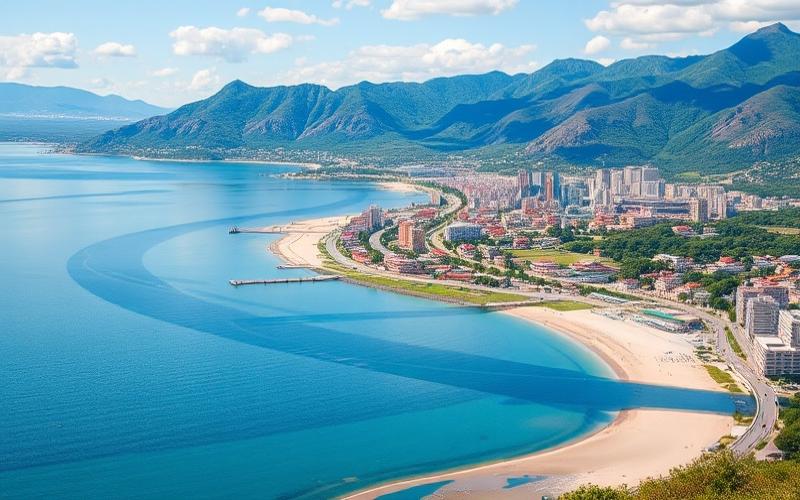
In contrast to the Ardennes relief, the Belgian coast stretches about 65 to 70 kilometers of sandy beaches facing the North Sea. While the water remains cool and grey, the coastline offers a string of highly contrasting seaside resorts, connected by a coastal tramway that runs the entire coast from Knokke-Heist to De Panne, for nearly 70 kilometers.
From Dune Villages to Chic Resorts
De Panne, at the far west, is distinguished by its very wide beach – up to more than 400 meters at low tide – and by its protected dunes, notably in the Westhoek reserve, which borders France. It’s also home to the Plopsaland De Panne amusement park, very popular with families.
Knokke-Heist is a seaside resort renowned for its luxurious ambiance, sometimes evoking Saint-Tropez. It is characterized by its high-end boutiques, art galleries, and modernist villas. The municipality also hosts the Zwin Nature Park, a crucial wetland for migratory birds. This park offers trails, observatories, and educational spaces, but full access is paid.
Between these two poles, the coast alternates large popular resorts and more discreet localities. Ostend, the largest city on the coast, concentrates museums (Mu.Zee dedicated to Belgian modern art, the Mercator ship-museum, Fort Napoleon), street art, and a major promenade. Blankenberge attracts with its iconic pier jutting out to sea and its Sea Life aquarium. De Haan, with its Belle Époque villas, has preserved low-rise buildings giving it a very particular charm. Bredene, less urbanized, appeals to those seeking a more natural beach, edged by dunes.
Nature, Art, and Memory on the Coast
Several natural spaces punctuate the coastal strip: the Zwin, already mentioned, the Uitkerkse polders near Blankenberge, the Doornpanne dune area around Koksijde, or the Hoge Blekker dune, the highest sandy point on the coast.
The Belgian coast hosts the Beaufort Triennial, which installs contemporary art works in the open air. Near Ostend, in Raversijde, the open-air museum of the Atlantikwall allows you to discover a preserved section of the Nazi Atlantic Wall, including bunkers, trenches, and observation posts.
Another unique feature: the tradition of horseback shrimp fishing in Oostduinkerke, inscribed on the UNESCO Intangible Cultural Heritage list. Between April and October, at low tide, a few fishermen perpetuate this spectacular technique, hitching draft horses to pull their nets in the shallow waves.
For getting around, it’s hard to find anything more practical than the Kusttram. This coastal tramway, one of the longest in the world, serves about 68 stops, linking all the resorts in one long line. The entire trip from end to end takes about two hours; in practice, most visitors use it in sections, combining seaside stops, walks in the dunes, and museum visits.
Between Historic Cities and Landscapes, an Easy Country to Travel
A significant advantage of Belgium for the visitor is its compactness. From Brussels, a train takes about 35 minutes to reach Ghent, 40 minutes to Antwerp, 1h30 to Ostend, 1 hour to Bruges, 2 hours to Dinant. Dense and regular rail connections allow you to link up the must-see tourist sites in Belgium without a car, or to set down your bags in a single city (Brussels or Ghent, for example) to explore in a star pattern.
Belgium’s transport network is complemented by a wide range of guided day tours, serving sites like Bruges, Ghent, Antwerp, Dinant, the Flanders battlefields, or Luxembourg. To save money, opt for local tourist passes (like the CityCard Gent, Bruges museum cards, or combined packages for Brussels) which often reduce costs by bundling transport and museum entries.
Why Are These Places Truly Must-See?
Faced with such abundance, one might wonder: what justifies calling these sites “must-see”?
First, their ability to tell something essential about Belgium and, beyond, about Europe. The Grand-Place of Brussels or the Markt square in Bruges speak of the power of merchant guilds, free cities, and the rise of commerce. The Waterloo battlefield, the cemeteries of Ypres, or the Walloon mines tell of the wars, industrialization, and social changes that shaped the continent. Spa, with its thermal baths and casino, bears witness to a certain invention of modern tourism, when the European aristocracy came to “take the waters.”
These cities offer a remarkable concentration of varied activities in a small area. In Brussels, in the same neighborhood, you can visit a painting museum, a chocolate workshop, a historic brewery, and admire Art Nouveau architecture by Horta. In Bruges, during a single weekend, it’s possible to climb a belfry, cruise the canals, taste distinctive beers, and explore a beguinage.
Finally, their accessibility and their inscription in networks (UNESCO, natural parks, European cultural routes) facilitate their discovery. Whether you’re a history buff, nature lover, foodie, or architecture enthusiast, there is always, a short train ride away, a site that will meet these expectations.
—
Ultimately, exploring the must-see tourist sites in Belgium means accepting to compose your journey like a patchwork: a day in a Flemish city, an escape to the Ardennes, a break by the sea, a few hours on a battlefield or in an old coal mine, an evening in a Brussels bar, a morning in a beech forest. In this country where almost every church tower is a belfry, every old quarter an open-air museum, every valley an invitation to walk, the hardest part isn’t finding what to see, but choosing where to begin.
Disclaimer: The information provided on this website is for informational purposes only and does not constitute financial, legal, or professional advice. We encourage you to consult qualified experts before making any investment, real estate, or expatriation decisions. Although we strive to maintain up-to-date and accurate information, we do not guarantee the completeness, accuracy, or timeliness of the proposed content. As investment and expatriation involve risks, we disclaim any liability for potential losses or damages arising from the use of this site. Your use of this site confirms your acceptance of these terms and your understanding of the associated risks.

Cyril Jarnias is an independent expert in international wealth management with over 20 years of experience. As an expatriate himself, he is dedicated to helping individuals and business leaders build, protect, and pass on their wealth with complete peace of mind.
On his website, cyriljarnias.com, he shares his expertise on international real estate, offshore company formation, and expatriation.
Thanks to his expertise, he offers sound advice to optimize his clients' wealth management. Cyril Jarnias is also recognized for his appearances in many prestigious media outlets such as BFM Business, les Français de l’étranger, Le Figaro, Les Echos, and Mieux vivre votre argent, where he shares his knowledge and know-how in wealth management.