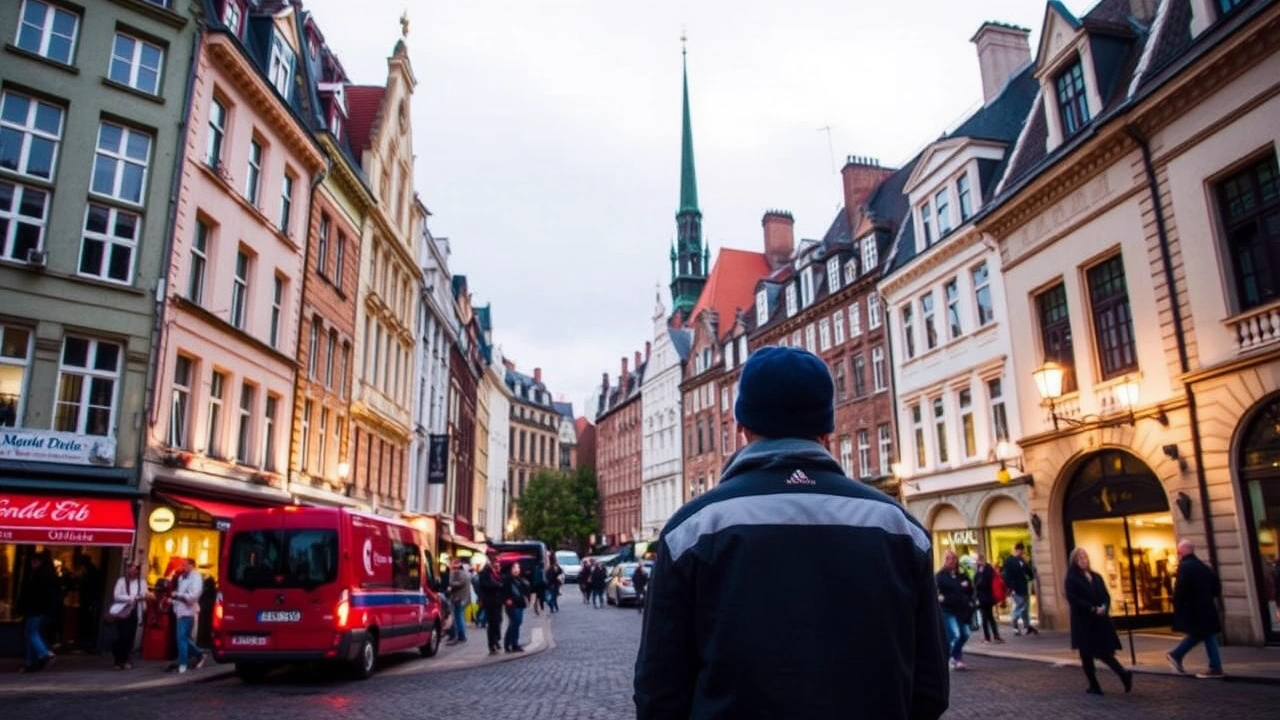
 Published on and written by Cyril Jarnias
Moving to Belgium is attracting more and more expats: a multicultural country, European institutions, a very good healthcare system, and an enviable quality of life. But as everywhere, the recurring question before packing your bags is simple: is it safe? And more importantly: how can you live there with peace of mind on a daily basis, with your family or solo?
Belgium is considered overall safe. The main identified risks are petty crime, cybercrime, burglaries, the presence of drugs in certain neighborhoods, and a “serious” but contained terrorist threat. For an expat, the key is to quickly adopt good local habits rather than becoming alarmed.
This guide offers a concrete dive into safety in Belgium – particularly in Brussels, where a large part of the expat community is concentrated – with practical advice for preparing your move, choosing your housing, getting around, protecting your belongings, handling emergencies, and enjoying the country without paranoia.
1. Understanding the Level of Safety in Belgium
The first step to reassurance is to look at the numbers. They allow you to put some myths into perspective and identify the real risks.
A Peaceful Country, But Not Without Risks
Global indicators place Belgium among safe countries:
| Indicator | Result for Belgium | Takeaway for an Expat |
|---|---|---|
| Global Peace Index 2023 Ranking | 20th out of 163 countries | Globally peaceful country |
| Homicide Rate | 1.1 to 1.7 per 100,000 inhabitants (depending on sources) | Lower than OECD average |
| General Safety Index | ≈ 70 / 100 | Level considered “fairly safe” |
| National Crime Index | ≈ 49 % | Moderate crime level |
In other words, if you’re coming from North America, Latin America, Africa, or even some large European cities, you’ll often feel that Belgium is rather quiet. But this general comfort should not hide three realities:
– petty crime is very present in large cities, especially in Brussels;
– cybercrime is exploding and affects both individuals and businesses;
– the terrorist threat is still taken very seriously by the authorities (level 3 out of 4).
Brussels, a Special Case: European Capital, Capital of Contrasts
Brussels concentrates a significant part of the risks, simply because it also concentrates EU institutions, NATO, large international companies, and a high mix of population.
Some key figures for the Brussels region:
| Data | Value | Comment |
|---|---|---|
| Regional Population | ≈ 1.24 million (10.6% of Belgian population) | Very high density (7,500 inhab./km²) |
| Share of Foreign Residents (working age) | 53 % | Very international city |
| Brussels Crime Index | ≈ 60.84 / 100 | High crime level |
| Proportion of Residents Feeling “Often or Always” Unsafe | 19% (versus 7% in Flanders) | More pronounced feeling of insecurity |
| Homicide Rate (region) | ≈ 3.2–3.5 per 100,000 | Significantly above the national average |
| Recorded Pickpocketing (2022) | 14,080 (+42% vs. 2021) | Very high pickpocketing activity |
| Residential Burglaries (2022) | 7,008 (+11% vs. 2021) | Real risk for housing |
| Reported Bicycle Thefts (2022) | 5,001 (+70% since 2015) | Classic urban scourge |
The capital is not a war zone, far from it. A large majority of residents say they never feel unsafe in their neighborhood. But differences between municipalities and even between streets can be significant. This is particularly true for:
It is advisable to be particularly vigilant in certain areas of Molenbeek, Anderlecht (canal and station zones), Schaerbeek, Saint-Josse, Anneessens and Marolles, as well as in the immediate vicinity of major train stations: Brussels-North, Brussels-Central and Brussels-South.
Conversely, municipalities like Uccle, Woluwe-Saint-Pierre, Woluwe-Saint-Lambert, Watermael-Boitsfort, or certain parts of Ixelles and Etterbeek are among the safest in the country, with very low crime rates and a more family-oriented population.
Terrorism: Serious Threat, Rigorous Management
It’s impossible to talk about safety in Belgium without mentioning terrorism. The 2016 Brussels attacks (Zaventem airport and Maelbeek station) remain in everyone’s memory, as does the 2023 shooting in Brussels that claimed two lives.
Today:
Number of threat or radicalization reports recorded by the authorities in 2024, a 13% decrease year-on-year.
Potential targets are classic: train stations, airports, public buildings, places of worship, shopping centers, popular bars and restaurants, cultural or sporting events. In practice, this mainly translates into:
– a visible police and military presence in certain locations;
– enhanced security checks in train stations and airports;
– regular crisis drills (the Brussels regional crisis center was activated 76 times in 2022).
For an expat, a realistic attitude involves staying informed (via Crisiscenter.be and the BE-Alert warning system), without giving up on using public transport or visiting public places.
2. Everyday Crime: Where Are the Real Risks?
Agencies from several countries (United States, Canada, Australia, United Kingdom) recommend “exercising increased vigilance” in Belgium. This does not mean you risk your life going out to buy bread, but that certain types of crime are common enough to require good habits.
Petty Theft, Pickpockets, and Scams
As in most major European cities, petty crime is the number one problem.
Common scenarios:
– bag, wallet, phone theft in the metro, tram, or train stations;
– pickpocketing in very touristy areas (Grand-Place, Rue Neuve, Christmas markets, festivals);
– theft of luggage on international trains (Brussels-Paris, Brussels-Amsterdam, Brussels-London) from the luggage racks just before the doors close;
– theft in cafés and restaurants: bag hung on a chair, laptop left unattended.
Thieves often work in teams of two or three and rely on distraction: asking for directions, spilling a drink “by accident”, insistent conversation, petition to sign, maneuvers to crowd you.
Good practices to adopt quickly:
To protect your belongings, opt for a **crossbody bag** worn in front and securely closed. Avoid leaving your bag or phone on a table or the back of a chair. Do not keep your passport, bank card, and large sums of cash in the same place. On trains, keep your valuables **on you or at your feet**, with the bag wedged between your legs, rather than in the racks at the end of the car.
Burglaries and Home Security
Across the whole country, more than 141 burglaries are reported every day. In Brussels, home break-ins increased by 11% in 2022. Vacation periods, winter evenings, and poorly protected ground floors are the most exposed.
For a newcomer renting an apartment, two major issues:
– 1. Understanding legal safety and livability standards
Belgium – and each region in particular – imposes very precise minimum standards on landlords:
– sound structure, compliant electrical installation, functioning heating;
– absence of damp and mold, correct ventilation, minimum natural light;
– presence of hot and cold water, a toilet, a functional bathroom, basic kitchen equipment;
– mandatory smoke detectors in all housing (and soon modernized fire detection rules in Brussels).
In the Brussels region, Bruxelles Logement has strict inspection powers. The agency can inspect homes and, in case of serious non-compliance, take coercive measures. These include prohibiting the rental of the property, imposing corrective work, or imposing fines of up to €25,000. In the most critical situations, such as a property declared uninhabitable, the mayor can order its evacuation.
Before signing, it is therefore reasonable to check:
– the condition of the windows (double glazing is mandatory, especially in Flanders, and very common elsewhere);
– the presence of functional smoke detectors;
– the sturdiness of the front door, the type of lock (multi-point, secure cylinder);
– the absence of damp stains, mold smells, or water infiltration.
2. Simply strengthening daily security
Two-thirds of break-ins happen… through the door. A few low-cost actions greatly enhance a home’s resistance:
Practical measures to deter break-ins and protect your home while you’re away.
Add a security bar or interior chain to the main door and install locks or window blocks on easily accessible openings.
Use a peephole or, better, a video intercom or smart doorbell to clearly identify who is ringing before opening.
Program lights on timers to create light activity during prolonged absences, such as vacations.
Ask a trusted neighbor to regularly empty your mailbox and collect mail while you’re traveling.
Avoid announcing vacations live on social media; it’s better to post photos after returning.
Beyond equipment, the simple act of always locking doors and windows, even for a short outing, remains the best barrier.
Bicycles: Cyclists’ Paradise, Anti-Theft Hell
Belgium – and Brussels in particular – strongly encourages bicycle use. But bicycle theft is one of the main reasons for cyclist discouragement: in Brussels, reported thefts increased 70% between 2015 and 2022, reaching 5,001 cases, and authorities consider this very under-reported.
To experience expatriate life by bike without going broke on stolen steeds, some useful benchmarks:
| What Most Often Happens | What You Should Do |
|---|---|
| Poorly or unattached bikes taken “in passing” | Always lock the frame and a wheel to a fixed point, even for 5 minutes |
| Basic cables cut in seconds | Ban cables as primary locks; prioritize massive U-locks or heavy chains |
| High-end bikes, cargo bikes, or e-bikes targeted | Avoid leaving them outside overnight, remove the battery and display, use multiple locks |
| Recovering a stolen bike is impossible | Register your bike in the national MyBike registry and keep photos + frame number |
Local specialists recommend:
– a good quality U-lock (like Abus Granit, Litelok, Hiplok) around the frame + front wheel;
– a second device (heavy chain, another U) to secure the rear wheel or in a bike storage room;
– a parking spot that is very visible, well-lit, near a business rather than a dark alley.
Another valuable ally: registration. The public service mybike.belgium.be provides a free QR code to stick on the frame. If the police recover it, you can be automatically contacted. In Brussels, found bikes can also be viewed on velostrouves.be.
3. Health and Emergencies: A Very Reassuring Healthcare System
On the health front, Belgium offers probably one of the most reassuring environments for an expat.
A Healthcare System Considered Among the Best in the World
International rankings are telling:
– 5th in the Euro Health Consumer Index 2018;
– 2nd best healthcare system worldwide in the Legatum Prosperity Index 2023 (score 85/100);
– 10th out of 32 in the World Index of Healthcare Innovation 2024;
– only 1% of the population reporting unmet medical needs (versus 2.2% EU average).
The country has dedicated over 10% of its GDP to health for more than a decade. Coverage is universal: every resident registered with social security and affiliated with a health insurance fund (mutualité / ziekenfonds) is entitled to reimbursements.
For an expat, this means:
– quick access to general practitioners, specialists, and hospitals, including top-level university hospitals;
– significant partial coverage for consultations (often 50 to 75%) and medications (up to 80% for some drugs).
In return, healthcare is not free: you pay for your consultations, then the health insurance fund reimburses a part, often supplemented by private insurance.
Getting Settled: Health Formalities for Expats
As soon as you settle long-term, health security involves a few essential administrative steps:
1. Municipality Registration
This allows you to obtain your national number (register), essential for social security and health insurance funds.
2. Affiliation with a Health Insurance Fund
These are non-profit organizations approved by the state (often historically linked to political or philosophical movements). Affiliation is mandatory for residents.
Some categories (low income, unemployed…) can go through the public fund HZIV/CAAMI.
3. Interim Coverage
There is often a waiting period (up to six months) before full coverage; having an international private insurance at the start of your expatriation is therefore prudent, even mandatory for many non-EU visas.
4. Electronic ID Card or ISI+ Card
It replaces the old SIS card and serves as proof of insurance with doctors and at pharmacies.
EU citizens can initially use their European Health Insurance Card (EHIC) or an S1 form, but will also need to affiliate if they become residents.
Understanding How the System Works in a Medical Emergency
Belgium has a dense network of emergency services:
– emergency numbers, see next section;
– top-tier university hospitals (UZ Leuven, UZ Brussel, Saint-Luc, CHU de Liège, etc.);
– hospital emergency departments (les urgences / spoed) reserved for serious cases.
Some important points for an expat:
In a life-threatening emergency, an ambulance takes you to the nearest hospital; transport costs are billed but partially reimbursable. For a non-life-threatening issue (fever, sprain…), prioritize seeing a general practitioner or on-call doctor rather than the emergency room. For mental health, 50 to 75% of psychology sessions can be reimbursed through subsidies, but wait times can sometimes be long in the public system.
Pharmacies and Medication: A Key Link in Daily Security
With nearly 5,800 pharmacies, access to medication and advice is excellent. They are recognizable by the green cross or the caduceus symbol.
To know:
– prices for reimbursable medications are regulated by the state, with coverage levels ranging from 50% to 100% depending on the category;
– to be reimbursed, you need to present your ID card and possibly request the Annex 30 (Bijlage 30), a standard proof in pharmacies.
In practice, for an expat, the pharmacy quickly becomes a regular point of contact for minor ailments, vaccinations, prescription renewals, or basic advice… also useful for understanding the local system.
4. Emergencies and Useful Numbers: Knowing Who to Call, and How
In Belgium, as in the entire European Union, the cornerstone of emergency safety is 112.
Essential Emergency Numbers
The main numbers to know – and to post on the fridge or save in your phone – are as follows:
| Service | Number | Main Use |
|---|---|---|
| European Emergency (police, ambulance, fire) | 112 | Single free number, from landline and mobile |
| Ambulance & Fire (Belgium) | 100 | Medical emergencies and fires |
| Police (emergency) | 101 | Theft, assault, serious accident, immediate danger |
| Red Cross Emergency (ambulance) | 105 | Medical aid (especially Flanders & Wallonia) |
| Non-urgent fire department interventions (storm, flood) | 1722 | By phone or online form |
| Text help for the hearing impaired | 114 | SMS emergency |
| Missing/sexually exploited children (Child Focus) | 116 000 | National center |
| Lost/stolen bank card (Card Stop) | 116 116 | Block credit/debit card |
| Lost Belgian ID documents (Doc Stop) | 00800 2123 2123 | Report lost or stolen document |
| Poison Control Center | 070 245 245 | Poisonings, accidental ingestions |
| Gas smell | 0800 19 400 | Report gas leaks |
| Suicide prevention (FR) | 0800 32 123 | Helpline in French |
| Suicide prevention (NL) | 1813 | Zelfmoordlijn |
| Violence, abuse, maltreatment (FR/NL) | 1712 | Anonymous line |
| Children in distress – listening (FR) | 103 | 103-Écoute-Enfants |
| Children in distress – AWEL (NL) | 102 | Helpline |
| Drugs (Infor-drogues) | 02 227 52 52 | Help and information |
| Alcoholics Anonymous (FR) | 078 15 25 56 | Helpline |
| Alcoholics Anonymous (NL) | 03 239 14 15 | Flanders helpline |
| Lost property in Brussels | 02 274 16 90 | Lost and found service |
Other numbers exist for electricity, gas, water or veterinary emergencies, but these already cover the essentials of an expat’s daily life.
Good news: operators at Belgian 112 centers can respond in English, and you can request this right away. Calls to numbers 112, 100, and 101 are free.
How to Talk to Emergency Services on the Phone
Belgian 112 centers handle nearly six million calls per year, via 21 dispatch centers and about 1,200 operators. For them to help you effectively, a few reflexes are essential:
During an emergency call, communicate clearly: your identity and precise location, the nature and status of the situation (ongoing/over, number of people, injuries, children), the possible presence of hazardous substances or weapons. Never hang up before the operator tells you to.
– the access code for your building, parking, or residence;
– the names of medications you take, ideally in a local language (French or Dutch);
– the weight and age of children, essential for toxicology advice.
The official “112 Where Are U” app also allows emergency services to automatically geolocate you during a call, which can save precious time.
Road Accidents: What the Law Requires
The Belgian road network is dense and of good quality, but the country has a relatively high rate of fatal accidents for Western Europe: 540 deaths on the roads in 2022, or 45 deaths per million inhabitants.
In case of a road accident, it is essential to secure the scene first. Turn on your hazard lights and place a warning triangle at an appropriate distance to alert other users. Check the condition of the people involved and immediately call emergency services (15 for medical, 18 for fire, 112 from a mobile) if necessary. Exchange contact and insurance information with the other drivers involved, and gather evidence (photos of vehicles, signage, damage). Fill out a joint accident report, even in case of disagreement, and report the accident to your insurer within the required timeframe.
– you must stop immediately, turn on hazard lights, put on a reflective vest, and place the triangle at least 30 m behind the vehicle;
– in case of a minor collision with no injuries, drivers fill out a European joint accident report, exchanging contact details, license plate numbers, and insurance references;
– in case of disagreement over liability, don’t sign anything and take photos;
– if there are injuries, a serious dispute, or dangerous immobilization: call 101 (police) and 112 or 100 (ambulance) and do not move the vehicles.
Foreign drivers should also familiarize themselves with two key points:
– the “priority to the right” rule at many urban intersections;
– the strict blood alcohol limit set at 0.5 g/L.
5. Cities, Neighborhoods, and Getting Around: Feeling Safe Day-to-Day
Settling in a country also means learning where you feel comfortable. Belgium offers various city profiles: large port metropolises, quiet university towns, ultra-tranquil tourist cities.
Overview of Some Belgian Cities
| City | Approx. Crime Index | Safety Profile |
|---|---|---|
| Bruges (Brugge) | ≈ 25 | Very safe, high tourist traffic, little violence |
| Leuven | ≈ 17 | Student city, very high feeling of safety, strong local pride |
| Ghent (Gent) | ≈ 26 | Some petty crime and reported assaults, but overall calm climate |
| Antwerp (Antwerpen) | ≈ 40 | Drug issues at the port, theft and vandalism; city center and tourist areas generally safe with vigilance |
| Liège | ≈ 60 | Higher crime, notably car theft and break-ins, drugs, street harassment in some areas |
| Charleroi | ≈ 63 | One of the most crime-ridden cities in the country, strong influence of unemployment and trafficking |
| Waterloo | ≈ 29 | Crime level above average, especially property (vandalism, theft) |
In most of these cities, the risks for an expat who follows basic precautions remain similar to what one knows in other major European cities: increased vigilance at night, attention around train stations and disadvantaged peripheral neighborhoods.
Brussels: Choosing Your Neighborhood and Routes Well
The capital is a special case, with a mosaic of 19 municipalities offering very contrasting atmospheres, both in terms of price and safety.
Generally Very Safe and Sought-After Municipalities
– Uccle (1180): green neighborhood, residential, very family-oriented, one of the lowest crime rates in Brussels, many international schools, but limited metro access and high rents.
– Woluwe-Saint-Pierre (1150) and Woluwe-Saint-Lambert (1200): green, quiet municipalities, very popular with families and expats; declining crime, good metro and tram connections.
– Watermael-Boitsfort (1170): half Sonian Forest, almost village-like atmosphere, third lowest crime rate in the region, excellent tram, metro, and train service.
– Auderghem (1160): mix of city and forest, good safety, sustained real estate growth.
Urban, Lively, Safe… But More Expensive Neighborhoods
– Ixelles (1050): reputed as one of the most pleasant neighborhoods in Europe, cosmopolitan, very lively, secure in its prime areas (Châtelain, Flagey, Avenue Louise), with just a bit more pickpocketing near major transport arteries.
– Etterbeek (1040): neighbor to the European quarter, perceived as clean, safe, family-friendly, very popular with international civil servants.
Neighborhoods in Transition, Safety Varies by Street
– Saint-Gilles (1060): undergoing gentrification, very creative, bars and restaurants, but around Brussels-South station or certain squares (Bethléem) the atmosphere can feel less reassuring in the evening.
– Schaerbeek (1030): strong contrasts between pleasant residential areas around Josaphat Park and more problematic sectors near Brussels-North station and the small red-light district.
– Anderlecht (1070): many quiet residential corners, but canal periphery and station areas require vigilance, especially at night.
– Molenbeek (1080): often stigmatized in the media, it includes peaceful streets and pockets of poverty and drug-related nuisance; know it neighborhood by neighborhood.
For calm circulation in Brussels, it is advisable to prioritize public transport, check traffic plans before traveling, and be attentive to the many pedestrian zones and one-way streets. Using real-time navigation apps can also help anticipate traffic jams.
– prioritize the metro and tram for home-work commutes: the network works well, despite regular strikes;
– late at night, prefer well-lit and frequented routes, especially when alone;
– in and around the major stations (North, Central, South), be particularly attentive to your personal belongings.
Transport and Driving: Rules to Integrate
Road safety relies on a few Belgian particularities to know:
In Belgium, priority to the right applies in certain zones, which can surprise foreign drivers. Speed checks are frequent and fines can be demanded on the spot, even for foreign-registered vehicles. Furthermore, Low Emission Zones (LEZ) exist in Brussels, Antwerp, and Ghent. To drive in them, foreign vehicles often need to be registered online in advance.
Regarding public transport:
– crime and pickpocketing are more common on crowded metro, tram, and bus lines, as well as on international trains;
– Friday and Saturday nights in Brussels are covered by Noctis buses until 3 a.m., but again, it’s better to watch your bag.
6. Cybercrime, Scams, and Fraud: The Other Side of Security
Belgium ranks 4th worldwide for cybercrime density, with 94 victims per million internet users. Nearly half of respondents to the national Security Monitor report having been targeted by a phishing attempt in one year, with 7% successful, and about 30% say they have suffered online fraud or hacking.
For expats, more exposed to online procedures (banks, administrative steps, rentals, remote services), a few rules are golden:
To protect yourself from fraud attempts, never click on a link received by SMS or email asking you to confirm a payment, parcel, or bank card; always access the official website directly. Use two-factor authentication for sensitive accounts and carefully check the URL of websites, especially those of Belgian administration. If in doubt about a banking transaction, contact your bank immediately then call Card Stop at 116 116 to block your card.
Rental fraud (fake listings, bogus ads, non-existent landlords) also exists. To protect yourself:
– avoid paying a significant deposit without a written and verifiable lease agreement;
– refuse any security deposit payment in cash or to a foreign account;
– prioritize recognized platforms or agencies, and verify the lease registration (mandatory for the landlord).
7. Housing, Insurance, and Safety Standards: Living in Compliance… and in Peace
Choosing your housing is one of the major stressful moments of expatriation. In Belgium, it’s possible to turn this exercise into a security asset.
Minimum Standards: Your Ally, Regulation
The three regions of the country strictly regulate the minimum conditions for rented housing: safety, livability, equipment.
– the building’s stability, quality of electrical installation, heating, plumbing;
– ventilation, absence of damp and mold, natural light;
– minimum surface areas (e.g., at least 18 m² for a one-person dwelling in Wallonia and Brussels);
– mandatory smoke detectors, often checked during certificate requests.
If a dwelling does not meet these requirements, regional authorities can:
The maximum amount of the administrative fine that can be imposed on a landlord for serious and immediate danger in a dwelling.
As a tenant, you therefore have the right – and the interest – to:
– report serious problems (risk of ceiling collapse, dangerous installations, major leaks…) to the municipality or the regional housing service;
– refuse a clearly uninhabitable dwelling, even if the market is tight.
Lease, Security Deposit, and Insurance: Securing the Landlord-Tenant Relationship
Three elements are crucial to avoid bad surprises:
The written lease must be complete and registered. It must contain the identity of the parties, description of the property, duration, rent, security deposit, and charges. Registration by the landlord is mandatory within four months and free for a primary residence. If the landlord does not do it, the tenant can terminate the lease without notice or compensation, and the rent can no longer be indexed.
2. A Security Deposit in a Blocked Account
The deposit cannot be handed over in cash: it must be deposited in a blocked account in the tenant’s name, for example via specific products like Belgian banks’ rental guarantee accounts. The maximum legal amount is generally three months’ rent.
3. Tenant’s Home Insurance
In Flanders and Wallonia, it is mandatory; in Brussels, it is strongly recommended.
It covers damage to the dwelling (fire, water damage, storm, sometimes theft) and your liability towards the landlord or neighbors. In a shared flat, each occupant should in principle be insured, unless a specific clause says otherwise.
On the landlord’s side, fire insurance completes the setup, but does not protect your personal belongings: it is the tenant’s policy that covers your furniture, personal effects, and part of theft losses.
8. Legal Framework, Police, and Relations with Authority: What an Expat Should Know
Belgium is a stable democracy, with a generally reliable police and judicial system. A few legal specifics can be surprising, however.
What Belgian Law Requires of You Daily
– Carry an ID document on you at all times: passport, ID card, or residence permit. A check without a document can lead to administrative complications.
– Respect the ban on face covering in public space (burqa, niqab, full-face hoods) under penalty of a fine up to €137 and/or short detention.
– Refrain from any consumption, possession, or trafficking of illegal drugs, including cannabis: penalties range from heavy fines to prison sentences (from three months for certain offenses).
– Comply with traffic rules, notably priority to the right, speed limits, and the ban on phone use while driving without a hands-free device.
Police: Approach, Languages, and Recourse
Belgian police forces are known to be:
– accessible and reliable, especially in large cities;
– often able to communicate in English, in addition to French and Dutch.
A distinction is made:
In Belgium, security is ensured by two main forces with distinct missions. The **local police** handles everyday matters like neighborhood safety, traffic management, and minor offenses. The **federal police**, on the other hand, is responsible for overall internal security and deals with broader cases such as terrorism and organized crime.
Non-urgent offenses can be reported online via the official platform policeonweb.belgium.be (available in French, Dutch, and German). This is particularly practical for:
– bicycle thefts,
– some simple thefts,
– requests for home surveillance during vacations.
In Brussels, a specific number (02 279 79 79) also allows you to contact the police for non-urgent questions or general information.
For victims of serious offenses (assault, violence, terrorism), a Financial Assistance Commission can, under conditions, grant partial compensation.
9. Social Life, Protests, Strikes: Managing the Unexpected
A lesser-known aspect of safety in Belgium lies in the culture of protest and strikes. It’s not about generalized violence, but it very concretely impacts an expat’s life.
Protests and Occasional Tensions
Major cities – Brussels in the lead – regularly host:
– union demonstrations against reforms or austerity plans;
– international solidarity marches;
– supporters’ gatherings after sports competitions.
Most of the time, these events remain peaceful, but overflow can occur on the sidelines: projectile throwing, vandalism, limited clashes with police.
Most affected areas in Brussels:
– the Schuman area (European institutions);
– routes leading to the city center;
– sometimes the vicinity of Brussels-South station.
The reflex to adopt is simple:
It is recommended to regularly check local information (city websites, online press, official accounts like @CrisiscenterBE). Avoid protest marches when possible, especially with children, and anticipate the impact on public transport, often disrupted or suspended on certain sections.
Strikes: A Real Logistics Issue, More Than a Safety One
Strikes particularly affect:
– public transport (STIB/MIVB in Brussels, De Lijn, TEC, SNCB);
– sometimes airport services (cases of partial or total closures of Brussels-National and Charleroi during major union actions);
– other public services (schools, administrations).
For an expat life without unnecessary stress:
– keep a plan B for important trips (meetings, flights, school runs);
– systematically check strike announcements a few days before a trip;
– have travel insurance covering disruptions related to social movements.
10. Building Your Own Security: Five Levers for a Calm Expatriation
In the end, the Belgian environment offers an objectively rather safe framework, but on condition that you play your part. Five levers allow, in practice, to live your expatriation with true peace of mind.
1. Get Informed Intelligently, Without Getting Overwhelmed
– Sign up for BE-Alert to receive official SMS alerts in case of crisis (floods, attacks, major incidents).
– Follow institutional channels: crisiscenter.be, regional sites (brussels.be, belgium.be), your country’s consulate or embassy.
– Consult, before moving, neighborhood safety indicators (the safe.brussels observatory, neighborhood guides for expats, etc.).
2. Choose Your Neighborhood and Housing with Safety in Mind
– Cross-reference budget, commute time, schools and crime statistics to decide between municipalities.
– During visits, note:
– lighting, general condition, quality of doors and windows;
– presence of smoke detectors and any alarm system;
– type of neighborhood (family building, student shared flat, busy commercial street).
– Don’t hesitate to ask the landlord about:
– previous burglaries;
– recent work on electricity, heating, window frames.
3. Establish Simple Security Routines
– Always carry a copy (paper or digital) of your passport, separate from the original.
– Systematically lock doors and windows, even for a few minutes.
– Secure your payment methods (limit cash, activate SMS alerts, immediately block any lost means via Card Stop 116 116).
– On the internet, consider that any urgent message requesting a payment is suspicious until verified via an independent channel.
4. Integrate into the Local Fabric
– Establish cordial contact with neighbors and, if possible, join a neighborhood group, a parent-teacher association, a sports club.
– Inform each other of absences, agree to empty a neighbor’s mailbox on vacation and benefit from the same service in return.
– Join, where available, a Neighborhood Information Network (BIN) if the municipality offers one.
5. Prepare Children and Family
– Teach children:
– their address by heart;
– to recognize police uniforms and emergency vehicles;
– to say their name and their parents’ names in the local language or in English.
– Calmly explain how to react:
– if lost in a public place (go to a vendor, a police officer, a security guard);
– if an unknown person offers a ride, a gift, or asks for help alone.
—
Expatriating to Belgium offers political stability, a first-rate healthcare system, solid infrastructure, and great cultural diversity. Safety is overall well-managed, although the situation can vary by city and neighborhood.
By quickly learning the emergency numbers, respecting a few anti-theft reflexes, choosing your neighborhood well, and using the protective legal framework for housing, an expat can live in Belgium in a truly peaceful way – enjoying what the country offers best: a “European-style” quality of life, a rich neighborhood life, and, above all, the possibility to feel at home in relatively little time.
Disclaimer: The information provided on this website is for informational purposes only and does not constitute financial, legal, or professional advice. We encourage you to consult qualified experts before making any investment, real estate, or expatriation decisions. Although we strive to maintain up-to-date and accurate information, we do not guarantee the completeness, accuracy, or timeliness of the proposed content. As investment and expatriation involve risks, we disclaim any liability for potential losses or damages arising from the use of this site. Your use of this site confirms your acceptance of these terms and your understanding of the associated risks.

Cyril Jarnias is an independent expert in international wealth management with over 20 years of experience. As an expatriate himself, he is dedicated to helping individuals and business leaders build, protect, and pass on their wealth with complete peace of mind.
On his website, cyriljarnias.com, he shares his expertise on international real estate, offshore company formation, and expatriation.
Thanks to his expertise, he offers sound advice to optimize his clients' wealth management. Cyril Jarnias is also recognized for his appearances in many prestigious media outlets such as BFM Business, les Français de l’étranger, Le Figaro, Les Echos, and Mieux vivre votre argent, where he shares his knowledge and know-how in wealth management.