 Published on and written by Cyril Jarnias
South Korea has established itself as one of the most sports-oriented countries in Asia. Between ubiquitous mountains, a generous coastline, ultra-modern infrastructure, and a collective passion for both competition and well-being, the country offers an impressive playground for those who want to get moving. Whether you enjoy hiking, hitting a ball, gliding on snow, cycling hundreds of kilometers, or simply learning martial arts, the possibilities are numerous and often very well organized.
Hiking is a very popular social ritual, while golf has become a status symbol and a mass pastime, practiced both on real greens and in high-tech simulators. These two central activities are complemented by a diverse sports offering, including hundreds of kilometers of bicycle paths and the Olympic ski slopes of Gangwon-do.
Hiking, a candidate for national sport
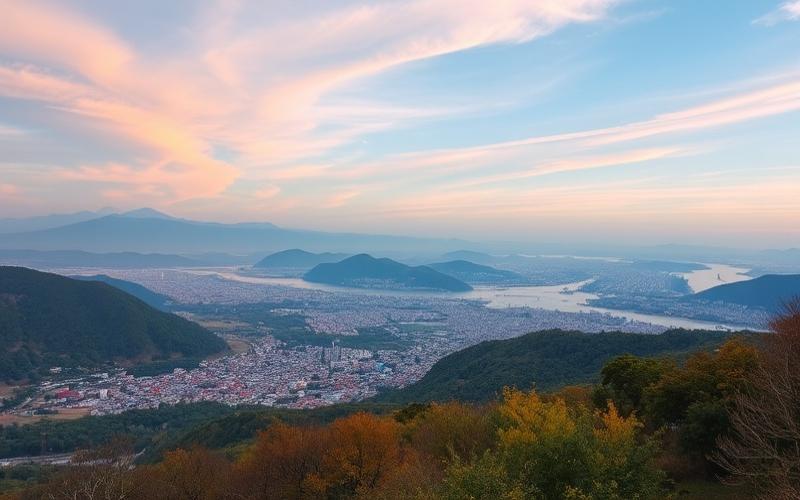
With nearly 70% of its territory covered by mountains, South Korea is literally made for walking. Hiking is described as a genuine national pastime, practiced by all generations, from ultra-equipped senior groups to young city dwellers seeking to disconnect.
The trails run through national parks, follow the coasts, cross cities, and even wind into central Seoul neighborhoods. Routes are generally well-marked, equipped with rest platforms, public toilets, and sometimes even outdoor exercise equipment. On the busiest paths, you’ll readily encounter hikers wearing sneakers… or completely barefoot on specially designed pebble paths, believed to stimulate circulation and health.
Korean hikers invest in comprehensive technical gear (clothing, poles, ultralight backpacks). A must-have in their pack is *kimbap*, rice rolls with fillings similar to sushi, which they traditionally enjoy at the summit to take in the view.
The etiquette is clear: you carry your trash with you, as trash cans are rare on the trails. You start early, monitor the often-changing weather, and respect park opening hours, generally from sunrise to sunset, with some sections even requiring prior reservation.
Three iconic mountains to understand the hiking culture
The diversity of landscapes and atmospheres is evident in a few major national parks, each with its own character.
In the east of the country, Seoraksan, near Sokcho, is a concentration of spectacular nature. Korea’s second-largest national park, designated a UNESCO Biosphere Reserve, combines steep cliffs, deep valleys, and Buddhist temples. The peak of Daecheongbong, the country’s third-highest summit, rises to 1,708 meters. To reach it, challenging trails of 10 to 16 kilometers with significant elevation gain. Less experienced hikers opt for the very popular Ulsanbawi and its steep steps, or the Cheonbuldong Valley.
Nearly 5,000 species are recorded in Jirisan National Park, making it a biodiversity laboratory.
On Jeju Island, Hallasan completes this trio. As South Korea’s highest peak (1,947 meters), it’s a dormant volcano whose crater holds a circular lake, Baengnokdam. The park holds multiple UNESCO titles: Biosphere Reserve, World Natural Heritage, and Global Geopark. To reach the summit, regulations require booking a time slot in advance, to protect the site and manage crowds. Two major routes lead to the crater, Seongpanak and Gwaneumsa, the former stretching nearly 9.6 km one way.
The mountain… in the city
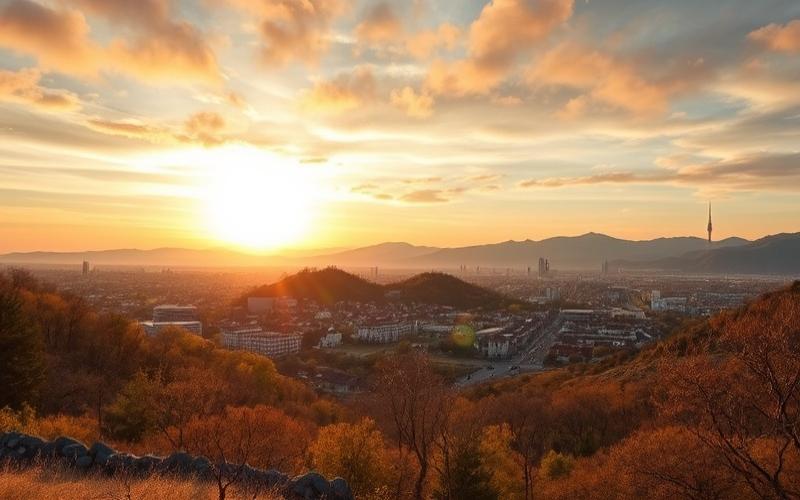
In Seoul, the very idea of “going hiking” doesn’t necessarily mean leaving the metropolis. Bukhansan, north of the capital, is so frequented that it holds a Guinness World Record for the number of visitors per square meter for a national park. Its granite silhouette overlooks a city of over nine million people, and its trails lead to Baegundae, its highest point (836 meters), or follow ancient fortifications like Bukhansanseong.
More centrally, Namsan offers gentle paths punctuated with viewpoints, at the foot of the famous N Seoul Tower, while Gwanaksan, to the south, attracts urban hikers with its rocky ridges and hermitages clinging to the mountain. This network explains why hiking is sometimes described as Korea’s “national sport”: it’s accessible, codified, socialized, and naturally fits into urban daily life.
Description of hiking in Korea
For visitors and locals alike, public institutions support this movement. The national park service, the Korea National Park Service, provides detailed information on routes, shelters, or restrictions (mandatory reservations, cut-off times). English signs are multiplying on the major classics, facilitating the activity for foreigners.
If hiking structures Koreans’ relationship with nature, golf reflects more of the country’s urban, status-conscious, and tech-savvy side. South Korea is now the world’s third-largest golf market behind the United States and Japan. The sector was already worth 13 trillion won in 2019 and continues to grow, driven by the rise of screen golf and a massive enthusiasm for playing, but also by the prestige associated with the sport.
The numbers are staggering: more than 800 courses dot the territory. Gyeonggi-do, the large province around Seoul, alone concentrates nearly 300 courses. Jeju-do, the volcanic island to the south, boasts nearly 40. Overall, specialized guides list dozens of clubs around each major metropolis, from US military installations to luxury resorts designed by the biggest names in golf architecture.
An elite of champions, especially among women
This passion isn’t limited to Sunday leisure. On the international stage, South Korean female golfers have dominated for two decades. Forty-seven Koreans compete on the LPGA tour. Names like Pak Se-ri, Inbee Park, Ko Jin-young, Ryu So-yeon, and Chun In-gee regularly appear on major championship leaderboards. Among men, Yang Yong-eun, winner of the 2009 PGA Championship, and K.J. Choi, an eight-time PGA Tour winner, paved the way.
This success, coupled with the image of refinement that golf projects, makes it a social marker. Playing on a great course, displaying a membership card, or sharing rounds on social media is also a way of showing one’s belonging to a certain socio-professional category.
Courses everywhere, for all tastes… but not at all prices
South Korean courses take advantage of varied landscapes: sea, mountain, forests, volcanic plains. Here are some iconic regions and clubs, with a numerical overview.
Approximate distribution of courses by region
| Region / City | Indicative Number of Courses |
|---|---|
| Seoul | 16 |
| Busan | 90 |
| Daegu | 70 |
| Incheon | 70 |
| Gyeonggi-do | 292 |
| Gangwon-do | 59 |
| Chungcheongbuk-do | 60 |
| Chungcheongnam-do | 79 |
| Jeollabuk-do | 37 |
| Jeollanam-do | 38 |
| Gyeongsangbuk-do | 70 |
| Gyeongsangnam-do | 15 |
| Jeju-do | 38 |
Around Seoul and Incheon, Sky 72 (renamed Club 72) stands as an icon. Located right next to Incheon International Airport, it features 72 holes spread across four courses (Sky, Lake, Classic, Ocean). It’s both one of the country’s most frequented and highest-rated clubs. A promotion targeting transit passengers even offers free green fees, cart, and club rental, with the player only paying for the caddie.
The Korean metropolitan basin concentrates several notable golf courses, including Jack Nicklaus Golf Club Korea in Songdo, private clubs like Seowon Valley and Shinwa, as well as renowned courses such as Jade Palace, Yangpyeong TPC, South Springs Country Club, and Lake Hills.
Jeju-do, for its part, capitalizes on its volcanic and ocean scenery. The Club at Nine Bridges was long ranked among Asia’s best courses. Lotte Skyhill, Pinx, Blackstone, Jungmun Beach, Ecoland, Everis, Ora, Roan, and Teddy Valley form a constellation of clubs where fairways weave between fossilized lava flows, forests, and sea views.
In the southeast, near Busan and the coast, names like East Busan Country Club, South Cape Owners Club on Namhae Island, Blue One Resort in Gyeongju, Dongrae Benest, and Stone Gate attest to the dense network in this region.
Renowned architects and very distinct experiences
The big names in global golf architecture have invested in the country: Robert Trent Jones Jr., Jack Nicklaus Design, Kyle Phillips, Ronald Fream, Rees Jones, Perry Dye, Greg Norman Design, Colin Montgomerie, and many others have designed or co-designed layouts. Some clubs feature spectacular details: par-6 holes at Yongin Country Club or Sunning Point, limousine carts at Cascadia, grass driving ranges at Trinity, a 6-hole only course at 123 Golf Club (Goyang) for quick play, or 24 holes at Luna-X in Gyeongju.
Details of main expenses to expect when playing golf in South Korea, in won (₩).
130,000 to 450,000 ₩ on weekdays, and up to 550,000 ₩ on weekends or holidays.
Generally between 90,000 and 130,000 ₩ per round.
Almost mandatory, costs 120,000 to 170,000 ₩ per group.
Clubs: 50,000 to 80,000 ₩. Shoes: 15,000 to 20,000 ₩.
Locker: 10,000 to 20,000 ₩. Range balls: 10,000 to 15,000 ₩.
Membership in private clubs can reach astronomical levels, from 30 million won to several billions, with most ranging between 100 and 700 million.
A summary overview of these costs:
| Expense Item | Indicative Range (KRW) |
|---|---|
| Green fee weekday | 130,000 – 450,000 |
| Green fee weekend / holiday | 180,000 – 550,000 |
| Cart (per group) | 90,000 – 130,000 |
| Caddie (per group) | 120,000 – 170,000 |
| Locker / changing room | 10,000 – 20,000 |
| Range balls | 10,000 – 15,000 |
| Club rental (optional) | 50,000 – 80,000 |
| Shoe rental (optional) | 15,000 – 20,000 |
| Private lesson (1 hr) | 150,000 – 300,000 |
Seasons also play a role: the months of high attendance (April to June, September to October) lead to increases of 20 to 30%, while winter (November to March) opens the door to discounts of up to 40%.
A highly codified golf culture
On a Korean course, nothing is left to chance. The dress code requires a polo shirt, golf pants or shorts, and appropriate shoes. In some high-end clubs, attire in the clubhouse can border on suit and tie.
The presence of a caddie is mandatory on Korean courses. Their role is comprehensive: they drive the cart, measure distances (primarily in meters), advise on club selection, monitor the pace of play, and keep score. Remuneration follows precise customs: a birdie is often rewarded with a tip of about 10,000 won, an eagle with at least 50,000 won. A hole-in-one entails substantial obligations: a generous tip (minimum 300,000 won), a high-end meal for the group, often a complimentary round later, and commemorative gifts. This athletic feat can therefore represent a significant bill.
At the halfway point, the “shadow house” break is almost institutional. The group stops for a snack or quick soup before tackling the last nine holes. After the round, showers and a meal at the clubhouse complete the day. Golf here is as much a sporting activity as it is a social protocol.
Tricky access for foreigners… except on screen
Booking a tee time can be an obstacle course, especially for non-residents. Slots open two weeks to a month in advance, often on platforms or apps in Korean that require a verified local phone number. Most clubs require a full foursome: playing alone or as a pair remains the exception, generally reserved for more affordable courses.
Many visitors therefore go through specialized agencies, through Korean friends, or via hotel concierges. Expat group chats, like “Expat Golf in Korea” on KakaoTalk, also facilitate forming complete groups.
In parallel, screen golf democratizes the practice. These simulation salons, very common in cities, allow playing virtually on reproductions of major international courses, at a moderate price and without weather constraints or a strict dress code. One figure illustrates the phenomenon: 64% of new Korean golfers reportedly start with this format. Golfzon, the industry leader, generates over 440 billion won in revenue. Pro screen golf even has its own televised professional league, with over $12 million distributed in prize money since 2012.
For a traveler, these rooms often constitute the simplest way to “sample” Korean golf without tackling the complexities of a real green.
Cycling, the country’s other great sports network
If mountains structure hiking, rivers organize cycling. South Korea has developed an original system: a network of marked bicycle paths, associated with a “cycling passport” and collection of official stamps along the routes.
Twelve certified routes crisscross the territory, from the cross-country Incheon–Busan route (633 km) to the East Coast road (over 350 km), to the full loop around Jeju Island. They all share the same principle: stamping booths spaced 10 to 30 kilometers apart, in train stations, parks, or dedicated posts. The passport, sold at a modest price (4,000 won, with a supplementary map for 500 won), allows obtaining a certificate and, for the most determined, medals like “Cross-Country,” “Four Rivers,” and “Grand Slam” (85 stamps).
A country designed for utility and sport cycling
Regulation-wise, the bicycle is considered a full-fledged vehicle under the Korean Road Traffic Act. Dedicated lanes take various forms: paths exclusively for bicycles (often painted red), paths shared with pedestrians, bicycle lanes on road shoulders, and bicycle-priority roads marked with repetitive red pictograms.
Specific rules govern the practice: alcohol while riding is strictly prohibited, helmet use is mandatory or strongly recommended, riding on the right, stopping and walking across pedestrian crosswalks where there is no dedicated bicycle crossing. The use of “scooter-style” throttle e-bikes is prohibited on bicycle paths, as these vehicles fall under a different regulatory category.
In large cities, kilometers of bike lanes are counted in the thousands. Seoul thus boasted 1,337 km of bicycle lanes by the end of 2023. Daejeon proclaimed itself a “bicycle city” as early as 2007. Goyang even went so far as to provide free accident insurance for all its residents while cycling.
Routes spanning hundreds of kilometers
The most iconic remains the Incheon–Busan route, often presented as the “crossing” of Korea. From the Ara Lock, at the gates of the Yellow Sea, to the mouth of the Nakdong River in Busan, it links four major segments: the Ara Trail (21 km), the Han River network, the mountainous Saejae Pass (100 km, highest point at 539 m), and the long descent along the Nakdong (389 km). Cyclists alternate river valleys, urban crossings, and moderate slopes, with logistics facilitated by the frequent presence of convenience stores, cafes, and guesthouses.
That’s the maximum distance, in kilometers, one can cycle along the banks of the Han River in Seoul.
Jeju-do also has its cycling loop, often completed in about ten days by travelers looking to combine sport, beaches, and volcanoes. Sangju Island is considered the Korean “cycling capital,” with a dedicated museum and a strong cycling culture.
Easy rental, multimodality, and cycling culture
The system extends to public rental systems. In Seoul, the green “Ttareungi” bikes (Seoul Bike) rent for about 1,000 won per hour, provided you register and leave a deposit via a transportation card. Many other cities have adopted their own fleets: Tashu in Daejeon, Nubija in Changwon, Pedalro in Ansan, Fifteen in Goyang, U‑Bike in Yeosu, etc. Private rental shops are also common, often located near stations or major routes: Bike Nara, Bike Rental Korea, Bikeropros, Bike Trip (Jeju), and others.
In South Korea, it is possible to transport your bicycle on most public transport networks. KTX (high-speed) trains accept them in certain carriages. Subways in large cities allow non-folding bikes on weekends and holidays, in the first or last cars. Intercity buses generally place them in the luggage compartments. Even the airport express train AREX (Incheon-Seoul link) accepts assembled bicycles, under conditions and with prior reservation.
For foreign cyclists, the country also focuses on information: an official website for the paths, a multilingual tourist hotline (1330), local navigation apps (Kakao Map, Naver Map), and instant translation (Papago).
Ski resorts: winter, organized version
When temperatures drop, the Korean mountains transform into a sliding playground. Twenty-one ski resorts are recorded, totaling nearly 200 kilometers of slopes served by 136 lifts. The majority are concentrated in Gangwon-do, the snowiest region, and on the outskirts of Seoul.
The season is in full swing from mid-December to the end of February, although opening dates vary depending on conditions. Many resorts keep their lifts open late into the night, even until 3 a.m., for the very popular “night ski.” Beyond the slopes, indoor water parks, spas, cafes, and sledding parks complete the offering.
Gangwon-do, Korea’s winter sports capital
Pyeongchang and its surroundings, hosts of the 2018 Winter Olympics, concentrate some of the flagship facilities. Alpensia, located around 700 meters altitude, features six slopes of varying difficulty, including a black diamond run, Foxtrot, known for its panoramas. About 3,000 skiers can be accommodated simultaneously. The resort is integrated into a larger complex with accommodations, restaurants, and a water park called Ocean 700.
Length in kilometers of the Panorama slope, a route accessible to beginners at Phoenix Pyeongchang.
Older, Yongpyong – now Mona Yongpyong – claims the title of the country’s first ski resort and remains the largest. Twenty-eight slopes and fourteen lifts are spread across the slopes of Balwangsan. The cable car line to the summit (1,458 m) takes about 18 minutes. The Rainbow Paradise slope, at 5.6 km, is the country’s second-longest continuous descent. Again, the site was at the heart of the Olympic slalom events.
Further north, High1 Resort, on the slopes of Baegunsan (1,340 m), offers 17 slopes spread across three peaks, including a 4.2 km green run, one of the longest for beginners. Two of its slopes have hosted World Cup ski events. Particular attention is paid to accessibility for people with disabilities. Surrounding amenities include a casino, hiking trails, a snow park, and a water park.
In the same province, Vivaldi Park has gained strong popularity among teenagers and young adults. The slopes bear music genre names – Hip‑Hop, Techno, Funky – and the resort boasts twelve slopes, from green to black diamond. A large themed sledding park, Snowy Land, stays open late into the night, as do the slopes.
The Welli Hilli Park resort in Hoengseong is recognized by the International Ski Federation. It features about twenty slopes and a superpipe meeting international standards. It notably hosted the Snowboard World Championships in 2009, a first on the Asian continent.
An hour from Seoul, “proximity” sliding
Closer to the capital, more modest resorts cater to day trips. Jisan Forest Resort, in Icheon, is about an hour’s drive from Seoul and twenty minutes from Everland amusement park. Slopes for all levels, five fast chairlifts, a conveyor belt for beginners, and prices considered affordable make it an ideal entry point for novices.
Konjiam, in Gwangju (Gyeonggi-do), boasts being the largest resort in the metropolitan basin. Nine slopes, five lifts, and a majority of runs designed for beginners, intermediates, and seniors make it a very accessible domain. An app allows managing tickets, equipment rental, and lessons to reduce wait times.
Located near Wonju, about 1.5 hours from Seoul, the Oak Valley resort is modest in size and offers a family-friendly atmosphere. It features three main slopes (one easy, two intermediate), a sledding area with tubes on a conveyor belt, and snow-covered walking trails. It is particularly appreciated by snowboarders who want to avoid large crowds.
Finally, Muju Deogyusan Resort, within the national park of the same name, offers the Silk Road, a legendary 6.1 km slope starting at 1,520 meters altitude, reputed to be the country’s longest, and an extremely steep black diamond run nicknamed Raiders. The complex is complemented by outdoor hot springs, a combination appreciated after a day of skiing.
A very organized winter, from transport to passes
In this country where winter is short but intense, the winter sports industry has bet on efficiency. Packages combining transport, rental, lift passes, and lessons with English- or Chinese-speaking guides are offered by major booking platforms. Shuttle buses connect Seoul to most resorts in one to three hours, sparing visitors from having to drive on snowy roads.
Resorts have also systematized the “multi-activity” offering: skiing and snowboarding, of course, but also snowshoeing, sledding, rail-biking, visits to ice valleys (Cheongsong, Eobi), animal parks (Alpaca World), or nighttime experiences like walking on illuminated structures (Pohang Spacewalk).
For a foreigner, South Korea thus proves to be a credible country for discovering sliding sports without facing the sometimes stratospheric prices of the Alps or the Rockies, while benefiting from modern infrastructure and highly structured service.
Martial arts: a living heritage to practice
Beyond major outdoor sports, it’s impossible to discuss Korean physical activities without mentioning martial arts. They constitute one of the historical pillars of popular culture, being simultaneously a physical discipline, a transmission of values, and a source of national pride.
The roots are ancient, documented by chronicles such as the Samguk Sagi or the Samguk Yusa, which testify to the importance of martial practices during the Three Kingdoms period. From Goguryeo to Joseon, texts and manuals followed, codifying weapon and bare-handed combat techniques. After restrictions during the Japanese colonial period, the 20th century saw the rebirth of these disciplines and the creation of numerous schools.
Taekwondo, the national standard-bearer
Taekwondo is probably the most visible sports export of contemporary Korea. Born in its modern form in the mid-20th century, it combines spectacular kicks, hand strikes, fast footwork, blocks, but also throws and joint techniques in some schools. The codified uniform (dobok), colored belts, and training in the dojang compose an immediately recognizable universe.
Number of first Dan black belt holders in taekwondo in South Korea (in millions).
Institutionally, Korea relies on the Kukkiwon (national academy founded in 1972) and the Korea Taekwondo Association. Internationally, World Taekwondo (ex‑WTF) and the ITF structure competition. For a visiting traveler, attending a training session or following an initiation class at a local school is an accessible experience, with many clubs in large cities offering classes for foreigners.
Taekkyeon, hapkido, ssireum: less mainstream but very much alive disciplines
Alongside taekwondo, other arts retain a special aura. Taekkyeon, sometimes described as a “fighting dance,” combines undulating movements, a swaying rhythm, and sweeping or striking gestures. It was inscribed on UNESCO’s Representative List of the Intangible Cultural Heritage of Humanity, and Korea recognized it as Important Intangible Cultural Heritage No. 76. In Seoul, particularly in the Insadong district, it is possible to take introductory classes, sometimes accompanied by a symbolic certificate.
Hapkido is a comprehensive Korean martial art, similar to aikido or jiu-jitsu. It combines strikes, joint locks, throws, immobilizations, and weapon training. Partly originating from the Japanese Daito-ryu school, it developed as a holistic self-defense method. Dojangs like Kyung Mu Kwan in Seoul offer bilingual classes for foreign practitioners.
Ssireum, traditional wrestling, is still practiced in schools, universities, and at festivals, to the point of gaining UNESCO recognition as intangible cultural heritage. Wrestlers compete in traditional shorts, grabbing their opponent’s belt, trying to make them fall. The discipline has had its own federation since 1920 and remains anchored in village festivals.
Beyond that, the Korean martial landscape still includes gungdo (traditional archery), kumdo (swordsmanship), subak, tang soo do, or more recent styles like hanmudo, proof that these practices constitute a distinct sporting path for those wanting to discover another facet of the country.
Urban sports and the fitness explosion
Korean sports dynamism isn’t limited to wide-open spaces. In cities, fitness centers have multiplied to the point of representing a market of over $4 billion, growing rapidly. Seoul, Busan, Daegu, or Incheon concentrate the majority of gyms, often opening very early in the morning and until late at night, with offerings ranging from classic weight training to group classes (yoga, Pilates, Zumba, HIIT, boxing, K‑pop dance).
The market for wearables, like smartwatches and fitness trackers, is already approaching $3.8 billion.
The offering also extends to public facilities. In Seoul, municipal centers offer swimming pools, badminton courts, dance studios, ping‑pong tables at very low prices. In Guro-gu, for example, the Récéa‑center in Sindorim, the Gocheok Dome, or the Hang-dong community center provide access to pools, gyms, futsal pitches, or park golf courses. A public policy that facilitates access to exercise for residents, beyond the purely commercial logic of large chains.
In 2024, over 550 gyms closed, some after collecting significant upfront payments. This situation led to an increase in complaints to consumer protection authorities, highlighting the need for regulation adapted to the sector’s rapid growth.
Water sports and thrills: a playground the size of the country
With its coasts on three seas, islands, rivers, and lakes, South Korea has also established itself as a prime terrain for water sports. In summer, from June to August, the period officially devoted to vacations, beaches and water sports centers fill up.
The annual number of surfers in South Korea, attracted notably by the beaches of Busan and the East Coast.
Sea kayaking, parasailing, kiteboarding, and sailing trips complete this picture, as do mass activities like banana boats, wakeboarding, jet surfing, or water parks on major rivers like the Han or the Bukhangang. Adrenaline seekers also find white-water rafting on the Hantangang or Donggang, river bugging (individual buoy descent), bungee jumping, or a zip line nearly one and a half kilometers long in Hadong.
For most of these activities, professional supervision, safety equipment, and ancillary infrastructure (showers, changing rooms, rest areas) are highlighted in the tourist pitch. A way to reassure both family audiences and foreign travelers, sometimes unfamiliar with the terrain.
A country where sports permeate daily life
This quick overview shows how much sports practice in South Korea is widespread and structured. Hiking serves as a social glue, golf as a status and economic showcase, cycling carves out slow axes in the heart of a very fast country, ski resorts transform mountains into winter amusement parks, martial arts perpetuate a millennial heritage, and urban gyms cater to the contemporary obsession with physical fitness.
Behind the diversity of new activities, we observe strong public sector involvement in infrastructure, a marked interest in technology and gamification, and a tendency to turn every practice into a shareable social experience (via digital objects or content).
For those who like to be active, the popular sports to practice in South Korea are therefore not just a list of options, but a way to discover the country differently. By putting on hiking boots, renting a bike, booking a taekwondo session, or reserving a slot for virtual golf, you touch on entire aspects of contemporary Korean culture: its relationship with nature, with the group, with performance, and more broadly, with the very idea of quality of life.
Disclaimer: The information provided on this website is for informational purposes only and does not constitute financial, legal, or professional advice. We encourage you to consult qualified experts before making any investment, real estate, or expatriation decisions. Although we strive to maintain up-to-date and accurate information, we do not guarantee the completeness, accuracy, or timeliness of the proposed content. As investment and expatriation involve risks, we disclaim any liability for potential losses or damages arising from the use of this site. Your use of this site confirms your acceptance of these terms and your understanding of the associated risks.

Cyril Jarnias is an independent expert in international wealth management with over 20 years of experience. As an expatriate himself, he is dedicated to helping individuals and business leaders build, protect, and pass on their wealth with complete peace of mind.
On his website, cyriljarnias.com, he shares his expertise on international real estate, offshore company formation, and expatriation.
Thanks to his expertise, he offers sound advice to optimize his clients' wealth management. Cyril Jarnias is also recognized for his appearances in many prestigious media outlets such as BFM Business, les Français de l’étranger, Le Figaro, Les Echos, and Mieux vivre votre argent, where he shares his knowledge and know-how in wealth management.