 Published on and written by Cyril Jarnias
South Korea’s public transportation reputation is well-established. A sprawling network, military-like punctuality, cleanliness, reasonable fares, and deep integration between buses, subways, and high-speed trains: for a traveler, everything is designed for getting around quickly and far… provided you understand a few codes. This practical guide gathers essential information about the Korean network, from transport cards to etiquette rules, covering the Seoul subway, intercity buses, KTX trains, airport transfers, and main tourist passes.
The goal is to provide you with concrete reference points to efficiently organize your daily commutes and intercity trips, optimizing your time and budget, without delving into unnecessary technical details.
Understanding the System: A Dense, Integrated, and Highly Digitalized Network
South Korea has developed one of the world’s most advanced public transportation networks. In the Seoul metropolitan area, nearly 7.2 million people use public transit every day, and over 60% of adults say the subway is their primary mode of transport. In major cities like Seoul or Busan, the “Bus – Subway – Walking” triad sums up daily life: buses for fine-grained neighborhood coverage, subways for fast trips, and a lot of walking between stations and daily destinations.
In Seoul, a single transport card allows you to successively use the subway, bus, sometimes taxis, and even public bikes, with discounts for transfers. This intermodal system is complemented by the national train network of the public corporation Korail, which connects major cities, and a dense web of intercity buses serving medium-sized cities and areas not covered by rail.
The flip side of this efficiency is that the system can seem complex at first glance: color codes, numerous different cards, transfer rules, and exceptions depending on private lines. Hence the importance of mastering the basics: transport cards.
Transport Cards: The Indispensable Key
In South Korea, traveling without a transport card is possible, but frankly impractical. Almost all buses and subways operate on a rechargeable contactless card system. Paying with cash is becoming the minority, or even impossible on some bus lines, especially in Seoul and Daejeon where lines have switched to “cashless.”
The main cards for travelers are Tmoney, EZL (new name for Cashbee), WOWPASS, Namane Card, and the Climate Card for Seoul. All work roughly on the same model: a prepaid, cash-rechargeable card, usable on most public transportation and in many stores.
The Main Families of Cards and Passes
To clarify, it’s useful to compare the main products aimed at travelers.
1. Classic (Prepaid) Transport Cards
These cards are mainly for paying for each trip based on actual usage, with discounts and free transfers included.
| Card / Pass | Product Type | Where It Works for Transport | Usable in Stores? | Who Is It For? |
|---|---|---|---|---|
| Tmoney Card | Multi-use prepaid card | Buses, subways, some private lines, taxis, airport buses, some express buses | Yes (convenience stores, cafes, fast food…) | Everyone, tourists included, nationwide |
| EZL Card | Prepaid card (ex-Cashbee) | Buses, subways, some taxis (mainly Lotte network) | Yes, mainly Lotte affiliates | Travelers to multiple cities, Lotte fans |
| WOWPASS | Prepaid card + Tmoney | Like Tmoney (transport) | Yes (as a debit card) | Foreign tourists without a Korean bank account |
| Namane Card | Prepaid + integrated Tmoney | Like Tmoney (with dedicated transport balance) | Yes (as a debit card) | Long-stay travelers, personalization fans |
| Climate Card | Unlimited pass for Seoul | Seoul subways & buses + bike/boat options (depending on plan) | Some cultural benefits | Stays primarily in Seoul |
All these cards are prepaid and do not require a Korean bank account, except for certain top-up options via apps. The standard remains cash top-up at convenience stores and subway vending machines.
2. Unlimited or Themed Passes
Other products are more like limited-duration passes with a defined number of trips or network coverage area.
| Pass | Duration / Limit | Main Coverage Area | Key Advantages |
|---|---|---|---|
| Mpass Card | 1 to 7 days, 20 trips/day | Seoul subway, city buses, AREX all-stop | Foreigners only, interesting for intensive subway use in Seoul |
| Discover Seoul Pass | 24/48/72 hours | Seoul attractions + Tmoney function | Free/discounted entries + integrated transport card |
| Korail Pass | 2 to 5 days (flexible or consecutive) | Korail trains (KTX, ITX, Mugunghwa…) | Ideal for visiting several major cities |
| Climate Card | 1, 2, 3, 5, 7, or 30 days | Seoul bus + subway network | Unlimited in Seoul, very cost-effective beyond a few days |
Tmoney: The Leading Card
Among all cards, Tmoney remains the benchmark. It works almost nationwide: Seoul, Busan, Daegu, Daejeon, Gwangju, Incheon, Jeju… It is accepted on subways, city buses, some taxis, airport buses, and some express buses, as well as in many stores (GS25, CU, 7-ELEVEN convenience stores, cafes, fast food, cosmetics shops, vending machines, phone booths, highway tolls…).
This is the maximum cost in Korean Won (KRW) to buy a standard T-money card, without pre-loaded credit.
Regarding fares, using Tmoney allows you to pay about 100 KRW less per trip than with a single-journey ticket. For example, the base subway fare in Seoul is 1,350 KRW with a ticket, and 1,250 KRW with Tmoney. Transfer discounts are also reserved for cardholders.
Another advantage is that the card has no strict expiration date. The physical card remains valid even after several years, and the balance remains usable as long as there has been activity within the last five years. When leaving the country, it’s possible to request a refund of the balance, subject to a small fee (usually 500 KRW), at some convenience stores for small amounts, at subway customer centers, or at the Tmoney headquarters in Seoul for large balances.
For those under 18, discounted fares are available, but the date of birth must be registered at the time of purchase (at a convenience store), upon presentation of a passport.
EZL Card: The Successor to Cashbee
The EZL Card, which replaced the old Cashbee brand, works on a model very close to Tmoney. It’s a rechargeable prepaid card, usable on subways and city buses in most major cities (Seoul, Busan, Incheon, Daegu, Daejeon, Gwangju…), some taxis, vending machines, and especially many Lotte group affiliates (Lotte Mart, Lotte Cinema, Lotte Duty Free…).
It can be purchased at all major convenience stores (CU, GS25, 7-ELEVEN, Emart24), in subway stations, at city kiosks, or via online booking platforms</strong with airport pickup. The price starts around 4,000 KRW. Balance refund is possible but limited (less than 20,000 KRW at a convenience store).
The EZL app allows you to register the card and activate a “tap” function via smartphone, handy if you prefer to use your phone rather than the physical card.
WOWPASS and Namane: Hybrid Cards for Connected Travelers
WOWPASS and Namane combine two functions: a transport card (via Tmoney integration) and a prepaid debit card for paying at stores. Their main interest for travelers: avoiding opening a local bank account while enjoying a Korean payment card.
The WOWPASS card is exclusively for foreigners. It’s available for purchase at hundreds of city kiosks, in major subway stations, hotels, and airports. Its cost is 5,000 KRW (4,000 KRW if reserved online). This card allows loading both Korean Won and foreign currencies (USD, JPY, CNY…) directly at kiosks, with no service fees on payments. If lost, it can be blocked via the dedicated app and the balance transferred to a new card.
The Namane Card also plays this dual role, with an added “fun” dimension: you can personalize the design with your own photos, predefined themes, or K-pop concert visuals. It works with two separate balances (transport and spending), between which money can be moved.
Climate Card: The Unlimited Pass for Seoul
The Climate Card is an initiative by the City of Seoul to encourage the use of public transportation. It is an unlimited pass for a given period, valid on all Seoul subways (plus the Gimpo Gold Line) and buses licensed by the city (including neighborhood and night buses). The 30-day versions can include access to the Ttareungi public bike system and even the river bus on the Han River.
Here is a summary of the prices (excluding the cost of the physical card, 3,000 KRW):
| Duration / Option | Price (KRW) | Includes |
|---|---|---|
| 1 day | 5,000 | Unlimited bus + subway (Seoul) |
| 2 days | 8,000 | Bus + subway |
| 3 days | 10,000 | Bus + subway |
| 5 days | 15,000 | Bus + subway |
| 7 days | 20,000 | Bus + subway |
| 30 days bus + subway | 62,000 | Bus + subway |
| 30 days bus + subway + bike | 65,000 | + Ttareungi (2h/day) |
| 30 days bus + subway + Han boat | 67,000 | + Hangang River Bus |
| 30 days bus + subway + bike + boat | 70,000 | Complete package |
The pass is now valid, in addition to Seoul, in several cities of the greater metropolitan area (Seongnam, Goyang, Gwacheon, Gimpo, Namyangju, Guri). However, it does not include some express or private lines (Shinbundang, M bus, G bus, airport buses, intercity express buses), nor transportation in other major cities like Busan or Daegu. Top-ups and purchase are in cash or by Korean credit card, which forces foreigners without a local account to sometimes go through the Tmoney headquarters to obtain a refund.
Mpass and Discover Seoul Pass: Targeted Tourist Products
For short stays centered on Seoul, two cards often stand out in guides:
The Mpass, reserved for foreigners, allows up to 20 trips per day on Seoul’s urban transport (subway, bus, AREX ‘all-stop’). Plans range from 1 to 7 days (15,000 to 64,500 KRW), with a refundable 5,000 KRW deposit. It can be topped up for taxis or intercity buses. However, it is often considered not cost-effective for most tourists, except in the case of a very high number of daily trips.
– The Discover Seoul Pass, on the other hand, focuses on tourist attractions: over 70 free sites and more than 100 with discounts (royal palaces, N Seoul Tower, etc.), for durations of 24, 48, or 72 hours, with prices around 39,900, 55,000, and 70,000 KRW. The card integrates a Tmoney function for transport, but trips are still deducted from the balance; they are not unlimited.
Transfer and Discount Rules
When you use a transport card (Tmoney, EZL, WOWPASS, Namane…), you benefit from free or discounted transfers between buses and subways, according to a well-established mechanism:
– The first trip is charged at the base fare (e.g., 1,400 KRW on the Seoul subway).
– If you change modes (bus to subway or vice versa) within 30 minutes (or 1 hour between 9 PM and 7 AM), and within a 10 km radius from the last exit point, the transfer is not charged at the full fare.
– In total, up to four transfers are possible (i.e., five trip segments) within the same journey chain.
– However, boarding a bus with the same number is not considered a free transfer.
On buses, it is crucial to “tag” both when boarding and alighting. Forgetting to validate upon exit results in a charge based on the maximum distance, often higher.
The Subway in South Korea: The Backbone of Urban Travel
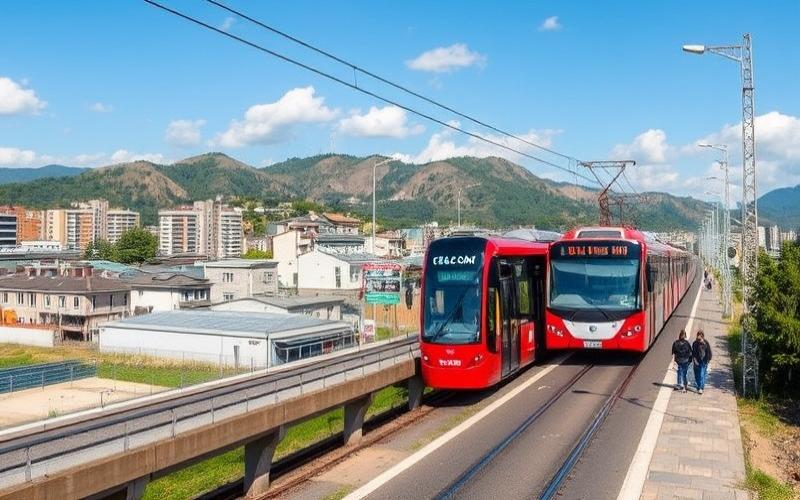
The subway, especially in Seoul, is the backbone of travel. The Greater Seoul network has 24 lines (heavy rail, light rail, and integrated commuter trains), with several hundred stations, unified by a common fare system with metropolitan area buses.
General Characteristics of the Seoul Subway
The subway is regularly ranked among the best in the world. A few points to remember:
– Cleanliness: Trains and stations are very well maintained, trash cans are rare but constant upkeep.
– Comfort: Air conditioning, information screens, platform screen doors in all stations, widespread free Wi-Fi.
– Information: Audio announcements in Korean, English, often Chinese and Japanese; signs in Hangeul, English, and sometimes Chinese characters.
– Frequency: Under normal conditions, a train every 3 to 8 minutes depending on the line and time.
– Hours: Service generally from 5:30 AM to midnight (some lines extend slightly on weekday nights, sometimes until 1 AM).
– Integration: Common fare with buses in Seoul, Incheon, and Gyeonggi, free transfers for transport card holders.
The peak rush hours (approximately 8-9 AM and 6-7 PM) are nicknamed “지옥철” (jiokcheol), meaning “hell train.” It’s recommended to travel outside these times, especially if you have bulky luggage.
Fares and How It Works
The subway operates on a distance-based fare principle:
– Base fare: Approximately 1,400 KRW for the first 10 kilometers with a transport card.
– Beyond that: A 100 KRW surcharge every 5 km up to 50 km, then every 8 km.
– Single-journey ticket: Approximately 1,500 KRW + a 500 KRW deposit, refunded at the end of the trip by returning the plastic card to the designated machine.
The ceiling for a single trip within the Seoul area is around 2,650 KRW. Youth and children benefit from discounted fares if their card is registered with their date of birth.
Private lines like AREX, Shinbundang Line, Yongin EverLine, or Ui-Sinseol Light Rail may apply surcharges, even when using Tmoney.
Each line has a color and each station a three-digit code (line number + order number). Some useful examples for a traveler:
An overview of the essential lines in the Seoul subway network for getting around the city and to its airports efficiently.
Connects central Seoul to many suburban cities. Serves notably Seoul Station, City Hall, Dongdaemun, and Yongsan.
Loop line passing through major districts like Hongdae (Hongik University), Gangnam, Jamsil, and City Hall.
Crosses central and commercial areas such as Myeong-dong, Seoul Station, and Dongdaemun.
Connects Gimpo Airport to eastern Seoul via the business district of Yeouido and the historic center of Jongno.
Airport express line connecting Incheon and Gimpo airports to Seoul Station.
Convenient lines for reaching tourist destinations on the outskirts, like Gapyeong or Chuncheon.
Apps like Naver Map, KakaoMap, Subway Korea, or KakaoMetro indicate which car and door to use to be closest to the right transfer or most convenient exit. If you go the wrong way, it’s often possible to exit and re-enter within 5 to 10 minutes without penalty on some lines.
Subway Etiquette Rules
Subway use follows a set of implicit rules, linked to a culture of discretion and respect for shared space:
In public transport, relative quiet is the norm: speak softly, avoid phone calls, and use headphones. Leave the reserved seats (often marked in yellow/pink) for priority persons. It is polite to offer your seat to the elderly or pregnant women. Avoid spreading out or occupying multiple seats with your belongings. Eating is prohibited; only discreet drinking is tolerated. Stand on the right on sidewalks and on the left on escalators. Always let passengers exit before boarding. Finally, give priority in elevators to people with reduced mobility, with strollers, or large luggage.
Bicycles are not allowed during rush hours (generally 7–10 AM and 5–8 PM). Pets are generally not allowed, except for assistance animals.
City and Intercity Buses: A Complementary Network
While the subway structures travel, buses provide a very fine-grained mesh of neighborhoods and intercity connections. In Seoul, the system is very developed, but can be intimidating at first.
Seoul City Buses: Colors and Line Logic
Buses are color-coded, which simplifies understanding:
– Blue buses: Main lines crossing the city and connecting downtown and suburbs.
– Green buses: Feeder buses between residential areas, subway stations, and blue lines.
– Yellow buses: Downtown circulator buses, connecting stations, business districts, and major tourist sites.
– Red buses: Express buses connecting Seoul to suburbs in the greater metropolitan area (Gyeonggi).
– Village buses (Maeul): Small green buses serving short distances within the same district.
Fares are generally flat-rate within Seoul, with variations based on bus type. As a guide, for an adult with a transport card:
| Bus Type | Approximate Fare (adults, card) |
|---|---|
| Blue/Green bus | 1,300 to 1,500 KRW |
| Yellow bus | 1,200 to 1,400 KRW |
| Maeul bus | 1,000 to 1,200 KRW |
| Red express bus | 2,400 to 3,000 KRW |
| Night bus | ~2,500 KRW |
The first validation after 6:30 AM sometimes gives a small discount called “Early Bird” on Seoul buses.
To benefit from the correct fare and free transfers, it is imperative to validate your card again on the reader at the rear door when getting off the vehicle.
Key point to remember: Eating and drinking are very frowned upon, even prohibited. Since 2018, Seoul, for example, prohibits open takeaway drinks on buses, for safety and cleanliness reasons.
Intercity and Express Buses
To travel outside major cities, the intercity and express bus network is a pillar of the system. There are two main categories:
The South Korean intercity bus network is mainly divided into two categories. “Gosok beoseu” (express buses) provide direct highway links between major cities, like Seoul-Busan or Seoul-Gwangju trips. “Si-oe beoseu” (intercity buses) serve more stops, connecting both large cities and smaller towns, with intermediate stops.
Prices are very competitive compared to the high-speed train. For example, a Seoul–Busan trip by express bus costs roughly between 23,000 and 35,000 KRW, compared to 43,000 to over 57,000 KRW by KTX. Other typical distances:
| Trip | Bus Price Range (KRW) |
|---|---|
| Seoul – Gyeongju | ~19,000 to 30,000 |
| Seoul – Jeonju | ~12,000 to 20,000 |
| Seoul – Sokcho | ~13,000 to 18,000 |
| Busan – Daegu | ~10,000 to 17,000 |
Tickets are purchased at bus terminals (counters or kiosks), or online via sites like Kobus, Bustago, or TxBus. Some official platforms require a Korean phone number and a local card, but agencies like Klook allow booking with a foreign card and an English interface.
For long trips, buses make 10-minute breaks at highway rest areas (“hyugeso“), which are almost worth the trip themselves: snacks, food, shops, impeccable restrooms, sometimes even children’s play areas or themed cafes. There are no toilets on board, so these stops should be anticipated.
Trains: From Ultra-Fast KTX to Tourist Trains
The Korean rail network is dominated by Korail (Korea Railroad Corporation). It includes high-speed trains (KTX), slower intercity trains (ITX, Mugunghwa, Nuriro), and several themed tourist trains.
KTX and SRT: The Korean High-Speed Trains
The KTX (Korea Train Express) is the star of Korean rail. It can reach about 300–305 km/h and connects major cities in record time. The Seoul–Busan trip, for example, takes about 2 hours 15 minutes to 2 hours 30 minutes. The main departures from Seoul are from Seoul Station, Yongsan, and Cheongnyangni stations.
Alongside the KTX, the SRT (Super Rapid Train) is a competing operator, which mainly departs from Suseo Station in southern Seoul. The SRT is not covered by the Korail Pass, and tickets must be purchased separately.
KTX fares vary based on class (standard / first) and the day. Some approximate price ranges:
| Trip (KTX) | Price Range (KRW) |
|---|---|
| Seoul – Busan | ~43,000 to 57,700 |
| Seoul (Yongsan) – Gwangju | ~36,900 to 39,700 |
| Seoul (Yongsan) – Mokpo | ~41,600 to 44,700 |
| Seoul – Masan | ~48,600 to 52,300 |
| Seoul (Yongsan) – Yeosu Expo | ~42,800 to 46,000 |
ITX trains are slower but cheaper. For example, from Yongsan, an ITX to Gapyeong (base for Nami Island) costs about 6,900 KRW, and 9,800 KRW to Chuncheon.
The Korail Pass: Unlimited for Foreigners
For foreign travelers planning multiple train trips, the Korail Pass (or Korea Rail Pass) is a powerful tool. Reserved for non-resident tourists, it allows unlimited travel on most trains operated by Korail (KTX, ITX, Saemaeul, Mugunghwa…) for a defined duration.
The plans are divided into two families:
– Consecutive Passes: 3 or 5 consecutive days.
– Flexible Passes: 2 or 4 select days within a 10-day window.
Different rates exist for adults, youth, and children, as well as a cheaper “Saver” rate for groups of 2 to 5 people traveling together. Examples of prices (in foreign currency or KRW) show that, for a typical Seoul – Busan – Jeonju – Seoul itinerary, the Korail Pass can be cheaper than buying separate tickets (approximately 121,000 KRW with a pass vs. 151,500 KRW with separate tickets in one cited case).
The Korail Pass can be purchased on official sites (letsKorail, Korail-pass), via third-party platforms (Klook, Trip.com), or at Korail centers in major stations. It is issued as an e-voucher, which must be activated before your first trip, either online or at a counter, specifying the start date of use.
With a Korail Pass, it is highly recommended to reserve seats, even if it’s not mandatory on all trains. Reservations are free for pass holders, and generally open 30 days in advance. You can reserve online (the “My Ticket” section of the Korail site), via the app, or at counters. During peak periods (national holidays like Chuseok, Seollal, summer), seats can be scarce: better to plan ahead.
The pass does not cover the SRT or urban subways, even when partially operated by Korail.
Tourist Trains and Other Services
Korail offers several themed scenic tourist trains, accessible with the Korail Pass: the S-Train along the south and east coasts, the V-Train in the gorges of the Baekdudaegan range, the A-Train around Jeongseon, or the G-Train on the west coast. They are worth it for those wanting to combine transport and scenic discovery.
Getting to Seoul from the Airports: AREX, Limousine Bus, Taxi
Most travelers arrive in Korea via Incheon International Airport (ICN), and to a lesser extent via Gimpo (GMP), closer to downtown.
AREX: The Airport Rail Line
The AREX line connects Incheon and Gimpo to Seoul Station. It offers two services:
– The Express Train: Direct between the airport terminal (Terminal 1 or 2) and Seoul Station, with reserved seats, luggage space, and Wi‑Fi. Travel time about 40–45 minutes from Terminal 1, a bit more from Terminal 2. Fares around 8,700 to 9,500 KRW.
– The All Stop Train: Stops at all intermediate stations, notably Gimpo Airport and Hongik University (Hongdae). Travel time around 60–66 minutes. Fare 4,150 KRW from Terminal 1, 4,750 KRW from Terminal 2.
Tickets can be purchased at counters or kiosks on level B1, via the Korail app, or platforms like Trip.com. With a Tmoney card, you can take the All Stop Train directly by paying a 500 KRW deposit for single-journey tickets, refundable upon arrival.
From Gimpo, the AREX trip to Seoul Station takes about 20–26 minutes, for 1,500 to 3,100 KRW depending on the option and distance.
Airport Limousine Bus
Limousine buses, operated by companies like K Airport Limousine or Airport Limousine, connect Incheon and Gimpo to many districts of Seoul: City Hall, Gwanghwamun, Myeongdong, Dongdaemun, Gangnam, COEX, Jamsil, etc. Trips generally take 60 to 90 minutes depending on traffic, with fares ranging from 11,000 to 18,000 KRW for standard service, and up to 17,000 KRW for deluxe service.
Bus tickets are purchased at counters (Terminal 1), near the transportation center (Terminal 2 B1), at kiosks, or from the driver with a card. For late arrivals, night lines (prefix N, e.g., N6001) generally run between 11:20 PM and 3:40 AM.
Taxis and Private Transfers
Taxis are available 24/7 in front of the terminals, with dedicated zones based on taxi type (standard, deluxe, jumbo, international). From Incheon to downtown Seoul, the fare varies roughly between 48,000 and 90,000 KRW, plus a toll of about 7,900 KRW for the highway. Between midnight and 4 AM, a 20% night surcharge applies.
International taxis offer zone-based flat rates for foreigners, with possible advance reservation via the official site, for fares between 70,000 and 95,000 KRW to downtown, but with a more structured experience (English, Chinese, or Japanese-speaking drivers).
Pre-booked private transfers (with a driver waiting for you with a sign in the arrival hall) start around 65,000 KRW for a sedan, and easily exceed 120,000 KRW for a high-end group van.
City Taxis: Practical and Affordable
In large cities, taxis advantageously complement the subway and buses, especially at night, with bulky luggage, or in a group. Korean taxis have a reputation for being numerous, clean, and relatively inexpensive.
The main categories are:
Presentation of the different categories of taxis available in Seoul, with their features and base fares.
The most common, often orange, gray, or white. Starting price around 4,800 KRW for the first 1.6 kilometers, then distance-based charging.
Deluxe taxis (black with gold stripe) and Jumbo taxis (up to 8 people): more expensive, but more comfortable, base around 7,000 KRW for 3 km.
Black or orange with the “International” label, drivers trained in foreign languages, slightly higher fares.
Payment can be made in cash, by credit card, and very often with transport cards like Tmoney. Apps like Kakao T and UT allow you to hail a taxi, estimate the cost, and pay directly in the app for certain types of rides.
Cards, Cash, and the Future of Payment in Transportation
South Korea is one of the world’s most advanced countries in terms of digital payment. Credit cards and apps like KakaoPay or Naver Pay are omnipresent, even in everyday contexts. However, access to these services for short-term stays remains limited, as they generally require a local bank account and a resident registration number.
Currently, prepaid cards like Tmoney are primarily topped up with cash at convenience stores or subway vending machines. Seoul plans to align its system with international standards by the end of the decade. Announced developments include: an “open loop” system to pay directly with a credit/debit card, the ability to top up Tmoney with foreign cards at vending machines, and potentially the use of Apple Pay.
These developments will take time (the first steps are targeted from 2026–2027), but they will simplify life for visitors who won’t have to juggle cash for their travel anymore.
The last key element to mastering South Korean transportation: navigation apps. Google Maps does not have the necessary data to provide reliable real-time guidance in Korea, due to legal restrictions on exporting detailed mapping data.
Locals therefore essentially use two apps:
– Naver Map
– KakaoMap
Both exist in an English version and integrate walking, subway, bus, and even intercity (KTX, long-distance bus) routes. They display bus schedules in real time, walking time, and often indicate the best station exits to use, or even the right train car for an optimized transfer.
Naver Map is known for its clear interface, multilingual support, and advanced features like augmented reality for walking and integration with delivery services. KakaoMap, on the other hand, is often considered more accurate for bus schedules and arrivals, and benefits from excellent integration with the Kakao ecosystem, notably via Kakao T for taxis and KakaoTalk for location sharing.
In practice, many travelers install both and use them complementarily. Additionally, dedicated apps like Subway Korea, KakaoMetro, or Smarter Subway are useful for subway maps, while Papago (Naver) is very helpful for translating signs, tickets, and announcements.
Etiquette Rules and Practical Tips
Beyond technical aspects, using public transportation well in South Korea also means respecting the social codes that govern it.
Some cross-cutting principles:
For a pleasant and respectful journey for all, adopt these good practices: speak softly and turn off loud ringtones; give priority to the elderly, pregnant women, and people with disabilities. In crowded trains, avoid spreading out physically (legs or luggage). It is also advised to avoid buying from street vendors in the subway. Smoking is strictly prohibited in stations or vehicles. Finally, always double-check that you have properly validated your transport card upon entry and exit.
For buses, an essential point: most no longer accept cash at all, or very rarely. Without a transport card, you may therefore be denied boarding. In less dense areas, you sometimes need to give a slight wave to the driver for them to stop.
This is the number for the Korea Travel Hotline tourist assistance line in South Korea, available in multiple languages for any questions about transportation.
—
By mastering these tools – cards, passes, subway, buses, KTX, AREX, apps – public transportation in South Korea becomes an ally rather than a headache. Once you understand the logic, you’ll be able to cross Seoul during rush hour, reach Busan by KTX, explore the countryside by intercity bus, and connect transfers like a local, all with a simple card “beep” and a few well-placed polite gestures.
Disclaimer: The information provided on this website is for informational purposes only and does not constitute financial, legal, or professional advice. We encourage you to consult qualified experts before making any investment, real estate, or expatriation decisions. Although we strive to maintain up-to-date and accurate information, we do not guarantee the completeness, accuracy, or timeliness of the proposed content. As investment and expatriation involve risks, we disclaim any liability for potential losses or damages arising from the use of this site. Your use of this site confirms your acceptance of these terms and your understanding of the associated risks.

Cyril Jarnias is an independent expert in international wealth management with over 20 years of experience. As an expatriate himself, he is dedicated to helping individuals and business leaders build, protect, and pass on their wealth with complete peace of mind.
On his website, cyriljarnias.com, he shares his expertise on international real estate, offshore company formation, and expatriation.
Thanks to his expertise, he offers sound advice to optimize his clients' wealth management. Cyril Jarnias is also recognized for his appearances in many prestigious media outlets such as BFM Business, les Français de l’étranger, Le Figaro, Les Echos, and Mieux vivre votre argent, where he shares his knowledge and know-how in wealth management.