 Published on and written by Cyril Jarnias
Settling long-term in Cuba isn’t just about choosing a country: it’s also about choosing between very different living atmospheres from one neighborhood to another. For an island of about 11 million inhabitants, the number of expatriates remains limited compared to other Latin American countries, but demand is heavily concentrated in a few specific areas. These neighborhoods combine access to services, relative infrastructure stability, intense cultural life, or proximity to the sea, all decisive criteria for those who live there year-round.
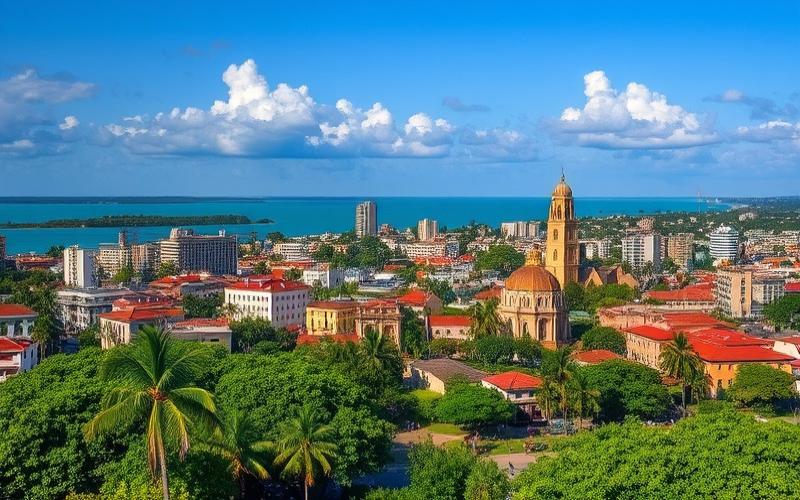
Expatriate life in Cuba is primarily concentrated in Havana, the political, economic, and cultural capital, offering professional opportunities and an urban setting. The iconic neighborhoods of Vedado, Miramar, Playa, Habana Vieja, and Centro Habana are its core, along with more residential areas like 10 de Octubre or the beaches east of the capital. Outside Havana, some beach and historic towns like Varadero, Trinidad, or Santiago de Cuba also attract expatriates, often linked to the tourism sector.
Havana, epicenter of expatriate life in Cuba
Havana is both the largest city in Cuba and the largest urban area in the Caribbean, with just over two million inhabitants. Located on the north coast, less than 100 miles from Florida, it concentrates political institutions, ministries, universities, major hospitals, and a large part of the nascent economic life in the private sector. For an expatriate, this density of services comes at a price: one must contend with sometimes fragile infrastructure, heavy bureaucracy, a banking system complicated by the U.S. embargo, and slow, uneven internet connectivity.
An expatriate needs at least $1,000 per month to live in Havana, while the average monthly salary in the public sector is about $30.
The table below provides a comparative overview – based on available data – of the types of neighborhoods favored in Havana and elsewhere in Cuba.
| Area / City | Type of Location | Dominant Expatriate Profile | Main Assets |
|---|---|---|---|
| Vedado (Havana) | Central, cultural neighborhood | Students, teachers, digital nomads, NGOs | Cultural life, cafes, relative safety, good location |
| Miramar (Havana) | Diplomatic and high-end residential neighborhood | Diplomats, executives, expatriate families | Embassies, international schools, large villas, quiet |
| Playa (Havana) | Western residential municipality | Well-off expatriates, families | Urban beaches, relaxed atmosphere, varied rents |
| Habana Vieja | Historic center | Trendy expats, tourism workers | Colonial heritage, tourist life, museums |
| Centro Habana | Central working-class neighborhood | Budget-conscious expatriates, “adventurous” profiles | Authenticity, low prices, proximity to the Malecón |
| 10 de Octubre | Residential municipality | Families, expatriates seeking peace and quiet | Substantial houses, neighborhood feel, modest rents |
| Playas del Este / Guanabo | Beach strip east of Havana | Expatriates seeking beaches, retirees | Beaches, village atmosphere, more affordable rents |
| Varadero | Beach resort | Tourism professionals, wintering retirees | Postcard beaches, developed tourist services |
| Trinidad | Colonial tourist town | Tourism entrepreneurs, guides, retirees | UNESCO heritage, picturesque atmosphere |
| Santiago de Cuba | Major historic city | Expatriates linked to culture or education | Music scene, pronounced Caribbean character |
With this framework established, it’s time to delve into the details of the neighborhoods most frequently mentioned in discussions among expatriates settled in Cuba.
Vedado: Havana’s modern and cultural heart
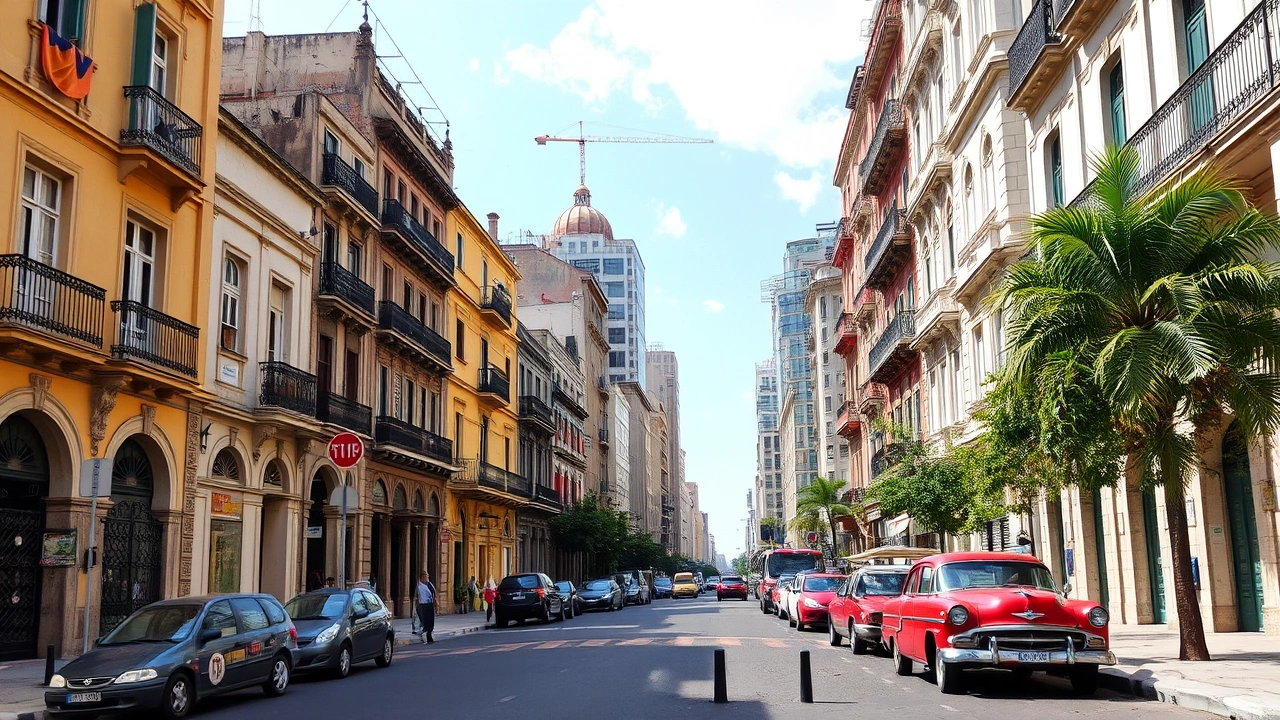
Vedado holds a special place in the imagination of foreigners who settle, even temporarily, in Cuba. Located in the Plaza de la Revolución municipality, bordered by the Malecón to the north and the Almendares River to the west, it forms the modern heart of the capital. Developed mainly in the first half of the 20th century, it features wide, tree-lined avenues, generous sidewalks, Art Deco and neoclassical buildings, and tall residential towers from the 1950s.
It’s often described as the most “affluent” part of the city: many embassies, ministries, and national institutions are headquartered here, attracting a local middle class and part of the intellectual elite. For an expatriate, Vedado ticks several essential boxes: a perceived safety higher than average, better regularity of water and electricity than in many other neighborhoods, easy access to transportation, and a varied offering of restaurants, bars, and cafes.
Institutions, universities, and student life
Vedado concentrates an impressive number of key institutions. These notably include the Cuban Ministry of Foreign Affairs, the Institute of International Relations, several sectoral ministries (Labor, Health, Sugar), the Chamber of Commerce, the Union of Artists and Writers, as well as the headquarters of national television and the film institute. This institutional density attracts foreign missions, researchers, and experts coming for cooperation.
The presence of the University of Havana, a prestigious institution, attracts many Cuban and foreign students as well as visiting professors. Many of them stay in *casas particulares* in Vedado, state-licensed homestays, thus offering cultural immersion combined with a certain level of comfort.
Overview of some major institutions located in Vedado:
| Type of Institution | Examples located in Vedado |
|---|---|
| Universities and research centers | University of Havana, Casa de las Américas |
| Ministries and public bodies | Ministry of Health, Labor, Foreign Relations, etc. |
| Culture and arts | Cuban Institute of Cinematographic Art and Industry (ICAIC), Union of Artists and Writers (UNEAC) |
| Diplomacy | U.S. Embassy, other foreign representations |
| Media | Institute of Radio and Television, national television center |
For an expatriate, living close to these institutions means shorter daily commutes, networking possibilities, and a dense cultural offering within reach.
Cafes, culture, and nightlife
Vedado is renowned as the cultural epicenter of the capital. Along 23rd Street, nicknamed “La Rampa,” there is a concentration of cinemas, galleries, cafes, bookstores, and public Wi-Fi spots. Places like the Yara cinema, Coppelia (a huge open-air ice cream parlor), or the Fábrica de Arte Cubano (a hybrid center combining gallery, club, and performance space) have become essential landmarks for both locals and foreigners.
Cultural life is paced by international festivals (film, theater, jazz). Since the 2010s, an expanded private sector has allowed the development of *paladares* (restaurants), cafes with Wi-Fi, and intimate clubs. Although expensive for locals, these places are accessible to expatriates with an international budget.
Vedado also plays a central role in Cuba’s LGBTQ+ life. The gay scene is notably concentrated along a stretch of 23rd Street, between the Yara cinema, Coppelia, and the Malecón. The public institution CENESEX, active in defending LGBT rights, contributes to an atmosphere more open than in the rest of the country. For LGBTQ+ expatriates, this micro-climate is often a decisive factor in choosing to settle in Vedado rather than elsewhere.
Housing and cost of living in Vedado
In terms of accommodation, Vedado offers a wide range: rooms in casas particulares, apartments in 1950s buildings, shared old houses, luxury hotels like the Nacional, Riviera, or Meliá Cohiba, as well as small recently renovated boutique hotels. Rents remain theoretically lower than in major Western cities, but they are high in absolute value for the Cuban context.
In practice, apartments for expatriates start around $400 per month. Prices increase based on location, size, and the presence of rare amenities like efficient air conditioning, a generator, a water tank, or stable internet access. Rentals often go through local platforms (e.g., Revolico) or word of mouth. Although written leases exist, many agreements remain informal and paid in cash, requiring caution.
For an expatriate, Vedado is therefore a compromise: more expensive than peripheral residential areas, but significantly more practical for daily life, with a particularly attractive social and cultural environment.
Miramar: the diplomatic and high-end residential neighborhood
If Vedado speaks to artists, students, and digital nomads, Miramar is synonymous with diplomatic life, business, and luxury residences. Located in the Playa municipality, west of Vedado, this neighborhood stretches from the mythical Quinta Avenida (5th Avenue), a wide tree-lined boulevard along the sea lined with embassies, villas, and corporate headquarters.
Historically, Miramar emerged in the interwar period as an affluent residential suburb, connected to the center by a bridge over the Almendares River. Its layout is inspired by the North American “City Beautiful” movement: landscaped boulevards, large plots, varied architectural styles (Art Nouveau, Art Deco, 1950s modernism). After the Revolution, some of the villas were reassigned to official uses: “protocol houses,” housing for Party cadres, ministries, embassies.
Diplomats, businesses, and affluent expatriates
Since the 1990s, with the gradual opening to foreign investment, Miramar has positioned itself as Havana’s main business hub. The Miramar Trade Center, a large office and commercial complex developed in partnership between a Cuban company and a foreign investor, illustrates this strategy: several modern office buildings, parking lots, commercial spaces, hosting about 150 companies, notably joint ventures and foreign company representations.
The neighborhoods of Vedado and Miramar in Havana concentrate a significant expatriate population, including diplomats, executives of multinationals, and heads of international organizations. Many embassies, like that of the United States for some consular services, are located there, and their staff reside there for reasons of proximity and security.
International schools and medical services
For expatriate families, the presence of international schools is a major argument. Miramar and, more broadly, the Playa municipality host several establishments: the International School of Havana (English-language teaching), a French school (Lycée Français de La Havane Alejo Carpentier), and a Spanish educational center. These are expensive private institutions: tuition fees can exceed $9,000 to $12,000 per year for upper grades, effectively reserving them for families receiving employer assistance or with high incomes.
The neighborhood hosts international clinics, including the Clínica Central Cira García in Miramar, which is the reference hospital for many expatriates and tourists. These establishments operate on a fee-paying model in foreign currency (euros, Canadian dollars…) and often require advance payment for care. It is therefore crucial for expatriates to have solid international health insurance recognized by Cuban institutions.
Prestige real estate and “inmobiliarias”
Miramar is also one of the main playgrounds for the high-end real estate market in Cuba. Legally, only Cuban citizens and permanent residents can buy a home, with few exceptions related to tourist projects or certain complexes designed from the outset for foreign buyers, called inmobiliarias. In these buildings, all units can be owned by foreigners or foreign companies, often under long-term leases.
An emblematic example is the Habana Palace building, located in Miramar. This upscale condominium offers two-bedroom apartments with two bathrooms, private balcony, garage, 24/7 security, rooftop pool, and its own power generation system. It targets an international, diplomatic, or business clientele. Meanwhile, some individual properties, like renovated large colonial-style villas, reach very high prices in the Cuban market, exceeding $400,000 for surfaces over 600 m², while the national average house price is about $36,000.
The following table illustrates the gap between average price levels by area, according to available data:
| Area or property type | Indicative price range (USD) |
|---|---|
| 3-bedroom / 2-bath apartment in Vedado or Playa | Approximately 60,000 |
| Single-family house in Vedado or Playa | From 100,000 and up |
| Old town / Habana Vieja (apartments) | From 25,000 to 100,000 and up |
| Large villas in Siboney (west of Havana) | From 150,000 to over 500,000 |
| National average house price (estimate) | Approximately 36,000 |
| Price per m² in Havana (general) | Approximately 1,500 to 3,000 |
| Price per m² in Varadero | Approximately 1,000 to 2,500 |
| Other towns / rural areas | Approximately 800 to 1,500 |
Even though many expatriates cannot or do not wish to buy due to legal constraints, this real estate boom has a direct effect on rents in Miramar: the best-located homes, with gardens, pools, generators, and reasonable internet, rent for rates that few Cubans can afford, but which remain comparable to rents in intermediate metropolises elsewhere in the world. Expatriate families, especially those with children in international schools, therefore concentrate in these high-end pockets.
Playa, Guanabo, and “Playas del Este”: living between city and sea
The municipality of Playa encompasses Miramar but also other calmer or more popular areas. It’s a vast, largely residential territory combining very affluent sectors and middle-income neighborhoods. For many expatriates, Playa offers an interesting compromise: less dense than Vedado, greener, close to the sea, while remaining reasonably connected to the center.
Further away, beyond the city’s administrative limits, the coastal strip called Playas del Este stretches for about fifteen kilometers, from Bacuranao to Guanabo. These beaches form Havana’s proximity beach resort. The area is heavily frequented on weekends by locals, but several calmer sectors also attract some expatriates seeking a beach life without completely cutting ties with the capital.
Guanabo, a beach village within reach
About a twenty-minute drive from Centro Habana, Guanabo stands out as a beach town with a village atmosphere, with small streets, low houses, and a multitude of family-run casas particulares. The beaches of Guanabo or Boca Ciega, which is quieter, appeal to those who dream of waking up facing the sea and living in a relaxed atmosphere. Compared to Miramar, rents are often more affordable, but services are also more basic: fewer reference hospitals, more fragile internet connection, reduced commercial offerings.
This type of choice suits mainly retirees or remote workers willing to accept a degree of isolation, or expatriates who split their time between a primary residence in Havana and a beach pied-à-terre.
Habana Vieja: colonial charm and its limits
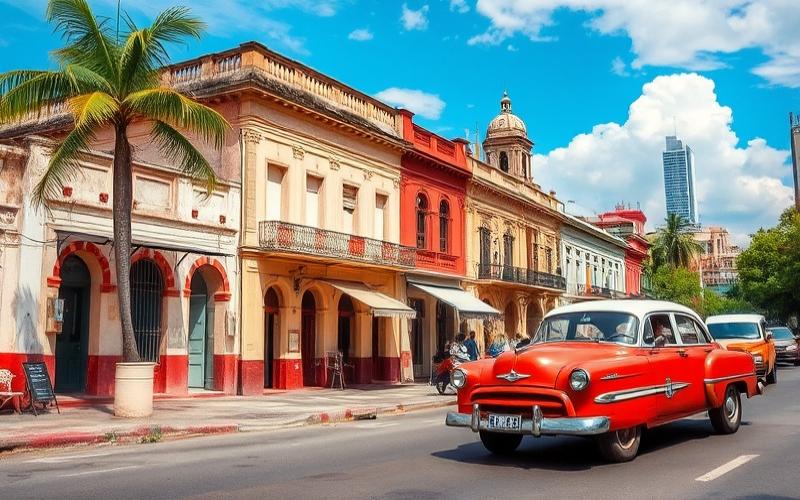
Havana’s historic center, Habana Vieja, is the postcard image of Cuba: cobblestone streets, faded-color colonial buildings, Baroque plazas, fortresses, and churches. A UNESCO World Heritage Site, this zone of only 4 km² concentrates nearly 900 buildings of historical and cultural interest and about 100,000 inhabitants. It’s also the country’s primary tourist hub.
For an expatriate, residing in the heart of Havana’s historic center offers a unique living environment, in immediate proximity to iconic sites like the Plaza de la Catedral. The vibrant neighborhood concentrates many museums, hotels, bars, and private restaurants. It also has the advantage of better continuity of water and electricity services than other areas, making it a favored choice for professionals in tourism, culture, or heritage NGOs.
But the flip side is equally clear: permanent noise, high density, massive influx of tourists, often severely dilapidated buildings. Many buildings would require major renovations, even though some blocks benefit from rehabilitation projects led by the City Historian’s Office. Quality housing is scarce and expensive, and cohabitation with neighbors living in very precarious conditions can be a shock for expatriates unprepared for these contrasts.
Havana’s Old Town mainly attracts foreigners on extended stays, owners of small tourist structures (like casas particulares), and expatriates involved in heritage preservation. However, people seeking a more stable life, especially families with children or those needing to work remotely, generally prefer the neighborhoods of Vedado or Miramar.
Centro Habana: “authentic” immersion on a small budget
Wedge between Habana Vieja and Vedado, Centro Habana is a very dense, predominantly working-class district. Bordered to the north by the Malecón, it lines up a succession of crowded streets, faded facades, neighborhood markets, and small shops. Aesthetically, it often appears more run-down than the historic center, as renovation resources were first concentrated on Habana Vieja.
For budget-limited expatriates or those seeking realistic immersion, Centro Habana is an appreciated neighborhood. Rents are generally lower than in more sought-after areas. One finds more small rooms and cheap *casas particulares* to rent. The neighborhood is very central: Habana Vieja is within walking distance for work, Vedado is a few minutes away by bus or shared taxi, and the Malecón is nearby for evening walks.
Iconic places like the restaurant La Guarida, set in a chicly ruined old building, testify to a certain urban creativity. However, Centro Habana remains an area with fragile infrastructure: water outages, occasional building collapses, lack of green spaces. For an expatriate, it’s a gamble: accepting discomfort in exchange for daily immersion in Cuban social reality.
10 de Octubre, Cerro, and the residential neighborhoods to the south
For those who want neither the tourist bustle of Habana Vieja nor the “enclave” feel of Miramar, several municipalities further south, like 10 de Octubre or Cerro, offer a more discreet alternative. These areas are largely composed of residential streets, sometimes substantial single-family homes, small local businesses, and a strong neighborhood life.
Micro-neighborhoods like Santo Suárez or La Víbora offer a quiet, local environment with good-quality housing. Little frequented by tourists, they are appreciated by some expatriates. Rents are generally lower than in Vedado or Miramar but higher than in modest peripheries.
Cerro, one of Havana’s oldest districts, offers an atmosphere of an inner suburb, with markets, mixed streets of housing/commerce, and less traffic than downtown. Here again, the main asset for an expatriate is daily quality of life: advantageous rent/space ratio, stable neighborhood, perception of greater normality in daily life.
The major drawback of these residential municipalities is the relative distance from major institutions, international schools, and clinics for foreigners, which imposes longer commutes and more complex organization, especially for families.
Siboney, Jaimanitas, Cojímar: exclusive pockets and picturesque enclaves
At the far west of Havana, in continuation of Playa, Siboney is one of the island’s most exclusive neighborhoods: a fabric of spacious villas, often surrounded by high walls, occupied by Cuban leaders, high-ranking foreign representatives, and a few wealthy expatriates. The purchase prices of villas, when available, can exceed $500,000, and rents follow this niche logic. For an expatriate with a very comfortable budget, Siboney offers a rare level of comfort in Cuba: large gardens, pools, generators, household staff, enhanced security.
Jaimanitas, a sector of Playa, is famous for the Fusterlandia urban art project. Initiated by a local artist, it has transformed a former fishing village into an open-air museum. This unique artistic ambiance attracts a community of expatriates seeking creativity, although the structured housing supply there is limited.
Further east, beyond the bay, Cojímar is a small coastal village associated with Ernest Hemingway, who used to fish there. Some expatriates fond of literary history or a maritime setting find a compromise between charm and tranquility there, but with far fewer services than in the city.
Beyond Havana: Varadero, Trinidad, Santiago de Cuba, and Viñales
Even though the vast majority of long-term expatriates choose Havana, several towns and regions also attract foreigners, often linked to tourism or culture.
Varadero is Cuba’s main beach resort, offering miles of white sand beaches and a dense hotel network. For expatriates, opportunities exist in hospitality, tourism joint ventures, or the medical sector (international clinics). The quality of life is beach-oriented with relatively well-assured services. The real estate market, geared towards vacation clientele, has prices per square meter lower than Havana’s but higher than the rest of the island.
Trinidad, a colonial town near the Caribbean Sea and, along with the Valle de los Ingenios, a UNESCO World Heritage Site, attracts a small community of expatriates involved in tourism projects (casas particulares, restaurants, excursion agencies). Its cobbled charm and colorful facades come at a price: daily life is heavily structured around tourist flow, with fewer specialized services for foreigners than in Havana.
Santiago de Cuba, the country’s second city, attracts expatriates linked to the university, culture, or cooperation projects thanks to its strong Caribbean identity, rich music scene, and distinct historical heritage, offering a very different atmosphere from Havana. It’s important to note that infrastructure dedicated to foreigners, like international schools or specialized clinics, is more limited there.
Finally, rural areas like the Viñales Valley, famous for its mogote landscapes and tobacco plantations, are developing a growing offering of long-term rentals for foreigners. These green stays, often in country houses or eco-designed bungalows, rely almost exclusively on the casas particulares system. They mainly suit mobile expatriates, artists, writers, or retirees seeking a natural environment.
Living in sought-after neighborhoods: constraints and realities
Regardless of the chosen neighborhood, expatriate life in Cuba involves dealing with structural realities. Electricity is subject to frequent outages, telecommunication networks remain fragile despite notable progress, and internet access, even improved since the arrival of 3G then 4G and undersea cables, is expensive and limited. One must buy prepaid NAUTA cards to connect to public Wi-Fi spots or subscribe to expensive mobile plans relative to local incomes.
Expatriates favoring sought-after neighborhoods look for housing equipped with generators, water reserves, sometimes solar panels, and stabilized internet connection (e.g., via repeaters). These amenities significantly increase rental costs, even in typically less expensive areas.
The following table summarizes, by major type of sought-after neighborhood, the main advantages and limitations from an expatriate’s perspective.
| Neighborhood type | Major advantages | Main limitations |
|---|---|---|
| Vedado | Culture, relative safety, institutions, cafes & Wi‑Fi | Noise, recent price increases, sometimes aging housing |
| Miramar / Siboney | Quiet, villas, embassies, international schools, hospital for foreigners | Very high rents, feeling of being in a bubble, distance from center |
| Playa (excluding Miramar) | Residential atmosphere, urban beaches, varied rents | Uneven services depending on sectors, sometimes less direct transport |
| Habana Vieja | Heritage, animation, tourist flow, cultural services | Noise, over-tourism, dilapidated buildings, few green spaces |
| Centro Habana | Lower cost, local immersion, proximity to center | State of buildings, outages, sometimes harsh environment |
| 10 de Octubre / Cerro | Relative quiet, spacious houses, softer rents | Fewer services for foreigners, longer commutes |
| Playas del Este / Guanabo | Beaches, village atmosphere, accessible rents | Limited infrastructure, dependence on Havana for services |
Added to this are legal constraints: impossibility for most foreigners to buy a home, necessity for specific visas to reside longer than the 90 days of a tourist visa (extendable once), special conditions for U.S. citizens subject to OFAC restrictions, and the requirement for everyone to have health insurance recognized by Cuban authorities for the entire duration of the stay.
How to choose your neighborhood when expatriating to Cuba?
Choosing among the neighborhoods most favored by expatriates in Cuba often comes down to arbitrating between two logics: integrating into a relatively protected bubble, well-equipped with services but disconnected from part of Cuban reality, or accepting more material constraints in exchange for deeper immersion. Vedado, Miramar, and certain sectors of Playa represent the first option; Centro Habana, 10 de Octubre, or some towns in Playas del Este embody the second more strongly.
The personal and professional profile of the expatriate directly influences the choice of residential neighborhood in Cuba. A family with children will favor Miramar or Playa for proximity to international schools and the Cira García clinic. A student or researcher will more likely opt for Vedado, near the university and cultural venues. A retired couple might choose a house by the sea in Guanabo or a renovated home in a quiet part of 10 de Octubre. Finally, a tourism entrepreneur will look for a pied-à-terre in Habana Vieja, Trinidad, or Varadero, at the heart of tourist zones.
One must also consider the real budget, once hidden costs are integrated: generator or not, stabilized internet access, proximity to transport, school fees, international health insurance, cash reserves in currency given the difficulty of using foreign bank cards (especially American). In a country where inflation of the local currency has reached extreme levels and access to foreign currency is crucial, living in a sought-after neighborhood means paying a daily premium for relative comfort.
Ultimately, the neighborhoods most favored by expatriates in Cuba outline a very clear geography: an urban arc in Havana stretching from Habana Vieja to Siboney, with Vedado and Miramar as major poles, complemented by a few beach enclaves and historic towns. Within this arc, each micro-neighborhood offers a different way of negotiating the compromise between Cuban life and the specific needs of an expatriate life. It’s by visiting these places, talking to those who already live there, and concretely measuring daily constraints that each person can find, or not, their corner of Cuba.
Disclaimer: The information provided on this website is for informational purposes only and does not constitute financial, legal, or professional advice. We encourage you to consult qualified experts before making any investment, real estate, or expatriation decisions. Although we strive to maintain up-to-date and accurate information, we do not guarantee the completeness, accuracy, or timeliness of the proposed content. As investment and expatriation involve risks, we disclaim any liability for potential losses or damages arising from the use of this site. Your use of this site confirms your acceptance of these terms and your understanding of the associated risks.

Cyril Jarnias is an independent expert in international wealth management with over 20 years of experience. As an expatriate himself, he is dedicated to helping individuals and business leaders build, protect, and pass on their wealth with complete peace of mind.
On his website, cyriljarnias.com, he shares his expertise on international real estate, offshore company formation, and expatriation.
Thanks to his expertise, he offers sound advice to optimize his clients' wealth management. Cyril Jarnias is also recognized for his appearances in many prestigious media outlets such as BFM Business, les Français de l’étranger, Le Figaro, Les Echos, and Mieux vivre votre argent, where he shares his knowledge and know-how in wealth management.