 Published on and written by Cyril Jarnias
Owning a pied-à-terre in the tropics, transforming a colonial house into a boutique hotel, or setting up a beachfront resort… On paper, Cuba is a dream for many expatriates. But behind the pastel facades of Havana and the beaches of Varadero, the Cuban real estate market operates under rules radically different from those of a Western country. Restrictions for foreigners, limited property rights, bureaucratic delays, political and monetary risks: here, nothing is simple, and every step must be meticulously prepared.
This article is a realistic guide for expatriates wishing to invest in Cuban real estate (tourist rental, hospitality, commerce). It details precisely the applicable legal framework, expected costs, potential returns, and a comprehensive assessment of associated risks, without promising an easy dream.
A Real Estate Market in Flux, Within a Strained Economy
The Cuban residential market has been in a phase of unprecedented development for about a decade. For over 50 years, buying and selling a home was simply prohibited: Cubans could only exchange their homes via a system of *permutas*, and a black market had formed on the margins of the official system. The major shift came in 2011 with Decree-Law 288, which finally authorized Cuban citizens – and foreigners with legal resident status – to buy and sell their houses at a freely negotiated price.
Number of residential property titles registered in Cuba in the first ten months of 2013, one-third of which involved a sale or exchange.
However, the macroeconomic environment remains very fragile. Cuba has about 11.2 million inhabitants, 77% of whom live in urban areas. GDP is estimated at around 107 billion dollars, with projected growth of 2 to 3% per year in the most optimistic scenario. But the country faces unofficial inflation estimated at over 70% per year, severe shortages of foreign currency, and a banking system cut off from much of the international circuit. The official currency is the Cuban peso (CUP), but the dollar circulates widely informally, and the gap between the official and street exchange rates complicates any financial projection.
In this context, real estate evolves according to specific cycles, where value fluctuations depend mainly on regulatory decisions, tourism trends, and the macroeconomic situation, rather than classic supply and demand mechanisms. The Covid-19 pandemic caused a sharp market contraction between 2020 and 2023, alongside the collapse of tourism. A timid recovery has been observed since 2024, but it is taking place in an environment of persistent instability.
A Deeply Different and Highly Restrictive Legal Framework for Foreigners
Before considering buying or developing a property in Cuba, an expatriate must understand one central point: property rights there bear no resemblance to the freehold ownership model known in Europe or North America. The Cuban system, inherited from Spanish civil law and profoundly reshaped by the Socialist Constitution, prioritizes the “social function” of property over an individual’s absolute right to it.
Cubans themselves are subject to strict limits: only one primary residence and a maximum of one vacation home, to prevent speculation and the accumulation of large estates. Above all, land remains largely state-owned, and what is transferable or negotiable are primarily use rights – whether surface rights (*derechos de superficie*) or usufruct rights.
For a non-resident foreigner, acquiring residential property is generally prohibited. Although exceptions exist, they are rare, legally complex, and subject to prior political authorization.
The Main Legal Pathways to Real Estate for an Expatriate
To understand what is feasible, one must distinguish between several channels, all heavily regulated.
First, there are investment structures provided for by the foreign investment law. Three forms dominate:
| Structure | Legal Nature | Typical Use | Key Particularities |
|---|---|---|---|
| Joint-Venture (Empresa Mixta) | Cuban law company with mixed capital | Hotels, resorts, tourist complexes | Cuban entity often holds ≥ 51%, surface rights for 50–99 years |
| International Economic Association Contract (IEA) | Contract without creating a new company | Hotel management, renovation, targeted projects | Duration generally 10–15 years, more flexible but time-limited |
| 100% Foreign-Owned Company | Company wholly owned by the investor | Industry, ZED Mariel, some specific projects | Very rare in classic real estate, high level of control |
These structures do not allow a private expatriate to “own” an apartment as in a classic country, but they provide access to surface or usufruct rights for commercial projects, mainly in tourism, restaurants, services, and certain offices.
A foreigner holding permanent residency can acquire a residential property (primary and/or secondary residence) under the same conditions as a Cuban citizen. However, obtaining this status is demanding: it typically requires a lasting marriage to a Cuban, a significant investment approved by the authorities, or special skills. The assignment procedure remains at the discretion of the Cuban authorities.
An interesting particularity for expatriates who are already owners: the creation of a “property resident” (Residente de Inmobiliaria) status. This one-year visa, indefinitely renewable, is accessible to foreigners who own property in certain programs or have long-term lease contracts. It does not transform a non-resident’s right into freehold ownership, but it offers valuable security of stay and movement for those who have legally accessed such a property.
Finally, there is the possibility for a foreigner to buy a property from another foreigner in specific residential complexes built in the 1990s, which were then open to foreign investment. These units, often in condominiums, can only be resold among non-residents. This market remains narrow and highly specialized, but it is one of the few legal gateways to “private” housing for a non-resident expatriate.
Informal Setups: A Bad Idea for Expatriates
Faced with this extremely locked-down framework, many foreigners resort to unofficial solutions: funding the purchase of a house in the name of a Cuban spouse, a local partner, a friend, or a family member, with a verbal agreement (or sometimes a private contract) on the actual distribution of rights.
Investments via Cuban nominees, though common, are very risky. The title legally remains in the Cuban citizen’s name, leaving the foreign investor with no recourse in case of conflict, death, or relationship change. Furthermore, undeclared transactions to reduce taxes complicate future resales or transfers.
For an expatriate, these solutions should only be considered for what they really are: very high-risk personal gambles, not as an investment strategy.
The Investment Process: An Administrative Marathon
When an expatriate targets a structured investment – hotel, tourist complex, mixed-use building, marina – the logic has nothing to do with buying a classic residential property. It is a full-fledged foreign investment project that follows a long, technical, and highly political process.
The first phase involves clearly defining the type of project and its alignment with the Cuban government’s priorities. The authorities favor investments that generate foreign currency, local jobs, technology transfers, import substitution, and contribute to regional or sustainable development. A boutique hotel in historic Havana, an eco-resort on a *cayo*, a marina in Cienfuegos, or a tourist complex in Varadero fit more easily into this logic than a simple speculative buy-and-sell operation.
To create a foreign enterprise in Cuba, a complete file must be assembled including the statutes, a business plan, feasibility studies, financial projections, an environmental impact study, and an organizational chart. All these documents must be notarized, legalized, authenticated by a Cuban consulate, and translated into Spanish by sworn translators. This preliminary administrative phase can last from 6 to 12 months.
Simultaneously, extensive due diligence is essential. In Cuba, land registries were long neglected, titles are sometimes incomplete or contradictory, and some plots may be encumbered by use rights or old expropriations. The Ministry of Justice has implemented a modernized property registry, but reality still requires meticulously verifying the history of the targeted property, any prior claims, heritage protection aspects (especially in Havana, where the Office of the Historian must validate any project affecting historic buildings), and risks of dispute.
The estimated budget for due diligence in Cuba, combining local lawyers and international experts, ranges from 15,000 to 50,000 dollars.
Once the file is technically ready, the formal investment application is submitted to the Ministry of Foreign Trade and Investment (MINCEX), which then coordinates the review with other relevant ministries: Tourism (MINTUR), Finance, Environment, Labor, etc. Depending on the size and nature of the project, authorization will be issued by the Council of Ministers or, for the most sensitive projects (natural resources, major public facilities), by the Council of State.
The review times announced range from 45 to 60 days from the submission of a complete file. In practice, the review and negotiation phase typically stretches over 6 to 18 months, or even longer. In total, from conception to effective authorization, project promoters should plan for a cycle of 6 to 24 months.
Operational Reality: A Country Where Everything Takes Two to Three Times Longer
Even once the green light is obtained, the adventure is only beginning. Investors who have already carried out projects in Cuba all emphasize the same point: construction and renovation timelines are on average two to three times longer than in North America for an equivalent project.
Several structural obstacles slow down projects: local companies (often state-owned) face material shortages, logistical problems, and a lack of skilled labor. Furthermore, importing materials and equipment is subject to heavy customs procedures, with clearance delays of 2 to 6 weeks and import duties that can increase costs by 30% to 120%.
Mixed setups combining Cuban companies and a foreign technical team can sometimes improve efficiency a bit, but the investor must accept a certain degree of unpredictability. The renovation of historic buildings is particularly sensitive: costs there are estimated 25 to 50% higher than for comparable work in other regional countries, and coordination with heritage authorities can extend schedules.
Finally, basic infrastructure (electricity, water, telecommunications, internet) remains fragile in many areas. A serious operational plan must include backup solutions (generators, water storage systems, connection redundancy) and a higher-than-average maintenance budget.
An Atypical Fiscal and Banking Architecture
The other major singularity of the Cuban market for an expatriate investor lies in the fiscal and banking framework.
For structured projects (hotels, resorts, commercial complexes), the nominal tax burden may seem heavy, with a standard profit tax rate of 35%. But the country has implemented an incentive system to attract foreign capital into sectors deemed a priority, particularly tourism. Properly authorized joint-ventures can thus benefit from reduced rates between 0 and 15%, profit tax exemptions lasting up to eight years from the start of operations, discounts on the sales tax (between 10 and 25% depending on the sector, with a high level for tourism activities), as well as exemptions from customs duties on importing equipment necessary for approved projects.
Social security contributions average 14% of the payroll.
For residential transactions between individuals, established by Decree-Law 288, the scheme is simpler but very codified. For each sale, the buyer pays a 4% tax on the asset value, while the seller pays a 4% tax treated as income. In practice, many parties tend to underdeclare the value in the deed to reduce their tax burden, which complicates statistics and can also cause problems during resale or disputes.
For an expatriate wanting to position themselves in this segment via authorized residential structures, other levies must also be considered: registration fees (1 to 4%), annual property tax in some cases, taxes on rental income (often between 15 and 30%), and charges related to the potential status of a foreign worker.
The Cuban financial system relies on key institutions like BFI and BICSA for operations with foreigners. Opening multi-currency accounts (CUP, dollars, euros) is generally necessary, with regulations imposing a strict separation between domestic and international flows.
Above all, it is almost impossible to obtain local bank financing for a project led by a foreign investor. Cuban banks do not offer classic mortgage credit to non-residents, and loan programs are limited, expensive, and granted for short terms. In practice, almost all real estate investments structured by expatriates rely on 100% equity or on foreign financing arranged upfront in the home country.
As for profit repatriation, it is in principle guaranteed by law: authorized investors have the right to transfer abroad, in convertible currency, their dividends and liquidation proceeds, exempt from local taxes. But this possibility remains theoretical if the state lacks foreign currency at a given time. In reality, transfers can be delayed, staggered, or subject to political arbitration.
Where to Invest in Cuba? Overview of Key Areas for Expatriates
Even within such a regulated framework, not all regions of the country offer the same prospects for expatriates.
Havana, Political Heart and Tourism Showcase
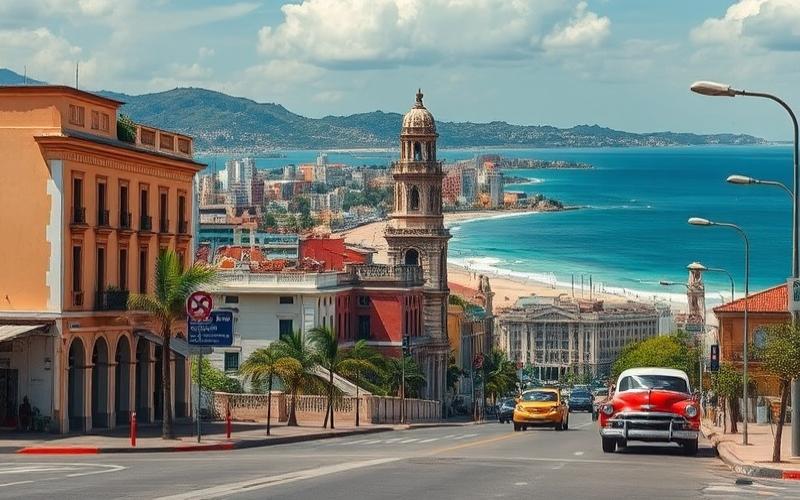
The political and economic capital, Havana logically concentrates most of the tourist and commercial real estate projects. Several neighborhoods have very different profiles.
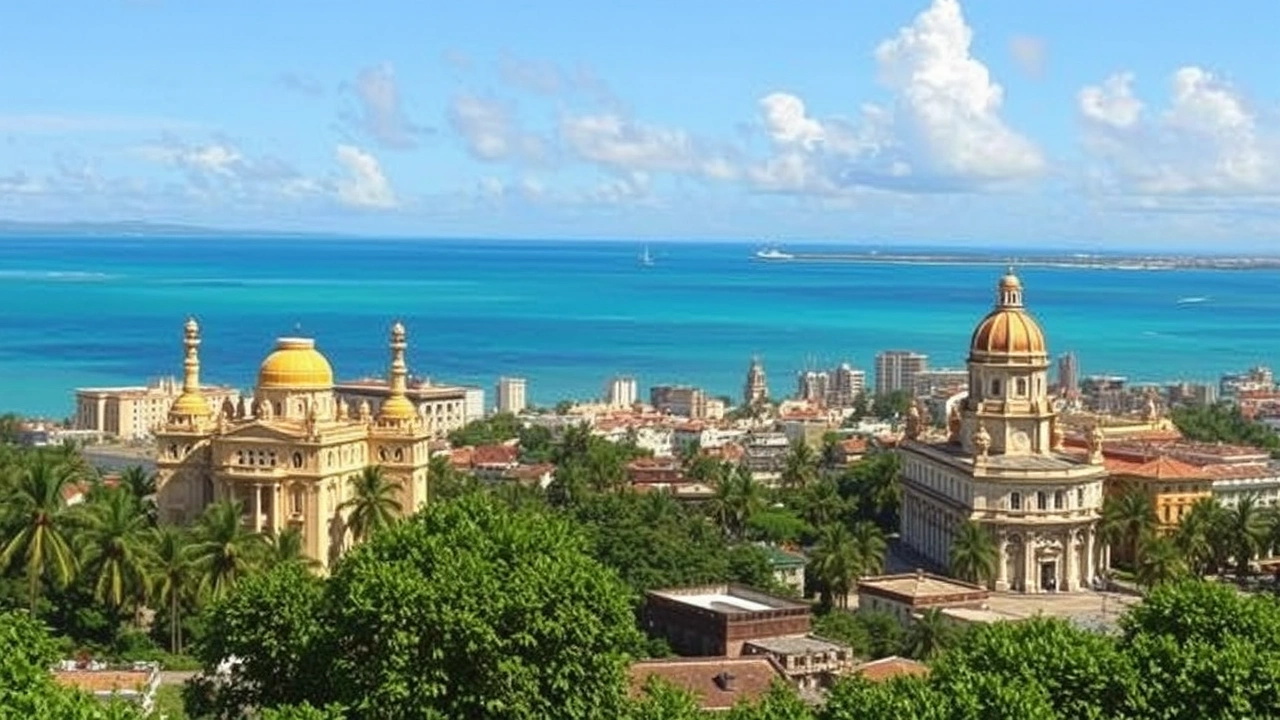
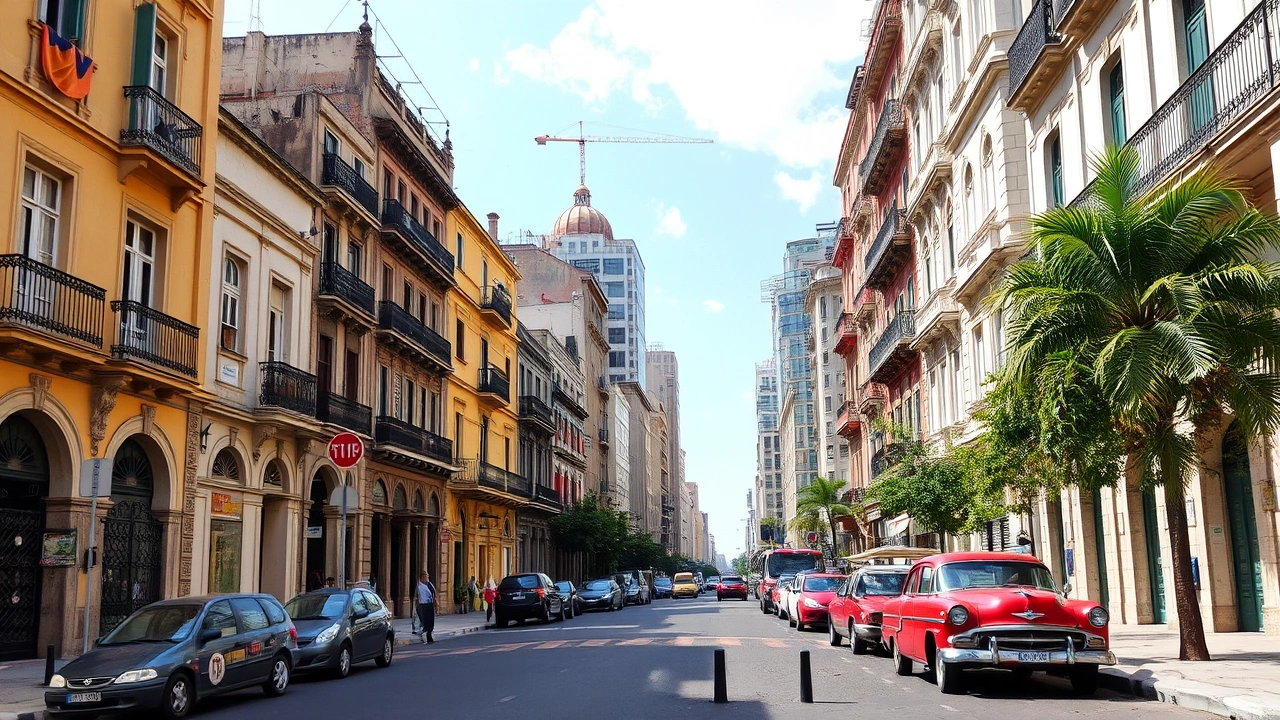
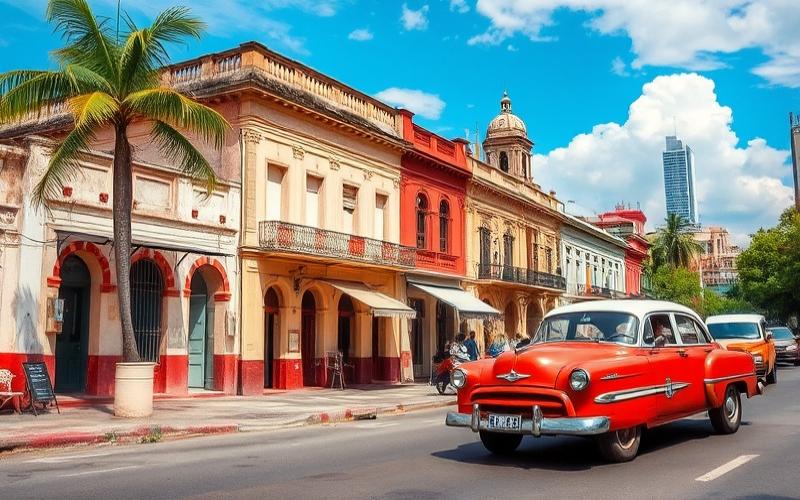
Habana Vieja, the historic center listed as a UNESCO World Heritage site, boasts exceptional architectural heritage. Colonial houses there are negotiated, for the few authorized structured transactions, between $150,000 and over $500,000 depending on area, condition, and location. Many boutique hotel and tourist residence projects are carried out here via joint-ventures or association contracts, under the tight control of the Office of the Historian, which safeguards the urban fabric.
The price of a single-family home in Havana’s upscale residential neighborhoods frequently exceeds this amount in dollars.
Short-term rental market data confirms the capital’s attractiveness for investors focused on hospitality and tourist accommodations.
| Market (Short-Term Rental) | Active Listings | Average Monthly Revenue | Average Daily Rate (ADR) | Occupancy Rate |
|---|---|---|---|---|
| Havana (entire city) | 1,595 | $527.17 | $82.31 | 33.55% |
| Centro Habana | 1,015 | $294.88 | $48.35 | 32.56% |
| Vedado | 40 | $545.79 | $68.44 | 33.59% |
These figures, from a specialized index, show a dynamic but far from hyper-tight market compared to some global metropolises, with occupancy rates around one-third of nights. They also illustrate the strong presence of *casa particular*-type accommodations and small structures, in a regulatory environment officially classified as “lowly restrictive” for seasonal rentals.
Varadero and the Cayos: The Country’s Beachfront Showcase
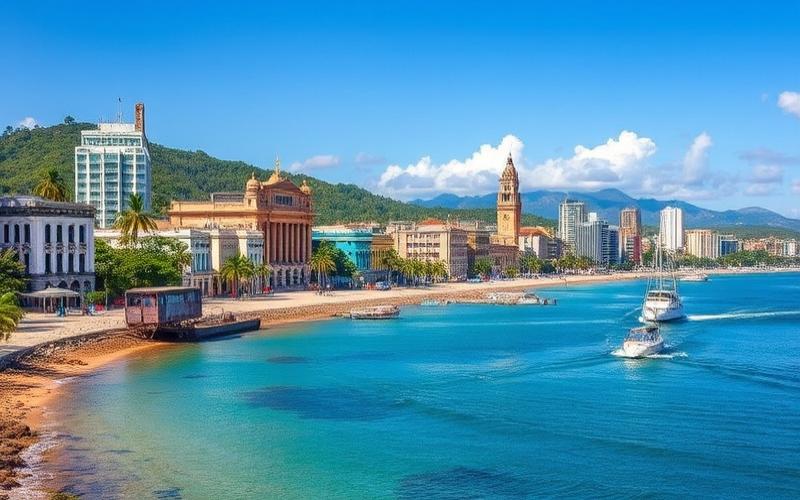
Varadero, on the north coast, embodies the country’s main beach destination, with its kilometers of white sand and all-inclusive resorts. It is also where some of the highest investment tickets in hospitality are concentrated: a 200- to 400-room complex can require a budget of $40 to $80 million. On islands like Cayo Santa María or Cayo Coco, luxury resort projects can reach $50 to $100 million in investment, especially when they include golf, marina, or eco-tourism components.
The short-term rental market there remains smaller in volume than Havana’s but shows high average revenue per property.
| Beach Market | Active Listings | Average Monthly Revenue | ADR | Occupancy |
|---|---|---|---|---|
| Varadero | 38 | $584.09 | $87.36 | 33.71% |
| Guanabo | 114 | $729.93 | $106.94 | 33.94% |
These levels suggest that a quality offering can generate significant revenue, provided one masters the higher operating costs (energy, logistics, personnel) and the requirements of tour operators.
Trinidad, Cienfuegos, Viñales, and Secondary Cities
Beyond the major hubs, several cities and regions offer more targeted opportunities. Trinidad, a UNESCO-listed colonial gem, attracts strong interest for the restoration of old mansions into guesthouses and small charming hotels, with budgets often between $30,000 and $100,000 for a property to renovate, and $2 to $5 million for a 15- to 30-room hotel project.
The maximum amount in millions of dollars for a medium-sized marina project in Cienfuegos.
Viñales, known for its karst landscapes and tobacco, attracts growing demand for eco-responsible accommodations and guesthouses integrated into the rural setting. Other cities like Santiago de Cuba, Holguín, Santa Clara, and Matanzas also appear in short-term rental market rankings, with more modest average monthly revenues but much lower entry costs.
| Rank | Market | Active Listings | Average Monthly Revenue | ADR | Occupancy |
|---|---|---|---|---|---|
| 5 | Trinidad | 611 | $190.49 | $40.60 | 23.04% |
| 6 | Viñales | 476 | $173.43 | $33.80 | 23.14% |
| 7 | Cienfuegos | 296 | $247.84 | $46.15 | 24.98% |
| 10 | Santiago de Cuba | 154 | $124.37 | $30.18 | 27.23% |
For an expatriate, these secondary cities represent more of a testing ground for targeted projects (eco-lodges, small charming structures, thematic offerings) than a mass speculative market.
Potential Profitability: Between High Promises and Cuban Reality
Theoretical indicators can be dizzying. Some international indices indicate for Cuba gross rental yields around 24% in city centers and up to 26.6% in the periphery, as well as price increases of around 38% over five years for residential property. A price-to-income ratio of 51.8 and an affordability index of 0.2 reflect a market where housing is very expensive relative to local wages, translating into massive dependence on tourist demand and foreign currency flows.
Overview of financial performance indicators for foreign investors in different asset types.
Operating margin: 20 to 35%. Internal Rate of Return (IRR): 10 to 18%. Payback horizon: 8 to 12 years.
Operating margin: 25 to 40%. Internal Rate of Return (IRR): 12 to 20%. Payback horizon: 7 to 11 years.
Operating margin: 30 to 45%. Internal Rate of Return (IRR): 14 to 22%. Payback horizon: 6 to 10 years.
But these figures are based on scenarios where several conditions are met: minimal regulatory stability, sustained tourist flows, regular access to imported inputs, no prolonged blockage on profit repatriation. In an economy marked by political volatility, currency shortages, and unpredictability in relations with the United States, prudence dictates incorporating large margins of error.
Risks Not to Underestimate for an Expatriate
Investing in Cuba is not simply being exposed to an emerging market; it is accepting a bundle of specific risks, sometimes difficult to mitigate.
On the political and regulatory front, volatility remains high. Deep reforms have been undertaken since the 2010s, but the legal framework continues to evolve in an incremental and sometimes abrupt manner. A tax advantage granted today can be reduced tomorrow, a visa scheme can be modified, and procedures can become more complex without notice. The economy’s dependence on tourism revenue and external decisions (sanctions, visitor flows, international conditions) adds a layer of uncertainty.
Financial management is complicated by the coexistence of multiple exchange rate regimes, a significant gap between official and informal Cuban peso rates, and recurrent tensions over foreign currency reserves. Even with a theoretical right to transfer dividends, the reality of the central bank’s reserves and the state’s priorities can delay or limit these flows.
The legal security of titles is another sensitive point. Decades of nationalizations, *permutas*, occupations, and successive reforms have left traces in ownership chains. The land registry has been modernized, but some areas remain subject to dispute risks, particularly related to historical claims by owners expropriated after 1959. For American investors, the Helms-Burton Act adds an additional contentious dimension, even though its practical application remains mostly deterrent.
Investors may encounter supply difficulties, aging infrastructure, and a shortage of spare parts. Recruitment must often go through state agencies: the investor pays the agency in foreign currency, but employees are paid in local currency at a much lower level. This mechanism can generate social tensions and complicates implementing performance-based pay policies.
For U.S. citizens, the picture is even more complex. The sanctions framework (Cuban Assets Control Regulations, Trading With the Enemy Act, etc.) largely prohibits buying or leasing real estate, with very limited exceptions, for example for entities holding a specific OFAC license. Any breach can lead to severe prosecution and sanctions in the home country, regardless of the operation’s legality in Cuba.
How Can an Expatriate Position Themselves Realistically?
Faced with this contrasting landscape, the expatriate who still wishes to position themselves in Cuban real estate must adopt a methodical, patient, and highly professional approach.
An individual wanting a seaside apartment for the winter will need to explore specific avenues like purchasing in an authorized condominium, acquiring a property from another foreigner, the property resident status, or long-term leasing. Conversely, a hotel entrepreneur investing several million over 10-15 years will favor structures like a joint-venture with a state partner, an international economic association contract, or setting up in a special development zone like Mariel.
Next, the choice of contacts is decisive. In a market where the state controls almost entirely the keys to entry, building strong relationships with public bodies (MINCEX, MINTUR, Office of the Historian, local authorities) is essential. But it is equally important to be surrounded by independent advisors, both Cuban and international: specialized lawyers, tax experts, hospitality consultants, technical experts. Professional organizations like the National Union of Cuban Jurists (UNJC) can refer you to registered lawyers; specialized firms already assist foreign investors on the ground.
An expatriate investor should prioritize equity financing and plan for prudent scenarios including construction delays, import and maintenance overruns, and delays on dividends. Contractual clauses on profit repatriation, currency conversion, arbitration in case of dispute, and exit conditions (sale, renewal of rights, liquidation) must be drafted with extreme precision from the initial agreement.
Finally, the time horizon is central. Cuba is not suited for quick “flip” strategies. Successful projects are generally those that accept a medium- to long-term commitment, bet on the gradual growth of tourism, integrate the social and environmental dimension demanded by the authorities, and adopt a partnership logic with the state rather than confrontation.
Conclusion: An Insiders’ Market, Not an Eldorado for All Expatriates
Investing in Cuban real estate as an expatriate means entering a world of exception. The country combines real potential – geographic location, cultural wealth, tourist appeal, scarcity of certain locations – with a set of political, legal, monetary, and operational constraints unmatched in most destinations favored by international investors.
Real estate investment in Cuba is not suitable for liquid and secure placements. It specifically targets entrepreneurs with significant capital, a high-risk tolerance, a long-term horizon, and a readiness to navigate a complex administration. Opportunities lie mainly in the tourism, boutique hospitality, marina, and mixed-use real estate development sectors.
In all cases, one rule is paramount: never apply to Cuba the reflexes acquired in other markets. Here, every step – from choosing the legal vehicle to the smallest rental contract, from obtaining a business visa to submitting the most minor renovation plan – must be considered in light of the Cuban system, its own logic, and its delays. The potential reward exists, but it is only accessible at the price of rigorous preparation, strong professional support, and constant vigilance in the face of developments in a country still in full transition.
Disclaimer: The information provided on this website is for informational purposes only and does not constitute financial, legal, or professional advice. We encourage you to consult qualified experts before making any investment, real estate, or expatriation decisions. Although we strive to maintain up-to-date and accurate information, we do not guarantee the completeness, accuracy, or timeliness of the proposed content. As investment and expatriation involve risks, we disclaim any liability for potential losses or damages arising from the use of this site. Your use of this site confirms your acceptance of these terms and your understanding of the associated risks.

Cyril Jarnias is an independent expert in international wealth management with over 20 years of experience. As an expatriate himself, he is dedicated to helping individuals and business leaders build, protect, and pass on their wealth with complete peace of mind.
On his website, cyriljarnias.com, he shares his expertise on international real estate, offshore company formation, and expatriation.
Thanks to his expertise, he offers sound advice to optimize his clients' wealth management. Cyril Jarnias is also recognized for his appearances in many prestigious media outlets such as BFM Business, les Français de l’étranger, Le Figaro, Les Echos, and Mieux vivre votre argent, where he shares his knowledge and know-how in wealth management.