 Published on and written by Cyril Jarnias
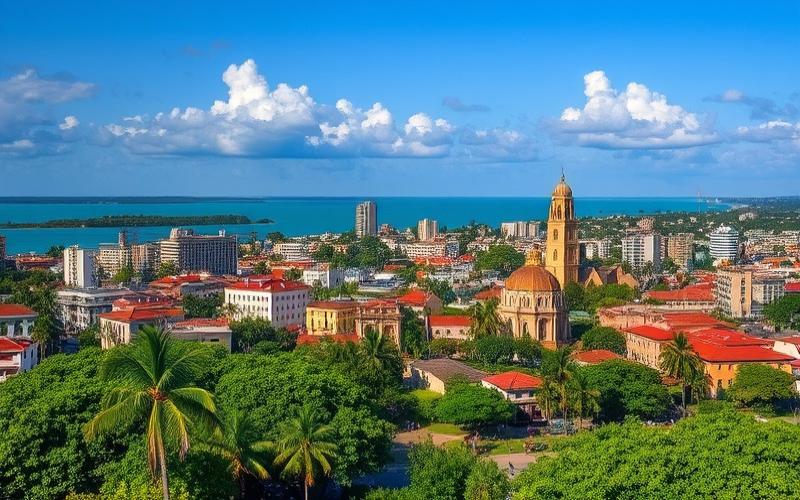
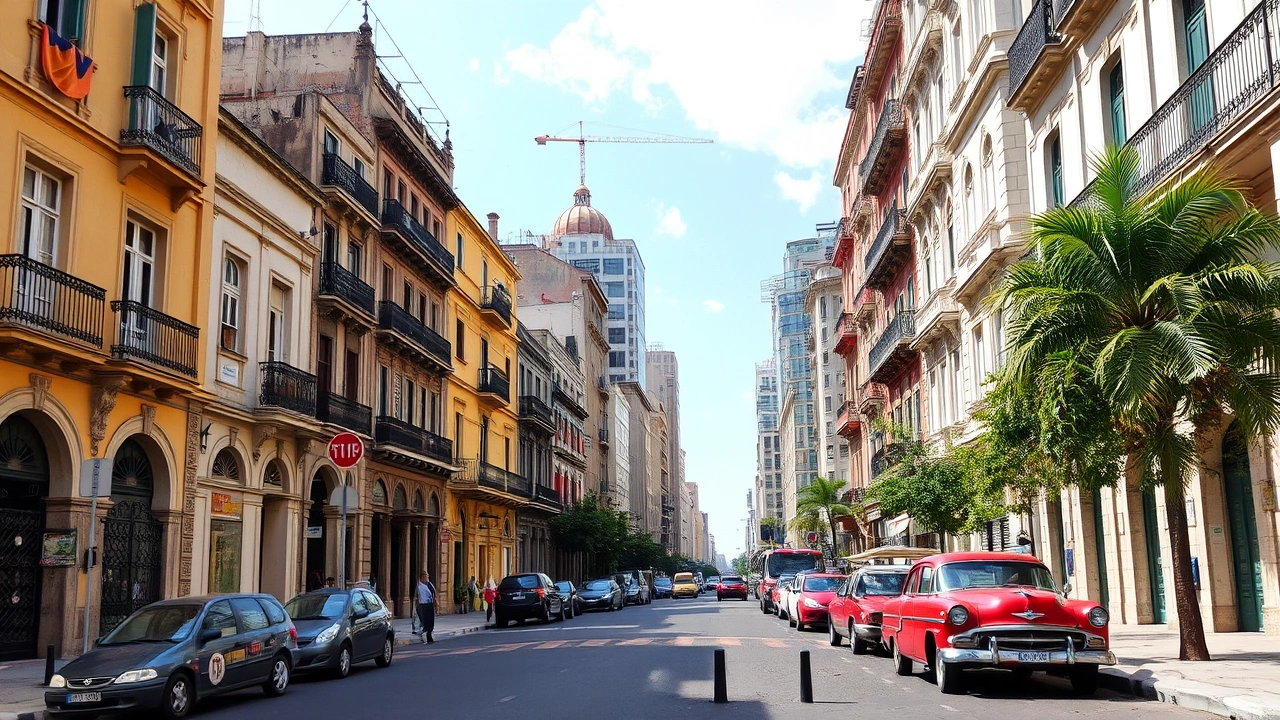
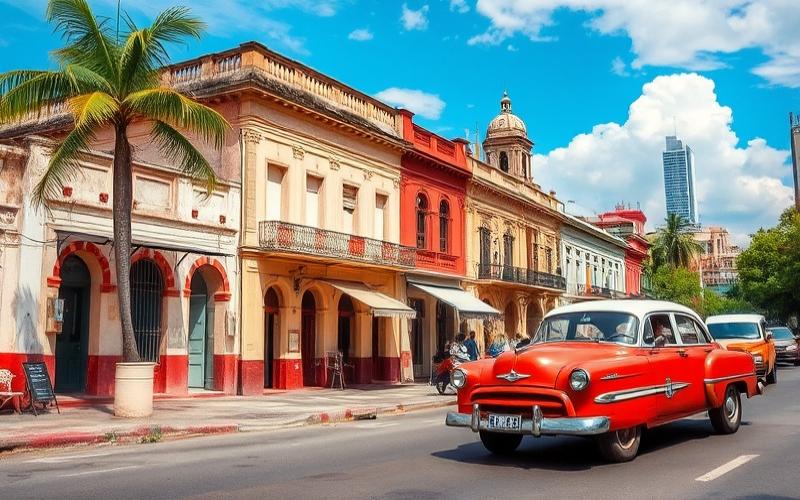
Travelers arriving in Cuba quickly realize that the island lives and breathes to the rhythm of sport. In the streets of Havana, on the beaches of Varadero, in schools as well as in old stadiums with peeling paint, people run, hit balls, jump, swim, and box. Sport is everywhere because it is simultaneously a leisure activity, a political tool, a social elevator, and a source of national pride. For a visitor, this means one thing above all: opportunities to participate are endless.
Cuba offers a dual sports offering: elite sports with international renown (baseball, boxing, volleyball, athletics) and activities accessible to travelers (water sports, running, diving, beach activities in Varadero), including unique experiences like *juego de maní* or boxing training camps in Havana.
An Island That Made Sport a Right
In Cuba, sport is not just about entertainment. Since the Revolution, the state has presented it as a fundamental right. The National Institute of Sports, Physical Education, and Recreation (INDER), created in 1961, oversees all disciplines, from primary schools to national teams. The 1976 Constitution even explicitly enshrines the right to physical education, sport, and recreation.
In Cuba, national sports policy dictates that five disciplines (athletics, basketball, baseball, gymnastics, and volleyball) are mandatory in secondary school. Consequently, the majority of Cubans are familiar with several sports from childhood, and the average level, including in combat and team sports, is surprisingly high. For a traveler, training or playing informally with locals thus becomes an experience that is simultaneously athletic, cultural, and social.
The country also bet on a highly structured talent identification and training system: the EIDE schools (Escuelas de Iniciación Deportiva) identify talented young people and guide them toward specialized institutions. On the Isle of Youth, south of the archipelago, more than 27 such schools each host nearly 600 students. This champion-producing machine largely explains why a small nation has accumulated over 200 Olympic medals, particularly in boxing, athletics, wrestling, and volleyball.
The Cuban sports ecosystem is evident in its omnipresent infrastructure (stadiums, gyms, swimming pools) and spontaneous popular practice. You’ll see children playing improvised baseball, pick-up basketball games on worn-out courts, runners along the Malecón at dawn, and families enjoying water activities like kayaking or paddle boating at the beach.
Varadero, Showcase of Cuban Water Sports
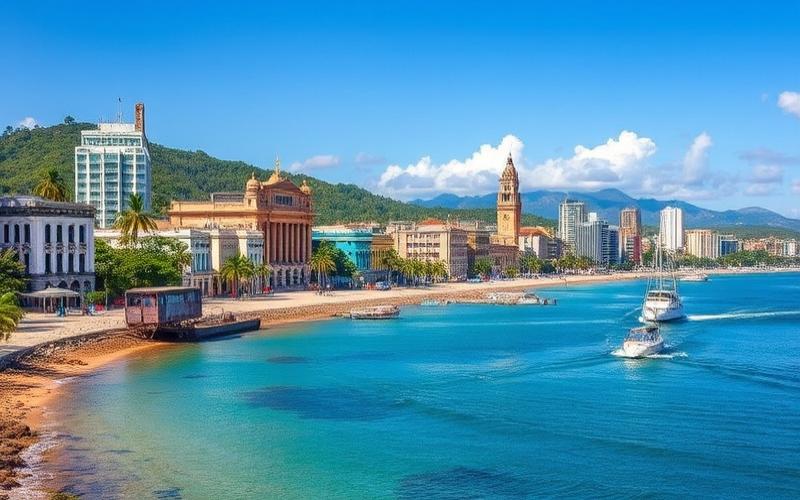
To understand what Cuba offers in terms of sports to practice, one need only look toward Varadero. Located on the Hicacos peninsula, this resort town boasts 20 kilometers of white sand beach bordered by turquoise waters, with over 50 all-inclusive resorts. It’s one of the largest beach complexes in the Caribbean and a veritable factory of sports activities.
Beach and Water Sports in Varadero
At most hotels, non-motorized water sports – kayaking, stand-up paddleboarding, windsurfing, small catamarans like Hobie Cats, paddle boats, bodyboarding – are included in the package. Motorized activities – jet-skiing, water skiing, parasailing – are usually extra but easy to book from the beach or a marina.
Varadero offers exceptional sites for diving and snorkeling, like Coral Beach, Saturno Cave, and the Bacunayagua reef. The Cayo Piedra underwater park, near the Marina Gaviota, provides a spectacular playground with tunnels, cavities, coral reefs, and ship and airplane wrecks.
To provide a synthetic overview of the aquatic activities offered in Varadero and other regions of Cuba, the following table makes it easy to find your way.
| Aquatic / Water Activity | Where to Practice It Mainly | Particularities for Travelers |
|---|---|---|
| Scuba Diving | Varadero (Coral Beach, Cueva Saturno, Bacunayagua), Bay of Pigs, Trinidad, Guajimico | Many clubs, wall diving sites, wrecks, introductory courses available |
| Snorkeling | Playa Coral near Varadero, Cayo Blanco | Over 300 fish species at Playa Coral, accessible from shore or by excursion |
| Catamaran (Seafari, cruises) | From Marina Chapelin and Marina Gaviota to Cayo Blanco | Day trips with open bar, meals (often lobster, fish, shrimp), Cuban music, snorkeling stop |
| Kayak / Stand Up Paddle | Varadero beaches, Cayo Coco, Guardalavaca | Non-motorized, often included in “all inclusive” packages |
| Windsurfing / Small Boat Sailing | Varadero, Cayo Coco, Guardalavaca | Steady wind, ideal for beginners |
| Kitesurfing | Varadero (local schools), some cayos | Lessons possible through specialized schools |
| Jet-ski / Water Skiing | Varadero, major resorts | Paid activities, to be booked on-site |
| Glass-bottom Boat | Varadero (Varasub), semi-submersible Nautilus | Trips of about 90 minutes with included drinks, viewing the seabed without getting wet |
| Sport Fishing (offshore & coastal) | North coast of Varadero, Zapata Peninsula | Marlin, tuna, sailfish offshore; snappers, groupers, barracudas near shore |
These activities are best enjoyed during the dry season, from November to April, when the sea is generally calmer and the weather more favorable for boat trips.
Beyond the Beach: Exploration and Nature
Varadero isn’t just about beach sports. A few kilometers away, Saturno Cave, a cenote with cool waters (around 68–72 °F) surrounded by stalactites, allows for swimming and diving in a spectacular mineral setting. Other caves, like Cueva de Ambrosio and Cueva de Musulmanes in the Varahicacos ecological reserve, combine hiking, wildlife observation, cave paintings, and aboriginal fossils.
For a gentle break, visit Parque Josone in Varadero, a green oasis with gardens, a lake, and restaurants, where you can rent small boats. For more adventure, opt for a jeep excursion to the south, towards the Yumurí Valley or the Zapata Peninsula. These outings combine off-road driving, boat rides through mangroves, visits to crocodile farms, and sometimes swimming in cenotes.
For those wanting to mix tourism and animal interaction, the Varadero Delfinario or the open-sea dolphinarium at Rancho Cangrejo offer structured encounters with dolphins. These activities are very popular, though they also spark growing ethical debates.
Finally, Varadero’s nightlife takes on a sporting twist of its own: dancing until dawn in clubs like the Tropicana, Casa de la Musica, or Mango’s Disco is a physical activity in its own right, extending into the night the energy spent in the water during the day.
Baseball: Playing the National Sport Alongside Cubans
You can’t talk about popular sports to practice in Cuba without starting with baseball. It’s the official national sport, and it’s estimated that about 62% of the population plays it, even if only occasionally. Introduced in the 1860s by American sailors and Cuban students returning from the United States, it quickly took on a political dimension. Banned by Spanish colonial authorities in 1869, it became a symbol of freedom and equality, in opposition to bullfighting, perceived as a spectacle of the occupier.
A Unique League System
After the abolition of the pre-revolution professional league in 1961, the Serie Nacional de Béisbol (SNB) was established as the main internal competition. It now has 16 teams, each associated with a province or region (plus Havana). The regular season currently lasts about 75 games from March to July, followed by playoffs.
Number of World Cup titles won by the Cuban national baseball team.
A more recent elite league, the Liga Elite de Béisbol, brings together the best teams from the Serie Nacional for a shorter championship, the winner of which represents Cuba in the Caribbean Series.
Where and How to Play Baseball as a Traveler
For a tourist, there are several ways to enter the world of Cuban baseball:
To experience Cuban baseball, you can attend a game at a major stadium like the Estadio Latinoamericano in Havana, the Guillermón Moncada in Santiago, or the Victoria de Girón in Matanzas, where the atmosphere is electric and festive. Another option is to join an informal “pickup game” in a neighborhood, where kids improvise games with makeshift equipment; often, just offering to play is enough to be included. Finally, specialized tours organized by foreign travel companies offer stadium visits, meetings with coaches or former players, and sometimes supervised training sessions.
Since baseball is the king sport, discussing with Cubans their local teams, historic rivalries (for example between Industriales and Santiago de Cuba), and iconic players (from Martín Dihigo to José Abreu) is an excellent ice-breaker. In terms of practice, even a beginner is often warmly welcomed: the pleasure of the game trumps skill level.
Boxing: Training in a Cradle of Champions
If baseball is the most practiced sport, boxing is arguably the most prestigious in the eyes of the world. Cuba has won 37 Olympic titles (73 medals total) in boxing, placing it just behind the United States in Olympic history. Two boxers, Teófilo Stevenson and Félix Savón, each won three Olympic titles, a unique feat.
A Structured and Omnipresent Boxing School
Boxing was introduced in the late 19th century and structured as early as 1910 with the creation of the first club in Havana. After the Revolution, the regime banned professionalism but massively invested in amateurism. Boxing schools were opened across the country, integrated into the school system. Training follows a model inspired by the Soviet school, with a standardized, progressive program.
Number of boxers among Cuban athletes, forming the core of a system renowned for its technical and tactical style.
Rafael Trejo Boxing Gym, a Cult Address
For those wishing to discover this culture from the inside, the Rafael Trejo Gym in Old Havana has become a sort of pilgrimage site. Nestled between decrepit buildings in the working-class San Isidro neighborhood, it is an open courtyard with an old ring and rudimentary facilities. Yet it is one of the oldest and most famous clubs in Cuba, having trained many champions.
Recently renovated, this gym serves as an entry point for foreign boxers. Renowned trainers, like former five-time national champion Nardo Mestre Flores, coach both young Cuban prospects and visitors. Organizations offer complete boxing camps including accommodation in *casas particulares*, transfers, daily training, and the possibility of sparring with local boxers.
Often, sessions for foreigners take place in the morning on the Malecón or on beaches near Havana, like Santa Maria del Mar. The emphasis is on technical work, footwork, repetition of simple movements, sometimes through evasion games closer to “tag” than frontal combat. The experience is physically demanding but accessible even to amateur practitioners, provided they are motivated.
To get an idea of the resources deployed in boxing compared to other sports, the following table summarizes some key figures mentioned in reports.
| Indicator | Boxing in Cuba (Order of Magnitude) | Comment |
|---|---|---|
| Number of boxers | Approx. 19,000 | Out of 99,000 recorded athletes |
| Boxing coaches | Approx. 494 | 7-year training for coaches |
| Facilities | Approx. 185 gyms and rings | Spread across the entire territory |
| Olympic medals | 37 gold / 73 total | 2 triple Olympic champion boxers |
Besides Rafael Trejo, other venues like the Kid Chocolate Sports Hall, facing the Capitol, or the Ponce Carrasco Gymnasium in Centro Habana, give a glimpse of boxing’s central role in daily life. Even without training, attending a session, seeing 12-year-olds work on their footwork with near-military discipline is in itself a memorable activity.
Volleyball: From High-Level to Improvised Matches on the Sand
Volleyball ranks second or third among the most popular team sports, behind baseball and often tied with basketball. Introduced in the early 20th century, it benefited from the same system of sports schools as other priority disciplines.
National Teams with an Impressive Track Record
The women’s national team left its mark on world volleyball history between the late 1970s and early 2000s. Nicknamed the “Spectacular Caribbeans”, the Cuban women ended the domination of the USSR and Japan by winning the 1978 World Championship, then secured three consecutive Olympic titles (1992, 1996, 2000), along with several World Cups, Grand Prix, and Grand Champions Cups.
The table provided summarizes the main achievements of the national volleyball teams, allowing an assessment of the sport’s cultural importance in Cuba.
| Team | Major Competitions Won | Peak Period |
|---|---|---|
| Women’s team | 3 Olympic golds, 3 World titles, several World Cups and Grand Prix | 1978–2000 |
| Men’s team | 1 Olympic bronze, medals at World Championships (silver, bronze), titles in World League, World Cup, NORCECA | 1970–2000, then recent resurgence |
This track record has repercussions even on the beach. On the shores of Varadero, Cayo Coco, or Guardalavaca, beach volleyball nets are omnipresent. Resorts frequently organize tournaments open to vacationers, with activity leaders mixing Cubans and tourists on the same team. The level varies enormously, but the technical fundamentals are often solid among locals, who went through the school system.
Cuba is also present in high-level beach volleyball competitions. Men’s pairs like Noslen Díaz – Jorge Luis Alayo have recently won gold and silver medals on international circuits, confirming that volleyball culture thrives on all surfaces.
Basketball: From Olympic Bronze to Neighborhood Courts
Basketball holds a special place in the Cuban sports landscape. Officially, it’s slightly less popular than baseball and boxing, but in cities, especially among youth, it clearly rivals these disciplines. It’s part of the mandatory high school curriculum, and the Cuban Basketball Federation runs a national league (Liga Superior de Baloncesto) for men and women.
The year the Puerto Rican men’s basketball team won its only Olympic medal, a bronze in Munich.
For the traveler, the most direct way to touch this culture is to go to a public court. In Havana, the court at 23 y B, in the Vedado neighborhood, brings together players of all levels every day. The concrete is worn, the backboards sometimes patched up, but the intensity of the games more than makes up for it. Near the University of Havana, an old gymnasium with tired wooden floorboards also hosts fierce games.
Most games are played 3-on-3 or 5-on-5, to short points (often up to 7, with baskets worth 1 or 2 points). Debates – sometimes very animated – about fouls or out-of-bounds calls are part of the spectacle and almost a form of street theater. Players don’t always have recent equipment: many wear second-hand NBA jerseys, sometimes very old, inherited from family or given by tourists.
A foreigner may be invited into the rotation if they wait courtside and offer their services. The language barrier fades quickly: a good screen, a tough rebound, or a successful shot speaks for itself.
Athletics and Running: Discovering Cities on Foot
Athletics is one of the priority sports in the Cuban system, and the country has produced legends like Javier Sotomayor, holder of the world record in the high jump. In daily life, this culture manifests in two ways: elite competition and running as a popular practice.
Havana hosts the Marabana marathon, which attracts local and foreign runners. The Malecón promenade, eight kilometers long along the bay, is one of the few clear routes for long-distance running in the city, whose streets are often narrow and crowded. Running at dawn on this seawall, passing fishermen, couples, and groups of young people, is a striking experience for runners.
Specialized platforms even list running routes across the island, with descriptions of the terrain, difficulty, estimated time, and elevation change. You’ll find urban routes in Havana, but also more natural loops in national parks or valleys like Viñales.
For a visitor wanting to integrate running into their stay, some precautions are necessary: tropical heat, hydration, attention to traffic in narrow streets and sometimes degraded surfaces. But once these constraints are accepted, running becomes a privileged way to explore the city in immersion.
Combat Sports and Martial Arts: From Wrestling to *Juego de Maní*
Besides boxing, Cuba also excels in judo, Greco-Roman and freestyle wrestling, and, more recently, in mixed martial arts inspired by Olympic disciplines.
Wrestling, Judo, Judokickbox
Cuban Greco-Roman wrestling is considered one of the strongest in the world, at least in the Western Hemisphere. The national team racks up team titles at continental and regional championships, and athletes like Mijaín López have won multiple Olympic titles.
Judo, a state sport in Cuba, inspired the creation of Judokickbox (JKB), considered the first form of Cuban MMA. Founded by two coaches, it combines Cuban judo and kickboxing following a philosophy of “chain reaction” integrating strikes, blocks, throws, and submissions. Annual national championships bring together hundreds of clubs.
Even if these events remain geared toward the local public, a foreign practitioner can sometimes attend competitions or, through local contacts, arrange an introductory session with coaches involved in the movement.
Juego de Maní, a Little-Known Afro-Cuban Martial Art
At the crossroads of dance, combat, and ritual, juego de maní – or simply maní – is one of the island’s most fascinating martial expressions. Born in African slave communities, probably linked to Congolese traditions, it is practiced in a circle to the beat of percussion from the Palo Monte religion.
Originally, mani combat was real, sometimes deadly, and slave masters would bet on the fighters. Today, the practice has been folklorized and survives mainly in artistic ensembles like the Conjunto Folklórico Nacional or the Raíces Profundas troupe. Current demonstrations mix songs, warrior dance, and codified combat sequences including low kicks, sweeps, punches, throws, rolls, and sometimes the use of weapons like sticks or machetes.
For a traveler, it would be unrealistic to claim to “learn” maní in a few days, especially since authentic masters are rare and protective of their knowledge. However, attending a performance or an introductory workshop organized by a folkloric troupe offers valuable insight into how sport, dance, and spirituality intertwine in Afro-Cuban culture.
Chess, Salsa, Trekking: Other Forms of Practice
If we broaden the definition of sport to include intellectual activities or non-competitive physical exercises, Cuba holds other surprises.
Chess, for example, is part of the school curriculum from primary school. The island gave the world José Raúl Capablanca, the third world champion in history, which explains the game’s enduring popularity. You can easily find players in parks, around folding tables, ready to challenge a stranger. For an enthusiast, playing a few games outdoors is an experience as Cuban as a baseball game.
Although salsa is not an official sport, its regular practice in daily life makes it a true physical exercise. Many schools and clubs offer lessons, often complemented by night outings. For a tourist, learning a few salsa steps allows immersion in another aspect of local culture: the art of partying, considered a national activity.
Finally, hiking (trekking) is mentioned among the popular activities. The country has several national parks, like Alejandro de Humboldt National Park or Topes de Collantes, as well as reserves like the Ciénaga de Zapata. Guided excursions combine walking, wildlife observation (birds, reptiles), swimming in rivers or natural pools. These hikes can be physically demanding, especially in intense heat, and are a good alternative for those who prefer nature to sports arenas.
Varadero and Beyond: How to Organize Your Sports Stay
Whether you’re staying at a Varadero resort, a casa particular in Havana, or a village inland, the question is always the same: how to plug into the local sports ecosystem?
A few principles emerge from the available information:
To practice a sports activity in Cuba, several approaches are recommended. Take advantage of the infrastructure included in all-inclusive hotels, like kayaking or paddleboarding, often at no extra cost. Don’t hesitate to join games on public courts (basketball, soccer) where Cubans are generally welcoming. For more structured disciplines (boxing, diving, baseball), opt for specialized tours through well-established local agencies or clubs. Finally, always respect the local context: show humility in the face of sometimes outdated equipment, a very high level of athletic commitment, and conditions (heat, schedules) that require flexibility.
One can also approach the Cuban sports offering by broad categories, to better choose according to one’s desires. The table below proposes a simplified typology of sports to practice as a traveler.
| Type of Practice | Examples of Sports in Cuba | Traveler Profile Concerned |
|---|---|---|
| Beach & Sea Sports | Kayaking, paddleboarding, diving, snorkeling, beach volleyball, windsurfing, kitesurfing, sport fishing | Beach vacationers, beginners to intermediate |
| Street Team Sports | Baseball, basketball, soccer, volleyball on urban courts | Curious travelers, ready to engage with locals |
| Combat Sports | Boxing, judo, wrestling, judokickbox (observation or guided initiation) | Motivated practitioners, martial arts enthusiasts |
| Endurance & Running | Running on the Malecón, marathons (Marabana), mountain hiking | Regular runners and hikers |
| Culture & Intellect | Chess in the park, juego de maní (observed), salsa | Travelers interested in culture and sport in the broad sense |
A Deeply Political Sport… But Intensely Lived
Behind this profusion of activities lies an essential fact: in Cuba, sport is intimately linked to the political project. As early as 1959, the revolutionary leaders bet on sports victories to demonstrate the superiority of their system. INDER was designed as a machine to train champions, but also as a tool for social cohesion: all children, regardless of background, go through the same sports crucible.
Cuba invests about 120 million dollars annually in sport, with priority given to Olympic disciplines.
For the visitor, this background is felt in the way Cubans talk about sport. An Olympic medal is not just an individual’s achievement but proof – at least in official discourse – of the efficacy of a collective system. Elite athletes are often state-employed, seen as workers serving the nation, although many now seek opportunities abroad, sometimes at the price of a painful break with their country.
On the ground, in improvised places like a boxing gym or around a baseball field, it’s the laughter, the passion for the game, and the desire to push oneself that dominate. The discourse on “the people’s right to sport” takes on its full meaning when you observe children training for hours on a wobbly basketball hoop or teenagers tirelessly repeating dance steps or boxing combinations.
Conclusion: Practicing Sport to Understand Cuba from the Inside
Exploring Cuba through the lens of sport means discovering an essential facet of the island. Whether you spend your days in Varadero between snorkeling and catamaran rides, sign up for a boxing camp in Havana, improvise a basketball game in Vedado, or run at dawn on the Malecón, each sports activity becomes a pretext for encounters.
In a country where baseball is a quasi-religion, where boxing has produced some of the greatest champions in history, where women’s volleyball ruled the world for a decade, the simple act of sharing a ball, a ring, or a stretch of track with Cubans opens doors never crossed by those confined to purely tourist circuits.
Cuban Sports Context
Therefore, the popular sports to practice in Cuba are not just a list of disciplines. They form a common language, a way to start a conversation with a complex society, proud of its sporting successes and attached to the idea that everyone, from the most modest schoolchild to the Olympic champion, has something to experience and learn on a playing field.
For the traveler, accepting this invitation to move, to sweat, to play with Cubans, is perhaps the best way to understand what the expression “sport for all” truly means here.
Disclaimer: The information provided on this website is for informational purposes only and does not constitute financial, legal, or professional advice. We encourage you to consult qualified experts before making any investment, real estate, or expatriation decisions. Although we strive to maintain up-to-date and accurate information, we do not guarantee the completeness, accuracy, or timeliness of the proposed content. As investment and expatriation involve risks, we disclaim any liability for potential losses or damages arising from the use of this site. Your use of this site confirms your acceptance of these terms and your understanding of the associated risks.

Cyril Jarnias is an independent expert in international wealth management with over 20 years of experience. As an expatriate himself, he is dedicated to helping individuals and business leaders build, protect, and pass on their wealth with complete peace of mind.
On his website, cyriljarnias.com, he shares his expertise on international real estate, offshore company formation, and expatriation.
Thanks to his expertise, he offers sound advice to optimize his clients' wealth management. Cyril Jarnias is also recognized for his appearances in many prestigious media outlets such as BFM Business, les Français de l’étranger, Le Figaro, Les Echos, and Mieux vivre votre argent, where he shares his knowledge and know-how in wealth management.