 Published on and written by Cyril Jarnias
Traveling in Cuba means accepting that the journey itself is part of the adventure. The archipelago has roads, buses, trains, taxis, ferries… but the system is defined by fuel shortages, aging infrastructure, and an organization far from European standards. With a little planning, practical sense, and a few well-chosen digital tools, getting around Cuba by public transport is still entirely possible, and often fascinating.
This guide details the use of buses, trains, shared taxis, and other public transport in Cuba. It also covers the specific impact of the monetary situation and internet access on traveler mobility.
Understanding the Context of Transport in Cuba
The Cuban transport system has been shaped by decades of embargo, lack of investment, and chronic fuel shortages. The result: infrastructure exists, but it operates at a slow pace.
Roads connect the entire country, with a network of over 60,000 km, nearly half of which is unpaved. The main highway, the Autopista Nacional, connects Havana to the center of the island, complemented by older routes like the Carretera Central. On paper, it all holds together. In practice, potholes, lack of nighttime lighting, animals on the road, and vehicles decades old significantly increase travel times.
In Cuba, low private car ownership makes the population massively dependent on a diverse public transport system (buses, trucks, taxis, ferries, etc.). Tourists use this same system, designed primarily for residents, which can create incompatibilities like services or ticket sales reserved for Cubans.
Fuel, when it’s scarce, disrupts the entire chain: less frequent buses, taxis at a standstill, interminable lines at gas stations. In this context, one rule: plan ahead, book as early as possible, keep backup plans B, C, and D, and never schedule a tight connection.
Internet, Apps, and Information: Traveling Almost Offline
Another Cuban particularity: digital access. Wifi is neither widespread nor stable, and some popular apps or sites are blocked. Expensive or non-functional foreign roaming, erratic speeds, power cuts… You cannot rely on your smartphone like in Barcelona or Lisbon.
Before leaving, it is vital to download and set up all useful tools for offline mode, because once there, you might not be able to install much.
Offline Mapping Apps
Two solutions stand out for planning your transport journeys:
The Maps.me app allows you to download the detailed map of Cuba (about 25 MB) for completely offline use. It offers walking, driving, or cycling routes and indicates many points of interest like Viazul bus stations, shared taxi terminals, bus stops, restaurants, and casas particulares. Its widespread use by Cubans themselves makes discussing a journey easier by showing the map to the driver.
– Google Maps in offline mode Works in Cuba provided you download the necessary areas in advance (Havana, Varadero, Trinidad, Santiago, etc.). Once the area is saved, GPS locates you even without a connection, and you can consult streets and places. Your saved place lists remain accessible, as do saved routes.
Other more specialized apps on Cuba, like Cuba Offline Map and Travel Guide or Map of Cuba offline, usefully complement these two giants, offering address search, categories (stations, hotels, airports) and location sharing, all based on OpenStreetMap data.
Communication and Organization Tools
The language and low penetration of English outside tourist areas make a minimum of tools useful:
By downloading the Spanish language pack beforehand, the Google Translate app works without an internet connection. It allows translation of short texts and pronunciation of useful phrases, for example to negotiate a taxi price or ask for a bus stop. Its instant translation via camera feature is also available and very effective for deciphering signs, menus, or any other written notice in real time.
– WhatsApp remains the number one tool for contacting hosts, drivers, and agencies. Problem: it requires a connection. Consider buying an eSIM (e.g., via GigSky) or a local tourist SIM if you need to be reachable for transfers or taxis.
– Telegram can be used to follow information from the airport operator ECASA on domestic flights, handy if you combine plane and bus.
– Habana Trans is a free local app that shows routes and schedules of city buses in Havana. A real survival tool if you plan to use Havana’s guaguas (local buses).
A final tip: save all critical info offline (screenshots, PDFs in Pocket or equivalent): Viazul schedules, your accommodation address, bus terminal map, etc.
Currency, Cards, and Transport Payment
The operation of public transport in Cuba is closely linked to the monetary system. Since currency unification, the Cuban peso (CUP) is the only official currency, but in reality, transport services juggle CUP, euros, and dollars.
Local buses, ferries, and national trains are paid in CUP. Tourist-oriented companies (Viazul, Transtur, private transfers, modern taxis) prefer euros or dollars, or payments by card on Cuban terminals.
Several points are crucial for getting around:
American bank cards do not work. Non-American Visa/MasterCard cards are partially accepted (e.g., Viazul bookings). Local buses and shared taxis are paid only in cash (CUP or foreign currency at the informal rate). Prioritize exchange on the informal market, as official rates are less favorable and directly influence the cost of your journeys in Cuban pesos (CUP).
For daily transport (city buses, guaguas, ferries, bicitaxis, camiones), it is prudent to keep an assortment of low-denomination CUP bills. For long trips (Viazul, intercity colectivos, private taxis, airport transfers), having clean, small-denomination euro or dollar bills greatly facilitates negotiations.
The elTOQUE app allows you to track informal market rates, which helps you understand the real cost, in local currency, of a bus ticket or a taxi.
Long-Distance Buses: Viazul and Others
To cross the country by public transport, the bus remains the basic option. Cuba has several networks, but they are not all open to foreigners.
Viazul: The Interprovincial Tourist Network
Viazul is the main backbone of long-distance travel for visitors. It is a state company operating a fleet of modern, air-conditioned coaches, most often Chinese Yutong brand. Buses have toilets, luggage space, and two drivers who take turns at the wheel.
Viazul connects practically all major cities and tourist destinations: Havana, Varadero, Viñales, Trinidad, Cienfuegos, Santa Clara, Camagüey, Holguín, Santiago de Cuba, Baracoa (line sometimes suspended), and also Havana and Varadero airports.
An overview of some routes and typical fares (in euros, indicative):
| Viazul Route (examples) | Indicative Price (one-way) | Approximate Duration |
|---|---|---|
| Havana – Varadero | 10–15 € | 3 h |
| Havana – Viñales | 16 € | 3 h 30 |
| Havana – Trinidad | 24–26 € | 7 h |
| Havana – Cienfuegos | 20 € | 5 h 30 |
| Havana – Santa Clara | 22 € | 7 h 30 |
| Havana – Santiago de Cuba | 57–60 € | 16–20 h |
| Santiago de Cuba – Baracoa | 15 € | 5–6 h |
| José Martí Airport – Havana center | 10 € | 45–60 min |
Prices can vary by season and fare updates, but remain, by European standards, very affordable for sometimes huge distances.
However, operation has specificities:
Reserving Viazul bus tickets in Cuba is mandatory and must be done several days in advance via their official website, often only accessible with a VPN from the island. Payment is exclusively by international bank card (in euros). After online booking, a physical check-in at the station is required at least 1 hour before departure to get the boarding coupon. Note that seats are not assigned: boarding is in a line and seats are taken in order of arrival.
The luggage policy is rather generous:
| Luggage Type | Included in Ticket | Max Weight | Surcharge |
|---|---|---|---|
| Checked Baggage | 2 pieces | 23 kg each | Yes, if extra piece or overweight |
| Bike / Bulky Item | Possible, by reservation or sent as unaccompanied baggage | Variable | Around 15 € per bike (indicative) |
| Carry-on Baggage | 1 piece | – | Free |
On board, buses stop about every two hours at roadside cafes or small stations. Each break lasts 20 to 30 minutes, sometimes 45 minutes at meal times. Toilets at these stops are paid (have a few pesos or small foreign coins ready).
Traveler reviews often mention some inconveniences: freezing air conditioning, worn seats, toilet odors, bumpy journeys, occasional breakdowns. Still, Viazul remains the most structured and straightforward solution for crossing Cuba by public transport.
AstroBus, Transtur, Transgaviota and Others
Alongside Viazul, several other networks exist.
AstroBus (also called Omnibus Nacional) is the mainstream interprovincial network, also operated with modern coaches, but sold in CUP and reserved primarily for Cubans. In practice, foreigners are often refused tickets and directed to Viazul. A few seats may theoretically be accessible, but procedures involve apps or offices intended for the local population.
Transtur and Transgaviota are Cuban tourist companies that operate coaches to serve hotels, beach tourism, and some intercity transfers.
– shuttles between Havana Airport and major hotel areas,
– routes like Varadero – Havana,
– organized tours.
These tickets are usually booked through state agencies like Cubanacán, often located in hotel lobbies. Schedules are rarely published reliably online, requiring inquiries on-site or through your accommodation.
Camiones: The Cuban Truck-Buses
Even more rustic, camiones are trucks converted into buses, sometimes with wooden benches, sometimes completely open. They serve as ultra-cheap transport between towns, even as local transport. You travel packed in, among luggage, poultry, and sometimes animals, for a derisory price in CUP.
For a visitor, it’s a total immersion into daily Cuban life, but it’s also uncomfortable, unpredictable and with no guarantee of safety or punctuality. This mode of transport is more for very seasoned travelers, speaking Spanish, and who are not in a hurry.
Getting Around Town: Guaguas, Taxis, Colectivos, and Alternatives
In major cities, Havana in particular, urban transport is both dense and chaotic. It relies mainly on buses, taxis in all their forms, and, to a lesser extent, ferries.
City Buses (Guaguas)
City buses, called guaguas, are the backbone of mobility for residents. In Havana, the network, managed by the provincial company, includes about thirty key lines (main and secondary), all operated with modern Yutong buses.
In theory, service resembles a classic network: numbered lines, spaced stops, arrivals every 10 to 30 minutes depending on the time. In practice, fuel and spare part shortages cause:
– very long lines during peak hours,
– overcrowded buses where you squeeze in,
– high irregularity in frequency.
The price, however, is unbeatable: a few CUP per trip, a practically symbolic sum for a foreign traveler. Payment is in cash, directly on board, often to a conductor who moves through the bus. A physical ticket sometimes doesn’t exist: your payment boils down to handing over the change.
One difficulty for visitors is understanding the informal organization of stops. In front of a pole, a scattered crowd forms a tacit line. The local rule is to ask “¿El último?” (who is last?) to note your place in the queue. It’s the key to not being seen as a rude intruder.
In Havana, the Habana Trans app gives a synthetic view of lines and schedules, which at least lets you know which guagua to take from one neighborhood to another.
Havana Bus Tour: Hop-On Hop-Off Tourist Buses
To explore Havana without diving into the fray of local buses, the Havana Bus Tour offers hop-on hop-off circuits on double-decker buses or tourist coaches. Two main lines exist:
Discover Havana at your own pace with these two bus lines designed for visitors, connecting the city’s main points of interest.
Travel through the main tourist neighborhoods (Old Havana, Centro Habana, Vedado, Miramar) with strategic stops near key sites.
Leave the city center for a coastal excursion. This route passes historic fortresses and goes directly to the famous Playas del Este.
Tickets are valid for a day and cost around 10 dollars. Departures are about every 20 to 30 minutes from Parque Central, opposite the Hotel Inglaterra. The particularity, in the Cuban context, is that payment is made upon boarding, generally by non-American bank card, not in cash.
It’s a simple, predictable, and comfortable option for the first days in Havana, especially if you want to scope out the city without worrying about connections.
Taxis: From Modern to Vintage
The taxi universe in Cuba is very diverse. Several main categories can be distinguished, differing in comfort, price, and use.
On one side, official state taxis (often called Cubataxi or Grancar): recent cars, often yellow, with meters, air-conditioned, operating from identified stands in front of hotels, bus stations, the airport. They are reliable, comfortable, but more expensive. The airport – Havana center trip costs around 25–30 dollars or euros.
Price range in dollars for a private taxi ride between tourist neighborhoods in Havana
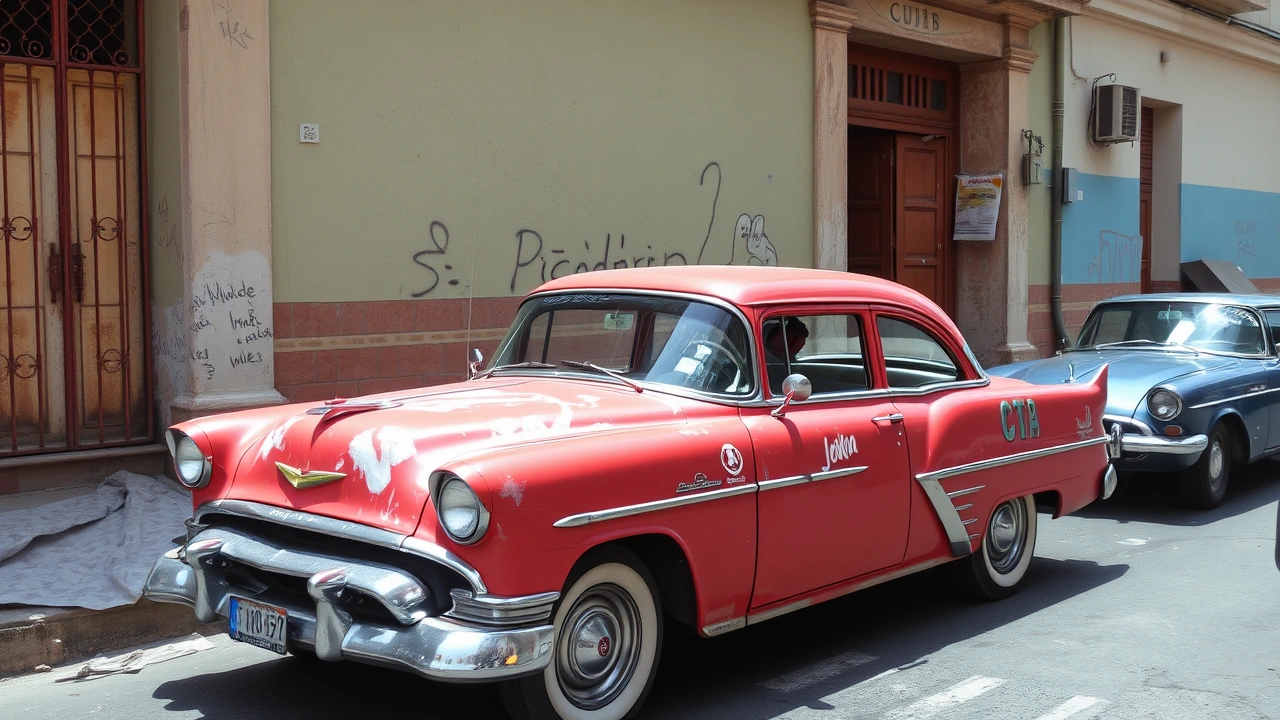
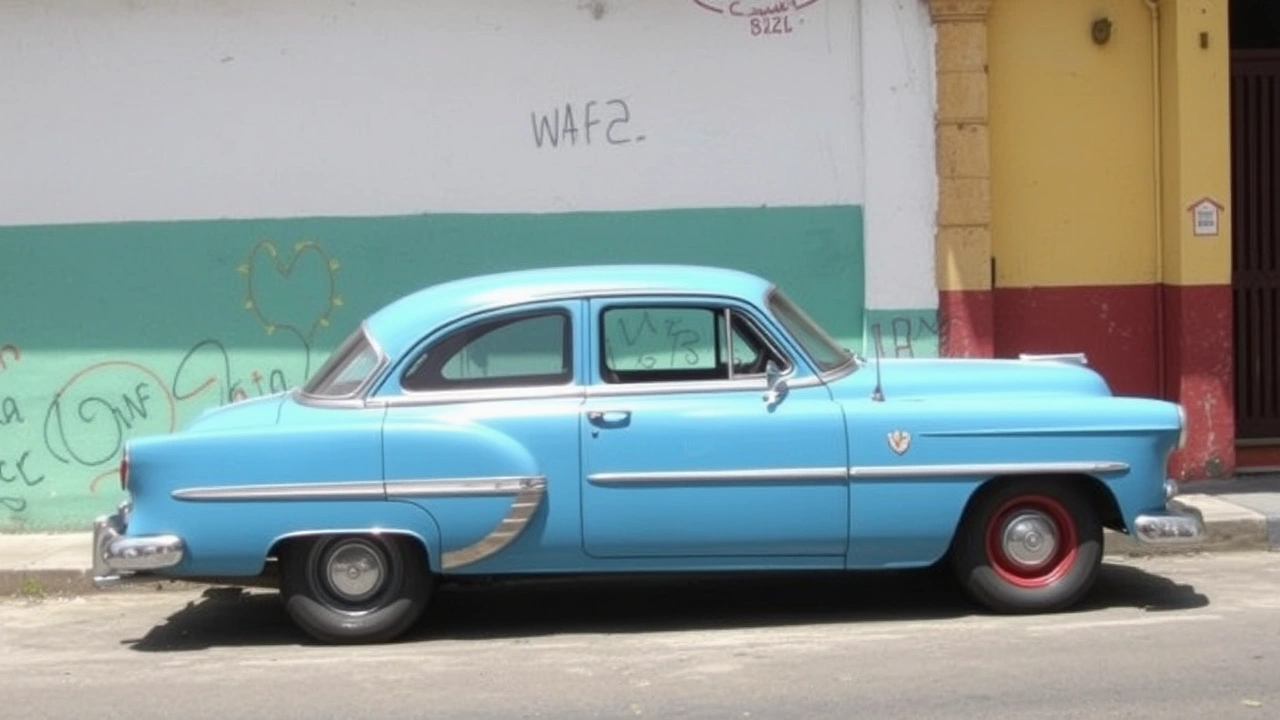
Add a hybrid, very iconic category: shared taxis or almendrones. These mythical American cars from the 50s ply the same routes several times a day, almost fixedly, picking up passengers along the road.
Urban Colectivos: The Art of Per-Seat Taxis
To get around town at the local rate, the shared taxi, also called máquina or almendrón, is the ideal tool, provided you understand the system.
The principle: each car follows a set route (e.g., a major avenue connecting two neighborhoods). You stand on that stretch, signal, say “colectivo” to specify you want shared transport, and you tell the driver the name of the intersection where you want to get off. The price is fixed in advance for the typical trip (formerly around 10–20 CUP, now higher with inflation) and must be paid in local currency or small foreign currency depending on agreements.
This type of transport is:
– very cheap,
– extremely frequent on main arteries,
– authentic and full of encounters.
It requires, however, knowing a minimum of urban geography and speaking a few words of Spanish to avoid asking for a private detour that would skyrocket the cost.
Bicitaxis, Cocotaxis, and Classic Convertibles
For short distances, “picturesque” alternatives abound.
Bicitaxis are human-powered tricycles, ideal for short trips in narrow streets or historic centers. The fare, generally modest (a few euros in tourist areas), must be negotiated before departure. While not a mass transport solution, they are a practical way to easily cover a short distance.
Cocotaxis are motorized tricycles covered with a yellow coconut-shaped shell. Fast, very visible, they target visitors first. You’ll find them mainly in Havana, Trinidad, or Varadero. They are more affordable than classic taxis for short distances, with fares of a few dollars and one-hour tours around 20 dollars. However, safety standards are minimal: no seatbelt, fragile structure, significant speed.
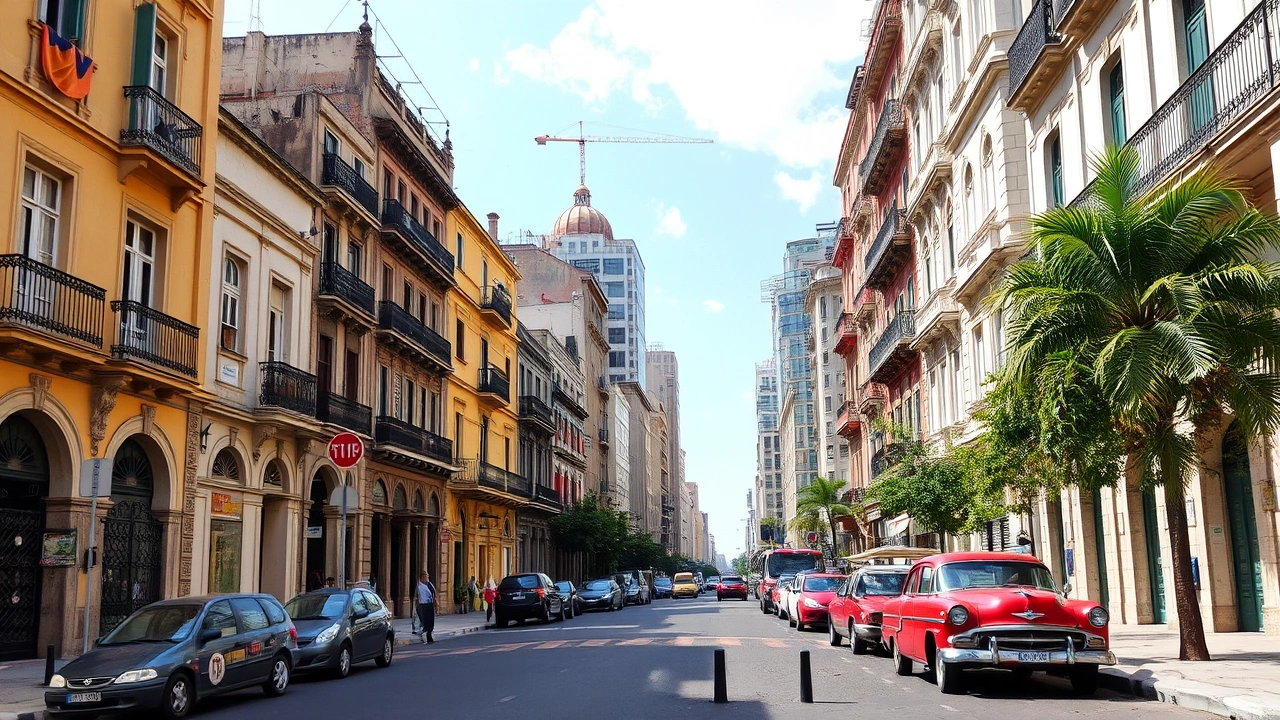
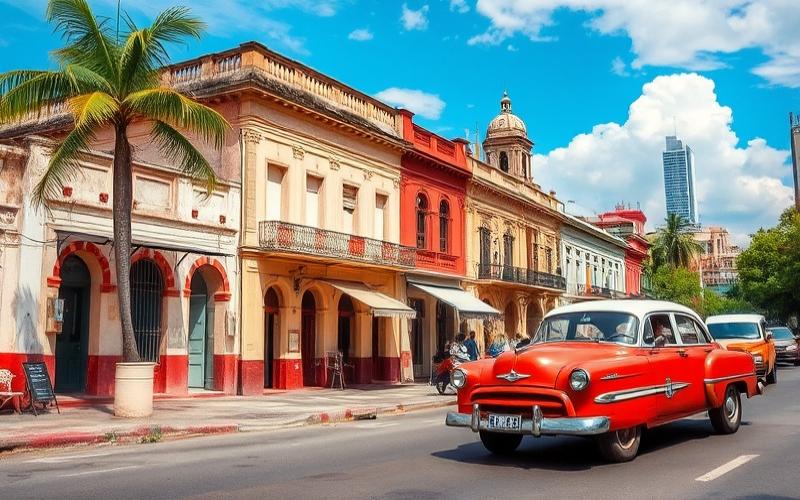
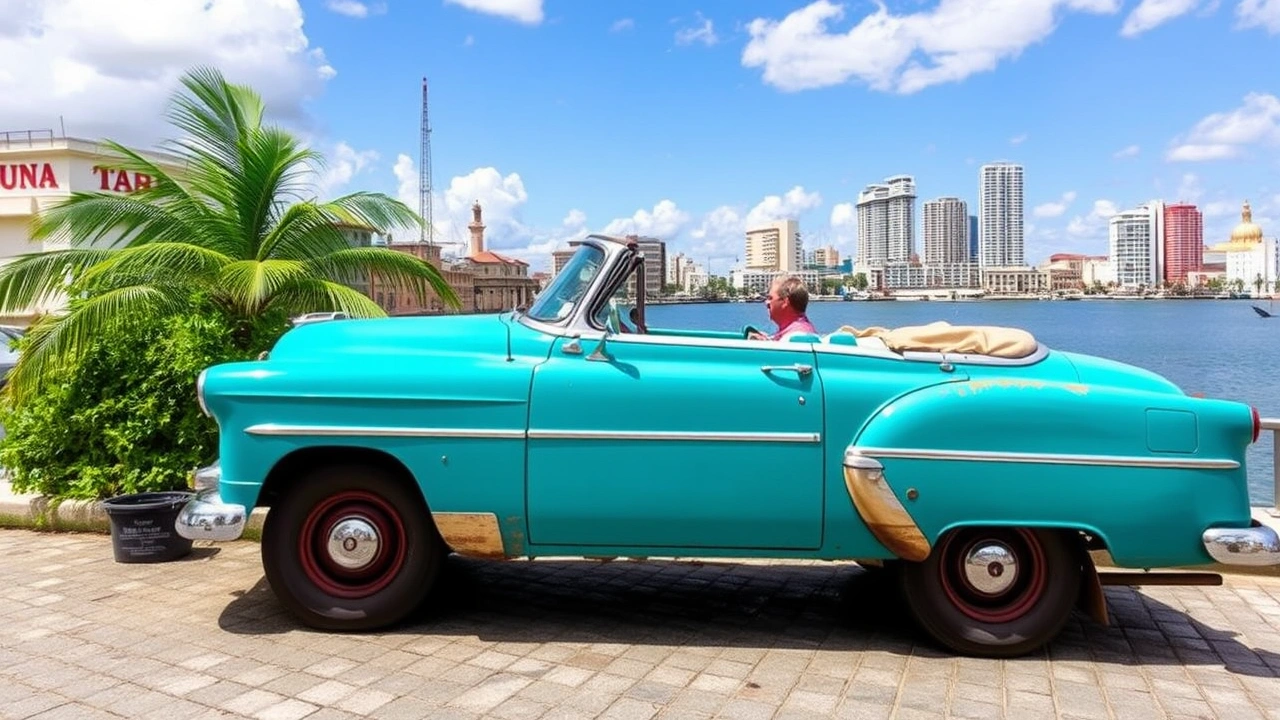
The American convertible cars offered for panoramic tours are more a tourist transport than a utilitarian one. In Havana, they park around Parque Central and offer one to two-hour circuits in key neighborhoods. Advertised rates are around 30 units of currency per hour for the entire car. You can also charter them for long trips (e.g., a day trip to Viñales), requiring more substantial negotiation.
In Havana, a local app, La Nave, functions as an on-demand transport platform similar to Uber or Lyft. It allows you to order a car for urban trips, with payment made in cash. However, registration requires a local phone number (American numbers don’t work), and the reliability of pre-scheduled rides is considered inferior to real-time requests.
For a short stay, it’s often simpler to rely on traditional taxis, negotiated upfront, especially if your casa particular can book them for you via driver WhatsApp groups.
Intercity Colectivos: Flexible Alternative to Buses
Between major cities, long-distance shared taxis (colectivos interprovinciales) offer a widely used alternative to Viazul. The principle is the same as for urban colectivos, but on journeys of several hours.
Here are some common examples of fares per person, in shared seats:
| Intercity Colectivo Route | Indicative Price per Person (one-way) |
|---|---|
| Havana – Viñales | 25 € / 25 $ |
| Havana – Varadero | 25–30 € / $ |
| Havana – Trinidad | 35–40 € / $ |
| Havana – Cienfuegos | 30 € / $ |
| Havana – Playa Girón | 30 € / $ |
These amounts are per seat. If you want to charter the car, the entire vehicle is charged, and the price is negotiated directly with the driver or via your accommodation. In this case, for a group of three or four, the cost per person can become competitive with Viazul, with the huge advantage of door-to-door service and schedule flexibility.
The departure and arrival points for these vehicles are not always official terminals. They can be squares or intersections serving as informal meeting points. To locate them, it’s advisable to ask your host or inquire near bus stations, where drivers often wait for travelers arriving by bus.
Keep in mind that these shared taxis generally leave when they are full. Starting the trip early in the morning increases the chances of quickly finding travel companions. For trips to the cayos or some highly touristic destinations, colectivos are not always allowed to use the causeways or access roads; again, a local driver will know what’s possible.
Trains: A Real Network, But Unpredictable
Cuba is the only Caribbean country with a vast functional railway network. The national company, Ferrocarriles de Cuba, operates a main line linking Havana to Santiago de Cuba and branches to Cienfuegos, Sancti Spíritus, Holguín, Guantánamo, Pinar del Río, etc.
Since 2019, brand new trains made in China run on some long-distance services. They offer two classes:
| Class on New Trains | Main Characteristics |
|---|---|
| Second Class | Reclining fabric seats, opening windows, fans, cold drinking water, audio |
| First Class | Red leather seats, air conditioning, TV, audio, same seat dimensions, bar car on some trains |
Prices are remarkably low, paid in CUP. As an indication, a one-way ticket Havana – Santiago de Cuba costs, according to recent schedules, the equivalent of just a few euros, even in air-conditioned first class.
Although the Cuban train has its advantages, it remains an option to be used with caution.
– Frequencies are low: some trains run only once every three or four days.
– Last-minute delays and cancellations are frequent, aggravated by fuel shortages and technical problems.
– Reservations are made only in person, at the offices of the state agency Viajero or at station ticket counters, upon presentation of a passport.
– Tickets for new trains generally go on sale 30 days before departure, and sell out very quickly.
Travel is in seated cars only, no sleeper cars. Comfort can be uneven on old trains and baggage theft is reported on some lines. There is no complete official website or online booking system for foreigners; the Viajando app is reserved for residents with a CUP bank account.
The experience can still appeal to rail enthusiasts, especially on the major diagonal Havana – Santiago route, where the newest trains with bar cars run. For simple, reliable transportation needs, most travelers still prefer Viazul or colectivos.
Ferries and Maritime Connections
Boat transport plays a limited role in Cuban public transport, but there are a few very useful routes, particularly in Havana.
The ferry connects Old Havana to the neighborhoods of Regla and Casablanca. The crossing takes less than ten minutes and departures are every 15 to 20 minutes. The fare is very economical (a few cents in CUP) and you can board with a bicycle. Note: a basic bag check may be performed at boarding.
Elsewhere, catamarans serve Isla de la Juventud from Surgidero de Batabanó. Tickets must be reserved in advance and these connections are weather-sensitive, particularly during hurricane season.
Havana Airport and Transfers
The main international entry point, José Martí Airport, is located about twenty kilometers from Old Havana. To get to the city, several options are available:
Different means to reach downtown from the José Martí International Airport, with their main characteristics.
The simplest and most frequent solution. The ride to downtown costs about 25–30 units of currency per vehicle. They are stationed outside the terminals.
Connect the airport to major hotels in Vedado, Miramar, and Parque Central. Ticket about 5–10 $/€, usually paid by foreign card on board. Drawback: potential wait for the bus to fill up.
For very budget-conscious independent travelers. Lines P12 or P16 near domestic terminals. Impractical with luggage (internal shuttle or walking >1 km possible).
There is no subway or commuter rail. In Cuba, the airport connects essentially by road.
Safety, Accessibility, and Daily Realities
In terms of safety, Cuba enjoys a reputation for relative security compared to other countries in the region. Pickpocketing, taxi scams, pushy pseudo-intermediaries around stations or in tourist areas exist, but violent assaults remain rare. Caution is still advised in crowded transport and near major hubs (bus stations, Parque Central, airport).
In case of a road accident with injuries or death, the driver, even a foreigner and insured, risks lengthy detention during the investigation. This severity of the legal system leads many travelers to prefer public transport or local drivers over self-driving.
Accessibility for people with reduced mobility is very limited. Even if some hotels and tourist sites have adapted facilities, city buses, degraded sidewalks, omnipresent steps, and lack of systematic standards make travel complicated for wheelchair users or those using walking aids. Equipped transport (adapted taxis, vehicles with ramps) is rare and must be booked long in advance, often through specialized agencies.
For travelers with special needs (sensory, cognitive, motor), preparation must be thorough: contact lists, verification of assistance possibilities, planning for breaks (toilets, water access), keeping in mind that published schedules are not always respected.
Transport Budgets: How Much to Plan For?
The transport item can weigh significantly in a travel budget to Cuba, especially if covering large distances in a short time. Estimates of daily transport expenses around 10 to 20 dollars per person circulate among trip reports, with large variations depending on travel style.
Some benchmarks:
– Very budget traveler, favoring guaguas, camiones, walking, some Viazul booked in advance: a transport budget of 7 to 10 dollars per day can suffice, at the cost of limited comfort and lots of time spent in lines.
This is the average daily budget in dollars for a standard traveler in Cuba, including long-distance transport and transfers.
– Comfort-oriented traveler, relying mostly on private transfers, chartered colectivos, and sometimes domestic flights: the bill can climb to 30–40 dollars and more per day, depending on distances and duration.
The key is to book as much as possible in advance what can be (Viazul, intercity transfers via platforms like Daytrip or Civitatis, airport taxis via your accommodation) to avoid paying last-minute surcharges in a context of shortage.
Practical Tips for Using Public Transport in Cuba
Based on experience, a few reflexes stand out to smooth travel:
Always plan ahead for anything long-distance. Viazul tickets, seats in intercity colectivos, and airport transfers should be arranged several days in advance. Departure days are fixed; vehicles, not so much.
Always confirm and reconfirm schedules. Timetables can change, sometimes overnight. Between what’s posted on a sign, what’s announced on local radio, and what the driver believes, reality is often somewhere in between. Going to the ticket counter the day before, sending a WhatsApp message to the driver, or checking with your host helps limit surprises.
It is advisable to always have a small stock of local currency (Cuban pesos) for daily expenses: taking the bus, ferries, bicitaxis, paying for toilets at Viazul stops, or making small purchases at the gas station. Reserve your large foreign currency bills for long-distance taxis and transfers whose price was negotiated in advance.
Negotiate the price clearly before each taxi ride. In the absence of a meter, the only way to avoid misunderstandings is to specify the amount, currency, and nature of the service (one-way trip, round trip, waiting on-site).
In Havana, familiarize yourself with the major transport hubs: Parque Central, Viazul Nuevo Vedado, Parque de la Fraternidad, Regla ferry dock. Most urban transport modes revolve around these points, which quickly become landmarks.
Before your trip, download and test essential apps: Maps.me, Google Maps (offline mode), Habana Trans, Google Translate (with Spanish pack), and a functional VPN. Once on-site, internet connection is often unreliable, making these downloads and their setup difficult.
Do not underestimate the importance of body language and a few Spanish phrases. Knowing how to say where you’re coming from, where you want to go, and asking the price politely simplifies exchanges with colectivo drivers, camiones drivers, or bus conductors considerably.
Finally, accept that Cuban time is not Western time. Delays, detours, unexpected stops are part of the journey. Using these moments to chat with seat neighbors, observe the surrounding life, and gather local advice often turns a simple trip into a memorable experience.
Conclusion
Public transport in Cuba forms a hybrid system, both fragile and incredibly resilient. Between the air-conditioned Viazul coaches, the renovated but capricious trains, the overcrowded guaguas, the almendrones with jury-rigged mechanics, and the ferries of Havana Bay, it is possible to reach practically every corner of the island without ever touching a steering wheel.
Prepare for fuel shortages, indicative schedules, a local currency coexisting with foreign currencies, and non-guaranteed internet connection. In return, you will discover a society where resourcefulness and solidarity are the main logistical resources.
With patience, a bit of flexibility, and the right offline tools in your pocket, public transport becomes not an obstacle, but one of the best ways to understand daily Cuban life, far beyond the beaches and postcards.
Disclaimer: The information provided on this website is for informational purposes only and does not constitute financial, legal, or professional advice. We encourage you to consult qualified experts before making any investment, real estate, or expatriation decisions. Although we strive to maintain up-to-date and accurate information, we do not guarantee the completeness, accuracy, or timeliness of the proposed content. As investment and expatriation involve risks, we disclaim any liability for potential losses or damages arising from the use of this site. Your use of this site confirms your acceptance of these terms and your understanding of the associated risks.

Cyril Jarnias is an independent expert in international wealth management with over 20 years of experience. As an expatriate himself, he is dedicated to helping individuals and business leaders build, protect, and pass on their wealth with complete peace of mind.
On his website, cyriljarnias.com, he shares his expertise on international real estate, offshore company formation, and expatriation.
Thanks to his expertise, he offers sound advice to optimize his clients' wealth management. Cyril Jarnias is also recognized for his appearances in many prestigious media outlets such as BFM Business, les Français de l’étranger, Le Figaro, Les Echos, and Mieux vivre votre argent, where he shares his knowledge and know-how in wealth management.