 Published on and written by Cyril Jarnias
The idea of moving to Cuba is alluring: tropical climate, colonial architecture, ever-present musical culture, warm-hearted people. But beyond the clichés of vintage American cars and mojitos at sunset, daily reality is more complex. Economic insecurity, power outages, shortages, a highly regulated political system, limited internet connection: a successful expatriation requires a good understanding of the terrain, its risks… and how to manage them.
This article covers all the essential safety aspects for a future expatriate: actual and perceived crime, common scams, the legal and political framework, health, infrastructure, money management, daily life, and the right habits to adopt for a serene and responsible life on the island.
A generally safe country, but in a deep crisis
Cuba is often presented as one of the safest countries in Latin America. International comparisons partly confirm this reputation, while also revealing growing vulnerabilities.
The country’s place in peace rankings and the advisories from foreign embassies are telling.
| Indicator / Source | Level or Rank |
|---|---|
| US Department of State Advisory | Level 2: “Exercise Increased Caution” (crime, power outages) |
| US Crime Indicator (“C”) | Presence of violent / organized crime & limited police response |
| Global Peace Index Ranking | 98th out of 163 countries |
| Position in the region | Safer than several Latin American and Caribbean neighbors |
This safety is largely due to the very tight control exercised by the State: a single party, strong police and military presence, a neighborhood surveillance network (Committees for the Defense of the Revolution), and a strict justice system. Civilians rarely carry firearms, and large criminal organizations like cartels or gangs, which plague other countries in the region, do not exist there to the same degree.
The Cuban peso is estimated to have lost between 500% and 1000% of its value since 2019, illustrating the hyperinflation hitting the country.
For an expatriate, this means that violence remains largely contained, but vulnerability to theft and fraud is real. The sense of tranquility comes less from a total absence of risk and more from the ability to anticipate, adapt, and surround oneself wisely.
Crime: Real Risks and Incident Geography
On paper, homicides and violent crimes are much less frequent than elsewhere in the region. UN data places the homicide rate around 4 to 5 per 100,000 inhabitants, among the lowest in the Caribbean and South America. However, official Cuban statistics remain scarce and state media does not report on crime news, which leads observers to rely on independent sources.
These sources report a clear worsening:
| Year / Period | Confirmed Criminal Incidents by Independent Sources |
|---|---|
| 2023 | 649 |
| 2024 | 1,317 |
| First half of 2025 | 1,319 |
The most affected areas are recurrent: Havana, Santiago de Cuba, Matanzas, and Holguín, with peaks during holidays and during long power outages. Most incidents are opportunistic thefts: pickpocketing, bag snatching, break-ins into homes or vehicles, theft from luggage at the airport or from a taxi trunk.
While violent assaults with weapons are less frequent and rarely target foreigners, serious risks persist, such as drink spiking, sexual assaults, or muggings, reported by several Western embassies.
The tourist neighborhoods of Havana – Habana Vieja, Vedado, Malecón – concentrate pickpockets and jineteros (touts and scammers), without being “no-go zones.” Vedado and the residential neighborhoods of Miramar and Playa are generally perceived as calmer and more family-oriented. Elsewhere on the island, cities like Trinidad, Cienfuegos, Santa Clara, or Baracoa are described as relatively peaceful, as are major beach resorts (Varadero, Cayo Coco, Guardalavaca), where police and private security presence is very visible.
For an expatriate, the challenge is not to systematically avoid risk areas, which would be impossible, but to approach every situation with big-city smarts. This includes: not displaying ostentatious valuables, keeping bags closed, distributing money and important documents on your person, and being extra cautious at night on poorly lit streets.
Scams and “Small Hustles”: Learning the Ropes
Alongside common law delinquency, a foreigner’s daily life in Cuba is punctuated by a multitude of small scams and sometimes aggressive survival strategies, especially in tourist areas and near bus stations or José Martí airport.
The Most Frequent Scams
The techniques are often based on emotion, confusion, or exploiting the information gap between locals and foreigners.
Common ones include:
– Tear-jerking stories: a birthday “today,” death of a relative, urgent need for baby formula. The famous “milk scam” involves taking the foreigner to a complicit store where the product price is outrageously inflated, before the shopkeeper and the tout split the profit.
– False friendly invitations: a “friend” suggests going for a drink or to eat “at a typical bar”; later arrives an astronomical bill, sometimes with a commission for the person who brought you. This is the logic of the “Mojito scam” or “bar scam”.
A lost expatriate is approached by a stranger who insists on helping, specifying that he “is not like other Cubans.” After gaining their trust, he systematically directs them to a complicit business or taxi, later receiving a commission on the transaction, thus exploiting the tourist’s vulnerable situation.
– False practical information: someone warns you that your casa particular is closed, that the owner died, that the museum or restaurant you want to go to is “closed for renovations,” and redirects you to a much more expensive alternative, again with a commission. At bus stations, some taxi drivers swear that buses are full or canceled to sell you an overpriced ride.
– Fake products: the sale of counterfeit cigars is massive on the street. Real cigars can only be bought in state stores, hotels, or official factories, with holographic seals and certificates. Rum bottles can be adulterated, and fake mineral water can simply be refilled from the tap. In the Viñales Valley, farms sometimes offer low-quality “peso cigars,” undrinkable coffee, and low-end rum sold as “organic” or “nicotine-free.”
Be vigilant against these frequent financial scams to protect your currency and avoid bad surprises.
Risk of receiving counterfeit bills or obsolete bills during informal exchanges. Avoid unofficial money changers.
You are sometimes given Cuban pesos (CUP) instead of the agreed-upon hard currency, or they claim to have no change to keep your large bills.
In restaurants, always check the bill. Lines can be added or an unjustified “tourist tax” can be charged to you.
– Fake events: supposed “national cigar festivals,” “official” salsa parties, or imaginary public holidays sometimes serve as pretexts to sell overpriced tickets or lure people into partner stores.
– Trapped street performances: musicians who surround you, put an instrument in your hands, then demand payment. The same mechanism exists with photos of animals or costumed characters.
Added to this are more modern scams, online: fake travel agencies selling non-existent trips for several thousand dollars, virtual romances via messaging and social media ending in requests for money, fake profiles of foreign financial advisors inviting investment, or fake requests to recharge Netflix or phone accounts.
Where and How These Scams Operate
Jineteros and other scammers concentrate where money and visitors circulate: Habana Vieja, Vedado, hotel areas, busy beaches, bus stations, airport exits, but also around certain provincial sites. They often work in networks, with touts, accomplices in shops, and partner taxi drivers.
A particular case often mentioned concerns a certain Lazaro Alberto Hernat, described by several travelers as a notorious scammer, recognizable by a gold tooth – proof that some individuals make a living from these hustles full-time.
Lazaro Alberto Hernat, notorious scammer
For an expatriate, the key is to understand that behind genuine friendliness, part of the population is pushed by the economic situation to systematically test what a foreigner is willing to pay or “let slide.” This is neither inevitable nor a reason for paranoia, but a parameter to factor into daily life.
Habits to Limit Risks
Most of these situations can be avoided with a few simple habits: politely but firmly refuse unsolicited offers, verify information yourself (for example, by calling your casa particular or the place you want to visit directly), use only official exchange houses (CADECAs) or banks, pay with small bills, meticulously check every bill before signing or paying, and only buy cigars and rum from the official network.
For transportation, it is prudent to favor recognized taxi stands, agree on the price in advance, and avoid loading the trunk with high-value luggage unattended – some suitcase thefts from taxi trunks have been reported.
Political System, Law, and Freedoms: A Framework to Understand
Expatriating to Cuba is not just a change of scenery; it is also living in a political system radically different from most Western countries. The country is a socialist republic with a single party, where the Communist Party is constitutionally designated as the “leading force of society and the state.” The 2019 Constitution reaffirms the irreversible nature of socialism.
The law is inspired by civil law systems and follows a logic of “socialist legality,” where the law is an instrument of social transformation. Main areas are codified (civil, criminal, labor, family). A notable advance is the new Family Code, which legalizes marriage and adoption for same-sex couples, thus strengthening LGBT+ rights.
In theory, the Constitution guarantees education, health, equality, and prohibits discrimination. It also reinstates the presumption of innocence. In practice, several international organizations like Amnesty International or Human Rights Watch denounce systematic human rights violations: arbitrary arrests, short or long-term detentions to prevent demonstrations, unfair trials, severe restrictions on freedom of expression, assembly, and association, close surveillance of the population.
The law allows for preventive detention of up to four years for people deemed ‘dangerous’ based on antisocial behavior, without a crime having been committed. NGOs report that this mechanism is sometimes used to silence peaceful opponents.
Unauthorized protests are illegal and systematically dispersed; the large protests of 2021, then those of 2024 in Santiago de Cuba, led to hundreds of arrests and heavy sentences for some participants. The state is known for slowing or cutting internet access to hinder the organization of gatherings.
For an expatriate, the golden rule is clear: stay away from any local political activity, avoid openly criticizing the government in public, do not photograph military installations, police, ports, train stations, or airports – such shots can be considered espionage. It is also advised not to get involved in opposition actions, even symbolic ones, at the risk of being caught up in a heavy criminal procedure in a very different and non-transparent judicial system.
Health, Medical System, and Insurance: Prepare Well to Avoid Bad Surprises
Officially, Cuba has a universal public health system, free for citizens, with a very dense network: in every agglomeration of over 100 inhabitants, there is a family doctor and nurse. The country is recognized for the quality of its doctors’ training and its preventive approach, and boasts respectable health indicators (life expectancy, infant mortality) compared to the region.
But for an expatriate, this image must be nuanced. Shortages of medicines, medical supplies, modern equipment, and even basic items (gloves, syringes, antibiotics) are frequent in public facilities, due in particular to international sanctions, chronic underinvestment, and the monetary crisis. Hygiene conditions are uneven.
Foreigners do not have free access to the ordinary system: they go through a specific network, Servimed, which groups about forty clinics intended for non-Cubans. In Havana, the reference facility is the Clínica Central Cira García, in the Miramar neighborhood, recognized by several embassies for its care for foreigners and the presence of English-speaking staff. Other good-level hospitals exist in the capital (Hermanos Ameijeiras, CIMEQ, Camilo Cienfuegos) and international clinics are located in major tourist resorts like Varadero or Santa Lucía.
Access there is nevertheless paid, and American bank cards are generally unusable. Payment is made in cash (euros, Canadian dollars, sometimes US dollars) or with a Visa/Mastercard not linked to a US bank, when the terminals work.
Several unavoidable realities for an expatriate:
Health insurance is legally mandatory for any foreigner entering the country. Limited coverage may be included in some airline tickets, but for a long-term stay, you must prove to immigration authorities the continuous validity of insurance.
– Recommended insurance policies should include emergency care, hospitalization, emergency dental care, and especially international medical evacuation (medevac) and repatriation. A medical transfer to another country can cost over $50,000, not including hospitalization costs in the receiving country.
– Many standard insurance policies do not cover Cuba or exclude certain services (maternity, psychiatry, chronic conditions, pre-existing conditions). Specialized medical evacuation providers like Global Rescue or Medjet are frequently cited as references to supplement coverage.
– Pharmacies are often understocked; most experienced expatriates recommend arriving with a stock of personal medications (prescriptions and medications in original packaging, accompanied by a doctor’s note): chronic treatments, basic antibiotics, antidiarrheals, pain relievers, anti-allergics, mosquito repellent, sunscreen, personal hygiene products.
Three main mosquito-borne diseases threaten the country: dengue, Zika, and chikungunya.
Added to this are digestive pathologies related to non-potable water and food hygiene: drinking tap water is not recommended, even for brushing teeth, and traveler’s diarrhea is frequent. The scarcity of bottled water during shortages complicates the situation: filtering with tablets or purifying water bottles is a wise investment.
Pre-hospital emergencies (ambulances) exist but remain limited, with long response times outside tourist areas. In the most serious cases, evacuation to another country often remains the best guarantee.
Sluggish Infrastructure: Electricity, Water, Internet, Transportation
The “safety” aspect of an expatriation is not limited to crime. The reliability of essential infrastructure – power, water, telecommunications, transportation – directly impacts quality of life, daily stress, and in a crisis, the ability to protect oneself.
Cuba suffers from recurring power outages, due to an aging grid, lack of spare parts and fuel, and cumulative hurricane damage. Since late 2024, long nationwide blackouts have been documented, and Havana experiences planned or impromptu outages that can reach twelve hours a day, with even longer durations in the provinces.
Despite official schedules, power outages in Cuba are frequent and unpredictable. Although some establishments like hotels or clinics have generators, their use is limited by fuel shortages. For an expatriate, it is essential to adopt a true “survival kit culture”: plan for headlamps, power banks, water reserves, battery-powered fans, and, for more permanent setups, consider using domestic solar panels.
Access to internet and the mobile network, controlled by the state operator ETECSA, is notoriously unstable, slow, and expensive. The connection can be cut or throttled for political reasons (preventing protests) or technical ones (power outages, network saturation). Wi-Fi is often available in hotels, certain parks, and equipped homes, but quality varies greatly. More and more residents and expatriates use local SIM cards with data plans, but here again, service remains below Western standards, and using a VPN is almost essential to bypass some restrictions and secure communications.
The road network presents many dangers: degraded pavement, insufficient lighting and signage, a mix of aging vehicles, animals, and vulnerable users, and sometimes disrespectful driving. Accidents are a major cause of mortality. Furthermore, most cars are not insured for passengers, and in the event of a serious accident, the driver is presumed responsible, risking heavy prison sentences.
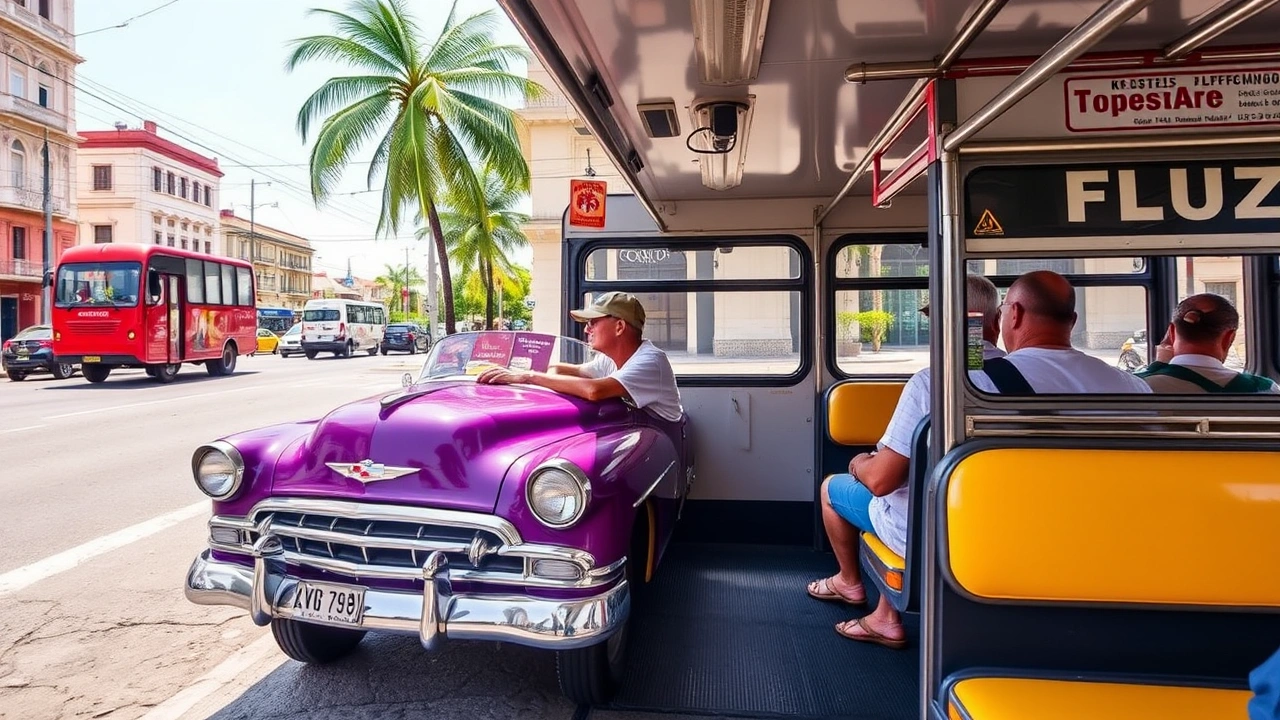
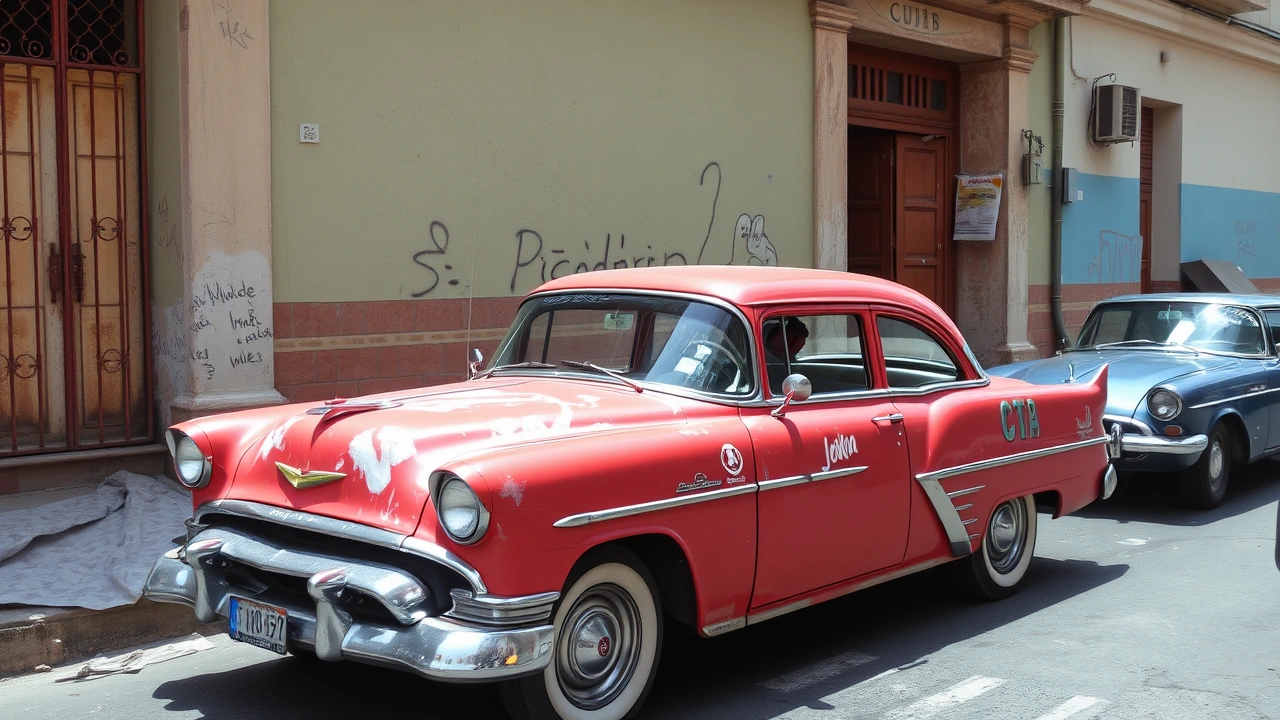
Public buses are overcrowded, infrequent, in poor condition, and strained by the fuel crisis. The old collective taxis, particularly the 1950s American cars, appeal to travelers, but the frequent absence of seat belts, effective brakes, or original parts make them more folkloric than safe transportation options, especially over long distances.
For these reasons, many foreign residents favor either official taxis (with price negotiated in advance), or pre-arranged private driver services, sometimes via local apps like La Nave. Car rental remains possible but is particularly not recommended for Americans, who have to deal with the absence of usable bank cards, fuel shortages, and the complexity of procedures in case of an accident.
Money, Exchange, and War Economy: Managing a Cash-Based Daily Life
The financial dimension has a direct impact on an expatriate’s security in Cuba, both because the economy is massively informal and because currency management mistakes can be costly.
The country operates largely on cash. Cards linked to an American bank practically never work, due to sanctions. Other Visa or Mastercard cards may sometimes be accepted in some state hotels or stores in hard currency, but terminal failures and power outages are frequent.
Expatriates should arrive with enough euros or Canadian dollars, which are better accepted than US dollars, which may be subject to a surcharge. The local currency, the Cuban peso (CUP), is unstable. There is a dual exchange rate system: a very unfavorable official rate and a much more advantageous parallel (‘street’) rate, a source of confusion and risk.
Typically, an official rate can be around 110 CUP to 1 USD, while the parallel market sometimes offers 300 CUP to 1 USD or more. Exchanging at the bank effectively means paying triple the cost of living, while exchanging on the street exposes you to scams (counterfeit bills, obsolete bills, outright theft). Some casa particular owners or trusted contacts offer more interesting intermediate rates, without the most glaring dangers of the street, but legally, exchange outside authorized channels (CADECAs, banks, airport counters, state hotels) is illegal and theoretically subject to fines or even prosecution.
Faced with shortages in ordinary supermarkets, many residents and expatriates must resort to parallel circuits. This notably involves the use of MLC (Moneda Libremente Convertible), a scriptural currency backed by hard currencies, accepted in certain state stores that only take foreign bank cards. Daily management requires constantly juggling between Cuban pesos, hard currencies, card balances, access to MLC stores, and informal markets, while trying to stay within the legal framework.
This financial tension also contributes to daily micro-scams around money: no change given, attempts to make you pay in hard currency instead of CUP, billing at “tourist price,” pressure for you to leave a bill without checking.
Legal Status, Visas, and Residence: Settling In Without Crossing the Line
Legal security is an often underestimated aspect of expatriation. In Cuba, access to permanent resident status or citizenship remains highly regulated. Only Cubans and foreigners benefiting from specific procedures (marriage, family ties, special permits) can aspire to lasting settlement.
Most foreigners reside with temporary visas (tourist, family, student, work for journalists/professionals, or seasonal retiree stay). Each type implies specific obligations and procedures to be carried out with the Directorate of Immigration and Foreigners.
For American nationals, the straitjacket of the Office of Foreign Assets Control (OFAC) regulations is added, which purely and simply prohibits “classic” tourism to Cuba. To enter legally, they must declare belonging to one of the twelve authorized categories (family visits, journalistic or professional activities, educational projects, religious, support for the Cuban people, etc.). Any violation of these rules can theoretically lead to financial and criminal sanctions from US authorities, regardless of what Cuba does.
Certain specific residence titles, like E-1 for close relatives of Cuban citizens or E-2 for people with special authorization, require the deposit of a significant sum into a Cuban bank account, a medical exam, proof of means of subsistence, and a thorough background check.
For an expatriate, a good part of “security” therefore involves not playing with these red lines: scrupulously respecting authorized stay durations, renewing or changing visas according to the rules, avoiding undeclared or locally illegal economic activities, and keeping in mind that consular defense (whatever your country of origin) has limited room for maneuver if you violate Cuban law.
Living Serenely: Cultural Codes, Support Networks, and Best Practices
Beyond technical aspects, an expatriate’s sense of security depends greatly on their ability to understand and respect local social codes. Cubans are described as very warm, expressive, demonstrative, with direct and often loud communication, a physical proximity that can surprise Northern Europeans or North Americans, and omnipresent humor even in difficult situations.
In Cuba, it is important to use “usted” and titles (Señor, Doctor, etc.) to show respect, especially during a first contact or with elderly people or those in authority. Absolutely avoid criticizing Fidel Castro, the Revolution, or the government in public, as it is very frowned upon and can lead to delicate situations, even with your neighbors.
On the street and in commercial interactions, the line between sincere sociability and interested approach can sometimes be blurry. Over time, expatriates learn to distinguish a truly disinterested invitation from a trolling attempt, without completely closing themselves off to connections with residents.
Upon your arrival abroad, register with your embassy or consulate, for example via the Smart Traveler Enrollment Program (STEP) for US citizens. This step significantly improves the responsiveness of authorities in a crisis (hurricane, political unrest, serious accident). At the same time, it is essential to know and note down the local emergency numbers specific to your destination.
| Emergency Service | Number to Dial |
|---|---|
| National Police | 106 |
| Ambulance / Medical Emergencies | 104 |
| Fire Department | 105 |
Expatriates also benefit from building a local network: trusted doctors, a lawyer within a bufete colectivo (state-authorized collective law firm), a reliable private driver, a serious casa owner, benevolent neighbors. This relational fabric often counts for more than formal infrastructure in facing the unexpected.
Finally, digital prudence is essential: communications (phone, internet, hotel Wi-Fi) may be monitored, electronic devices inspected, and certain technologies (drones, satellite phones, radio equipment) are strictly controlled and sometimes confiscated. It is better to encrypt your devices, limit sensitive data stored locally, and curb any feeling of technological impunity.
Natural Disasters: Good Institutional Preparation, But Real Constraints
Cuba lies in the path of many Atlantic hurricanes. The cyclone season usually runs from June to November, with intensification between August and October. The island is nevertheless regularly cited as an example by the United Nations and the Red Cross for its preparedness measures: preventive evacuations, shelters, information campaigns, coordination of relief. During major cyclones like Ivan or Irma, the number of victims remained surprisingly low given the violence of the phenomena.
Residents experience profound and lasting disruptions to their daily lives, including prolonged water and electricity cuts, blocked roads, and increased pressure on food stocks. Furthermore, damage to already fragile infrastructure worsens the vulnerability of the power grid and buildings.
The seismic risk is low for most of the territory, concentrated mainly in the far southeast (region of Santiago and Guantánamo), and the probability of a tsunami remains very limited, although monitored.
For the expatriate, familiarizing oneself with local disaster management procedures, identifying solid buildings and areas safe from flooding, and stocking water, non-perishable food, medications, and lighting means allows for navigating these episodes with less stress.
Toward a Serene Expatriation: Lucidity, Preparation, Adaptation
Safety in Cuba is nothing like a tropical fairy tale, but it’s not a film noir scenario either. The country combines a relatively low level of criminal violence for the region, massive state control – sometimes reassuring, sometimes oppressive – and an economic crisis such that daily pressures translate into a host of possible small infringements on your wallet, your data, and even your rights.
A serene expatriation therefore requires several things at once:
– Solid material preparation: health insurance including evacuation, stock of medications, Plan B for prolonged power outages, financial reserves in hard currency and a thought-out exchange strategy.
A good understanding of the legal and political framework is essential. This involves having your visas in order, maintaining a deliberate distance from local political contestation, and strictly respecting prohibitions, especially concerning drugs, illegal exchange, and photographs of sensitive subjects.
– A calm vigilance toward risks of crime and scams: accepting that you are an economic target, without paranoia, but with basic habits (negotiating taxis, checking bills, refusing dubious invitations, protecting documents and devices).
– Genuine curiosity for local culture: learning a minimum of Spanish, grasping codes of politeness, understanding the constraints Cubans face so as not to be surprised by certain survival strategies, and building lasting relationships of trust.
For a successful expatriation, it is crucial to anchor yourself in formal and informal networks. This includes regular contact with your embassy, knowledge of local emergency numbers, as well as the prior identification of a trusted doctor, lawyer, and transporter. Participating in expatriate circles or intercultural exchange groups also facilitates integration and provides valuable support.
Cuba, with its contradictions, remains for many an endearing place to live, where you can feel more physically secure than in many other capitals on the continent, while accepting a permanent economic and infrastructural insecurity. Those who succeed in their expatriation there are neither those who idealize the island, nor those who demonize it, but those who look at it squarely, with lucidity, patience, and respect, and who adjust their plans to this singular reality.
Disclaimer: The information provided on this website is for informational purposes only and does not constitute financial, legal, or professional advice. We encourage you to consult qualified experts before making any investment, real estate, or expatriation decisions. Although we strive to maintain up-to-date and accurate information, we do not guarantee the completeness, accuracy, or timeliness of the proposed content. As investment and expatriation involve risks, we disclaim any liability for potential losses or damages arising from the use of this site. Your use of this site confirms your acceptance of these terms and your understanding of the associated risks.

Cyril Jarnias is an independent expert in international wealth management with over 20 years of experience. As an expatriate himself, he is dedicated to helping individuals and business leaders build, protect, and pass on their wealth with complete peace of mind.
On his website, cyriljarnias.com, he shares his expertise on international real estate, offshore company formation, and expatriation.
Thanks to his expertise, he offers sound advice to optimize his clients' wealth management. Cyril Jarnias is also recognized for his appearances in many prestigious media outlets such as BFM Business, les Français de l’étranger, Le Figaro, Les Echos, and Mieux vivre votre argent, where he shares his knowledge and know-how in wealth management.