 Published on and written by Cyril Jarnias
Relocating to France isn’t just about changing countries, languages, or climates. It’s about entering a finely codified cultural universe, where politeness is second nature, debate is a national sport, bureaucracy is a world of its own, and free time is held (almost) sacred. Understanding these codes before you go prevents many misunderstandings, makes the first weeks less disorienting, and facilitates integration, both at work and in daily life.
Understanding the French Spirit: Between Hierarchy, Debate, and Art de Vivre
French culture rests on a few key pillars that often surprise newcomers: an assumed hierarchy, a marked taste for intellectual discussion, and a genuine obsession with work-life balance.
According to Geert Hofstede’s studies, France scores significantly higher than the UK or the United States on the “power distance” scale. In French companies, this manifests as pyramid-shaped organizational structures, highly decisive leadership, and marked importance given to status, degrees, and titles. In this context, publicly challenging a superior’s authority is generally poorly received, although a well-argued disagreement in private can be appreciated.
Simultaneously, the country cultivates a cultural great power identity. The history of France, the centrality of Paris, the role of the State in culture (Académie Française, Ministry of Culture, language policies, protection of cinema, fashion, or gastronomy) feed a strong national sentiment. This is felt daily: the French language is a symbol of culture, debating ideas is valued, and defending “French specificities” against globalization (especially American) remains a frequent reflex.
The famous motto “work to live, not live to work” profoundly influences the relationship to time, work, and leisure. The legal 35-hour week, a minimum of five weeks paid vacation, the right to disconnect, long summer holidays, and one-to-two-hour lunches form a coherent system, very different from cultures where overwork is valued.
French Art de Vivre
To get your bearings from the start, it’s useful to keep this triad in mind: strong hierarchy, cult of logical debate, and priority given to quality of life.
The Language: Key to Integration and a New Legal Imperative
Relocating to France without speaking French is possible, especially in big cities, but increasingly less viable in the long term. The State now considers language mastery one of the foundations of integration, on par with respect for republican values.
Official Requirements: Increasingly High CEFR Levels
The authorities rely on the Common European Framework of Reference for Languages (CEFR), which defines levels from A1 (beginner) to C2 (mastery). The required thresholds are set to increase for long-term residence permits and naturalization.
Here is a simplified overview of required levels depending on residency plans:
| Plan in France | CEFR Level Required (from new rules) | Expected Use of French |
|---|---|---|
| Multi-year residence permit | A2 | Getting by in daily life, simple interactions |
| 10-year Resident Card | B1 (instead of A2) | Communicating in most situations, arguing simply |
| Naturalization (citizenship by residence) | B2 (instead of B1) | Following complex discussions, defending a nuanced viewpoint |
| Service/retail employment | Approx. B1 | Managing customer interactions |
| Management, marketing positions, teamwork | B2 | Participating in meetings, negotiating, writing professional emails |
| Medical, legal professions | C1–C2 | Technical language, sensitive interactions, complex documentation |
Simultaneously, a mandatory civics exam will assess knowledge of the Republic’s institutions, history, and values, via a relatively demanding multiple-choice questionnaire.
These requirements aren’t just bureaucratic: they very concretely condition access to the job market, professional mobility, or the ability to follow children’s schooling.
Tests, Diplomas, and Exemptions
To prove one’s level, several official tests are recognized, notably:
– TCF‑IRN (Test de Connaissance du Français – Integration, Residence, Nationality)
– TEF‑IRN (Test d’Évaluation de Français – Integration, Residence, Nationality)
– DELF diplomas (A1 to B2) and DALF diplomas (C1, C2)
– Certain French university degrees or certificates from Chambers of Commerce and Industry
Foreign certificates are generally rejected for residence or naturalization procedures. However, exemptions exist for elderly individuals (often from 60-65 years old depending on the procedure), certain medical situations, or holders of French-language degrees.
Why the Linguistic Effort Really Matters
Beyond the law, the language structures the relationship with French society. It conditions:
Successful integration into a new context, particularly professional and social, relies on several pillars: access to essential public services (prefecture, healthcare, CAF, school), mastery of implicit cultural codes (humor, innuendo, double meanings), involvement in local life (associations, parent-teacher meetings, unions), and maintaining professional credibility through appropriate written and oral communication (presentations, reports, emails).
Studies on language learning show it takes on average several hundred hours of work to reach each CEFR plateau. For a serious project in France, aiming for at least a B1–B2 level is a realistic investment.
In everyday life, the French greatly appreciate a foreigner trying to speak their language, even imperfectly. Starting a conversation with a phrase like “Excuse me, I don’t speak French very well” defuses concern and generally elicits goodwill. Corrections are seen as politeness, not humiliation.
Communication Styles: Formalism, Logic, and Debate
Communication in France mixes three ingredients that often surprise expats: a very codified form of politeness, a major place given to logical reasoning, and a debate culture that can seem confrontational.
Form Matters as Much as Content
In the professional sphere, communication is generally more formal than in Anglo-Saxon cultures. People address their interlocutors as “Monsieur,” “Madame,” using last names and the formal “vous” form. Switching to first names and “tu” should be explicitly suggested by the more senior or older person.
Professional emails are structured, with elaborate greetings and polite closing phrases. Spelling or grammar mistakes can be interpreted as a lack of seriousness or education. Written French remains quite codified, almost “old-fashioned,” even in modern companies.
In meetings, an effective presentation relies on a solid structure, logical arguments, and precise data. If an interlocutor makes a remark like “that’s not logical,” it constitutes an important signal that the core of your argument isn’t being perceived as valid. It’s then essential to check and reinforce the coherence of your reasoning to convince your audience.
The Art of Debate, Not Harmony at All Costs
Where some cultures primarily seek consensus and common ground, the French value critical examination, nuance, and the confrontation of ideas. Discussions can seem animated, with lots of interruptions, raised voices, gestures: it’s not necessarily a conflict, but often a sign of engagement.
During a meeting, being interrupted is generally not a lack of respect, but a way to bounce off what is being said. Disagreements are acceptable – even desirable – as long as they are argued. What’s wrong isn’t disagreeing, but being unable to justify one’s position in a structured way.
In this context, giving an opinion on a topic you don’t master well is risky: you’ll quickly be asked to elaborate, cite references, clarify your reasoning. It’s better to simply admit “I’m not familiar with this topic” than to vaguely improvise.
Direct but Nuanced
Studies on communication styles show a certain ambivalence: compared to very direct cultures like the United States, the French can seem more diplomatic and allusive, especially for sensitive criticism. At the same time, negative feedback is often more frank than in countries where remarks are “sugar-coated.”
This mix of frankness and nuance stems largely from the educational system, which values rhetoric, the ability to handle subtext, and analyzing texts “between the lines.” Therefore, don’t expect brutal transparency, but a subtle game where tone, silences, and softened phrasing count as much as the words.
Politeness, Greetings, and Social Distance
You can’t understand France if you neglect its politeness rituals. Many foreigners discover them the hard way, being labeled “rude” without understanding why.
The Power of “Bonjour”
The golden rule is simple: initiating contact without a greeting is, socially, a major faux pas. In a bakery, post office, store, pharmacy, open-plan office, elevator… it’s practically mandatory to say “Bonjour” (or “Bonsoir” in the evening), even for an exchange of a few seconds. You close the interaction with a “Au revoir” or “Bonne journée”.
Not doing so is perceived as a lack of respect, even passive aggression. The intonation should remain neutral and polite, neither aggressive nor overly cheerful. Big, exaggerated smiles or effusions can be interpreted as flirtation or falseness.
“Vous” First, “Tu” Later
The use of “vous” and “tu” is a crucial cultural marker. “Vous” expresses distance, respect, sometimes coldness; “tu” signals closeness, familiarity, even intimacy. When in doubt, “vous” is the rule, whether with a neighbor, shopkeeper, colleague, or fellow parent. Switching to “tu” too quickly without being invited can be seen as intrusive or disrespectful.
A guide to adapting your level of formality according to the French professional context.
Between colleagues of the same hierarchical level, “tu” is common in private, but “vous” is often resumed in meetings or in the presence of superiors.
In certain settings like start-ups, associations, or the artistic world, quick adoption of “tu” is the norm. It’s advised to observe and imitate the group’s customs.
Handshake or Cheek Kiss?
In the professional world, the handshake remains the standard: rather brief, not too firm, accompanied by a “Bonjour, Monsieur/Madame + last name.” When the relationship becomes more familiar – especially between colleagues – the “bise” (cheek kiss) can set in, often daily. It involves lightly touching cheeks while making a kissing sound, usually twice (left then right), sometimes more depending on the region.
In a French professional setting, it’s best to let the French person, especially if it’s a woman, initiate the greeting gesture (like the cheek kiss). Between men, the cheek kiss exists but is less frequent outside of friendly or family relationships. When unsure, offering a hand for a handshake is the best approach; your interlocutor will adjust their gesture accordingly.
Topics to Handle with Care
At the start of a relationship, a number of questions, perfectly normal elsewhere, can surprise, even offend in France. Asking “what do you do for a living?”, “how much do you earn?”, inquiring about someone’s marital status or religion is quickly judged intrusive.
Paradoxically, topics considered explosive elsewhere – politics, secularism, religion, sexuality – can be debated passionately among friends or close colleagues, especially over a meal. But this freedom comes after a period of building trust. Initially, neutral grounds are safer: food, travel, cinema, music, sports, culture, differences between countries, etc.
Lifestyle: Schedules, Meals, and Work-Life Balance
For many expats, the major shock isn’t the Eiffel Tower or grammar, but the way the French organize their days – and especially what they refuse to sacrifice.
Working Hours: The Law and Reality
On paper, France has one of the shortest working hours in the developed world, with a legal 35-hour week. Employees are entitled to at least five weeks paid vacation per year, plus 11 national holidays, not counting days off for those working over 35 hours (RTT).
In practice, many managers work more than 35 hours – frequently around 39 to 45 hours – but get additional days off in return. The law also requires a minimum 11-hour rest period between workdays. And since 2017, the “right to disconnect” obliges companies with over 50 employees to define time slots during which work emails should not be sent or read.
France has one of the highest hourly productivities in the OECD, exceeding the average by 35%.
Sacred Lunches, Slower August
Another strong cultural marker: lunch. The midday break often lasts between one and two hours, especially outside major cities. Eating a sandwich at your computer is poorly regarded and, in some cases, formally forbidden. People lunch in the company cafeteria, at a local bistro, or at a canteen, often in groups, sometimes with clients. These moments, far from being simple breaks, are also spaces for socializing and networking.
In summer, the country lives at a holiday pace. In July-August, many companies slow down significantly; in August, it’s not uncommon for entire departments to close, especially in small towns and the administration. Schools close for several weeks. Similarly, many shops are closed on Sundays, and May, punctuated by holidays, is famous for its “bridges” and “viaducts” of consecutive days off.
For an expat, it’s advisable to avoid planning crucial administrative steps, project launches, or major moves during annual shutdown periods, at the risk of finding doors closed or services overwhelmed.
Social Time: Apéritif, Dinner, Weekend
French evenings have their own tempo. Dinner rarely starts before 7:30–8 p.m., often around 8:30 p.m. Before the meal, the “apéritif” (or “apéro”) is an institution: a drink (wine, pastis, beer, juice) with some appetizers, the epitome of a convivial moment. Being invited for an apéritif at neighbors’ or colleagues’ homes is a sign of trust and integration.
Meals, especially at home or at a restaurant in a social setting, can last several hours, with a succession of courses: starter, main course, cheese, dessert, sometimes a digestif. People talk a lot, savor, and aren’t in a hurry to leave the table. Using your phone at the table, asking for the bill before the meal is over, or requesting major menu modifications (“without this, with that”) are seen as impolite or devaluing the cuisine.
Weekends are often reserved for family, friends, hobbies, cultural outings, markets. Again, the boundaries between work and private life are stricter than in other cultures.
Professional Life: Hierarchy, Meetings, Negotiations
In the workplace, cultural differences crystallize particularly around hierarchy, the conduct of meetings, and how decisions are made.
A Vertical and Very Present Hierarchy
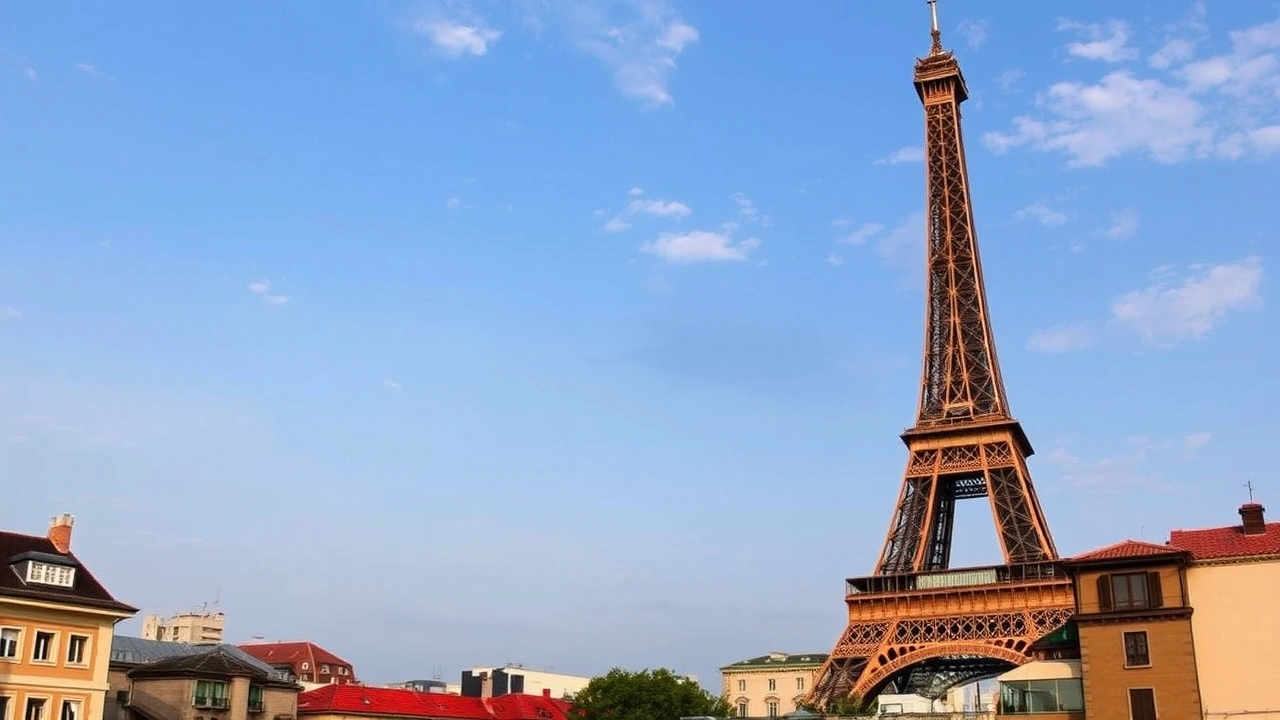
Many French companies adopt a so-called “Eiffel Tower” structure: a wide base, a very concentrated point, and distinct levels in between. Power is highly concentrated at the top; access to information is a source of authority. The hierarchical chain of command is respected: bypassing your direct superior is very poorly viewed and can durably harm your credibility.
Leaders – often from prestigious Grandes Écoles – are expected for their strategic vision, analytical ability, and eloquence. Important decisions are frequently made at this level, after sometimes lengthy internal discussions. Meetings serve more to discuss, deepen, and test ideas than to decide immediately. It’s not uncommon for no firm decision to be made during the meeting, but rather afterwards, following internal validation.
The decision-making process can seem slow or bureaucratic, especially to expats from more pragmatic cultures. It actually responds to a logic of meticulous risk examination and search for overall coherence, which explains its pace.
Meetings: Rigor, Debate, and Patience
Meetings are numerous and taken seriously. Invitations are, in principle, sent in advance with a detailed agenda. Punctuality is expected: arriving 5–10 minutes late isn’t dramatic, but beyond that, a call to warn becomes essential. During the meeting, a short time for “small talk” is frequent at the start, but then people move to dense content.
Participants are expected to contribute, ask questions, sometimes challenge – but always on the terrain of ideas. Questions can be very direct, sometimes perceived as “prying” by interlocutors unused to this level of precision. Humor is welcome, provided it’s subtle, without hurtful sarcasm or inappropriate innuendo.
The “hard sell,” ultimatums, or pressure attempts are almost always counterproductive. Heavily insisting on urgency, threatening to break off negotiations, or demanding immediate answers risks alienating your interlocutors. For them, patience and tenacity reflect the seriousness and solidity of a partnership more than the speed of closing a deal.
Work Relationships: Professionalism and the Boundary with the Private
The French clearly distinguish professional life and personal life. Elements of private life are sometimes shared with close colleagues, but this openness is gradual. “Getting drunk with the boss at the pub” evenings common in some countries are rarer, especially when the hierarchical superior is present. Alcohol flows less freely on such occasions, and people remain mindful of their image.
Yet, human relationships matter enormously in professional life. The famous “network” (or “Rolodex”) plays a major role in careers: recommendations, introductions, former schoolmates or colleagues can open doors. Lunches, coffees, professional apéritifs, conferences, and trade shows are all opportunities to build these connections.
Bureaucracy and Administration: A Cultural Universe in Itself
Few subjects crystallize as many fantasies as French administration. The reality is more nuanced: slow, demanding, and nitpicky, certainly, but also structured, predictable, and, fundamentally, egalitarian in principle.
The Reign of the File and the Proof
For almost any procedure – visa, residence permit, access to social benefits, school registration, driver’s license, starting a business – you’ll need a complete paper file: passport, birth certificate (often apostilled and translated), proof of address less than three months old, identity photos in the correct format, proof of financial means, insurance certificates, rental contracts, and many other documents.
French administrations like prefectures, town halls, CPAM, CAF, or OFII apply procedures that can vary by department. For example, an agent may demand a document already provided, ask for both an original and a copy, or request a sworn translation not specified on the official website, illustrating the lack of standardization.
The successful expat in France quickly develops a reflex: scan everything, file everything, keep all proofs, anticipate permit renewals several months in advance, systematically check up-to-date lists on government websites rather than blogs.
Interaction Style with Civil Servants
In appointments, formal politeness is essential: “Bonjour Madame/Monsieur,” systematic use of “vous,” a calm voice despite frustration, respect for schedules, appropriate attire. Demanding, raising your voice, unfavorably comparing France to your home country are tactics doomed to failure.
Many civil servants have little command of English, especially outside major cities. To facilitate exchanges, it’s advisable to use a few simple phrases in French, explain your situation clearly, and adopt a respectful tone. In complex situations, using an interpreter, specialized lawyer, or relocation service can avoid complications and save time.
The system is evolving toward more digitization (online platforms for visas, taxes, residence permits, health insurance). But the culture of paper, stamps, and appointments persists strongly.
Social Life: Neighborhood, Friendships, and Integration
Socially integrating in France takes time. Circles of friends are often narrower but more durable, and the line between a mere acquaintance and a true friend is clear.
Neighborhood and “Quartier” Rather Than “Community”
The Anglo-Saxon notion of “community” is little used in everyday language, sometimes even seen as connoting communitarianism. People talk more about the “neighborhood” (“quartier”), “voisinage,” “network,” or “associations.” Introducing yourself to neighbors after moving in, proposing a small apéritif, greeting regularly in daily life, are good ways to become part of the local landscape.
In the countryside, forms of mutual aid are numerous and concrete, like sharing tools, childcare, house-sitting, or sharing harvests. In urban settings, the dynamic is different and varies by building, but structures like homeowners’ associations, neighborhood councils, or block parties still create opportunities for meeting and solidarity.
From “Copain” to “Ami”
In French, words for friendly relationships are revealing. An “acquaintance” is someone you see, chat with, nothing more. A “copain” or “copine” (or “pote”) is a friend for outings, leisure, with whom you share time. An “ami,” in the full sense, is someone close, of long standing, to whom you confide worries, on whom you can count.
Moving from one to the other doesn’t happen in a few weeks. It often takes months, even years, of regular meetings, shared experiences, tested trust. This slower pace can disconcert expats used to more immediate sociability, but in return, the bonds built are often very solid.
Where and How to Meet People
France is a country of associations. Sports, leisure, culture, environmental protection, solidarity, music, dance, hiking, gardening: hundreds of thousands of local structures exist. Each September, “forums des associations” organized by town halls allow you to discover this offering and sign up.
Community centers, MJCs, cultural or sports associations, community cafés, parishes, and various collectives offer many meeting opportunities. For parents, school is a crucial entry point via school outings, fairs, parent-teacher meetings, and birthday parties.
Many expats also build a circle thanks to a pet, especially a dog: daily walks create routines for meeting other owners, and conversations start easily.
Everyday Codes: Restaurants, Gifts, Appearance
Beyond work and language, countless small gestures shape daily life and say a lot about French culture.
At the Restaurant: Assumed Slowness and Respect for Food
In cafés and restaurants, service isn’t designed for fast table turnover as in other countries. The customer is supposed to take their time; the bill is never brought spontaneously, on principle of not “kicking them out.” You must ask for it: “L’addition, s’il vous plaît.”
Tipping is not obligatory: service is included in the price. Leaving some change or a few euros is a sign of appreciation, not a systematic expectation. Phoning or scrolling through messages during the meal is frowned upon; you wait for everyone to be served before starting and for the traditional “Bon appétit.”
Bread is placed directly on the tablecloth and eaten in small pieces, sometimes for mopping up sauce. The fork is held in the left hand and the knife in the right, without switching. Asking for a doggy bag, once considered vulgar, is becoming more accepted due to anti-waste laws, but remains less common than in North America.
Invitations and Gifts
When invited to someone’s home, arriving 10 to 15 minutes late is considered polite: arriving right on time or even early can embarrass hosts as they aren’t ready. You generally bring a small gift: flowers, chocolates, quality pastries, a specialty from your country. Some subtle customs exist: avoid chrysanthemums (funeral flowers), bouquets with strongly marked even numbers, or gifts that are too personal (perfume, clothing) if the relationship is recent.
Bringing a bottle of wine can be tricky, as your hosts, if they are connoisseurs, have often planned pairings in advance. It’s often safer to opt for a bottle of champagne, a digestif, or a gourmet product typical of your region of origin.
Appearance: Chic Sobriety Over Display
The French place real importance on appearance, but in a rather sober register. The dominant codes are “chic but discreet“: well-cut, clean clothes, without huge logos or accumulation of brands. Sportswear outside of sports activities, sweatpants on the street, or flip-flops in the city are poorly perceived, especially in Paris.
In the professional world, the codes are even stricter: dark suit and shirt for men in formal sectors (finance, consulting, high-level civil service), tailored suit or sober dress for women, clean shoes, discreet accessories. The famous “casual Friday” remains rare, even if start-ups and tech companies adopt more casual attire.
Material ostentation is frowned upon: boasting about your salary, flaunting signs of wealth, wearing lots of flashy jewelry is considered vulgar.
Regional Diversity: A Mosaic of Cultures Within One Country
Talking about “the” French culture is necessarily reductive as the country is marked by strong regional identities: Brittany, Alsace, Occitania, Basque Country, Provence, Corsica, the North, etc. Each has its dialects or regional languages, festivals, cuisines, landscapes, and political sensibilities.
The relationship with religion, family, work, and free time can vary significantly between the north and south, the east bordering Germany and the west facing the Atlantic. Celtic traditions in Brittany, Germanic influences in Alsace, Catalan culture in the Pyrénées-Orientales, Corsican or Basque pride… all this colors everyday behaviors.
For an expat, this means that settling in Paris, Marseille, Strasbourg, or a Breton village isn’t the same “France.” The rhythms, politeness formulas, warmth of welcome, use of the “bise,” use of “tu,” openness to debate can vary. Taking the time to discover local history, village festivals, local products, and accents is an integral part of integration.
Taboos, Faux Pas, and Frequent Cultural Pitfalls
Finally, some recurrent pitfalls deserve mention, not to scare, but to avoid unnecessary misunderstandings.
Among the main traps:
For successful interaction in France, avoid neglecting greetings, using “tu” too quickly, or speaking English without trying French. Refrain from frontally criticizing the country, its leaders, or its historical figures, and avoid direct questions about money, religion, or private life. Certain gestures (like the “OK” sign) can be misinterpreted. In a professional context, don’t push for quick decisions, respect lunch hour, and consider the administration as a system to be tamed with patience rather than an adversary.
Conversely, showing curiosity about French history, cuisine, and culture, respecting social distances, demonstrating linguistic humility, respecting work and vacation rhythms, investing in local associative life, and accepting the long time it takes to build relationships are very positive signals.
Conclusion: Entering French Culture, More Than a “User Manual”
Knowing these cultural differences before expatriating to France doesn’t mean erasing yourself or renouncing your own identity. It’s more about understanding that your own reflexes – which you might think are “natural” – are in fact culturally situated, and that those of the French are equally so.
The successful expat in France isn’t the one who slavishly imitates all the codes, but the one who:
To integrate in France, it’s important to know when and why certain social codes apply (like politeness rules, hierarchy, linguistic specificities, or punctuality). It also involves understanding the fundamental principles that structure the society, such as secularism, equality, the taste for debate, the protection of private life, and the value of the social state. Finally, it means accepting to navigate between your own cultural references and those of your host country.
France requires time: for residence permits, for lunches, for decisions, for friendships. But those who accept this tempo, invest in the language, open themselves to debates – often lively – and anchor themselves in local life discover a country of great richness, capable of combining tradition and modernity, rigor and pleasure, hierarchy and critical thinking.
Expatriating to France is about agreeing to enter this permanent conversation – sometimes contradictory, often passionate – that is French culture itself.
A 62-year-old retiree, with a financial portfolio over one million euros well-structured in Europe, wished to return to France as a tax resident to secure his living environment and optimize his tax burden, while maintaining an international diversification of his investments. Allocated budget: €10,000 for complete accompaniment (tax advice, administrative formalities, relocation, and wealth structuring), without forced asset sales.
After analyzing several European schemes (Portugal, Italy, Spain, France), the chosen strategy targeted France to benefit from legal stability, extensive tax treaties, and privileged healthcare access, while arbitrating taxation through the right status choices (resident, non-resident, treaties, furnished rental, life insurance). The mission included: pre-move tax audit (exit tax, tax deferral), choice of region (lower cost of living than Paris, e.g., provinces or coastline), CNAV/CPAM management, banking residence transfer, plan to manage dual tax residence risk, connection to a local network (lawyer, notary, tax specialist, real estate agents), and wealth integration (retirement optimization, real estate, inheritance).
Planning to move abroad? Contact us for custom offers.
Disclaimer: The information provided on this website is for informational purposes only and does not constitute financial, legal, or professional advice. We encourage you to consult qualified experts before making any investment, real estate, or expatriation decisions. Although we strive to maintain up-to-date and accurate information, we do not guarantee the completeness, accuracy, or timeliness of the proposed content. As investment and expatriation involve risks, we disclaim any liability for potential losses or damages arising from the use of this site. Your use of this site confirms your acceptance of these terms and your understanding of the associated risks.

Cyril Jarnias is an independent expert in international wealth management with over 20 years of experience. As an expatriate himself, he is dedicated to helping individuals and business leaders build, protect, and pass on their wealth with complete peace of mind.
On his website, cyriljarnias.com, he shares his expertise on international real estate, offshore company formation, and expatriation.
Thanks to his expertise, he offers sound advice to optimize his clients' wealth management. Cyril Jarnias is also recognized for his appearances in many prestigious media outlets such as BFM Business, les Français de l’étranger, Le Figaro, Les Echos, and Mieux vivre votre argent, where he shares his knowledge and know-how in wealth management.