 Published on and written by Cyril Jarnias
Moving to France is a dream for many: quality of life, heritage, gastronomy, a robust healthcare system… But a successful expatriation also relies on a good understanding of safety, both in daily life and online. Between pickpockets in the metro, rental scams, sophisticated cyberfraud, or simple domestic carelessness, risks exist without turning the country into a dangerous zone. The challenge for an expat is not to live in fear, but to adopt the right reflexes to enjoy French life with complete peace of mind.
This article provides a concrete overview for a smooth installation: how the police work, emergency numbers, common scams targeting foreigners, securing your home and bank data, and precautions in major cities like Paris or Lyon.
Understanding the Safety Level in France
France is generally considered a safe country, including for women traveling alone and families. Violent assaults targeting foreigners remain rare. The authorities have a dense security apparatus, with visible law enforcement in the streets, especially in Paris and major cities.
The overall feeling of safety is good, particularly in rural areas where some doors remain unlocked during the day. However, it is essential to remain cautious of the main risks: pickpocketing, opportunistic burglaries (on the rise in isolated vacation homes), bank fraud, phishing, and scams specifically targeting new arrivals.
Keep one thing in mind: statistically, a home is more likely to be damaged by a fire or storm than by a burglary. Similarly, most visitors or expats never encounter serious security problems. The goal, therefore, is not to dramatize, but to prepare intelligently.
Terrorism, Protests, and the Security Climate
Foreign authorities, like the US or Canada, recommend exercising “increased vigilance” in France, mainly due to the terrorist threat and episodes of violence on the sidelines of protests. The country has strengthened its measures with the Vigipirate plan and Operation Sentinelle: military patrols, bag checks at the entrance to major sites, increased surveillance of train stations, airports, shopping centers, and places of worship.
For an expat, the security context mainly translates into a visible police and military presence, regular checks, and sometimes longer lines at the entrance to sites like museums or stadiums. While this situation might be intimidating, its purpose is precisely to reduce risks and ensure everyone’s safety.
The wisest course of action is to:
– avoid large protests, especially if the climate is tense;
– follow official instructions (posted signs, government messages, alerts on authorities’ social media);
– stay informed via embassy and ministry websites.
Who Protects You? How the Police Work in France
For a newcomer, the French police landscape may seem complex. In reality, two main forces dominate, complemented by municipal police.
Police Nationale and Gendarmerie Nationale: Who Does What?
The Police Nationale is a civilian force, under the Ministry of the Interior. It mainly covers large cities and urban areas. It employs approximately 149,000 officers. Its missions range from maintaining public order to criminal investigations, combating irregular immigration, and securing borders.
The Gendarmerie Nationale has about 100,000 personnel to ensure security across 95% of French territory.
The division is simple for an expat: in the city, you will mainly see the Police Nationale; in the countryside, it will be the Gendarmerie. In both cases, the emergency number remains the same.
Here is a useful summary table:
| Force | Status | Main Area | Personnel (approx.) | Key Missions |
|---|---|---|---|---|
| Police Nationale | Civilian | Major cities, Paris | 149,000 | Public order, investigations, borders, CRS, anti-terrorism (RAID, BRI) |
| Gendarmerie Nationale | Military | Countryside, small towns, suburban areas | ~100,000 | Rural security, roads, sensitive sites, GIGN, mobile units, Republican Guard |
In addition to these forces, there are municipal police, created by town halls. They mainly handle local public tranquility: parking, nuisance, minor offenses, sometimes video surveillance. They do not have the same powers as a national police officer or a gendarme, but they contribute to the security network.
When and How to Call for Emergency Services
For a smooth expatriation, memorizing the right numbers is essential. In France, several numbers coexist, but you can perfectly manage by remembering just two:
Two essential numbers to know to get urgent help from emergency services or law enforcement.
Unique emergency number working throughout Europe, accessible free of charge from a landline or mobile phone. Operators can call on interpreters in about forty languages.
Number to dial to report an assault, theft, or serious public disturbance. Allows you to be connected directly to law enforcement.
Other numbers can be useful:
| Service | Number |
|---|---|
| SAMU (medical emergency) | 15 |
| Police / Gendarmerie | 17 |
| Firefighters (fires, accidents, rescue) | 18 |
| European Emergency | 112 |
| Emergency for deaf/hard of hearing (SMS, video) | 114 |
In practice, for an expat, the simplest reflex is 112. When you call, operators will ask you:
– your name;
– your phone number;
– your precise location (the what3words app can help);
– the nature of the emergency (accident, illness, assault, fire, etc.).
It is advised not to hang up until asked to do so. Even with limited French, try a few simple words; on 112, an English-speaking operator is often available.
Major Cities, Transportation, and Everyday Minor Risks
The vast majority of expats settle in urban areas: Paris, Lyon, Marseille, the French Riviera… They offer a very good level of infrastructure, but also the classic drawbacks of big cities: theft, scams, occasional incivilities.
Paris: Beautiful, Touristic… and Loved by Pickpockets
Paris still attracts scammers who target tourists and, by extension, new arrivals unfamiliar with the locations.
The most exposed areas are:
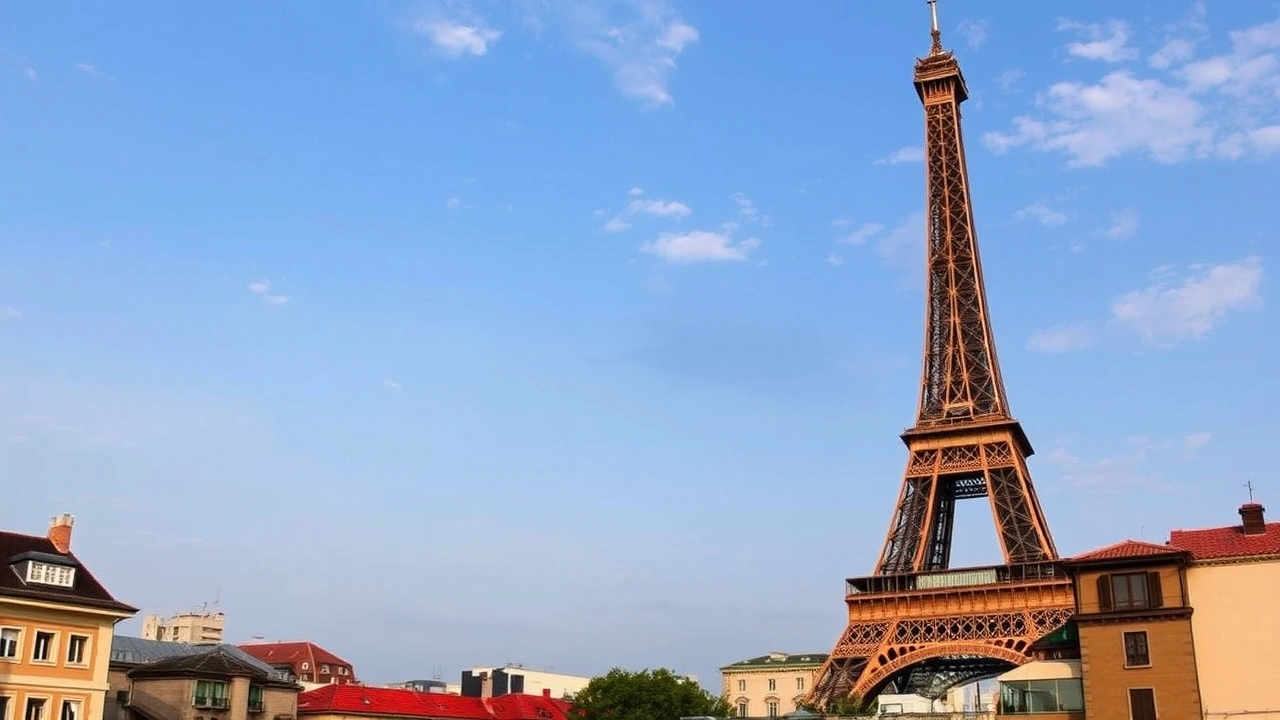
– around the Eiffel Tower, the Louvre, Notre-Dame, Montmartre / Sacré-Cœur, the Champs-Élysées, and the banks of the Seine;
– major train stations: Gare du Nord, Gare Saint-Lazare in particular;
– very busy metro stations and RER trains to airports or the suburbs.
Pickpocketing is omnipresent: an open bag on your back, a phone left on a cafe table, a wallet in a back pocket are enough to tempt thieves.
Several well-established scams thrive there:
Several scams are frequently encountered in Parisian tourist spots. The ‘friendship bracelet’ involves tying a thread around a person’s wrist near Sacré-Cœur before demanding money. The ‘fake charity petition’ sees individuals, often near the Eiffel Tower, ask for a signature for a cause and then aggressively demand a donation. The ‘gold ring on the ground’ scam involves a stranger pretending to find a precious jewel to try to sell it, when it’s worthless. The ‘rose offered’ is a trap where someone hands over a flower as a gift before demanding payment. Finally, ‘fake help at ticket machines’ offers assistance to buy a metro ticket, but sells an expired ticket, keeps the difference, or attempts to memorize bank codes.
The golden rule for an expat as well as a tourist is very simple: never stop for this type of approach and respond with a “No, thank you” while continuing to walk.
Lyon: Pleasant City, Moderate Crime
Lyon, the country’s third-largest city, is generally perceived as safe for expats. Crime there is considered moderate, and violent crimes remain less frequent than in other major European metropolises. Expats are happy to settle there for its economic dynamism, universities, and heritage.
The main risks (theft, vandalism, burglaries) require increased vigilance in some sectors like parts of La Guillotière, the 8th and 9th arrondissements, and some areas of Villeurbanne, especially late at night. Conversely, neighborhoods like Presqu’île, Vieux Lyon, Croix-Rousse, or the 6th arrondissement are known for their atmosphere and good safety level and are very popular with expats.
Lyon’s public transport (metro, tram, bus) is considered safe and well-monitored. Basic vigilance is still required during peak hours or in major stations like Part-Dieu.
Public Transport: Safe, But Stay Alert
France has a dense and generally reliable public transport network: TGV, TER, metros in several cities (Paris, Lyon, Marseille, Lille, Toulouse, Rennes), trams in many urban areas. In most cases, traveling by metro, bus, or tram remains safe, even for women alone.
The main risks:
– pickpockets in crowded trains and connecting corridors;
– handbag snatching near doors (grabbed as they close);
– rare cases of harassment, especially on certain lines and late at night.
In Paris, about 43% of serious violence experienced by women occurred in public transport.
– on the metro, avoid staying near the doors with an open bag;
– carry your bag tightly in front of you;
– choose a crowded car, ideally near the driver at night;
– avoid visibly dozing off with your phone in your hand.
Taxis, Ride-Sharing Services (VTC), and Fake Drivers
In major train stations and airports, fake taxis are a classic: unlicensed drivers offering “taxi” or “Uber” outside terminals, charging excessive prices or taking detours.
To avoid this: avoid risky situations and take preventive measures.
– only use official taxi ranks (vehicle with a roof light, a meter) or recognized apps like G7 or Uber;
– always check that the ride-sharing vehicle’s license plate matches the one shown in the app;
– decline unsolicited offers in the airport or train station hall.
Official taxis have regulated fares from Paris airports to the city center; a driver demanding a sum well above should alert you.
Most Frequent Scams Targeting Expats
Beyond petty tourist theft, some schemes more specifically target new arrivals, often still unfamiliar with the local system.
Rentals and Housing: The Trap of Too-Good-To-Be-True Listings
Rental scams particularly affect foreign students and expats looking for an apartment from abroad. The pattern is often the same:
– very attractive ad on a platform like Leboncoin or Facebook, with a abnormally low rent (e.g., around €400 for a Paris apartment, well below market rate);
– pretend landlord very accommodating, sometimes with a stolen ID or falsified contract;
– request to wire a deposit or security via money transfer systems before the viewing (Ria, Western Union, etc.);
– impossibility of seeing the property other than in photos; refusal of a live video tour.
To protect yourself:
In France, never transfer any money before signing the lease and verifying the landlord’s identity. Demand a physical visit or, failing that, a live video tour. Be wary of abnormally low rents and, for a first home, prefer recognized platforms or real estate agencies.
Fake Police, Fake Inspectors, and Identity Theft
Among the scams targeting foreigners:
– fake plainclothes police officers: an individual shows a “police card” and pretends to check your papers, wallet, even your bank card. The goal is to steal money or note card numbers.
– fake inspectors on the metro or train: people without a credible uniform, demanding a cash fine on the platform.
Useful reminder: a real police officer or gendarme can be in plain clothes, but they will present an official professional ID card, and if in doubt, you can demand to go to the nearest police station. Real transport inspectors wear uniforms or clear badges, and fine payments can be made by card.
“Institutional” Scams: Fake Emails, Fake SMS, Fake Calls
Fraudsters exploit trust in French institutions: Social Security, taxes, embassy, training account, etc. The principle: a message (email, SMS, sometimes a call) perfectly imitating an administration’s graphic design, urging you to click a link or give information.
Among the most frequent:
– fake messages from ANTAI (parking fine agency) claiming you have an unpaid fine to settle online: in reality, ANTAI does not contact by email or SMS but by postal mail;
– fake Health Insurance (Ameli) refunds, asking for your bank details;
– calls pretending to be from an embassy to “regularize” a visa file in exchange for payment;
– aggressive solicitation regarding your Personal Training Account (CPF) to obtain your banking data.
The rule: never click on a link received in an unsolicited message. If in doubt, go directly to the official website (by typing the address yourself) or call the official number listed on official documents or government websites.
Financial Security and Cybercrime: A Key Issue for Expats
Data shows a global explosion in cybercrime, and France is not immune. French banks and the French Banking Federation have conducted several studies revealing how sensitive the issue is for the population.
What French Studies Reveal
Surveys conducted for European Cyber Security Month paint an instructive picture:
– in 2023, 87% of French people consider their banking data the most sensitive of all;
– 85% fear identity theft, as many dread an attack on their bank data;
– more than half the population says they have faced an attempted banking data fraud, and about 8% admit to having actually been defrauded.
And yet, prudent behavior is slightly declining: fewer people check if a site is secure, read the terms and conditions, or research a site before buying. Nearly one in five French people still admit to clicking links in messages supposedly sent by their bank.
For an expat, it’s essential to adopt good practices from the moment they open an account, especially to pay rent online and manage French subscriptions from abroad.
Digital Best Practices to Adopt
Recommendations from banks and French authorities converge:
– never share your banking login credentials, PIN codes, passwords, or one-time codes (OTP), even with someone claiming to be your advisor;
– your bank will never ask you over the phone or email to validate a transaction by reading a code received via SMS;
– type your bank’s address yourself into your browser instead of clicking links in emails;
– prefer accessing your accounts from your own devices, on a private network or via a VPN rather than on free public Wi-Fi;
– use long, unique passwords for each service, ideally managed by a password manager;
– enable, whenever possible, two-factor authentication (MFA/2FA) on your sensitive accounts (bank, email, social media).
Nearly 80% of French people report using a unique password for their online banking, according to studies.
Public Wi-Fi, Suspicious Apps, and Phishing
The tools expats use most – cafe Wi-Fi, ride-sharing apps, social media – are also exploited by cybercriminals:
– free Wi-Fi at airports, hotels, bars can be unencrypted, even falsified (fake network using the name of the city or town hall, for example) to intercept your data;
– fraudulent mobile apps can contain malware (adware, Trojans) and sometimes even end up on official app stores;
– phishing emails or SMS copy logos and graphic charters of large companies or administrations.
A simple and effective reflex for a new arrival: buy a French SIM card or a local eSIM and use mobile data rather than open Wi-Fi for any sensitive operation (banking, purchases, email access). And, of course, keep your devices updated and protected by a passcode, pattern, or even biometrics, with auto-lock enabled.
Securing Your Home: The Other Pillar of a Smooth Expatriation
Whether it’s a rented studio in Lyon, a Paris apartment, or a house in the provinces, protecting your home largely determines your peace of mind.
Burglaries: A Manageable Reality
Statistics remind us that burglaries are increasing, especially in isolated vacation homes and during key periods (summer, Christmas, Easter). But the probability of being a victim remains generally low, especially if you live in a year-round occupied building.
Burglars are often opportunists who prefer:
– houses obviously unoccupied (neglected garden, overflowing mail, shutters constantly closed or… always open);
– poorly closed windows or doors, open garages, ladders or tools left outside.
A burglary lasts on average about ten minutes; any measure that complicates the task or takes time works in your favor. Hence a series of concrete tips.
Simple Physical Best Practices
A few inexpensive reflexes can significantly reduce the risk:
To secure your home, always lock doors and windows, even during a short absence. Invest in quality locks, ideally A2P certified. Inspect and reinforce vulnerable areas like old glass doors or windows hidden by dense vegetation. Eliminate potential climbing points by trimming trees near openings and storing chairs, trash cans, and trellises. Install motion-sensor outdoor lighting and always store ladders and garden tools in a locked shed.
For an apartment, it’s often advised: to carefully check the overall condition of the property, to inquire about fees and taxes, and to examine the geographical location to ensure proximity to transport, shops, and services.
– to equip the door with a peephole and a security chain;
– to avoid doors with large glass panels easy to break;
– to have a multi-point lock installed by a professional if needed.
French home insurance policies sometimes set minimum requirements (security lock, ground-floor shutters, even two locking points in some areas considered higher risk like Île-de-France or Alpes-Maritimes). Checking what’s in your contract is essential: in case of a claim, non-compliance with these requirements can complicate compensation.
Alarms, Video Surveillance, and “Lived-In House” Appearance
For expats owning a second home or being away for long periods (missions abroad, extended travel), more advanced solutions exist:
Discover the main technological solutions to protect your home, deter intrusions, and monitor your property remotely.
Choose a simple local siren or a 24/7 monitored system that sends an alert to a central station in case of intrusion.
Connect cameras to a mobile app to remotely view and check activities at your home in real time.
Program lighting, TV, or shutters to simulate occupancy and deter burglaries while you’re away.
Some sophisticated systems (like camera + remote recording packs, or very comprehensive smart home setups) can cost several thousand euros, but more affordable solutions exist. Insurers may, in some cases, grant a premium reduction if a certified alarm is installed.
Beyond technology, a few very simple tricks can give the illusion of an occupied house:
– use timers to turn on lamps in the evening, even a radio or TV;
– entrust keys to a trusted neighbor to open and close shutters regularly;
– ask a relative to mow the lawn or minimally maintain the garden;
– put up a “Premises under surveillance” or “Beware of the dog” sticker (even without a dog…);
– display a security company plaque, even if you use a different system.
Operation Tranquillité Vacances: A Little-Known Free Service
A very practical asset for an expat who owns or long-term rents is the Operation Tranquillité Vacances program. It’s a free service offered by the police and gendarmerie: you report your dates of absence (from a few days to several months depending on your type of residence), and your home is included in their surveillance patrols.
Concretely:
– for a primary residence, you can request surveillance for a period of 3 to 90 days;
– for a secondary residence, the gendarmerie can extend vigilance up to 12 months;
– after each check, law enforcement often leaves a note in the mailbox, confirming their visit.
To register, simply go to the police station or gendarmerie brigade, or fill out an online form depending on the department. This service, still little known among expats, is a very simple peace-of-mind tool.
In Case of Burglary: What to Do (and Not to Do)
If, despite all these precautions, you discover a burglary:
1. Call immediately 17 or 112. 2. Do not touch anything: police or gendarmes need to preserve traces and evidence. 3. File a report (plainte) at the police station or gendarmerie. 4. Notify your insurer within 48 hours (a frequently mentioned timeframe in contracts). 5. Keep invoices, photos, certificates of your valuables to facilitate compensation.
Consumer associations recommend photographing important items (artworks, jewelry, expensive equipment) regularly and keeping these images in a separate place (cloud, safe, etc.). In the absence of a receipt, these photos can serve as evidence.
Daily Scams and Fraud: How to Stay in Control
Beyond housing, an expat’s daily life confronts a whole range of small scams, sometimes confusing for those not yet fluent in the language.
Restaurants, Cafes, and Hefty Bills
In ultra-touristy areas, some unscrupulous establishments practice:
– overcharging;
– adding unordered items (a whole bottle of wine instead of a glass, mineral water instead of free tap water);
– different prices between the menu board outside and the final bill.
In France, tap water is free at restaurants: just ask for “a carafe of water.” Checking the menu and the bill before paying is a healthy reflex. In case of a serious dispute, you can contact the Departmental Directorate for Consumer Protection and Fraud Control (DGCCRF).
Payment Scams: Bills and Cash Exchanges
Some tricks consist of:
– discreetly swapping a high-value bill for a low-value one and then claiming you made a mistake;
– giving you change with a counterfeit bill.
Limiting the use of large bills as much as possible, preferring card payment (with a visible terminal), and counting change in front of the merchant remain the best ways to reduce these risks.
Markets, Street Vendors, and Street Games
On some tourist spots, street games like “bonneteau” (cup and ball) thrive. These games are rigged and run by a team (fake winners, spotters); it’s impossible to win in the long run.
Street vendors (often souvenirs, light-up gadgets, amusement park rides, etc.) can become insistent, especially if you touch the merchandise. Again, it’s better to avoid any contact with items if you don’t intend to buy and simply politely refuse.
Health, Emergencies, and the Medical System: Securing Your Well-being Too
Safety isn’t just about avoiding thieves: it’s also knowing how to react in case of an accident, illness, or urgent need for care.
Numbers, Services, and First Reflexes
In France:
– for a serious illness, life-threatening distress: call 15 (SAMU/emergency medical services) or 112;
– for a fire, road accident, urgent rescue: 18 (firefighters) or 112.
The SAMU operates hospital-based call centers, capable of triaging emergencies: a doctor assesses the severity and sends, if necessary, an ambulance or a mobile intensive care unit (SMUR). Firefighters also frequently intervene for victim rescue, especially in rural areas.
In urban areas, the SOS Médecins service offers home visits 24/7, depending on availability in your geographic area.
Health Insurance, Expatriation, and Cyber Risks
The French healthcare system is renowned for its quality. For a non-European expat:
– a comprehensive private insurance is necessary to obtain a long-stay visa;
– after three months of regular residence, it is in principle possible to apply for affiliation to the public system (PUMa).
Meanwhile, health authorities warn against phishing pretending to be from Social Security (Ameli), offering immediate refunds in exchange for your bank details. Never enter sensitive data via a link received by SMS or email in this context.
Discrimination, Harassment, and Safety for Women and Minorities
France has a legal arsenal against discrimination (sex, sexual orientation, disability, origin, etc.). The country is often perceived as relatively welcoming for LGBTQ+ people, and same-sex marriage has been legal for several years.
Expat women may face street harassment (whistling, inappropriate comments, persistent catcalling), particularly in certain neighborhoods and late at night. Although these behaviors are socially rejected, they exist. Advice is frequently given on how to deal with it.
– maintain a confident attitude, a firm “no thank you” is often enough to stop advances;
– avoid excessive drinking in unfamiliar settings;
– watch your drink in bars and clubs;
– prefer taxi or ride-sharing services to get home late, especially if alone.
In case of sexual violence or a distressing situation, a specialized national hotline exists: Viols Femmes Informations, at 0 800 05 95 95 (free call). Associations like La Maison des Femmes in Paris can also support victims.
Settling Long-Term: Visas, Integration, and New Requirements
A smooth expatriation also requires clear administrative status. For non-Europeans, several types of long-stay visas exist: “visitor” visas, talent residence permits, family reunification, etc. Some schemes, like the Talent Passport, are for qualified profiles or investors, with permits lasting up to four years.
French authorities now require French language levels (A2, B1, or B2 depending on the permit) and passing a civic knowledge exam to obtain certain multi-year residence permits, the long-term resident card, or citizenship. These requirements are part of the integration process. An exemption from language tests is usually granted to people over 65 for the resident card.
For an expat, anticipating these language requirements also has a security dimension: the stronger your French, the more you can:
– understand safety instructions;
– communicate with police, doctors, or administrations;
– avoid contractual misunderstandings (lease, insurance, subscriptions).
In Summary: A Smooth Expatriation Rests on a Few Pillars
Living in France peacefully does not require becoming a security expert. However, integrating a few key principles can reduce most risks:
For a safe stay, it’s crucial to know the emergency numbers (112, 17, 15, 18) and understand the role of the Police and Gendarmerie Nationales. Be vigilant in tourist spots and on transport, be wary of insistent approaches, spontaneous gifts, and dubious collections. For housing, never transfer any funds without a signed lease, real visit, and identity verification. Adopt good digital reflexes (unique passwords, skepticism towards phishing, limited use of public Wi-Fi). Secure your home (locks, lighting) and use the Operation Tranquillité Vacances service if needed. Finally, learning a few basic French phrases can be invaluable for asking for help.
With these basics, France reveals itself for what it is for most expats: a country where you can live comfortably, enjoy a high-performing healthcare system, rich cultural heritage, a dense transport network, and an overall safe environment, provided you bring reasonable vigilance. In other words, security is not a barrier to expatriation, but an aspect to integrate lucidly to fully savor this new life.
A 62-year-old retiree, with a financial estate exceeding one million euros well-structured in Europe, wanted to return to France as a tax residence while optimizing his tax burden and diversifying his investments. He wanted to maintain some economic ties abroad. Allocated budget: €10,000 for complete support (tax advice, administrative formalities, relocation, and estate structuring), without forced asset sales.
After analyzing several scenarios (staying abroad, Italy, Portugal, Spain), the chosen strategy was to target France by combining favorable schemes for new tax residents, access to a vast banking and financial network, and the possibility of structuring a primary residence in an area with moderate local taxation. The mission included: pre-residence tax audit (potential exit tax, tax treaties), choice of return regime, obtaining residence and registration with social organizations, organizing banking residence, plan for securing against the French tax administration (183 days, center of economic interests, proof of non-double residence), connection to a local network (tax lawyer, notary, investment experts), and overall estate integration (income optimization, real estate, inheritance).
Planning to move abroad? Contact us for custom offers.
Disclaimer: The information provided on this website is for informational purposes only and does not constitute financial, legal, or professional advice. We encourage you to consult qualified experts before making any investment, real estate, or expatriation decisions. Although we strive to maintain up-to-date and accurate information, we do not guarantee the completeness, accuracy, or timeliness of the proposed content. As investment and expatriation involve risks, we disclaim any liability for potential losses or damages arising from the use of this site. Your use of this site confirms your acceptance of these terms and your understanding of the associated risks.

Cyril Jarnias is an independent expert in international wealth management with over 20 years of experience. As an expatriate himself, he is dedicated to helping individuals and business leaders build, protect, and pass on their wealth with complete peace of mind.
On his website, cyriljarnias.com, he shares his expertise on international real estate, offshore company formation, and expatriation.
Thanks to his expertise, he offers sound advice to optimize his clients' wealth management. Cyril Jarnias is also recognized for his appearances in many prestigious media outlets such as BFM Business, les Français de l’étranger, Le Figaro, Les Echos, and Mieux vivre votre argent, where he shares his knowledge and know-how in wealth management.