 Published on and written by Cyril Jarnias
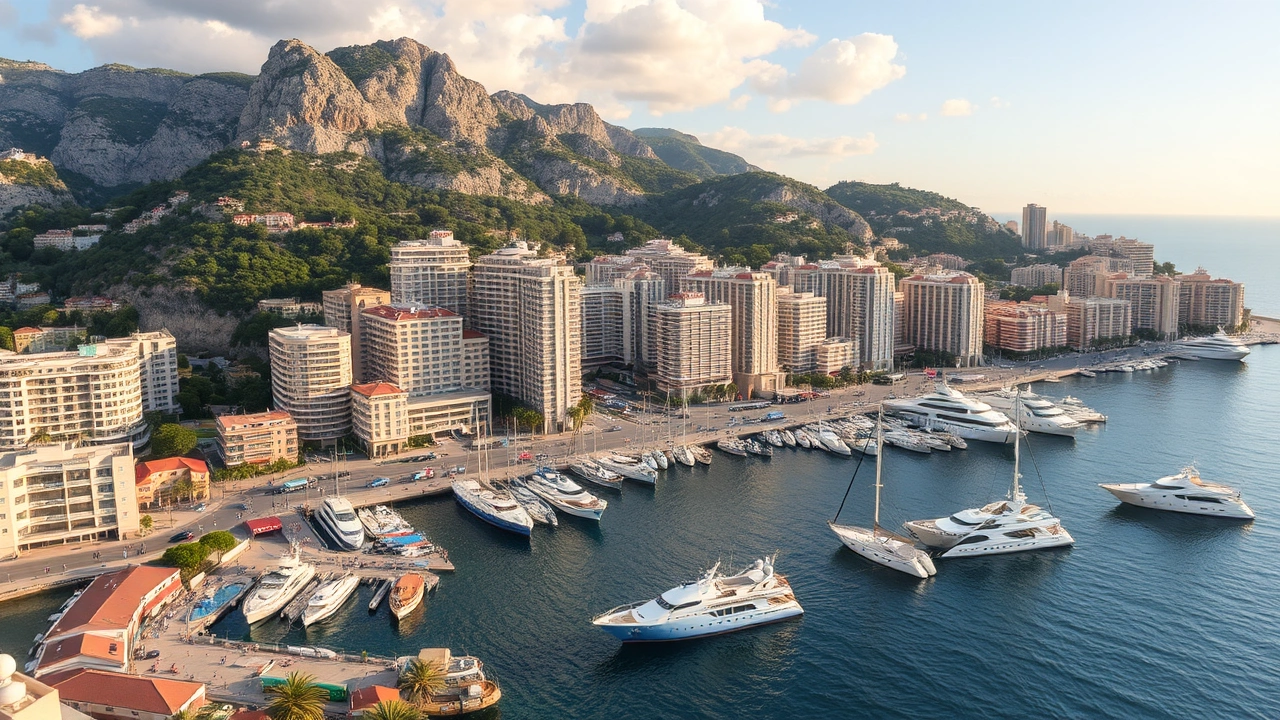
Monaco is tiny on the map – just 2.1 km², smaller than Central Park – but gigantic when it comes to high-end education. In this micro-state where one in three residents is a millionaire and life is meticulously organized, the question of international schooling has become central for expatriate families and residents alike.
The principality offers a high-performing public system, the International School of Monaco and the British School of Monaco. Within 45 minutes, the French Riviera also offers a network of international schools in Nice, Mougins, or Sophia Antipolis, making the choice crucial.
This article provides a detailed overview of the best international schools in Monaco, with hard data, concrete comparisons, and practical benchmarks to help parents navigate an environment that is as demanding as it is competitive.
A Highly Structured and Resolutely International Educational Context
The Monegasque education system is based on a French foundation but with a distinct international flavor. Education is compulsory from ages 6 to 16, although, in practice, most children start preschool at age 3.
The Principality has ten French-language public schools (preschools, elementary schools, middle school, general and technological high schools, a hospitality and vocational high school) and several private institutions, either state-contracted or independent. All public schools, as well as state-contracted private schools, are recognized as French schools abroad and follow the curriculum, schedules, and exams of the French Ministry of Education.
The Monegasque specificity lies in several very concrete points:
The Monegasque school system is characterized by small class sizes, promoting individual student follow-up. Language learning is central: English is taught from age 3 in some public schools, and Monegasque is compulsory from CE2 (approx. 3rd grade) through middle school, then optional in high school. Most students thus master, in addition to French, English and often a third language (German, Italian…). European and international sections in public middle and high schools allow for specific reinforcement of English.
In this very Francophone landscape, two institutions stand out for families seeking a truly international or English-speaking curriculum: the International School of Monaco (ISM) and the British School of Monaco. In addition, for post-secondary paths, there is the International University of Monaco, a 100% English-language university specializing in business.
Statistical Overview: Who are the Students in Monaco?
To gauge the scale of the educational offering, one must look at the numbers. In the 2024/25 school year, 6,565 students are enrolled in Monaco, a record after several years of growth. Public schools accommodate about two-thirds of these students, with private institutions – state-contracted and independent – sharing the rest.
An overview of the fundamental principles governing and stabilizing the entire system.
The system maintains a stable state through constant adjustments and feedback, not through static rigidity.
All elements of the system are connected; a change in one impacts the others.
The system’s ability to regulate its internal environment to maintain optimal operating conditions.
Presence of control mechanisms, often in the form of feedback loops, to correct deviations.
| Indicator (2024/25) | Estimated Value |
|---|---|
| Total number of students | 6,565 |
| Share of public schools | 65–66% (approx. 4,227 students) |
| Share of state-contracted private schools | 21% |
| Share of independent private schools | 14% |
| Primary school share | 46% |
| Secondary school share | 54% |
| Students in specialized programs | 1% (84 students) |
| Male / Female distribution | 52% / 48% |
| Nationalities represented | 82 |
| Share of French students | 38% (2,528) |
| Share of Monegasque students | 19% (1,320) |
| Students residing in the Principality | 68% |
| Students living in neighboring communes | 23.5% |
| Students coming from the rest of the Alpes-Maritimes | 8% |
The key data point for foreign families: so-called “Anglo-Saxon” students are overrepresented in the private sector, and particularly in international schools. This is where British curricula or IB (International Baccalaureate) programs are concentrated.
International School of Monaco: The Premier IB Reference in the Heart of the Principality
It is hard to discuss the best international schools in Monaco without starting with the International School of Monaco. Founded in 1994, this independent, co-educational, non-profit private school has become, over three decades, a pillar of international education in the region.
A School from Preschool to the International Baccalaureate
The International School of Monaco educates over 830 students, aged 3 to 18, representing more than 60 nationalities. It is one of the 17 educational establishments in the Principality, but above all the only independent international school offering the full continuity of the IB system.
The institution is an IB World Continuum School, meaning it offers all four IB programs:
– PYP (Primary Years Programme) for preschool and elementary classes,
– MYP (Middle Years Programme) for middle school,
– DP (Diploma Programme) – the “IB diploma” – for the final two years,
– CP (Career-related Programme) for students combining studies with more vocational training.
This structure is rare: globally, only a minority of international schools offer the complete “IB Continuum” from ages 3 to 18.
Bilingualism in Primary, English in Secondary
One of the major strengths of the International School of Monaco is its linguistic approach. In primary school (Kindergarten to Year 6), instruction is bilingual French/English. Children work in both languages, with a highly structured weekly organization: some days are dedicated to subjects in French, others to subjects in English. The bilingual section for ages 7–11 operates, for example, with classes in French on Mondays and Thursdays, and in English on Tuesdays and Wednesdays.
In secondary school (Year 7 to Year 13), the language of instruction switches almost entirely to English. French remains a core subject, but the rest of the disciplines are taught in the language of Shakespeare. From the start of middle school, all students add a third language from a very broad range: Spanish, German, Italian, Russian, or even Mandarin or Chinese within the IB framework. Monegasque, however, is not offered.
This is the number of years, according to research, needed to fully master a foreign language.
A New Iconic Address on Avenue Princesse Grace
For nearly thirty years, the International School of Monaco was located on the port, Quai Antoine Ier, in the Condamine district. The school even took over the former Yacht Club building, transforming it into an educational space.
Since September 2024, it has moved to a brand-new site on the ground floor of the Testimonio II tower at 43 Avenue Princesse Grace in the Larvotto district. This skyscraper hosts not only the school but also apartments, private residences, and a nursery.
The new campus benefits from modern infrastructure: connected classrooms, science labs, coworking space, relaxation areas, and especially a dedicated performing arts center for music, theater, visual arts, and gymnastics. Sports facilities are split between these spaces and the city’s own amenities, like the Stade Louis-II.
Academic Results and Rankings: A School in the International Elite
Academic performance consolidates the reputation of the International School of Monaco. Over recent IB cohorts, the average diploma score exceeds 35 points out of 45, with some years reaching 37 points. Scores well above the global IB average, which is around 30 points.
This excellence is reflected in specialized rankings:
– The school was ranked among the top three IB schools in the European Union/EEA for 2021 results, according to ib-schools.com.
– The Carfax / Spear’s Schools Index has repeatedly ranked it among the top ten private schools in Europe (excluding Switzerland and the UK).
– In 2024 and 2025, the Spear’s Schools Index included the school in its Global Top 100, while Carfax Education placed it in the Top 150 private schools worldwide.
The International Baccalaureate (IB) Diploma is recognized in over 120 countries, notably by the French Ministry of Education. This international recognition opens a wide range of possibilities for further study, allowing students to enter highly selective universities in the UK (like Oxford or St Andrews), the US (like the University of Pennsylvania or Columbia), Canada, or elsewhere in Europe.
An Educational Project Focused on Well-being and Global Citizenship
Beyond the numbers, the International School of Monaco champions a clear vision: “International education with distinction“, with three pillars – excellence, well-being, multilingualism.
The school promotes four core values: respect, integrity, learning, kindness. These underpin a project aimed at developing happy, confident, independent, polyglot, and responsible students.
Concretely, this translates to:
– A wellbeing department led by a Head of Wellbeing, supported by a psychologist and a school counselor.
– A structured PSHE (Personal, Social and Health Education) program, addressing mental health, social life, and digital citizenship.
– External recognition via the Optimus Wellbeing Award, which audits wellbeing policies and practices.
Pedagogically, the school fully embraces the IB philosophy: inquiry-based learning, interdisciplinary, critical thinking, community engagement through the CAS (Creativity, Activity, Service) program, writing a research paper (Extended Essay), and Theory of Knowledge courses.
Sports, Arts, Clubs: A Dense Extracurricular Life
The international dimension is also reflected in the range of activities offered. The International School of Monaco provides:
– Sports clubs (soccer, volleyball, swimming, basketball, taekwondo, yoga, athletics, badminton, table tennis…), often associated with local, regional, or international competitions.
– An Outdoor Adventurous Activities program with sea outings, nipperboarding, snorkeling, jumps, and apnea, in partnership with organizations like École Bleue.
– A rich arts program: music, theater, dance classes, the possibility to take ABRSM (music) and LAMDA (drama) exams, performances on stage in the new Performing Arts Centre.
– Academic and civic clubs: Model United Nations, entrepreneurship club, debates, languages, preparation for the Duke of Edinburgh’s International Award.
The school thus aligns with the tradition of major international schools that invest in character development in all its dimensions, not just academic results.
High Tuition Fees, Reflecting its Reputation
As is often the case in this high-end segment, quality comes at a cost. Several sources indicate fee ranges for the International School of Monaco. For the 2024/25 school year, a detailed schedule provides the following amounts:
| Level / Grade | Indicative Annual Fees (2024/25) |
|---|---|
| Kindergarten (afternoon class) | €8,900 |
| Kindergarten (morning class) | €13,200 |
| Transition to Grade 3 | €25,700 |
| Grades 4 to 6 | €27,600 |
| Grades 7 to 9 | €29,600 |
| Grades 10 to 13 | €32,800 |
Other, older sources mentioned a range from €5,430 (preschool) to €19,440 (high school) or even from €6,230 to €23,460. In any case, the International School of Monaco is clearly at the top of the scale, often presented as the most expensive international school in the region.
Tuition fees are typically paid in two installments: 40% in the spring and 60% at the end of summer. They also include registration fees, a development fund contribution, and may include additional costs for optional activities or individual educational support. A sibling discount is applied, which can reach 20% for the fifth enrolled child.
In return, many services are included:
– Supplies, textbooks, and school materials,
– Annual CAM bus pass,
– IGCSE and IB exam fees,
– iPad for Grades 4 to 9, MacBook for Grades 10 to 13,
– Educational trips, major school trips for certain grades,
– Meals for most levels up to the equivalent of 11th grade.
Admissions: A Selective but Open Process
The International School of Monaco practices a selective admissions policy, while adhering to a principle of non-discrimination (gender, religion, origin, nationality). Applications are made via an online platform, usually starting in September for the following academic year.
The process is based on: the fundamental principles of the chosen methodology, the analysis of relevant data, and continuous adaptation based on participant feedback.
– Review of report cards from the two previous years, as well as any exam results,
– Internal assessments: classroom observation for younger children, standardized tests (like CAT4) for grades from around age 7–8,
– An interview (in-person or remote) for older candidates, especially for entry into the IB Diploma or Career-related Programme,
– A thorough evaluation of English proficiency, particularly for secondary school grades.
To enter the IB Diploma Programme (DP), the school generally expects the equivalent of at least four B grades and two C’s at GCSE/IGCSE (with mathematics and English passed). For the Career-related Programme (CP), the requirement is around four C’s, still with a solid foundation in English and mathematics. A minimum attendance of 85% is also required.
Another structuring principle: no single nationality or mother tongue should represent more than 25% of a class, in order to preserve a true cultural and linguistic mix.
British School of Monaco: The Booming 100% British Option
Facing the dominance of the IB at the International School of Monaco, the British School of Monaco offers a completely different positioning: a school strictly following the British curriculum, from primary to A-Levels.
Opened in November 2022, this still-young school has quickly found its place in the Monegasque landscape, particularly among English-speaking families wanting to stay within the UK system, or parents seeking a direct path to UK universities via A-Levels.
A Complete British Curriculum, with A-Levels
The British School of Monaco is presented as the only school in the Principality to deliver the full British program up to A-Levels. Concretely, this means:
– Primary program aligned with the National Curriculum for England,
– Secondary cycle inspired by the GCSE system, although specific exam details are not all published,
– Final cycle built around A-Levels, those in-depth specializations which are the benchmark for entry into UK universities.
Located at 8 Avenue de Fontvieille, in the district of the same name near the Stade Louis-II and numerous sports facilities, the school operates from 8 am to 4:30 pm, Monday to Friday, a rhythm close to the classic British model, more concentrated than the typically extended French or Monegasque school day.
The Fontvieille School
British Ethos, Debates, and Duke of Edinburgh’s Award
The British School of Monaco emphasizes an educational philosophy based on well-being and moral dimension. The school’s discourse highlights a “strong moral purpose,” with the well-being of students and teachers at its core, and reflection on the relationship with oneself, others, and life.
Two elements illustrate this orientation:
– The structured use of debate, with weekly sessions where students learn to argue, listen, defend a point of view – a signature of high-level British schools.
– The introduction of the Duke of Edinburgh’s Award, a flagship program in the Anglo-Saxon world, which combines sports commitment, community service, skills development, and expeditions. This scheme is particularly valued by universities and fits well with an A-Levels pathway.
Academically, the British School of Monaco has received positive feedback from the Council of British International Schools (COBIS), a network that imposes demanding criteria regarding teaching quality and alignment with British standards.
A Strategic Alternative to the International School of Monaco
For an international family, the choice between the International School of Monaco and the British School of Monaco often hinges on several criteria:
– Higher education plans: The IB opens doors widely worldwide, including in France via Parcoursup; A-Levels remain the royal road to the UK and are well accepted elsewhere, but sometimes less familiar to some continental universities.
– Child’s profile: Some students thrive better with the in-depth specialization of A-Levels, others prefer the broadness of the IB with its six subjects and its three TOK/EE/CAS components.
– Languages: The British School of Monaco is resolutely English-speaking, while the International School of Monaco capitalizes on strong bilingualism in primary school.
– Pedagogical style: IB rhymes with project-based learning, transdisciplinarity, reflexivity; the traditional British system is often more linear, with a very strong emphasis on disciplinary depth in the final years.
In any case, the presence of these two international schools just a few hundred meters apart offers families a choice that, for a territory of 2.1 km², is exceptional.
International Schools on the French Riviera: Serious Options Within an Hour
Though Monaco concentrates much wealth, its size mechanically limits the number of schools. Many families – including those residing in the Principality – therefore look beyond the border, towards the French Riviera, to find an international school perfectly suited to their project.
Several institutions stand out within a radius of about 45 minutes, notably in Nice, Mougins, or Sophia Antipolis.
Mougins School: A Historic British Campus
Founded in 1964 near Mougins, Mougins School claims the status of a pioneer on the French Riviera. It welcomes about 510 students of 42 nationalities, aged 3 to 18, in a green setting easily accessible from the A8 motorway.
The program fully follows the British system, with IGCSEs, AS, and A-Levels. Results are remarkable: over the last four years, the school announces a 100% pass rate at A-Level. A guidance service (ISCO – International School Career Orientation) supports high school students in their university choices, often towards the UK, but also to Europe and North America.
The campus, very comprehensive, offers multiple sports, cultural, and scientific facilities, and provides numerous extracurricular activities.
International School of Nice (ISN): Dual US and European Accreditation
The International School of Nice, opened nearly four decades ago, is particularly popular with Monegasque families due to its proximity (a car or school bus ride from Monaco).
This school is unique in the region for holding dual American (MSA) and European (CIS) accreditation since 1990, regularly renewed. Instruction is in English from age 4, supplemented by five French lessons per week.
The academic path combines: theoretical instruction and professional practice.
– 10 IGCSE subjects in Years 10 and 11 (ages 14–16),
– An IB Diploma Programme in Years 12 and 13, recognized by over 120 countries, including France.
Classes are limited to a maximum of 22 students, often fewer in high school. The infrastructure is worthy of a university campus: science labs, libraries, art and music studios, a 300-seat theater, gym, sports fields, cafeteria. Clubs are held twice a week in the late afternoon, and a bus service serves Monaco morning and evening. Students can participate in international competitions (sports tournaments, arts festivals, academic games) organized by the Globeducate network.
EBICA International School: The Strict 50/50 Bilingualism Bet
In Sophia Antipolis, EBICA International School also caters to students aged 3 to 18, with a particularity: a strictly bilingual program, 50% in English, 50% in French, designed to ultimately ensure true dual language mastery.
The school offers three distinct paths to obtain a high school diploma.
Path focused on broad theoretical training, primarily preparing for higher education.
Path combining general and technological studies, leading to technological higher education.
Path focused on acquiring professional skills, with work placements, for direct entry into a trade or further study.
– French Baccalaureate,
– International Baccalaureate (IB),
– British A-Levels.
Tuition fees are significantly below those in Monaco: around €9,000 per year for ages 3–11, €14,000 for ages 11–16, and €14,500–€16,500 for ages 16–18, depending on the chosen track. Extracurricular activities are inspired by LAMDA frameworks, with a focus on public speaking, theater, music, languages, and sports.
EIPACA: The Tuition-Free Public Bilingual Boarding School
Further from Monaco, but of interest to some families, the École Internationale Provence-Alpes-Côte d’Azur (EIPACA) offers an original formula: a public state school, tuition-free, with weekly boarding and bilingual instruction.
Students there study up to six foreign languages (Chinese, English, German, Italian, Japanese, Spanish), with a principle of parity between French and another language, and up to 80% of middle school courses taught in English. For families willing to accept the distance and boarding, EIPACA offers a very rare combination: high academic level, zero tuition (excluding ancillary fees), intensive language immersion.
IB, French Bac, A-Levels: Three Paths for Different Profiles
Choosing an international school, in Monaco or on the French Riviera, often means choosing an educational system. The three main pathways offered – French Baccalaureate, International Baccalaureate, A-Levels – each have their own logic.
The French Bac is centralized and academic, emphasizing written work and general culture. The International Baccalaureate (DP) is structured around six subjects, an extended essay, and creative and sports activities, aiming to develop critical and international thinking. British A-Levels allow in-depth specialization in three or four subjects, ideal for targeted university pathways.
In Monaco, the International School of Monaco represents the IB pathway taken to its maximum, while the British School of Monaco embodies the A-Levels route. The public system and state-contracted schools (like FANB) offer the French Baccalaureate (general, technological, or vocational), sometimes enriched with European or international sections.
Tuition Costs: The Budgetary Reality of an International Education
The French Riviera is one of the most expensive regions in France, and Monaco ranks among the most costly territories in the world. Education is no exception to this logic.
Estimates commonly cited for international schools in the region provide a rough idea:
| School Level | Typical Annual Range (region) |
|---|---|
| Pre-school / Kindergarten | ≈ €6,000 |
| Grades 1–5 (Primary) | ≈ €10,000 |
| Grades 6–8 (Middle School) | ≈ €13,000 |
| Grades 9–10 | ≈ €15,000 |
| Grades 11–12 | ≈ €17,000 |
In Monaco, amounts rise a notch, especially for the International School of Monaco, whose fees can exceed €30,000 per year in high school. Neighboring schools like EBICA or ISN remain below that, although their rates are far from modest.
Families must also factor in:
– Registration and development fees (often several thousand euros the first year),
Additional costs: uniforms, transportation, cafeteria, optional activities, specific textbooks,
Potential fees for individual educational support or additional exams (music, theater…).
However, some schools offer sibling discounts, payment plans, or partial merit or needs-based scholarships, especially at the university level (the case of the International University of Monaco, for example).
International University of Monaco: Continuity in Higher Education
Even though it concerns only post-secondary studies, the International University of Monaco (IUM) completes the picture of the Monegasque international offering. Founded in 1986, this private, non-profit university has specialized in the fields of business, finance, luxury, sports, and international management.
All courses are taught in English, with a student population of over 1,100 students from more than 70 nationalities. Programs cover:
Discover our full range of academic programs, from Bachelor to Doctorate, designed to train tomorrow’s leaders in various sectors of expertise.
A 3-year program with various specializations: global business, communication, luxury, finance, sport. Foundational training for starting in the business world.
Specialized 16-month programs in finance, luxury management, sports management, and international management. Some, like the MSc in Finance, are ranked in the global top 20 (Financial Times 2025).
A Master of Business Administration (MBA) for executives and a Doctorate in Business Administration (DBA) for advanced research and expertise in business administration.
Tuition fees are around €17,000 to €20,000 per year for the Bachelor’s, and often over €27,000 per year for Master’s programs. The university offers merit scholarships and payment plans, but remains in a very high-end segment.
For a student who attended the International School of Monaco or another English-speaking international school, the IUM represents a natural continuity option, within the same ecosystem, with strong links to the Principality’s key sectors (finance, luxury, yachting, events).
How to Choose the Best International School in Monaco for Your Child?
In Monaco, the “best” international school depends less on an absolute ranking than on the fit between the child’s profile, the family’s priorities, and practical constraints. Several lines of thought are essential.
Academically, the International School of Monaco offers a highly structured IB environment, perfectly recognized internationally, with a strong bilingual dimension in primary and high-level IB results. The British School of Monaco offers the pure and hard British anchor, with a very clear focus on A-Levels and English-speaking universities.
Public schools and state-contracted institutions (e.g., FANB) in France offer excellent academic quality at a much lower cost. Instruction is mostly in French, with a reinforced program in English. However, they are not complete international curricula.
Logistical constraints also play a role:
– Living in Monaco or neighboring communes (Beausoleil, Cap-d’Ail, Roquebrune-Cap-Martin, La Turbie) allows full use of the Principality’s schools.
– Opting for a school in Nice, Mougins, or Sophia Antipolis means accepting daily commutes, sometimes offset by school bus services.
Finally, budget is a decisive factor: between a free public school, a state-contracted school at moderate cost, and a private international school with over €25,000 in annual fees, the gap is considerable. One must not forget the other costs of living in Monaco, where a student can quickly spend €2,000 to €3,000 per month on housing and living expenses if living independently.
Monaco, A Global Educational Microcosm
In summary, The best international schools in Monaco form a surprisingly dense network for a country of only 36,000 inhabitants. The International School of Monaco stands out as a heavyweight in the IB at the European level, the British School of Monaco provides a strong British alternative, and the neighboring schools in Nice, Mougins, or Sophia Antipolis further broaden the field of possibilities.
Add to that a very high-performing public system, multilingual from a young age, and an internationally recognized management university, and you get an educational ecosystem that rivals that of infinitely larger cities.
For international families seeking school stability and global openness, Monaco thus offers a seductive paradox: a tiny, ultra-secure territory, bathed in sunshine over 300 days a year, but connected to a network of schools and universities that, in itself, spans the globe.
A 62-year-old retiree, with over one million euros in well-structured financial assets in Europe, wanted to change his tax residence to permanently reduce his tax burden and diversify his investments, while maintaining strong ties with France. Budget allocated: €10,000 for comprehensive support (international tax advice, administrative formalities, relocation and asset structuring), without forced sale of assets.
After studying several attractive destinations (Monaco, Greece, Cyprus, Mauritius), the chosen strategy was to target Monaco for its absence of income tax for non-French individuals, its stable legal framework, security, and geographical proximity to France. The mission included: pre-expatriation tax audit (exit tax, tax deferral), obtaining Monegasque residency with rental/purchase of suitable housing, organization of health coverage, transfer of banking domicile, plan to sever French tax ties (183 days/year outside France, center of economic interests…), integration into a local network of experts (lawyers, private banks, family offices), and adaptation of the overall estate planning strategy (restructuring and preparation for wealth transfer).
Planning to move abroad? Contact us for custom offers.
Disclaimer: The information provided on this website is for informational purposes only and does not constitute financial, legal, or professional advice. We encourage you to consult qualified experts before making any investment, real estate, or expatriation decisions. Although we strive to maintain up-to-date and accurate information, we do not guarantee the completeness, accuracy, or timeliness of the proposed content. As investment and expatriation involve risks, we disclaim any liability for potential losses or damages arising from the use of this site. Your use of this site confirms your acceptance of these terms and your understanding of the associated risks.

Cyril Jarnias is an independent expert in international wealth management with over 20 years of experience. As an expatriate himself, he is dedicated to helping individuals and business leaders build, protect, and pass on their wealth with complete peace of mind.
On his website, cyriljarnias.com, he shares his expertise on international real estate, offshore company formation, and expatriation.
Thanks to his expertise, he offers sound advice to optimize his clients' wealth management. Cyril Jarnias is also recognized for his appearances in many prestigious media outlets such as BFM Business, les Français de l’étranger, Le Figaro, Les Echos, and Mieux vivre votre argent, where he shares his knowledge and know-how in wealth management.