 Published on and written by Cyril Jarnias
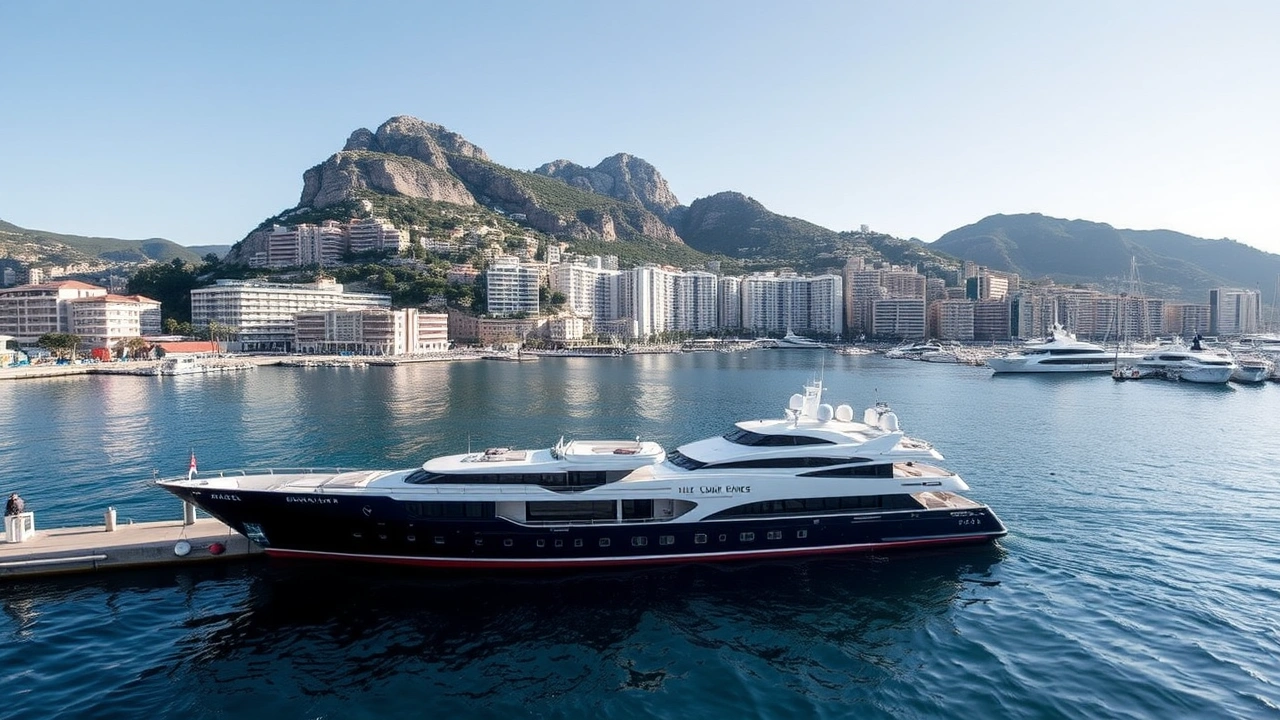
Moving to Monaco is a dream: idyllic climate, record security, ultra-favorable taxation, and a luxurious living environment. But behind the postcard image lies a simple fact: the principality is officially the most expensive country in the world to live in. For an expatriate, understanding the true cost of living in Monaco isn’t an option; it’s a condition for budgetary survival.
The real cost of living for an expatriate in Monaco is now precisely quantified by cross-referencing several sources: the Numbeo and Expatistan databases, official statistics from Monaco and France, as well as data from local real estate agencies.
One of the Highest Living Standards on the Planet
Monaco is ranked 1st out of 197 countries in terms of cost of living, with a price level approximately 6.8 times higher than the global average. Compared to the United States, the cost of living excluding rent is already about twice as high, and if housing is included, the gap climbs to nearly 2.5 times.
Overall estimates provide a first idea of the scale:
| Profile | Total Monthly Cost (with rent) | Cost Excluding Rent | Source / Note |
|---|---|---|---|
| Single Person (Monaco City) | ~€6,400 – €7,600 | ~€1,000 – €2,300 | Cross-referenced data, variable amounts |
| Family of 4 | ~€9,400 – €10,000 | ~€3,850 – €8,400 | Strong impact of the type of housing chosen |
Differences between estimates come from methodological variations and the low number of local responses, but they all agree on one point: living in Monaco requires a very high net income. Many specialists consider that a minimum net monthly salary of at least €7,000 is necessary to settle there without being constantly under financial pressure.
The average net monthly salary after taxes, which only covers one month of expenses.
Housing: The Number One Expense (By Far)
For an expatriate, rent or the purchase price of housing is, by far, the heaviest burden. Comparisons with France are telling: rents are about ten times higher than in France, and more than five times higher than in the United States.
Rents: From Very Expensive to Stratospheric
Data from several sources corroborate: a simple one-bedroom apartment reaches levels rarely seen elsewhere in the world.
| Type of Housing (Rental) | Average Monthly Price in Monaco | Average Monthly Price in France | Approximate Difference |
|---|---|---|---|
| 1 bedroom city center | ~€7,355 | ~€756 | + ~874% |
| 1 bedroom outside center | ~€6,981 | ~€606 | + ~1,050% |
| 3 bedrooms city center | ~€40,900 | ~€1,410 | + ~2,800% |
| 3 bedrooms outside center | ~€13,000 | ~€1,098 | + ~1,080% |
Some “lower” estimates mention averages around €5,900 for a 2-room apartment (T2) in the center and €13,500 for a 4-room apartment (T4) outside the center, but even these figures illustrate a reality: renting in Monaco costs several thousand euros per month, even for relatively modest square footage.
For an expatriate, it’s common to hear that “a decent one-room apartment” easily costs around €3,000 per month, and in sought-after neighborhoods like Monte-Carlo, a 40 m² (430 sq ft) one-bedroom easily surpasses €7,000 to €9,000 in monthly rent.
Neighborhoods: Price per Square Meter, a Key Indicator
The rent level varies significantly by neighborhood. Data per square meter allows for better comparison.
| Neighborhood | 1 room (€/m²/month) | 2 rooms | 3 rooms | 4 rooms | 5+ rooms | Average |
|---|---|---|---|---|---|---|
| Carré d’Or | 160 | 145 | 165 | 185 | 230 | 190 |
| Larvotto | – | 100 | 115 | 115 | 115 | 115 |
| Fontvieille | 95 | 95 | 130 | 115 | 85 | 95 |
| Monte-Carlo | 80 | 95 | 85 | 90 | 95 | 90 |
| Condamine | 80 | 80 | 80 | 120 | 80 | 100 |
| Jardin Exotique | 85 | 85 | 90 | 80 | 105 | 85 |
| Moneghetti | 70 | 70 | 80 | 75 | 75 | 75 |
Carré d’Or clearly dominates, with an average rent close to €190/m² per month, and family properties (5+ rooms) reaching €229–230/m². At the other end of the spectrum, Moneghetti offers the most “affordable” rents around €75/m². For a 70 m² (~750 sq ft) apartment there, you still exceed €5,000 monthly.
Villas or large apartments in Monaco’s Carré d’Or can rent for over €150,000 per month.
Very Tight Market, Strong Demand, Limited Rental Yield
Despite these high amounts, rental yields remain relatively modest. Official data shows a gross average yield of 3.26% in the fourth quarter of 2025 (2.87% in the second quarter). Land scarcity, pressure from international demand, and strict regulations keep purchase prices very high, which compresses yields.
A few orders of magnitude illustrate this paradox:
| Property Type (Purchase) | Approximate Purchase Price | Estimated Monthly Rent | Gross Yield |
|---|---|---|---|
| Studio | €1,790,000 | €3,300 | ~2.21% |
| 1 bedroom | €3,500,000 | €6,500 | ~2.23% |
| 2 bedrooms | €5,800,000 | €14,000 | ~2.90% |
| 3 bedrooms | €12,500,000 | €30,000 | ~2.88% |
| 4+ bedrooms | €29,500,000 | €150,000 | ~6.10% |
These yields are gross: once charges, maintenance, agency fees, possible taxes, and vacancy are deducted, the net yield typically falls 1.5 to 2 percentage points lower. For expatriates buying to live rather than invest, the issue is therefore not so much profitability but access to an ultra-exclusive market.
Purchase Prices: Among the Most Expensive Square Meters in the World
2024 figures give an average price of about €52,000 per square meter in the principality, with an average resale price around €6 million per property. Some international databases, converted to dollars, even show levels close to $78,000 to $82,000/m² in the center.
| Location | Average Price per m² (approx.) |
|---|---|
| Center of Monaco | ~$78,000 (≈ €72,000) |
| Periphery / Monegasque “suburb” | ~$68,000 |
| Center of Paris (comparison) | ~$13,400 |
In practice, in the most sought-after sectors (Carré d’Or, seafront), listings regularly exceed €50,000 per m² and can flirt with €100,000 for exceptional properties.
For an expatriate wishing to buy real estate, it is essential to prepare thoroughly in advance. This involves planning for and anticipating several crucial aspects, including the administrative procedures specific to the country, financial feasibility (budget, savings, borrowing capacity), understanding the local market and regulations, as well as the tax implications both in the host country and the country of origin.
– A substantial initial down payment (classically 10% upon signing the preliminary contract),
– Notary and registration fees around 4.5% to 7.5% of the price (depending on the purchase structure),
– Possibly an agency commission close to 3%.
Mortgage interest rates remain relatively attractive: around 2.8% to 3.2% for 20-year loans according to sources.
Utilities and Bills: Expensive, But Not Insane Compared to Housing
Compared to the shock of rents, regular utilities seem almost reasonable, although they remain significantly higher than French standards.
For an apartment of about 85 m² (~915 sq ft), average monthly bills for electricity, heating, water, and garbage range from €180 to €330.
Access to high-speed internet will entail a non-negligible additional budget:
| Service | Monthly Range in Monaco | Observed Average |
|---|---|---|
| Fixed Internet ≥ 60 Mbps (unlimited) | €49 – €150 | ~€68 – €75 |
| Mobile plan (calls + 10 GB+) | €32 – €80 | ~€59 |
In summary, an expatriate household should expect a monthly “package” of around €250–400 for energy, water, and connectivity (internet + mobiles), a level significantly higher than in France but weighing much less than rent.
Eating in Monaco: A Well-Stocked Basket, A Hefty Bill
Food is part of the top trio of expense categories, especially if one frequents restaurants a lot. Comparisons show that restaurant prices are about 70% higher than in France, and that groceries cost 30 to 50% more on average.
Restaurants: From a Simple Lunch to a Fine Dining Dinner
On site, the “basic” lunch in the business district runs around €23–30. A meal in an inexpensive restaurant is often billed between €15 and €50, with the average around €25–27. For a dinner for two in a mid-range restaurant, with three courses, expect around €150 on average, with ranges easily reaching up to €300 without drinks.
Key reference points: the French Revolution of 1789, World War I from 1914-1918, the fall of the Berlin Wall in 1989, and the creation of the euro in 1999. These key dates serve as reference points for structuring the understanding of historical periods and major developments.
| Eating Out | Indicative Average Price |
|---|---|
| Simple lunch menu (drink included) | ~€23–30 |
| Inexpensive meal | ~€26–27 |
| 3-course dinner for 2 (mid-range) | ~€150 |
| Fast food combo meal (e.g., McDonald’s) | ~€11–12 |
| Draught beer (0.5 L / ~1 pt) | ~€9–10 |
| Cappuccino | ~€4.5–5 |
| Soda in a café (small bottle) | ~€5.5–6 |
In prestigious establishments – of which the principality has no shortage – the bill climbs with the chef’s creativity. In some fine dining restaurants, exceeding €250 per person is common.
Supermarket Shopping: A Systematic Surcharge
Supermarkets (SPAR, Carrefour, Casino, Intermarché, etc.) display prices well above those of French mass-market retailers.
Simplified comparison of some basic products:
| Product (approx. 1 kg or standard unit) | France (average) | Monaco (average) | Approximate Surcharge |
|---|---|---|---|
| White bread (500 g / 1 lb) | ~€1.60 | ~€4.08–4.50 | +150–180% |
| Milk (1 L / ~1 qt) | ~€1.10–1.20* | ~€1.9–2.3 | +60–90% |
| Dozen eggs | ~€3.8 | ~€4.5–6 | +20–60% |
| Chicken (breast fillets, 1 kg) | ~€5.5 | ~€8–17 | +50–200% |
| Local cheese (1 kg) | ~€10–12 | ~€15–20 | +30–80% |
| Mid-range bottle of wine | ~€7 | ~€12 | +70% |
| Mineral water (1.5 L / ~1.6 qt) | ~€0.7 | sometimes > €2–3 | +200–300% |
*Approximate price conversion per gallon.
Ultimately, estimates of monthly food expenses converge:
– For a single person: around $770–800/month (approx. €720–760),
– For a family of four: about $2,050–2,120/month (nearly €1,950–2,000).
For an expatriate couple without children, a grocery budget of €700 to €1,000 per month is a realistic baseline, excluding restaurants.
Transportation: A Surprisingly “Reasonable” Expense
Pleasant surprise: public transportation in Monaco is far from reflecting the soaring rents. The territory is tiny (2.8 km² / ~1.08 sq mi) and can be crossed on foot in 45 minutes. An efficient bus network, public elevators, escalators, and electric bike paths reduce the need for a car.
Public Transit: Buses and Boat-Bus
The bus network (Compagnie des Autobus de Monaco) offers very gentle fares compared to the rest of the cost of living:
| Transport Ticket | Indicative Fare |
|---|---|
| Single bus ticket | ~€1.70–2.00 |
| 10-trip booklet | ~€6.00 |
| Unlimited day pass | ~€3.00 |
| Monthly pass | ~€22–27 |
The electric boat-bus that crosses the port costs around €1–2 per trip, also with 10-trip formulas. For an expatriate working and living in the principality, a public transport budget of €25–30 per month is therefore sufficient.
Transportation costs in Monaco are significantly lower than in major metropolises like Paris, despite more expensive fuel.
International Comparisons
Car: The Bill Rises Quickly
Owning a car is expensive, especially because of parking, fuel, and the initial purchase.
– Gasoline: about €2.0–2.2 per liter (~$8.30–$9.15 per gallon*) (more expensive than in France),
– New Golf or compact sedan: around €38,000–48,000,
– Equivalent Toyota Corolla: between €35,000 and €42,000,
– Residential parking: often €200–400 per month,
– Taxi: base fare slightly over €5, per km rate between €1.6 and €2.1, with a minimum of €7.5 to €8.5.
Trips to Nice Côte d’Azur Airport offer a good illustration of costs: by taxi, expect about €82.5 per ride (toll included), while the express bus costs around €16–17 one-way, and the helicopter about €100–120 per person for a 7-minute flight.
School and Childcare: A Colossal Budget for Families
For expatriates with children, the question of schooling is central. The Monegasque public system is of very good quality and follows the French model, but it is French-speaking. Therefore, many expats opt for international schooling, often at the International School of Monaco (ISM) or at neighboring institutions in Nice, Valbonne, or Mougins.
Daycare, Preschool, and International Primary School
The numbers are clear:
| Type of Facility | France (average) | Monaco (average) | Difference |
|---|---|---|---|
| Private daycare (month) | ~€710 | ~€2,370 | x3.3 |
| International primary school (year) | ~€10,400 | ~€30,900 | x3 |
For Monaco City, estimates mention daycare fees around $2,250/month and international primary school fees exceeding $38,000–46,000 per year.
Annual fees at ISM for 2024/2025 range from ~€8,900 (afternoon kindergarten) to ~€32,800 (grades 10 to 13). This is in addition to registration fees (€250), enrollment fees (€1,500), and a mandatory contribution to the development fund of €7,000, applicable from kindergarten.
Higher Education: Less Extreme, But Not Negligible
The International University of Monaco charges, for example, around €14,800–15,150 per year for a BBA, plus various contributions (association fees, “IUM for Life Fee”). Master’s and MBA programs aim higher (up to over €40,000 for some programs).
For an expatriate family with two school-age children, international schooling can quickly exceed €60,000 per year, not counting extracurricular activities, transportation, and supplies.
Health: High-Performance System, High Costs, and Essential Insurance
Monaco has a high-performance public health system, closely linked to the French system, complemented by a very developed private sector. For an expatriate, health has two major financial implications:
– Mandatory social security contributions if employed or self-employed in Monaco,
– The almost systematic need for supplemental or international insurance to cover co-payments, private care, and repatriation.
The public system (Caisses Sociales de Monaco) generally reimburses 80% of basic medical costs, with the remaining 20% borne by the patient. Official rates are high: a general practitioner consultation costs about €34–41, while a private practitioner can charge up to €85 for 15 minutes. A stay in the private sector of the hospital often exceeds €2,000 per night.
Private international health insurance premiums for an expatriate vary greatly depending on age, scope of coverage, and covered zone, but ranges of €200 to €600 per month are common for decent coverage. In terms of overall figures, some analyses estimate that health insurance can weigh around $675 per month on average in Monaco, compared to $70 in France.
For an expatriate couple, it is reasonable to budget €400 to €1,000 per month for health (contributions, supplemental insurance, out-of-pocket expenses), depending on professional situation and health status.
Leisure, Sports, and Lifestyle: Luxury Has a Price
Monaco strongly emphasizes quality of life: restaurants, bars, yachts, casinos, spas, sports clubs. For an expatriate, “discretionary” expenses can explode if one spontaneously adopts the ambient lifestyle.
A few price benchmarks:
This is the average monthly cost of a fitness club membership in Monaco, well above the French average.
For those who frequent spas, chic restaurants, cocktail bars, and social events, it’s not difficult to exceed several hundred euros per week.
Taxation: A Tax Paradise, But a Price Hell
The great strength of Monaco for high-income expatriates is its almost non-existent personal taxation:
– No income tax for residents (except French nationals, subject to French taxation),
– No wealth tax,
– No annual property tax or residence tax,
– No capital gains tax on real estate for residents.
Standard VAT rate applied in the principality, aligned with that of France.
From the perspective of a very wealthy expatriate, the financial logic is often as follows: accept an extremely high cost of living, particularly on housing, in exchange for an almost total absence of direct tax on income and assets. For very significant incomes (executives, entrepreneurs, family fortunes), the annual tax savings can largely offset a housing budget of several hundred thousand euros per year.
Comparisons with Other Major Cities
To measure what Monaco represents, comparisons speak for themselves. Including housing, the cost of living there is:
Monaco is often cited as one of the most expensive cities in the world. For example, its cost of living is about 30% higher than in Paris, but the principality itself is rated as over 260% more expensive than Paris in some studies based on extreme rents. It is also over 50% more expensive than Dubai, and 11 to 13% more expensive than already very costly cities like Bern or Honolulu. Finally, it is several times more expensive than many major emerging cities such as Jakarta, Hangzhou, or Tunis.
For an expatriate coming from France, the shock effect is particularly clear: to maintain in Monaco the standard of living provided by €10,000 in Paris, one would need about €13,000 net. And even then, settling for often more modest square footage and amenities.
Residency and Financial Requirements: A Natural Filter
Obtaining Monegasque resident status implies not only bearing the cost of living but also meeting prior financial criteria. The authorities require demonstrating sufficient resources, housing in the principality (purchase or rental), health insurance, and a clean criminal record. In practice, Monegasque banks frequently ask for a deposit of at least €500,000, sometimes more, to issue the bank certificate used in residency applications.
The resource requirement for settling permanently in Monaco creates a selection effect: the majority of expatriates already belong to a very high income or wealth category. This partly explains why about a third of residents are said to be millionaires and why the official poverty rate there is zero.
How Can an Expatriate Structure Their Budget in Monaco?
Even for a household with high income, the key is to anticipate and prioritize expense categories. Based on available data, we can sketch what a “typical” monthly budget might look like for different profiles, while remaining reasonably comfortable.
Single Executive
– Rent (studio or 1 bedroom in an “average” neighborhood): €4,000–7,000
– Utilities (water, electricity, heating, internet, mobile): €250–350
– Food (groceries + some restaurants): €800–1,000
– Transport (bus, travel, occasional taxi): €50–150
– Health (supplemental + out-of-pocket): €200–400
– Leisure, clothing, outings: €500–1,500
The average monthly budget for a retired couple in France, depending on comfort level, excluding savings.
Couple Without Children
– Rent (2-room or small 3-room apartment): €6,000–10,000
– Utilities + internet + mobiles: €300–450
– Food: €1,000–1,400
– Transport: €80–200
– Health: €400–800
– Leisure and outings: €800–2,000
Total: €8,500–14,000 monthly.
Family with Two Children in International School
– Rent (3 or 4-room apartment): €13,000–25,000 (or more depending on neighborhood)
– Utilities: €350–500
– Food: €1,800–2,200
– Transport: €150–250
– Health: €600–1,200
– International School: €50,000–65,000/year, i.e., €4,200–5,400/month
– Leisure, clothing, children’s activities: €1,000–3,000
Total: €21,000–37,000 per month, for a comfortable but not necessarily ostentatious standard of living.
These orders of magnitude show that in Monaco, even a net income of €20,000 per month for a family household does not offer as much margin as one might imagine from the outside.
Do You Have to Be Rich to Live in Monaco?
The answer, given all the available figures, is clearly yes. Monaco is not just more expensive than Paris, London, or New York: it is an environment designed for households with very high incomes or very high net worth, who come precisely to optimize the taxation of those incomes.
An expatriate with a decent salary can absolutely live in a country with a high cost of living, under certain conditions. For example, if they opt for housing on the outskirts rather than in the city center, if they adapt their lifestyle to local prices (such as prioritizing public transport or local food), or if they benefit from additional advantages from their employer like partial coverage of rent or school fees.
– their employer covers part of the housing,
– they have no children to enroll in international school,
– they adopt a relatively sober lifestyle (few luxury outings, control over daily expenses).
But for the majority of profiles, the heart of the matter remains the same: the combination of rents + children’s schooling very quickly absorbs considerable sums.
In Summary: A Tax Paradise, a Daily Luxury
Monaco offers a rare cocktail: exceptional security, mild climate, quality public services, a high-performance health system, multiculturalism, almost non-existent taxation on income and assets. But this privilege has a price, and it is paid daily, in every square meter rented or bought, in every meal, every subscription, every parking space.
For an expatriate, preparing for a move to Monaco therefore implies:
To establish a reliable expatriation budget, it is crucial: to build an extremely precise budget based on available orders of magnitude; to consider the housing size actually needed and neighborhood choice; to measure the massive impact of international schooling if you have children; to integrate the cost of health and private insurance; and, above all, to weigh these costs against potential tax savings and the quality of life sought.
The principality is not just a place where you pay little tax: it’s a place where you pay dearly for almost everything else. For expatriates who can afford this choice, the question is therefore not so much “How much does it cost?” but rather: “Are the lifestyle, security, climate, and taxation of Monaco worth, for me and my family, that price?”.
A 62-year-old retiree, with a financial estate exceeding one million euros well-structured in Europe, wanted to change tax residence to optimize his taxable burden, diversify his investments, and enjoy a high-end living environment, while maintaining a link with France. Allocated budget: €10,000 for complete support (tax advice, administrative formalities, relocation and asset structuring), without forced sale of assets.
After analyzing several attractive destinations (Monaco, Greece, Cyprus, Mauritius), the chosen strategy was to target Monaco for the absence of income tax for non-original French nationals, the absence of wealth tax, and a stable financial environment, in immediate proximity to France. The mission included: pre-expatriation tax audit (exit tax or not, tax deferral), obtaining a Monegasque residence permit via rental or purchase of a primary residence, proof of sufficient financial means, transfer of banking residency, plan for breaking French tax ties (183 days/year outside France, center of economic interests…), introduction to a local network (lawyers, private bankers, family office) and international asset integration.
Planning to move abroad? Contact us for custom offers.
Disclaimer: The information provided on this website is for informational purposes only and does not constitute financial, legal, or professional advice. We encourage you to consult qualified experts before making any investment, real estate, or expatriation decisions. Although we strive to maintain up-to-date and accurate information, we do not guarantee the completeness, accuracy, or timeliness of the proposed content. As investment and expatriation involve risks, we disclaim any liability for potential losses or damages arising from the use of this site. Your use of this site confirms your acceptance of these terms and your understanding of the associated risks.

Cyril Jarnias is an independent expert in international wealth management with over 20 years of experience. As an expatriate himself, he is dedicated to helping individuals and business leaders build, protect, and pass on their wealth with complete peace of mind.
On his website, cyriljarnias.com, he shares his expertise on international real estate, offshore company formation, and expatriation.
Thanks to his expertise, he offers sound advice to optimize his clients' wealth management. Cyril Jarnias is also recognized for his appearances in many prestigious media outlets such as BFM Business, les Français de l’étranger, Le Figaro, Les Echos, and Mieux vivre votre argent, where he shares his knowledge and know-how in wealth management.