 Published on and written by Cyril Jarnias
Relocating to Monaco is unlike any other move abroad. As an ultra-secure micro-state, a stronghold of finance and luxury, with a unique tax environment and a population of over 140 nationalities, professional networking practically serves as the key to entry. For an expatriate, understanding how relationships are forged in the Principality, where the right circles are, and how to approach them, is as crucial for one’s career as for personal integration.
To grow your business in Monaco, integrating into its specific ecosystem is essential. This involves understanding its economic institutions, participating in its clubs, women’s networks, and expat associations, attending business events, using local digital tools, and mastering cultural codes to build a strategy of trust.
Understanding the Playing Field: A Micro-State, Maxi-Networks
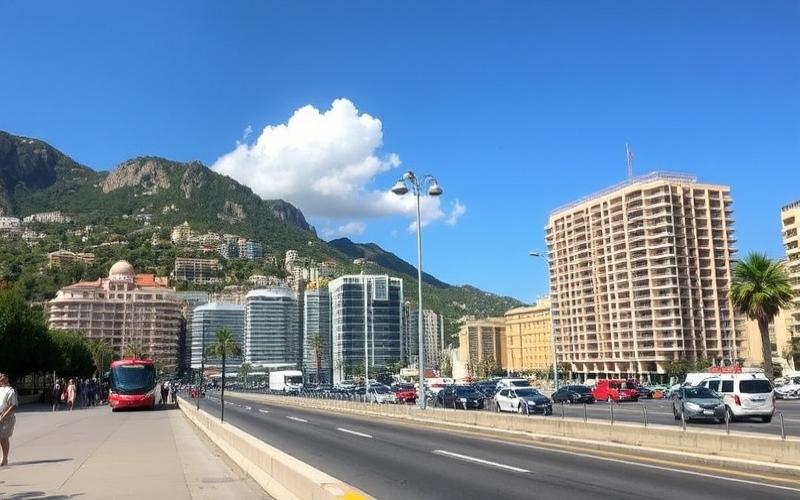
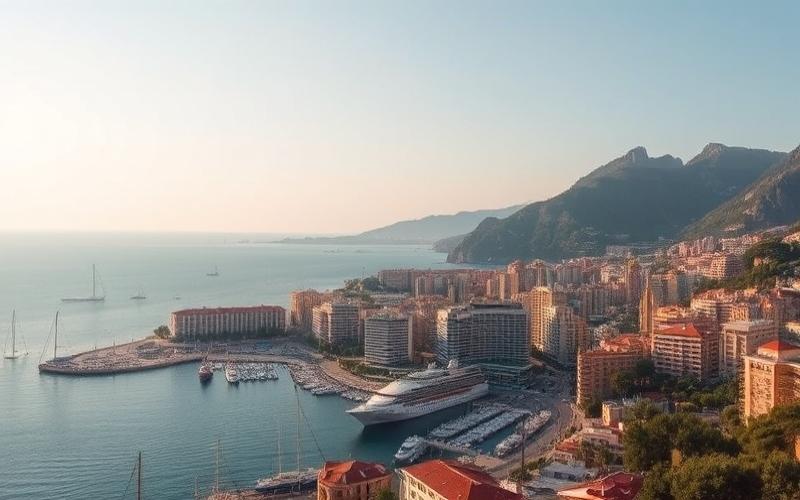
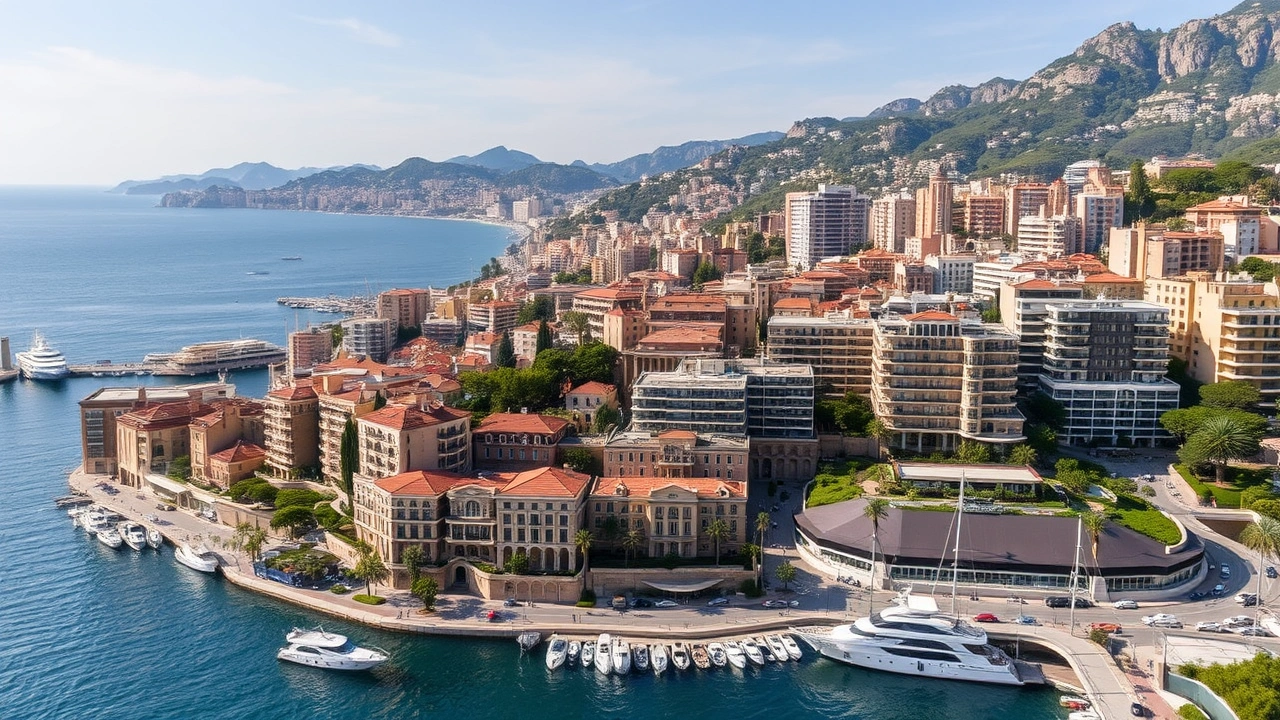
Monaco is a tiny territory—about 2 km²—but with exceptional economic density. In 2023, it was home to 38,367 residents from 141 nationalities and over 10,700 companies providing more than 58,000 salaried jobs. The economy relies primarily on services, with a decisive weight from finance, real estate, luxury, and business tourism.
Nearly 99% of the Principality’s residents are internet users, making it one of the most connected places in the world.
Another key element is the demographic structure: an aging population with a median age over 50, and a strong presence of decision-makers and executives. Add to this a culture of discretion (paparazzi are banned by law, privacy is sacred) and a high level of formality in relationships, and you get an environment where you don’t break in, but enter through sponsorship, consistency, and credibility.
The Fundamentals: Cultural Codes and Business Language in Monaco
Before even talking about events or clubs, an expatriate who wants to build a network in Monaco must master three sets of codes: language, professional etiquette, and the local way of building trust.
French is the official language, used in administration, justice, and education. English is very present in the finance, yachting, and tourism sectors. Italian also remains important in daily life, especially among the working population. Monégasque, a Ligurian dialect taught in schools, is part of the local identity.
In practice, an effective network in Monaco often relies on a very simple linguistic trio: French to show respect and fit into institutional codes, English for international agility, Italian as an additional asset depending on sectors and interlocutors. Even a few polite phrases in French (“Bonjour,” “Enchanté,” “Merci beaucoup”) pronounced carefully can open more doors than perfect but perceived as distant English.
In the Monegasque business world, credibility rests on rigorous etiquette, blending French rigor and Italian elegance. It demands strict punctuality, impeccable attire, polite and structured communication, and the systematic use of titles (‘Mr.,’ ‘Mrs.’) and last names, until explicitly invited to use first names.
Finally, trust isn’t won with a handful of business cards. It relies on what some experts call the “3 C’s: Competence, Character, Connection.” Demonstrating your expertise regularly, honoring your commitments down to the smallest detail, and taking the time to create a human connection (listening, remembering, following up) count as much as attending any gala.
Economic Institutions: Entering Through the Front Door
For an expatriate arriving in Monaco with an entrepreneurial project, a managerial role, or investor ambitions, ignoring the major economic institutions would mean depriving oneself of the most powerful channels in the market.
Monaco Economic Board: The Central Hub of Business
The Monaco Economic Board (MEB) is the main platform for connecting businesses in the Principality. Supported by the Princely Government, it brings together over 600 member companies and serves as the national committee for the International Chamber of Commerce (ICC).
The MEB (Mouvement des Entreprises de Belgique) is a strategic resource for expatriates. It organizes economic missions abroad, “Doing Business in…” seminars, meetings with foreign delegations, and manages a network of international promotion offices (in Australia, Germany, Italy, Japan, Singapore, the United Kingdom, and the United States). It’s an essential entry point for understanding the local economic environment and identifying partners, suppliers, clients, or investors.
A table quickly highlights its main assets for a newcomer:
| Element | Detail |
|---|---|
| Number of members | Over 600 companies |
| International role | National committee of the ICC, nearly 40 agreements with foreign chambers of commerce |
| Types of activities | Economic missions, seminars, conferences, investor hosting |
| Target audience | Executives, export managers, investors, entrepreneurs |
| Advantage for an expat | Direct access to the economic fabric, institutional legitimacy |
An expatriate executive or project leader would do well to apply for membership, or first attend open events to gauge the atmosphere, identify key contacts (general management, project managers, sector representatives), and gradually be recognized as a serious player.
Welcome Office and Government Agencies: Getting Settled Properly
Alongside networking, settling in Monaco, whether personally or professionally, involves rigorous administrative procedures. The Government’s Welcome & Business Office assists newcomers free of charge: information on business creation, residency, regulatory obligations, and referrals to the right technical departments (Economic Expansion Department, tax services, etc.).
For an expat entrepreneur, this approach helps avoid pitfalls like unlicensed advisors and risky setups. It secures the project and offers the often underestimated advantage of beginning to build a reputation for seriousness with the local authorities.
Networking Clubs and Business Circles: Where the “Real” Network Happens
Beyond institutions, it’s in clubs, circles, and associations that the Monegasque network is woven daily. These places function as filters: they attract certain profiles, nationalities, and sectors. Choosing them well is also about defining the color of your future network.
Club Vivanova: Business, Lifestyle, and International
Club Vivanova presents itself as one of Europe’s leading networking clubs, based in Monaco. With over 400 international partners and members, it organizes events in exceptional venues, blending tastings, product launches, dinners, and professional meetings.
For an expat, joining a specific club offers two major advantages. First, it allows quick connection with an international audience already accustomed to newcomers. Second, it makes networking less formal and more accessible through convivial formats, often centered around gastronomy and wine. In an environment where image and social setting are important, regular participation in these events helps anchor one’s presence and become known in the new landscape.
Monaco Ambassadors Club and Influence Circles
The Monaco Ambassadors Club (MAC) illustrates another type of circle: that of social and diplomatic influence. It organizes galas, official dinners, summer soirées, and events with a strong protocol dimension. The mission is both to promote Monaco’s image and to create bridges between decision-makers, diplomats, business leaders, and personalities.
An expatriate doesn’t join overnight: one often arrives by recommendation, via an already established career or recognized social standing. But understanding its role helps map the ecosystem and, eventually, aim for this type of circle when one’s own legitimacy is consolidated.
Monaco Business Circle, Sector Circles, and Cross-Border Networks
The Monaco Business Circle operates by invitation and brings together high-level executives at regular breakfast meetings, notably at the Club CREM. These exclusive meetings foster dense exchanges, partnerships, and more open discussion than at large trade shows.
The Principality is connected to several clubs like the Club Suisse de Monaco, the Cercle Franco-Monégasque, or the International Club of the Riviera. These associations, often grouping nationals (Italians, Brits, French abroad), organize cultural activities, meals, and conferences. They serve as bridges between social life and professional opportunities, particularly useful for expats sharing a common language or culture.
A table compares some major types of clubs useful for an expatriate:
| Type of club / network | Example | Dominant Profile | Main Interest for an Expat |
|---|---|---|---|
| International business club | Club Vivanova | Entrepreneurs, executives, consultants | Quick meetings, blend of business / lifestyle |
| Influence & protocol circle | Monaco Ambassadors Club | Diplomats, major CEOs, personalities | Access to the top of the social hierarchy |
| By-invitation executive circle | Monaco Business Circle | CEOs, seasoned executives | High-level exchanges, targeted opportunities |
| National / cultural clubs | Swiss Club, British Association | Language and origin-based communities | Quick integration, mutual aid, first opportunities |
An expatriate will generally benefit from combining these spheres rather than limiting themselves to one: a business club for activity, a national network for support, an influence circle as a strategic mid-term horizon.
Women’s Networks: A Powerful Lever for Expats
Monaco attracts many women entrepreneurs, executives, investors, or independent professionals. The Monaco Women Network has established itself as a key player for this population, with a dual mission: supporting women’s careers and offering a structured networking platform.
The association offers membership at two levels (Silver and Gold) with a very clear list of benefits: access or invitations to monthly Networking Happy Hours, participation in roundtables, private dinners with experts, discounts on the Monaco Women Forum and the Monte-Carlo Woman of the Year Award Gala, company spotlight on the portal for the higher tier.
A table summarizes the main differences between the tiers:
| Tier | Annual Fee (indicative) | Main Benefits |
|---|---|---|
| Silver | €280 | Discounts on Happy Hours, Forum, private dinners |
| Gold | €600 | Invitations included to several events, visibility on the portal, expanded discounts |
For a female expat, this type of network presents three major advantages: a supportive environment where codes are explained rather than assumed; direct access to female leaders in key sectors (luxury hospitality, energy, art, cutting-edge medicine, etc.); and the possibility of quickly gaining qualified visibility on the Monegasque scene.
The Monaco Women Network organizes varied events (happy hours, dinners) that bring together diverse professional profiles: hotel executives, gemologists, urban planners specializing in thermal networks, or longevity doctors. For an expat, these meetings are a unique opportunity to broaden their network informally with people they wouldn’t otherwise meet.
Expatriate Associations and International Platforms: Creating Your First Circle
For a newcomer, the first months are often marked by isolation: you don’t know the right places, customs, or contacts. Expat networks play a decisive role here, offering an integration airlock where you can ask “stupid questions” without losing face.
InterNations, Expat.com, Facebook Groups: Community Support
InterNations, present in Monaco, organizes regular events—often monthly—for expatriates: soirées, sports activities, cultural outings. The platform also provides discussion forums on residency procedures, the school system, daily life. Several accounts report first friendships and even first professional contacts made through these events, especially for newly settled Americans and Europeans.
On Facebook, groups like “Monaco Expats,” “Expat Women in Monaco,” or “Nice / Cannes / Antibes / Monaco – Expat” serve as a digital village square. They allow for sharing recommendations (doctors, lawyers, schools, agencies), classifieds (jobs, shared housing, services), and organizing social events (aperitifs, hikes, dinners). These communities extend across the entire French Riviera, helping even French residents working or investing in Monaco to build connections aligned with their geographical reality.
Social and Charitable Clubs: Networking Through Conviviality
Organizations like Les Voisins, Les enfants de Frankie, the International Club of Monaco, or the Club Suisse de Monaco blend social activities, culture, and charitable actions. For an expatriate, these are ideal frameworks for practicing French, understanding local references, and showing involvement in the community, all without immediate commercial stakes.
Monaco highly values philanthropic engagement, particularly in the fields of the environment, children, and culture. Regular participation in this philanthropic life sends a powerful signal: it shows that you’re not just there to benefit from the system, but that you actively contribute to collective life.
University, Tech, and Innovation: A Network for “New Profession” Profiles
Contrary to the static image of a city of rentiers, Monaco invests in future-oriented sectors: digital, smart city, biotech, green tech, sustainable yachting, digital art. For an expat in tech, innovation, or data, concrete anchors exist.
MonacoTech, SMI, Monaco Digital Advisory Council
MonacoTech, the country’s startup incubator, supports innovative projects with programs, events (conferences, hackathons, coding challenges), and even funding possibilities of up to €500,000 in seed money for some applications. The ecosystem has already seen startups like Carlo (shopping app) or YouStock (storage solution) emerge, proving that a relevant project can find room to grow here.
The Société Monégasque de l’Informatique (SMI), active since the mid-1990s, brings IT professionals together through conferences and a major annual event. The Monaco Digital Advisory Council is involved in the Principality’s digital transformation, notably on issues of smart city, cybersecurity, data, and digital infrastructure.
For an expatriate specialized in cybersecurity, AI, blockchain, or software development, signing up for hackathons (like those organized with international partners), technical morning meetings, or conferences such as “Les Assises de la Cybersécurité” at the Grimaldi Forum is a direct way to be identified by major accounts, institutions, and local startups.
International University of Monaco: Academic Network and Alumni
The International University of Monaco (IUM) attracts students from around the world, particularly in the fields of luxury, finance, marketing, and sports or yachting management. For an expatriate, this institution can play three different roles:
Discover the various ways to interact with our institution and benefit from its dynamic network, whether you are a student, graduate, or professional.
Benefit from Career Center services: webinars, Career Week, career coaching, and connections with our partner companies.
Join an active network of graduates present in over 100 countries worldwide.
Speak as a guest, mentor a student project, or sponsor an event to share your expertise.
The Career Center claims that about half of the graduates find their jobs through its services, and nearly a fifth start their own business. For an expatriate in career transition or wanting to position themselves in luxury or finance, frequenting this milieu, even occasionally (conferences, business plan competitions, collaborations with MonacoTech or the yachting cluster), can open unexpected doors.
Business Tourism, Major Events, and Galas: The Art of Capitalizing on the Calendar
Monaco is a major destination for business tourism. In 2024, over 430 professional events were organized there, and infrastructures like the Grimaldi Forum, the Méridien Beach Plaza (Sea Club), the hotels of the Monte-Carlo Société des Bains de Mer group, and convention centers host congresses, trade shows, forums, and corporate conventions.
Events like Monaco Business, Digital 360 Monaco, Les Assises de la Cybersécurité, investment forums, yachting summits, and sector conferences offer networking different from clubs, often more transactional and focused on concrete projects.
For an expatriate, the good strategy is rarely to “do everything,” but to target according to your sector, then prepare in advance a list of contacts, exhibitors, or speakers to approach. Events related to the Monaco Yacht Show, the Formula 1 Grand Prix, ICC conferences, or missions organized by the MEB deserve preparation as serious as a business trip abroad: personalized messages before and after, clear documentation, precise positioning.
Digital Networks: Extending Networking in a Highly Connected Country
With almost the entire population connected to the internet and a mobile penetration rate above 100%, Monaco offers fertile ground for the smart use of digital networking tools. But the low proportion of active social media users means effectiveness relies less on quantity than on relevance.
LinkedIn, X (Twitter), Online Communities
LinkedIn remains the central platform for professional networking: a polished profile in French and English, highlighting your link to Monaco (position, project, investment), participation in groups focused on the Principality or key sectors (finance, yachting, tech). Joining relevant groups and commenting with added value can put you on the radar of executives or institutions.
Use platforms like X (formerly Twitter), as well as certain Slack or Discord communities, to follow announcements of events, the positions of tech or finance players, and regulatory developments in real time. The goal is not to flood these channels, but to make yourself visible to the right people.
Event platforms like Eventbrite or Meetup serve to find after-work events, entrepreneur meetups (“Big Ballers,” CEO dinners on the Côte d’Azur, Franco-Italian meetups, etc.) that orbit around Monaco. This periphery (Nice, Cannes, Antibes, Sophia Antipolis) functions as a natural extension of the Principality’s talent and business pool.
Networking Strategies for Expatriates: From Theory to Practice
Knowing the places and organizations isn’t enough: you need to build a method. For an expatriate, the difficulty is twofold: making yourself known without being perceived as opportunistic, and integrating into a codified environment without denying yourself.
Several key principles, drawn from work on trust and relational effectiveness, apply particularly well to Monaco.
Come Prepared and Offer Value
In a country where many people are already over-solicited, the expatriate who arrives thinking only of “taking” quickly closes doors. Conversely, the one who arrives offering a viewpoint, a contact, specialized know-how, or even just concrete help (proofreading a pitch, making an introduction in their home country, sharing knowledge about a foreign market) immediately creates a positive dynamic.
To optimize the outcome of a networking event, prepare for each one by identifying 3 to 5 specific people to meet. Formulate clearly, in one concise sentence, what you do and what you are looking for. Finally, prepare a few concrete examples of possible collaborations to present. This preparation radically changes the outcome of the evening.
Master the Follow-Up: The Second Impression Counts as Much as the First
Trust experts emphasize consistency: sending a personalized message after a meeting, recalling what was discussed, proposing a clear action (coffee, a video call, sharing an article, an introduction) shows you weren’t just looking to collect business cards.
In Monaco, punctuality, reliability, and respect for commitments (like sending promised information, arriving on time, or replying to emails) constitute a silent and informal, but widely applied, test to assess a person’s rigor.
Understand the Local Tempo: Patience and Consistency
Decisions are often made at the top of the hierarchy, in a relatively vertical system, and after an observation period. Failures are viewed cautiously, innovation happens in small steps. For an expatriate, this implies accepting that turning a contact into collaboration takes more time than in an ultra-agile startup ecosystem.
The gains, however, are significant: a trust-based relationship with a Monegasque player is often long-term, with a leverage effect on other countries and other circles.
Adapt Your Strategy Based on Your Expat Profile
Not all expatriates come to Monaco with the same objectives. Depending on whether you are an employee, entrepreneur, investor, independent consultant, or trailing spouse, the use of the network will differ.
A managerial employee will likely seek to:
– join clubs related to their sector (finance, IT, yachting);
– attend MEB events or conferences related to their industry;
– join an expat network of their nationality for social support and practical advice.
An entrepreneur will prioritize:
The key structures and events in Monaco for structuring a project, developing your network, and testing your offer on the market.
The MEB and Welcome Office for project structuring and institutional connections.
Business clubs like Club Vivanova or the Monaco Business Circle (eventually) to identify partners and investors.
Sector forums and trade shows, especially at the Grimaldi Forum, to test your offer and observe the competition.
An investor or family office will more naturally turn to:
– investment forums, events around wealth management, executive circles;
– organizations linked to the ICC, official economic missions;
– influence clubs and certain charity galas, where part of the informal deal flow concentrates.
A person in transition or seeking a career change, finally, would benefit from: – Assess your skills and passions. – Research growing sectors. – Develop your professional network. – Take relevant training. – Be proactive in your search for opportunities.
– using executive programs and resources from institutions like IUM;
– relying on expatriate networks and national associations for an initial market mapping;
– securing your language base (professional English, operational French) to multiply your options.
Pivoting from Purely Social Networking to Real Collaborations
Many expatriates find it relatively easy in Monaco to build a social network: dinners, cocktail parties, international meetups, sporting events. The challenge is to transform this social capital into professional capital, without breaking the subtle balance between conviviality and business.
The key often lies in three progressive moves:
To transform your status as an expatriate into an anchored and useful presence, adopt three complementary approaches. First, diversify your identity beyond just ‘expat’ by becoming a recognized resource in your field. This involves public speaking (conferences, panels), publishing (articles, LinkedIn posts), or mentoring (student projects, hackathons). Second, clearly structure your professional objectives: define the type of partners, clients, or projects you are seeking so your network can spontaneously identify you with opportunities. Third, anchor your local commitment by getting involved in an association, a community project, or a recurring event. This demonstrates that you are an engaged player in the community, not just passing through.
Monaco strongly values loyalty and longevity. An expatriate who aligns with this timeframe, even while maintaining international mobility, will naturally be integrated into recommendation circuits.
Conclusion: Monaco, A High-Density Networking Lab
Developing your professional network in Monaco as an expatriate is neither “just going out a lot” nor “collecting high-end business cards”. It’s learning to navigate an extremely concentrated ecosystem where every interaction counts, discretion is a virtue, and the boundaries between social and professional are porous but never completely erased.
To turn a relocation to Monaco into a career accelerator, it’s essential to leverage local institutions (Monaco Economic Board, Welcome Office), participate in business clubs (Club Vivanova, sector circles), integrate networks like the Monaco Women Network, join expatriate communities, and actively use digital tools.
Provided you respect the codes (linguistic, sartorial, behavioral), Monaco then becomes what it knows how to be best: a hub where a few well-built encounters can have more impact than an oversized contact list elsewhere.
A 62-year-old retiree, with financial assets over one million euros well-structured in Europe, wishes to change tax residency to reduce his tax burden and diversify his investments, while keeping a strong link with France. Allocated budget: €10,000 for comprehensive support (tax advice, administrative formalities, relocation and wealth structuring), without forced asset sales.
After analyzing several attractive destinations (Monaco, Greece, Cyprus, Mauritius), the chosen strategy is to target Monaco, for the absence of personal income tax for individuals (except French citizens subject to specific rules), no local wealth tax, a very secure living environment, and a high-end financial ecosystem in immediate proximity to France. The mission includes: pre-expatriation tax audit (exit tax, treaties, requalification risks), obtaining a Monegasque residency permit via rental or purchase of a primary residence, opening bank accounts, a plan for severing and managing French tax ties (length of stay, center of economic interests), introduction to a local network (lawyer, private bank, family office) and comprehensive wealth integration (restructuring and international transfer).
Planning to move abroad? Contact us for custom offers.
Disclaimer: The information provided on this website is for informational purposes only and does not constitute financial, legal, or professional advice. We encourage you to consult qualified experts before making any investment, real estate, or expatriation decisions. Although we strive to maintain up-to-date and accurate information, we do not guarantee the completeness, accuracy, or timeliness of the proposed content. As investment and expatriation involve risks, we disclaim any liability for potential losses or damages arising from the use of this site. Your use of this site confirms your acceptance of these terms and your understanding of the associated risks.

Cyril Jarnias is an independent expert in international wealth management with over 20 years of experience. As an expatriate himself, he is dedicated to helping individuals and business leaders build, protect, and pass on their wealth with complete peace of mind.
On his website, cyriljarnias.com, he shares his expertise on international real estate, offshore company formation, and expatriation.
Thanks to his expertise, he offers sound advice to optimize his clients' wealth management. Cyril Jarnias is also recognized for his appearances in many prestigious media outlets such as BFM Business, les Français de l’étranger, Le Figaro, Les Echos, and Mieux vivre votre argent, where he shares his knowledge and know-how in wealth management.