 Published on and written by Cyril Jarnias
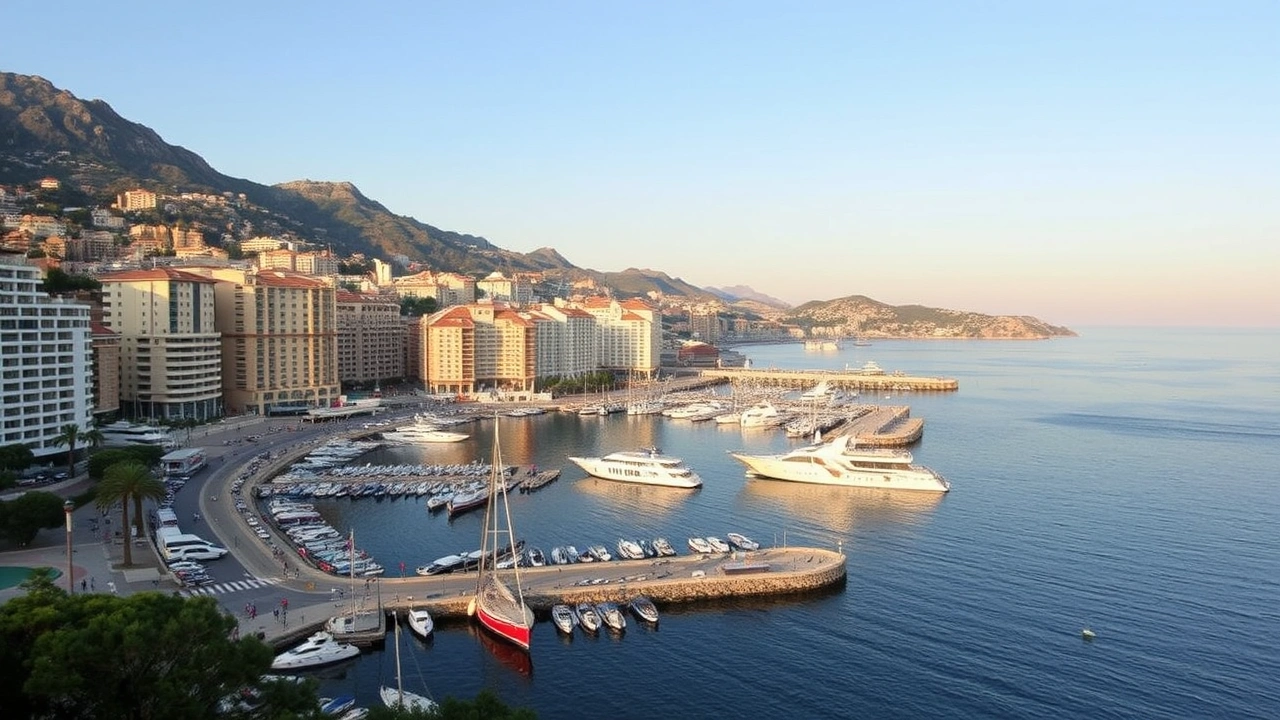
Moving to Monaco means entering a world where luxury meets the Mediterranean, where you encounter nationalities from over 140 countries in a city-state of just two square kilometers. English and Italian are very present, but French remains the official language and the key to accessing local life, business, and, more discreetly, the trust of the residents. For an expatriate, learning French in Monaco is not a plus; it’s a lever for integration.
For an expatriate in Monaco, learning the local language is essential for working, managing daily life, understanding cultural codes, and fully enjoying life on the Rock. This article details the practical methods and resources available.
Why French is Essential in Monaco
Monaco is officially French-speaking. About half of the residents have French as their mother tongue, and in 2021, nearly 62% of the workforce employed in the Principality were French. Other languages—Italian, English, but also Monégasque—complete the landscape, without dethroning French in administration, most businesses, and institutional life.
For an expatriate, this translates very concretely:
The majority of contracts, banking documents, administrative forms, and real estate leases are written in French. Furthermore, formal professional exchanges, such as meetings, negotiations, and official emails, generally take place in French, even in environments where English is understood. It is crucial to note that politeness, courteous formulas, and respect for the social hierarchy are strongly expressed through the language, notably through the use of “vous,” titles, and different registers of language.
At the same time, the Principality remains an international crossroads: the foreign community comes from about a hundred countries, English often serves as an “interface” between varied nationalities, and many services are accessible in several languages. It is precisely this duality that traps some expatriates: it is possible to “survive” in English, but one remains confined to an expat bubble, far from the circles where real professional and personal relationships are forged.
Learning French in Monaco therefore means:
– gaining autonomy (healthcare, housing, school, procedures)
– drastically expanding your local network (colleagues, entrepreneurs, shopkeepers, neighbors)
– sending a signal of respect towards the local culture, which is very sensitive to discretion and politeness
Understanding the Monégasque Linguistic Context
French dominates, but Monaco has a richer linguistic identity than it seems.
Monégasque (Munegascu) is the historical language of the Rock, a Ligurian dialect of Genoese origin. It almost disappeared in the 1970s before becoming the subject of a genuine preservation effort: written standardization since the 1920s, teaching in schools, bilingual signage in Monaco-Ville. About 5,000 people speak it, a little more than half of the Monégasque nationals.
A few basic words show how this language is both close to and distinct from French:
| French | Monégasque |
|---|---|
| Hello | Bon giurnu |
| Good evening | Bona sera |
| Please | Per pieijè |
| Thank you | Merçì |
| Goodbye | A se revede / Ciau |
| Yes | Sci |
| No | Nun |
An expatriate does not need to learn Monégasque to live in Monaco, but knowing a few phrases is often perceived as a sign of curiosity and respect, especially among long-established families.
Despite the significant presence of Italian and English as a lingua franca in key sectors, learning French is essential for sustainable integration and navigating freely between different communities, beyond the temporary status of a passing English speaker.
Choosing Your Method: Immersion, Structured Courses, or Hybrid Learning
Monaco and the French Riviera offer a range of solutions for learning French, from private lessons to total immersion programs. The right choice depends on your situation: workload, budget, level, professional or family goals.
Intensive and Structured Courses in Monaco
For expatriates already settled or coming specifically to study, two main types of providers stand out: local schools and organizations specialized in French as a foreign language.
Alliance Française Monaco: The Academic Reference
The Alliance Française Monaco offers French courses led by highly qualified teachers: native speakers, FLE (French as a Foreign Language) specialists, and holders of a Master’s degree in the field. Their experience within the Alliance guarantees a good understanding of the typical difficulties of non-French-speaking adults.
The course structure is based on the Common European Framework of Reference for Languages (CEFR), from A1 to C2. The materials used come from recognized specialized publishers (DIDIER, CLE International for grammar, Alter Ego by Hachette), supplemented by authentic documents: press articles, literary texts, audio and video materials. This approach offers a living French, anchored in current events and culture.
The formats and prices allow for a tailored program:
| Type of Course | Duration / Format | Indicative Price* |
|---|---|---|
| Annual administrative fees | – | €70 |
| General French course | 30 h (session) | €450 |
| July semi-intensive course | 30 h | €510 |
| Private lesson (one-to-one) | 1 h | €65 |
| Lesson for two people | 1 h | €90 (for the group) |
| Corporate training | 1 h | €120 |
| DELF / TCF preparation (private) | 60 minutes | €70 |
The amounts mentioned are from information available in the report and are subject to change.
For an expatriate, the major benefit of this institution is twofold:
– a solid pedagogical framework, aligned with officially recognized levels (useful if you later consider naturalization, studies, or a certification like DELF/TCF)
– schedule flexibility allowing you to combine work and learning (evening, daytime, individual or duo formats)
Regency School of Languages: Flexibility at the Service of Businesses and Families
Located on Avenue de Fontvieille, the Regency School of Languages is a Monegasque language center deeply rooted in the local economic fabric. Accredited as a training center by FEDEM since 1997, it allows companies based in the Principality to benefit from public subsidies for language training for their employees.
Discover the different services offered by our institution to support students and families.
Personalized support to help students overcome their difficulties and excel in their studies.
A wide choice of sports, artistic, and cultural activities for students’ development outside of class.
A dedicated service to guide students in their study choices and the construction of their future plans.
Balanced and varied meals prepared on-site to ensure the well-being and health of students.
A secure and reliable bus service to facilitate students’ travel to the institution.
A space for listening and support provided by professionals for students’ emotional well-being.
– private lessons
– premium mini-groups of 3 to 4 people
– conversation workshops
– courses for children and teenagers via a Kids Club (4–17 years old)
– preparation for numerous exams (DELF, DALF, TCF, but also TOEIC, TOEFL, IELTS, Cambridge, etc.)
– courses in person in their air-conditioned classrooms, in companies, at home, or online
The languages offered go beyond French (English, Italian, German, Russian, Spanish, Portuguese, Arabic, Dutch, Chinese…), which can be useful for mixed couples or children in bilingual school systems. For companies, the benefit is clear: securing an appropriate level of French for the sector (banking, yachting, healthcare, events) while accessing financial aid.
Alliance Française Monaco and Regency School: Two Complementary Profiles
Their positions for an expatriate can be summarized as follows:
| Criterion | Alliance Française Monaco | Regency School of Languages |
|---|---|---|
| Main orientation | French as a foreign language, academic approach | Multi-language training |
| Certification | CEFR-aligned courses, DELF/TCF preparation | Preparation for numerous exams (DELF, TOEIC…) |
| Target audience | Adults, businesses, exam preparation | Businesses, families, children, students |
| Course locations | School, possibly online | School, home, company, online |
| Key advantage for expatriates | Clear curriculum, CEFR levels, expert FLE teachers | Strong connection to businesses, great flexibility |
In practice, many expatriates combine several approaches over time: a general course at the Alliance to build a foundation, then targeted corporate or mini-group courses at Regency to adapt their French to their professional reality.
Total Immersion: Living with a Teacher in Monaco
For those who want to progress very quickly—for example before starting a new position, an internal transfer, or a professional deadline—immersion stays represent a formidable tool.
Home Language International (HLI): “All in French” Daily Life
Home Language International offers a radical setup in Monaco: the student lives with their teacher. The lessons are private and flow into daily practice (meals, television, outings, social encounters). The teacher is qualified (university degree or equivalent, plus a recognized teaching certificate) and their home is inspected by a local coordinator, who also monitors the student’s progress.
The strengths of this formula for an expatriate:
HLI offers total immersion in French, going beyond traditional lessons by integrating the language into all the micro-situations of daily life (table conversations, phone calls, administrative procedures). The learning is extremely personalized, with content adapted to the student’s specific needs (banking vocabulary, medical terminology, or specialized jargon like in the yachting or finance sectors). The organization, accredited by ABLS, ALTO, and UNOSEL, ensures serious supervision and welcomes over 5,000 students worldwide each year.
This option is more expensive than a classic course but, in terms of progress per day, often very competitive. It is particularly suited for:
– a manager transferred to Monaco with little available time and high language requirements
– an expatriate spouse wishing to quickly reach a level of autonomy in daily life
– teenagers joining a francophone or bilingual institution in the region
French Study Programs Near Monaco
For those who can afford to leave the Principality daily or temporarily, the French Riviera offers some gems.
Institut de Français (Villefranche-sur-Mer): Intensive Immersion 35 Minutes from Monaco
Founded in 1969 and often cited among the best French language centers in France, the Institut de Français overlooks the bay of Villefranche-sur-Mer from a terraced Provencal villa. It is about 35 minutes from Monaco by car, 10 minutes from Nice, 30 minutes from the international airport.
The principle is clear: total and immediate immersion (“Immediate Immersion,” “Total Approach”) for adults. The courses last:
– 8.5 hours per day
– 5 days per week
– for 2, 3, or 4 weeks
That’s about 40 hours of class per week. Groups do not exceed 10 people, organized into eight levels, after a written, oral, and listening placement test. A typical day alternates between:
– current events discussions
– grammar and structured exercises
– language lab
– role-playing and situational practice
– lunch-discussions with teachers
The fees (for example €2,900 for 2 weeks, €5,800 for 4 weeks, including a non-refundable registration fee of about €200) include breakfasts and lunches on class days. The school can also arrange furnished apartments nearby.
For an expatriate already in Monaco, the Institut de Français is a kind of “linguistic boot camp”: in 2 to 4 weeks, you cross a threshold that many do not reach in a year of sporadic lessons.
Institut de Français
– before taking on greater professional responsibilities in French
– to prepare for a proficiency exam or entry into a francophone training program
– to break through a plateau (B1/B2) by unlocking your oral expression
Languages Abroad: A School in the Heart of Monaco
Another structured option within the Principality is offered by Languages Abroad. The school, located in central Monaco, welcomes learners aged 16 and over (13 for some youth programs) for flexible durations starting from one week. A placement test takes place on the first Monday to integrate into a suitable group (A0 to B2).
Typical course formats:
| Program Type | Weekly Volume* | Target Audience |
|---|---|---|
| Standard | 20 group lessons (4 per day) | Adults, from age 16 |
| Intensive | 26 group lessons + 3 private lessons | Motivated adults |
| Private | 15 individual lessons per week | Custom courses |
| Youth Program | 20 group lessons + activities and excursions | 13–21 years old |
Durations are indicative, based on data from the report.
The school issues a language certificate at the end of the stay and offers a 12-week DELF preparation course (with fixed start and exam dates throughout the year). Credits can be recognized by Brookhaven College, which will interest North American students.
Logistically, Languages Abroad organizes:
– homestays (accommodation + meals, selection of families interested in intercultural exchange)
– airport transfer service (about $150 USD per trip)
– insurance (about $30 USD per week)
Additional fees should be expected: $200 USD registration fee, $200 USD accommodation placement fee, plus a non-refundable deposit of about $400 USD.
For an expatriate already settled in Monaco, this model can serve as:
– a launch pad (a few intensive weeks upon arrival)
– a boost for a teenager in an Anglophone school system who needs to strengthen their French
– a summer solution for children or young adults coming to join a parent in the Principality
Online Courses and Apps: Advantage of Time and Flexibility
Even in a two-square-kilometer city, time remains the scarcest resource. Between travel, events, and professional obligations, many expatriates appreciate being able to “squeeze in” 30 minutes to 1 hour of French per day without leaving their office or living room.
Private Online Lessons: Maximum Personalization
International platforms like italki or Preply allow you to find a qualified French teacher, often a native speaker, used to working with expatriates, in a few clicks. You can filter profiles by:
– specialization (business French, DELF/TCF preparation, pronunciation, conversation)
– experience (sometimes 5 to 20 years of teaching)
– qualifications (Master’s in FLE, TEFL, etc.)
– schedule availability and time zone
– price (starting from a few dollars/euros per hour, with an average around $20 USD)
For a Monegasque resident, these platforms play a key role:
Online courses allow you to fill available time slots, even short ones or outside office hours. They offer precise targeting for specific needs like preparing presentations, correcting documents, or learning technical vocabulary. Virtual classroom tools facilitate written corrections and resource sharing.
Many traditional schools (like Regency School) have also developed their own online course offerings with formats modeled on in-person ones, but via Zoom, Teams, or Skype.
Apps and Digital Resources: The Portable Lab
Apps alone are not enough to achieve fluency, but they are an excellent complement, especially for expatriates with busy schedules. The main types of apps are roughly divided as follows:
Discover different approaches and tools for progressing in French, from structured courses to exchanges with native speakers.
Organized programs with a clear pedagogical progression, offered by Babbel, Rocket French, and Fluenz.
Approach based on listening and repetition, like the Pimsleur method, to develop comprehension and pronunciation.
Platforms like Yabla, FluentU, Lingopie, and News In Slow French to immerse yourself in the language with authentic materials.
Apps such as Memrise, Lingvist, and Clozemaster to learn and memorize vocabulary in a practical way.
Communities on HelloTalk, Tandem, and MyLanguageExchange to practice with native speakers and help each other.
Tools like Copycat Cafe, Langua, TalkPal, and Speak to practice speaking with a tutor or artificial intelligence.
Essential resources like WordReference, Linguee, Reverso, and Le Conjugueur to check words, expressions, and conjugations.
In an environment like Monaco, where home-work commutes are generally short but people travel a lot for business, these tools become companions on flights, trains, or in the car.
Some strategic uses for an expatriate:
– Pimsleur or Michel Thomas while driving or traveling: 30 minutes of audio per day is enough to consolidate comprehension and pronunciation.
– News In Slow French, Inner French, RFI or Radio France podcasts while exercising: develop your ear without a screen.
– Memrise/Lingvist/Anki while waiting in line or at a cafe: automate frequently used vocabulary and phrases (polite expressions, meeting language, standard sentences for banking or real estate).
– Yabla, FluentU, or series on Netflix (for example Lupin) with French subtitles to link images, dialogues, and intonation.
The key is to avoid spreading yourself too thin: choose two or three complementary tools (for example, a structured app, a podcast, and a dictionary) and stick with them for several months.
Business French in Monaco: Codes, Stakes, Training
Monaco is a business hub where some 5,000 companies coexist, very active in banking, finance, healthcare, high tech, tourism, real estate, or international trade. French is both a working language and a vehicle for many cultural codes.
Politeness and Formalism: The Foundation of Communication
Monégasque business culture borrows heavily from the French tradition:
– almost systematic use of “Mr.” or “Ms.” followed by the last name until you are invited to use first names
– use of the “vous” form in all professional interactions, including between colleagues, until the relationship has clearly shifted to using “tu”
– writing structured emails (salutation, development, polite closing formula) even for exchanges that seem brief in English
Some specific gestures can be surprising:
– the “OK” gesture (thumb and index finger forming a circle) can be interpreted as “zero,” meaning “nothing” or “worthless”
– interrupting your interlocutor can sometimes be a sign of keen interest in the discussion, not rudeness, in certain French professional contexts
Understanding these nuances is as important as knowing specialized vocabulary. Many training courses on “French business culture” or “professional communication in French” integrate these socio-pragmatic dimensions.
Specialized Training for Professional French
Several providers mentioned in the report precisely meet these needs:
Discover specialized organizations offering tailored business French programs, adapted to the needs of professionals and companies.
Designs tailor-made business French programs, in person or online, led by experienced native trainers. Courses cover daily conversation and sector-specific vocabulary, with intensive one to four-week courses.
Offers professional French training, including remotely, with modules of 10, 15, 20, or 40 hours. These programs are specifically adapted to the requirements of managers and executives.
The benefit of this type of training for an expatriate in Monaco is clear:
– working directly on real situations: presenting a project, participating in a meeting, negotiating a contract, leading a hybrid video conference
– integrating implicit codes: speaking turns, managing disagreement, formulating criticism, the progression from “vous” to “tu”
Combined with more general courses (Alliance Française, Regency School) and regular practice, these trainings allow you to move from “correct” French to “credible” French in decision-making spheres.
Living French Daily in Monaco
Learning French doesn’t only happen in a classroom. Monaco, despite its small size, offers a remarkable linguistic playground if you know how to use it.
Making the City a Learning Ground
Iconic locations can become open-air classrooms:
– Oceanographic Museum, Exotic Garden, Prince’s Palace, Larvotto Beach, Monte Carlo Casino, Monte Carlo Opera: so many opportunities to buy a ticket, ask a question, read exhibition signs, listen to guided tours in French.
– Grand Prix circuit: follow a guided tour in French, read local media coverage during the race, listen to driver interviews on French-speaking channels.
To optimize your on-site experience, prepare a few essential phrases in advance (like asking for a ticket, checking hours, or inquiring about the history of the place) and force yourself to use them during your visit.
Libraries, Media Libraries, and Cultural Resources
Even though the report mainly mentions a “French Library” outside Monaco, the idea remains valid for the Principality and its surroundings: francophone resource centers are gold mines. You generally find there:
– novels, comic books, children’s books
– CDs, DVDs, magazines, board games
– story hours in French, book clubs, film screenings
Many establishments draw inspiration from initiatives like:
– shelves by level (A2, B1, etc.) to guide learners
– book/film pairs (“ALMOST ALIKE”) to read the book and watch its adaptation
– thematic recommendations (cooking, travel, current events, thrillers, comics)
For an expatriate, dedicating an hour per week (borrowing a simple book, a DVD with subtitles, a magazine on a subject they like) maintains the language in an enjoyable way.
Language Exchange Groups and Social Life
Even if Monaco doesn’t have the density of language cafés of a large metropolis, the region (Nice, Antibes, Cannes) is very active. Many groups of the “expats & language exchange” type organize:
– conversation evenings
– informal meetups in bars or cafés
– themed activities (board games, hikes, cultural visits)
For a Monégasque expatriate, participating has a dual effect.
– practicing French under low pressure, alternating with English or other languages
– building connections outside the strict professional milieu, which is often the key to true integration
In parallel, youth programs (for example those of Languages Abroad in Monaco) or Kids Clubs from language schools like Regency School offer expatriate children a space to create a French-speaking network outside of school.
Building a Realistic Progression Plan
Whatever mix of resources is chosen, success relies less on the “perfect” choice than on the regularity and coherence of the whole. For a newly arrived expatriate in Monaco, a three-phase plan can serve as a guide.
Phase 1: Securing Daily Life (0–3 months)
Goal: to be able to manage everything that cannot afford errors (healthcare, housing, money, children).
Possible strategy:
To progress effectively in French, adopt a combined approach. Enroll in a structured general French course, like 3 hours per week at the Alliance Française Monaco or in a mini-group at Regency School. Add to that 1 to 2 private online lessons per week, entirely dedicated to daily life situations (doctor, bank, shopping, transportation). Finally, complement this learning by using a basic app daily (Duolingo, Babbel, Memrise) for 10 to 15 minutes to solidify simple vocabulary and structures.
At this stage, speaking French “badly but often” is more important than aiming for grammatical perfection.
Phase 2: Investing in the Professional World (3–9 months)
Goal: actively participating in meetings, writing correct emails, holding a 15 to 30-minute professional conversation.
Possible strategy:
– switching to a mode of more targeted courses: business French, DELF B1/B2 or TCF preparation, depending on your project
– taking an intensive course of one or two weeks (for example at the Institut de Français or with HLI immersion) to unlock oral fluency
– integrating intensive listening into the routine (podcasts, radio, French series)
This is also a good time to ask your French-speaking colleagues:
For effective progress, it is recommended to periodically review your important emails and correct yourself each week on one specific point you choose, like polite formulas, the use of “tu” vs. “vous,” or logical connectors.
Phase 3: Refining and Sinking Roots (9–24 months)
Goal: to no longer be perceived as “the expat who gets by”, but as a full-fledged interlocutor.
Possible strategy:
– aiming for a certification (DELF B2 or C1 depending on your profile) with targeted support
– attending cultural activities in French: conferences, VO cinema, book or debate clubs
– building a French-speaking friendly network (neighbors, other parents, sports or cultural associations, volunteering)
At this stage, learning becomes less academic: it’s mainly about refining the understanding of implications, humor, cultural references, local and national press.
Managing Common Obstacles
Even in an environment as privileged as Monaco, learning French remains a challenge. Several typical difficulties regularly come up among expatriates.
The “Anglophone Bubble Effect”
Because English is so widespread, many end up using French only with shopkeepers, or not at all. Result: after two or three years, the level has barely evolved. The only way to avoid this pitfall is to impose a few rules:
To progress effectively in French, adopt a systematic approach: always start your conversations in French, even if a switch to English becomes necessary later. Structure your environment by designating specific times or places as “French-only” zones, such as lunch with colleagues, weekends in town, or cultural outings. Finally, integrate at least one activity whose operating language is French, like a sports club, an association, a choir, or a cooking class, for regular and natural practice.
Lack of Confidence in Speaking
Many adult expatriates quickly master comprehension and reading but don’t dare to speak, for fear of “doing it wrong.” Yet, correctness comes from practice, not from holding back. Effective strategies include:
To improve your pronunciation and oral fluency, practice **shadowing**: listen to an audio clip (podcasts, textbook dialogues, subtitled videos) and repeat it immediately, imitating the rhythm and intonation. Record yourself (on a smartphone) to compare your voice to that of a native speaker. Apps like Speechling or Copycat Cafe can provide precise feedback on your pronunciation. To build confidence, prioritize **structured conversations** (classes, sessions with a tutor, conversation workshops) before exposing yourself to overly complex real situations, like difficult team meetings or tense negotiations.
Lack of Time
Professional and family obligations sometimes leave little room for study. It is then useful to work in “layers”:
– 10–15 minutes of vocabulary app every morning or before bed
– 20–30 minutes of French podcast or radio while exercising or walking
– 1 to 2 lessons per week (private or in mini-group), firmly blocked in the agenda
– 1 cultural outing in French per month (movie, conference, museum)
Monaco, with its short distances but a very dense schedule, lends itself well to this type of micro-session.
Conclusion: Making French an Ally of Your Monegasque Life
The Principality offers a paradoxical environment: it is entirely possible to settle and work there for a long time using mainly English… but those who take the step into French access another dimension of local life.
Resources are not lacking:
– solid academic structures like the Alliance Française Monaco or Regency School, adapted for adults, businesses, and families
– powerful immersions like Home Language International in Monaco or the Institut de Français in Villefranche-sur-Mer
– centralized programs by organizations like Languages Abroad, combining courses, accommodation, and activities
– online tutor platforms (italki, Preply) and a galaxy of apps for working on grammar, vocabulary, pronunciation, comprehension
For an expatriate, the key is not to use all available tools, but to build a stable and personalized ecosystem. This ecosystem should rest on three fundamental pillars, such as: tailored banking services, a social and professional support network, and practical solutions for daily management (housing, health, administration).
1. A structured foundation: regular lessons with a qualified teacher, in person or online. 2. Daily practice: even if brief, in contact with native speakers or authentic content. 3. Progressive immersion into Monegasque life: shops, events, cultural institutions, local network.
In a country where discretion, politeness, and respect for formalities count as much as material success, speaking French is not only useful; it’s a genuine gesture of belonging. For an expatriate in Monaco, it is probably the investment with the highest return, both professionally and personally.
A 62-year-old retiree, with financial assets exceeding one million euros, well structured in Europe, wishes to change his tax residence to settle in Monaco, optimize his tax burden, and diversify his investments, while maintaining a connection with France. Budget allocated: 10,000 euros for complete support (tax advice, administrative formalities, relocation, and wealth structuring), without forced asset sales.
After analyzing several attractive destinations (Monaco, Greece, Cyprus, Mauritius), the chosen strategy is to target Monaco for the absence of personal income tax, the absence of wealth tax, and a stable political-financial environment, combining immediate proximity with France and a very high-end quality of life. The mission includes: pre-expatriation tax audit (exit tax or not, tax deferral), obtaining Monegasque residence with rental or purchase of a primary residence, detachment from French social security systems, transfer of banking residence, plan to sever French tax ties (183 days/year outside France, center of economic interests…), introduction to a local network (lawyer, immigration, private bank, property manager), and wealth integration (analysis and restructuring if necessary), in order to significantly reduce the tax burden while controlling the risks of dual residence and French tax audits.
Planning to move abroad? Contact us for custom offers.
Disclaimer: The information provided on this website is for informational purposes only and does not constitute financial, legal, or professional advice. We encourage you to consult qualified experts before making any investment, real estate, or expatriation decisions. Although we strive to maintain up-to-date and accurate information, we do not guarantee the completeness, accuracy, or timeliness of the proposed content. As investment and expatriation involve risks, we disclaim any liability for potential losses or damages arising from the use of this site. Your use of this site confirms your acceptance of these terms and your understanding of the associated risks.

Cyril Jarnias is an independent expert in international wealth management with over 20 years of experience. As an expatriate himself, he is dedicated to helping individuals and business leaders build, protect, and pass on their wealth with complete peace of mind.
On his website, cyriljarnias.com, he shares his expertise on international real estate, offshore company formation, and expatriation.
Thanks to his expertise, he offers sound advice to optimize his clients' wealth management. Cyril Jarnias is also recognized for his appearances in many prestigious media outlets such as BFM Business, les Français de l’étranger, Le Figaro, Les Echos, and Mieux vivre votre argent, where he shares his knowledge and know-how in wealth management.