 Published on and written by Cyril Jarnias
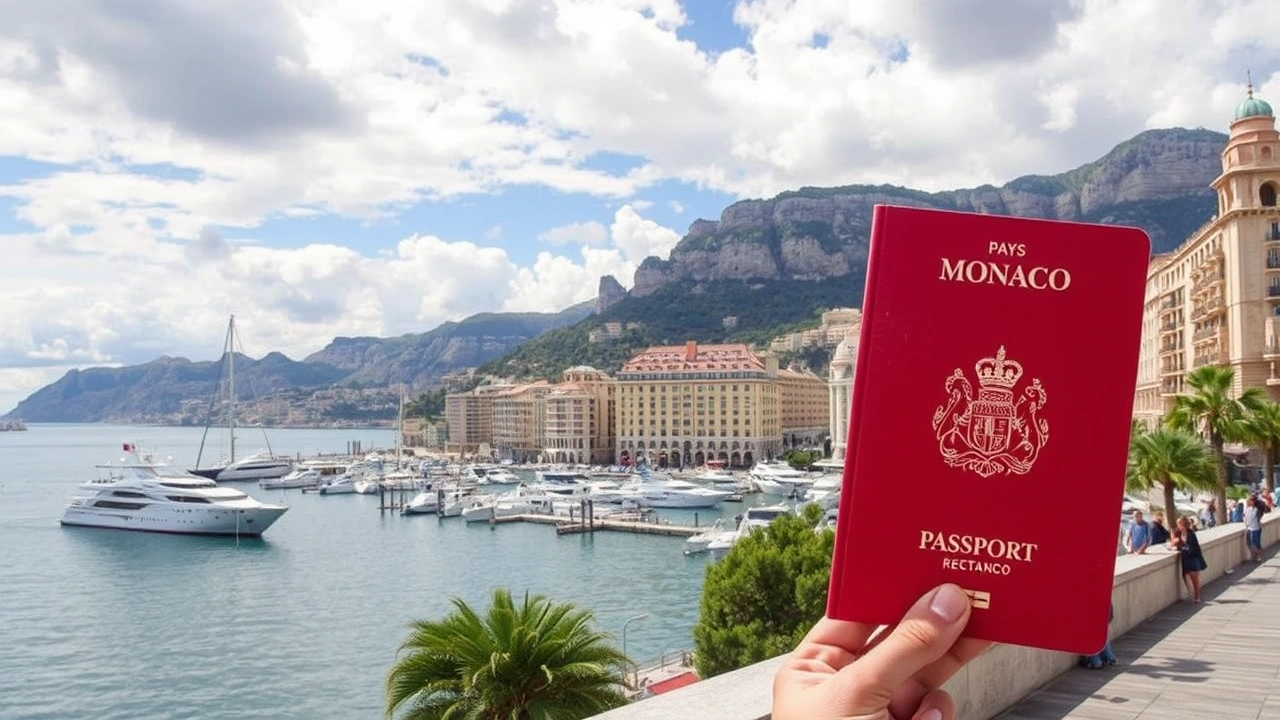
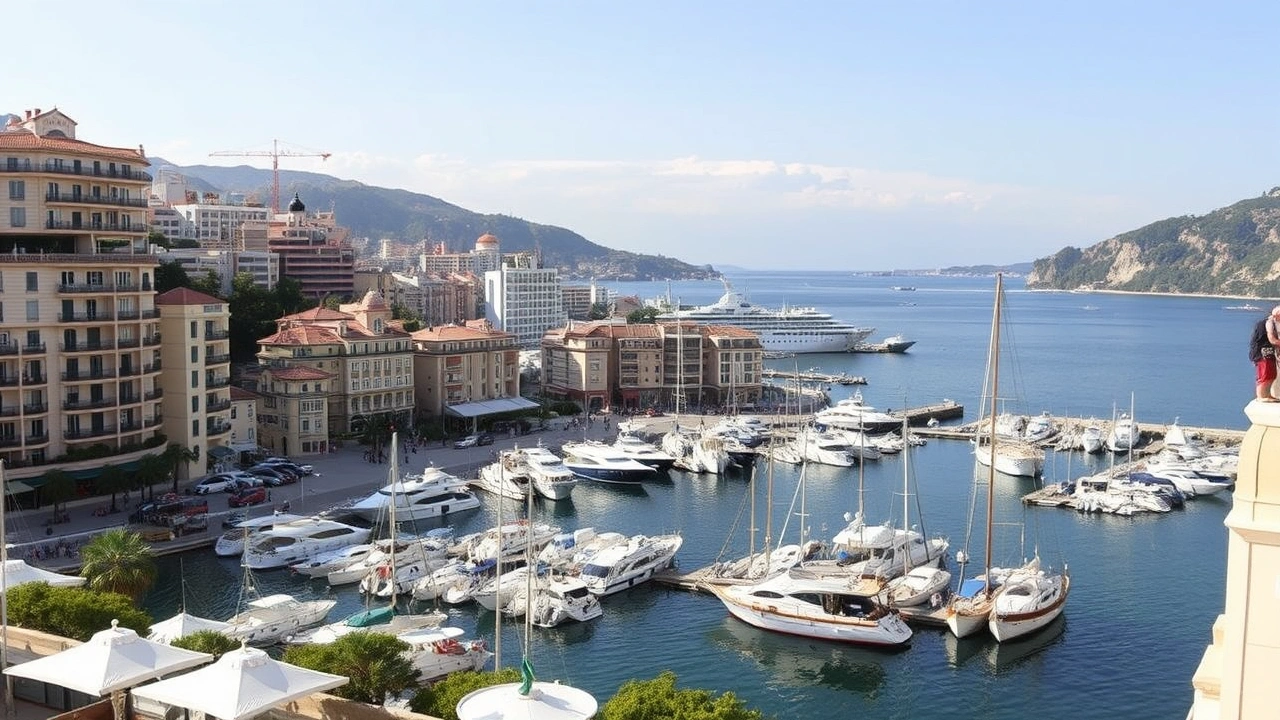
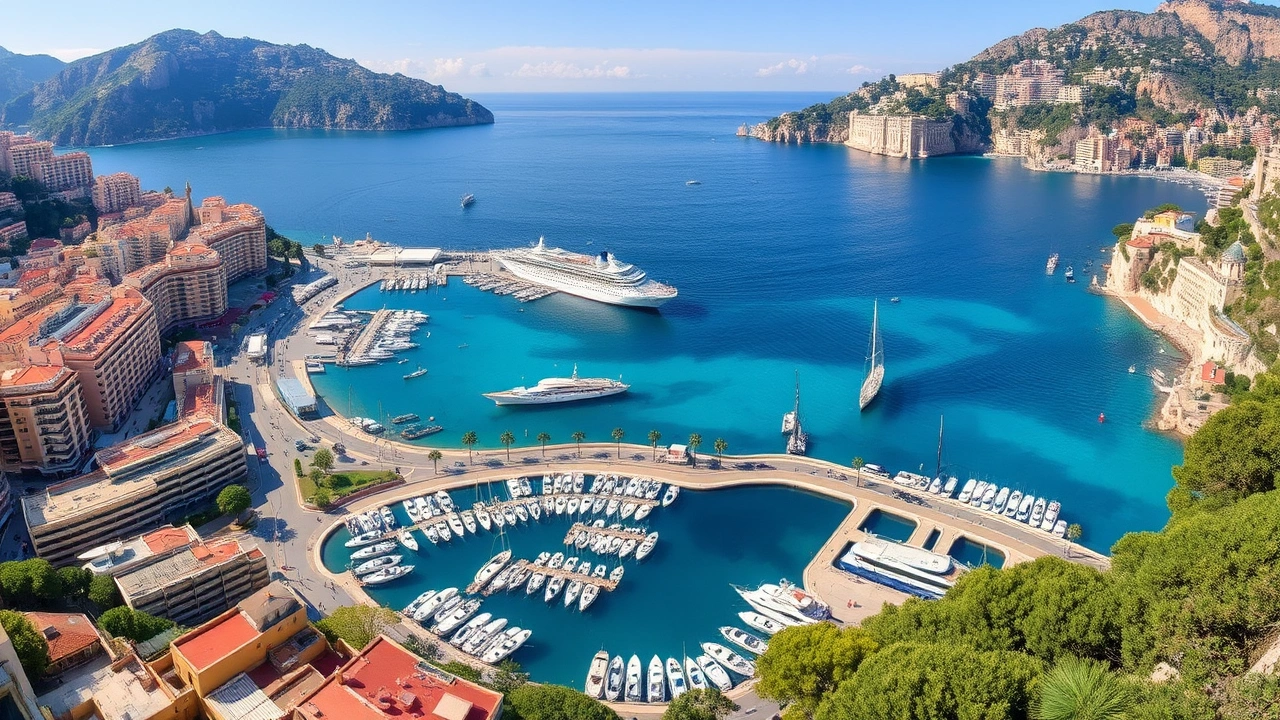
Monaco is tiny on the map – just 2.8 km² – but when it comes to mobility, the Principality clearly plays in the league of major cities. Between a dense bus network, an electric boat-bus, a self-service bike system, 100% electric car-sharing, a heavily used underground train station, and a forest of public elevators, everything is designed so you forget about the car.
This comprehensive guide details the different transport modes available (bus, train, boat, bike, helicopter), explains how to get around, which travel passes to buy, which mobile apps to use, and how to optimize your trips by combining these options according to your needs.
Understanding the Principality’s Mobility Philosophy
Monaco has about 77 km of roads, but hosts up to nearly 100,000 vehicles per day during high season. Needless to say, traffic can quickly become congested. The government clearly recommends leaving your car in a parking lot upon arrival and using public transport, walking, or opting for soft mobility.
The Principality promotes an alternative mobility strategy to private cars, based on a dense bus network, fast cross-border connections, vehicle electrification, park-and-ride facilities, and an extensive network of elevators and escalators to cross the territory on foot in under an hour.
The Compagnie des Autobus de Monaco (CAM), created in 1939 to replace the old tramways, is at the heart of the system. It operates city buses, night buses, the Bateaubus, the MonaBike network, and even an on-demand transport service. Its stated goal: a 100% decarbonized fleet (electric or hydrogen) by 2030, while it already largely runs on biofuels and electricity.
The Urban Bus Network: The Backbone of Travel
The bus is the central means of transport in Monaco. The Principality’s small size can be misleading: traffic is dense, the terrain is steep, and the bus often saves time and avoids steep climbs.
Daytime Lines: 6 Lines to Cover the Entire Territory
CAM operates six main urban lines (1 to 6), supplemented by express lines and a night network. The six daytime lines run every day, roughly from 7 a.m. to 9/9:15 p.m., with a frequency of about 10 minutes during peak hours (10 to 15 minutes the rest of the time, slightly less frequent on weekends).
These lines serve all key areas: Monaco-Ville (The Rock), Monte-Carlo, the train station, Fontvieille, Larvotto, the hospital, gardens, ports, beaches, major cultural and sports facilities.
Here is a summary of the main routes:
| Line | Origin – Main Destination | Key Sites Served |
|---|---|---|
| 1 | Monaco-Ville – Saint-Roman | Prince’s Palace, Cathedral, Oceanographic Museum, Place d’Armes, Port Hercule, Mareterra, Japanese Garden, Casino Square, Tourist Office |
| 2 | Monaco-Ville – Exotic Garden | Prince’s Palace, Cathedral, Oceanographic Museum, Port Hercule, Casino Square, Train Station, Villa Paloma |
| 3 | Fontvieille Shopping Center – Hector Otto | Heliport, Place d’Armes, Port Hercule, Sainte‑Dévote, Hospital, Observatory, Train Station, Princess Antoinette Park |
| 4 | Fontvieille Shopping Center – Saint-Roman | Princess Grace Rose Garden, Heliport, Louis II Stadium, Fontvieille Port, Place d’Armes, Train Station, Monte‑Carlo, La Rousse neighborhood |
| 5 | Hospital – Larvotto | Observatory, Train Station, Monte‑Carlo, Grimaldi Forum, Villa Sauber, Larvotto Beach, Sporting complex |
| 6 | Fontvieille Shopping Center – Larvotto | Rose Garden, Heliport, Louis II Stadium, Fontvieille Port, Port Hercule, Casino Square, Grimaldi Forum, Larvotto Beach, Sporting complex |
With 143 stops across the territory, the coverage is dense. For a visitor, some lines are particularly useful (1, 2, 4, 6) as they connect the old town, the Casino area, the ports, the beaches, and the train station in a few minutes.
The buses are modern, air-conditioned, and clean. They are equipped with real-time information screens. Almost all are accessible for people with reduced mobility, thanks to electric access ramps, dedicated spaces for wheelchairs or strollers, and audible stop announcements.
Express Lines (X1 to X4): Crossing Monaco in Record Time
For faster journeys or connections to park-and-ride lots and upper neighborhoods, Monaco has set up several express lines, which only stop at a few key points.
Lines X1, X2, X3, and X4 run Monday through Friday during the day. They notably connect the Exotic Garden, The Rock, Monte-Carlo Tourisme, Mareterra, Albert II Fontvieille, Larvotto, and Saint-Roman with very few intermediate stops. Their role: to provide fast east-west cross-town links, especially for commuters and students.
Sample routes:
| Express Line | Main Stops | Typical Use |
|---|---|---|
| X1 | Exotic Garden – Belgique (train station access) – Place d’Armes – The Rock | Direct access to The Rock from the upper neighborhoods and the station |
| X2 | Exotic Garden – Pont Sainte-Dévote (station) – Monte‑Carlo Tourisme – Portier (Mareterra) | Fast link from upper city – Casino district – new waterfront |
| X3 | Albert II Fontvieille – Fontvieille Port – Princesse Antoinette (Port/station) – Portier – Larvotto | Direct link Fontvieille – Larvotto |
| X4 | Albert II – Saint-Roman (according to sources) | Reinforcement of east-west axes |
Express lines X1 and X2 are also very practical for shuttling to and from the Salines parking, a large park-and-ride lot at the entrance to Monaco, connected to the center by two frequent X1/X2 lines.
The Night Network N1 and N2: Staying Mobile After 9 p.m.
After 9 p.m., the network switches to nighttime configuration, with two lines N1 and N2. They run every night starting at 9:20–9:30 p.m., with a bus every 30 minutes until about 12:20 a.m. On Fridays and Saturdays, service is extended until 4 a.m., with an hourly frequency after 12:30 a.m.
The routes follow the main axes of the daytime lines:
– N1 combines the routes of lines 1 and 4 (or 1 and 6 depending on documents) and loops between Albert II (Fontvieille), Larvotto, Saint‑Roman, the Casino and back to Albert II.
– N2 more or less follows the route of line 2 between Monaco‑Ville and the Exotic Garden.
A key point: transfers between N1 and N2 take place at the PRINCESSE ANTOINETTE stop going uphill and at the MONTE‑CARLO stop going downhill, allowing you to change lines without long waits.
ClicBus: The On-Demand Bus for Under-Served Neighborhoods
Some residential areas (Plati, Les Fleurs, Annonciade) do not have regular bus stops. To prevent these neighborhoods from becoming “mobility black holes”, CAM and the government launched ClicBus, an on-demand shuttle service.
Discover the two complementary services offered by ClicBus, using accessible 8 or 20-seater electric minibuses.
Book a custom trip based on your needs and destination, for flexible and personalized mobility.
Use predefined circuits with fixed stops, for simple and predictable daily commutes.
– During the day (7 a.m. – 9:20 p.m.): Departure from Plati, Fleurs, Annonciade neighborhoods to 4 main hubs: Place d’Armes, Fontvieille Shopping Center, Monte‑Carlo Tourisme, and Place des Moulins;
– At night (9:20 p.m. – 1:30 a.m., until 2:30 a.m. on Fridays and Saturdays): Departure from any network stop to the chosen stop, always by reservation.
Reservation and info are available via the ClicBus Monaco app or by phone (+377 92 00 17 99 / +33 4 65 40 60 09). Fares mirror those of the regular network, and all CAM travel passes are accepted.
ClicBus replaced line 7, which was discontinued precisely to switch to a more flexible model better suited to diffuse demand.
Fares, Tickets, Passes: How to Pay Less for Your Travel
Monaco’s pricing policy is clear: encourage regular use of transport through a range of passes and a spending cap system, while remaining simple for the occasional user.
Main CAM Passes and Their Indicative Prices
Amounts may vary slightly depending on the source and year, but the general scheme is as follows:
| Pass | Indicative Price | Validity / Advantages |
|---|---|---|
| Single ticket on board | €2.00 | One trip + 30 min transfer, purchased from the driver |
| Single ticket via card or Monapass | €1.50 | Same validity, contactless payment |
| 10-trip card | approx. €10–16 depending on medium | Multi-person trips possible, multiple validations on the reader |
| 15-trip card (contactless cardboard) | 15 trips, sold on board | For frequent occasional use |
| 24-hour pass | €5.50 | Unlimited travel for 24 hours |
| 7-day pass | ~€15 (Open Payment weekly cap) | Unlimited travel on a rolling week |
| Monthly pass (all public) | ~€22 (Open Payment monthly cap) | Full monthly subscription for the CAM network |
| Annual pass (all public) | Discounted rate | On a personalized card, rechargeable online |
| Youth pass (under 26, monthly/annual) | Reduced rate | With proof of age |
| Student passes | Reduced rate / free depending on case | With school ID, managed by CAM and Monapass |
| Children under 5 | Free | No pass needed |
An interesting feature is that CAM monthly and annual subscriptions can also provide preferential access to certain regional networks (Lignes d’Azur, Envibus, Palm Bus, Sillages, Zest) to facilitate cross-border commuting.
In the Alpes-Maritimes and Monaco, the PASS Azur and PASS Sud Azur schemes allow unlimited use of buses, trains, and trams. They are available in ‘Explore’ versions for a few days, or as monthly/annual subscriptions (Carte Azur), covering two, three, or all zones of the network.
Open Payment: Validate with Your Bank Card and Let the System Cap the Cost
Another Monegasque asset: “Open Payment” directly with a contactless bank card on the readers on board. Each adult validation is charged €1.50 (up to 6 travelers can be validated with multi-validation using the same card), but the system then automatically applies spending caps:
| Period | Cumulative Cap | How It Works |
|---|---|---|
| Service Day | €5.50 | From the 4th trip onward, no further charges are added that day |
| Week | €15.00 | Beyond that, validations no longer generate additional charges for that week |
| Month | €22.00 | A cap close to a classic monthly subscription |
Concretely, a visitor making multiple validations doesn’t have to do the math: their bank card is pre-authorized during the day, then the final charge is adjusted after midnight taking these caps into account.
Standard debit and credit cards are accepted for validating your travel pass. However, American Express and Nickel cards are not compatible with the validators.
Where and How to Buy Your Passes
There are multiple options:
– On board buses: single tickets and some multi-trip cards, payment in cash (exact change preferred) or contactless card;
– At automatic vending machines at stops (available at many points, accepting cash and cards);
– At the CAM ticket office, 22/24 rue du Gabian (Fontvieille), open Monday to Friday from 8:30 a.m. to 4:30 p.m.;
– Online via the CAM website (cam.mc);
– Via the Monapass app, which allows purchase, storage, and digital validation of passes.
Note that the old paper ticket-only vending machines at some stops are being gradually removed, as policy moves towards digitization (Monapass, Open Payment) and centralized physical sales points.
Monapass and Mobility Apps: Managing Everything from Your Smartphone
Monaco has made Monapass the cornerstone of its “smart city” mobility. It is a multimodal ticketing and information app certified as part of the “Extended Monaco” program.
Monapass: A Unique Mobility Wallet
Monapass allows you to:
The mobile app offers a complete range of services to facilitate your travel and activities in Monaco, centralizing purchase, management, and real-time information.
Buy and store bus tickets (single trip, 10 trips, 24h, groups…), monthly or annual subscriptions, as well as youth or student passes.
Buy and manage MonaBike trips (electric bikes) and pay for on-street parking directly from the app.
Check upcoming buses, MonaBike availability and charge, as well as parking space and payment terminal availability.
Centralize all your passes, even those bought outside the app, in a secure digital wallet.
Buy tickets for cultural venues like the Oceanographic Museum, Monaco Le Grand Tour, or the Cinéma des Beaux‑Arts, avoiding lines.
The app is available on Android and iOS, and can be easily installed thanks to the free public Wi-Fi network “Wifi Monaco” covering many areas.
Other Useful Apps
Several other digital tools complement Monapass:
Discover the official and third-party apps to plan your bus, bike, or shuttle trips in the Principality.
Displays real-time wait times, vehicle geolocation, occupancy levels, network alerts, route maps, and allows saving favorite stops.
App developed by Unostile offering schedules, network map, stop geolocation, and useful numbers, in several languages.
App dedicated to booking on-demand shuttles.
Used for renting MonaBikes via QR code scan.
Includes Monaco in its services for multimodal route calculation.
In practice, a visitor for a few days can get by with just Monapass (for tickets) and, possibly, Citymapper. A resident or cross-border commuter will get more out of the official Monaco Bus app from CAM for tracking their preferred bus in real time.
Boat-Bus and Sea Links: Crossing or Leaving the Port by Sea
The Bateaubus is one of the friendly curiosities of the Monegasque network. It combines soft mobility (electric + solar) and picture-postcard views over Port Hercule.
Bateaubus: The “Bus” that Crosses Port Hercule
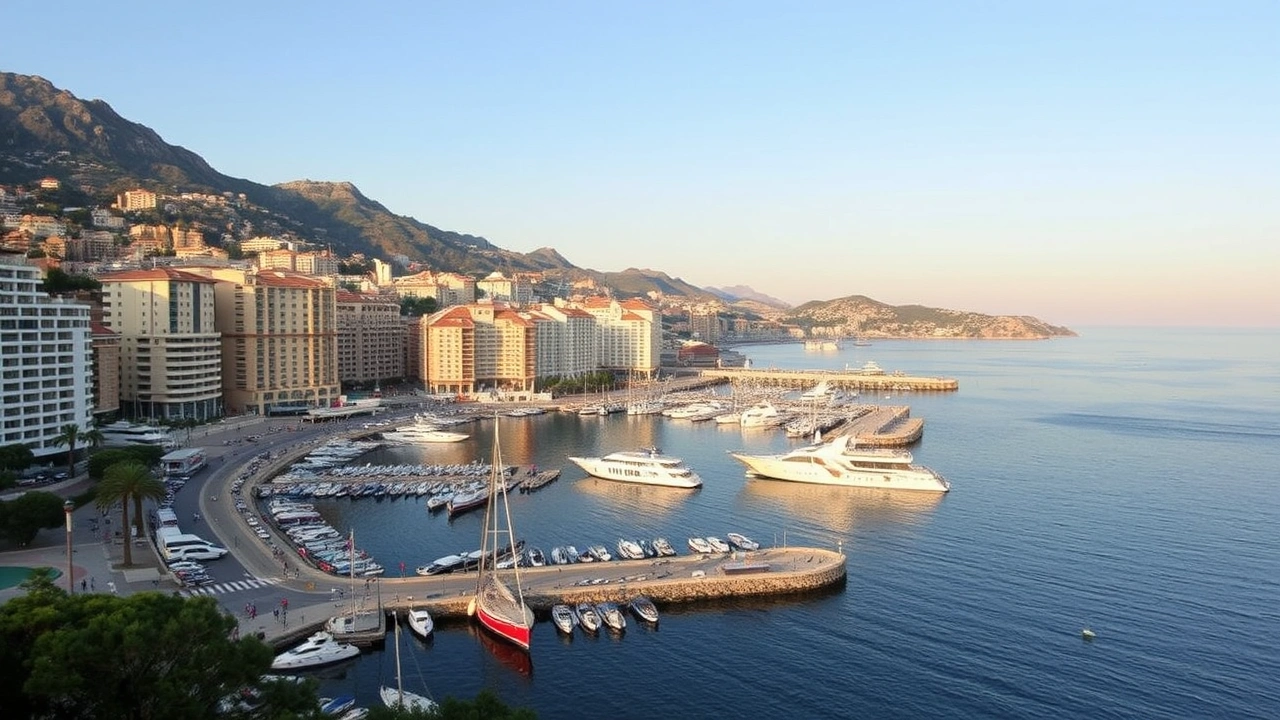
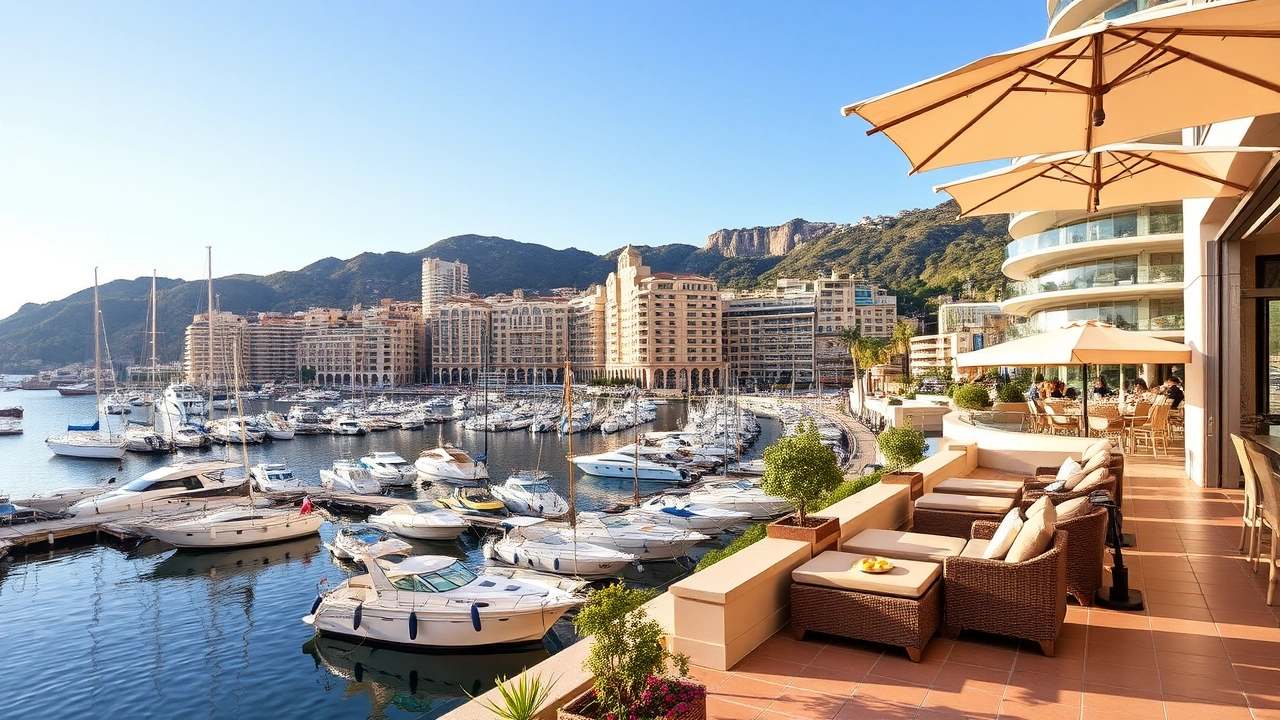
The Bateaubus, operated by CAM, is an electric and solar-powered shuttle connecting two quays of Port Hercule (Quai des États‑Unis and cruise terminal / Quai Antoine 1er). The crossing takes about 10 minutes, with departures every 10 minutes from 8 a.m. to 8 p.m.
The travel passes are identical to those for buses: a single ticket or a day pass is sufficient, and 10-trip cards are also valid. Children under 7 travel for free.
Over 100,000 passengers use this emission-free boat service each year.
Other Shuttles and Ferries
Besides the Bateaubus, several maritime services complement the offer:
– Seasonal shuttles departing from Port Hercule or Fontvieille to Nice, Saint‑Tropez, or other ports along the coast;
– Catamaran “Monaco One” connecting Port Hercule to Cala del Forte (Ventimiglia, Italy) in 15–20 minutes, by reservation and for about a dozen passengers;
– A maritime shuttle Nice – Cap‑d’Ail / Monaco is mentioned as being due to enter service to relieve congestion on the coastal road.
These offers are mainly useful for boaters, cruise passengers, or day-trippers, but they fit into the overall logic: diversifying modes of transport to better distribute flows.
MonaBike and Soft Mobility: Conquering the Terrain on an Electric Bike
For those who prefer to pedal, Monaco offers a self-service electric bike system: MonaBike, deployed by CAM in partnership with PBSC Urban Solutions.
MonaBike, Electric Bikes Almost Everywhere
The MonaBike network now has nearly 400 electric-assist bikes spread across 49 smart stations (35 originally, gradually extended and connected to neighboring towns). Stations are often located near major bus stops, to encourage intermodality.
The bikes are equipped with a screen showing speed, distance, and battery level. The announced range varies by source, from 20–25 km to up to 60 km. This range is more than enough to cover all of Monaco, even on the steepest slopes.
Regarding fares, the structure is designed for frequent short trips:
| Plan | Indicative Price | Details |
|---|---|---|
| Single trip | from €1 | From station to station |
| Monthly unlimited subscription | €6 / month | Unlimited number of trips (subject to terms of use) |
Rental is done via the PBSC app or Monapass, by scanning a QR code on the bike or the terminal. MonaBike usage is growing: over 600,000 trips in 2023, a 23% increase from 2022, confirming adoption by both residents and cross-border commuters.
Elevators, Escalators, and Moving Walkways: The Other “Public Transport”
In a city built on a cliffside, public elevators</strong are almost as important as buses. Monaco has 79 of them, along with 35 escalators and 8 moving walkways. They allow quick crossing of major elevation changes and linking of neighborhoods that appear far apart.
Among the emblematic axes, one can cite the Champs-Élysées, the Avenue des Champs-Élysées being a perfect example. This historic axis, linking the Place de la Concorde to the Arc de Triomphe, illustrates the importance of grand perspectives in Paris’s urban planning, serving as a major artery, parade ground, and national symbol.
– Place des Moulins – beaches (Larvotto): a very popular vertical route for residents and tourists alike;
– Avenue de la Costa – Port Hercule: perfect for reaching the port without a strenuous walk;
– Princess Grace Hospital – Exotic Garden: connection between a key facility and a high perched residential neighborhood;
– Place Sainte‑Dévote – Moneghetti;
– Casino Terraces – Auditorium – Boulevard Louis II;
– Avenue des Citronniers – Avenue Grande‑Bretagne;
– Boulevard du Larvotto – Saint‑Roman.
Combined with the bus network, these pathways allow crossing the Principality from east to west in about 45 minutes of walking, despite the rugged terrain.
Electric Car-Sharing and Taxis: The Bus Complements
Even though this guide focuses on public transport, it’s impossible to ignore two important elements of the Monegasque landscape: taxis and the electric car-sharing service Mobee.
Mobee: 100% Electric Car-Sharing
Mobee is the Principality’s car-sharing service. It operates on a “free-floating” basis: no fixed stations, vehicles can be picked up and dropped off anywhere within the authorized zone, with free on-street parking and in a series of partner parking lots (14 to 34 depending on sources).
The fleet consists solely of electric vehicles, including:
– Renault Twizy (small quadricycles);
– Peugeot e‑208 (compact sedans, about 340 km range);
– Tesla Model 3.
The fleet includes about 60 vehicles (initially 25 to 30 Twizys, complemented by sedans). Reservation is made via a mobile app, with a possible 15-minute notice. Billing is based solely on driving time. This solution is suitable for specific trips poorly served by bus, while fitting into a shared mobility approach.
Taxis and Electric Eco-Taxis
Taxis are managed by the Monégasque Association of Taxi Operators, with Monaco Prestige as the emblematic 24/7 operator (tel. +377 93 15 01 01). Several taxi stands exist: train station, Casino, major hotels, Avenue Princesse Grace, Saint‑Roman, Fontvieille, etc. Uber and other ride-hailing platforms are prohibited from picking up passengers within Monaco, although they remain accessible on the French side (Cap‑d’Ail, Beausoleil…).
The government has introduced a fleet of 20 100% electric taxis to green the transport sector.
A dedicated app “Taxis Monaco” also allows booking a taxi in a few clicks.
Finally, for late-night outings, the Be Safe association offers a free ride-home service by car, 7 nights a week in July and August, from midnight to 5 a.m., departing from Monegasque establishments to Monaco and some neighboring towns. An atypical but very coherent service with road safety policy.
Train: The Underground Gateway to the French Riviera and Italy
Rail plays a key role in connecting Monaco to the rest of the French Riviera, mainland France, and Italy. All railway infrastructure on Monegasque territory is underground: 1.7 km of tracks, making Monaco the world’s third smallest rail network.
Monaco-Monte Carlo Station: One Station, Many Trains
The Monaco‑Monte Carlo station, inaugurated in its underground version in 1999, is located at Place Sainte‑Dévote, very close to Port Hercule and not far from the Casino. It has many access points (Fontvieille, La Condamine, Monte‑Carlo, Exotic Garden / Hospital), via stairs, escalators, and elevators, connecting the station to different city levels.
SNCF, the French national railway company, operates there:
– about a hundred trains per day, mostly TER Provence‑Alpes‑Côte d’Azur regional trains;
– a daily round-trip TGV Paris – Ventimiglia (via Nice), stopping at Monaco;
– other long-distance services (seasonal), including international trains (e.g., to Moscow at certain times);
– freight trains transiting between France and Italy.
A TER train runs every 15 to 25 minutes on the Nice-Menton-Ventimiglia line, always serving Monaco.
Destinations and Typical Travel Times
From Monaco‑Monte Carlo, you can easily reach:
| Destination | Approximate Duration | Notes |
|---|---|---|
| Menton | 10–20 min | Multiple stops depending on TER |
| Nice | 20–25 min | Connection to airport via tram or bus 110 |
| Ventimiglia (Italy) | 35–40 min | Connection to Trenitalia network |
| Antibes | ~55 min | Via Cannes |
| Cannes | ~65 min | Coastal line |
| Marseille | ~3h10 | TER + connection or TGV depending on schedule |
| Paris | ~6h15 | Daily direct TGV Paris – Ventimiglia stopping at Monaco |
| Genoa, Milan, San Remo | Variable | Via connection at Ventimiglia |
TER tickets can be purchased at the station, from machines, online, or via the SNCF Connect app. Tickets are generally valid on any TER on the chosen day, not just the specific time displayed at purchase.
For commuters, Monaco and the PACA / Alpes‑Maritimes region have set up specific subscriptions (like the TER+ Principality pass for cross-border workers), which require an application with a photo, ID, and employer certificate.
Parking, Park-and-Ride, and Incentives for Electric Vehicles
Monaco has about 40 public parking lots, mostly underground, with over 15,000 spaces. The strategy is not to encourage car traffic, but rather to quickly store incoming vehicles and then switch to public transport.
Salines Parking: The Model Park-and-Ride Connected to Buses
Located at the entrance to Monaco, the Salines Parking illustrates this logic well. With 1,790 spaces and 100 electric vehicle charging points, it offers an attractive daily rate (about €11) and, importantly, includes a free 10-trip bus card for the CAM network. A monthly subscription at €51 even includes unlimited bus travel.
Two express lines continuously connect the parking lot to the city center on weekdays. They run every 10 minutes, with increased frequency during peak hours. For a commuter or a motorized visitor, this offer is far more rational than driving into the heart of the Principality.
Advantages for Electric Vehicles
The Principality strongly encourages the adoption of electric and hybrid vehicles:
– Purchase subsidies for individuals and companies, including for electric bikes and two/three/four-wheelers without lead-acid batteries;
– Free annual vignette (sticker) for electric vehicles;
– Regulated but free on-street parking for “zero-emission” vehicles, with the possibility to charge for free at many public charging points;
– Participation by the City Hall and the State in the massive deployment of charging points in parking lots and public spaces.
These measures complement the decarbonization of public transport (hybrid and electric buses, solar Bateaubus, MonaBike, 100% electric Mobee) to align mobility with Monaco’s climate goals.
Accessibility and Transport for People with Reduced Mobility
Accessibility is a strong focus of public policy in Monaco. Most CAM buses are equipped with electric ramps, an enlarged interior space for wheelchairs and strollers, audible stop announcements, and a specific information system for visually impaired people, via a dedicated European frequency and hybrid receivers.
Drivers are trained in procedures for welcoming people with reduced mobility.
Mobibus: Dedicated and Free Transport
Alongside the standard offer, a specialized service called Mobibus provides door-to-door transport for people with reduced mobility, within Monaco and four neighboring towns. It operates by reservation, free of charge, with adapted vehicles.
In 2016, the service already had 209 registered users, illustrating its rapid adoption.
Accessibility of Infrastructure and Tourist Sites
The underground Monaco‑Monte Carlo station is certified for welcoming people with reduced mobility, with ramps, elevators, adapted restrooms, and SNCF’s free “Accès Plus” service, by reservation 48 hours in advance.
Many sidewalks and routes, especially in tourist areas, are adapted. The ‘Monaco Malin’ brochure lists accessible pedestrian routes and main sites visitable by wheelchair, such as the Prince’s Palace, the Cathedral, the Oceanographic Museum, the Exotic Garden, the Japanese Garden, the Saint-Martin Gardens, the Casino and Monte-Carlo Opera, the Salle des Étoiles, Larvotto beaches (with beach wheelchairs available), and Fontvieille Port.
Practical Tips for Using Public Transport in Monaco Effectively
Monaco’s transport offer is dense relative to the territory’s size. To make the most of it, a few practical guidelines are in order.
Combining Walking, Buses, and Elevators
The most common mistake visitors make is to underestimate the elevation changes or, conversely, to rely too much on the car. The right approach is to combine walking, buses, and elevators:
– Walk on flat or short stretches (e.g., between the Casino and the port, or around Fontvieille);
– Use buses for steep climbs and longer east-west connections;
– Take advantage of elevators to cross vertical “walls” for free.
With this approach, you enjoy the city on foot, but without unnecessary fatigue.
Optimizing Your Tickets and Apps
For a full day’s stay or more, a 24-hour pass or using card payment with the daily cap (€5.50) is often more economical than buying single tickets. As soon as you plan to make more than 3 or 4 trips in a day, the pass becomes the better option.
It is also strongly advised to: verify information before sharing it, respect online privacy rules, and maintain a courteous attitude in all digital interactions.
– Download Monapass (for passes, MonaBike, and parking);
– Download the Monaco Bus app or check real-time displays at stops;
– Keep your validated tickets until the end of your trip, and even beyond, in case of inspection.
For students, commuters, and seniors, using Monapass allows applying for specific passes (student passes, resident senior pass, etc.), with loading directly into the smartphone. If you change phones, the app offers a recovery function for passes purchased since September 2021.
Leaving Monaco Without a Car
For an excursion from Monaco to the French Riviera or Liguria, several options are relevant:
The Principality is well-served by several modes of transport for exploring the French Riviera and the hinterland.
From Monaco-Monte Carlo station, serves the cities of Nice, Menton, Cannes, Antibes, Ventimiglia, and San Remo, with high frequencies during the day.
Main lines: 100 (Nice – Monaco – Menton), 100X (Nice – Monaco), 110 (Nice Airport – Monaco – Menton), 11 and 114 (Monaco – La Turbie).
Use the MonaBike service or buses to reach neighboring villages located above the Principality, then a bus or train connection.
The PASS Sud Azur Explore (3, 7, or 14 days) is interesting for those who want to travel frequently throughout the Alpes‑Maritimes + Monaco area by train and bus without worrying about fares.
Getting to Monaco from Nice Airport
Three main options are available for travelers arriving by plane at Nice Côte d’Azur:
– Bus 110 (Airport Express – Monaco – Menton) every 30 minutes, taking about 45 minutes;
– Tramway to Nice‑Saint‑Augustin or Nice‑Ville station, then TER to Monaco in 20–25 minutes;
– Helicopter from Nice to Fontvieille Heliport, in 6–7 minutes, via Monacair or Heli Securite, with departures about every 15 minutes (premium service, around €140–160 per person).
Once in Monaco, buses, elevators, MonaBike, and walking take care of the rest.
Conclusion: A “Big” Network in a “Small” Country
Public transport in Monaco is not just a few bus shuttles in a tiny city. The Principality has implemented a complete ecosystem, combining city buses, express lines, on-demand shuttles, boat-bus, underground rail network, shared bikes and electric cars, decarbonized taxis, public elevators, digital tickets, and park-and-ride facilities.
Monaco’s urban planning is designed to reduce private car use, lower CO₂ emissions, and improve pedestrian comfort. In this dense environment, residents and visitors can live or stay without a car while remaining perfectly mobile.
Provided you master two or three basic reflexes – using Monapass, identifying the main bus lines (1, 2, 4, 6), utilizing public elevators and, if needed, regional connections – it becomes very easy to get around quickly from one end of the Principality to the other and far beyond.
For such a compact territory, it is an impressive feat, and a real-world laboratory for what compact, connected, low-carbon urban mobility can be.
A 62-year-old retiree, with over one million euros in well-structured financial assets in Europe, wanted to change his tax residence to optimize his tax burden and diversify his investments, while maintaining strong ties with France. Allocated budget: €10,000 for comprehensive support (tax advice, administrative formalities, relocation, and asset structuring), without forced asset sales.
After analyzing several attractive destinations (Greece, Cyprus, Mauritius, Andorra), the chosen strategy was to target Monaco, for its absence of income tax for non-French individuals working in Monaco, no wealth tax, a very secure environment, and a high-end financial ecosystem, in close proximity to France. The mission included: pre-expatriation tax audit (exit tax or not, tax deferral), obtaining the Monegasque residence permit via renting or purchasing a property, opening local bank accounts, proof of resources, plan for breaking French tax ties (183 days/year outside France, center of economic interests…), and introduction to a local network (lawyers, private banks, family offices) for asset integration and international diversification.
Planning to move abroad? Contact us for custom offers.
Disclaimer: The information provided on this website is for informational purposes only and does not constitute financial, legal, or professional advice. We encourage you to consult qualified experts before making any investment, real estate, or expatriation decisions. Although we strive to maintain up-to-date and accurate information, we do not guarantee the completeness, accuracy, or timeliness of the proposed content. As investment and expatriation involve risks, we disclaim any liability for potential losses or damages arising from the use of this site. Your use of this site confirms your acceptance of these terms and your understanding of the associated risks.

Cyril Jarnias is an independent expert in international wealth management with over 20 years of experience. As an expatriate himself, he is dedicated to helping individuals and business leaders build, protect, and pass on their wealth with complete peace of mind.
On his website, cyriljarnias.com, he shares his expertise on international real estate, offshore company formation, and expatriation.
Thanks to his expertise, he offers sound advice to optimize his clients' wealth management. Cyril Jarnias is also recognized for his appearances in many prestigious media outlets such as BFM Business, les Français de l’étranger, Le Figaro, Les Echos, and Mieux vivre votre argent, where he shares his knowledge and know-how in wealth management.