 Published on and written by Cyril Jarnias
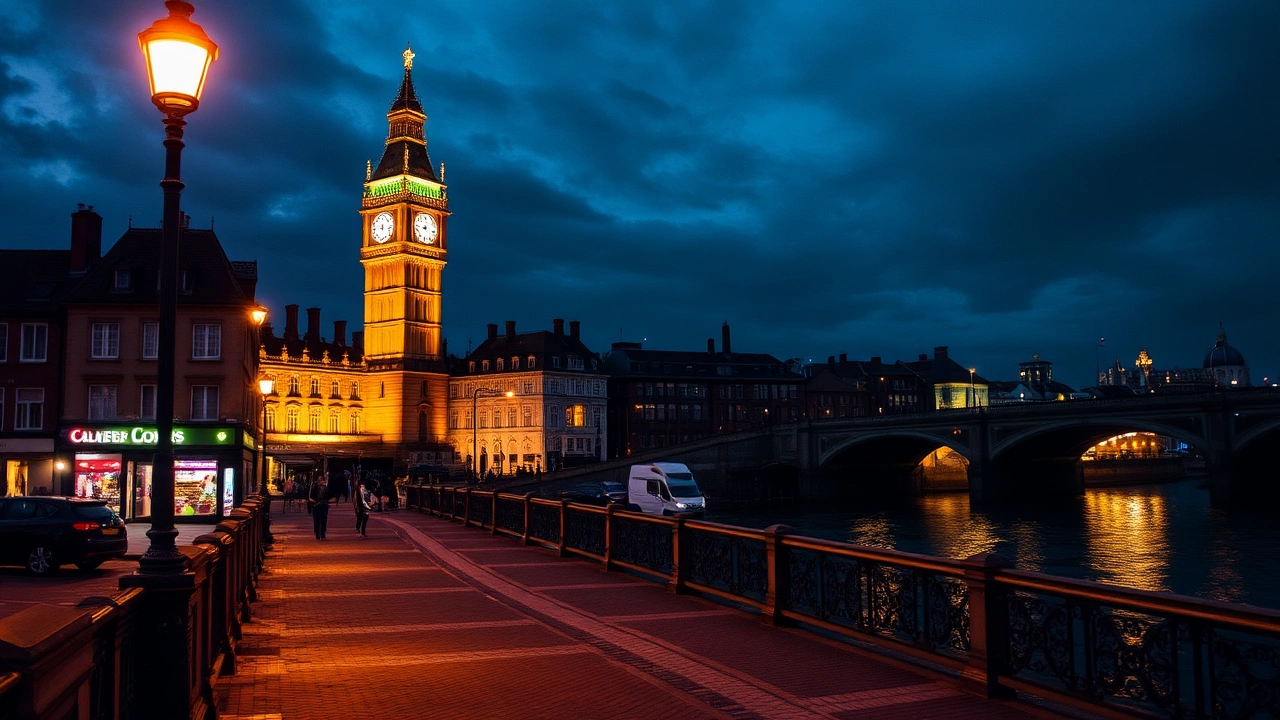
The UK lives as much by night as by day. Between Victorian pubs, electronic clubs, student parties, and new “wellness” concepts, the British nightlife scene generates billions of pounds, attracts diverse crowds… and sees habits changing fast. Nightlife in the UK: where going out in the evening is no longer just about pints and all-nighters, but a complete ecosystem that weighs heavily in the economy and culture.
To evaluate nightlife, it is essential to examine the figures, major trends, must-see cities, and significant venues. A key parameter to consider is safety and how young people, particularly Generation Z, consume and experience the night.
An economic powerhouse reinventing itself
The night is no longer a “side” aspect of the British economy: the night-time sector represents nearly £154 billion in 2024. The cultural component of this night-time economy is growing faster than the rest, with 3.2% growth, even as the overall market slows to 2.5%.
In detail, nightlife venues are evolving differently: bars are multiplying, clubs are closing, and hybrid formats are emerging.
Here is a numerical summary of this transformation.
| Key Indicator | Recent Trend / Current Level |
|---|---|
| Value of UK night-time economy | £153.91 billion |
| Cultural night-time economy growth | +3.2% |
| Overall night-time market growth | +2.5% |
| Night-time venues (all types) | +4.9% in one year |
| Bars | +7.6% in one year; +2.8% vs March 2020 |
| Clubs (nightclub sites) | +5% in one year; –33% vs 5 years ago |
| Independent night-time businesses | –15.8% vs March 2020 |
| “Managed” groups (chains…) | –3.2% vs March 2020 |
| Drinks revenue after 1 AM | –13% |
| Late-night venues in major cities | –20.1% vs 5 years ago |
| Late-night venues in small towns | –31.1% vs 5 years ago |
Themed bars, however, are exploding: their numbers are estimated to have surged by nearly 195% in a year. Meanwhile, large regions like the South and South East of England are losing venues, while London returns to growth (+5.5% night-time venues in one year).
This restructuring also reflects a profound change in habits, particularly among 18-30 year-olds.
Generation Z: Less alcohol, more control
Young Brits no longer go out at night like their elders. A survey of 2,001 people aged 18 to 30 shows a massive decline in the frequency of going out, due to the combined effects of inflation, post-Covid fatigue, and safety concerns.
| Going Out Behavior (18-30 year-olds UK) | Survey Result |
|---|---|
| Go out less often than a year ago | 61% |
| Go out more often after 10 PM | 16% |
| Reduced night-time activities due to the economy | 68% |
| Spend less on nights out than a year ago | 53% |
Regarding alcohol, the shift is even clearer. A significant portion of young people are adopting a moderate approach, even “sober-curious”:
– 17% say they never drink alcohol.
– 29% drink only once a month or less.
– Gen Z is estimated to consume about 30% less alcohol than previous generations.
– Nearly 80% systematically alternate alcoholic and non-alcoholic drinks (“zebra striping”).
‘Coffee clubbing’ events have surged by 478% according to Eventbrite data.
At the same time, fear of “drink spiking” weighs heavily: 55% of consumers say this fear reduces their desire to go out, and almost a third of young people associate the night with negative emotions (fear, anxiety, feeling of insecurity).
The safety of the journey home becomes decisive: 71% of 18-30 year-olds say how they get home affects their decision to go out, and 69% of all respondents claim that better night-time transport would encourage them to stay out longer.
London, a nightlife capital under pressure
London embodies the most spectacular example of these contradictions: immense offerings, significant infrastructure, but high costs and a declining club scene.
The capital’s night-time industry is worth around £764.4 million and employs 1.4 million night workers. Over 15 million visitors come each year to enjoy its nightlife – and more than 2 million people go out after 9 PM on a given night.
Yet the city has lost 480 clubs in four years and only has about 851 nightclubs nationwide in 2025 (compared to 875 in 2023). Projections suggest a possible drop of nearly 50% in the number of London clubs by 2030 if the trend continues.
Londoners remain generally satisfied with their city at night (75% satisfaction, third-highest rating in the country behind Brighton and Liverpool), but the price issue is explosive: barely 16% find a night out in London “affordable”. On average, a night out costs at least £20 more than thirty years ago, and club entry is most often between £5 and £20, even when booking in advance.
Neighborhoods with strong personalities
London nightlife is not a uniform block; it’s defined by neighborhoods, each with its own scene and vibe.
Soho, the heart of London nightlife, concentrates iconic venues like the gay bar Heaven, historic pubs like The Three Greyhounds or Waxy O’Connors, and eclectic spots such as Sick Bario Soho (Latin vibe) and NQ64 Soho (retro arcade bar with video game-inspired cocktails). An evening can start in a classic pub, continue at Freedom Bar for West End artist performances, and end at a club or karaoke at Lucky Voice.
To the east, Shoreditch and Hoxton form the “hipster” epicenter: cutting-edge clubs like XOYO or Village Underground, concept bars like Ballie Ballerson (ball pit bar) or Bounce (ping-pong and beer), hidden speakeasies (The Mayor of Scaredy Cat Town behind a fridge, Lounge Bohemia and its molecular cocktails by appointment). Pubs and bars like Simmons, Nikki’s, or Queen of Hoxton set the rhythm for the neighborhood’s organized pub crawls.
Camden, to the north, plays the rock, indie, and alternative card: The Underworld and Electric Ballroom for concerts, KOKO for major electro or live nights, Cyberdog for futuristic rave aesthetics, The Good Mixer or The World’s End for the grittier atmosphere of a neighborhood pub.
To the south, Brixton and Peckham embody a more multicultural and creative London: Electric Brixton in a former 1920s cinema, Pop Brixton and Peckham Levels for hybrid complexes mixing food courts, bars, performances, and parties. Frank’s Café, a rooftop perched atop a car park in Peckham, has become a summer classic.
The south bank of the Thames, from South Bank to London Bridge, offers a wide variety of evening options. You’ll find rooftop bars (like the 12th Knot, Bar Elba, or London Bridge Rooftop), night markets (Borough Market, Mercato Metropolitano), immersive concepts (Aures London), unusual bars set in street art tunnels (Leake Street), and many historic riverside pubs.
A network of night-time transport… decisive
London has long understood that mobility is key to the night. The Night Tube – nighttime subway service – operates on Fridays and Saturdays on five major lines (Victoria, Jubilee, Central, Piccadilly, Northern). It saves an average of 20 minutes per journey (and up to an hour), generates £77 million in annual economic benefits, creates 2,000 permanent jobs, and according to assessments, every pound spent on this service yields £2.70 in direct benefits and £1.20 in indirect spillover effects.
This is complemented by a robust night bus network, black cabs (the only taxis allowed to be hailed on the street), and ride-hailing apps like Uber. Most Night Tube stations are fully staffed, with British Transport Police patrols, and off-peak fares apply.
This infrastructure does not prevent a persistent feeling of insecurity, especially among women: more than half of female respondents say they are concerned when traveling late at night, and many lack confidence in the government’s ability to address these issues. Hence the importance taken by city policies and local initiatives.
Urban Safety Report
Night-time taskforce and new nightlife formats
Faced with these challenges, London established an independent Night Time Taskforce in 2025, chaired by Cameron Leslie, co-founder of the club Fabric. Around the table: figures from diverse scenes, such as Nadine Noor (Pxssy Palace), Nathaneal Williams (Colour Factory), Provhat Rahman (Daytimers), or Alice Hoffmann-Fuller (Corsica Studios). The goal: work with the Metropolitan Police, local officials, and Transport for London towards a safer and more vibrant city at night.
At the same time, the capital is seeing new forms of night-time activity flourish, less focused on intoxication and more on experience: festive alcohol-free steam baths (&soul and its “Sober Sauna Rave”), daytime events like UNFOLD at club FOLD (parties starting at 2 PM on Sunday), attentive listening concerts at venues like 180 Studios or Brilliant Corners, or short-duration event series like Brief Encounters (4.5-hour parties ending before midnight).
“Hardcore” clubs like Fabric (Farringdon), Ministry of Sound (Elephant & Castle), Egg London (King’s Cross), or Studio 338 (Greenwich) continue to attract electro enthusiasts until the early hours, but they now coexist with a multitude of hybrid venues: arcade bars (Four Quarters in Peckham, NQ64), board game bars (Draughts under Waterloo station), karaoke pubs, green rooftops, art spaces like Tate Modern which programs “Lates” with DJ sets and workshops.
Beyond London: The major nightlife cities
While the capital holds a central place in the night-time imagination, nightlife in the UK is deeply decentralized. Many cities claim the status of “best nightlife scene“, often driven by universities.
A ranking based on 25,755 student reviews places Liverpool top for student life (rating of 4.38/5), followed by Newcastle, Leeds, Sheffield, Cardiff, Glasgow, Belfast, Nottingham, and Birmingham. Another ranking dedicated to the best student nightlife, taking into account club density, prices, safety, and student culture, gives first place to the University of Manchester, followed by Newcastle, Sheffield, Bristol, Leeds, Nottingham, Manchester Metropolitan, Sheffield Hallam, Nottingham Trent, and Cardiff.
Liverpool, partying on a human scale
Liverpool combines reasonable prices (pint just under £5 on average), bar density, and a strong musical identity. Around Concert Square, Wood Street, and Fleet Street, you’ll find large commercial clubs like Level, bars like Popworld, Heebie Jeebies, or McCooleys, and hybrid venues like Brooklyn Mixer.
Further south, the Baltic Triangle concentrates creative spots like 24 Kitchen Street and the former Cains Brewery, which hosts, among others, Bongo’s Bingo, an unlikely mix of bingo and rave that has conquered a whole generation. For more relaxed vibes, students often cite Kazimier Garden or The Merchant, while the Oh Me Oh My rooftop offers a panoramic city view.
The city of Liverpool is renowned for its dynamic music scene, supported by local players and major events.
The city hosts this major music festival, showcasing new talent and established artists.
A very active small concert venue scene, essential to local musical vitality.
The Night Time Industries Association is one of the unions supporting and promoting this cultural nightlife.
Manchester, a permanent music laboratory
Manchester remains one of the world’s music capitals. From the punk and post-punk scene to the Madchester years and Britpop, the city has seen the emergence of The Smiths, Joy Division, Oasis, and artists from Factory Records (808 State, A Guy Called Gerald). Today, it still boasts an impressive constellation of venues of all sizes, from Co‑Op Live (23,500 capacity, the country’s largest covered arena) to the tiny Eastern Bloc (75 capacity), via the AO Arena, Victoria Warehouse, the Academy, the art deco Apollo, or The Ritz with its sprung dance floor.
Around the university, complexes like Manchester Academy (four rooms from 470 to 2,600 capacity) host both emerging artists and pop giants. In the Northern Quarter, institutions like Night & Day Café, Band On The Wall, or Matt & Phred’s perpetuate a tradition of daily live music (rock, jazz, funk, soul). Spaces like YES, Gorilla, or SOUP embody the new guard: between club, concert hall, bar-restaurant, and rooftop, they illustrate the genre-blending very characteristic of contemporary British nightlife.
Capacity of The Warehouse Project, the Manchester club voted best in the country.
Glasgow, alternative capital
In Scotland, Glasgow is often named one of the best nightlife cities in the country. The universities of Glasgow and Strathclyde benefit from an environment where beer remains relatively affordable (around £4.50 a pint) and where the density of bars, pubs, and clubs is considerable, especially around Sauchiehall Street.
Venues like Sub Club – presented as the oldest underground club in the world still in operation, regularly ranked in the global top 10 – or SWG3 and The Garage make the city a hub for electronic and alternative music. Bamboo, Firewater, Nice ‘n Sleazy, or The Garage host nights oriented towards indie, rock, pop, while the tradition of the “storytelling pub” is maintained in many establishments.
Newcastle, Leeds, Sheffield, Cardiff: The strength of student cities
Newcastle, often cited in the top 3 nightlife cities, is renowned for its very low prices (many bars offer drinks for £1) and the abundance of student parties: Jungle at Tup Tup Palace, parties at Soho, Digi, or The Cut, not forgetting campus bars like Luther’s or Habita. The Quayside area and the Ouseburn neighborhood complete the offering.
Leeds relies on a flagship student union (Leeds University Union) with its own club (Fruity, a Friday institution) and a neighborhood famous for its bars, Call Lane. You’ll find Mixtape Project, Sticky Feet, Space Tuesdays or Quids In Mondays, as well as the famous Otley Run, a pub crawl crossing the city in costumes.
Sheffield, awarded for its student quality of life, cultivates a mix of perceived safety, reasonable prices (pint around £4.10), and small independent venues. Leadmill, the city’s oldest concert hall, or clubs like Tank and Code Warehouse embody the local scene.
Cardiff, the compact Welsh capital, combines a large student population, contained prices, and a rich concert offering, which consistently earns it a place in best nightlife city rankings.
Brighton, Bristol, Birmingham, Swansea: Regional nuances
Brighton, often described as “alternative” and the LGBTQ+ capital, relies on themed bars (Alcotraz, cabarets, comedy clubs), clubs like Concorde 2 or Patterns, and a wealth of alumni who, like Fat Boy Slim, have contributed to its reputation as a party city.
Bristol built its reputation on drum’n’bass, dubstep, and venues like Motion (the city’s largest club), Thekla (club on a boat), or Colston Hall for concerts.
In Birmingham, the night revolves around Broad Street and Digbeth, with mainstream clubs (Walkabout, Snobs, Gatecrasher, Risa) and iconic student parties like Fab ‘N’ Fresh. The university is ranked among the country’s “hardest partying unis“.
Swansea, finally, is known for its very high alcohol consumption per student and a party street, Wind Street, which concentrates bars and clubs.
Pubs, the backbone of British nightlife
Impossible to talk about nightlife in the UK without mentioning pubs. The country is estimated to have between 45,000 and 50,000 pubs, even though nearly 15,800 have closed since the beginning of the 21st century. The tradition dates back nearly 2,000 years, from Roman “tabernae” and Anglo-Saxon alehouses.
Pub culture structures evenings, with codified rituals: buying ’rounds’ (each person pays for a round of drinks), an invisible queue at the bar, almost non-existent table service, and the importance of respect towards staff and other customers.
Pub names tell part of the country’s history: “The Red Lion” (the most common), “The Crown”, “The King’s Arms”, “Cross Keys”, “Lamb and Flag”… often inherited from royal coats of arms or historical references, like “The Mayflower” which refers to the ship that sailed to America in 1620.
Even if most still close around 11 PM (midnight on weekends) with a “Last orders!” call about twenty minutes before closing, they remain for many the gateway to British nightlife, especially in medium-sized cities and residential neighborhoods.
Night music: The sound map of British cities
British nightlife can also be read through music genres. A study of 16 major cities between January and December 2024 reveals the dominance of house and techno in a majority of urban scenes.
| Main City | Leading Genres in Club / Party Programming |
|---|---|
| London | House, techno, disco, tech house, garage + EDM, hip‑hop, R&B, latin, reggae, rock, jazz |
| Birmingham | Drum’n’bass, afrobeat, house, grime, techno |
| Manchester | House, techno, garage, bass, disco |
| Liverpool | House, techno, tech house, garage, drum’n’bass |
| Leeds | House, techno, garage, drum’n’bass, bass |
| Bristol | House, drum’n’bass, jungle, techno, garage |
| Glasgow | Techno, house, disco, garage, trance |
| Cardiff | House, techno, garage, drum’n’bass, trance |
| Brighton | House, drum’n’bass, techno, garage, jungle |
| Belfast | Techno, house, electro, drum’n’bass, disco |
| Newcastle | Techno, house, garage, drum’n’bass, breakbeat |
| Nottingham | House, garage, tech house, techno, drum’n’bass |
| Sheffield | House, techno, jazz, bass, garage |
| Aberdeen | Techno, house, trance, disco, acid |
| Dundee | Disco, techno, house, funk & soul, garage |
In 9 out of 16 cities, house is the most popular genre. In four of them, techno dominates. Some areas stand out: Aberdeen is the only city where acid features in the top 5, and Dundee the only one where funk & soul is among the main genres.
The electronic music industry is worth approximately £2.4 billion in the UK.
Going out differently: Immersive experiences and “soft clubbing”
While traditional clubs close by the dozen, a new grammar of the night is taking hold, especially in major cities: immersive experiences, themed bars, alcohol-free parties, daytime parties.
In London, the wave of immersive bars is particularly pronounced. Companies like Inventive Productions have developed concepts such as:
Several London establishments offer a fully immersive bar experience. Hexmoor, in Hoxton, recreates a wizard’s prison where cocktails are presented as potions. Avora transports customers to a bioluminescent alien planet, with color-changing cocktails, in a setting criticizing a fictional multinational. Alcotraz simulates a prison where customers, dressed in orange jumpsuits, must smuggle in their alcohol to have it transformed into cocktails by inmate-bartenders. Finally, Moonshine Saloon immerses visitors in a Far West saloon in BYOB (bring your own bottle) mode, with smuggling scenarios and a role to play.
These experiences, typically priced between £35 and £55 for 2 to 4 cocktails, mix interactive theater, elaborate decor, online booking systems, and regulated consumption.
Other concepts rely on popular imaginaries: The Cauldron and its wizard potions using molecular mixology, The Bletchley and its WWII-style puzzles, ABQ London inspired by Breaking Bad, or hidden bars (speakeasies) behind fridges, bookshelves, or false facades.
At the same time, “soft clubbing” is gaining ground: alcohol-free parties, morning or daytime events, wellness-oriented (sauna rave, yoga + DJ, coffee clubbing). These formats respond directly to two key concerns of young people: health and safety.
Safety, a central issue for British nightlife
From York to London and across university campuses, the same advice recurs: don’t go home alone, stick to well-lit routes, watch your drinks, avoid unlicensed taxis, plan your journey in advance, and keep your phone charged. Universities, municipalities, and associations like the Suzy Lamplugh Trust or Crimestoppers are multiplying prevention campaigns.
Approximately 1 in 9 women and 1 in 17 men report having ever been a victim of ‘drink spiking’.
Several protection measures are developing in night-time venues:
– the “Ask for Angela” program, which allows a person in danger to discreetly ask for help at the bar by using this code;
– the “Ask for Clive” initiative, which identifies establishments aiming to be safe for LGBTQIA+ people and committed to acting against harassment;
– the distribution of cup covers, drink spiking detection kits, or staff training to spot distress situations.
Venues like The Night Owl in Birmingham, specializing in retro soul, implement strict protocols: team training, visible display of safety charters, and active encouragement for customers to report any suspicious behavior.
On an individual level, the recommendations are repetitive but essential: eat before drinking, alternate alcohol and water, do not accept drinks from strangers, stay in a group, use official taxis or public transport, avoid isolated paths, keep personal belongings in closed pockets, and know where to find help (campus safety apps, partner taxi numbers, Safezone, etc.).
Why British nightlife remains unique
Between the historical weight of pubs, the inventiveness of clubs, the power of the electronic music industry, the rise of immersive experiences, and the rapid evolution of behaviors, British nightlife is both in crisis and full of effervescence.
Decline in the number of independent establishments since 2020, illustrating economic pressure on nightlife.
Nightlife in the UK: where to go out in the evening thus depends less on an “ultimate spot” than on a set of choices: musical vibe (house, techno, drum’n’bass, funk, jazz), desired intensity (club until 8 AM, cozy pub, arcade bar, alcohol-free party), budget (from cheap Wetherspoons pubs to rooftops at The Shard), relationship with alcohol, and safety requirements.
For those who can read this moving map – figures in hand – the UK remains one of the world’s richest and most complex nocturnal playgrounds. The challenge for the coming years will be to preserve this creativity while meeting the new expectations of a generation that wants to dance as much as it wants to remain in control of its nights.
Disclaimer: The information provided on this website is for informational purposes only and does not constitute financial, legal, or professional advice. We encourage you to consult qualified experts before making any investment, real estate, or expatriation decisions. Although we strive to maintain up-to-date and accurate information, we do not guarantee the completeness, accuracy, or timeliness of the proposed content. As investment and expatriation involve risks, we disclaim any liability for potential losses or damages arising from the use of this site. Your use of this site confirms your acceptance of these terms and your understanding of the associated risks.

Cyril Jarnias is an independent expert in international wealth management with over 20 years of experience. As an expatriate himself, he is dedicated to helping individuals and business leaders build, protect, and pass on their wealth with complete peace of mind.
On his website, cyriljarnias.com, he shares his expertise on international real estate, offshore company formation, and expatriation.
Thanks to his expertise, he offers sound advice to optimize his clients' wealth management. Cyril Jarnias is also recognized for his appearances in many prestigious media outlets such as BFM Business, les Français de l’étranger, Le Figaro, Les Echos, and Mieux vivre votre argent, where he shares his knowledge and know-how in wealth management.