 Published on and written by Cyril Jarnias
Moving to Uruguay, whether to Montevideo, Punta del Este, or a small coastal town, is much more than changing your address. For a professional, it primarily means entering a new game of relationships, codes, and opportunities. In this country, which is both very European in its references and very Latin in its human warmth, success largely depends on the quality of your network.
Despite its stability and dynamic economy, access to employment or a client base in Uruguay heavily depends on local connections. Technical expertise alone can remain invisible without a network. Quickly understanding how local professional relationships work is a key lever for successful integration within a few months.
This article offers a very concrete approach to networking for expatriates already settled or preparing to move to Uruguay, with a particular focus on Montevideo and the main economic hubs. Goal: move beyond the status of “lost newcomer” to become, in less than a year, someone who is recommended, invited, and consulted.
Understand the Terrain: What “Having a Network” Means in Uruguay
Even before collecting a stack of business cards, it is essential to understand the country’s professional culture. Uruguay projects an image of stable democracy, transparency, and safety among the highest in the region. This stability is reflected in business relationships: everything is based on trust and reputation.
Uruguayans place great importance on education, seriousness, and consistency of behavior. The society is overwhelmingly urban, with a spectacular concentration in Montevideo, which is home to nearly half the population. Professional circles therefore quickly intersect, get to know each other… and talk among themselves.
In this context, having a network is not just “knowing people”: it is being recognized as someone reliable, respectful of codes, and pleasant to work with long-term. Trust takes precedence over speed, relationship over one-off transactions.
Professional Context and Network
A Formal Business Culture… But Highly Relational
The first shock for many expatriates is this mix of great formal courtesy and the typically South American emotional closeness.
In business, you first address people by their titles and last names, dress in a sober and classic manner, respect hierarchy, and don’t rush decision-making processes. Meetings serve more to exchange, clarify, and test trust than to force an immediate decision.
In Uruguay, the meeting atmosphere remains warm, with informal conversation to break the ice. It is essential to avoid aggressiveness and ‘pressure tactics’ during negotiations, as direct confrontation risks closing doors.
The Hidden Figures of Networking: Why It Matters More Here
Several studies cited in the sources show how much networking weighs on a career. In Uruguay, this is particularly true in high-demand sectors like tech: professionals who actively maintain their connections are reportedly up to three times more likely to land a new job, twice as likely to get a promotion or raise, and significantly better informed about industry trends.
In a country of 3.5 million people, very connected but relatively small, a reputation spreads quickly… for better or worse. Managing your first few months well is therefore strategic: you are laying the foundation for what others will say about you for years to come.
Montevideo, Heart of Professional Networks
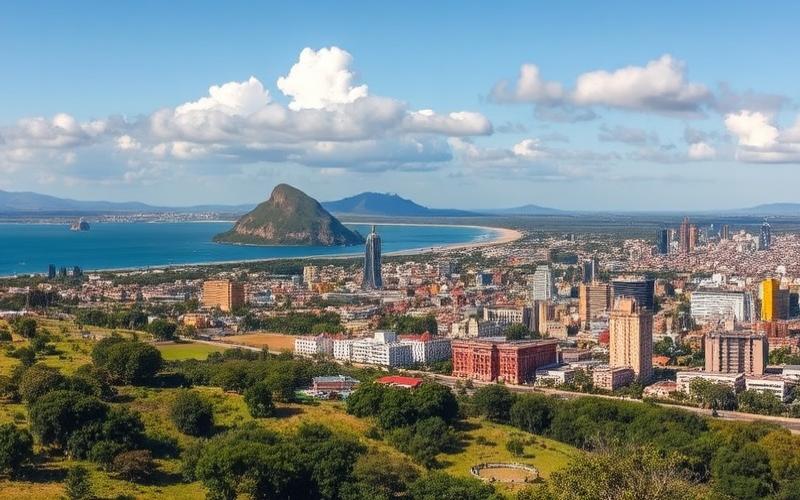
For an expatriate, most opportunities are in Montevideo. The capital concentrates bank headquarters, a large part of the services sector, almost all of the tech industry, and the majority of major conferences.
The city is divided into dozens of barrios with different atmospheres. From a networking perspective, certain neighborhoods are particularly important.
Pocitos, Carrasco, Ciudad Vieja: Where Communities Cross Paths
Pocitos is the iconic neighborhood where many internationals settle. Seafront, lively cafes, coworking spaces, rather cosmopolitan vibe: it’s an ideal playground for multiplying informal encounters, whether with other expats or with Uruguayans very open to the world.
The Carrasco neighborhood in Montevideo exemplifies an affluent and international residential environment. It is home to several international schools, private sports clubs, and a significant portion of the diplomatic corps stationed in the Uruguayan capital. The social network there is distinct, marked by a strong institutional presence, including senior executives, embassy members, and leaders of large companies, making it an influential and cosmopolitan microcosm.
Ciudad Vieja and Centro, on the other hand, concentrate a large part of the cultural life: galleries, theaters, exhibition spaces. These places attract creatives, entrepreneurs, professionals in marketing, law, or culture, often very open to collaboration.
For an expatriate in Uruguay, it is advisable to alternate between different social spheres: the relaxed cafes of Pocitos, the cultural events in Ciudad Vieja, and the more formal meetings in Carrasco. This approach allows for building a varied network, not limited to one’s own professional circle or the expat community alone.
La Rambla: An Open-Air Social Space
La Rambla, this several-kilometer-long coastal promenade bordering Montevideo, is an underestimated informal meeting space for many newcomers.
Morning joggers, families on weekends, groups of friends sharing mate in the late afternoon: it’s excellent terrain for joining group activities (running clubs, small yoga groups, informal meetups organized via apps like Wooh App or through Meetup groups). In Montevideo, “doing things with people” is often more effective than “talking about work” for creating bonds that will matter later.
First Steps: Using Expat Communities Without Getting Stuck
Arriving in a new country is exhausting: administrative procedures, housing, healthcare, sometimes language shock. Relying on already established communities is a very valuable shortcut.
InterNations, Uruguay Expat Life, and Specialized Forums
Among the most active entry points is InterNations, a global network present in over 420 cities, including a structured community in Montevideo. For a newcomer, this platform offers three major advantages:
– practical guides on life in Montevideo (health, visas, housing, schooling);
– a forum to ask concrete questions (residency procedures, insurance, schools, etc.);
– regular events – happy hours, dinners, cultural outings – where you can quickly meet dozens of people in the same situation.
These initial meetings do not directly lead to signing contracts. Their main benefit is allowing you to build an initial network of contacts, identify key players in your field, and understand the informal codes of Uruguayan society.
Other communities, like the Montevideo International Community or forums such as Uruguay Expat Life, serve a similar role: sharing tips, experiences, mutual aid among families.
Quickly Getting Out of the “Expat Bubble”
The risk, of course, is getting stuck in an English-speaking bubble, among foreigners who frequent the same bars, restaurants, and schools. However, most opportunities, valuable information, and recommendations circulate within local, mostly Spanish-speaking networks.
A good strategy is to use expat networks as a launchpad, while setting a simple rule: for every “foreigners-only” event, also attend one predominantly Uruguayan event (conference, tech meetup, language class, association, sports club…).
Language, Codes, and Rituals: The Foundation of Credible Networking
Even though a significant portion of professionals speak English well, Uruguay remains a Spanish-speaking country, with a Spanish marked by Italian influences and the use of “vos” rather than “tú”. Making a real effort with the language is perceived as a sign of respect and dramatically improves the quality of interactions.
Invest in Learning Spanish
Several recognized institutions offer language courses adapted for foreigners:
| Institution | City(ies) | Main Features |
|---|---|---|
| UdelaR – Language Center | Montevideo | Semester-long courses, intensive options in January and July |
| UTEC – Language for Foreigners | Several cities | Immersive approach, focused on communication and cultural exchange |
| Academia Uruguay | Montevideo | Accredited Cervantes center, courses for all levels, specialized options |
| International House Montevideo | Montevideo | Tailored courses with integrated cultural agenda |
| La Herradura | Montevideo, Punta del Este | Combination of courses + cultural activities |
| Berlitz & Oxbridge Institute | Montevideo | Small group formats, in-person or online |
Enrolling in one of these institutions doesn’t just help you improve your Spanish: it’s also a place to meet other motivated foreigners and Uruguayans involved in teaching or international exchanges.
Mastering Etiquette: Small Things with Big Impact
In a formal business culture, certain details send strong signals:
For business appointments, it is essential to use professional titles (Doctor, Engineer) and polite forms Señor/Señora until invited to use first names. Punctuality is strictly required, unlike for social events. It is recommended to present a bilingual business card (Spanish/English) and to examine received cards carefully. Some common gestures should be avoided, like the “OK” sign made with fingers, considered rude; prefer a thumbs-up. Finally, adopt a sober, neat, and unostentatious dress code, especially during initial contacts.
These details may seem anecdotal, but they shape the first impression – crucial in a country where word of mouth is key.
The Role of Rituals: Mate, Asado, and Sobremesa
A significant part of networking in Uruguay happens… at the table or around a drink.
Discover the essential codes of sharing mate, a traditional infusion that seals social bonds in Argentina and the Southern Cone.
Being invited to share a mate means you are accepted into a circle of trust and friendship.
Do not touch the bombilla (straw), drink the entire portion in one go, and only say “gracias” when you no longer wish to drink.
Respecting these rules shows you have taken the trouble to understand and honor the country’s customs.
Similarly, asados – large meat barbecues – are moments where people talk about everything, not necessarily about business directly. The tradition of the sobremesa, those long discussions after the meal, is the space where affinities are woven, projects are revealed, and collaboration ideas germinate. Not being in a hurry, knowing how to listen, sharing a bit about yourself without imposing: that’s where a large part of relational capital is earned.
Using Digital Platforms Intelligently
Networking in Uruguay isn’t limited to in-person interactions. The country is one of the most advanced in the region in terms of digital infrastructure, with high internet speeds, widespread broadband, and a very connected population.
LinkedIn: Your Showcase for the Uruguayan Market
LinkedIn is widely used there, especially in tech, finance, consulting, international trade. Well before your arrival, you can:
– identify companies based in Montevideo in your sector;
– identify key contacts (HR, technical leads, business unit directors);
– join local groups.
Two communities stand out particularly for IT profiles:
| LinkedIn Group | Theme | Approximate Size |
|---|---|---|
| Profesionales de Tecnología en Uruguay | IT, engineering, products | > 23,000 members |
| Desarrolladores Uruguay | Developers, pure tech | ~ 15,000 members |
Presenting yourself with a polished profile, clearly oriented towards Uruguay (city indicated, summary partly in Spanish, explicit mention of your relocation) gives you credible visibility. From there, sending short, personalized messages, explaining your relocation project and proposing a coffee remains a well-accepted approach.
LinkedIn offers at least four major global expat groups, like Expat Network and Living Abroad, for career advice and experience sharing.
InterNations, Wooh App, and Meetup: Bridges Between Online and Offline
InterNations isn’t limited to its website: the Montevideo community regularly organizes events, sometimes thematic (arts & culture, wine tasting) which allow you to meet varied profiles: executives, entrepreneurs, freelancers, active retirees. Statistics from past events show participation of a few dozen people: an ideal size to actually talk without getting lost in an anonymous crowd.
The Wooh App, designed for friendly meetings based on shared values and interests rather than photos, can be a lever for networking. In Uruguay, where personal relationships are paramount, its goal of at least one real meetup per week allows for multiplying informal contacts, potentially leading to strong professional connections.
On Meetup, Montevideo has a particularly dynamic offering of groups in tech, web3, product management, or language communities. For a developer, product manager, cloud specialist, or startup founder, these groups are real gateways into the local ecosystem.
Getting Established in the Uruguayan Tech Scene
Uruguay has established itself in a few decades as a credible tech player in Latin America. The IT sector employs over 21,000 people, accounts for over 2% of GDP, and attracts international names like Tata Consultancy Services or Globant. The density of startups, tech service companies, and well-trained talent makes it particularly fertile ground for digital profiles.
The Structured Ecosystem: CUTI, ANII, Montevideo Valley
Several actors organize and animate this technological world:
The Cámara Uruguaya de Tecnologías de la Información (CUTI) is described as “essential” for making yourself known. The Agencia Nacional de Investigación e Innovación (ANII) runs the Uruguay Innovation Hub and supports startups. Montevideo Valley brings together entrepreneurs and professionals around community events.
CUTI, ANII, and Montevideo Valley
For an expatriate, joining CUTI as a representative of a foreign company or local project, participating in ANII events, or signing up for Montevideo Valley meetings allows you to quickly emerge from anonymity.
Meetups and Conferences: High-Value Visibility Hubs
Several very active Meetup groups in Montevideo constitute relational hubs:
| Group / Event | Domain | Activity Indication |
|---|---|---|
| Montevideo Javascript Meetup Group | JavaScript, web | ~ 2,000 members |
| Flutter Montevideo | Mobile development | > 600 members, > 10 events |
| AWS UG Montevideo | Cloud, AWS | > 550 members |
| ProductTank Montevideo | Product management | ~ 900 members |
| Ruby Montevideo Meetup | Ruby development | Regular meetups |
| web3 meetup Uruguay – INIT.UY | Web3, blockchain | Monthly meetups |
Attending regularly, asking relevant questions, proposing a lightning talk, or offering to lead a workshop on a topic you master (even in English, but adapting the introduction in Spanish) immediately makes you recognizable in the community.
Other larger-scale events also structure the calendar:
Over 400 participants attended the latest edition of the TestingUy conference dedicated to software testing.
Volunteering to help organize the Punta Tech Meetup, for example, is an extremely effective way to meet the management teams of numerous companies in record time.
Coworkings: The Office as a Networking Tool
The density of coworkings in Montevideo is remarkable for a country of this size. These spaces are designed not only as offices but also as meeting platforms.
Among the best known:
| Coworking Space | Neighborhood / City | Network Positioning |
|---|---|---|
| Sinergia Cowork (several sites) | Montevideo (including Ciudad Vieja, near La Rambla) | Very community-focused, tech, creatives |
| Sinergia Design | Montevideo | Large hub mixing workshops, shops, coworking |
| Cowork18 | Downtown Montevideo | Flexible offices, highly modular offering |
| YOUHUB Cowork | Montevideo | Created by 11 women entrepreneurs, inclusive spirit |
| La Fábrica | Montevideo | Hybrid space for learning, expression, projects |
| Regus – WTC Montevideo III | World Trade Center | More corporate positioning |
| Morales Cowork, Serratosa, Smart Office… | Montevideo | Local network, mixed clientele (freelancers, SMEs, tech) |
Surveys show that about 68% of coworkers feel these spaces have expanded their professional network. For an expatriate, choosing to work a few days a week in one of these places, participating in breakfasts, afterworks, or internal workshops, is often enough to trigger the first recommendations.
Targeting the Right Structures: Chambers of Commerce, Sector Hubs, Conferences
Beyond tech, many sectors structure their own networks through professional organizations, binational chambers, or public initiatives. Joining them is a direct way to gain credibility.
Chambers of Commerce and Business Clubs
Several very active chambers cover the landscape:
Main organizations offering support, information, and networking opportunities for businesses in Uruguay.
Central platform for economic information, business support, and networking events like “Mujeres al Mundo”.
Uruguay–United States Chamber of Commerce, founded in the 1930s. Groups over 150 member companies and offers networking services, sector information, seminars, and trade missions.
Designed to strengthen exchanges with Scandinavian countries. Offers its members seminars, facilitated access to Nordic contacts, and dissemination of commercial and legal information.
Like the Business Club of the Mercosur Global Chamber of Commerce. Rely on “smart networking” via matching algorithms, a documentation base, and an AI assistant.
For an expatriate, these structures offer several cumulative advantages: institutional recognition, access to exclusive events, enhanced reliability in the eyes of local partners, and access to very rich newsletters on market trends.
Uruguay XXI and Uruguay Innovation Hub: Public-Private Bridges
Uruguay XXI, the investment and export promotion agency, plays a very important role in connecting local and international companies. It notably organizes:
– sectoral platforms (e.g., in agribusiness);
– B2B meetings, like appointments between Uruguayan fashion brands and foreign buyers;
– missions abroad (e.g., economic delegations accompanying the president on official visits).
The Uruguay Innovation Hub, supported by ANII, focuses more on innovators, with events like Punta Biotech, which bring together scientists, entrepreneurs, and investors in the life sciences.
Integrating these programs, even initially as a simple participant, allows you to grasp the dynamics between players, identify the influential people driving change, and find your place within internationally-scaled value chains.
International Conferences: Making the Country a Springboard
The conference calendar in Uruguay is particularly dense, with events covering engineering, health, management, law, energy, tourism… often of international scale, sometimes hybrid (in-person + online).
For an expatriate, speaking as a presenter, presenting work, or simply attending panels is an effective way to: network with sector professionals and exchange innovative ideas.
– become visible beyond the local framework;
– build ties with foreign researchers, practitioners, and decision-makers interested in the region;
– capitalize on the country’s image as a hub of academic and technological quality.
Again, carefully preparing your presence (updated LinkedIn profile, bilingual cards, presentation summary in Spanish) allows you to transform a one-off event into a lasting anchor point in your network.
Sector-Specific Strategies: Education, Banking, Tourism, Agribusiness, Services
Not all expatriates work in tech. The Uruguayan economy is diversified: agribusiness, livestock, financial services, tourism, education, light industry, audiovisual, etc. The networking levers vary from one sector to another but follow the same logic: identify the places (physical or virtual) where your peers meet, where your clients gather, where your partners coordinate.
Education, Training, Language
The demand for qualified English teachers remains strong, as in much of South America. The international schools in Carrasco, language institutes (Berlitz, International House, Oxbridge), and universities (UdelaR, UTEC) are essential stops for those wishing to teach.
Networking here happens through:
To illustrate professional development avenues, one can cite: participation in continuing education, such as coaching and mentoring courses available in several cities; involvement in pedagogical or language events like workshops, open days, or congresses; and contribution to mentoring and support programs, particularly those organized by certain NGOs or universities.
Banking, Finance, Law
Montevideo is home to the headquarters of many banks and financial institutions, as well as the main corporate law firms in the region. In these very formal environments, networking happens through:
– attending conferences and seminars organized in hotels like the Hyatt Centric Montevideo, Radisson Victoria Plaza, or business clubs like Piso 40;
– joining professional associations (bar associations, associations of lawyers or tax specialists);
– following specialized seminars, for example in customs law, compliance, or arbitration, often organized by professional institutions.
In a professional context, an image of seriousness, discretion, and reliability is central. It is preferable to cultivate a few solid and reliable contacts rather than distributing dozens of business cards lightly, without real follow-up intention.
Tourism, Gastronomy, Events
In coastal destinations – Punta del Este, La Barra, José Ignacio, Piriápolis, or the Costa de Oro around Atlántida – much business is conducted in informal settings: beach clubs, sailing clubs, golf courses, restaurants.
Expatriates developing activities in these sectors (tourism, catering, events, high-end leisure) benefit from:
– integrating into existing networks (merchants’ associations, beach clubs, local professional structures);
– participating in events like accessible tourism congresses, days on sustainable tourism, or sector forums;
– regularly frequenting certain “pivot” places where sector players gather.
In these circles, the reputation for seriousness in management, quality of service, and reliability of contractual commitments circulates very quickly from one establishment or provider to another.
Building a Sustainable Networking Routine
Developing your network in Uruguay is neither a sprint nor a series of one-off moves. It is foundational work, built over time and based on a form of consistency.
The First Three Months: Presence, Listening, Integration
Testimonies from expatriates in Uruguay converge: most feel truly “settled” after three to six months, provided they have been proactive. A good roadmap might look, in essence, like this (without presenting it as an exhaustive list): set a reasonable number of events per week (meetups, language classes, InterNations outings, sector events); spend time understanding the codes before trying to persuade; prioritize quality conversations over quantity of contacts.
During this phase, the goal is not to sell, but to learn, to be noticed as a curious, respectful, and reliable person.
Six to Twelve Months: Contribution, Visibility, Anchoring
Once you have a better grasp of the country, it’s time to move from the status of “newcomer” to that of contributor. You contribute when you:
– lead a workshop in a coworking space;
– offer a testimonial at a meetup;
– co-organize an event in a group (tech, marketing, expats, non-profit sector);
– mentor a more junior profile through a program like those promoted by NGOs or innovation hubs.
The shift from an integration posture to that of a resource person is decisive. It makes you perceived as a key interlocutor for advice, introductions, or experience sharing, which naturally generates more spontaneous invitations (lunches, meetings, collaborations).
Cultivating Depth Over Breadth
In a small country where circles overlap, it’s tempting to want to “know everyone”. In practice, what matters are a few strong, trusted relationships with people well-connected in their sphere.
Uruguayans highly value loyalty, discretion, and continuity of ties. Honoring commitments, remaining consistent over time, giving before asking, circulating useful information without always seeking immediate return are behaviors that ultimately pay off.
In Summary: Transforming Uruguay into a Career Platform
Uruguay ticks many boxes that appeal to expatriates: safety, solid democracy, high education level, digital infrastructure above regional average, economy open to the world, high quality of life, active cultural and tech scenes.
To transform these macro assets into a concrete career trajectory, a common thread emerges:
To succeed in your professional integration in Uruguay, it is crucial to quickly learn the linguistic and cultural codes to avoid remaining on the margins. Ensure active physical presence in key places like coworking spaces, meetups, conferences, chambers of commerce, professional clubs, and cultural spaces. Adopt a long-term strategy, prioritizing the building of trust, consistency, and respect for formalities, rather than aggressive approaches or commercial power moves. Finally, work to establish a permanent link between your original professional expertise and the specific needs or ambitions of the Uruguayan ecosystem.
In a country where the boundaries between personal and professional life are more porous than elsewhere, the network isn’t limited to what happens in the office. It is also built on a beach along La Rambla, around a mate passed from hand to hand, during the sobremesa of an asado, after a cultural event in Ciudad Vieja, or during a workshop in a Pocitos coworking.
For the expatriate who agrees to play this game, Uruguay doesn’t just become a pleasant place to live: it transforms into a true regional platform, from which you can weave relationships that radiate towards Argentina, Brazil, the rest of Mercosur, and beyond. And that is precisely what a well-built professional network allows: opening doors you hadn’t even spotted upon arrival.
Disclaimer: The information provided on this website is for informational purposes only and does not constitute financial, legal, or professional advice. We encourage you to consult qualified experts before making any investment, real estate, or expatriation decisions. Although we strive to maintain up-to-date and accurate information, we do not guarantee the completeness, accuracy, or timeliness of the proposed content. As investment and expatriation involve risks, we disclaim any liability for potential losses or damages arising from the use of this site. Your use of this site confirms your acceptance of these terms and your understanding of the associated risks.

Cyril Jarnias is an independent expert in international wealth management with over 20 years of experience. As an expatriate himself, he is dedicated to helping individuals and business leaders build, protect, and pass on their wealth with complete peace of mind.
On his website, cyriljarnias.com, he shares his expertise on international real estate, offshore company formation, and expatriation.
Thanks to his expertise, he offers sound advice to optimize his clients' wealth management. Cyril Jarnias is also recognized for his appearances in many prestigious media outlets such as BFM Business, les Français de l’étranger, Le Figaro, Les Echos, and Mieux vivre votre argent, where he shares his knowledge and know-how in wealth management.