 Published on and written by Cyril Jarnias
Moving to Uruguay is attracting more and more retirees, families, and digital nomads. A stable, safe, rather egalitarian, and very “tranquilo” country, it offers a surprising mix of European culture and Latin American warmth. But for a newcomer, one question immediately arises: which neighborhoods should you actually live in? Between the coastal barrios of Montevideo, the beach resorts of Maldonado, and historic small towns, the choice is vast… and the atmospheres very different.
This article compares areas favored by expatriates by analyzing prices, safety, services, and testimonials. It provides concrete benchmarks for choosing based on your budget, lifestyle, and language level, without establishing a definitive ranking.
Why expatriates move to Uruguay
Before getting into the details of neighborhoods, it’s important to understand why this small country of 3.5 million inhabitants attracts so many international profiles.
Uruguay is ranked first on peace indices in South America.
Expatriates are also sensitive to the quality of the healthcare system – a mix of public service and reputedly affordable private mutuals – and the relative simplicity of residency procedures. Foreigners can buy property with the same rights as locals, without special restrictions. Tax rules are attractive, especially for income generated abroad, and a new category of permit for digital nomads facilitates the arrival of remote workers.
The country offers a slow pace of life, a social culture centered on mate and family, and a broad, unostentatious middle class. However, the cost of living is high relative to local incomes, especially in sought-after areas. Imported goods (appliances, tools, vehicles, electronics) are expensive, bureaucracy is cumbersome, and English is rarely spoken outside urban centers.
It is within this framework that one should look at the neighborhoods sought by expatriates: they generally combine good safety, access to services, reliable internet, and an active international community, but at a price above the national average.
Montevideo, the heart of expatriate life
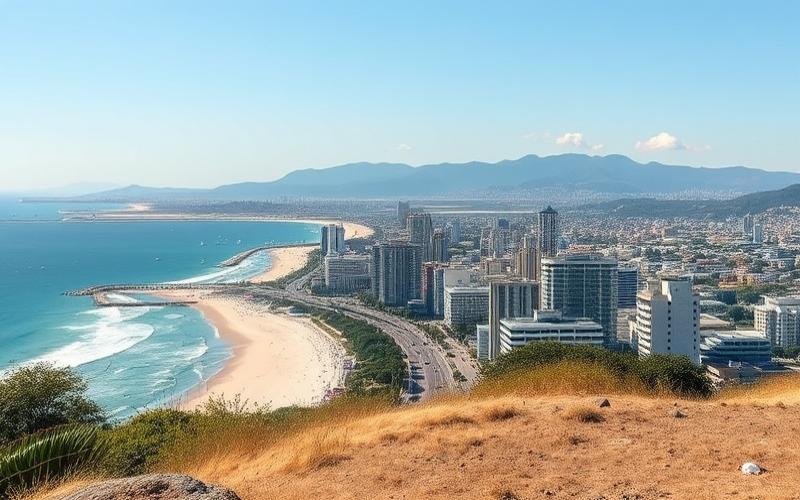
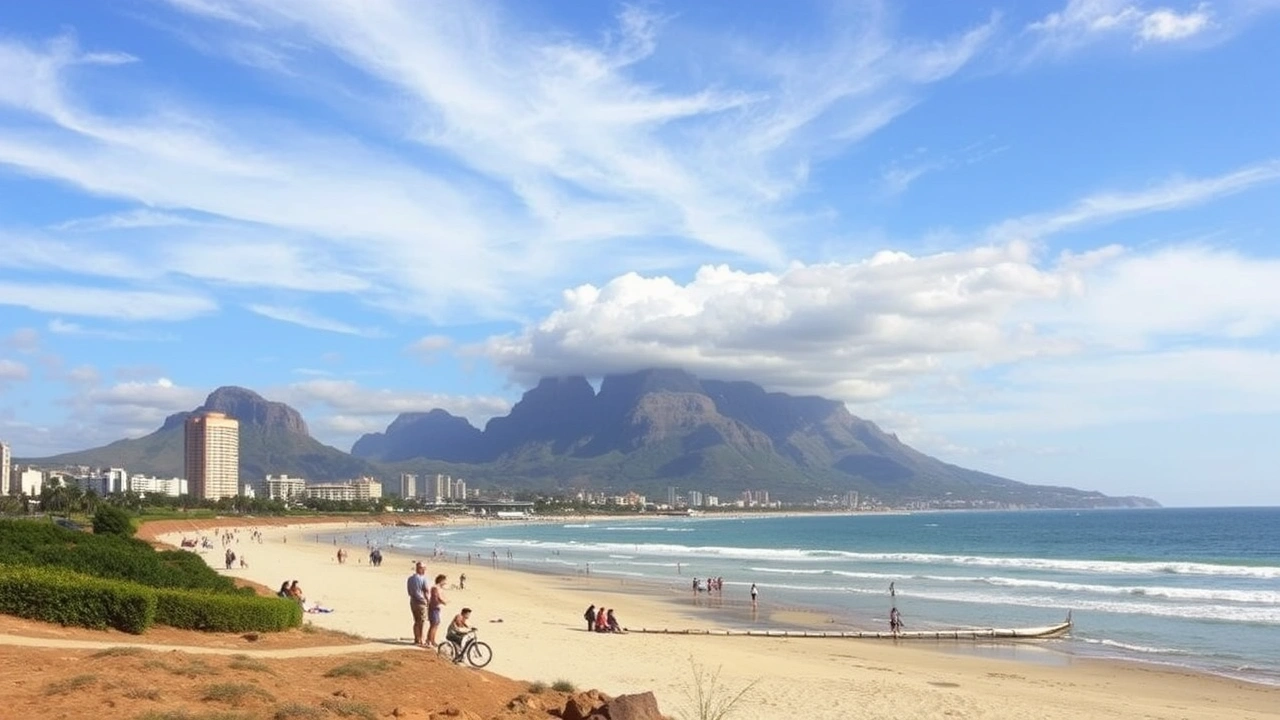
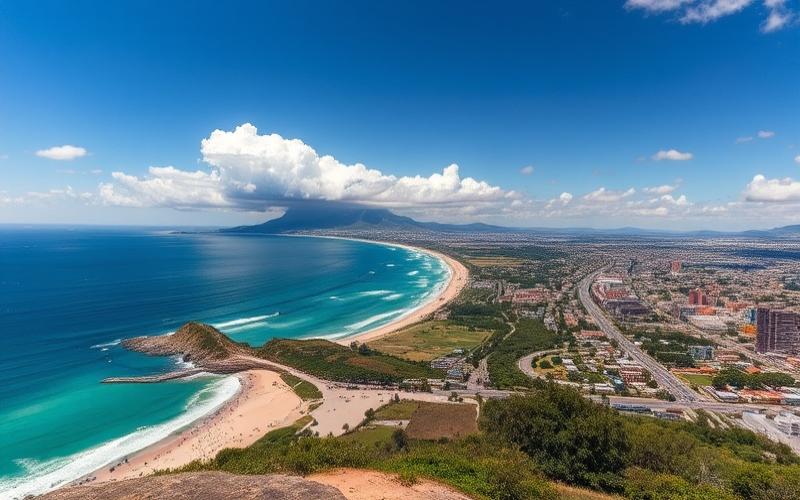
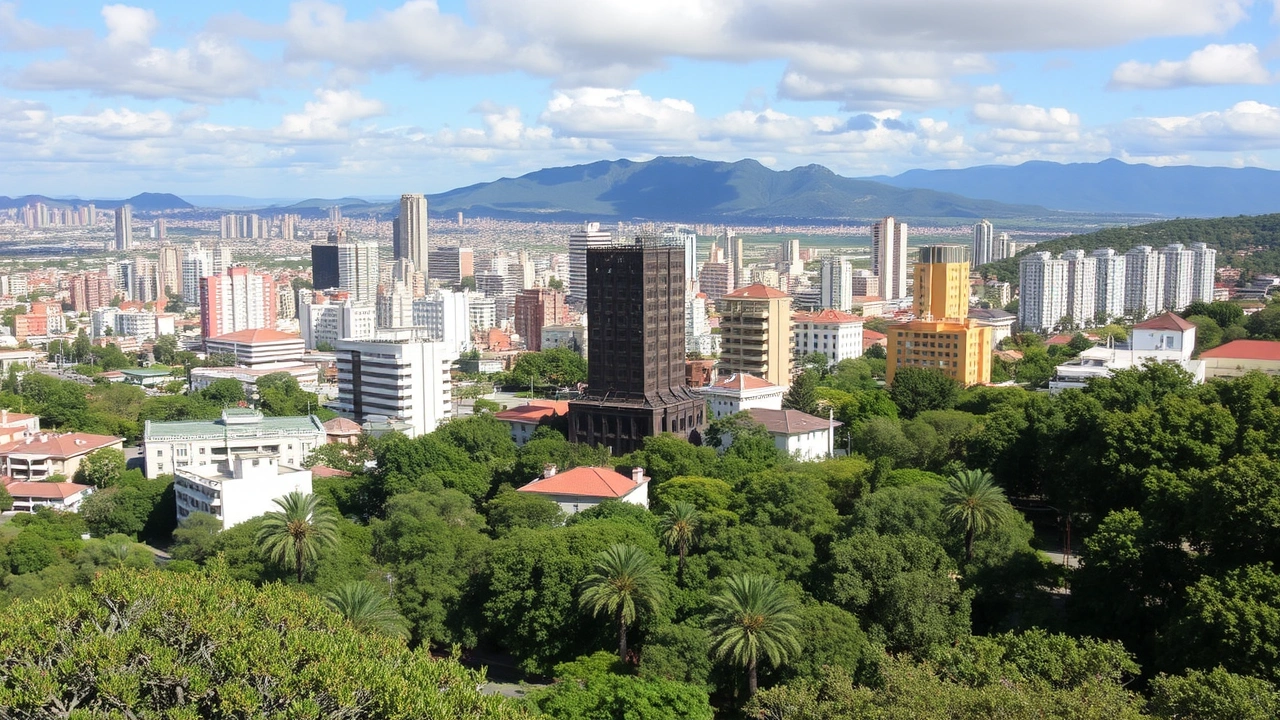
The capital concentrates more than half of the country’s population if you include its metropolitan area. Sitting on the Río de la Plata, it unfurls over 20 km of Rambla – this long coastal promenade connecting a succession of urban beaches – and is divided into 62 distinct neighborhoods. For many newcomers, Montevideo is the natural gateway: all services are available, connections are good, international schools are numerous, and the cultural scene is particularly rich.
Among these 62 barrios, several stand out clearly in the choices of expatriates: Pocitos, Punta Carretas, Carrasco, Malvín, Buceo and, for history lovers, Ciudad Vieja and Centro. Each has its own identity, with different trade-offs between price, safety, atmosphere, and proximity to the sea.
Pocitos, the classic for urban expatriates
Pocitos is arguably the iconic neighborhood for foreigners in Montevideo. This two-square-kilometer coastal sector lines up tall modern buildings, a few old mansions, a very popular beach, and a density of cafes and restaurants quite unique in the country. It’s the area where you are most likely to encounter English speakers, and where “international” services (coworking spaces, cafes with reliable Wi-Fi, foreign cuisine) are most developed.
The numbers clearly show its status as a safe bet for the upper-middle class and expats:
| Key Indicator | Estimated Value in Pocitos |
|---|---|
| Population | 45,000 inhabitants |
| Average Price per m² (Purchase) | US$2,800 / m² |
| Average Rent 2-room (Monthly) | US$950 |
| Crime Rate | 12/1,000 inhabitants |
| Travel Time to Centro | 15 minutes |
| Share of Green Spaces | 18% |
| Average Monthly Household Income | US$2,800 (high level) |
| Ongoing Real Estate Projects | 15 |
| Average Internet Speed | 220 Mbps (fiber ~90%) |
The main attraction of Pocitos remains its beach, which resembles more of a large urban esplanade than a wild cove: sand, volleyball nets, beach soccer, joggers, and families parade along the Rambla. The water of the Río de la Plata is rather brown and the bottom muddy, making it more of a social space than a diver’s paradise, but the overall atmosphere recalls – in a more modest version – some seafronts like Waikiki.
The Pocitos neighborhood offers a remarkable quality of life for expatriates. Its main asset is its accessibility: all essential services (supermarkets, neighborhood ferias, pharmacies) and leisure activities (cinemas, local and international restaurants) are within walking distance. Public transportation is omnipresent, and it’s easy to find a taxi or ride-hailing service. Safety is good, day and night. Finally, the presence of schools, like the German school, and a dense commercial fabric make it a logical choice for families wanting to enjoy the city while having the beach nearby.
In return, rents are high for the country, and the density of buildings may displease those seeking a greener or quieter environment. For a couple on a tight budget, the monthly bill (rent, common charges, health, food) easily rises beyond US$2,500–3,000.
Punta Carretas, upscale urban chic by the Rambla
Right next to Pocitos, Punta Carretas extends the seafront in a slightly more bourgeois version. This relatively compact neighborhood stretches around an iconic shopping center – a former penitentiary turned mall – and the Club de Golf del Uruguay. The streets are tree-lined, the restaurant offering varied, and the Rambla here is bordered by large grassy parks used as soccer and cricket fields or simply for picnics.
On paper, the data is close to that of Pocitos, but with a bit less density:
| Key Indicator | Punta Carretas |
|---|---|
| Average Price per m² (Purchase) | US$2,600 / m² |
| Average Rent 2-room (Monthly) | US$900 |
| Crime Rate | 10/1,000 inhabitants |
| Population | 38,000 inhabitants |
| Average Monthly Household Income | US$2,600 (high) |
| Share of Green Spaces | 22% |
| Ongoing Real Estate Projects | 12 |
| Average Internet Speed | 200 Mbps (fiber ~88%) |
In practice, Punta Carretas particularly attracts expatriate families and professionals who want a very safe environment, quality services, a certain architectural elegance – but without moving to the suburbs. Recent buildings with pools, gyms, and 24/7 security are numerous. The neighborhood is entirely walkable, connected by many bus lines to the rest of the city, and remains fairly lively in the evening without approaching the bustle of a historic center.
A significant asset for Francophone or Anglophone expatriates: the proximity of several renowned private and international schools (The British Schools, Uruguayan American School a few minutes by car, Lycée Français a bit further in Buceo). For a couple with children in private school, the total monthly cost rises very quickly, but the environment and services are comparable to those of high-end residential neighborhoods in European capitals.
Carrasco, the high-end “suburb”
At the eastern end of Montevideo, Carrasco represents the most exclusive option in the capital. Historically a chic beach resort, the neighborhood has become a residential sector composed of large single-family homes, tree-lined avenues, gardens, and parks. It is also home to many consulates and embassy residences, further reinforcing the feeling of safety.
The numbers illustrate this very high-end positioning:
| Key Indicator | Carrasco |
|---|---|
| Average Price per m² (Purchase) | US$3,200 / m² |
| Average Rent 2-room (Monthly) | US$1,100 |
| Crime Rate | 8/1,000 inhabitants |
| Population | 28,000 inhabitants |
| Average Monthly Household Income | US$3,500 (very high) |
| Share of Green Spaces | 35% (record in Montevideo) |
| Public Transport Usage | 20% (low) |
| Average Internet Speed | 250 Mbps (fiber ~95%) |
Carrasco is ideal for families with a significant budget, seeking a very quiet, green, and secure setting, with a beach, sports clubs, quality shopping centers, and excellent private schools (Uruguayan American School, The British Schools, for example). The flip side is threefold: cost of living significantly above the Uruguayan average, dependence on a car for most trips, and relative distance from the cultural and nightlife heart of Montevideo (about a 30-minute drive to Centro).
According to testimonies from expatriates living in Carrasco, the monthly expenses for a family of three, including rent, high condo fees, private school, car, gas, and insurance, can easily reach US$6,000 to $7,000. Living in other Montevideo neighborhoods would cut these costs in half, but at the expense of a less idyllic environment and a more urban density.
Malvín, Buceo and the transition neighborhoods
Between downtown and Carrasco, several coastal neighborhoods make up a “transition zone” very popular with expatriates who find Pocitos too dense and Carrasco too expensive or remote.
Malvín is a good example of a compromise. This residential barrio with two beaches (Malvín and Punta Gorda) offers a mix of small houses, mid-size buildings, green spaces, and a family atmosphere. It is quieter and more affordable than Pocitos, while still being relatively well connected to the center.
| Key Indicator | Malvín |
|---|---|
| Average Price per m² (Purchase) | US$1,800 / m² |
| Average Rent 2-room (Monthly) | US$650 |
| Crime Rate | 14/1,000 inhabitants |
| Population | 32,000 inhabitants |
| Average Monthly Household Income | US$1,800 (medium) |
| Share of Green Spaces | 25% |
| Average Internet Speed | 160 Mbps (fiber ~75%) |
An important nuance: Malvín and Malvín Norte are two very different realities. The part near the sea is considered safe and pleasant, while Malvín Norte is regularly cited as a risky area where some expatriates have reported several thefts. As often in Montevideo, one street can make the difference between a perfectly livable sector and a much more delicate one.
Buceo, directly neighboring Pocitos, combines several assets for internationals: presence of the World Trade Center, Montevideo Shopping, recent buildings, a pleasant Rambla, and quick access to the center. You can find apartments a bit cheaper than in Pocitos, with still a good level of services. This is also where the Jules Supervielle French Lycée is located, a factor that weighs in for Francophone families.
For tight budgets, the Cordón neighborhood, central and located between Centro and Parque Rodó, offers significantly lower prices. Very popular with students and the middle class, it however presents a more ‘raw’ environment and slightly less safety than the waterfront areas.
| Key Indicator | Cordón |
|---|---|
| Average Price per m² (Purchase) | US$1,200 / m² |
| Average Rent 2-room (Monthly) | US$450 |
| Crime Rate | 18/1,000 inhabitants |
| Population | 42,000 inhabitants |
| Average Monthly Household Income | US$1,200 (low-medium) |
Cordón has a reputation as a neighborhood in transformation, where many bars, microbreweries, and cultural spaces have flourished in recent years. For a digital nomad or a young couple without children, it offers a lively neighborhood life, easy access to several universities, and a much lighter housing cost than on the Rambla. On the other hand, for a retiree seeking peace or a family looking for a very secure environment, coastal neighborhoods are generally preferred.
Ciudad Vieja and Centro, for lovers of historic urban areas
The historic center of Montevideo, Ciudad Vieja, is often visitors’ first contact with the city: old cobblestone streets, colonial buildings, a port market turned into a temple of grilling, theaters, museums, art galleries. The area has been the subject of rehabilitation programs, with pedestrianization of some streets (like Sarandí) and installation of numerous surveillance cameras.
For an expatriate, Ciudad Vieja presents a particular profile. On one hand, it’s a concentration of heritage and cultural life, with character apartments, sometimes fully restored, offered at more affordable prices than on the coast. On the other hand, it’s a neighborhood that empties out in the evening, where caution is advised at night, despite recent improvements.
| Key Indicator | Ciudad Vieja |
|---|---|
| Average Price per m² (Purchase) | US$1,500 / m² |
| Average Rent 2-room (Monthly) | US$550 |
| Crime Rate | 22/1,000 inhabitants |
| Population | 25,000 inhabitants |
Foreign investors are interested in it for rental yields: tourist demand and the effect of urban renovation support the market. For a year-round installation, it’s above all a choice of heart, made by profiles attracted to history, architecture, and cultural life, accepting a more contrasted environment in terms of safety.
Centro, just east of Ciudad Vieja, concentrates administration, offices, shops, and housing. It is extremely lively during the day, then empties after offices close. Prices are quite attractive, but the same cautionary advice applies: favor certain main streets, avoid walking alone late at night.
Maldonado and Punta del Este, the beachfront showcase
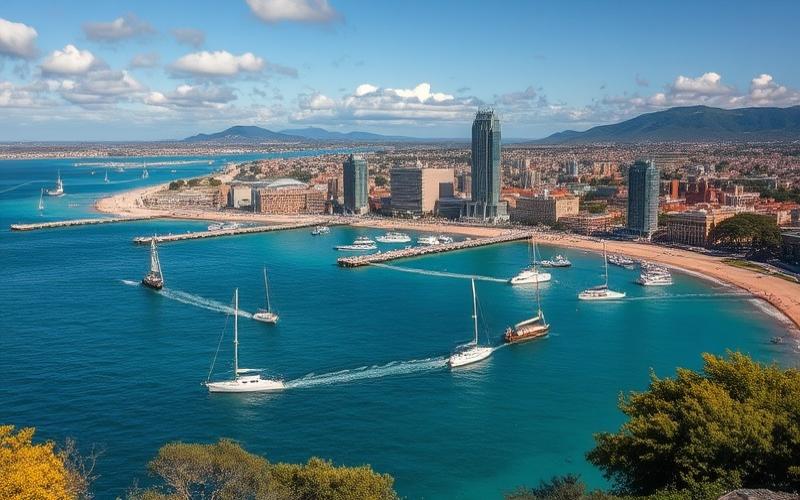
While Montevideo concentrates the majority of year-round expatriates, it is Maldonado and especially Punta del Este that embody Uruguay’s international image: long sandy beaches, marinas, apartment towers facing the sea, private clubs, and high-end restaurants. The department of Maldonado saw its real estate transactions rise by 16% in a recent year, with a sharp increase in sales promises and mortgages. It alone accounts for nearly half of the country’s “private neighborhoods” type developments.
Punta del Este, between luxury resort and year-round town
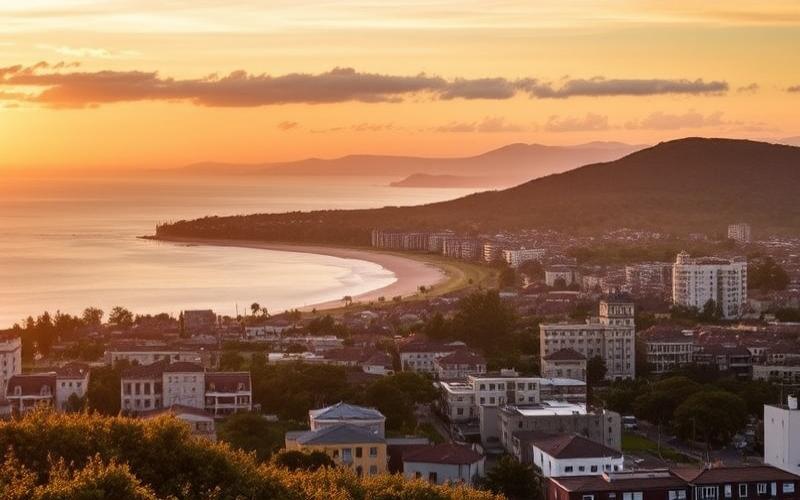
Punta del Este is often nicknamed the “Monaco” or “St‑Tropez” of South America. Its permanent population, around 20,000, can exceed 250,000 in the peak of the southern summer, when Argentines, Brazilians, and tourists from around the world flock there between Christmas and February. The peninsula is framed by two large beaches: Mansa, on the west side, with calm waters and permanent commercial activity, and Brava, on the east side, with stronger waves and a more preserved coastline.
The city alternates between a crowded and expensive beach resort in high season, where some expatriates rent out their homes to travel, and a quiet but well-equipped coastal town in low season, with hospitals, international schools, museums, coworking spaces, and quality restaurants.
The numbers illustrate the very particular price level of the area, especially waterfront.
| Key Indicator | Punta del Este (order of magnitude) |
|---|---|
| Rent 1 bedroom center (outside high season) | ~US$1,500 / month |
| Rent 3 bedrooms outside center | ~US$2,000 / month |
| Studio for purchase (entry-level) | < US$100,000 |
| Apartment 100 m² in high-end neighborhood | ~US$500,000 |
| Rent 2 bedrooms near ocean (expat cited) | ~US$2,500 / month |
| High season rental income (2 months, first line) | up to US$40,000 |
| Average local net monthly income | ~US$900 |
To this are added often high condo fees (pool, gym, 24/7 security, services) and a daily cost (restaurants, leisure, supermarkets) among the highest in Uruguay. Nevertheless, some expatriates estimate it’s possible for a couple to live in Punta del Este on a budget of US$1,800 to $2,800 per month outside of high season, by carefully choosing their accommodation.
The profile of those who settle there is quite clear: retirees with comfortable incomes, well-paid remote workers, real estate investors, international freelance professionals. The city is perceived as a sort of “bubble” compared to the rest of the country, with a level of comfort and services well above average, but also more tenuous links with the daily life of Uruguayan society.
Pinares and the residential neighborhoods of Maldonado
A few kilometers west of the peninsula, the Pinares neighborhood, attached to the city of Maldonado, represents a more residential alternative for expatriates attracted to the area but put off by the prices and “bubble” aspect of Punta del Este. Pinares consists of single-family homes, quiet streets, and direct access to the coast. It is often cited as the preferred sector for foreigners seeking a suburban setting in the region.
As the administrative capital of the department, Maldonado (70,000 inhabitants) attracts new residents with its classic grid downtown, its commercial streets, and much more affordable prices than on the neighboring peninsula. The *centro* offers apartments in small buildings with all services within walking distance, while neighborhoods like Roosevelt or Nuevo Cantegril offer modern residential complexes.
The advantages of Maldonado for an expatriate are many: quick access to beaches and Punta del Este’s infrastructure, slightly lower housing and daily costs, the atmosphere of a real Uruguayan town functioning year-round, and the good presence of schools, hospitals, and public transport. On the other hand, to fully enjoy Pinares and the outskirts, a car quickly becomes essential.
The high-end beach enclaves: La Barra, José Ignacio, Punta Ballena
Around Punta del Este gravitate several localities that, each in their own way, attract a niche of expatriates.
The starting price for a modest house in La Barra, where real estate values have risen sharply.
Further on, José Ignacio has undergone a spectacular transformation, from a simple fishing village to an international luxury destination. Seafront villas there trade starting at about US$1.5 million, in a setting of dunes, gourmet restaurants, and exclusive clubs. Expatriates who settle there clearly belong to the very affluent segment, often with multiple residences worldwide.
Punta Ballena, finally, west of Punta del Este, offers a steeper terrain, spectacular views of the bay, and high-level residential complexes, often with pools, spas, security services, and private beach access. It’s a destination favored by retirees and families who can afford an exceptional beachfront quality of life.
Other destinations favored by expatriates
While Montevideo and Maldonado/Punta del Este concentrate the main flow, other Uruguayan cities and regions are beginning to attract a more discreet international community.
Colonia del Sacramento, for example, charms with its historic center listed as a UNESCO World Heritage site, its cobblestone streets, colonial houses, and direct view of the Río de la Plata. Its proximity to Buenos Aires, accessible by ferry in a few hours, makes it an interesting base for remote workers who like to alternate between the two shores. Real estate prices remain high for the country, but the atmosphere is radically different from that of Maldonado’s beach resorts.
The Rocha region, with villages like La Paloma or Punta del Diablo, attracts lovers of nature, surfing, and simple living. Properties are more affordable, but life is very seasonal: very lively in summer and very quiet in winter. Note that as you move away from Montevideo, mastery of Spanish becomes essential and access to services (healthcare, international education, coworking spaces) is significantly reduced.
Inland, cities like Carmelo (with its vineyards) or Tacuarembó (heart of gaucho country) attract a few profiles seeking a rural lifestyle, total immersion in local culture, and land at much gentler prices. It’s a radically different choice, which implies giving up a good part of urban conveniences.
How to choose your neighborhood when expatriating to Uruguay
Quantitative data helps compare neighborhoods, but the final choice will always depend on a set of personal factors: age, family situation, budget, professional activity, mastery of Spanish, tolerance for life in an expat “bubble” or desire for total immersion.
However, we can outline some typical profiles.
A couple of young digital nomads or independent remote workers, without children, will tend to favor Montevideo – Pocitos, Punta Carretas, or even Cordón or Parque Rodó – or Punta del Este in low season, to combine good Internet connectivity, cafes and coworking spaces, social life, decent safety, and access to the sea. A rental budget of US$900–1,500 per month, plus US$600–800 for daily life, constitutes a minimal order of magnitude for this type of profile in a favored coastal area.
The monthly budget for a family living in the affluent neighborhoods of Montevideo or Punta del Este, including high rent, school fees, and expenses.
A retiree or couple nearing retirement, with a comfortable pension, might choose Punta del Este or Piriápolis for a beachfront life rich in leisure (golf, sailing, tennis, bodega tours), or a quiet Montevideo neighborhood like Malvín, Buceo, or even some sectors of Prado to enjoy the parks. The central question for this profile is access to healthcare: proximity to hospitals or quality mutuals, ease of reaching Montevideo for major procedures.
For deep integration in Uruguay, it is advisable to favor less international neighborhoods like Cordón, Parque Rodó, certain parts of Centro or Ciudad Vieja under renovation, or towns like Maldonado or Colonia. These environments, though less polished, offer a more authentic experience. A good command of Spanish is an essential asset for this approach.
In all cases, one piece of advice comes back from many settled foreigners: rent first, buy later. Spending at least a year renting in a neighborhood allows you to check the real daily atmosphere, noise level, traffic, safety day and night, the quality of the condo, the seriousness of the building management. Uruguay allows foreigners to buy without restriction, the real estate market is relatively transparent, but price gaps from one neighborhood to another are considerable, and a cautious approach avoids bad surprises.
Between expat “bubble” and local immersion
The neighborhoods most favored by expatriates in Uruguay – Pocitos, Punta Carretas, Carrasco, the privileged sectors of Punta del Este or Maldonado – share several traits: good safety, strong presence of middle and upper classes, access to sought-after schools, effective healthcare, high-speed internet, parks, and the sea. They offer a gentler transition for people coming from wealthy countries, accustomed to a certain level of material comfort and services.
The median annual income in Uruguay is below US$10,000.
Conversely, choosing a more modest neighborhood or a provincial town not only reduces costs but also allows you to live at the true pace of the country: learning Spanish because no one speaks English, frequenting neighborhood markets, participating in local festivals (Carnival, Día de la Patria, Semana Criolla), meeting neighbors from all social backgrounds.
Ultimately, the ‘best neighborhoods for expatriates’ are not necessarily those where the concentration of foreigners is highest, but those that best match each person’s life project. Uruguay, with its mix of Southern Europe and Atlantic pampa, offers a surprisingly wide palette for such a small country. Yet you need to take the time to explore it, from a Pocitos café to a deserted beach in Rocha, before deciding where to unpack your bags for good.
Advice for expatriates in Uruguay
Disclaimer: The information provided on this website is for informational purposes only and does not constitute financial, legal, or professional advice. We encourage you to consult qualified experts before making any investment, real estate, or expatriation decisions. Although we strive to maintain up-to-date and accurate information, we do not guarantee the completeness, accuracy, or timeliness of the proposed content. As investment and expatriation involve risks, we disclaim any liability for potential losses or damages arising from the use of this site. Your use of this site confirms your acceptance of these terms and your understanding of the associated risks.

Cyril Jarnias is an independent expert in international wealth management with over 20 years of experience. As an expatriate himself, he is dedicated to helping individuals and business leaders build, protect, and pass on their wealth with complete peace of mind.
On his website, cyriljarnias.com, he shares his expertise on international real estate, offshore company formation, and expatriation.
Thanks to his expertise, he offers sound advice to optimize his clients' wealth management. Cyril Jarnias is also recognized for his appearances in many prestigious media outlets such as BFM Business, les Français de l’étranger, Le Figaro, Les Echos, and Mieux vivre votre argent, where he shares his knowledge and know-how in wealth management.