 Published on and written by Cyril Jarnias
Uruguay is attracting an increasing number of retirees, digital nomads, tech sector professionals, and families seeking a more serene living environment. Considered the most stable and one of the safest countries in Latin America, it promises a rather rare mix: strong democracy, tolerant society, Atlantic beaches, good infrastructure, efficient healthcare system, and relatively mild taxation on foreign income.
Despite its reputation as a tranquil country, expatriating to Uruguay presents challenges: a high cost of living for the region, modest local salaries, often slow bureaucracy, the necessity of mastering Spanish, a humid winter climate, and very high prices for purchasing a car. Thorough preparation is essential.
This detailed overview of the advantages and disadvantages of expatriating to Uruguay is based on statistical data, international studies, and numerous firsthand accounts from expats already living there.
Quality of Life and Safety: A Real Strength… With Some Nuances
One of the country’s major assets lies in its political stability and level of safety. Uruguay is consistently ranked among the most peaceful states in Latin America, far ahead of its immediate neighbors on the Global Peace Index. Montevideo ranks at the top of South American capitals in quality of life rankings (Mercer).
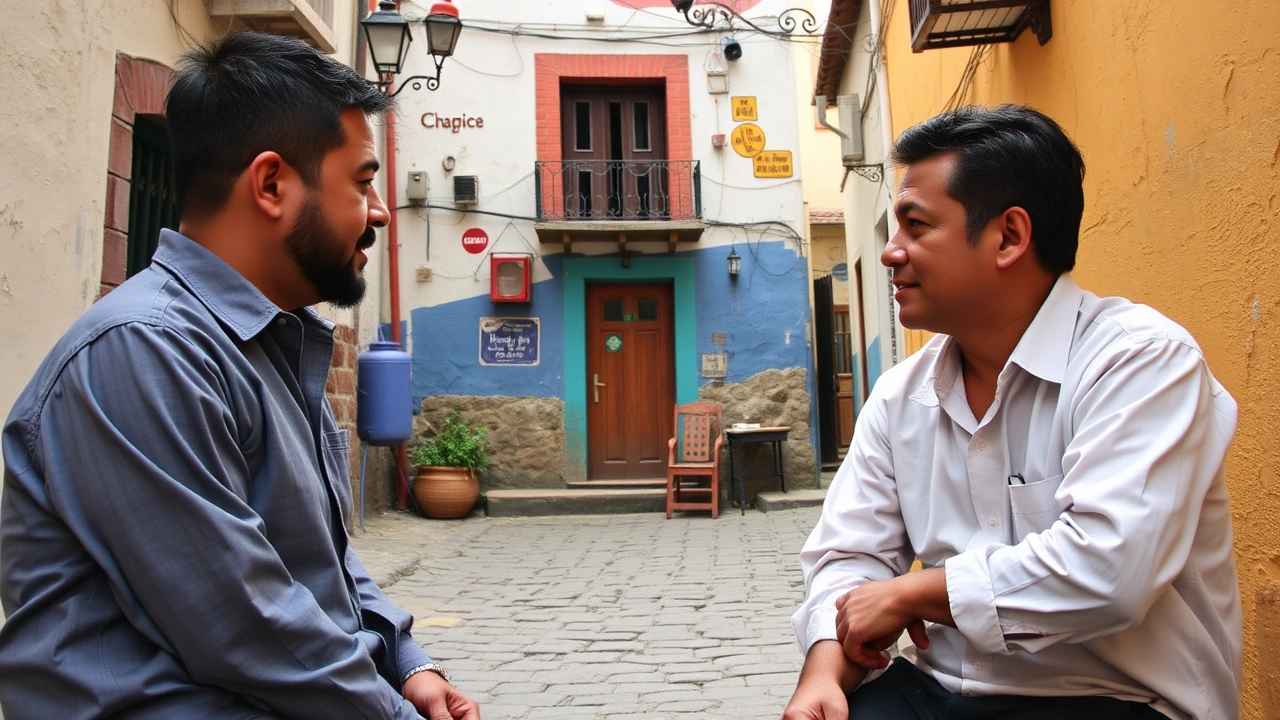
For many expats, especially North Americans and Europeans, the dominant impression is of living in a “calm” society, with less visible social tension than in other countries in the region. This relative safety translates concretely into quiet coastal towns, an absence of armed conflict, no insurrectionist movements, and a democracy considered “full” in international indices.
North American and European expats
However, it would be misleading to speak of a country without crime. American, British, and Canadian authorities highlight the existence of petty crime: pickpocketing, bag-snatching, car break-ins, and home burglaries, especially in Montevideo, in certain beachfront areas during high season, or near the Brazilian border. Violent assaults remain rare in the neighborhoods where most expats live, but basic precautions are necessary: do not leave valuables visible in cars, secure homes, avoid certain areas at night.
A sharp contrast exists between the capital and the rest of Uruguay. In small towns and rural areas, many residents do not lock their doors, and the notion of insecurity is very relative there. For an expat willing to accept a simpler, slower pace of life, away from Montevideo and Punta del Este, the feeling of day-to-day safety is very high.
An Open, Progressive, and Rather Welcoming Society
Uruguay cultivates an identity strongly marked by European immigration: a large majority of the population is of Spanish or Italian origin, with smaller groups of African, Amerindian, or Asian descent. In some Montevideo neighborhoods, up to 65% of residents are said to have Italian roots. There are also historical Swiss or Russian colonies.
The political and social culture is resolutely secular. The state is strictly separate from religion; Catholic holidays have neutral names (Christmas becomes “Day of the Family,” Holy Week becomes “Tourism Week”). In practice, about 80% of the population claims a religious affiliation, mainly Christian, but practice is often discreet.
The country is characterized by a progressive legal and social framework, including same-sex marriage since 2013, the decriminalization of abortion, regulated legalization of marijuana for residents, and broad recognition of LGBT rights. For gay, trans, or gender-nonconforming expats, the social climate is much more relaxed than in most countries on the continent, with a noted ease in living openly as a same-sex couple without visible hostility.
Another characteristic that strikes newcomers: the value placed on family and leisure time. The country operates on a “tranquilo” tempo: people take time to chat, share a mate, have an asado (large barbecue) with loved ones. This slowness can appeal to those fleeing constant stress, but irritate those from fast-paced, performance-oriented cultures. Integration almost always involves learning this more relaxed rhythm.
Cost of Living: Manageable on a Foreign Income, Heavy on a Local Salary
One of the major paradoxes of expatriating to Uruguay lies in this dual reality: for a North American or European retiree or for a digital nomad paid in a strong currency, the country can offer good value for money. For an employee paid in Uruguayan pesos, life is often expensive, even stifling.
Overall estimates show the country ranks as the second most expensive in Latin America, and more expensive than 68% of countries worldwide. The cost of living is regularly compared to that of Western European countries, “with a South American flavor.” Montevideo, for example, is nearly 40% more expensive than Buenos Aires, but remains about 35% cheaper than Denver and 44% cheaper than Washington D.C.
This is the approximate number of people directly affected by this reality each year.
| Household Profile | Estimated Monthly Expenses (excl. rent) | Range with Housing in Montevideo |
|---|---|---|
| Single person | ~$970 USD | $1,200 – $1,800 USD (modest) |
| Couple | $1,800 – $2,800 USD | $2,500 – $4,000 USD (comfortable) |
| Family of 4 | ~$3,230 USD (excl. rent) | $4,500 – $7,000+ USD (with private school) |
At the same time, the average net salary hovers around 40,000 UYU, or approximately $900 to $950 USD per month. In other words, a standard local income struggles to cover the monthly expenses that an expat with foreign income considers simply “reasonable.” This gap partly explains why many young Uruguayans seek work abroad.
For an expat who receives their pension or salary remotely from abroad, the situation is very different. The overall cost of living is estimated to be 17 to 21% lower than in the United States, with rents about 66% lower than in the US. A retired couple often reports being able to live comfortably on $2,500 to $3,000 USD per month, or even less by moving away from Montevideo and upscale beach areas.
Housing: Still Affordable Rents, Regulated and Secure Purchases
Housing is one area where Uruguay stands out positively for expats, provided you choose the city and neighborhood wisely. The rental market remains, on the whole, more affordable than in many major Western cities, even if some premium areas rival European prices.
In the capital, a modern, furnished two-bedroom apartment in Pocitos or Punta Carretas typically rents for $800 to $1,200 USD per month. Studios downtown go for around $450 to $700 USD, one-bedrooms between $600 and $1,000 USD, two-bedrooms between $800 and $1,500 USD. A three-bedroom house in a residential Montevideo neighborhood often ranges from $1,200 to $2,500 USD.
In Uruguay, the cost of equivalent housing varies considerably. In small towns or rural areas, rents typically range from $400 to $700 USD. Punta del Este is a special case: in the low season, long-term rentals are available starting at $1,000 USD per month, but prices increase dramatically with the start of the high tourist season.
The average figures set the tone:
| Type of Housing (Montevideo) | Average Monthly Rent | Typical Range |
|---|---|---|
| 1BR downtown | ~24,500 UYU | 19,900 – 35,900 UYU |
| 1BR outside center | ~19,000 UYU | 15,000 – 29,900 UYU |
| 3BR downtown | ~41,500 UYU | 30,000 – 79,700 UYU |
| 3BR outside center | ~32,000 UYU | 24,000 – 51,800 UYU |
| Private room (shared housing / coliving) | 12,000 – 20,000 UYU | ~$300 – $500 USD |
Monthly Airbnb rentals and coliving solutions are more expensive per night but offer flexibility and included services.
Additional costs and guarantees required for renting, from common charges to specific deposits.
Condominium fees for maintenance, security, and shared services. They range from ~$50 to over $600 USD/month in upscale residences in Montevideo or Punta del Este.
Landlords often require a deposit equivalent to one month’s rent, as well as personal and professional references.
Mandatory guarantee, usually in the form of a bank guarantee or rent insurance from entities like ANDA or Porto Seguro.
For someone without a local history, compiling the rental dossier (guarantee, references) can be a long and complex process.
On the purchasing side, the country offers a very reassuring framework for foreign investors: no caps or restrictions, equal rights with citizens, reliable land registry, and well-defined procedures via a notary-lawyer (escribano). You just need to factor in additional fees of 7 to 9% of the price (legal fees, taxes, etc.). Average values in Montevideo give an idea:
| Location | Estimated Price per m² |
|---|---|
| Montevideo Center | 86,000 – 110,000 UYU/m² |
| Montevideo Outskirts | 47,000 – 71,000 UYU/m² |
| Prime neighborhoods (USD) | $2,000 – $3,500 USD/m² |
On an international scale, real estate remains more affordable than in many comparable coastal markets, especially as legal security is considered excellent by specialized firms.
Utilities, Internet, and Fees: An Often Underestimated Expense
Another point to carefully calibrate before moving: the cost of basic services. Expenses for gas, electricity, and water may seem reasonable in summer but can explode in winter, in a country where many houses are poorly insulated and the cold is felt primarily through humidity.
Estimated monthly range in UYU for utilities (electricity, heating, water, garbage) for a 90 m² apartment in Uruguay.
Water remains more moderate, around $20 to $40 USD per month for a typical household, while bottled gas for cooking and hot water costs $15 to $30 USD per tank, lasting one to three months depending on consumption.
On the other hand, Uruguay offers an excellent level of connectivity, making it a solid base for remote workers. Fiber optic penetration exceeds 90%, broadband coverage surpasses 90% of the territory, and the average speed is around 160 Mbps. An Internet subscription starts around 1,200–1,300 UYU monthly ($30–33 USD) for 100 Mbps, and faster plans run around $30 to $50 USD depending on the operator (Antel, Claro, Movistar). Mobile plans with abundant data and unlimited calls typically range from $20 to $45 USD.
Food: Between Affordable Local Products and Expensive Imports
Regarding food, Uruguay sits in the upper-middle range for the region but remains in line with what many European or North American expats are used to. The major advantage: an abundant local supply of meat, fruits, and vegetables, of good quality, which remain competitive.
A couple generally spends between $300 and $450 USD per month on basic groceries, a family of four around $630 to $880 USD. In local currency, a single person often budgets 12,000 to 18,000 UYU per month for supermarket shopping.
Some key prices illustrate this reality:
| Product | Average Indicative Price (UYU) | Approx. Equivalent (USD) |
|---|---|---|
| Milk 1 L | ~49–50 UYU | $1 – $1.25 |
| White Bread (1 day / 2 people) | ~82–100 UYU | $2 – $2.50 |
| Eggs (12) | ~178–205 UYU | $4 – $5 |
| Chicken (1 kg) | $5.5 – $8.5 USD | — |
| Beef (1 kg) | $9 – $15 USD | — |
| Rice (1 kg) | $2 – $3.5 USD | — |
| Fresh Vegetables (1 kg) | $1.5 – $4 USD | — |
| Fresh Fruit (1 kg) | $2.5 – $5 USD | — |
| Local Beer 0.5 L (store) | ~92–95 UYU | $2.30 – $2.50 |
| Decent Bottle of Wine | ~350–387 UYU | $6 – $10 |
The bill quickly increases when turning to imported or specialized products: European cheeses, Asian groceries, imported organic foods, international brand cereals. High import duties on many categories of goods drive prices up.
Major chains (Tienda Inglesa, Disco, Devoto, Ta-Ta) coexist with street markets (“ferias”) where local fruits and vegetables are often cheaper. Many expats mix both circuits: supermarkets for essentials, ferias for fresh produce.
Eating out is not cheap, but not ruinous if sticking to simple cuisine. A lunch menu at a neighborhood restaurant typically costs between 300 and 500 UYU ($7.50 to $12.50 USD). At a mid-range restaurant, a full meal is around $15 to $25 USD per person, while fine dining in Montevideo or Punta del Este can reach $75 to $125 USD per person. Street snacks (empanadas, etc.) range from 60 to 100 UYU.
Transportation: Excellent Bus Network, Outrageously Priced Cars
Regarding transportation, an expat willing to forgo a car will find Uruguay rather affordable and functional. The urban bus network, especially in Montevideo, is dense, reliable, and cheap: a single fare costs between 42 and 56 UYU (just over $1 USD), a monthly pass runs around 1,800 to 2,400 UYU ($45–60 USD). Contactless STM cards can slightly reduce costs.
This is the cost in US dollars for a one-way fast ferry trip between Montevideo and Buenos Aires.
It’s when you want to own a car that the bill becomes heavy. While a liter of gasoline is around 78 to 85 UYU (approximately $1.80–$2 USD), the purchase price of vehicles is driven up by import taxes. A new compact sedan like a Toyota Corolla can thus cost $28,000 to $32,000 USD, a Golf or equivalent model around $27,000 USD or more, and used cars remain expensive. Maintenance (25,000 to 45,000 UYU per year) and insurance ($200–$300 USD per year for basic coverage) add to an already substantial budget.
In certain rural areas poorly served by buses, a car remains almost indispensable. Expats wishing to live in the countryside must factor in this structural additional cost.
Healthcare: Good Quality Coverage at Manageable Prices
The Uruguayan healthcare system is one of the strongest arguments in favor of moving there. It is based on a dual public-private structure centered around the National Integrated Health System (SNIS).
The public side, managed by ASSE, offers near-universal coverage at low cost for all legal residents. Care is little or not charged at the point of use, but wait times can be long for specialist consultations or non-urgent procedures, and infrastructure is sometimes aging in some urban hospitals.
This is the minimum monthly contribution in USD per person for a standard health plan with a mutualista in Uruguay.
For retirees or unemployed individuals, accounts mention contributions around $70 USD per month with some mutualistas. A retired expat couple living in Maldonado reports paying about $250 USD per person for very comprehensive “concierge”-type coverage. At the opposite end, premium plans in institutions like the internationally accredited and English-speaking-staff-favored British Hospital can exceed $325–400 USD monthly.
Number of doctors per 1,000 inhabitants, placing the country 11th in the world and among the top in Latin America.
The main drawbacks for an expat: the complexity of the landscape (multiplicity of plans and options), the language barrier (outside a few institutions, little medical staff speaks English outside Montevideo), age restrictions for joining some mutualistas (often between 60 and 65), and the need for a residence permit and Uruguayan ID card to enroll.
Education: Free Public System, But English and International Schooling Come at a Price
For families considering bringing children, the school question is central. Uruguay has a public system renowned for its free access and high literacy rate (over 98%), with compulsory schooling from age 4. In public school, instruction is entirely in Spanish, school days are short (often 4 hours), and infrastructure is sometimes under pressure in some urban or rural areas.
Many expats opt for private or international schools, especially in Montevideo and the Maldonado/Punta del Este region. These schools offer bilingual curricula, recognized programs (IB, A‑Levels, American or French), smaller classes, and facilitate access to higher education abroad.
But these advantages come at a high price by local standards. Tuition fees at an international primary school generally range from $400 to $1,000 USD per month per child. Some concrete examples cite 72,000 UYU monthly (approximately $1,660 USD) for two primary school children at a reputable bilingual school. Add uniforms, activities, and supplies, for an additional $100 to $200 USD per month per child.
Undergraduate university education, however, is free at public institutions like the University of the Republic for citizens and residents, which is a major asset for young adults considering staying long-term. Private universities, meanwhile, charge between 10,000 and 30,000 UYU per month ($250 to $750 USD) depending on the field.
Taxation and Residence: An Attractive Regime for Foreign Income
On the tax side, Uruguay applies a principle of territoriality: individuals are taxed primarily on Uruguayan-source income. Up to a certain time limit, most foreign income – pensions, rental income, capital gains, salaries related to activities performed outside – is not taxed, except for interest and dividends after a delay.
This framework is particularly attractive for retirees and remote professionals. New residents can benefit from a period of exemption or reduced taxation (up to 7%) on their foreign financial income (interest, dividends) for a maximum period of ten years plus the year of arrival. After this period, a 12% rate applies only to this income, and only if it is not already taxed at 12% or more in another country.
In parallel, tax brackets on local-source work income are progressive, from 0 to 36%, with high thresholds and few deductions. Most employees have their taxes withheld at source, with no annual filing obligation if their situation remains simple. There is no inheritance tax, no gift tax, and capital gains on foreign real estate are not subject to Uruguayan tax.
To be considered a tax resident in a country, three main conditions exist: spend more than 183 days per year in the territory, have one’s vital center of interests there (like immediate family), or make certain investments there (purchase of real estate of a specific amount or productive investments creating jobs). This flexibility notably allows wealthy expats to plan their move by combining physical presence and investments.
Caution, however: even though Uruguay is signing more tax treaties, it does not have them with all countries, and some states, like the United States, continue to tax their citizens on their worldwide income. In-depth study with a tax advisor is therefore essential before any tax planning project via Uruguay.
Work, Salaries, and Opportunities: An Eldorado… Mostly for Tech
The Uruguayan job market presents a mixed profile for expats. Overall, the economy is considered stable, with a highly developed services sector, strong agricultural exports (beef, soy, wood), a solid beach tourism industry, and an environment favorable to investment. The unemployment rate remains lower than that of many neighboring countries and extreme poverty has practically disappeared.
But for a foreigner who wants to “find a job locally,” prospects are limited outside of targeted sectors. Average salaries are modest, local competition is significant, and mastery of Spanish is almost essential. Many Uruguayans hold multiple jobs to make ends meet.
Number of professionals registered in the information technology sector in Uruguay, Latin America’s leading software exporter.
In this field, salaries reach levels far above the national average: around $2,300 USD monthly on average, sometimes much more for senior profiles, up to $6,000–$12,500 USD for highly skilled full‑stack engineers or digital marketing experts. For foreign employers, remuneration remains competitive compared to the US or Europe, even if the gap has narrowed.
The legal framework is favorable with simplified hiring procedures for foreigners, clear labor law (44-hour week, 20 days annual leave, 13th-month salary, overtime premiums), and structured social coverage. Free trade zones like Zonamerica offer major tax advantages in exchange for job creation. The government supports the digital sector via the Digital Agenda 2025, programs for innovative SMEs, and tax relief for R&D and exported services.
For a non‑tech professional expat, however, opportunities remain rarer, unless targeting sectors like English teaching, high-end consulting, or entrepreneurship in specific niches. Many accounts advise against coming to “try your luck” in Uruguay without solid savings, without highly sought-after skills, or without external income.
Climate, Environment, and Lifestyle: Mild, But Humid and Windy
The climate is often experienced as an asset compared to countries subject to harsh winters or extreme summer heatwaves. Uruguay enjoys a temperate climate, with four distinct seasons but rarely extreme temperatures. Summer (December–February) sees highs around 28°C (82°F), sometimes heatwaves exceeding 38–40°C (100-104°F), and nights around 17°C (63°F). Winter (June–August) remains statistically mild, with highs near 14°C (57°F) and lows around 6°C (43°F).
Winter can be more uncomfortable than the temperatures indicate, due to humidity and often poor housing insulation. A cool, damp interior (8-10°C / 46-50°F) is often perceived as more unpleasant than a dry cold. Heating (electric or gas) leads to high bills. The country is also exposed to powerful and changeable winds, like the Pampero from Argentina, which can cause violent storms in winter and spring.
In exchange, the country is safe from hurricanes, destructive earthquakes, and volcanoes. The main natural risks are extratropical storms, occasional flooding, and, in summer, forest fires. The beaches stretch over 600 km of coastline, often clean and without major concrete developments outside the large resorts. The water remains cool for much of the year but reaches swimmable temperatures in summer.
For daily life, the country offers many free or low-cost activities like walks on the ramblas (seafront promenades), beaches, parks, markets, and cultural events. A gym membership costs between $25 and $60 USD per month and a movie ticket about $8 USD. Many expats highlight this combination of a moderate urban life, proximity to nature, and the possibility of “getaway” weekends to the coast or countryside for $200–$350 USD for two nights.
Language, Bureaucracy, and Culture Shock: The Often Underestimated Obstacles
Two realities recur in almost all accounts: the central place of Spanish and the weight of bureaucracy.
Although English is common in the tech sector, daily life in Uruguay is conducted in Rioplatense Spanish, a distinct dialect. Without this language, administrative procedures (bank, notary), local medical care, and social relations become difficult, often leading to ‘language fatigue’ for expats during the first year.
Add to this an omnipresent bureaucracy. Procedures at the immigration office, for residence, vehicle registration, or starting a business can drag on, with paper forms, wait times of several hours, and spaced-out appointments. Setting up a company can take up to three months and cost several thousand dollars in fees. Obtaining and authenticating foreign documents, having them translated by a sworn translator, and registering them, is a sequence all residency applicants must undergo.
In a context where time is indicative and meetings often start with informal exchanges, you must anticipate that projects take longer than expected and administrative deadlines are extended. To adapt, it is advisable to use local advisors (lawyers, relocation consultants, accountants).
Conclusion: For Whom Is Uruguay Really a Good Expatriation Plan?
In the end, Uruguay cannot be reduced to an idyllic postcard nor a deterrent due to its cost of living. It is a country of clear compromises, where the strengths can be decisive for some profiles… and the weaknesses deal-breakers for others.
Uruguay is a top destination for retirees with a comfortable foreign pension, seeking safety, political stability, reliable healthcare, and a peaceful pace of life close to European standards. It is also very attractive for digital nomads, tech professionals, or digital entrepreneurs working for foreign clients, thanks to its winning combo: fast Internet, time zone compatible with North America and Europe, advantageous territorial taxation, and a safe environment.
For families with children, the equation is more nuanced: access to a good free public education exists, but international commercial or university requirements often push towards expensive international schools. On the other hand, the benevolent social environment, the relative freedom given to children, and the possibility of a daily life close to nature appeal to many parents.
For a young person without savings, without an in-demand profession, and without external income, the country can be very difficult: well-paying jobs are rare, the cost of living is high relative to local salaries, and there is the language barrier. The pace of life can also seem too calm or monotonous off-season for those seeking the dynamism of major metropolises, vibrant nightlife, or a very rich cultural offering.
Uruguay offers, in summary, what it promises on paper: a high quality of life for those who can afford it, a tolerant society, a reliable state, preserved beaches and natural spaces, an environment conducive to family and remote work. But it demands, in return, patience, a real language effort, good financial preparation, and an ability to acclimate to a slower, smaller, more discreet world than the globalized capitals. For many expats who accept these rules of the game, the bet is largely a winning one.
Disclaimer: The information provided on this website is for informational purposes only and does not constitute financial, legal, or professional advice. We encourage you to consult qualified experts before making any investment, real estate, or expatriation decisions. Although we strive to maintain up-to-date and accurate information, we do not guarantee the completeness, accuracy, or timeliness of the proposed content. As investment and expatriation involve risks, we disclaim any liability for potential losses or damages arising from the use of this site. Your use of this site confirms your acceptance of these terms and your understanding of the associated risks.

Cyril Jarnias is an independent expert in international wealth management with over 20 years of experience. As an expatriate himself, he is dedicated to helping individuals and business leaders build, protect, and pass on their wealth with complete peace of mind.
On his website, cyriljarnias.com, he shares his expertise on international real estate, offshore company formation, and expatriation.
Thanks to his expertise, he offers sound advice to optimize his clients' wealth management. Cyril Jarnias is also recognized for his appearances in many prestigious media outlets such as BFM Business, les Français de l’étranger, Le Figaro, Les Echos, and Mieux vivre votre argent, where he shares his knowledge and know-how in wealth management.