 Published on and written by Cyril Jarnias
Relocating abroad and buying property at the same time is a double gamble. Uruguay is one of the few countries where this bet remains relatively clear-cut: stable political framework, relatively mild taxation, transparent real estate market, and strong property rights. For an expatriate, it is a country where one can both live peacefully and build wealth in a strong currency.
This guide covers the essentials for expatriates looking to invest in Uruguayan real estate: analysis of the economic environment, types of properties available, potential returns, applicable taxation, necessary insurance, and legal procedures. It also addresses a crucial question for French nationals: how to reconcile legal residence, tax residence, and real estate investment.
Why Uruguay is attracting more and more expatriate investors
To understand the appeal of real estate investment, one must first look at the country as a whole. Uruguay is often presented as the “Switzerland of Latin America“: strong institutions, low corruption, modern banking system, convertible currency, and respect for property rights.
Inflation is contained around 4 to 5%, which is an indicator of economic stability.
Major rating agencies confirm this solidity: the ratings from Moody’s, Fitch, and Standard & Poor’s place the country in the “investment grade” category with a stable outlook. For an expatriate, this means an environment where violent political or monetary shocks – common in the region – are much less likely.
Homes equipped with solar panels sell for about 12% more than others.
Finally, Uruguay has built a legal framework deliberately welcoming to foreign capital: same rights as nationals to buy, no exchange controls, possibility to freely repatriate funds, agreements to avoid double taxation with many countries (but not yet with France), and a tax residence system that can be optimized through real estate investment.
A stable real estate market, driven by foreigners and tourism
The Uruguayan real estate market has experienced sustained growth over the last decade, without the speculative frenzy seen in other emerging countries. There is rather a steady increase in prices, slightly above inflation in the long term, with peaks and some occasional corrections.
Available figures show a rising volume of transactions: more than 52,000 sales recorded in 2024, an increase of over 3% from the previous year, and a further small rise in the first months of 2025. Montevideo accounts for about a third of purchases, followed by the department of Maldonado (where Punta del Este is located) and Canelones.
Historically, Argentines represent about 75% of foreign buyers in beach resorts, followed by Brazilians (around 20%). Since the 2010s, a growing core of Europeans and North Americans, notably European retirees, entrepreneurs, and remote workers, have been settling in Montevideo or along the coast.
This foreign clientele plays a key role in demand, especially in coastal areas. Punta del Este and its surroundings – often nicknamed the “Saint‑Tropez” or “Monaco” of South America – have transformed: from a highly seasonal beach resort, the city has become a year‑round living hub. Since the Covid period, the Punta del Este / Maldonado area has gained nearly 15,000 new permanent residents.
The market dynamic is driven by large-scale projects like the mixed-use Atlántico program ($130 million) and the 25‑story World Trade Center tower ($42 million) in Punta del Este. This combination of residential, office, and services reinforces the depth of the rental market and its long-term liquidity.
In this context, prices are not skyrocketing in a disconnected way: the increase remains largely in line with economic growth, with some segments very tight (luxury waterfront) and others much more accessible (emerging neighborhoods, inland areas).
Where to invest: overview of the main areas for expatriates
An expatriate interested in Uruguay usually immediately asks the geographical question: Montevideo, Punta del Este, a quieter coastal village, or a wine region or rural area?
Montevideo: the capital, economic and rental heart
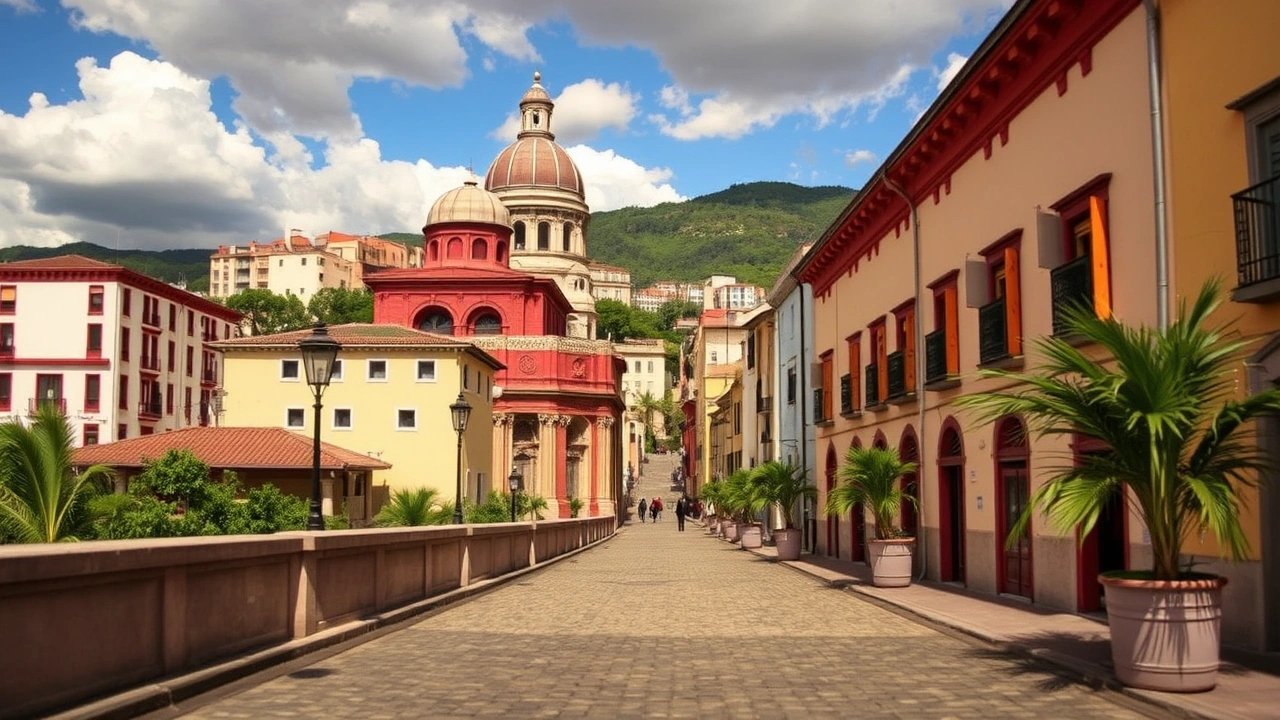
Montevideo concentrates most of the country’s economic, academic, and administrative activity. Unsurprisingly, it is also the deepest and most “legible” real estate market for a long-term rental investor.
Prices vary greatly by neighborhood. In the most high‑end sectors – Carrasco, Punta Carretas, Punta Gorda – average prices exceed $4,000 per square meter, with a record of over $4,200/m² in Carrasco. Pocitos, Malvín, or Parque Rodó are typically between $3,500 and $3,800/m². At the other end, peripheral neighborhoods like Nuevo París or Punta Rieles show much lower levels, around $750 to $1,100/m².
Recent price data for new builds confirms this gap: around $2,900/m² on average for a new house in Montevideo, compared to about $2,250/m² nationally. Older apartments in central neighborhoods, based on classified ads portals, are around 130,000 UYU per square meter, or about €2,800 according to recent exchange rates.
Montevideo concentrates over 76% of registered leases in Uruguay, making it the predominant rental market for investors.
Gross yields, meanwhile, are in a reasonable but stable range. Aggregate data indicates an average gross yield close to 5% in Montevideo, with variations by neighborhood:
| Montevideo Neighborhood | Gross Rental Yield (range) |
|---|---|
| Pocitos | 4.4% – 6.0% |
| Punta Carretas | 4.2% – 6.7% |
| Malvín | 5.8% – 6.7% |
| Cordón | 5.0% – 5.7% |
| Centro | 4.9% – 5.9% |
| La Blanqueada | 5.6% – 6.6% |
| Tres Cruces | 2.2% – 4.8% |
For an expatriate investor, Montevideo therefore offers a rather balanced yield/risk profile: regular rents, limited vacancy, deep market, complete infrastructure (schools, healthcare, transport), but high entry prices in the best neighborhoods. It is a logical option for those aiming for rental income in dollars and an easy resale in the medium term.
Punta del Este and the coast: luxury, seasonality, and upscaling
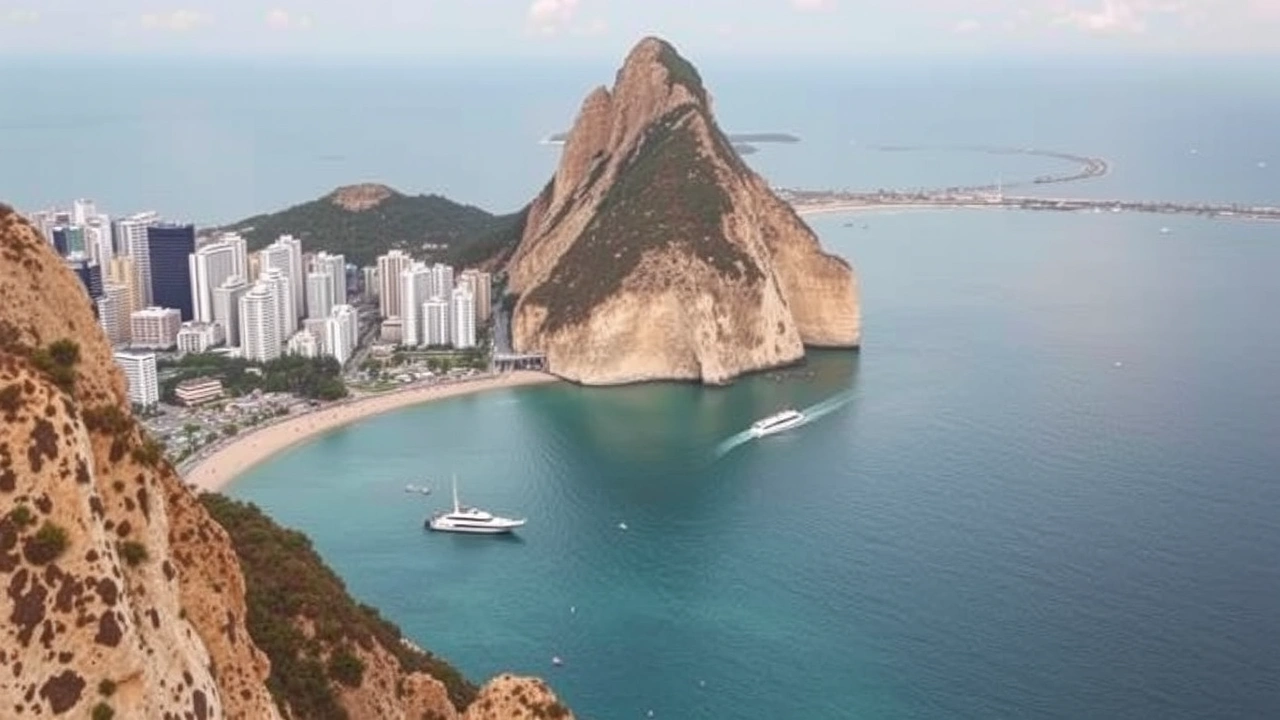
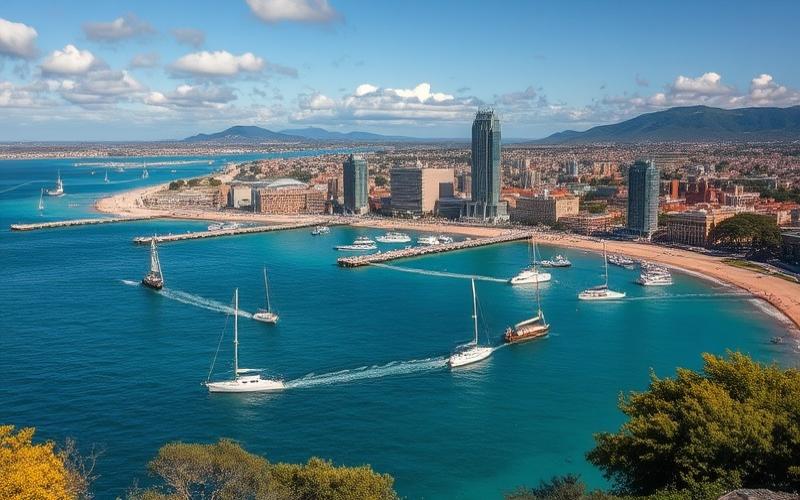
Punta del Este is the country’s other major real estate showcase. Spectacular waterfront, luxury towers, marinas, restaurants, festivals… The resort has long attracted wealthy Argentine and Brazilian clientele but is now seeing North American and European buyers arrive.
Real estate prices in Punta del Este are significantly higher than the national average. For houses, prices per square meter are around 130,000 UYU, and for apartments between 125,000 and 130,000 UYU. Exceptional properties, such as seafront villas or penthouses in prestigious buildings (Trump Tower, Mouette building), can reach between $7,000 and $10,000 per square meter. Luxury villas on the sea, meanwhile, can sell for between $7 and $20 million.
Alongside this ultra‑high‑end segment, there is however a more affordable “intermediate” market. A small two‑bedroom house a bit set back from the beach can be found for around $200,000. A one‑bedroom apartment with sea view starts at about $150,000, with seasonal rents that can range from $1,000 to $3,000 per month depending on the building’s services (pool, security, gym).
The main advantage of Punta del Este remains the combination of capital appreciation and seasonal income. Occupancy rates in summer approach 90 to 95% in the best sectors, and high‑season rents can achieve gross yields of 7 to 10% during that period for the most in‑demand villas and vacation apartments. Over the entire year, profitability will depend on the ability to rent off‑season to permanent residents or remote workers, a segment that has expanded since the pandemic.
One element to keep in mind: the concentration of foreign buyers means the market can be influenced by economic cycles in Argentina or Brazil. But the rise of a year‑round resident population is gradually diversifying demand, reducing the purely speculative character once observed.
Colonia, Rocha, Maldonado, Canelones: niches and diversification
Outside the Montevideo / Punta del Este duo, several regions offer interesting profiles for expatriates.
Colonia del Sacramento, a UNESCO World Heritage site, combines rich historical heritage and colonial charm. Its proximity to Buenos Aires, located just across the Río de la Plata, makes it a sought‑after destination. The real estate market there presents opportunities, notably through historic homes that form a heritage niche. In some micro‑markets, value increases are estimated at around 10% per year, a trend supported by the development of wine tourism and cultural tourism in the region.
Rocha, further north on the Atlantic coast, bets on a softer development model, focused on ecotourism. Almost wild beaches, protected lagoons, preserved nature: this department attracts a clientele seeking tranquility. Prices there are about 50% lower than in the most expensive beach areas, making it an interesting playground for eco‑house projects or small tourist facilities.
Maldonado, which includes Punta del Este but also more modest areas, offers houses and apartments at more affordable prices just a few kilometers from the most sought‑after beaches. For an expatriate who wants to live near Punta del Este without paying the high price of waterfront, it’s a logical alternative.
Canelones, west of Montevideo, combines wine regions, medium‑sized towns, and a calmer coastline. Here too, prices per square meter are significantly lower than in the capital’s upscale neighborhoods, while benefiting from quick road access and decent infrastructure.
Prices, rents, and yields: what the numbers show
To get a precise idea of the market, it is useful to look at orders of magnitude rather than isolated examples.
According to data from several portals and databases, the national median price per square meter is around 156,000 UYU for an apartment and 103,000 UYU for a house. Converting, and based on recent rates, this corresponds to a set of values consistent with statistics in dollars: slightly above $2,000/m² on average, much higher on the coast and in the fine neighborhoods of Montevideo.
Some useful orders of magnitude for an expatriate:
| Indicator (Uruguay, aggregated data) | Approximate Value |
|---|---|
| Average purchase price per m² in city center (Numbeo) | ~€2,800 |
| Average purchase price per m² outside center | slightly lower |
| Average rent for 1‑bedroom apt. in city center | ~24,500 UYU / month |
| Average rent for 3‑bedroom apt. in city center | ~41,500 UYU / month |
| Average gross rental yield (city) | ~4.0% – 5.0% |
| Price to income ratio | ~14 |
In practice, for an expatriate buying a small apartment in Montevideo, a typical scenario might look like this: a property for $150,000 in a neighborhood like Pocitos, rented for $800 to $900 per month on a long‑term lease, giving a gross yield around 6% if the property is well chosen, a bit less net after expenses, taxes, and maintenance.
A property valued at $350,000, rented at $200 per night during the 4‑month high season, can generate an annual gross yield of over 9% for that period alone. This yield is conditional on good marketing management to ensure a good occupancy rate and acceptance of highly seasonal income.
Finally, for those interested in agricultural land, leases on soybean farms or livestock operations generally yield lower but stable returns, around 3 to 5% net per year, in addition to the potential appreciation of the land.
Foreigners’ rights: almost unlimited access to property
One of Uruguay’s great strengths for an expatriate investor is the legal simplicity of access to property. Unlike many countries where foreigners are limited in terms of area, location, or type of property, Uruguay applies a principle of equality: a foreigner has, in matters of property, the same rights as a Uruguayan citizen.
Two main rules apply: agricultural properties must be held by an individual or a company with identified shareholders, and any land exceeding 500 hectares is subject to a right of first refusal by the National Colonization Institute at the agreed price.
Outside these special cases, an expatriate can buy a city apartment, a house on the coast, building land, or a farm, in full ownership (freehold), in their own name or via a local company.
This framework is part of a broader policy supporting foreign investment. Uruguayan law enshrines equal treatment and the free movement of capital, without exchange controls or restrictions on repatriating funds.
The buying process: how an acquisition unfolds
Despite this openness, Uruguay is not a country where one buys property lightly. The system is solid, but very formalized, with a key player: the escribano público, the notary.
Role of the notary and real estate agents
The notary is mandatory for any transaction. They are chosen and paid by the buyer, and their personal liability is engaged for the legal validity of the deed. Concretely, they verify the chain of title for a period that can go back 30 years, ensure there are no outstanding mortgages, tax debts, ongoing litigation, and draft all contracts (promise, definitive deed).
Real estate agents, on the other hand, handle property search and negotiation. In Uruguay, it is legally accepted that the same agent represents both the seller and the buyer (which many expatriates find tricky, as it creates a potential conflict of interest). Some agencies, like Team Haverkate, claim to exclusively represent the buyer.
Standard fees are 3% of the sale price for the agent (plus VAT), often paid by each party, and 3% for the notary (plus VAT) on the buyer’s side.
Key steps and timeline
In practice, a “standard” acquisition unfolds in several phases and takes on average between 30 and 60 days:
The buyer makes a purchase offer. If accepted, a reservation document (often called a boleto de reserva) is drawn up. This document outlines the main terms of the transaction: price, deadlines, and any suspensive conditions. At this stage, a deposit of about 10% of the sale price is usually made. This deposit is most often placed in an escrow account managed by the notary to secure the transaction.
2. Promesa de Compraventa The sales promise (promesa) is a more formal contract, detailing the final price, timeline, financing conditions, and penalties for default. In practice, it is from this stage that the notary begins the thorough title verification, whereas in other countries, this verification sometimes precedes any commitment.
The usual clause stipulates that if the buyer withdraws without legitimate cause, they lose their deposit; if it’s the seller who retracts, they must return double the amount. If a proven legal issue is discovered during due diligence, the contract can be canceled without penalty.
The notary performs several essential checks: consultation of public records, obtaining certificates of no encumbrances, checking local taxes and matching with the cadaster. For an apartment, they also ensure payment of homeowner association fees. Additional checks on easements, environmental permits, or coastal limits are necessary for properties in rural or coastal areas.
4. Signing of the definitive deed (Escritura) Once the checks are deemed satisfactory, the parties sign the sales deed at the notary’s office. The balance of the price is settled, in practice, via a bank check or transfer from a Uruguayan account. The deed is then presented to the property registry for recording, which legally formalizes the transfer of ownership.
All or part of this process can be carried out remotely by an expatriate physically absent from the country, provided they grant a notarized power of attorney (apostille legalization) to a representative on the ground.
Total transaction cost
Aggregating the main items, the total cost for the buyer is generally between 8% and 9% of the property price. The typical structure looks like this:
| Cost item (buyer’s side) | Order of magnitude |
|---|---|
| Notary fees (3% + 22% VAT) | ~3.66% of price |
| Agency commission (3% + 22% VAT) | ~3.66% of price |
| Transfer tax (ITP – 2% of cadastral value) | ~1–2% of real price |
| Administrative fees (certificates, registrations) | $300 to $800 (or more) |
In addition to these acquisition costs, after the purchase come the annual property taxes and, where applicable, homeowner association fees (expensas) and insurance.
Financing, capital flows, and bank accounts
A good portion of foreigners buy cash in Uruguay. This is not an obligation, but the credit system is not as flexible as in some European countries. Local banks can grant mortgages to non‑residents, but with stricter conditions: significant down payment (often at least 40–50% of the price), detailed income analysis, and sometimes a cap on the term.
Interest rates for inflation‑indexed loans are about 4.8% per year, in a context of a high benchmark rate (around 8%). Although a 20‑ or 30‑year loan is theoretically accessible, it remains rare in practice for non‑residents. Banks strictly apply anti‑money laundering rules and require very clear proof of the origin of funds.
Also note: for several years, large cash payments have been prohibited for real estate purchases. Payment must be made through the Uruguayan banking system. Non‑residents can open an account in a local bank, public (BROU) or private (Santander, Itaú, HSBC, etc.), but again, the bank will ask for a passport, proof of income, proof of address, and evidence of the source of funds.
Real estate taxation: what an expatriate pays
Uruguayan taxation is largely based on the principle of territoriality: residents are mainly taxed on their Uruguayan‑source income, with specific regimes for new arrivals. For an expatriate owner, several levels of taxation come into play.
Purchase taxes and transfer fees
As mentioned earlier, the Property Transfer Tax (ITP) is 2% of the fiscal (cadastral) value of the property for the buyer, and another 2% for the seller. This cadastral base is generally lower than the market value, which limits the effective weight of the tax.
Notary fees, registry fees, and agency commissions complete the bill, bringing total entry costs to about 8–9% of the price.
Annual taxes: property contribution and primary education
Every owner pays an annual property tax (Contribución Inmobiliaria), levied by the municipality, calculated on the cadastral value of the property. Rates vary by department but are roughly between 0.15% and 1.4%, with the most common cases around 0.25–0.5%.
Added to this is a small tax dedicated to financing primary education (Impuesto de Enseñanza Primaria), generally between 0.15% and 0.30% of the cadastral value. For a property with a fiscal value of $200,000, the total of these two taxes will be around $2,000 per year according to commonly cited estimates.
Wealth taxation and resident / non‑resident distinction
Uruguay applies a wealth tax (Impuesto al Patrimonio) above certain thresholds, but it is important to distinguish the situation of resident individuals, non‑residents, and legal entities.
The net wealth taxation threshold in Uruguay for a single filer is approximately 2 million Uruguayan pesos.
For a non‑resident, the rule is simpler: the wealth tax is calculated at a flat rate of 1.5%, on wealth located only in Uruguay and above the thresholds. In practice, many small or medium individual investors do not reach these levels, but an expatriate who is a multiple property owner or holds buildings via a company will need to factor this tax into their projections.
Companies, meanwhile, are subject to a wealth tax of 1.5% on the value of assets located in Uruguay, adjusted for inflation.
Rental income: IRPF or IRNR
Rents received on a Uruguayan property are always considered Uruguayan‑source income, and thus taxable in Uruguay, regardless of the owner’s tax residence.
If you are a non‑resident tax expatriate, your rental income is subject to the Non‑Resident Income Tax (IRNR). The applicable tax rate is generally between 10.5% and 12%, often withheld at source. It is possible to deduct certain expenses, such as property taxes, management fees, agency commissions, or losses from unpaid rent.
A tax resident, on the other hand, will be taxed via the Personal Income Tax (IRPF) in the capital income category, at a proportional rate generally of 12% on these rents.
Capital gains upon resale
In case of a sale with a gain, this profit is also taxable. The taxable gain is calculated as the difference between the sale price and the acquisition price, adjusted for inflation. For non‑residents, the usual rate is 12% under IRNR. For residents, the capital gain enters the IRPF base, in the capital income category, with a rate of 12%.
In some cases, notably for properties acquired a long time ago, an alternative regime may consist of taxing a fixed percentage of the sale price.
Tax residence: when real estate changes the game
Beyond the taxation related to the property itself, many expatriates consider Uruguay to optimize their overall tax status. Local law provides several pathways to tax residence, some of which involve real estate investment.
Tax residence in France is primarily established by a presence of more than 183 days in the territory during a calendar year. However, this duration can be reduced through specific investment thresholds provided by law. It is important to note that this condition does not apply if the person is already considered a tax resident in another country under a double taxation treaty.
Thus, the purchase of one or more real estate properties with a cumulative value exceeding 3.5 million indexed units (UI) – which in practice, depending on the period, is on the order of $400,000 to $550,000 – combined with a physical presence of at least 60 days per year, opens the door to tax residence. Another criterion is based on a larger investment in a local company creating jobs (15 million UI and 15 permanent positions), or on a portfolio of local real estate assets exceeding a certain amount.
The major issue for new residents is the so‑called “tax holiday” on foreign‑source income. The current regime offers new residents the possibility of being exempt from Uruguayan tax on their interest and dividends from foreign sources for a certain number of years (6 years initially, extended to 10 years for those who chose the option), or to opt for a permanent reduced rate on this income. Reforms are under discussion to adapt this regime to OECD standards, but Uruguay remains, at this stage, one of the few countries in the region to offer such a flexible system.
For a European or North American expatriate, this combination – real estate investment, tax residence with low pressure on foreign income, legal security – constitutes a strong argument.
Insurance: protecting your property and liability
Even though premiums are often lower than in Europe, insurance should not be overlooked in an expatriate investor’s strategy.
Home and liability insurance
The standard Seguro de Hogar contract generally covers the building structure and contents against main risks: fire, storm damage (wind, lightning), burglary. In coastal areas like Punta del Este or parts of Montevideo, it is prudent to closely examine clauses related to hail, flooding, or weather‑related damage, more frequent on the Atlantic.
Insurers do not cover the market value of the property, but its reconstruction cost. An official appraisal may be required to determine this amount. To give an idea, an apartment worth $500,000 in Punta del Este can be insured for an annual premium on the order of $600 to $1,200, depending on the coverage level.
Liability insurance is a crucial guarantee for landlords in Uruguay. It covers damages and legal fees if a tenant or visitor gets injured in the property and sues. Although Uruguay is not as litigious as some Anglo‑Saxon countries, this basic protection remains essential.
Rent guarantee and non‑occupant insurance
A product particularly widespread in Uruguay is Seguro de Alquiler, a rent guarantee paid by the tenant themselves, which covers the owner against non‑payment and sometimes eviction procedure costs. In a rental market where income can sometimes be irregular, this strongly secures the landlord’s cash flow, especially if they live abroad.
For properties rented or left vacant part of the year, there are also specific policies like “non‑occupant owner” (PNO), which can cover, in addition to liability, fire, theft, water damage, vandalism, certain weather events, and even aspects like legal assistance or coverage for rental vacancy.
This type of contract can cost up to 50% less than standard home insurance for a non‑permanent occupant.
Health, travel, and life: the personal trio
Beyond the property itself, the expatriate must think about their own protection. All legal residents must be affiliated with the public health system, but many additionally choose a private mutual (mutualista) to access a network of affiliated hospitals and clinics. Monthly contributions remain affordable (often less than $100 per person for basic options), but these plans may exclude pre‑existing conditions and impose age limits for enrollment.
For expatriates coming from Europe, other solutions involve maintaining private international coverage, comparing offers from specialized insurers. Base premiums for international health insurance dedicated to Uruguay start, for a 30‑year‑old adult, at a little over €130 per month, with amounts obviously increasing with age and family composition.
Finally, for those who make regular stays without legal residence, travel insurance covering medical expenses is now required for entry into the country.
Living in Uruguay as an expatriate owner: quality of life and realities
Investing in real estate makes even more sense if you enjoy the country day‑to‑day. On this front, Uruguay ticks many boxes sought by expatriates: relative security (in the Latin American context), decent standard of living, good drinking water quality, solid education system, temperate climate, and a culture imbued with individual freedom.
Montevideo is often cited as one of the most pleasant cities in Latin America. Its rambla, a promenade over ten kilometers long along the Río de la Plata, is at the heart of urban life, dedicated to walking, cycling, sports, cafes, and beaches. For families, neighborhoods like Pocitos, Punta Carretas, or Carrasco offer a balance between neighborhood life, activities, and proximity to schools.
Risks obviously exist: drug‑related crime in some Montevideo neighborhoods, road accidents, violent storms or occasional floods, economic crises in neighboring countries that can weigh on tourism. But the country remains, statistically, much safer than most of its neighbors and better equipped institutionally to manage these shocks.
For an expatriate investor, this quality of life has a direct effect on rental demand: it attracts retirees, families, students, and a growing population of remote workers looking for a stable, connected (4G/5G well deployed in urban areas), and pleasant environment.
Investment strategies for an expatriate: some typical scenarios
Given this overview, the possible investment profiles are varied. Some examples of strategies an expatriate might consider:
– Studio or one‑bedroom in Montevideo for long‑term rental Objective: regular dollar yield, low vacancy, easy resale. Target: center, Pocitos, Cordón, near universities or the waterfront. Target gross yield: 4.5–6.5%.
– Sea‑view apartment in Punta del Este for seasonal rental and personal use Objective: combine personal enjoyment part of the year and high high‑season income. Target: building with services on the waterfront, budget starting at $150,000–$200,000. Gross yield during season can exceed 7–9%, with vacancy the rest of the time.
Residential property in Montevideo or Maldonado, intended as a primary residence with a perspective of tax optimization and wealth appreciation.
Search in residential sectors of Carrasco, Punta Gorda, and Malvín, prioritizing access to good schools and a calm living environment.
Family home located in a tranquil suburb, with an objective of primary residence and potential tax residence optimization.
Long‑term property appreciation anticipated, correlated with the economic and demographic growth of the Uruguayan capital.
– Eco‑project or guesthouse in Rocha or Colonia Objective: position oneself in rural / nature tourism or wine tourism, with a potential for above‑average capital appreciation. Target: land or house to renovate in a developing area, a more entrepreneurial approach.
– Mixed portfolio (rental apartment + secondary residence) Objective: diversify across several zones to smooth cycles (an urban property for stability, a coastal property for seasonality and appreciation).
In all cases, the key remains local support: independent notary, agent who does not or rarely practices dual representation, tax lawyer if considering tax residence, and serious property manager if not living on site.
Conclusion: a market both accessible and demanding
Uruguay offers expatriates a rare set of characteristics: a real estate market in strong currencies, in a politically stable country, with robust property rights, few or no restrictions for foreigners, reasonable real estate taxation, and the possibility of articulating investment with a life project and, potentially, advantageous tax residence.
Despite positive aspects, the operation involves significant transaction costs, strict anti‑money laundering regulation, a potentially confusing dual agency practice, and common beginner mistakes (insufficient due diligence, unfamiliarity with taxes, underestimation of expenses or seasonality) which can lead to significant financial losses.
For an expatriate ready to seek professional help, respect the sometimes administrative pace of the country, and think of their project over several years rather than as a speculative bet, real estate in Uruguay can become both a tool for wealth diversification and the concrete foundation for a new life on the Atlantic coast.
Disclaimer: The information provided on this website is for informational purposes only and does not constitute financial, legal, or professional advice. We encourage you to consult qualified experts before making any investment, real estate, or expatriation decisions. Although we strive to maintain up-to-date and accurate information, we do not guarantee the completeness, accuracy, or timeliness of the proposed content. As investment and expatriation involve risks, we disclaim any liability for potential losses or damages arising from the use of this site. Your use of this site confirms your acceptance of these terms and your understanding of the associated risks.

Cyril Jarnias is an independent expert in international wealth management with over 20 years of experience. As an expatriate himself, he is dedicated to helping individuals and business leaders build, protect, and pass on their wealth with complete peace of mind.
On his website, cyriljarnias.com, he shares his expertise on international real estate, offshore company formation, and expatriation.
Thanks to his expertise, he offers sound advice to optimize his clients' wealth management. Cyril Jarnias is also recognized for his appearances in many prestigious media outlets such as BFM Business, les Français de l’étranger, Le Figaro, Les Echos, and Mieux vivre votre argent, where he shares his knowledge and know-how in wealth management.