 Published on and written by Cyril Jarnias
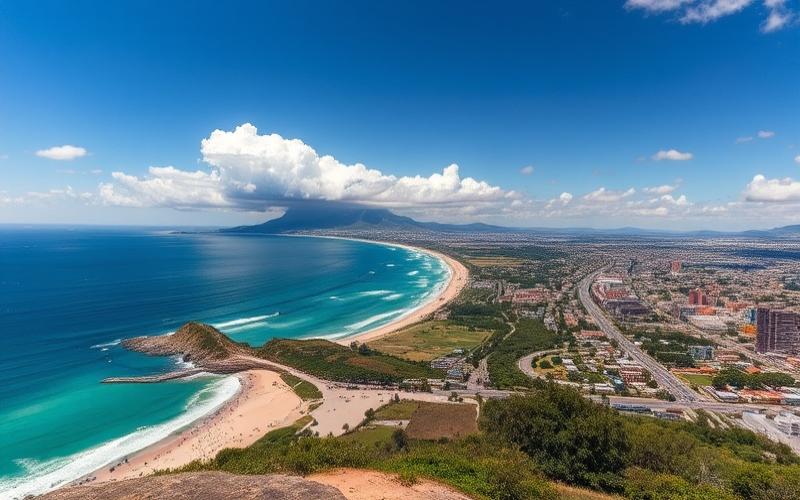
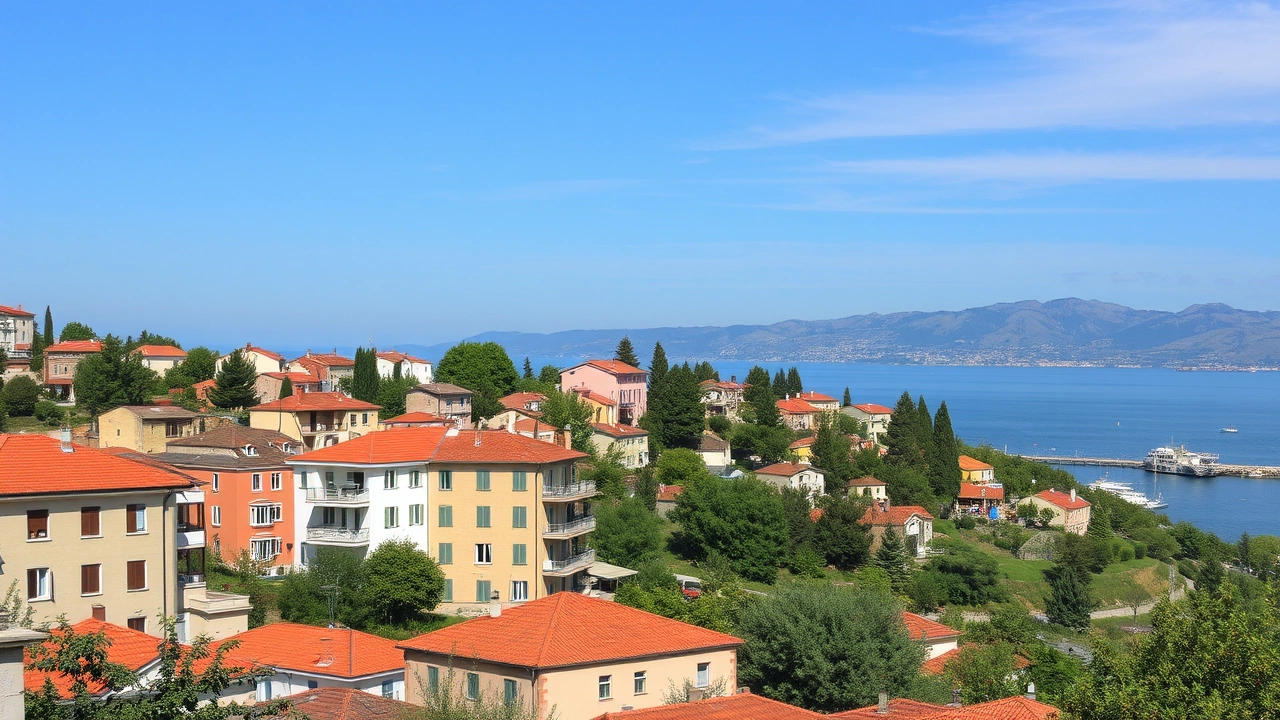
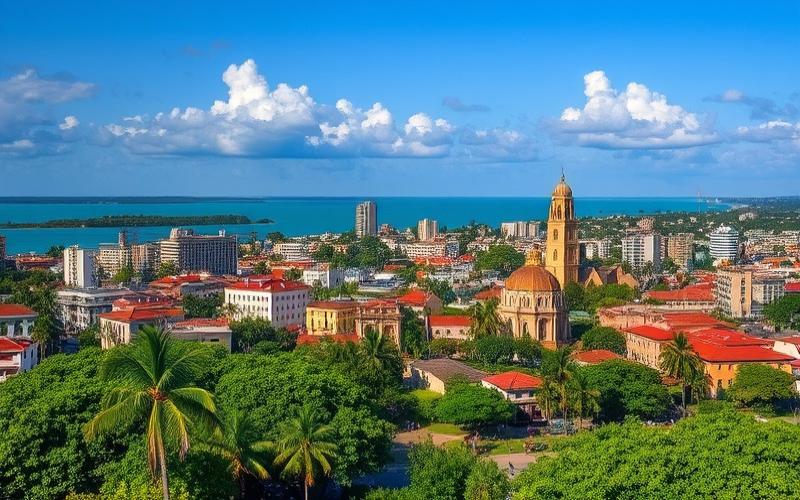
Sandwiched between two giants, Brazil and Argentina, Uruguay appears on the map as a small, discreet country. On the ground, it’s quite the opposite: still-wild Atlantic beaches, a charming capital, vineyards, estancias, protected wetlands, bohemian villages, and three sites already inscribed as UNESCO World Heritage. In this landscape of endless grasslands – where cows outnumber people – unfolds a mosaic of must-see places.
Uruguay stands out as one of the safest and most stable countries in South America. It offers a pleasant, livable capital, a prosperous economy, and a progressive society. Travelers discover a unique quality of life, a reinvented European culture, and vast, sparsely populated natural spaces.
Montevideo, Capital on the Río de la Plata
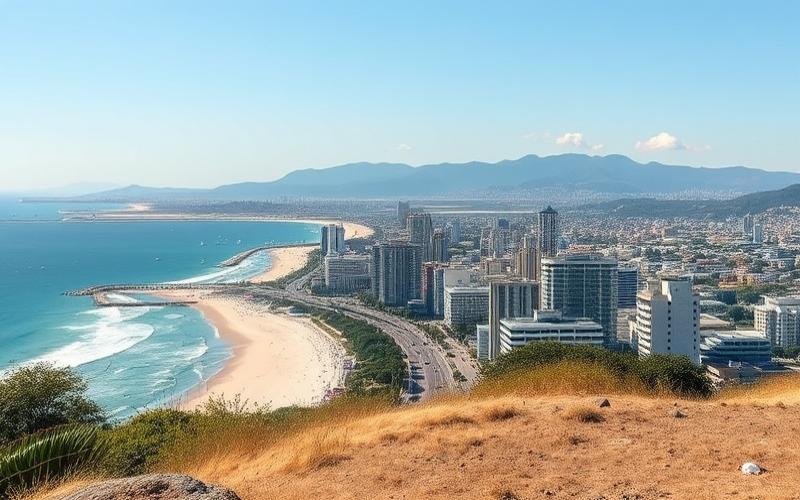
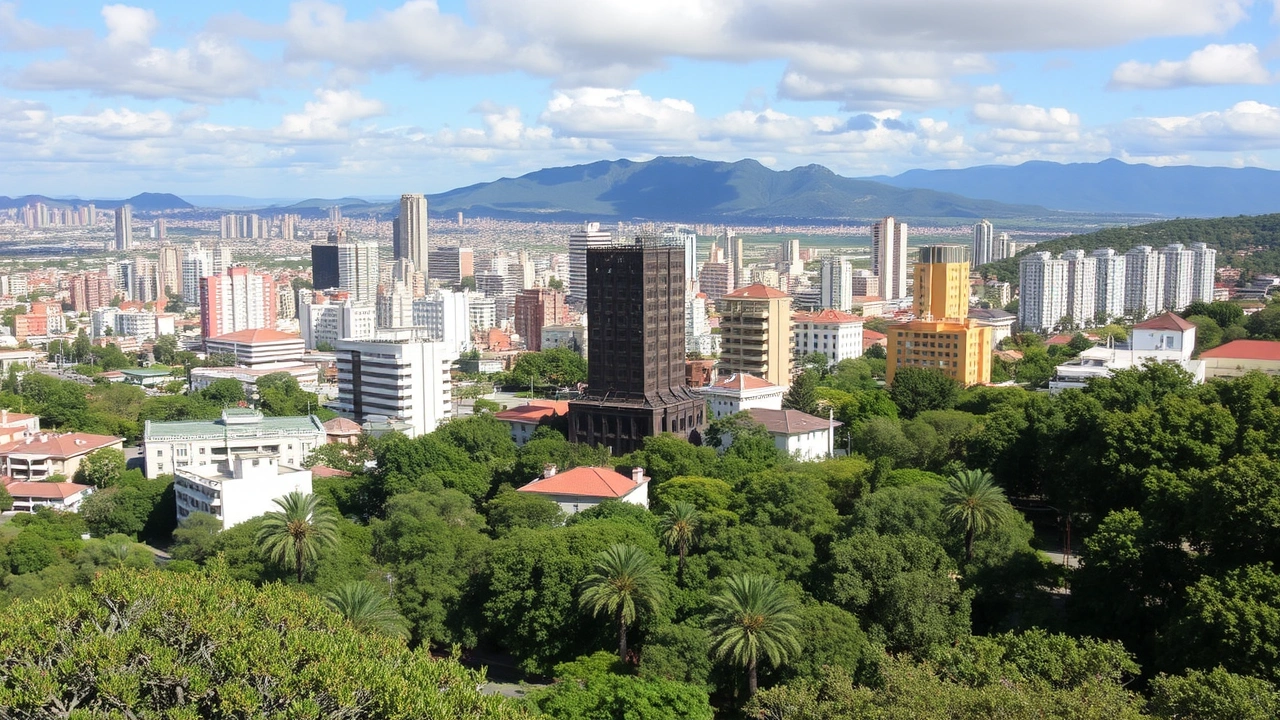
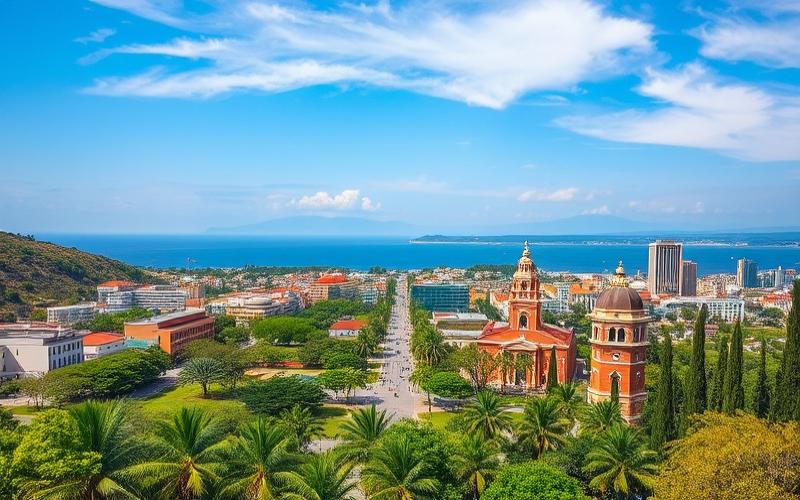
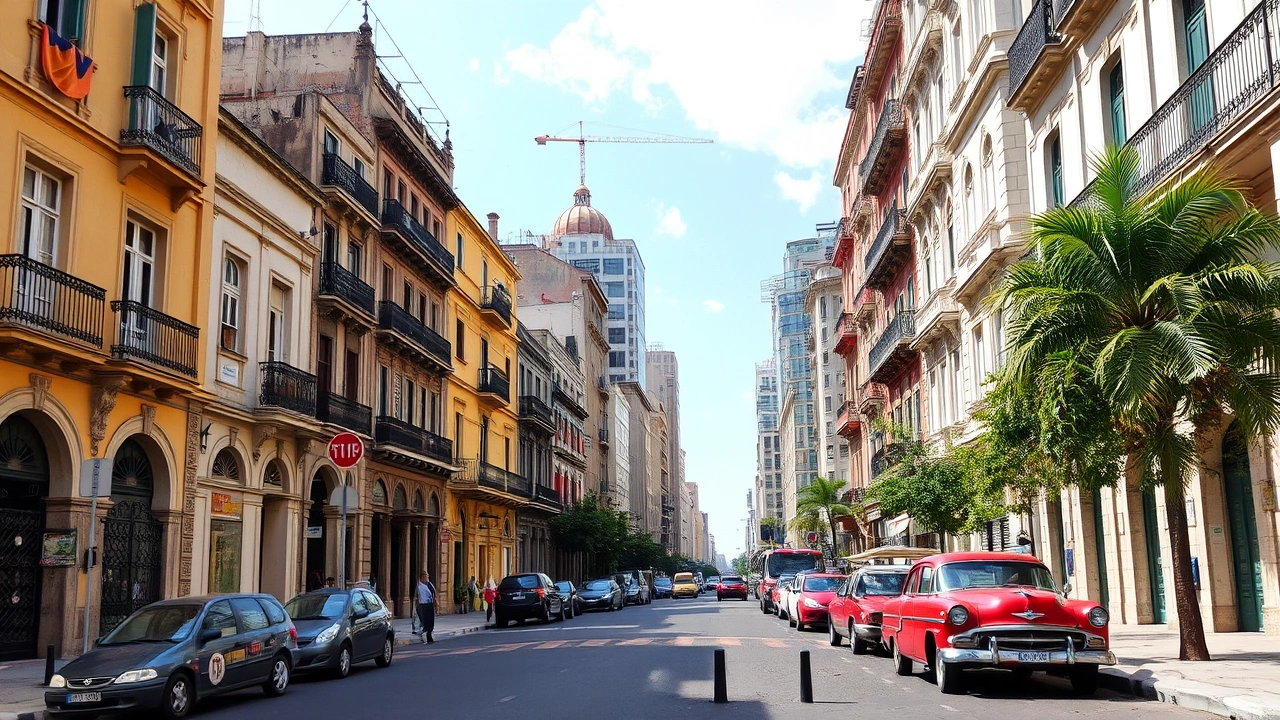
Montevideo alone concentrates nearly half of the country’s population. It’s a human-scale capital, perched on the northern shore of the Río de la Plata, with 14 miles of waterfront promenade, the famous Rambla, considered one of the longest in the world. Here, the sea and the city are in constant dialogue: joggers, cyclists, families, fishermen, and mate enthusiasts occupy the sidewalks facing the estuary.
The city is best read by neighborhood. The Ciudad Vieja (Old City), the historic heart, occupies a small peninsula that once constituted the entire fortified city. You pass through the monumental Puerta de la Ciudadela, the sole remnant of the walls, to emerge onto Plaza Independencia, the grand square linking the modern center and the old town. In the center stands the statue of national hero José Artigas, beneath which lies an underground mausoleum.
Palacio Salvo, a 26-story art deco skyscraper inaugurated in 1928, was at the time the tallest building in South America and still dominates the main square. Avenida 18 de Julio, the backbone of downtown, is lined with shops, cinemas, and historic cafes, illustrating the architectural richness of the Uruguayan capital despite its small population.
A Dense Cultural Heritage
Montevideo alone could occupy several days. Art lovers push open the door of the Museo Nacional de Artes Visuales in Parque Rodó, which houses the country’s largest public collection of paintings, or the Museo Torres García, dedicated to the great master of “universalismo constructivo.” Those keen on political history visit the Museo de la Memoria, dedicated to the 1973-1985 dictatorship, or the Palacio Legislativo, the imposing neoclassical parliament inaugurated in 1908.
The city possesses a remarkable array of specialized museums, covering themes as diverse as carnival, the gaucho, currency, pre-Columbian art, anthropology, geology, soccer (in the historic stadium of the first World Cup in 1930), the navy, national painters, and even a cannabis museum, reflecting Uruguay’s pioneering role in its legalization.
Among the most striking places, the Museo Andes 1972 tells with chilling sobriety the epic of the survivors of an airplane crash in the Andes: 45 people on board, 72 days in the mountains, 16 rescued. It displays original debris, personal effects, and period photos. The visit rarely takes more than an hour but leaves a lasting mark.
The City of Carnival and Candombe
Montevideo hosts the longest carnival in the world: over forty days of parades, contests, and shows. Candombe, an Afro-Uruguayan music played on three types of drums, holds a central place. This intangible heritage is recognized by UNESCO. In the Barrio Sur and Palermo neighborhoods, percussion groups rehearse on Sunday afternoons, offering visitors a free and authentic immersion.
Year of the inauguration of the Teatro Solís, one of the oldest performing arts venues in South America.
Montevideo’s Seaside: Beaches and the Rambla
Most travelers end up on the Rambla sooner or later. This 14-mile waterfront promenade passes several urban beaches: Playa Ramírez near Parque Rodó, Malvín, Buceo, Carrasco, and the very popular Pocitos. This beachfront neighborhood, with its modern towers and the large “MONTEVIDEO” sign facing the Río de la Plata, symbolizes the city’s more contemporary side.
Further west, Parque Lecocq offers a 300-acre natural space dedicated to wildlife conservation, adjacent to the protected Santa Lucía wetlands. It’s a good reminder that the capital itself remains intimately linked to its natural environment.
Colonia del Sacramento, a Colonial UNESCO Gem
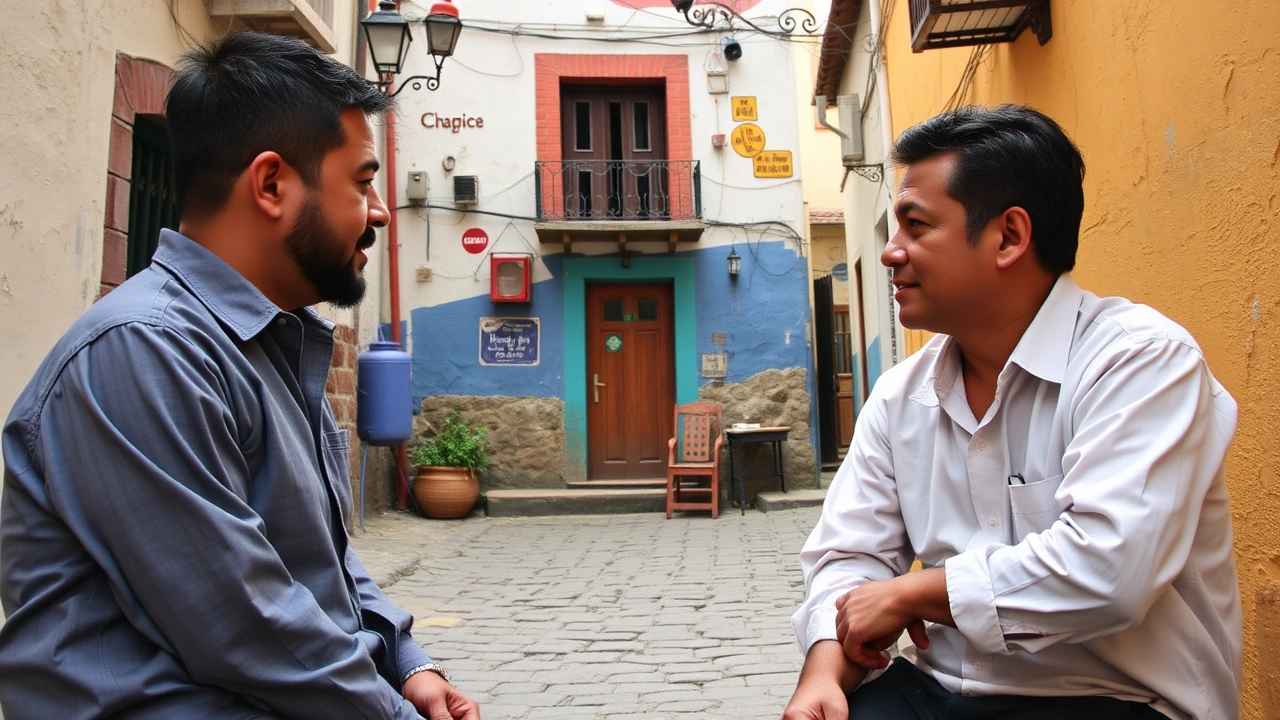
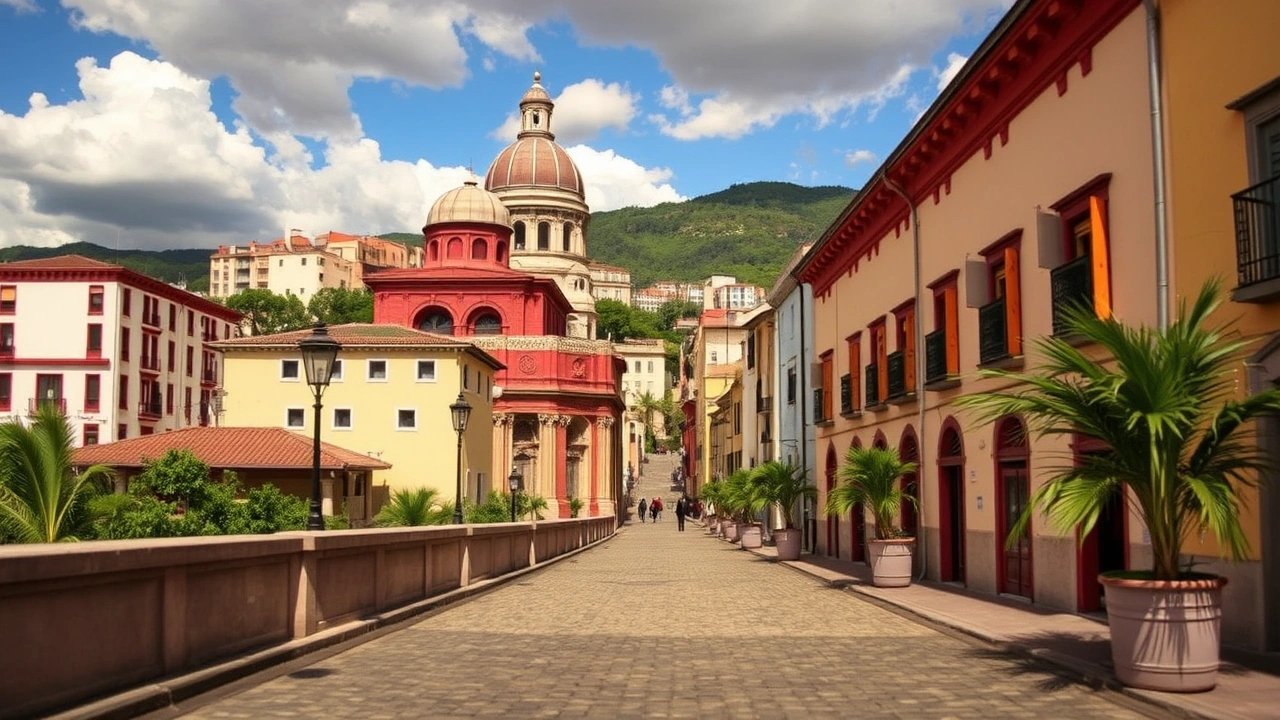
In contrast to this urban buzz, Colonia del Sacramento embodies serenity. Located on the Uruguayan shore of the Río de la Plata, facing Buenos Aires, this small town founded in 1680 by the Portuguese is the first Uruguayan site inscribed as a UNESCO World Heritage Site, in 1995. Its historic quarter, the Barrio Histórico, spans only 47 acres, but condenses several centuries of colonial history.
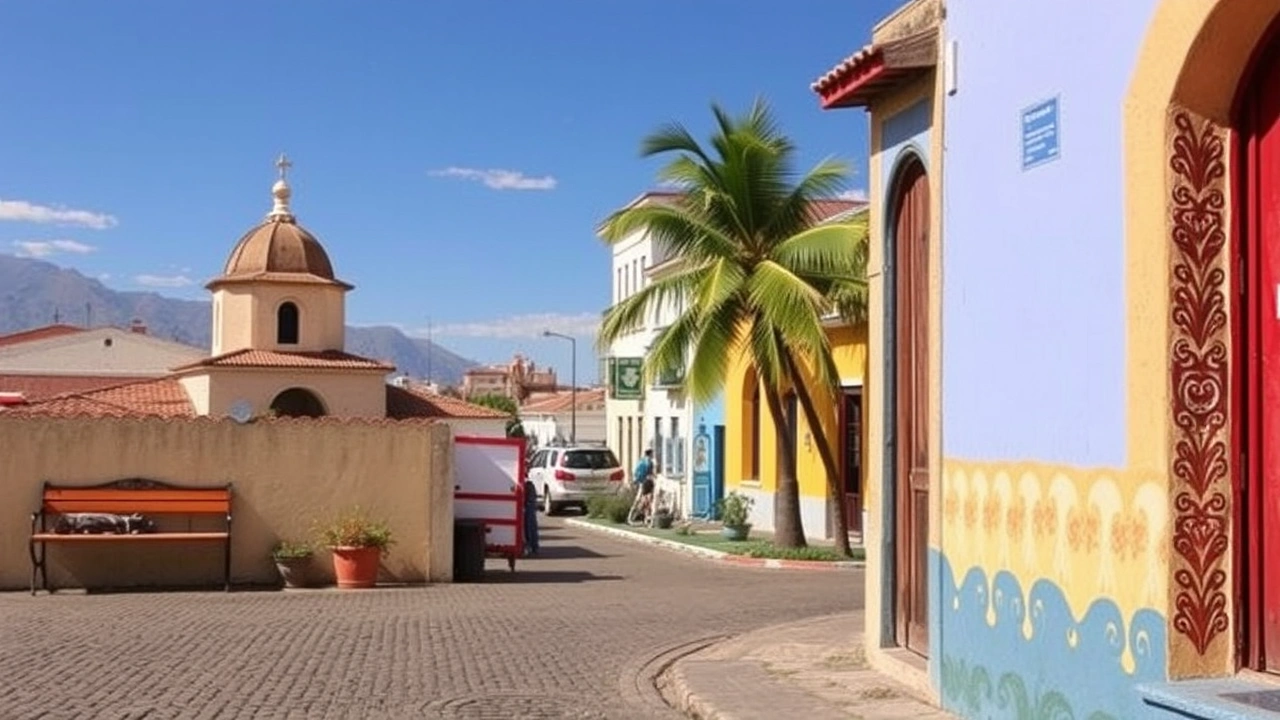
The cobbled streets, sometimes steep, outline an irregular urban plan – a Portuguese legacy – which the Spaniards later complemented with more geometric alignments. The result is an urban patchwork where low, whitewashed houses, tile roofs, stone walls, and small shaded squares intersect. Calle de los Suspiros, one of the most photographed streets in the country, still retains its uneven 17th-century paving and colorful houses.
An Open-Air Museum
The Portón de Campo, the old city gate, and the accompanying fragment of wall recall the strategic importance of Colonia: for decades, the Portuguese and Spanish fought over this bridgehead on the Río de la Plata, a key point on trade routes into the continent. Around the Plaza Mayor – also called Plaza de Armas – the colonial buildings now house restaurants, charming hotels, and small galleries.
Discover the main municipal museums accessible with a combined ticket and the city’s emblematic historical sites.
Traces the history and influence of the Portuguese community in the development of Mazatlán.
Explore the heritage and Spanish colonial legacy through historical collections.
Presents the culture, art, and history of the region’s native peoples.
Dedicated to traditional craftsmanship and the history of the city’s decorative tiles.
Displays fossils and traces the ancient natural history of the Mazatlán region.
Built in 1857 on the ruins of the San Francisco convent, it offers an exceptional panorama of the city and estuary.
On the outskirts, the Plaza de Toros Real de San Carlos – an early 20th-century bullring – has been converted into a cultural space. A bit further, sandy beaches on the Río de la Plata, like Playa Honda or the municipal beaches, allow for extending the visit with a swim in water known to be warm, though sometimes murky.
Colonia, the Country’s Gateway
Most visitors arrive by ferry from Buenos Aires in just over an hour. This proximity makes it one of the favorite excursions for Argentines, but Colonia easily deserves a night or two to enjoy the sunset over the port, explore the small streets after the boats depart, and sample the local cuisine, between parrillas, regional cheeses, and Uruguayan wines, notably those made from the Tannat grape.
Colonia is not just an isolated historical site: it is one of Uruguay’s three cultural properties inscribed by UNESCO, alongside the industrial landscape of Fray Bentos and the Atlántida Church. Together, they tell a story where trade, modern industry, and architectural experimentation hold as much importance as colonial conquest.
UNESCO Cultural Heritage in Uruguay
Uruguay’s Three UNESCO World Heritage Sites
To place Colonia in this broader context, it is useful to quickly compare the three sites already recognized by UNESCO.
| UNESCO Site | Type | Department | Year of Inscription | Area (ha) |
|---|---|---|---|---|
| Historic Quarter of Colonia del Sacramento | Cultural | Colonia | 1995 | 19 |
| Fray Bentos Industrial Landscape | Cultural | Río Negro | 2015 | 273.8 |
| The work of Eladio Dieste: Church of Atlántida | Cultural | Canelones | 2021 | 0.56 |
The industrial landscape of Fray Bentos, an old agro-industrial complex that grew around a meat extract factory founded in 1859, bears witness to Uruguay’s role in the first globalization of food. The Atlántida Church, designed in the mid-20th century by engineer Eladio Dieste, is a masterpiece of reinforced brick masonry and curved forms, innovative enough to justify its inscription on its own.
Punta del Este and the Glamorous Atlantic Coast
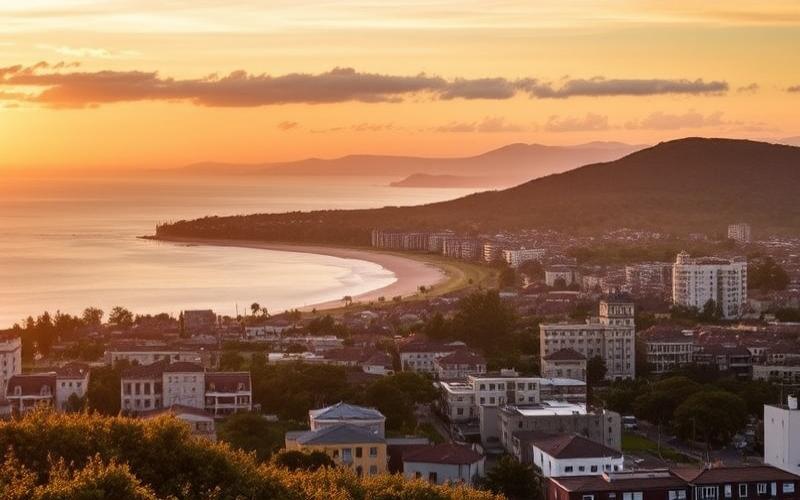
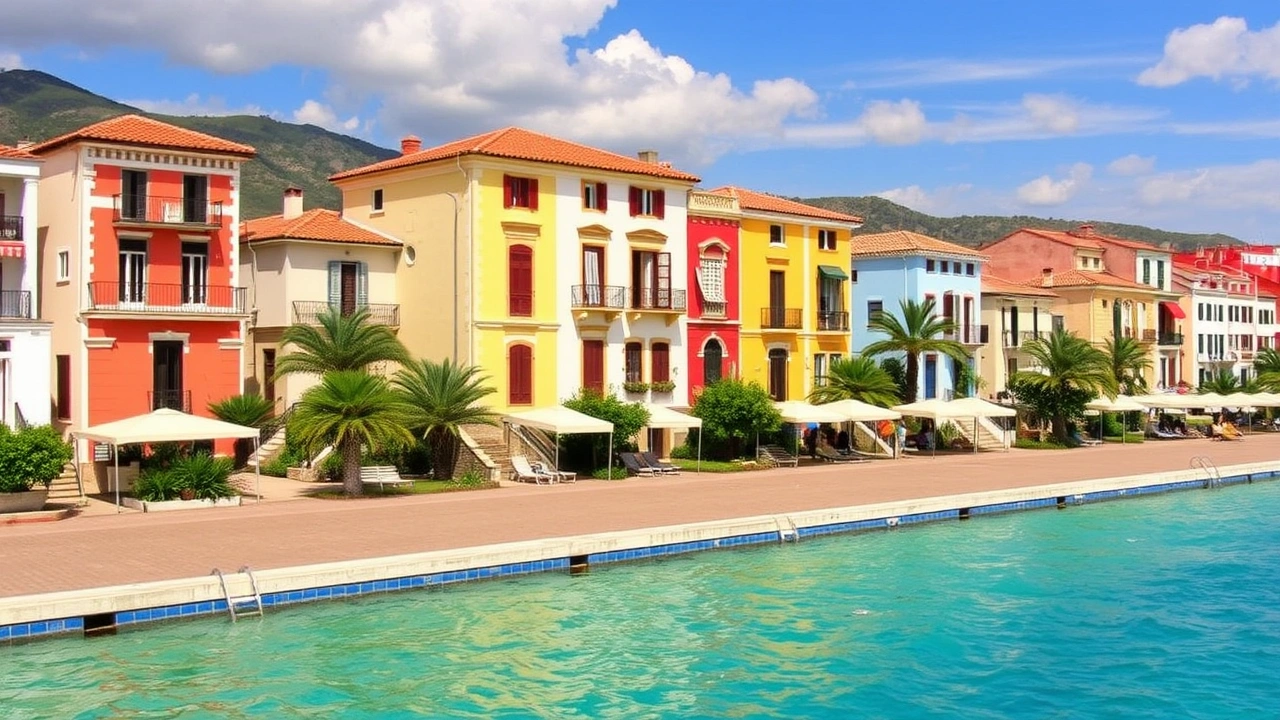
About 80 miles east of Montevideo, Punta del Este marks the transition between the Río de la Plata and the Atlantic Ocean. On this peninsula, the western shore harbors the calm waters of Playa Mansa while the eastern shore, Playa Brava, faces the Atlantic waves. This contrast has made the city’s reputation: a glamorous resort, invaded in the summer by a wealthy clientele from all over South America, alternately compared to Miami, the Hamptons, Saint-Tropez, or Marbella.
Along Avenida Gorlero and Calle 20, luxury boutiques, trendy galleries and restaurants follow one another. On Playa Brava, the monumental sculpture “La Mano” – five fingers emerging from the sand – has become the city’s icon. A work by Chilean artist Mario Irarrázabal, it is often interpreted as a warning against the dangers of the sea.
Between Beaches, Art, and Nightlife
Besides Playa Mansa and Playa Brava, other beaches like Bikini or Montoya, on the La Barra side, attract surfers and party-goers. La Barra, accessible by an undulating bridge designed by engineer Leonel Viera, combines upscale beach houses, art galleries, and nightclubs. The clubs and casinos – notably Enjoy Punta del Este – liven up the evenings, while establishments like Ovo Nightclub and numerous beach bars ensure a busy nightlife.
For a cultural break in Punta del Este, head to the Ralli Museum. Located in the “Beverly Hills” residential neighborhood, it houses an important collection of contemporary Latin American art as well as works by renowned international artists such as Dalí and Chagall. Admission is free, making it an ideal escape, especially on windy days or when the sun is too strong.
Casapueblo and Punta Ballena
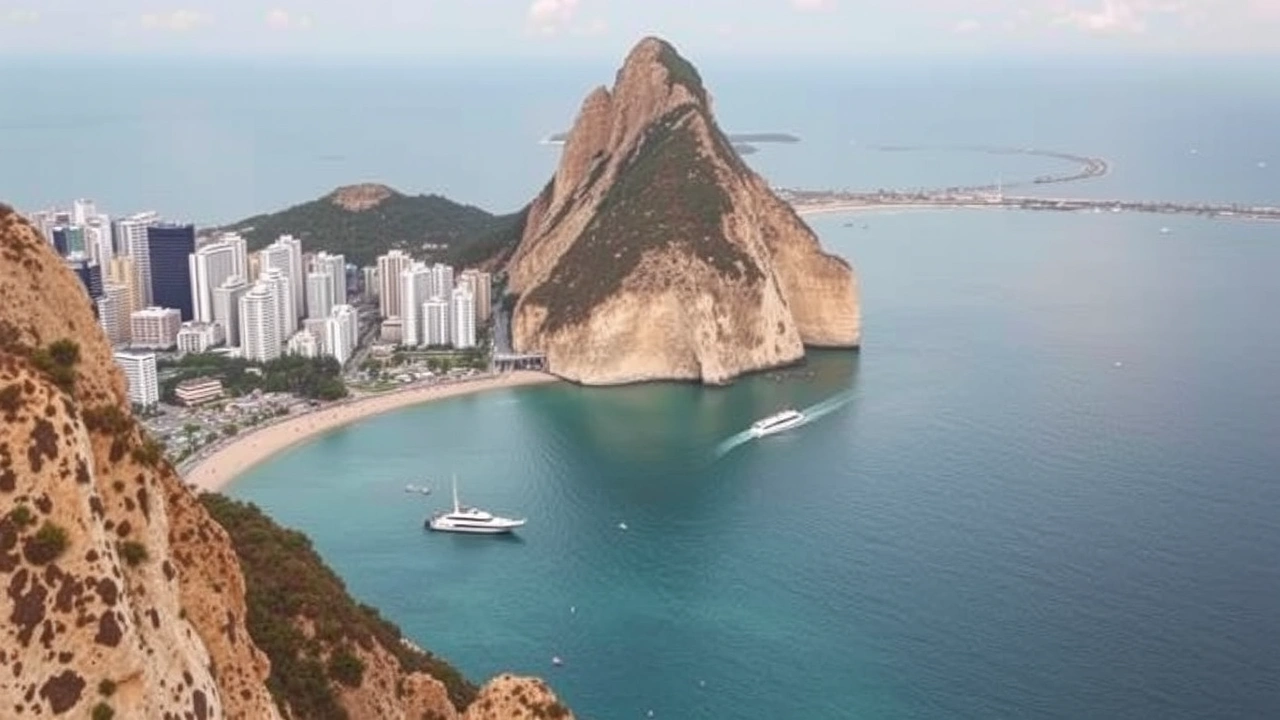
A few kilometers to the west, the small peninsula of Punta Ballena offers one of Uruguay’s most famous panoramas. It is there that artist Carlos Páez Vilaró built, starting in 1958, Casapueblo, a strange, immaculate complex on a cliffside, halfway between a Mediterranean village and an organic sculpture. A hybrid place, both museum, gallery, hotel, and cultural center, Casapueblo is best known for the sunset ceremony: a pre-recorded soundtrack of the artist reciting a poem to the sun accompanies each dusk.
Punta Ballena and Casapueblo illustrate well how Uruguay knows how to blend coastal landscape and artistic creation, offering visitors more than just a lineup of beaches.
Islands and Marine Wildlife: Isla de Lobos and Isla Gorriti
Offshore, Isla de Lobos is home to one of the largest sea lion colonies in South America, with tens of thousands of animals. The island, accessible only by boat and with no permanent facilities, is a designated marine reserve. Boat excursions allow for observing the animals from the sea, sometimes combined with diving or snorkeling trips to explore the surrounding kelp forests and underwater caves.
Closer to the coast, Isla Gorriti, accessible by shuttle from the Punta del Este port, offers quieter beaches and wooded areas favored by families.
When and How to Enjoy Punta del Este
The city changes face radically depending on the season. From December to February, it’s high season: hotels full, restaurants pricier, nightclubs packed. In the off-season, the energy subsides, some places close or reduce hours, but the charm of walks along the Rambla, sunsets over Playa Mansa, and cultural visits remains. Three or four days are enough to combine relaxation, sea outings, art, gastronomy, and trips to La Barra, Manantiales, or José Ignacio.
Rocha, Wild Coast and Bohemian Villages
East of Punta del Este, the coast becomes progressively more wild. The largely rural department of Rocha lines up lagoons, dunes, forests, and fishing villages that have become refuges for surfers and backpackers. This is where several of the country’s most remarkable natural sites are concentrated.
Cabo Polonio, End of the World with No Roads
Cabo Polonio is perhaps the most iconic. This tiny village, wedged between shifting dunes, ocean, and rocks, is accessible only on foot, by horse, or by authorized 4×4 trucks that cross about four miles of sand from the road. One discovers a handful of colorful houses, huts, a few simple posadas and restaurants, most operating on solar power or small wind turbines. There is no public power grid, no paved roads, no running water.
The lighthouse, built in the late 19th century, dominates the main rock. At its feet lies one of the largest sea lion colonies in the region, occupying the rock slabs washed by waves. The site’s biodiversity is remarkable: dolphins and whales can be spotted from the coast at certain times of the year. For visitors, the experience is also sensory and peaceful, with long walks on the beach, night silence broken only by the surf, and a night sky flooded with stars.
Punta del Diablo and Santa Teresa, Nature and History
Further north, almost at the Brazilian border, Punta del Diablo has traded its status as an isolated fishing village for that of a bohemian beach resort. But the atmosphere remains relaxed: no apartment blocks, scattered houses in the dunes, beaches like Playa del Rivero, Grande or de los Pescadores where surfers, families, and backpackers mingle. In the evening, terraces, artisan markets, and seafood restaurants maintain a more alternative than glitzy vibe.
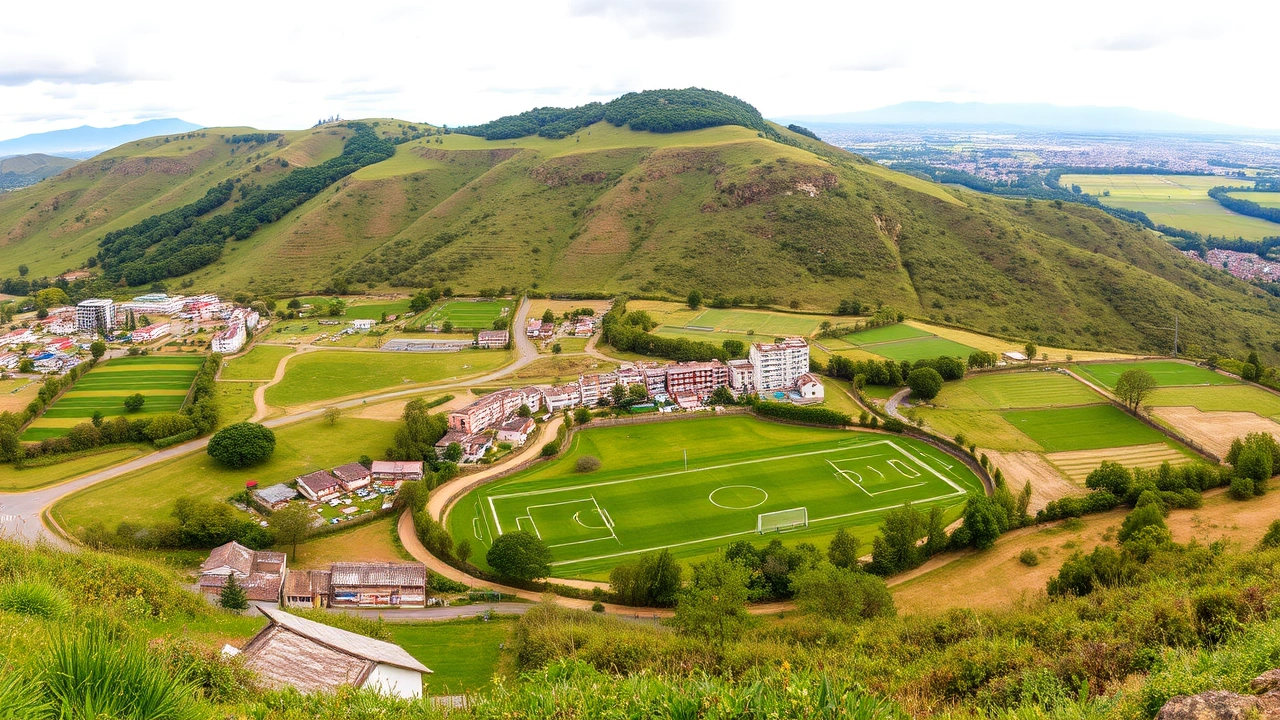
A few kilometers away, the Santa Teresa National Park, managed by the Uruguayan military, is one of the major protected areas on the coast. Across more than 7,400 acres of dunes, forests, gardens, and beaches (about eight miles of sand, including areas like Playa Grande or Playa La Moza), you can camp, hike, bike, or simply stay in the shade of the pines. The park features a botanical garden created in the 1940s, an aviary, an enclosure for pampas deer, and varied wildlife: capybaras, foxes, armadillos, black-necked swans.
The historical heart of the site is the Fortaleza de Santa Teresa, a star-shaped fortress whose construction began under the Portuguese in 1762 before being completed by the Spaniards. Its thick walls, bastions, chapel, and military buildings testify to past geopolitical tensions. A small on-site museum traces this history.
Lagoons, Reserves, and Hiking
Rocha is also the land of lagoons. Laguna de Rocha, a coastal lagoon separated from the sea by a dune cordon, is a site protected by both the Ramsar network and UNESCO’s Biosphere Reserve program. Over 220 bird species have been recorded there, from pink flamingos to herons, black-necked swans, and spoonbills. Kayaking, paddleboarding, boat trips, and simple beach walks allow one to appreciate its tranquility.
Not far away, La Pedrera offers long beaches with spectacular rock formations, while Barra de Valizas, a rustic village, is the starting point for a famous hike: about 12 miles round trip through the dunes to Cabo Polonio, following the ocean. This crossing on foot gives a concrete idea of the almost desert-like landscapes that characterize the Uruguayan coast far from major centers.
National Parks, Geoparks, and Wetlands
Behind this image of beaches and villages, Uruguay harbors a network of 17 national parks and many protected areas administered by the National System of Protected Areas (SNAP), under the Ministry of Environment. These areas represent about 2% of the territory, a modest but growing figure, aimed at preserving remnant Atlantic forests, wetlands, river islands, caves, and hill landscapes.
Cabo Polonio, Quebrada de los Cuervos, Esteros de Farrapos…
The Cabo Polonio National Park, which encompasses the village of the same name, protects dunes, beaches, rocky islets, and the significant sea lion colony. Further inland, Quebrada de los Cuervos, near the city of Treinta y Tres, impresses with its canyon five miles long and 500 feet deep. Waterfalls, the “Sendero del Indio” trail, and the Ojo del Tigre falls complete this setting, a vestige of Atlantic forest home to foxes, coatis, birds of prey, and the threatened black-and-chestnut eagle.
Located on the banks of the Uruguay River, it is the country’s largest national park, covering about 175 square miles of marshes, oxbow lagoons, and twenty-four river islands. Classified as a UNESCO Biosphere Reserve and Ramsar site, it is home to rich biodiversity, including several hundred bird species and mammals like the capybara and the neotropical river otter. The site also bears witness to long human occupation, with ruins of a Jesuit mission and the remains of an old Coca-Cola factory.
Grutas del Palacio and Spectacular Geology
In the Flores department, the Grutas del Palacio National Park highlights an underground landscape: a network of sandstone caves dating back over 70 million years, classified as a UNESCO Global Geopark. One explores evocative chambers like the “Salón Blanco” or the “Galería de los Espejos,” populated with rock formations, small waterfalls, and streams. On the surface, armadillos, foxes, and birds of prey complete the picture.
Near Minas, this park is centered on Cerro del Arequita, a 807-foot volcanic cone with a mesa shape. It is traversed by a cave, offering ideal terrain for hiking and recreational caving. Picnic areas and campsites are available nearby.
Valley of the Lunarejo and Northern Hills
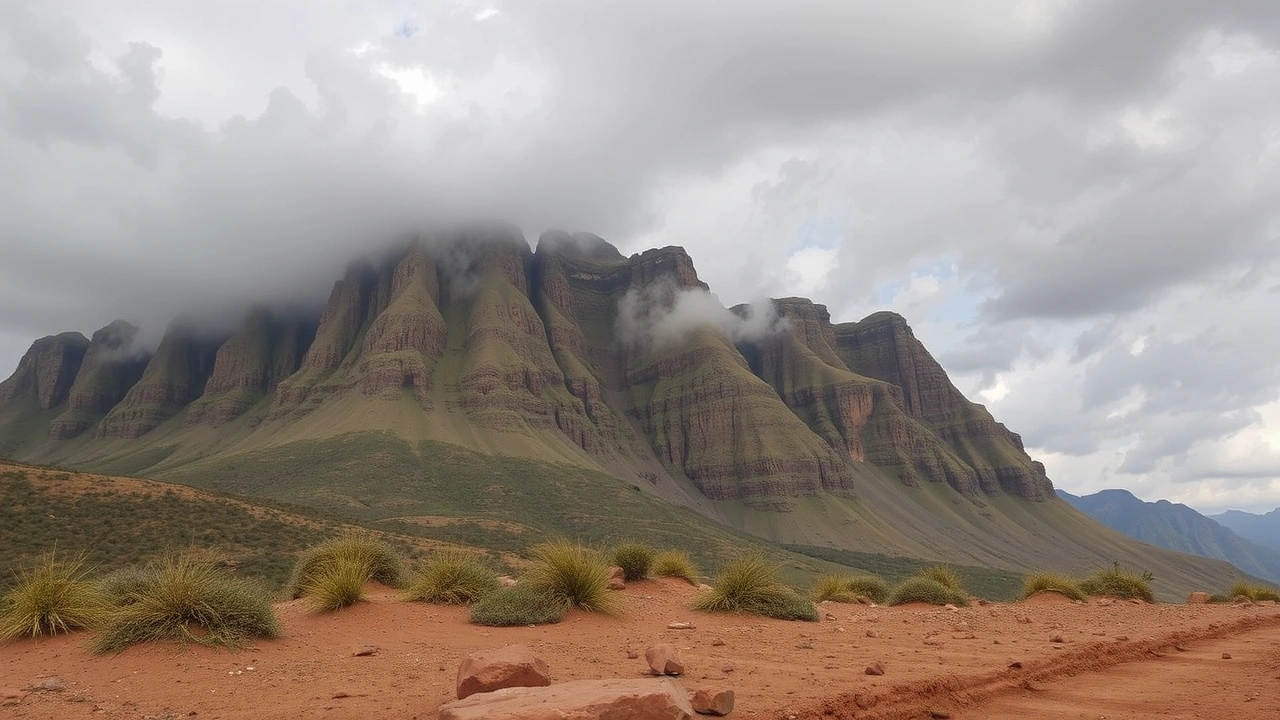
In the north, on the Brazilian border, the Valley of the Lunarejo (Valle del Lunarejo) forms a land of hills, sandstone cliffs, narrow gorges, and waterfalls. Located at a climatic crossroads, this region harbors flora mixing tree ferns, bromeliads, orchids, and araucarias. Howler monkeys, the elusive margay (a small arboreal feline), toucans, and black-and-white hawks share the space with the usual pampas armadillos. Hiking, swimming in natural pools, horseback rides to isolated estancias, and stargazing are among the key activities.
These parks illustrate the biodiversity of a country sometimes reduced to its image of pampas and coastline. Forests, wetlands, hills, and caverns tell another, more discreet side of Uruguay.
Other Must-Sees Between City, Countryside, and Hot Springs
Beyond Montevideo, Colonia, Punta del Este, and Rocha, Uruguay is full of other sites to round out an itinerary.
Piriápolis, the “City of the Sun”
Closer to Montevideo than Punta del Este, Piriápolis was one of the country’s first seaside resorts, founded by entrepreneur Francisco Piria. Its Rambla de los Argentinos runs along the main beach, dominated by the Cerro San Antonio massif. A funicular or a road leads to the top to enjoy the view of the bay. The Castillo de Piria, the former residence of its founder, evokes the ambition of this resort that had its heyday before being somewhat eclipsed by Punta del Este.
San Gregorio de Polanco, Open-Air Museum
On the shores of Rincón del Bonete lake, San Gregorio de Polanco is a small town that has transformed itself, since 1993, into an “open-air visual arts museum.” Murals, frescoes, and sculptures – over a hundred – adorn the streets, turning an urban stroll into a permanent artistic journey. The place illustrates well the capacity of small Uruguayan towns to reinvent themselves through culture.
Northern Hot Springs: Daymán, Arapey, Guaviyú
In the north of the country, near the city of Salto and the Salto Grande hydroelectric dam (which provides over half of the national electricity), several spa complexes harness the hot waters from the subsoil, partly sourced from the gigantic Guarani Aquifer. Termas del Daymán, in the immediate vicinity of Salto, offer pools, hot baths, and water parks. Termas del Arapey, older, focus on upscale facilities with high-end hotels and spas, while Termas de Guaviyú, near Paysandú, stand out for their vast green spaces.
The hot spring resorts offer an ideal complementary experience to an urban or beach stay, adding a dimension of relaxation and wellness for the body.
Wines, Estancias, and Gaucho Culture: Another Face of Uruguay
Uruguay is one of the great wine-producing countries of South America, although its production remains more modest and often less publicized than that of Argentina or Chile. About 20,000 acres of vineyards cover the countryside, with more than 200 bodegas scattered from south to north.
The Kingdom of Tannat
The emblematic grape of the country is Tannat, introduced in the 19th century by Basque and French immigrants. On clay-limestone soils and under Uruguay’s temperate climate, it produces wines more supple and charming than in its French cradle. Some oenologists call it “the healthiest red wine in the world,” due to its richness in polyphenols.
The Canelones department, north of Montevideo, produces about 60% of Uruguayan wine and cultivates a great diversity of grapes (Tannat, Merlot, Cabernet Sauvignon, Chardonnay, etc.). Close to the capital, it allows for day trips to visit wineries (Bouza, Pizzorno…). Tours typically include discovering the cellars and vineyards, explanations about winemaking, and a tasting accompanied by cheeses, cured meats, or a meal.
Other wine regions are emerging: Carmelo, near the Río de la Plata and the Argentine border, often nicknamed the “Uruguayan Napa Valley,” with historic bodegas like Narbona; Maldonado, around the spectacular Bodega Garzón, planted amid hills of crystalline rock not far from the Atlantic coast; or San José and Durazno, which produce characterful whites and reds.
Estancias and Gaucho Culture
Beyond the vineyards, about 80% of the territory is dedicated to agriculture and livestock. The country has three cattle and three sheep per inhabitant, and per capita meat consumption is among the highest in the world. This reality is reflected in the landscape of estancias, large rural estates practicing extensive livestock farming.
Many estancias now welcome visitors for stays. The experience allows one to discover gaucho culture through activities like horseback riding, participating in rural tasks, asado meals (wood-fired barbecue), and evenings by the fire. The offering varies: some, like El Charabon in the Rocha region, offer a pool, walks, and a warm welcome, while others focus more on the equestrian or gastronomic experience.
These countryside stays complement the discovery of cities and coasts well, reminding us that Uruguay remains deeply shaped by the rural world.
Uruguay, a Small Country with Multiple “Must-Sees”
From the Ciudad Vieja of Montevideo to the dunes of Cabo Polonio, from the alleys of Colonia to the glass towers of Punta del Este, from the canyons of Lunarejo to the meat factories of Fray Bentos, the “must-see tourist sites in Uruguay” depict a country far more complex than its size suggests.
To get oriented, several major categories can be distinguished:
| Type of Visit | Key Sites | Main Experiences |
|---|---|---|
| Capitals & Heritage | Montevideo, Colonia del Sacramento, Fray Bentos, Atlántida | Museums, architecture, history, carnival, urban walks |
| Glamorous & Seaside Coast | Punta del Este, Punta Ballena, La Barra, José Ignacio, Piriápolis | Beaches, nightlife, contemporary art, gastronomy, casino |
| Wild & Bohemian Coast | Rocha, Cabo Polonio, Punta del Diablo, La Pedrera, Barra de Valizas, Laguna de Rocha | Surfing, hiking, birdwatching, fishing villages |
| National Parks & Nature | Santa Teresa, Cabo Polonio (park), Quebrada de los Cuervos, Esteros de Farrapos, Arequita | Hiking, camping, kayaking, wildlife & flora, caves, waterfalls |
| Hot Springs & Inland | Termas del Daymán, Arapey, Guaviyú, San Gregorio de Polanco, Tacuarembó | Hot baths, street art, gaucho culture, local museums |
| Wines & Estancias | Canelones, Carmelo, Maldonado (Garzón), estancias in Rocha, San José or Durazno | Tastings, winery tours, rural stays, asados |
This network, added to the small colonial towns, festivals (carnival, jazz in Punta del Este, tango in Montevideo), and gastronomy (chivitos, parrilla, seafood, alfajores, Tannat wines, maté), offers an almost endless playground for a country the size of an average U.S. state.
To visit Uruguay is to embrace slowness and savor simple moments: strolling along the Rambla, lingering on a terrace, taking a bus along the coast, or sharing a maté. The must-see places transform with the seasons and encounters, in a discreet but singular country on the map of travel in South America.
Advice for the Traveler in Uruguay
Disclaimer: The information provided on this website is for informational purposes only and does not constitute financial, legal, or professional advice. We encourage you to consult qualified experts before making any investment, real estate, or expatriation decisions. Although we strive to maintain up-to-date and accurate information, we do not guarantee the completeness, accuracy, or timeliness of the proposed content. As investment and expatriation involve risks, we disclaim any liability for potential losses or damages arising from the use of this site. Your use of this site confirms your acceptance of these terms and your understanding of the associated risks.

Cyril Jarnias is an independent expert in international wealth management with over 20 years of experience. As an expatriate himself, he is dedicated to helping individuals and business leaders build, protect, and pass on their wealth with complete peace of mind.
On his website, cyriljarnias.com, he shares his expertise on international real estate, offshore company formation, and expatriation.
Thanks to his expertise, he offers sound advice to optimize his clients' wealth management. Cyril Jarnias is also recognized for his appearances in many prestigious media outlets such as BFM Business, les Français de l’étranger, Le Figaro, Les Echos, and Mieux vivre votre argent, where he shares his knowledge and know-how in wealth management.