 Published on and written by Cyril Jarnias
When one thinks of Uruguay, the image is often that of a small country wedged between two giants, Brazil and Argentina, with its tranquil beaches and vast plains. But behind this peaceful image lies a sports culture of astonishing density for a country of just over three million inhabitants. Sport here is simultaneously an identity marker, a way of life, and a fantastic playground for travelers who want to move, run, cycle, swim, surf, or simply kick a ball around with the locals.
In Uruguay, the sports landscape is varied, ranging from dominant sports to very lively niche activities. This diversity makes it easy to engage in physical activity, whether for leisure or competition.
A Tiny Country, An Immense Sports Culture
Uruguay has approximately 3.5 million inhabitants, with nearly half living in Montevideo and over 95% in the southern half of the country. This doesn’t prevent it from displaying a surprising sports density: 55 registered national federations, 236,000 registered athletes at the end of 2019, an Olympic Committee comprising 34 federations, and a National Sports Confederation that brings together 52.
Number of students participating in tournaments organized by the Collegiate Sports Integration Association.
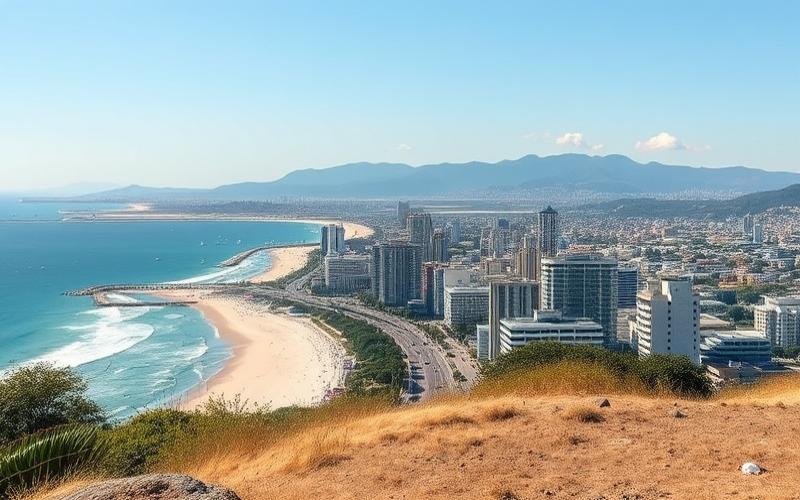
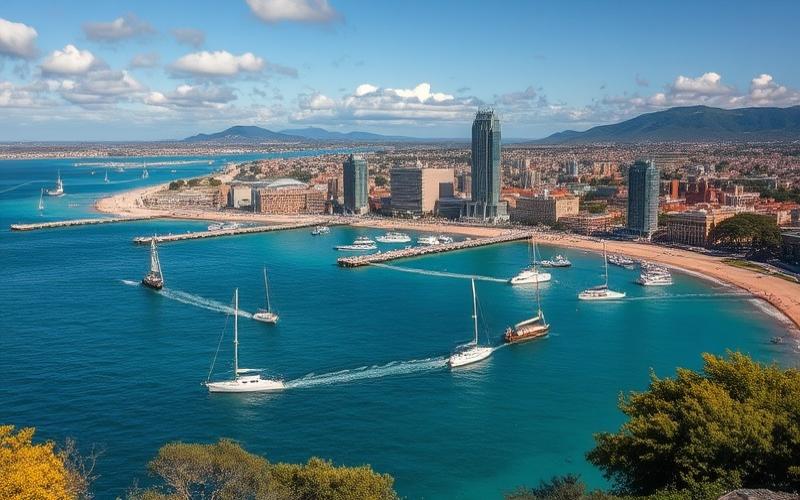
La Rambla in Montevideo – this coastal promenade stretching over 20 km along the Río de la Plata – perfectly embodies this culture. At any hour, you’ll see runners, cyclists, rollerbladers, beach soccer and volleyball players, or simple walkers. “Healthy spaces” have been set up there, with free outdoor exercise equipment. For a traveler, simply joining in is enough to immediately get into the local sports rhythm.
In this hyperactive setting, several sports stand out as the most popular to practice in Uruguay, each with its own culture, iconic locations, and practice circuits.
Soccer, the King of Sports and a Playground for All
It’s hard to overstate the importance of soccer in Uruguay. Approximately 90% of the population considers themselves passionate about the sport, which, according to international estimates, would make it the most “soccer-addicted” country in the world. It’s a true national obsession: the national team is nicknamed “La Celeste,” the major clubs – Peñarol and Nacional – structure the collective imagination, and hundreds of thousands of people play, watch, or discuss matches every week.
An Elite Tradition that Fuels Mass Participation
On a global scale, Uruguay has been punching above its weight for a century: two World Cups, two Olympic titles, fifteen Copa América titles, clubs with multiple wins of the Copa Libertadores and the Intercontinental Cup. The Estadio Centenario, built for the 1930 World Cup and designated a FIFA historic football monument, remains the symbol of this history.
Soccer is played everywhere and all the time, as evidenced by its daily impact and exceptional scale.
| Soccer Indicator | Available Data |
|---|---|
| Registered soccer players | ~160,000 |
| Estimated total participants (all levels) | ~500,000 |
| Baby fútbol clubs | > 600 |
| Children involved in baby fútbol | > 60,000 |
Baby fútbol – soccer for 6–13 year-olds – is one of the country’s most powerful institutions. Over 600 clubs form a pyramid encompassing more than 60,000 children, often on dirt fields with sometimes basic conditions but incredible passion. Press articles have estimated that about 85% of boys aged 6 to 13 who play a sport are involved in baby fútbol. Most of Uruguay’s big stars started there.
For adults, soccer takes the form of local leagues, corporate tournaments, informal matches on vacant lots or the beach, and countless amateur clubs. Uruguay even holds a record: it’s the country with the highest number of teams registered with its national federation relative to its population.
Where and How to Play Soccer When Passing Through
The best entry point remains the neighborhood club. In Montevideo, in coastal cities like Punta del Este, La Paloma, or Piriápolis, it’s often enough to walk past a field, watch a practice or an amateur match, to be invited to join a session. Uruguayans are used to mixing locals and foreigners in pick-up games.
In Barcelona, informal matches called ‘picaditos’ take place daily on La Rambla and urban beaches. These encounters, with no referee or nets, see teams form spontaneously within minutes. Meanwhile, some municipalities or university leagues organize more structured 7-a-side or 5-a-side soccer championships, played indoors or on synthetic fields, designed to be very accessible to new players.
For expatriate children or those on an extended stay, the National Children’s Football Organization (ONFI) structures a huge network of baby fútbol competitions. It’s both a sports school and a powerful vehicle for family integration.
Basketball, the Second National Passion and the Quintessential Urban Sport
While soccer occupies center stage, basketball has established itself as the second most popular sport in Uruguay, both in terms of participants and audience. Approximately 80,000 people play it regularly, an impressive number given the country’s size.
An Old Federation, a Modern and Spectacular League
Uruguayan basketball is overseen by the Uruguayan Basketball Federation (FUBB), founded in 1915, and a founding member of FIBA. The men’s national team, also nicknamed “La Celeste,” was long a regional and even world power. Bronze medals at the 1952 (Helsinki) and 1956 (Melbourne) Olympic Games, multiple podium finishes in the South American Championship (including twelve continental titles) have anchored this sport in the national DNA.
On the domestic front, the major transformation came in 2003 with the creation of the Liga Uruguaya de Básquetbol (LUB), a professional league that finally unified clubs from Montevideo and the interior. Before that, the venerable Federal Championship, also created in 1915, only involved the capital, while the rest of the country played separate regional tournaments.
Today, the LUB has established itself as a highly attractive sports product, also attracting foreign players, notably from Argentina and Brazil. The season – typically spanning several months starting in October – fills small neighborhood gyms and fuels local rivalries as intense as those in soccer.
To give an idea of the vitality of this league:
| LUB Key Element | Detail |
|---|---|
| LUB Launch | 2003 |
| Sports Format | Regular season, Championship/Relegation phase, play-in, playoffs |
| Playoff Format | Quarterfinals best of 5, Finals best of 7 |
| Access to Continental Cups | Finalists in BCL Americas, semi-finalists in South American League |
| Estimated Number of Registered Basketball Players | ~80,000 |
Historic clubs like Defensor Sporting, Aguada, Biguá, Hebraica Macabi, or Malvín dominate the record books, but the promotion/relegation format allows for team turnover and maintains suspense. League stars like Leandro García Morales (record holder for MVP titles) or point guards like Bruno Fitipaldo have helped raise the LUB’s profile beyond borders.
A Network of Neighborhood Clubs to Play Year-Round
On the ground, participation is extremely accessible. Montevideo is literally dotted with gimnasios, these small covered gyms attached to an omnisports club: Aguada, Goes, Biguá, Defensor Sporting, Cordón, Welcome, Malvín, Nacional, Peñarol and many others all have youth academies and time slots for adult amateurs.
Local clubs often offer complete youth categories (mini-basketball, U13, U15, U17…), serving as the foundation for training future professionals. In the evenings, time slots are dedicated to amateur tournaments or league matches. Although facilities are modest (stands with a few hundred seats, simple locker rooms), the atmosphere, especially during derbies, is particularly electric.
For a visitor, two options naturally emerge: go play and go watch.
| Basketball Experience | What You Can Do in Uruguay |
|---|---|
| Recreational Play | Join a neighborhood club, participate in outdoor pick-up games, sign up for a corporate or university league (on an extended stay) |
| Youth Play | Join a club’s basketball academy, follow summer camps or short clinics |
| Spectator | Attend an LUB match (especially playoffs), see a national team game when they play in Montevideo |
Uruguay has even produced an NBA player: Esteban Batista, a center who played for the Atlanta Hawks, a guiding figure for many young basketball players dreaming of following in his footsteps.
Rugby, the Third Pillar and Symbol of “Garra Charrúa”
Behind the soccer-basketball duo comes a third highly distinctive sport: rugby union. Its geographical spread is more limited – heavily concentrated around Montevideo – but its visibility is high, propelled by the exploits of the national team, “Los Teros,” and by a history both glorious and tragic, linked to the famous crash of the Uruguayan Air Force plane in the Andes in 1972.
A Prestigious Sport, Rooted in Historic Clubs
Introduced in the 19th century by the British, rugby took root via clubs like the Montevideo Cricket Club or educational institutions run by Irish brothers. The creation of the first club championship dates to 1950 and led the following year to the founding of the Uruguay Rugby Union (URU), now affiliated with World Rugby and Sudamérica Rugby.
The Uruguayan Rugby Championship consists of about a dozen first division clubs, mainly based in Montevideo, but also in Paysandú and Maldonado. Carrasco Polo has historically dominated with numerous titles, alongside other major clubs like Old Christians, Old Boys, the Montevideo Cricket Club, and Trébol.
Internationally, Los Teros have managed to qualify for several Rugby World Cups (1999, 2003, 2015, 2019, 2023 and already qualified for 2027). Their victory against Fiji in 2019, with a score of 30–27, made a global impact and strengthened rugby’s appeal in the country. They are now the second-highest ranked team in the Americas behind Argentina, with a world ranking around the top 15.
Practicing Rugby in Uruguay: A Concentrate of Intensity
Rugby enjoys a certain prestige in Uruguayan society: it is associated with values of discipline, commitment, and solidarity, often linked to the idea of “garra Charrúa,” that legendary combativeness attributed to the national teams.
| Rugby in Uruguay | Key Benchmarks |
|---|---|
| Estimated number of players | ~10,000 |
| Governing Body | Unión de Rugby del Uruguay (URU) |
| Main Venue | Estadio Charrúa (Montevideo, ~14,000 seats) |
| Professional Experience | Peñarol Rugby franchise in the South American league |
To play, clubs like Carrasco Polo, Old Christians, Old Boys, or Trébol offer youth categories, senior teams, and sometimes women’s rugby sevens sections. University tournaments and sevens circuits, notably the Punta del Este Sevens, also give players of all levels the chance to experience a very festive style of rugby.
For a foreign rugby player, contacting a club at the start of the season is usually enough to join training sessions. Uruguay is accustomed to welcoming international players who come to train or experience an intense sports and social experience within still often semi-professional structures.
Cycling: A Lifestyle, Mass Sport, and Exploration Playground
Bicycles hold a special place in Uruguay. They are simultaneously a daily mode of transport, a popular endurance sport, and a fantastic tool for discovering the country. An estimated 200,000 enthusiasts engage in sport cycling, a huge number for such a small country.
Ideal Terrain for Pedaling
Uruguay offers a very gentle geographical profile: plains, barely marked hills, highest point just over 500 m. Roads are generally well-maintained, with light traffic and decent shoulders. Drivers are described as fairly respectful towards cyclists, which makes a big difference in terms of comfort.
Around Montevideo, a large part of the activity is concentrated along the Rambla, which serves as an XXL bike path with views of the Río de la Plata. But on a national scale, several regions are perfectly suited for sport rides or bikepacking:
Discover four essential routes to explore Uruguay’s varied landscapes by motorcycle, from vineyards to wild coasts.
A route of about 80 km along the river, between vineyards, fields, and villages, very popular with road cyclists.
Just over 20 km to connect the capital to a winery, ideal for a half-day outing.
A long 120 km ride that passes through Punta del Este, La Barra, José Ignacio, then crosses the Garzón lagoon, combining beaches, lakes, and wild areas.
About 120 km along the Atlantic coast, via La Pedrera, Cabo Polonio, and further north, the Santa Teresa National Park.
Road cyclists are particularly visible around Punta del Este, where morning pelotons are common. Inland, many gravel paths allow for trying out gravel riding in peaceful countryside scenery.
A Tradition of Races and a Highly Structured Practice
On the competitive front, Uruguay hosts two major stage races: the Vuelta Ciclista del Uruguay and Rutas de América. These events, which pit local clubs against invited teams from the region, have become major fixtures on the South American calendar.
Riders like Milton Wynants, silver medalist in the points race at the 2000 Sydney Olympics, or Mauricio Moreira, winner of the Tour of Portugal in 2022, have helped put Uruguayan cycling on the world map. Once again, the elite nourishes the dreams of amateurs, whether they are children in clubs or weekend warriors.
Uruguayan Cycling
For a visitor, the practice is made easier by the presence of many “bicicleterías” (bike shops) in medium-sized towns, particularly along the coast, and by rental services like “Rent a Bike”, sometimes with the possibility of picking up and dropping off a bike in different regions of the country.
| Cycling in Uruguay | Data and Benchmarks |
|---|---|
| Estimated Enthusiasts | ~200,000 |
| Major National Races | Vuelta Ciclista del Uruguay, Rutas de América |
| Major Urban Infrastructure | Rambla de Montevideo (>20 km) |
| Road Conditions | Generally flat, well-maintained roads, moderate traffic |
For those who want to go further, gran fondo type events exist, like the GFNY Colonia (160 km and 80 km starting from Colonia del Sacramento) or the GFNY Punta del Este (146 km and 86 km along the Atlantic). They combine a competitive spirit, camaraderie, and landscape discovery.
Athletics, Running, and Endurance Sports
Athletics is considered the foundation for many sports in Uruguay, and approximately 100,000 people describe themselves as enthusiasts. But beyond stadiums, it’s especially road running that structures popular participation, with a proliferation of 10Ks, half-marathons, and marathons across the country.
A Running Scene in Full Bloom
Montevideo, Piriápolis, Punta del Este, or Maldonado host iconic events: the San Fernando, the Double San Antonio, the San Felipe y Santiago, brand-sponsored 10Ks, and triathlons like the Half Iron Punta or Iron Punta. The Nike 10K Montevideo race, launched in 2000 with 4,000 participants, saw its field double in less than ten years.
For Uruguayans, the Rambla in Montevideo is used like a real outdoor athletics track. Joggers are seen at all hours, from sunrise to sunset, often mixed with cyclists and walkers. Its appeal lies in its water view, sea air, continuous length, and the relative safety it offers.
In a more organized context, the Athletics Confederation manages a network of clubs and the main stadium, the Pista Darwin Piñeyrúa in Montevideo. The country has won a few medals at the Pan American Games thanks to athletes like Estrella Puente, Ricardo Vera, or Darwin Piñeyrúa.
For a traveler, participating in a local race is an excellent way to immerse oneself in this culture: registration fees remain moderate, courses are often spectacular (crossing the Rambla, hill climbs in Piriápolis, seaside in Punta del Este), and the atmosphere is relaxed and friendly.
Water and Beach Sports: A Playground Along 600 km of Coastline
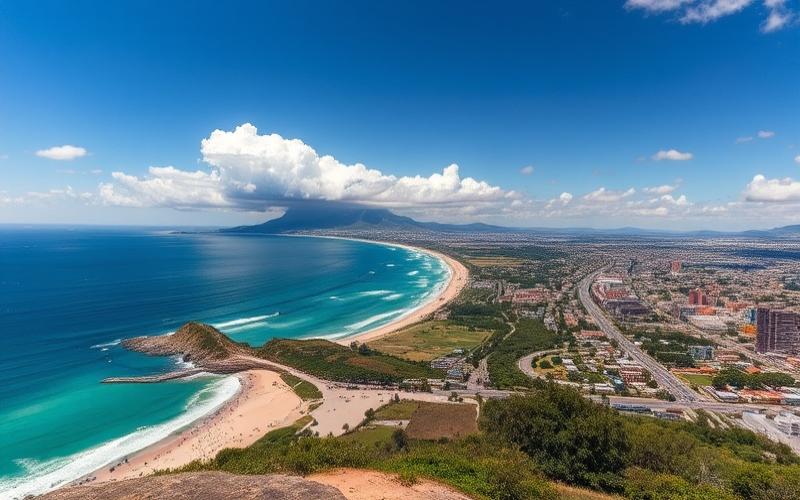
With over 600 km of coastline on the Atlantic and the Río de la Plata, Uruguay is a discreet paradise for those who love mixing sport and sea. Surfing, kitesurfing, windsurfing, stand-up paddleboarding, kayaking, sailing, open-water swimming, sport fishing: the menu is extensive, without the tourist density of some Brazilian or Argentine spots.
Surf, Windsurf, Kitesurf: The Atlantic as an Experimentation Ground
Surfing took root in the 1950s and now has approximately 30,000 practitioners. The best spots are concentrated on the Atlantic coast: La Paloma, La Pedrera, Cabo Polonio, Punta del Diablo, but also some areas of Punta del Este and José Ignacio. National championships structure the discipline, and surfers like Marco Giorgi give it international visibility.
The best waves (swells) generally occur from April to November (autumn-spring), requiring a 4/3 mm wetsuit, sometimes with gloves and booties in winter. Summer (December-February) offers calmer conditions, ideal for beginners, but beaches are more crowded with tourists.
Windsurfing and kitesurfing follow a comparable trajectory, with an estimated 20,000 and 10,000 enthusiasts respectively. Punta del Este, La Pedrera, or La Barra become playgrounds merging wind, waves, and sun. Competitions like the Punta del Este Windsurfing Open or the Kite Fest bring together the communities of practitioners.
| Water Sport | Estimated Number of Enthusiasts | Key Spots |
|---|---|---|
| Kayaking | ~50,000 | Inland rivers, lagoons, sheltered coasts |
| Surfing | ~30,000 | La Paloma, La Pedrera, Punta del Diablo, Cabo Polonio |
| Windsurfing | ~20,000 | Punta del Este, lagoons, Rocha |
| Kitesurfing | ~10,000 | Punta del Este, La Pedrera, La Paloma |
In parallel, stand-up paddleboarding is developing in calmer bays, and kayaking enjoys particular success with those who prefer exploring lagoons and estuaries over chasing waves. National kayaking championships also testify to a real competitive level.
Beaches, Swimming, Beach Volley, and the Ultra-Active Coastal Life
Beyond technical disciplines, Uruguay is a country where people spend a lot of time outdoors. The beaches of Montevideo, Canelones department, Maldonado, or Rocha serve as playgrounds for swimming, beach soccer, beach volleyball – the men’s national team has even participated in continental competitions – but also for more relaxed activities like power walking or sunrise yoga.
Uruguayan beach resorts like Piriápolis, Punta del Este, or La Paloma offer family-friendly beaches, suitable for swimming in summer and equipped with lifeguard stations. Further north, more natural sites like Santa Teresa or Punta del Diablo offer wild landscapes with strong waves, dunes, hiking trails, and forests ideal for horseback riding.
Sport fishing, on the other hand, comes in freshwater (in rivers like the Río Negro or Río Uruguay) and saltwater (sea bass, corvina, sargo, etc.) varieties, widely practiced by locals but easily accessible to visitors, often through organized trips from fishing ports.
Tennis, Golf, Equestrian, Indoor Sports: The “Club” Offer, Uruguayan-Style
The landscape obviously isn’t limited to the soccer-basketball-rugby trio and endurance sports. Uruguay inherits a tradition of European-style sports clubs, especially in Montevideo, where you’ll find tennis, gymnastics, swimming, paddle tennis, golf, martial arts, fitness, CrossFit, etc.
Tennis and Racket Sports
Tennis is described as “moderately popular” but well-represented in Montevideo and major cities: clubs like the Círculo de Tenis de Montevideo or the Lawn Tennis Club de Carrasco offer courts, youth academies, internal tournaments. Players like Marcelo Filippini or Pablo Cuevas, who reached the world top 30, have served as role models for new generations.
Inspired by the popularity of these sports in Argentina and Brazil, paddle tennis and beach tennis are developing in France. More and more sports complexes now offer courts, whether indoor or outdoor.
Golf and Equestrian
Golf is developing around courses like those in Montevideo or along the coast, while the Uruguay Open attracts good-level players. The country has produced an internationally renowned golfer like Fay Crocker.
Uruguay has about one horse for every eight inhabitants, one of the highest ratios in the world.
Fitness, Gyms, and Club Life
Montevideo, like the main coastal cities, has a dense network of gyms: weight training, cardio, group classes (Zumba, step, Pilates), CrossFit, boxing, martial arts… Prices can seem high (some gyms advertise memberships between 50 and 100 USD per month, often with a minimum commitment of several months), but the offering is vast.
Family-friendly omnisports clubs, sometimes with a pool and summer camps for children, complement this landscape. They offer an ideal environment for those who want to combine sports practice, socialization, and neighborhood life.
A Very Sporty Youth… But Not Active Enough
On the surface, Uruguay is a country where children play soccer in the street, where teenagers go to basketball or rugby practice several times a week, and where school sports are well-established. Yet, national assessments on youth physical activity paint a more nuanced picture.
The 2018 and then 2022 “Report Cards,” which grade ten key indicators of physical activity in children and adolescents (from A to F), delivered mixed results.
| Indicator (Uruguayan Youth) | 2022 Grade | Key Data |
|---|---|---|
| Overall Physical Activity | F | 13.8% of 13–17 year-olds meet the recommended 60 min/day (18.8% boys, 9.5% girls) |
| Participation in Organized Sports | F | 16% of 6–19 year-olds enrolled in a federated sport (27% boys, 4.6% girls) |
| Active Transportation | C | 50.5% of 13–15 year-olds walk or bike to school ≥4 days/week |
| Sedentary Behaviors | D+ | 37.1% meet screen time recommendations |
| School Environment | B+ | Mandatory physical education, 73–75% class attendance |
| Community and Environment | C- | 42.4% play sports in public facilities |
| Government | C | Seven national laws mention physical activity, five targeting childhood |
In short, despite a strong sports culture, a significant proportion of youth does not move enough and remains too sedentary, particularly girls and adolescents from disadvantaged backgrounds. Access to federated clubs, sometimes costly and geographically concentrated, plays a role, as does increased competition from screens.
For the authorities, a major challenge is to expand regular practice by diversifying the offering (outdoor sports, free activities in public spaces, enhanced school programs) and reducing gaps related to gender and income.
For a traveler, this reality isn’t necessarily apparent: one mostly perceives the intensity of the most visible sports. But it explains why Uruguay invests so much in open infrastructure, events accessible to all, and communication around the benefits of physical activity.
How to Enjoy This Sports Culture When Visiting Uruguay?
For those who love to move, Uruguay is a particularly pleasant playground, with a few characteristics that make the difference: relative safety, density of clubs, reasonable cost of many activities, favorable climate, and constant proximity to the sea or wide-open spaces.
Without providing an exhaustive list, the possibilities can be summarized as follows:
On the southern coast (Montevideo, Canelones, Maldonado), activities include running or cycling on the Rambla, swimming on urban beaches, team sports in neighborhood clubs, as well as surfing or SUP in Punta del Este or La Barra, with the possibility of signing up for local races. On the Atlantic coast (Rocha), in a wild environment, you can combine surfing, hiking, kayaking, and cycling between La Paloma and Punta del Diablo. Inland, practices include road or gravel cycling, horseback riding, river kayaking, and integrating into local clubs for team sports.
One of Uruguay’s strengths also lies in the fact that you can very quickly switch from one discipline to another: on the same weekend, it’s possible to run a road race, play an indoor basketball game, then go surfing or join a bike ride along the coast.
A Small Country, A Big Sports Field
In a country where most national teams play in sky blue, sport is much more than mere entertainment. It serves as a social cement, a symbolic elevator, and sometimes an economic springboard. From the improvised field of a baby fútbol club to the lights of the Liga Uruguaya de Básquetbol gyms, from cycling pelotons speeding along coastal roads to the rugby players of Los Teros challenging world giants, Uruguay offers a sporting palette of unexpected richness.
To play a sport, simply go to a public place like the Rambla, a park, a club, a beach, or a vacant lot. You almost always find an activity to share or a group to join, because in this country, sports opportunities are omnipresent and easily accessible.
Disclaimer: The information provided on this website is for informational purposes only and does not constitute financial, legal, or professional advice. We encourage you to consult qualified experts before making any investment, real estate, or expatriation decisions. Although we strive to maintain up-to-date and accurate information, we do not guarantee the completeness, accuracy, or timeliness of the proposed content. As investment and expatriation involve risks, we disclaim any liability for potential losses or damages arising from the use of this site. Your use of this site confirms your acceptance of these terms and your understanding of the associated risks.

Cyril Jarnias is an independent expert in international wealth management with over 20 years of experience. As an expatriate himself, he is dedicated to helping individuals and business leaders build, protect, and pass on their wealth with complete peace of mind.
On his website, cyriljarnias.com, he shares his expertise on international real estate, offshore company formation, and expatriation.
Thanks to his expertise, he offers sound advice to optimize his clients' wealth management. Cyril Jarnias is also recognized for his appearances in many prestigious media outlets such as BFM Business, les Français de l’étranger, Le Figaro, Les Echos, and Mieux vivre votre argent, where he shares his knowledge and know-how in wealth management.