 Published on and written by Cyril Jarnias
Moving to Venezuela today is far from a “standard” expatriation project. The country boasts the world’s largest oil reserves, a warm culture, spectacular landscapes… and one of the most severe economic, security, and humanitarian crises globally. For many governments, the directive is clear: do not go. Nevertheless, a small community of expatriates continues to live there, primarily as part of diplomatic missions, humanitarian work, or highly regulated contracts.
This guide aims to present facts, figures, and realities about Venezuela, without seeking to influence the decision to move there. It is specifically addressed to individuals who, despite the risks, are seriously considering relocation, often for precise professional reasons.
Understanding the context before leaving
Before thinking about housing or schooling, one must gauge the scale of the context.
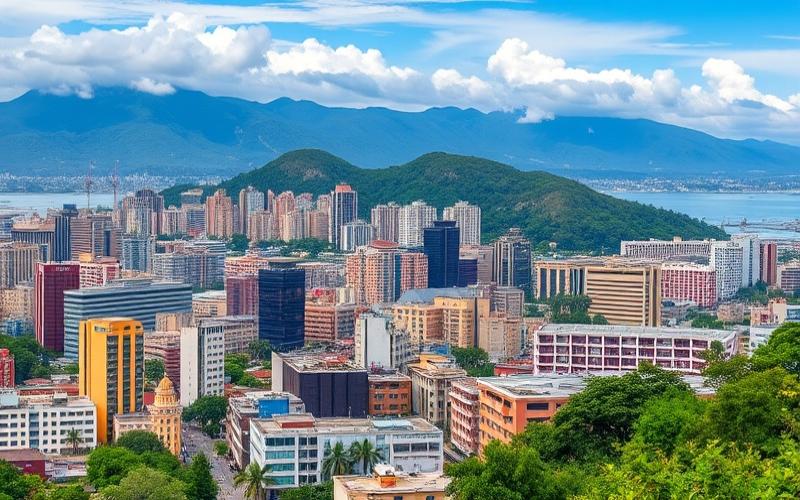
Venezuela has approximately 28.5 million inhabitants. Its capital, Caracas, is home to nearly 3 million people and remains the main economic, political, and cultural hub. Over 7.7 million Venezuelans, nearly a quarter of the population, have left the country in recent years. About 80% of residents live below the poverty line. Crisis indicators are everywhere: past hyperinflation, a largely informal economy, degraded infrastructure, shortages, a healthcare system on the brink of collapse.
The United States, Canada, and the United Kingdom officially recommend avoiding all travel to Venezuela, classified at the highest alert level “Do Not Travel.” Caracas is regularly ranked among the most dangerous cities in the world, with very high rates of homicide, armed robbery, and kidnapping. Several foreign ministries also report risks of arbitrary detention without consular access.
Despite this, a small foreign community persists, mainly in Caracas, Maracaibo, Puerto La Cruz, Anaco, and Valencia. It consists primarily of diplomatic staff, NGO employees, some oil industry executives, and expatriates with foreign currency income (often remote). In this context, every decision must incorporate three major parameters: security, health, and finances.
Visas, entry, and resident status
One of the first difficulties of an expatriation project to Venezuela is simply… obtaining a visa.
Venezuelan embassies and consulates have reduced or suspended many of their services worldwide. In several countries, it is no longer possible to apply for a visa in the conventional manner. Some applicants must go through the embassy in Mexico or representations in neighboring countries (like the Dominican Republic), with processing times that can exceed six weeks. Physical presence at the consulate for visa issuance is often required.
The visa regime is strict: no visas are issued on arrival. Entering without a valid visa exposes one to severe measures such as detention, expulsion, or even prosecution. For a long stay or professional expatriation, a residence or work visa is required, accompanied by a permit corresponding to the activity. Authorities generally require a passport valid for at least six months, proof of resources, a criminal record check, a health certificate, proof of accommodation, apostilled documents, and, for employees, a letter from the employer.
For a short stay, some profiles (tourists, remote workers) consider a tourist visa. It is generally valid for 90 days, sometimes renewable, but does not grant the right to take local employment. Remote work for foreign clients remains theoretically possible, provided one does not receive Venezuelan remuneration. Again, the issuance of this type of visa depends on the policy of the relevant consular representation.
To obtain resident status, one must follow the official procedure with SAIME, including an appointment and personal signature on-site for visas and permits, as well as mandatory early renewals. Authorities warn against using intermediaries promising these documents, as foreigners have been arrested for possessing false papers obtained through these fraudulent networks.
For dual nationals, the rule is clear: entry and exit from the country must be with the Venezuelan passport, while access to the country of origin is with the corresponding passport. Dual-national minors can only leave the territory with the consent of both parents or a notarized authorization.
In practice, obtaining a long-term visa is now described by many as “almost impossible” unless one is affiliated with an international organization, an embassy, or a major employer already established there.
Security: Living in one of the world’s most dangerous countries
Moving to Venezuela requires accepting a level of risk found in very few countries. Violence is pervasive: homicides, short-term kidnappings (“express kidnappings” aimed at draining your accounts), carjackings, armed robberies, assaults on public transport or around ATMs, crimes committed by armed gangs, often with near impunity.
Caracas illustrates a marked urban divide in terms of security. The west of the city and some popular neighborhoods, like Petare, Cota 905, or Catia, concentrate extreme delinquency and are considered completely inadvisable. In contrast, the east (Chacao, Altamira, Los Palos Grandes, La Castellana, Las Mercedes, El Rosal) comprises more affluent, better-monitored neighborhoods where expatriates, high-end businesses, and secure buildings are concentrated. However, even in these areas, the risk is never entirely absent.
On a national scale, border regions with Colombia, Brazil, and Guyana are particularly unstable: presence of armed groups, drug trafficking, smuggling, kidnappings. Foreign authorities strongly advise against any travel within a radius of several dozen kilometers around these borders.
The road connecting Simón Bolívar International Airport to Caracas is notoriously dangerous, with risks of assaults, theft, and extortion (sometimes by fake taxi drivers or fake police officers). It is highly recommended to only make this trip during the day and in a pre-arranged, identified, and secure vehicle, often organized by an employer or relocation agency.
In daily life, expatriates follow a kind of “survival protocol”: avoid walking at night, minimize the use of public transport, never display expensive watches, jewelry, bags, or smartphones, vary routes and schedules, inform someone of your movements, refuse cash withdrawals on the street, do not resist in case of assault, equip vehicles with GPS and sometimes tinted films or anti-theft devices. Housing security also becomes the primary variable in choice, ahead of comfort or proximity.
Health: A collapsed public system, a private one in dollars
The Venezuelan crisis is also a health crisis. The public system, state-funded (SPNS), has suffered years of underinvestment, staff exodus, and shortages. According to some estimates, more than half of hospitals do not have running water regularly. The pharmaceutical federation reported stock shortages exceeding 80% for many medications. Much equipment is out of service, operating rooms closed, specialized services non-existent outside major cities.
Direct consequence: for an expatriate, the public hospital cannot be considered a reliable solution, except for very basic care, and even then, depending on location. Foreigners, moreover, do not have access to the free care granted to citizens.
The maximum cost in U.S. dollars for a simple specialist consultation at a private clinic in Venezuela.
There are also specific health risks: vector-borne diseases (dengue, chikungunya, Zika, malaria in some rural areas), outbreaks of measles, rising tuberculosis, episodes of diphtheria or hepatitis A against a backdrop of water and sanitation problems. Tap water is not potable, even in large cities. Expatriates only use filtered or bottled water and avoid poorly washed raw vegetables, ice of uncertain origin, and much street food.
In Venezuela, international health insurance covering private care, medical evacuation (to Colombia, the United States, or Europe), and repatriation is a basic requirement. Premiums start around 300 USD/month. It is crucial to check geographical clauses, as many insurers explicitly exclude Venezuela, and to ensure the inclusion of an evacuation component.
A prudent expatriate also leaves with at least six months’ supply of chronic medications, a well-stocked first aid kit, an up-to-date vaccination record (yellow fever, hepatitis A and B, typhoid, possibly rabies and other vaccines as recommended), and a clear plan for regular medical check-ups during trips to a better-equipped neighboring country.
Cost of living: Living “well” in foreign currency, in an impoverished country
The Venezuelan paradox is striking: for a resident paid in local currency, life is extremely difficult, with an average salary around 211 USD, a legal minimum around 5 to 10 USD per month, and millions of people in poverty. For an expatriate paid in dollars or euros, however, the cost of living can seem relatively low, especially compared to other major Latin American cities.
The cost of living in Venezuela is lower than in more than three-quarters of the world’s countries for holders of strong currencies.
The following ranges give a rough idea in U.S. dollars:
| Expense Item | Monthly Range for 1 Person |
|---|---|
| Housing (secure apartment) | 800 – 1,500 USD |
| Groceries | ≈ 300 USD |
| Utilities (water, electricity, gas, etc.) | ≈ 150 USD |
| Transport (fuel, taxi, etc.) | ≈ 200 USD |
| Leisure and outings | ≈ 100 USD |
| International health insurance | ≈ 300 USD |
| Security measures (guarding…) | ≈ 100 USD |
For a family, these amounts skyrocket, especially when including international schooling: between 1,500 and 2,500 USD per month per child in some institutions, plus enrollment fees and additional costs.
Daily expenses remain contrasted. Some examples of typical prices illustrate this disparity:
| Good or Service | Average Price (USD) |
|---|---|
| Lunch menu in a business district | 10 – 20 |
| Fast-food type combo meal | 9 – 10 |
| Simple dinner for two in a neighborhood pub | 17 – 33 |
| Cappuccino (expat-frequented area) | 2.3 – 4.3 |
| Local beer (0.5 L) in a bar | 1.5 – 1.6 |
| Cinema (2 tickets) | 5 – 8 |
| Monthly gym membership | 38 – 79 |
| Brief consultation with a private doctor | 37 – 46 |
| Gasoline (1 L) | 0.49 – 0.55 (when available) |
| Monthly public transport pass | 25 – 34.3 |
| Fixed internet (≈ 8 Mbps) | 22 – 27 |
These prices remain very disconnected from local incomes but give an idea of the life of an expatriate paid in foreign currency. However, one must add what many call the “hidden costs of the crisis”: generators, water tanks, inverters, security equipment, overcosts related to instability (delays, losses, theft, workarounds), which can add 20 to 30% to the budget.
Currency, banks, and taxation: The empire of cash dollars
The sovereign bolivar (VES) remains the official currency, but the economy has largely become “de facto dollarized”. Most rents, medical procedures, school fees, a good portion of dining and commerce in eastern Caracas are paid in cash dollars. Small bills (20, 50, 100 USD) are the most practical. Electronic transactions in local currency exist but remain fragile and heavily capped.
The Venezuelan banking system suffers from severe chronic problems: very low bolivar withdrawal limits, IT instability, payment terminals often out of service, and international transfers subject to authorization and risks of blocking. Some banks offer dollar accounts, but their reliability and access to funds remain very uncertain.
Opening a local account as a foreigner is, in theory, possible with a residence or work visa, an RIF (tax ID number), proof of address, and an employment relationship. In practice, many institutions refuse to open accounts for non-permanent residents. Major local banks include Banesco, Banco de Venezuela, Banco Mercantil, or Banco Provincial.
Most expatriates keep their main bank account in their country of origin or in a stable neighboring country like Colombia or Panama. On the ground, transactions are primarily conducted in cash. The use of foreign bank cards is limited to the rare businesses that still accept them.
On the tax front, resident status is generally triggered after more than 183 days of presence in a year. Residents are taxable on their worldwide income, with a progressive scale ranging from about 6% to 34%. A 16% VAT (IVA) applies to most goods and services. For U.S. citizens, FATCA obligations continue to apply.
Housing: Secure residences, generators, and water tanks
In Caracas, almost all expatriates live in the east of the city, in secure residential buildings with 24-hour guards, entry control, gates, cameras, and sometimes electric fences. The most sought-after neighborhoods remain Las Mercedes, Altamira, Los Palos Grandes, La Castellana, El Rosal, and to a lesser extent, some areas of Chacao or Sebucán. In other major cities (Valencia, Maracaibo, Puerto La Cruz, Maturín), the logic is similar: choose sectors known for their relative safety and access to amenities.
Rents are generally quoted in dollars and often require payment of several months in advance. Leases are commonly signed for a minimum duration of 6 to 12 months, with a security deposit equivalent to two or three months’ rent. Payment is usually made via international wire transfer or in cash. To facilitate their search, expatriates almost systematically use a real estate agency or relocation company, to which it is standard to pay a commission equivalent to one month’s rent.
Rent levels depend heavily on the neighborhood, size, and amenities. The following benchmarks are frequently observed in the privileged sectors of Caracas:
| Type of Property (nice area, decent building) | Estimated Monthly Rent (USD) |
|---|---|
| Studio or small 1-bedroom in a simple building | 300 – 500 |
| 2-bedroom apartment in a good building | 700 – 1,200 |
| Large 3-bedroom apartment in a modern tower | 1,500 – 2,500 |
Additional charges (water, electricity, bottled gas, building fees, guarding, internet) are rarely included and often add 100 to 300 USD per month. In a studio, just the electricity, water, and gas bills can remain relatively low (30 to 50 USD), but it all depends on the presence of air conditioning and other equipment.
Facing frequent power and water cuts, it is advisable to prioritize housing equipped with a generator, a water reserve (tank or cistern), and inverters to protect electronic devices. For an expatriate, the most suitable apartments combine enhanced security, these amenities, a good internet connection, and ideally, the presence of other foreigners in the building or neighborhood.
Real estate purchase, legally accessible to foreigners, must be approached with extreme caution. Prices have plummeted to the point where a 100 m² apartment in a good neighborhood can be negotiated for between 50,000 and 100,000 USD. But legal insecurity, complex property titles, market volatility, risks of de facto confiscation, and lack of political visibility make it a very high-risk speculative investment. Many experts recommend renting only.
Getting around: A car almost mandatory, public transport to be avoided
In most of the country’s major cities, and particularly in Caracas, owning your own car is considered almost indispensable. The public transport network, already limited, suffers from fuel shortages, lack of maintenance, insecurity, and breakdowns. Buses and “colectivos” are overcrowded, aging, even dangerous. The Caracas Metro remains a relatively structured and inexpensive means of transport, but safety concerns, overcrowding, and service interruptions mean expatriates use it sparingly, during the day, and on well-known routes.
Roads show deterioration (potholes, deficient lighting and signage) and local driving is often abrupt and with little respect for traffic rules, with unexpected maneuvers. Driving at night is strongly discouraged due to the combination of accident risks and crime.
Official taxis or local ride-hailing services (like Yummy Rides) are preferable to informal taxis. Many companies provide their expatriate employees with dedicated drivers or cars with approved drivers, especially for home-work and airport transfers.
Gasoline, very cheap on paper, is often unavailable. Stations can remain closed for several days due to lack of fuel. Motorists sometimes queue for hours to refuel. This phenomenon, coupled with power cuts (which affect pumps and traffic lights), makes mobility unpredictable.
Working, entrepreneurship, remote work
The local job market is ravaged by the crisis. Tens of thousands of doctors, engineers, and teachers have left the country. Salaries in education, healthcare, or private engineering often range between 100 and 300 USD per month, while some civil servants earn less than 20 USD monthly. The economy has massively shifted to the informal sector.
For an expatriate, it is reasonable to favor positions where the employer offers a complete package. This should include: remuneration in foreign currency, secure housing, international health insurance with an evacuation clause, transportation coverage, security measures, administrative support, and sometimes, schooling for children. These conditions are mainly offered by international organizations, some oil companies, and major diplomatic missions.
Local entrepreneurship, meanwhile, faces a very unstable environment: endemic corruption, an unpredictable legal system, exchange controls, past hyperinflation, difficulty repatriating profits, complicated access to imports. Creating a company requires registration with the commercial registry, tax registration (SENIAT), sometimes a majority local partner depending on the activity, and the ability to navigate an opaque administrative environment.
Working remotely for abroad is a common alternative, but it is subject to local challenges: frequent power cuts, unstable and slow internet connection, often requiring backup equipment (inverters, batteries, 4G modem) and trips to places with generators to ensure communications.
The reality for many remote workers in Venezuela resembles that of “electric nomads”: laptops in a bag, extension cords under the arm, racing to find an available outlet in a café powered by a generator, working offline at home waiting for the next connectivity window.
Education: International schooling as almost a necessity
The public education system has suffered the same hemorrhage as healthcare: underpaid teachers, exodus abroad, dilapidated buildings, lack of materials, shortened school days sometimes limited to a few days per week. It is estimated that one million children may be out of school, while hundreds of thousands of teenagers do not complete secondary education. For expatriate children, the public sector is not considered an option.
Overview of the main private and international educational institutions offering recognized foreign programs.
Institutions like The British School Caracas, awarding qualifications such as IGCSE.
Schools such as Escuela Campo Alegre and Colegio Internacional de Caracas.
Several international structures offer this globally recognized program.
Institutions following Italian, German, or French educational systems, with national diplomas.
The trade-off is twofold: extremely limited access (small classes, priority to families of partner companies, diplomats, or alumni) and very high tuition fees for the local context, billed in dollars, often payable annually. For a recognized international school in Caracas, annual fees per child easily exceed 4,000 USD in primary and go much higher in secondary school.
For French-speaking families, the current absence of an institution accredited by the AEFE sometimes necessitates recourse to distance learning (CNED), supplemented by local bilingual or international schools.
In other regions, international educational offerings still exist (Maracaibo, Maturín, Anaco, Puerto La Cruz, etc.) but in reduced numbers, sometimes with infrastructures weakened by the crisis.
Daily life, culture, and adaptation
Beyond the numbers, daily life in Venezuela remains marked by a stark contrast between material difficulties and human warmth. The culture blends Spanish, African, and indigenous influences, with an important place for music, dance, and gastronomy. The country is notably known for its system of youth orchestras, “El Sistema,” and for its emblematic dishes: arepas (stuffed corn cakes), pabellón criollo (shredded beef, rice, black beans, plantain), cachapas, empanadas.
Venezuelans are renowned for their human warmth and openness, which can greatly help an expatriate. To integrate harmoniously, it is important to respect certain social conventions: avoid direct criticism of the country, approach political topics with caution, adopt appropriate attire in places of worship, and learn the basics of Spanish. Social life, marked by strong family ties and shared meals, is central.
Daily life is nonetheless paced by recurring constraints: power outages lasting several hours to several days (less frequent in Caracas than in the provinces, but still common), water cuts, queues, sudden unavailability of basic products, delays, internet dropping at the worst moment. The presence of armed guards in front of bakeries or supermarkets, piled-up trash bags, stray dogs, and visible precariousness change one’s relationship with public space.
Adaptation to expatriation follows a U-curve: a honeymoon phase, followed by intense culture shock, then gradual adaptation and partial integration. In a tense context, the shock can be particularly strong. It is important to note that more than half of expatriations fail worldwide, and nearly half of these failures are due to difficulties in the expatriate’s or their family’s adaptation, not the work itself.
In Venezuela, the obstacles typically mentioned elsewhere (language, pace of life, cuisine, social norms) are compounded by heavy factors: insecurity, potential isolation, difficulties accessing healthcare, shortages. The qualities that make a difference are resilience, the ability to tolerate uncertainty, curiosity about local culture, networking skills, and the aptitude to establish stable routines despite the surrounding instability.
Before leaving: Prepare every detail meticulously
Given the risks and complexity of the terrain, an expatriation project to Venezuela requires upstream preparation far more extensive than for other destinations.
On the administrative front, you need a passport with ample validity, the appropriate visa (obtained before entry, via an active embassy), civil status documents and diplomas apostilled and, if needed, translated. An international driver’s license facilitates local procedures. Financially, opening an account in a stable third country, preparing cash reserves (dollars) for several months, securing ways to replenish these reserves via your home country or an offshore bank are prerequisites.
For a stay abroad, it is crucial to undergo a complete health check-up and update your vaccination schedule. You must also subscribe to international health insurance including medical evacuation coverage, build a reserve of specific medications and hygiene products, and plan practical equipment like flashlights, power banks, extension cords, adapters for 115V/60Hz current, water filters, and possibly a small inverter.
For housing, most serious employers provide secure temporary accommodation upon arrival (hotel, furnished apartment in a guarded residence) and support for finding permanent housing. Allow two to four weeks on-site to finalize leases, registrations, and initial procedures (RIF, local registration, possible bank account). Using a relocation agency experienced in the country is highly recommended.
The importation of used personal effects into Chile may be exempt from duties under certain conditions (returning residents, some foreigners), but requires a consular certificate of use and detailed inventories in Spanish. The risks of theft, delays, and strikes strongly recommend using an experienced international freight forwarder or opting for a minimalist move.
For whom, under what conditions, and at what human cost?
Considering all elements, Venezuela is no longer a destination for “comfortable expatriation”. It remains a possible posting for certain profiles: diplomatic agents, humanitarian workers, technical experts sent by large companies, researchers, or highly seasoned remote workers, who consciously accept the risk and have significant financial and logistical margins.
For these profiles, relocation remains feasible if several conditions are met:
To settle and work effectively in a challenging environment, several key elements must be in place.
Includes secure housing, health insurance with evacuation, salary in foreign currency, transportation, security, and administrative support.
Embassy, international NGO, or large company capable of handling emergency situations.
Particularly crucial when bringing children.
Ability to withstand an environment where insecurity and scarcity are part of daily life.
Conversely, for an isolated individual wanting to “try their luck” without institutional support, for a family seeking a “quality of life” expatriation, or for a retiree wishing to enjoy a low cost of living, the combination of risks (security, health, access to money, isolation) makes the project an extremely dangerous gamble.
Living in Venezuela requires constant vigilance for essential aspects of daily life (health, travel, housing, connection). This choice implies a commitment made in full awareness, where personal safety is never guaranteed.
Disclaimer: The information provided on this website is for informational purposes only and does not constitute financial, legal, or professional advice. We encourage you to consult qualified experts before making any investment, real estate, or expatriation decisions. Although we strive to maintain up-to-date and accurate information, we do not guarantee the completeness, accuracy, or timeliness of the proposed content. As investment and expatriation involve risks, we disclaim any liability for potential losses or damages arising from the use of this site. Your use of this site confirms your acceptance of these terms and your understanding of the associated risks.

Cyril Jarnias is an independent expert in international wealth management with over 20 years of experience. As an expatriate himself, he is dedicated to helping individuals and business leaders build, protect, and pass on their wealth with complete peace of mind.
On his website, cyriljarnias.com, he shares his expertise on international real estate, offshore company formation, and expatriation.
Thanks to his expertise, he offers sound advice to optimize his clients' wealth management. Cyril Jarnias is also recognized for his appearances in many prestigious media outlets such as BFM Business, les Français de l’étranger, Le Figaro, Les Echos, and Mieux vivre votre argent, where he shares his knowledge and know-how in wealth management.