 Published on and written by Cyril Jarnias
Choosing to study abroad is already an ambitious bet. Doing so in Venezuela is a bold and very particular choice, as this country combines academic strengths and structural difficulties. Between renowned universities, a relatively low cost of living for a foreigner, and an extremely tense political, economic, and security context, it is a destination that requires careful planning.
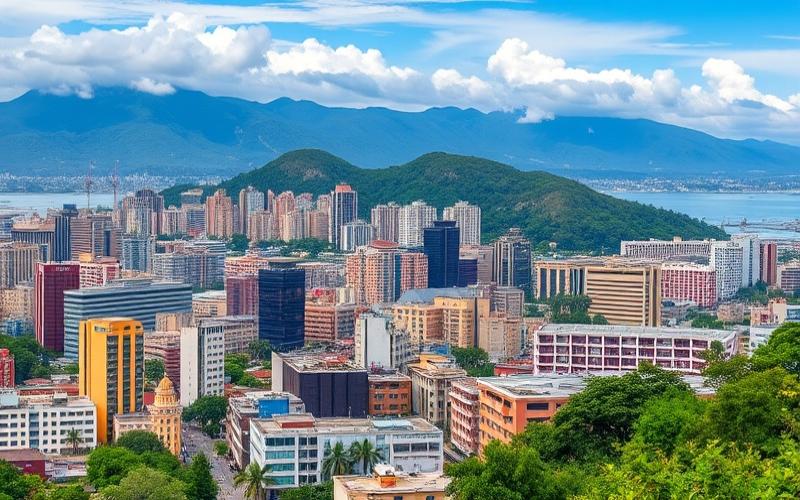
This article provides a comprehensive overview of higher education in Venezuela, with a particular focus on Caracas, which is its academic and economic heart.
A Country Rich in Universities, Poor in Stability
Venezuela, at the northern tip of South America, is officially the Bolivarian Republic of Venezuela. The country has nearly 29 million inhabitants and a capital, Caracas, which concentrates institutions, jobs, universities, and a significant part of cultural life.
Academically, the offerings are far from negligible. The higher education system includes several dozen universities, public and private, with hundreds of undergraduate, master’s, and doctoral programs. Some institutions, such as the Universidad Central de Venezuela (founded in 1721) or the Universidad de Los Andes in Mérida, carry a long tradition of research, particularly in medicine, engineering, sciences, and humanities.
The Central University of Venezuela is ranked around 1,145th globally by EduRank.
The contrast is striking: a relatively dense university system, historically strong, but severely weakened by the economic crisis, the flight of teachers (with an attrition rate that has reached over 70% according to some recent estimates), underfunding, and a tense political climate. It is this permanent tension between academic potential and the degradation of material conditions that should guide any foreign student’s consideration.
Caracas: Academic Heart, Center of All Paradoxes
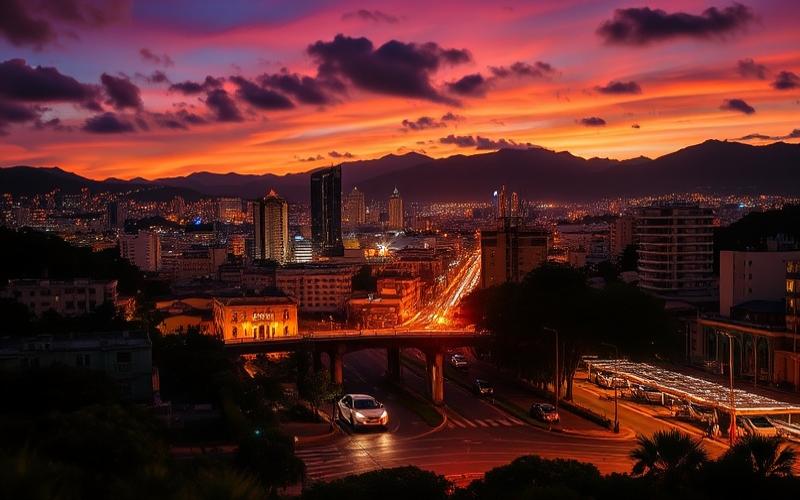
Caracas, a metropolis of 2 to 3 million inhabitants, is the country’s academic epicenter. It is home to the Central University of Venezuela, the Universidad Simón Bolívar (USB), the Universidad Católica Andrés Bello (UCAB), the Universidad Metropolitana, as well as specialized schools like IESA (Instituto de Estudios Superiores de Administración).
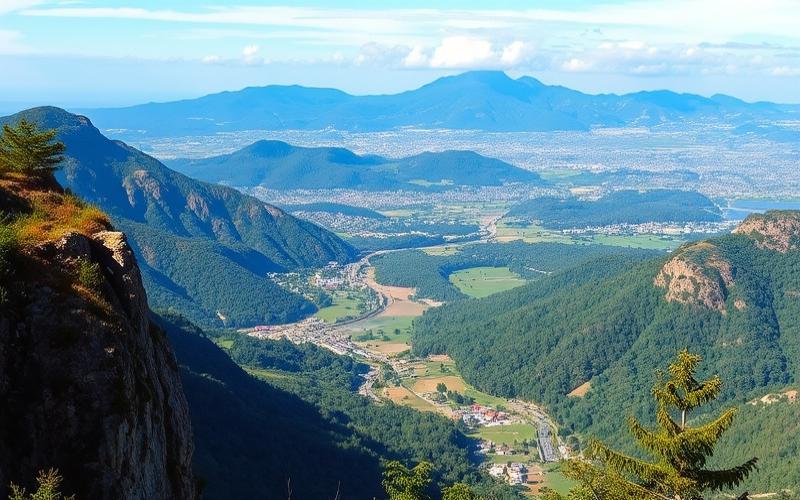
Caracas offers a complete student experience by combining a rich cultural life (museums, theaters, cultural centers), a dynamic economy (finance, commerce, the historic oil sector), and access to spectacular nature, notably the El Ávila National Park that overlooks the city.
But the capital also concentrates the country’s darkest aspects. It is regularly cited among the most dangerous cities in the world, with pervasive violent crime, kidnappings, armed robberies, and assaults in public spaces. Several Western governments, including the United Kingdom, the United States, Canada, and the Netherlands, officially recommend avoiding all travel to Venezuela. For a foreign student, the question of personal safety, daily commutes, and housing therefore becomes central.
A Vast and Diverse Higher Education System
Despite the crisis, the architecture of the university system remains structured.
Types of Institutions and Degrees
In Venezuela, one finds: the world’s largest oil reserves, varied landscapes ranging from beaches to mountains, and rich biodiversity. The country is known for its vibrant culture, notably through music, dance, and cuisine.
– traditional national universities (like UCV, ULA, LUZ, UCAB)
– experimental universities
– university institutes, university colleges, and polytechnic institutes
– mostly state-funded public institutions, and numerous private universities
The basic degrees are:
– TSU (Técnico Superior Universitario): University Higher Technician, three years
– Licenciado or professional title (lawyer, doctor, engineer, economist, etc.): 4 to 6 years for undergraduate studies
– Specializations, master’s degrees, and doctorates: with variable durations, generally up to 3 years for a technical specialization, up to 4 years for a master’s and up to 5 years for a doctorate.
Teaching is mostly conducted in Spanish, although some programs incorporate bilingual activities or modules in English.
Flagship Universities and Disciplines
Some institutions stand out for their positioning:
The Universidad Central de Venezuela (UCV) is the historic center of research in key fields like medicine, engineering, sciences, and humanities. Its Caracas campus is a UNESCO World Heritage Site.
– Universidad Simón Bolívar (USB) A reference for science and technology, with over 70 graduate programs: biomedical engineering, materials engineering, computer science, systems, political science, applied linguistics, music, etc. USB emphasizes applied research and the needs of the productive sector.
The Institute of Higher Administration Studies (IESA), based in Caracas with an international network, offers several high-level management programs.
Full-time, on-campus bilingual (Spanish/English) program, specialized in international finance.
Part-time MBA in Spanish, designed to develop global managerial skills, with the awarding of a double degree.
Part-time Master’s in Administration for executives, offering a strategic and multi-disciplinary vision of management.
– Online Universities and Digital Campuses Actors like the Metropolitan School of Business and Management (MSBM) operate a “Venezuela Online Campus” providing access to online or hybrid programs (MBA, DBA, professional degrees) in partnership with European and North American institutions. In practice, this means studying online while residing in Venezuela or elsewhere, partially circumventing local logistical difficulties.
In terms of disciplines, the most common master’s degrees are in engineering, technology, administration, computer science, management, law, economics, education, political science, environment, health (medicine, nursing, dentistry), agriculture, marketing, or environmental studies. Annual tuition fees for a master’s degree generally range from $500 to $800 USD, which remains very low by international standards.
Admission and Degree Recognition
For a foreign student wishing to pursue a master’s degree in Venezuela, the academic requirements are similar to those in many countries:
– possession of a degree equivalent to a bachelor’s (or local “licenciado”) of 4 to 5 years, or a professional title of 5 to 6 years;
– good overall grades (equivalent to a GPA of about 3.0 on a 4.0 scale, although conditional admission may sometimes be considered below this);
– for programs incorporating English, sufficient proficiency (e.g., TOEFL or IELTS);
– application package including application forms, official transcripts, copies of diplomas, sometimes application fees.
One of the major challenges is not so much gaining access to a Venezuelan university, but rather the recognition of the degree upon returning to one’s home country. Several factors must be considered on this point.
How are Venezuelan Degrees Perceived Abroad?
Many countries evaluate degrees based on a simple principle: if the institution is recognized by the Ministry of Education of the country of origin, the degree is in principle acceptable for an equivalence or recognition procedure. This is the case, for example, for North American universities that require a “Licenciado” or “Título profesional” for admission to a master’s program and accept most Venezuelan master’s degrees as equivalent to their own graduate degrees.
In practice, the degree recognition process can be lengthy, technical, and costly, particularly for Venezuelan migrants settled in other Latin American countries. The steps include obtaining apostilled copies, legalizing documents, translating them, and submitting files to foreign ministries or evaluation bodies, which often constitutes an obstacle-filled journey.
To address this challenge, a regional convention on the recognition of studies, degrees, and titles in Latin America and the Caribbean was revised in 2019. Venezuela is one of the 23 signatory countries. This convention does not impose automatic equivalence but encourages states to establish clearer and more consistent procedures for mutual recognition. Specific guides, produced by UNESCO, detail the structure of the Venezuelan university system, types of degrees, and authentication procedures (legalization, apostille, registration, etc.), to help administrations process applications.
In short, a degree obtained in Venezuela is not “invalid” per se, but its concrete value will depend on the recognition mechanisms of the return country. It is therefore advisable, before committing, to check the equivalence requirements of one’s home country or future destination (Europe, North America, another Latin American country).
Student Visa: Conditions, Procedure, Work Possibilities
For any study period exceeding 90 days, Venezuela requires a student visa. It cannot be obtained upon arrival: it must be applied for before departure at a Venezuelan embassy or consulate.
Main Student Visa Conditions
The visa is generally issued for one year, renewable depending on the program duration. Its cost is around $70 USD for 12 months, although variations exist based on nationality and type of service (standard or urgent). The procedure should ideally be initiated at least three months before the desired departure date, to allow time to gather the necessary documents and for processing, which typically takes about 20 business days.
Among the required documents:
List of supporting documents needed to compile a student visa application file.
Passport valid for at least six months after the planned return date and a duly completed visa application form.
Official letter of admission from the Venezuelan institution and legalized/apostilled copies of diplomas and transcripts.
Proof of financial resources (bank statements for the last three months, sponsorship letter, etc.).
Health insurance certificate covering the stay duration and sometimes, proof of housing or accommodation reservation.
Passport-sized photos meeting requirements and a yellow fever vaccination certificate if transiting through certain countries.
Failure to meet requirements (missing documents, proof of resources deemed insufficient) can lead to a visa refusal. The refusal rate is described as relatively low when documents are complete and authentic, but one should not underestimate the sometimes meticulous rigor of consular services.
Can You Work with a Student Visa in Venezuela?
Available information indicates that it is in principle possible to work with a student visa, but this point remains sensitive in a context where the labor market is extremely degraded, with derisory local salaries (the official minimum wage is under $7 per month) and a largely informal economy. In practice, it would be unrealistic to rely on a local part-time student job to fund one’s life there, especially if one comes with “international” salary expectations.
A foreign student with resources in foreign currency (savings, family support, scholarship) finds themselves in a very different position from that of the majority of the population, whose average incomes (200 to 300 dollars net per month for an employee) generally do not allow covering the real cost of living in dollars or bolivars indexed to the parallel market.
Foreign Student
Cost of Living: An Inexpensive Country… For Those with Foreign Currency
Available figures for Caracas paint a paradoxical picture. For a foreigner with income in dollars or euros, the cost of living can appear relatively moderate, even attractive, provided currency exchange and security are managed correctly. For a local paid in national currency, the situation is entirely different.
Estimated Monthly Budget
In Caracas, individual estimates revolve around $800 to $1,500 per month for a single person, including housing. For a family of four, budgets ranging from $2,050 to just over $3,200 monthly are mentioned.
In practice, everything depends on lifestyle, the neighborhood chosen, the type of accommodation, and the frequency of outings. Some order-of-magnitude figures provide an idea.
Housing in Caracas (Rentals)
| Type of Housing | Location | Estimated Monthly Range (USD) |
|---|---|---|
| 1-Bedroom Apartment | City Center | 228 – 524 |
| 1-Bedroom Apartment | Outside Center | 152 – 372 |
| 3-Bedroom Apartment | City Center | 496 – 979 |
| 3-Bedroom Apartment | Outside Center | 377 – 850 |
| 1-Bedroom Studio (center, median value) | City Center | ≈ 361 |
Neighborhoods like Altamira, Los Palos Grandes, or La Castellana are generally cited as safer and more pleasant for foreigners, with buildings often featuring 24/7 security. Prices there are consequently higher. A real estate agency commission usually corresponds to one month’s rent.
The median price for an owned property in the Venezuelan capital, Caracas, is about $35,000.
Food and Dining
| Expense Item | Indicative Price (USD) |
|---|---|
| Simple meal in an inexpensive restaurant | 6 – 12 |
| Three-course meal for two, mid-range restaurant | 35 – 90 |
| Fast-food combo meal | 9 – 10 |
| Local beer (0.5 l draught) | 1 – 1.5 |
| Cappuccino | 1.5 – 4 |
| White bread (500 g) | 0.91 – 3.63 |
| Milk (1 l) | 1.2 – 3.08 |
| Rice (1 kg) | 0.45 – 1.96 |
| Dozen eggs | 1.6 – 6 |
| Chicken (1 kg of breast fillet) | 1.36 – 8.48 |
| Beef (1 kg, standard cut) | 2.27 – 8.37 |
| Mineral water (1 l) | 0.75 – 2 |
Occasional shortages and the multiplicity of exchange rates (official, parallel, etc.) can cause significant price variations, sometimes from one neighborhood to another. Venezuela still faces chronic hyperinflation, even though the de facto dollarization of the economy has stabilized some segments. For a foreign student, the main risk is more logistical than financial: finding certain products, dealing with stock shortages, and managing payments in foreign currency or bolivars.
Transportation, Services, and Leisure
| Item | Indicative Price (USD) |
|---|---|
| One-way public transport ticket | 0.25 – 1 |
| Monthly public transport pass | 20 – 55 |
| Taxi – starting fare | 3 – 7 |
| Taxi – price per km | 0.98 – 4.89 |
| Taxi – waiting (1 hour) | 6 – 20 |
| Gasoline (1 l) | 0.49 – 0.84 |
| Basic utilities (85 m² apartment) | 10 – 40 |
| Mobile plan (10+ GB data) | 5 – 15 |
| Fixed internet (50+ Mbps, unlimited) | 25 – 51 |
| Gym membership (monthly) | 15 – 102 |
| Movie ticket | 4 – 10 |
Basic services (electricity, water, internet) are very cheap on paper, but reality is more nuanced: frequent power outages, water shortages, unstable internet speed (average speed around 6 Mbps). Tap water is not potable, adding a regular cost for bottled water or filtration.
Health: A System in Crisis, Private Insurance as a Lifeline
Historically, Venezuela had one of the best public health systems in Latin America. But the economic and political crisis has plunged the country into a critical health situation. Public hospitals desperately lack medicines, equipment (gloves, syringes, basic supplies), and staff. Testimonies and reports describe scenes where patients must bring their own gloves, scalpels, soap, even food and water to receive treatment.
Outside major cities, access to care is very limited: erratic emergency services, scarce ambulances, and interminable wait times for specialists. In severe cases, medical evacuation to a neighboring country, notably Colombia, is often the only solution.
Private facilities generally offer a significantly higher standard of care, with well-trained doctors, more modern equipment, and better supplies, especially in Caracas, Maracaibo, or Valencia. But they too suffer from medicine and equipment shortages. Above all, costs can be very high for a foreigner.
For an international student, several consequences arise from this situation:
International health insurance covering medical expenses and evacuation is essential. It is crucial to build a personal stock of essential medications, as many are unavailable locally. Finally, the public health system is not reliable for complex or urgent care, such as blood transfusions, and one should prioritize private clinics partnered with specialized insurers.
To summarize, any study project in Venezuela must integrate, into its budget and planning, robust health coverage and a degree of pharmaceutical self-sufficiency.
Security, Public Freedoms, and Social Climate
The security issue is probably the main deterrent to a study project in Venezuela.
The indicators are concerning:
– one of the highest homicide rates in the world;
– pervasive organized crime, police and security forces often overwhelmed or corrupt;
– express kidnappings, carjackings, armed robberies, armed assaults;
– significant road insecurity;
– sometimes violent protests, with risks of arbitrary arrests.
Several Western countries classify Venezuela at the highest alert level (“Do Not Travel”) and have reduced or withdrawn their consular presence on the ground. In case of problems, diplomatic assistance is therefore very limited and is generally provided from embassies located in Colombia.
Public freedoms are restricted: freedom of expression is low, the country is not considered a democracy, and the overall level of human freedom (index around 4.18 out of 10) remains low. The climate is not favorable for minorities: the environment is described as hostile for LGBTQ+ individuals, and Caracas is not considered safe for women, especially when alone.
For a foreign student, this implies: integrating into a new educational system, adapting to a different culture, and the need to master the host country’s language.
To ensure their safety abroad, expatriates are advised to prioritize housing in safe neighborhoods and secured buildings, ideally with doormen/security. It is recommended to limit walking, especially at night, and to avoid overcrowded or perceived unsafe public transport. It is imperative to strictly follow guidelines issued by universities and embassies. Finally, a very significant safety margin must be applied, both for personal and financial security.
This is not a “typical” mobility context: it is more of a niche destination, for students extremely motivated by a specific study topic or a very particular experience, and willing to accept a higher-than-normal level of risk.
Climate, Environment, and Air Quality
Climatically, Caracas enjoys a warm and humid tropical climate, with temperatures generally ranging between 24°C and 35°C, and a perceived temperature stable around 23-25°C year-round. Rainfall is frequent, with monthly averages ranging from 65 to nearly 190 mm depending on the season. Humidity is very high (around 90-96%).
The average annual air quality index, considered an ‘unhealthy’ level.
The country is also vulnerable to the effects of climate change (extreme events, flooding, etc.), which may interest some environmental science students, but adds a layer of uncertainty for daily life.
Housing options for a foreign student in Venezuela revolve around three main possibilities: university dorms (when they exist and function), homestays, and independent rental.
Dorms and Homestays
University dorms, when operational, have the advantage of proximity to classrooms, student life, and certain shared services (kitchen, laundry, lounges, sometimes dining). They also allow for faster integration. But capacity is limited, and quality varies greatly from one campus to another, especially in a context of chronic underfunding.
Homestays are a possible option through organized programs or platforms like Airbnb. They offer linguistic and cultural immersion but involve respecting the host family’s house rules and offer more limited autonomy.
Independent Rental and Search Tools
Most foreign students looking to settle in Caracas go through traditional rental, alone or in shared housing. The main online tools for finding accommodation are:
Main platforms and agencies for finding housing, whether for purchase, long-term rental, or a temporary stay.
Consult specialized portals like TuInmueble, ConLaLlave, and the real estate section of MercadoLibre for a wide selection of properties.
Explore OLX Venezuela for varied offers, often from private individuals, for real estate and other goods.
Airbnb is ideal for temporary accommodation upon arrival, while looking for permanent housing.
For more security and professional guidance (usually at a higher cost), turn to networks like RE/MAX, Century 21, or Engel & Völkers.
The usual precautions apply, reinforced by the local context: avoid cash advances on dubious listings, be wary of too-good-to-be-true offers, verify the building’s existence and the owner’s identity, always visit (or have a trusted contact visit) before signing. It is common for a security deposit equivalent to one month’s rent to be required.
Daily Life and Integration: Language, Society, Networks
The language barrier is a major obstacle. The level of English is very low in Venezuela: only a tiny percentage of the population masters this language. In practice, everything will be done in Spanish: administrative procedures, classes, exchanges with professors, daily life.
For a French-speaking student with only limited Spanish, the entry barrier is therefore high. At the same time, for those wishing to progress very quickly in this language, the immersion is total.
The return rate of visitors to Caracas is about 13%, a sign that the city is rarely a repeat destination.
Certain specific discriminations exist: LGBTQ+ individuals report a hostile climate, women face a high level of harassment and violence. On the other hand, it is notable that the country is described as relatively unaffected by racism, and the government is officially non-religious, even though the population remains predominantly Christian.
Why Consider Venezuela for Studies Nonetheless?
Faced with this picture, the question arises: for whom, and why, might Venezuela remain an option?
Several profiles may find a particular interest in studying there:
Venezuela, despite its challenges, offers unique academic opportunities in several specialized fields, constituting an exceptional learning and research ground.
Living and studying at the heart of a major political and economic crisis offers a unique observation ground for students in political science, international relations, and development economics.
The diversity of ecosystems (rainforest, Andes, Caribbean coast) and access to unique sites like Angel Falls make it an exceptional natural laboratory for environmental and ecotourism specialists.
A major player in hydrocarbons, the country retains sharp expertise in these fields, offering a relevant study framework for future petroleum engineers and geologists.
Schools like IESA or USB offer demanding programs, sometimes bilingual, valuable for a career focused on Latin America in management, finance, or entrepreneurship.
For this type of profile, Venezuela is not a “comfortable” destination, but rather a choice of engagement, with strong potential for an on-site research project or thesis.
Precautions and Preparation: Minimum Conditions for a Viable Project
A study project in Venezuela must be surrounded by exceptional precautions. In practice, a few conditions appear essential:
For a successful mobility experience, it is crucial to have solid funding in foreign currency (scholarship, savings), comprehensive health insurance including repatriation, and a sufficient level of Spanish. One must also rely on a reliable local network (partner university, student office), establish a personal safety plan according to official recommendations, and anticipate the degree recognition strategy in the return country.
Without these safeguards, the risk is to find oneself in a precarious situation, difficult to manage even for an experienced adult.
Conclusion: An Exceptional Destination, in the Literal Sense
Pursuing higher education in Venezuela is far from an “ordinary” choice. The country offers an almost unique mix of academic excellence in places, very low tuition costs, environmental and cultural richness, but also security threats, fragility of public services, a health crisis, and great political instability.
For a foreign student, Venezuela offers a unique opportunity to specialize in complex issues (public policy, economic transition, biodiversity, crisis management). This experience, however, requires a lucid approach, meticulous preparation, and acceptance of a risk level higher than most other study abroad destinations.
This is not a country one goes to “by default” because another application failed. It is a destination chosen with full awareness, because the study project, research topic, or personal commitment justifies the effort and uncertainties. For those who meet these conditions and have adequate institutional support, Venezuela can still be a place of intense, demanding, and profoundly singular education.
Disclaimer: The information provided on this website is for informational purposes only and does not constitute financial, legal, or professional advice. We encourage you to consult qualified experts before making any investment, real estate, or expatriation decisions. Although we strive to maintain up-to-date and accurate information, we do not guarantee the completeness, accuracy, or timeliness of the proposed content. As investment and expatriation involve risks, we disclaim any liability for potential losses or damages arising from the use of this site. Your use of this site confirms your acceptance of these terms and your understanding of the associated risks.

Cyril Jarnias is an independent expert in international wealth management with over 20 years of experience. As an expatriate himself, he is dedicated to helping individuals and business leaders build, protect, and pass on their wealth with complete peace of mind.
On his website, cyriljarnias.com, he shares his expertise on international real estate, offshore company formation, and expatriation.
Thanks to his expertise, he offers sound advice to optimize his clients' wealth management. Cyril Jarnias is also recognized for his appearances in many prestigious media outlets such as BFM Business, les Français de l’étranger, Le Figaro, Les Echos, and Mieux vivre votre argent, where he shares his knowledge and know-how in wealth management.