 Published on and written by Cyril Jarnias
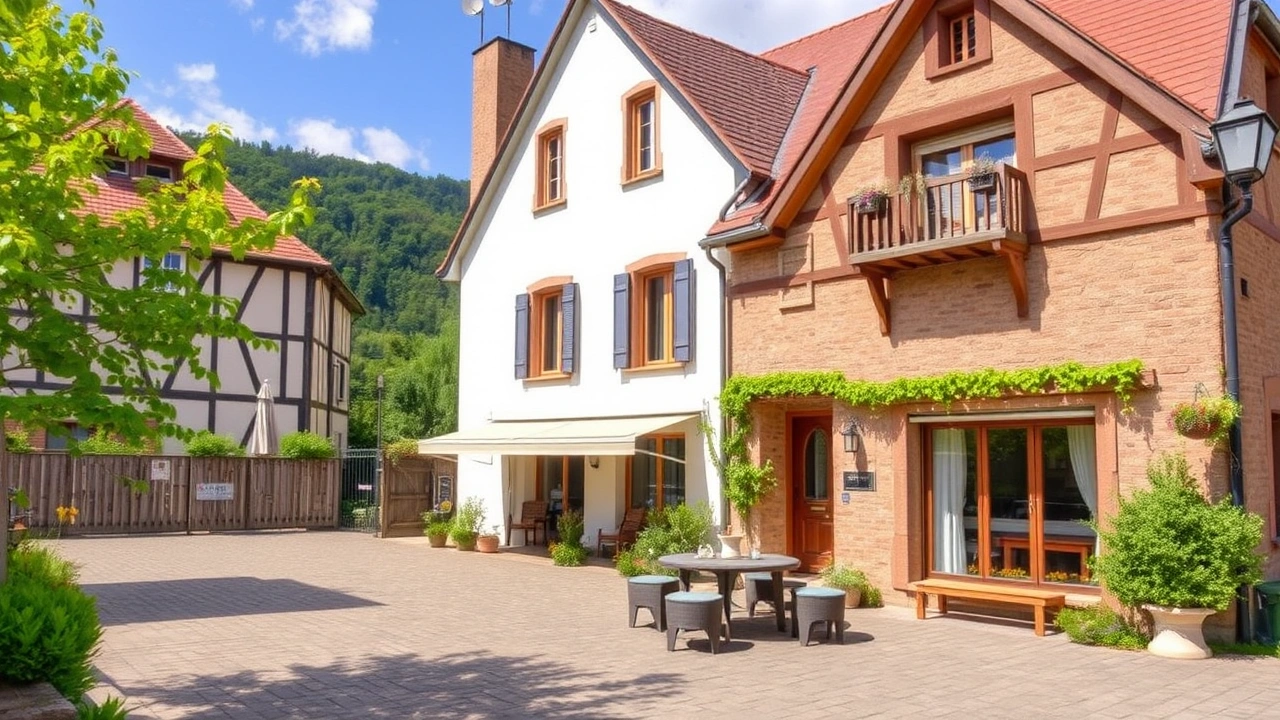
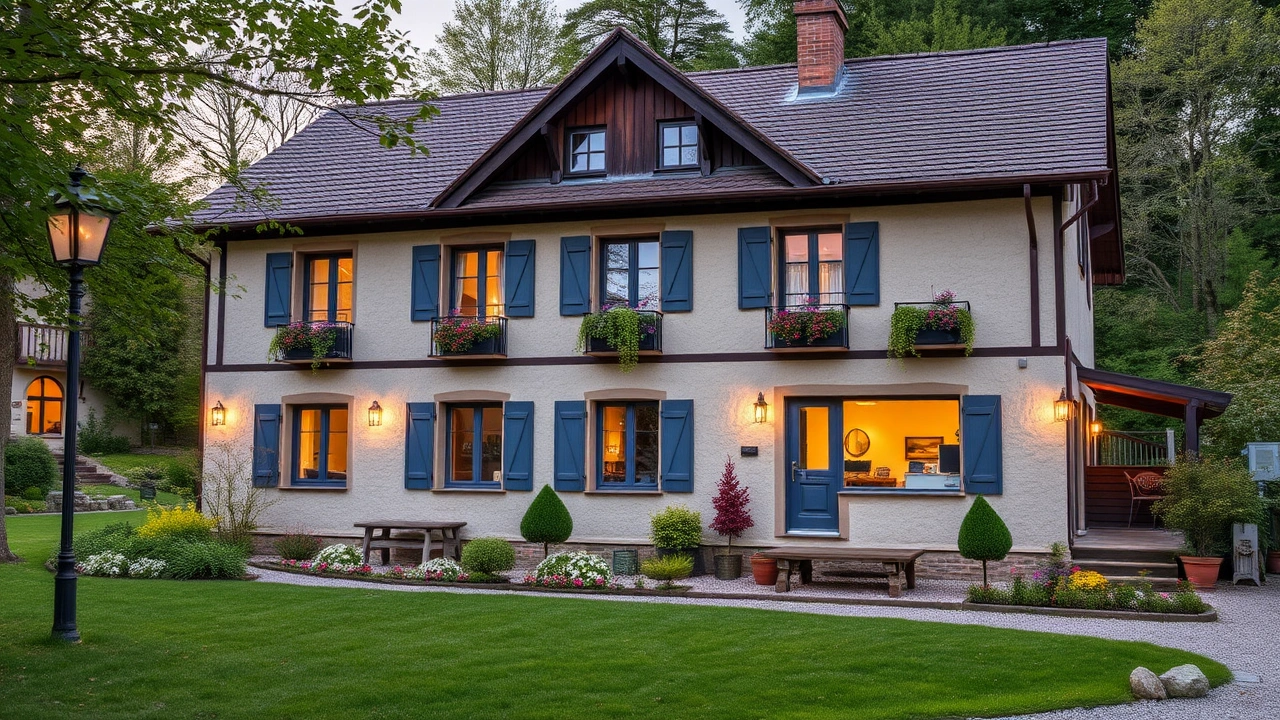
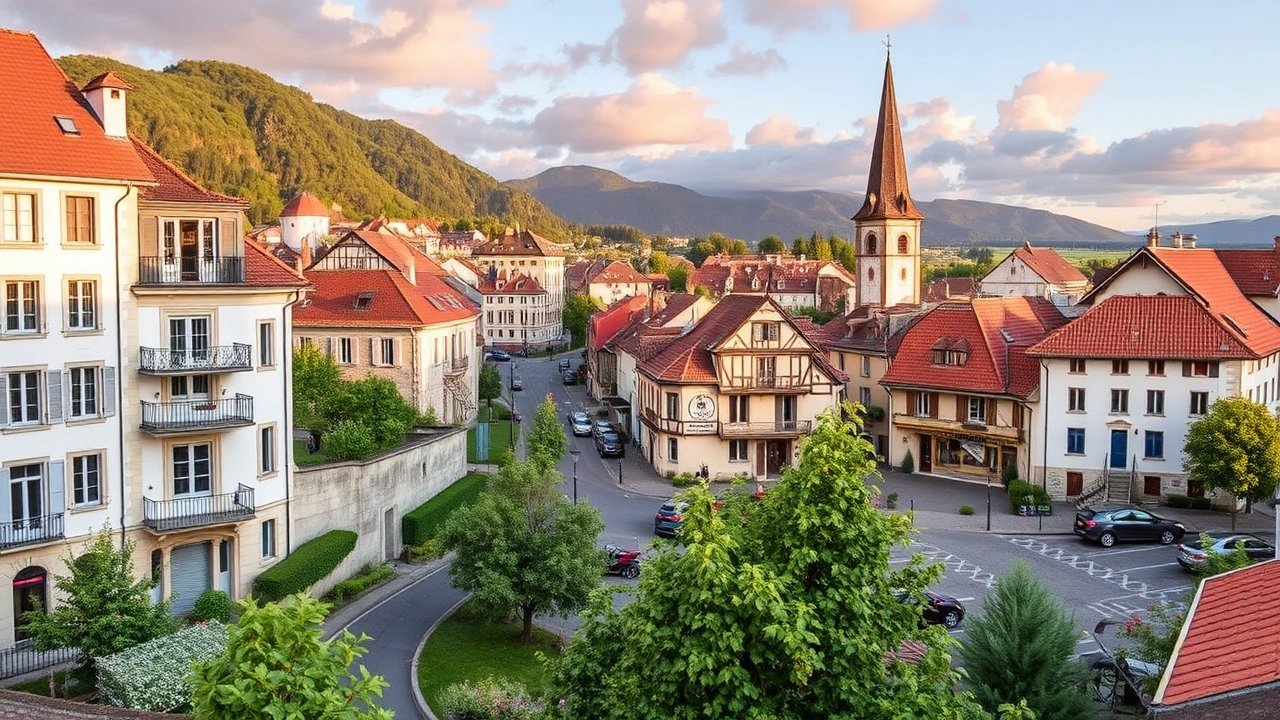
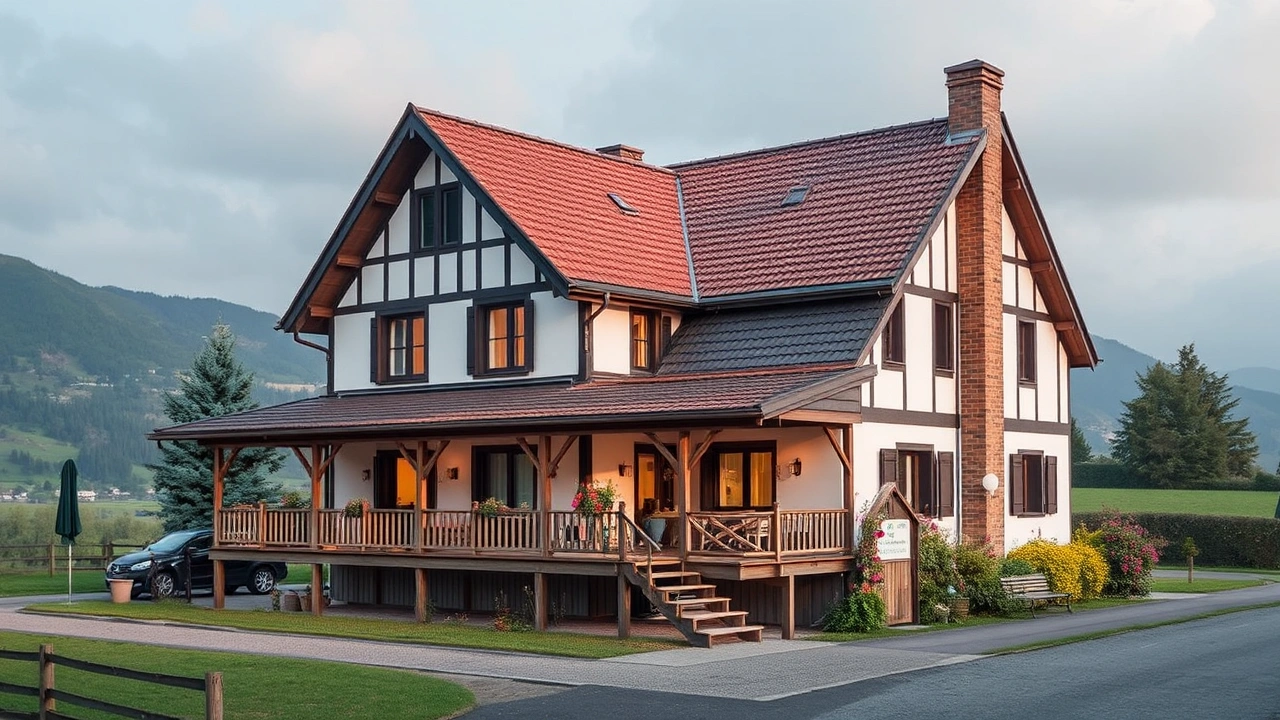
The image is idyllic: a wooden chalet in Kitzbühel, a panoramic view of the Wörthersee, a design duplex in Innsbruck, or a bourgeois apartment in the heart of Vienna rented out on a short-term basis. But behind the postcard, Austria’s second home market is one of the most regulated, segmented—and expensive—in Europe.
The acquisition of a second home in Austria is subject to legal restrictions, strong tourist pressure, specific taxation, and the challenges of the energy transition. It constitutes more of a strategic asset investment than an impulsive purchase, in a niche market characterized by scarcity.
An attractive market… but far from free
Austria ticks almost all the boxes sought by cautious investors. The economy is considered a European “blue chip,” political stability is high, the currency is strong (euro), and legal security is remarkable thanks to a public and reputedly reliable land registry (Grundbuch). The country also remains one of the continent’s major tourist destinations, with over 139 million overnight stays in 2023 and a new record of over 154 million in 2024.
However, the real estate market long seemed “dormant.” From the 1990s until 2005, prices rose more slowly than elsewhere in Europe. It was only with the 2005 reform, which removed many obstacles to purchases by foreigners, that the market truly opened up. Foreign investors, driven away by exploding prices in Switzerland and France, then turned to this “last still affordable Alpine territory.”
Context of the Alpine real estate market
Since then, the landscape has changed: the combination of the tourist boom, low interest rates, the search for tangible safe havens after the financial crisis, and then the post-Covid “race for space” has driven prices upward, especially in the Alps. In the most sought-after ski resorts, values jumped by about 50% between 2013 and 2019/2020, with peaks exceeding 60% in some areas like Zell am See.
To protect local residents from soaring prices and avoid ghost towns, the freedom to purchase and use second homes is much more regulated than in France or Switzerland.
A broadly stabilized market, the Alps still under pressure
On a macro level, Austrian residential real estate is coming out of a correction phase. After a decade of rapid growth (residential prices rose 24 to 27% nationally over five years, and about 35% in Vienna), rising interest rates and the economic slowdown reversed the trend.
In 2023, housing prices fell by about 2.35% nationally in nominal terms, or more than 7% in real terms once inflation is accounted for. The decline continued into 2024: the residential price index fell by 1.08% over the year, with a 2.1% drop in December year-over-year. Vienna also corrected: -3.01% in 2023, -2.08% in 2024.
Average increase in real estate prices in the first half of 2025 compared to the previous year.
Forecasts are cautious but positive: between 0 and 1% expected increase in 2025, 1 to 2% in 2026, 2 to 3% in 2027, then 2 to 4% per year by 2028–2030. The message is clear: Austria offers more of a value preservation perspective than a speculative bet on high capital gains.
In this relatively moderate national picture, second home regions stand out as an exception due to their structural tension.
Tyrol, Salzburg, Carinthia: the geography of dream prices
The price differences between regions are spectacular. For a 150 m² house, the gap between Tyrol and Burgenland is almost triple.
Average prices for a 150 m² house by region
| Region | Average house price 150 m² | Average price per m² |
|---|---|---|
| Tyrol | €1,074,519 | €7,163/m² |
| Vienna | €962,144 | €6,414/m² |
| Salzburg | €868,421 | €5,789/m² |
| Vorarlberg | €825,000 | €5,500/m² |
| Styria | €474,375 | €3,163/m² |
| Burgenland | €363,480 | €2,423/m² |
For second homes, the core issue clearly lies in the Alpine Länder:
Tyrol is the most expensive region, with apartments around €5,500/m² on average, exceeding €9,000/m² in Innsbruck and €10,000 to €15,000/m² in Kitzbühel. Salzburgerland offers a wider range, with an average price in Salzburg of €5,230/m² in 2020, now exceeding €8,500/m². Carinthia, slightly less expensive, sees prices around Lake Wörthersee approaching €5,000/m² on average, with extremes beyond €18,000/m².
Average apartment prices (all regions, order of magnitude)
| Region | Median apartment price €/m² |
|---|---|
| Tyrol | €12,241/m² |
| Carinthia | €7,653/m² |
| Vienna | €5,119/m² |
| Salzburg | €5,415/m² |
| Vorarlberg | ~€4,400/m² |
| Upper Austria | €4,083/m² |
| Styria | €3,473/m² |
| Lower Austria | €3,192/m² |
| Burgenland | ~€2,400/m² |
For a second home buyer, the message is twofold: Austria is generally cheaper than Switzerland, but the iconic resorts (Kitzbühel, Lech, St. Anton, Zell am See) play in the same league as Davos or St. Moritz. The “good deal” is more likely to be found in second-tier areas: Ski Amadé, certain parts of Styria or Carinthia.
Three legal statuses that change everything
The real crux of the matter, however, is not so much the price as the property’s legal status. In Austria, everything revolves around three essential categories:
– Hauptwohnsitz (primary residence)
– Touristische Vermietung (touristic use property, with short-term rental)
– Zweitwohnsitz (second home in the strict sense)
Hauptwohnsitz: primary residence, a false good idea for a pied-à-terre
A Hauptwohnsitz is a dwelling declared as the primary residence of its occupant. In theory, nothing prevents a foreigner from buying one. In practice, it often implies:
– registration as a primary resident in the municipality;
– extended tax obligations in Austria;
– prohibition, according to local regulations, from renting the property to tourists on a professional basis.
Many foreigners, thinking they are buying a vacation home, discover they have actually acquired a primary residence with heavy tax constraints and no legal right to do Airbnb. This is one of the costliest mistakes in the market.
Touristische Vermietung: the dominant model in resorts
Most new developments in Alpine resorts over the past decade have been built on land zoned for touristic use. Legally, these are properties intended to be rented to visitors, with:
To benefit from the LMNP (Non-Professional Furnished Landlord) tax regime for a touristic residence, three main conditions apply. First, the property must be rented out through a professional operator or agency. Second, personal use by the owner is strictly limited, usually to an annual period of 4 to 12 weeks. Finally, the property must obtain the tax status of “touristic accommodation,” which allows recovery of the 20% VAT on the purchase price, subject to meeting rental obligations and generating a profit over a 20-year period.
These properties are often structured as “apart-hotels”: buyers are co-owners of their unit, but management (marketing, reception, cleaning, maintenance) is handled by a hotel operator. Income is paid either based on the performance of each unit or via a pool where total revenue is pooled and then distributed pro rata.
Some key characteristics:
– targeted gross yield: often between 3 and 6% per year;
– variable management fees: 20 to 30% of collected rents;
– strong dependence on local tourism health, but seasonal diversification in “4-season” resorts.
For the majority of non-residents, especially non-EU nationals, this is the main access channel to the Austrian second home market.
Zweitwohnsitz: the elusive Holy Grail
The Zweitwohnsitz (or Nebenwohnsitz) is the true second home in the common sense: entirely free use by the owner, no rental obligation, possibility of never occupying it without having to account for it. In other words, the dream of a family chalet opened for a few weeks a year.
This status is, however, extremely rare:
– most Alpine resorts set extremely low quotas for Zweitwohnsitze as early as the 1960s-70s, quickly saturated;
– some areas have been classified as “Zweitwohnsitzgebiete” – zones where all dwellings are by definition second homes – but these are often places historically considered poorly suited for permanent occupancy (high altitude, difficult access).
Two main categories remain:
1. properties that benefit from a Zweitwohnsitz right “acquired” before a key date (e.g., before May 1, 1969 or March 1, 1992 depending on the province); 2. areas explicitly zoned as “Zweitwohnsitzgebiete” in certain urban plans.
Their rarity has a direct consequence: these properties sell very quickly and at a premium of 20 to 50% compared to a comparable property without this status. In some villages in Salzburgerland, a few chalets still classified as Zweitwohnsitz – nicknamed “jewels” in listings – practically disappear as soon as they hit the market.
Regulation fragmented by Länder, particularly tough for non-EU
Another key specificity of the Austrian second home market: regulation is not national, but largely regional. Each Land has its own law on property acquisition by foreigners (Ausländergrunderwerbsgesetz or Grundverkehrsgesetz) and decides on second home control policy.
EU / EEA citizens: quasi-equality with Austrians
For nationals of the European Union, the European Economic Area, and Switzerland, the regime is in principle simple: they are treated like nationals for property purchases. No specific quota, no prior authorization linked to nationality. The restrictions that apply concern the type of property and its zoning, not the passport.
Practical information on the conditions for purchasing property in Austria for French and German nationals.
Possibility to purchase a touristic residence or a Zweitwohnsitz (if available) in the Austrian Alps region.
Possibility to acquire an apartment in urban centers, such as Vienna or Graz.
Mandatory compliance with local Austrian law, including zoning rules and any quotas.
Non-EU: an obstacle course, especially in the Alps
For third-country nationals (post-Brexit, this includes British citizens), the situation is radically different:
The purchase of property by a non-resident in Austria is subject to the quasi-systematic requirement of obtaining authorization from the local land commission (Grundverkehrsbehörde). The granting criteria, variable and not very transparent depending on the Länder, lead to processing times of 2-3 months to over a year. Refusals are frequent for second home or touristic lodging projects, especially in sensitive regions like Tyrol, Salzburg, and Vorarlberg.
Some Alpine Länder are de facto closed to non-EU nationals for second homes and touristic properties, except in very specific cases (permanent relocation, job-creating economic activity, family reunification, etc.).
In practice, many non-EU nationals therefore focus on Vienna and a few major cities (Graz, Linz), where access is more flexible, or use structures via a European company, provided they demonstrate real economic activity.
Quotas and taxes to contain “cold beds”
Faced with the proliferation of second homes empty for most of the year, several instruments have been put in place to curb the phenomenon.
Second home quotas: the structural lock
In regions like Tyrol, the spatial planning law set a maximum cap of 8% for recreational residences in a municipality’s housing stock. In most iconic ski resorts (Ischgl, Serfaus, Kitzbühel, Sölden, etc.), this quota is largely reached, which virtually blocks any new creation of Zweitwohnsitz.
National recommendations (ÖROK, 2022) have also encouraged Länder to:
To regulate the market, it is necessary to enshrine this objective in planning, set regional caps, create municipal registries, and strengthen controls and sanctions against non-compliant uses, such as the illegal tourist rental of a primary residence.
Taxes on second homes and vacant housing
To strengthen deterrence, several Länder have introduced in recent years:
– a Zweitwohnsitzabgabe (tax on second homes);
– a Leerstandsabgabe (tax on vacant housing).
These taxes already exist in Salzburg, Styria, Tyrol, Vorarlberg, and Carinthia. The rules vary strongly from one Land to another, but the objective is twofold:
– discourage housing left permanently empty;
– make non-resident owners contribute more to funding local infrastructure.
The city of Vienna will introduce a tax on second and vacation homes starting in 2025. This measure will also apply to long-term vacant housing. Exemptions are provided, notably for apartments that, despite serious and demonstrated efforts, could not be rented at market price for at least six months.
These taxes raise legal debates (infringement on property rights, risk of “confiscatory” taxation) but the federal legislature recently provided an explicit constitutional basis for the possibility for Länder to levy vacancy taxes.
Second home taxation: getting into the fine details
The profitability of a second home in Austria depends not only on the purchase price or rental level, but also on a dense tax system, which clearly distinguishes:
– taxation of resale (capital gains);
– taxation of rental income;
– transaction and property taxes;
– depreciation regimes and ecological incentives.
Upon resale: real estate gains tax
Since April 2012, all real estate capital gains are in principle taxable, the old “speculation period” of 10 years having been abolished. The standard rate is:
– 30% on the net gain (difference between sales price and adjusted acquisition cost).
Reduced regimes exist for very old properties (“old cases” acquired before 2002), with effective rates of 4.2% or 18% on the sales price in certain scenarios of change of use.
However, major exemptions apply:
Real estate capital gains can be exempted in three main cases: the sale of a primary residence occupied either continuously for at least 2 years since acquisition, or at least 5 years out of the last 10 years (5/10 rule); the sale of a building constructed by the owner for their own use, provided the property has not generated rental income in the last 10 years (only the gain on the land remains taxable); and forced sales or those resulting from an expropriation procedure.
For a classic second home, these exemptions rarely apply. Therefore, this 30% on potential capital gains must be factored into any exit strategy calculation.
Rental income: progressivity, deductible expenses, VAT
Rents received (seasonal or annual rental) are subject to progressive income tax:
– 0% up to €12,816/year;
– from 20% to 50% depending on brackets up to €1,000,000;
– 55% above €1,000,000.
The taxable base is, however, reduced by a wide range of deductible expenses:
– loan interest;
– management fees, agency fees;
– maintenance and repair expenses;
– insurance, condominium charges, energy;
– depreciation of the building.
In some cases (small furnished units, guest rooms), a lump sum of 30% for expenses (excluding VAT) can be applied instead of accounting for all costs.
Regarding VAT:
– in principle, rental of residential housing is exempt from VAT;
– but tourist accommodation is subject to a reduced rate of 10%, which allows operators to recover VAT on their investments;
– small landlords with less than €35,000 in annual turnover excluding VAT are exempt from VAT, but cannot then deduct VAT on their expenses;
– from €33,000 in rental income, VAT registration generally becomes mandatory.
Transaction: “notary fees” in the broad sense
Acquiring a property in Austria incurs an additional cost of 10 to 15% of the price, a key piece of data for any investor.
Main items:
| Item | Order of magnitude |
|---|---|
| Property transfer tax (Grunderwerbsteuer) | 3.5% of the price |
| Land registry registration fee | 1.1% of the price |
| Real estate agent fees | up to 3% + VAT |
| Legal / notary fees | 1 to 3% |
| Mortgage registration (if financed) | 1.2% of the loan |
Additionally:
Federal base rate used for calculating property tax in Germany, subsequently modulated by municipalities.
For rented properties, only the value of the building (excluding land) is depreciable:
– standard rate: 1.5% per year;
– buildings prior to 1915: 2%;
– since July 2020, possibility to apply triple depreciation in the first year (4.5%) and double in the second (3%) for new constructions.
A specific scheme targets highly energy-efficient housing:
– for certain residential buildings completed between 2024 and 2027 meeting high energy standards, accelerated “off-balance sheet” depreciation over the first three years is possible;
– furthermore, an “eco bonus” allows for a fictional deduction of 15% of energy renovation investments (insulation, heat pumps, etc.) as additional expenses in 2024–2025.
In other words, the energy transition translates not only into increased value for “green” properties, but also into a tangible tax advantage for landlord owners.
The credit lever: an under-mortgaged market, still cautious
Compared to other European countries, Austria remains less indebted in real estate: outstanding housing loans represent about 27.7% of GDP, compared to 50% on average in the EU. Banks remain cautious, however, especially for non-residents and second homes.
Common practices:
– personal contribution: 20 to 30% of the price for residents, 30 to 50% for non-EU nationals;
– loan-to-value (LTV) ratios: often capped at 70–80%, lower for a pure Zweitwohnsitz;
– loan maturity: 20 to 30 years;
– recommended debt service ratio: < 35–40% of net income.
After a peak around 4.1% in 2023, interest rates stabilized in 2024–2025 around 3–3.5% for long-term fixed-rate loans. Lower offers, between 1.8% and 2.25%, are available for shorter fixed terms. Furthermore, “green” products (green mortgages) are developing, offering preferential conditions for high energy-performance housing.
A point to note: in 2022, the regulator imposed strict safeguards via the KIM-VO ordinance (minimum contribution, maximum term, debt service cap). These rules are officially being relaxed from mid-2025, with banks regaining more leeway, but the cautious spirit remains, especially in the already very tight Austrian second home markets.
Second homes and short-term rentals: a highly structured market
For many buyers, especially foreigners, the second home should be able to partially finance itself. Hence the importance of the tourist rental market, dominated by apart-hotels in the mountains and Airbnb-type rentals in cities.
Vienna, Salzburg, Graz: the urban game
In Vienna, short-term rentals have become a pillar of the quasi-urban second home market:
– about 10,800 active listings recorded in fall 2024;
– a median occupancy rate close to 77%;
– an average annual income around €24,000, or nearly €2,400 per month, based on an average rate of about €90–110 per night and 280 occupied nights.
The average gross yield in Vienna is around 4.1%, with strong disparities:
The gross rental yield can reach nearly 7% in well-connected peripheral districts of Vienna.
In Salzburg, a city of art and tourist destination, average rents reach €11.3/m², gross yields are around 3.6%, and seasonal rentals in the historic center benefit from high demand (festival, cultural tourism).
Graz, a major student city (over 31,000 students at the University), offers slightly lower yields (2.7% on average) but prices about 35% lower than Vienna, making it a “balanced” market for second homes intended for long- or medium-term rental.
Alpine resorts: high potential but rigid framework
In the Alps, the typical structure is that of the touristic residence/apart-hotel:
– obligation to go through a manager;
– limited owner occupancy;
– model either with guaranteed income (capped yield but risk transferred to the operator), or with variable income (riskier but more lucrative in high season).
Typical performance figures:
Some properties in top Tyrolean resorts can generate up to €125,000 in annual rental income.
Gross yields in these areas range from 3 to 8% depending on:
– immediate proximity to slopes or a cable car;
– dual seasonality (summer/winter);
– positioning (luxury, wellness, family);
– the operator’s ability to fill during the pre- and post-season.
Note: in Austria, over 90% of properties sold to non-residents in resorts are structured rental investments, and 70–90% of slope-side dwellings without primary residence status are owned by foreigners. The idea of a purely private “intimate” chalet remains the exception.
The environmental angle: climate, snow, and energy liabilities
The climate variable weighs increasingly on the Austrian second home market.
– Low-altitude resorts see their snow seasons shortening, with growing pressure to diversify into summer and wellness activities.
– Destinations above 1,000 m (Bad Gastein, Katschberg, Obergurgl) benefit from a comparative advantage in terms of snow reliability, which better supports second home values.
– Sharply rising energy costs (electricity networks +23.1%, gas +16.6% in 2025) make poorly insulated housing significantly less attractive.
Simultaneously, Austria has made energy efficiency a strategic axis:
– over 14,000 passive houses built since 1994, mainly in Tyrol;
– public programs such as “Building of Tomorrow,” subsidizing thermal insulation and renewable systems;
– Renewable Energy Law (2021) and Renewable Heating Law aiming to phase out fossil fuels by 2035/2040.
Direct consequence for second homes:
– new chalets and apartments with certification (LEED, BREEAM, ÖGNI, klimaaktiv) sell faster, for more, and obtain “green” financing more easily;
– old properties without a renovation plan risk becoming “stranded assets,” difficult to rent and more heavily taxed in the long run.
Buyer profiles and strategies: who buys, where and why?
The clientele for Austrian second homes mirrors the country: very international, but with clear geographic logic.
Overview of the main nationalities and profiles of foreign buyers in the Austrian Alpine regions.
Germans and Dutch dominate the Tyrol and Salzburgerland markets, motivated by geographic and cultural proximity.
Scandinavians, British, and Eastern Europeans (Czechs, Slovaks, Hungarians, ex-Yugoslavia) complete the landscape, the latter favoring Styria and Carinthia.
Growing demand from baby boomers seeking a seasonal retirement residence and remote workers looking for an Alpine base with fiber optic connection.
The market remains atypical on one point: turnover is low. Owners generally keep their properties for many years, even to pass them on. Few quick “flips”: most transactions involve new builds, often sold off-plan, with resales on the secondary market remaining limited.
Dominant strategies:
– search for stable rental income (apart-hotels, touristic residences);
– securing a patrimonial safe haven in a country perceived as politically and legally stable;
– diversification against more volatile domestic markets (Central and Eastern Europe).
Comparison: why Austria over France or Switzerland?
In the Alpine landscape, Austria sits between two models:
Switzerland is very exclusive with a highly restrictive law (Lex Koller) and high prices. Austria offers prices up to half as much for similar properties, even in prestigious resorts like Kitzbühel, although the gap is narrowing. France is more accessible legally, with few restrictions for non-EU nationals, especially in the Alps, and more flexible regulations on second homes. New developments with rental management allow for VAT recovery, with prices on average 20% lower for comparable resorts.
Austria distinguishes itself by:
– legal security superior to many neighboring markets;
– a highly diversified tourism (skiing, thermal baths, culture, lakes) that supports rental income;
– but also by a more intrusive regulatory framework on property use, tourist rentals, and ownership by non-EU nationals.
For an investor, the choice will therefore depend less on the simple entry ticket than on their tolerance for regulatory complexity and their holding horizon.
Issues and risks: what buyers often underestimate
Several risks regularly appear in dispute cases:
Several pitfalls are frequent: confusion between primary residence and tourist rental, ignorance of strict local regulations (such as the ban on new tourist rentals in Salzburgerland since 2018), underestimation of ancillary costs (10-15% transaction costs, taxes, management), the mistake of believing that purchase facilitates obtaining a residence permit (it grants no additional rights), and the risk related to the language and legal barrier (signing contracts in German without independent advice).
To these are added more structural risks: possible evolution of quotas and taxes on second homes, climate impact on certain resorts, or potential tightening of Airbnb rental rules in major cities.
The Austrian second home market in 2025: safe value, relative freedom
In the end, the Austrian second home market is a balancing act between four forces:
The country’s attractiveness rests on robust tourism, great stability, and exceptional quality of life, notably in Vienna. The market is regulated by organized scarcity via quotas and strict development control. Taxation, although rigorous, is predictable and offers optimization levers for rental projects and ecological renovations. Regulation is particularly complex for non-EU nationals wishing to acquire an Alpine second home.
For those looking for a quick speculative bet, Austria is not the ideal ground. For those who want, on the other hand, to combine personal use, reasonable rental income, and capital preservation in a solid institutional environment, the Austrian second home market remains one of the most coherent in Europe – provided one accepts that here, more than elsewhere, the freedom to use a chalet or an apartment is never acquired without a careful reading of the legal fine print.
Disclaimer: The information provided on this website is for informational purposes only and does not constitute financial, legal, or professional advice. We encourage you to consult qualified experts before making any investment, real estate, or expatriation decisions. Although we strive to maintain up-to-date and accurate information, we do not guarantee the completeness, accuracy, or timeliness of the proposed content. As investment and expatriation involve risks, we disclaim any liability for potential losses or damages arising from the use of this site. Your use of this site confirms your acceptance of these terms and your understanding of the associated risks.

Cyril Jarnias is an independent expert in international wealth management with over 20 years of experience. As an expatriate himself, he is dedicated to helping individuals and business leaders build, protect, and pass on their wealth with complete peace of mind.
On his website, cyriljarnias.com, he shares his expertise on international real estate, offshore company formation, and expatriation.
Thanks to his expertise, he offers sound advice to optimize his clients' wealth management. Cyril Jarnias is also recognized for his appearances in many prestigious media outlets such as BFM Business, les Français de l’étranger, Le Figaro, Les Echos, and Mieux vivre votre argent, where he shares his knowledge and know-how in wealth management.