 Published on and written by Cyril Jarnias
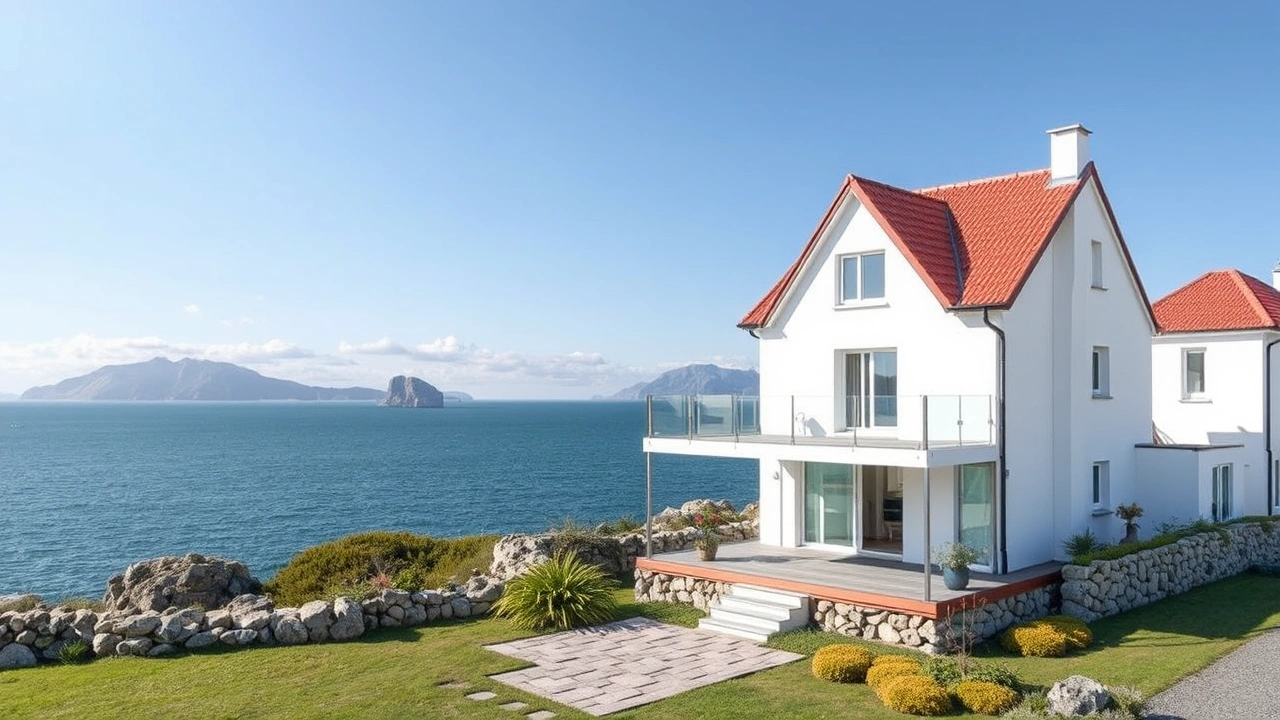
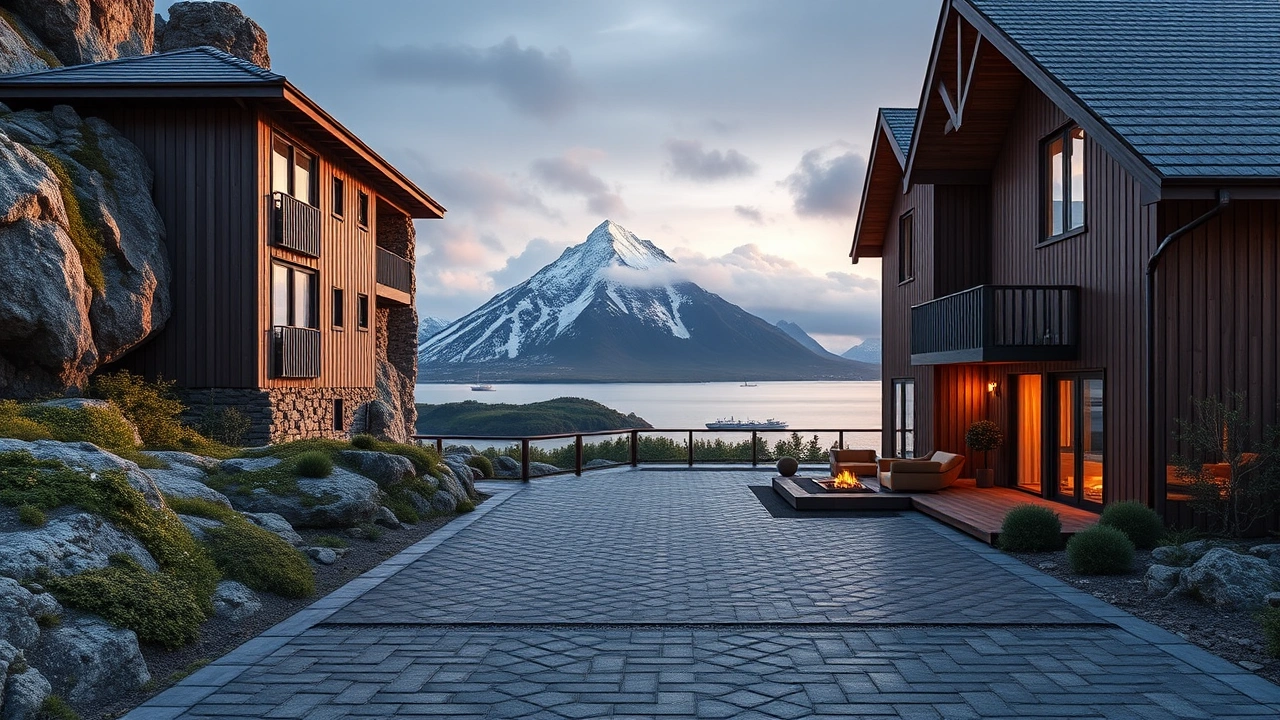
Renovating an ICELAND property is far more than a simple paint job. Between a tight real estate market, a demanding regulatory framework, harsh climate, and a unique energy system, every choice impacts the cost, comfort… and carbon footprint of your future home. However, with proper preparation, a renovation in Iceland can become a very solid investment, technically efficient, and sustainably pleasant to live in.
This guide is based on data from Icelandic agencies (HMS, Central Bank, Statistics Iceland), academic studies, and the national climate roadmap for the building sector. It aims to help plan, finance, and manage the renovation of a property in Iceland while minimizing risks and maximizing long-term value.
Understanding the Icelandic Context Before Renovating
Before touching a single wall, you must grasp three major specificities: the housing stock structure, the climate, and the energy system.
In Iceland, houses are very new by European standards: the average age of the housing stock is under 30 years. A study by Björn Marteinsson on homes in Reykjavik and Akureyri shows that most houses are built with cast-in-place concrete, with concrete slab floors and many load-bearing walls, especially in constructions from the 1950s‑1960s. Interior load-bearing walls remain common, although newer homes incorporate more lightweight partitions made of wood or lightweight blocks.
This structural reality has two direct consequences for a renovation:
Moving or removing interior walls, a frequent intervention to create open spaces, is particularly complex because these walls are often load-bearing. This highly sought-after adaptation requires proper structural engineering and should not be improvised.
In Marteinsson’s study, the property owners surveyed, most of whom were personally involved in the work, nonetheless judged their homes to be very high-performing, even the older ones. This confirms that deep renovation works: no functional obsolescence linked to age is observed. Instead, technical (condition of the structure, installations, envelope) and economic (cost vs. value) reasons determine a building’s useful life.
Iceland’s unique geophysical environment, located on the Mid-Atlantic Ridge, imposes specific constraints on constructions. They must withstand permanent geothermal, seismic, and volcanic activity, as well as strong winds, high humidity, large temperature variations, regular tremors, and sometimes ashfall. In response to this climate, which is harsh on materials, studies reveal a specific consumption: massive use of concrete and rock fill, leading to a material intensity much higher than that of typical wooden houses in other countries.
On the energy side, the situation is radically different from most countries. Approximately 90% of heating and domestic hot water come from geothermal energy via district heating networks; the capital Reykjavik has the world’s largest urban geothermal heating system. The cost of geothermal heating is very low compared to oil or electricity (around 1.5 to 3 US cents/kWh for the customer). As a result, many older houses were designed in a context where energy was cheap, which may have delayed some insulation or window replacement work.
Therefore, renovating an ICELAND property means working with:
– a structure often made of load-bearing concrete;
– a climate that is aggressive to materials;
– very cheap but low-emission heating energy;
– and a usual strong involvement of owners in maintenance work.
Regulations: Permits, Local Plans, and Heritage Protection
In Iceland, it is impossible to embark on a serious renovation without going through the permit process. The system is structured around several levels: national laws, municipal development plans, building permits, and technical approvals.
The legal basis can be found in the Planning Act No. 123/2010 and its accompanying regulations. Municipalities are responsible for local development plans, which define for each neighborhood or block the building dimensions, placement, use, appearance, material requirements, public spaces, etc. Every building permit must comply with this framework.
Concretely, the procedure begins by contacting the planning department of the municipality where your property is located. This department will inform you of:
Before submitting an application, it is crucial to check whether a local zoning plan or similar document applies to your plot, as it defines the specific rules. You must also determine if your project requires a simple preliminary notification or a full building permit. Finally, find out precisely about the mandatory technical documents to include, such as plans, sections, and any required studies.
The building permit application is submitted online via the portal of the Housing and Construction Authority (Húsnæðis- og mannvirkjastofnun, HMS), using an Icelandic electronic ID. You must detail the project, designate a design manager, a construction manager, the paying entity (owner), and upload all necessary plans, reports, and forms. Documents must not exceed a certain size, be correctly named, and any update requires submitting a complete set of revised plans. Once the application is deemed complete, it is forwarded to the building commissioner for review.
In some cases, it’s not just a building permit that’s needed, but also:
Before undertaking demolition work, several specific permits must be obtained from the relevant authorities.
Requires notifying the public health authority and a final inspection.
Issued by the Electrical Safety Authority.
Issued by the local building authority.
Historic buildings or those located in conservation areas benefit from enhanced protection. The law prohibits demolishing a listed building without specific authorization, and renovation work is subject to stricter rules regarding the preservation of facades, volumes, and even materials. Again, local planning and heritage services guide the process.
Finally, there are simplified neighborhood plans (hverfisskipulag) for established residential areas without major development projects. They allow for more flexible adjustments but do not remove the obligation to submit a formal application whenever work affects the structure, external appearance, or use of the building.
Project Planning: Assessment, Goals, and Budget
In a country where nearly one-third of the value added relies on project-mode work, project management is not a luxury but a necessity. A study on the “projectification” of the Icelandic economy shows that the use of project management methods is particularly widespread in industry and services and is constantly increasing. Renovating an ICELAND property by leveraging this project culture helps avoid cost overruns and delays.
It all starts with a detailed technical assessment of your property. It should cover:
– the structure (foundations, load-bearing walls, slabs): checking for cracks, settlement, reinforcement corrosion;
– the external envelope: roof, rainwater drainage system, facade cladding, terrace waterproofing;
– systems: electricity, plumbing, heating, ventilation;
– pathologies: water ingress, condensation, hidden mold;
– existing thermal and acoustic insulation.
An energy audit identifies the four main sources of heat loss: attics, walls, floors, and windows.
Based on this assessment, you can decide between renovation and reconstruction. Recommendations from European experience remain valid: if the main structure is severely damaged (subsiding foundations, compromised framework), or if the cost to achieve the desired performance far exceeds that of a new build, demolition may be more rational, subject to heritage and planning constraints. Conversely, a well-located building, possibly in a city center, with a sound structure, often deserves to be renovated, especially in a real estate market where buildable land is scarce and expensive.
Icelandic homeowners have a strong desire to modify their homes so they remain suited to their needs, regardless of the house’s age. There is no automatic obsolescence over time. This argues for ambitious yet targeted renovation projects, rather than a systematic demolition-reconstruction reflex.
Marteinsson Study
From a budgetary perspective, standard benchmarks remain relevant. Design and permit costs can represent 5 to 10% of the total cost. Materials often account for 40 to 50% of the budget, labor for 30 to 40%, with the remainder composed of various fees, studies, insurance, and contingencies. For an older house, a 10 to 15% contingency reserve is highly recommended, as unpleasant surprises (hidden moisture, degraded systems) are common.
The table below schematically illustrates a budget breakdown for a major renovation:
| Expense Item | Indicative Share of Total Budget |
|---|---|
| Design, Studies, Permits | 5–10 % |
| Demolition, Stripping Out | 5–10 % |
| Structural Work / Framework | 20–30 % |
| Envelope (Roof, Facades, Insulation) | 15–25 % |
| Systems (Electrical, Plumbing, Ventilation) | 10–20 % |
| Interior / Exterior Finishes | 15–25 % |
| Miscellaneous, Fees, Insurance | 5–10 % |
| Contingency Reserve | 10–15 % |
Alongside the budget, the timeline must be realistic. The design and permit acquisition phases can take several weeks to several months depending on the project’s complexity and the municipality’s workload. The construction site itself, for a complete structural and energy renovation, easily spans 6 to 12 months, excluding finishes.
Building Permit and Online Procedures
The core of the administrative procedure is on the HMS portal. A standard application must include:
– property identification (cadastral number, address);
– the nature of the application (new application, modification of an already granted permit);
– a detailed description of the planned work;
– designation of key stakeholders: design manager, construction manager, paying owner;
– graphic documents: site plan, floor plans, sections, elevations;
– any reports (structural, geotechnical, fire safety, environmental).
The documents are reviewed by the building commissioner. After validation, the plans are electronically “sealed“. For minor works exempt from a full permit (certain minor interior modifications, short-term temporary structures), a simple notification of work to the municipality is still required, with the issuance of a confirmation.
Temporary buildings or container storage on a plot for more than a few months also require a permit, even if the duration is limited. Demolition is also formally regulated: it requires a specific permit, a notification to public health services, and a final report.
The entire system relies on the articulation between permits and the local plan. The National Planning Agency controls overall coherence, but the local authority remains the municipality. Finally, all information on current or revised plans is accessible via the national portals Skipulagsvefsjá and Skipulagsgátt, which allows you to check the state of planning around your ICELAND property.
Financing the Renovation: Loans, Conditions, and Interest Rates
Renovating an ICELAND property often involves significant amounts, especially since the construction cost index has risen sharply since 2021. A central tool for finalizing the financing plan is the renovation loan managed by the Housing & Construction Authority (HMS).
This loan product is intended for individuals who need to carry out necessary maintenance or improvement work. The rules are strict:
– the official property value (Fasteignamat) must be below 73 million ISK;
– the property must be over 10 years old;
– the total renovation cost must reach at least 625,000 ISK;
– the total loan amount cannot exceed 44 million ISK per property;
– the loan can cover up to 80% of the work costs;
– funds are disbursed only after work completion.
Eligible work includes external repairs, replacement of water pipes or electrical installations, as well as interior painting and finishing work if they are part of a broader repair program. The owner’s own labor, donated materials, or free services are never included in the financed base.
This loan exists within a credit environment where most Icelandic mortgages are inflation-indexed and where interest rates vary depending on whether they are variable or fixed. In early 2025, average rates for new non-indexed variable-rate mortgages exceeded 10%, while indexed loans showed nominal rates around 4 to 5%, but with capital indexed to the price index. The majority of outstanding housing loans (about 62% of the stock) are indexed, which changes the capital trajectory over the long term.
Beyond the HMS renovation loan, other financial institutions (commercial banks, pension funds, specialized funds like Gildi) offer loan products secured by a mortgage on the residence. The most common criteria revolve around:
The granting of a mortgage loan primarily depends on four elements: the loan-to-value ratio (generally limited to 70-80% of the property’s value), the borrower’s creditworthiness (repayment capacity and credit score), the type of interest rate (indexed or not, fixed or variable), and the loan term (can range from 5 to 40 years depending on the fund).
The conditions outlined below provide an overview of the typical parameters of an HMS renovation loan:
| Parameter | Indicative Condition |
|---|---|
| Max. Official Property Value | 73 M ISK |
| Minimum Property Age | > 10 years |
| Minimum Work Cost | 625,000 ISK |
| Maximum Loan Amount | 44 M ISK |
| Maximum Share of Costs Covered | 80 % |
| Time of Fund Disbursement | After completion and verification of work |
Note: the post-renovation value of the property is crucial. A detailed construction description and cost estimate are sent to an appraiser, who assesses the post-work market value. The borrowing capacity can then, in some cases, reach up to 100% of this post-work value, but renovation costs do not always translate into an equivalent gain in value. The portion not covered by the loan must be financed with equity.
In a market where housing prices, especially in the capital region, frequently exceed 80 million ISK for a single-family home, renovation can also serve as a lever to secure the value of an older property, improve its energy performance (sometimes a requirement for certain grants), and potentially reposition the property in a more attractive segment for resale or rental.
Choosing the Right Professionals: Architects, Engineers, Companies
Iceland has a structured network of construction and design professionals. Several professional organizations play a key role in ensuring a serious renovation.
To find a local architect, the Association of Icelandic Architects (Arkitektafélag Íslands) is the natural starting point. Its members are familiar with both local constraints (climate, geology, planning) and the evolution of regulatory requirements, particularly environmental ones.
To select a construction or renovation company, two organizations are particularly recommended:
– the Icelandic Construction Association (Samtök byggingarframkvæmda);
– the Federation of Icelandic Industries – Construction and Housing Division (Samtök iðnaðarins).
Directories compile registered companies, facilitating basic checks such as solvency and compliance with standards. Furthermore, private actors (e.g., Builders Zone, Isbyggingar, MSBYGGÐ) offer complete renovation services (structure, facades, finishes, carpentry, technical systems), sometimes with excellent customer feedback on quality and meeting deadlines.
During a structural renovation, the structural engineer and the HVAC engineer are essential partners. They are involved notably for:
For a successful renovation, it is essential to: verify the feasibility of moving or removing load-bearing walls; properly size new openings in concrete facades; adapt or overhaul the existing geothermal heating system (radiators, underfloor heating, heat exchangers); and design or renew the ventilation system to ensure the healthiness of highly insulated homes and prevent moisture and mold problems.
Hiring an experienced project manager, whether an architect taking on the management role or an independent project manager, is particularly relevant for major renovations (complete remodeling, raising the roof, extension, multiple structural changes). Feedback from research on project management in Iceland shows that a lack of governance often leads to major cost overruns, especially in large public projects. On the scale of a house, rigorous project management remains the best defense against schedule and budget overruns.
Energy Performance and Specifics of Icelandic Heating
Even though geothermal energy provides abundant, cheap, and decarbonized heat, energy renovation is not an option: it is at the heart of Iceland’s climate strategy for the building sector. The “Byggjum grænni framtíð” (“Let’s Build a Greener Future”) roadmap published by HMS sets an overall target of a 43% reduction in building sector emissions by 2030. Some of these emissions come from operational energy (heating, electricity), but the largest share is related to materials and construction.
For a property owner, this translates into several areas of focus during a renovation:
To maximize the efficiency of a geothermal heating system, several complementary actions are essential. First, strengthen the insulation of walls, roof, and floors to reduce heat demand. Next, improving window quality is crucial, as old glazing can be responsible for up to a quarter of heat loss. Installing or modernizing a ventilation system with heat recovery is also paramount, especially in high-performance buildings. Finally, adapt the heating network to operate at low temperature, which requires sufficiently large heat exchange surfaces and properly sized radiators.
Icelandic systems often operate with hot water supplied at high temperatures, but interior networks are designed to achieve the coldest possible return (around 35 °C) to optimize the use of the geothermal resource. Some older installations are single-loop systems, inefficient for renovations. Conversion to double-loop systems or the use of cascade schemes (sequential use of heat at different temperatures) is part of the technical recommendations discussed in works on Icelandic district heating networks.
The reduction in electric heating costs for a 100 m² house through a renovation combining enhanced insulation, triple glazing, and heat pumps.
The target insulation values used in general technical recommendations remain relevant as orders of magnitude:
| Element to Insulate | Target U-Value (W/m²·K) | Indicative Insulation Thickness |
|---|---|---|
| External Walls | 0.12–0.22 | ~20–30 cm |
| Roof / Attic | 0.10–0.15 | ~30–40 cm |
| Ground Floor | 0.13–0.20 | ~20 cm |
In the Icelandic context, where older houses often have old windows and thermal bridges in concrete, the most visible gains come from combining:
– roof insulation (often more accessible);
– window replacement with high-performance triple glazing;
– treatment of concrete / lightweight wall junctions.
The challenge is not only to reduce an already competitive bill but to participate in the national effort to reduce emissions, while increasing comfort (fewer cold surfaces, moisture, drafts).
Materials, Durability, and the New LCA Regulation
The major regulatory novelty for Icelandic construction is the introduction of a mandatory Life Cycle Assessment (LCA) for a large number of new building permits starting in September 2025. While this requirement initially concerns new constructions of certain categories, it sets the tone: from now on, a building’s performance is no longer judged solely on operation, but on its entire life cycle, from raw materials to demolition.
The “Byggjum grænni framtíð” roadmap estimates the annual emissions of the building sector (new construction + operation of existing) at about 360,000 tonnes of CO₂e. The breakdown of the footprint of a reference project is as follows:
| Life Cycle Phase | Share of Emissions (reference) |
|---|---|
| Material Production (A1–A3) | 45 % |
| Construction Phase (A4–A5) | 13 % |
| Replacement / Renovation (B4–B5) | 13 % |
| Operational Energy (B6) | 30 % |
The 2030 targets address all these phases, with targeted reductions of 55% for materials, 70% for construction, 55% for renovation, and 7.5% for operational energy. For the renovation of an ICELAND property, this opens up a range of possibilities:
For an environmentally friendly renovation, it is advisable to reuse the existing structure (concrete, framework) as much as possible rather than demolishing. Prioritize low-carbon footprint materials such as wood, bio-based insulation, or products with Environmental Product Declarations (EPD). Choose demountable and reusable solutions for finishes and partitions to reduce future waste. Finally, stay informed about local innovations, such as hempcrete, green facades, algae-based paints, or experiments with lava as a material.
Research projects like “Lavaforming” (using lava as a construction resource) or the small pilot hempcrete house designed by Lúdika Architects show the direction: leveraging Icelandic natural resources (imported hemp but combined with local materials, algae, volcanic rocks) to reduce dependence on imported materials and decrease the carbon footprint. Marteinsson’s study on the material mass of Icelandic buildings (nearly 2.9 tonnes of materials per m² of usable area) explicitly concludes that the traditional construction technique is inefficient in terms of materials and that a reduction in mass (more modest foundations, optimized structures) is necessary.
For property owners, this means that renovation choices can align with this dynamic by:
– preserving everything that can be preserved (structure, fill, quality joinery);
– replacing only the essential with certified low-impact materials;
– organizing the construction site to reduce waste and sorting materials (the country aims for a 95% recycling rate for construction and demolition waste by 2030, compared to an average of 88% today).
The new LCA obligation for new projects also encourages documenting the materials of a major renovation, which will ultimately facilitate overall environmental assessments of existing buildings.
Interior Style, Comfort, and Icelandic Identity
Renovating an ICELAND property is not just about bringing it up to technical standards: it is also an opportunity to align it with a lifestyle and aesthetic strongly marked by local nature and culture.
Icelandic interiors blend contemporary Scandinavian design, Danish influences, and traditional ‘primitive’ elements. Their color palette, in soft, muted tones with bright accents, is directly inspired by the landscapes: glacial whites, volcanic blacks, oceanic blues, mossy greens, and red or ocher earth tones evoking magma. Brighter colors refer to the Northern Lights or the colorful facades of Reykjavik.
Natural materials occupy a central place: wood, stone, wool, linen, artisanal ceramics, heavy blown glass. Tactile fabrics (bouclé, velvet, leather, thick wool) bring warmth and comfort in a harsh climate. Sheepskins, warm textiles, and thick rugs remain classics for visually structuring spaces and insulating from the cold floor.
The most recent trends in interior design in Iceland lean towards:
Current projects favor a strong visual and spatial connection with the outdoors via large windows and intermediate spaces. Open yet articulated floor plans foster social life while preserving privacy. Versatility is sought through modular furniture and multifunctional rooms, essential in compact urban dwellings. Finally, there is a marked attraction for unique artisanal objects, valued for their story.
Local design magazines and awards (Icelandic Design Awards) highlight projects that combine social responsibility, material reuse, and carbon footprint reduction. Integrating these inspirations into a renovation means thinking simultaneously about:
– thermal comfort (insulation, ventilation, heating);
– visual comfort (natural light, views, careful artificial lighting);
– tactile comfort (warm materials, soft acoustics).
All without falling into cold minimalism, now considered dated: interiors are warmer, more personal, more “narrated.”
When to Renovate, When to Rebuild: Making the Call in Iceland
With rising construction costs and limited land supply, the question “renovate or rebuild?” arises in all countries, but it is particularly sensitive in Iceland. Several criteria can help clarify the choice.
From a purely technical standpoint, rebuilding is justified when:
The load-bearing structure has severe and widespread damage (reinforcement corrosion, compromised foundations, subsidence). Furthermore, the desired floor plan (e.g., a large open space without columns) is impossible to integrate into the existing structure in an economically reasonable way. Finally, bringing the building up to structural, energy, and safety standards would cost as much as, or even more than, a new building.
However, location value plays a major role in Iceland. Older houses are often more central, which is highly appreciated by residents, even if it comes with parking difficulties or density. Demolition in a historic or established neighborhood can face heritage restrictions, or even be completely prohibited in case of listing. Marteinsson’s study also shows that owners of renovated older houses give very high performance ratings to their homes, confirming the relevance of preservation and adaptation.
A realistic arbitration therefore examines:
– the overall cost of the two scenarios (renovation vs. reconstruction);
– planning and heritage constraints;
– the expected market value in each case;
– and the property’s downtime.
In a country that has set ambitious targets for reducing construction waste (–30% waste per m² of new construction by 2030) and increasing the recycling rate, renovation retains an obvious environmental advantage whenever it is technically possible.
Conclusion: Transforming Icelandic Constraints into Assets
Renovating an ICELAND property means navigating a complex landscape where geothermal energy, concrete, salty wind, seismicity, land prices, climate ambition, and project culture intersect. However, available studies converge on a reassuring message: Icelandic houses, even old ones, have very good longevity potential, provided they are regularly adapted. Owners see it as a profitable investment, which they do not hesitate to transform deeply to suit their needs.
To turn renovation into an opportunity, it is crucial to integrate regulatory constraints from the start (local plans, permits, heritage protection), build a realistic financing plan (HMS renovation loan, bank mortgages, contingency budget), surround yourself with qualified professionals (architects, engineers, registered companies), and think of the project within the logic of the ecological transition (material choices, reuse, energy performance).
Iceland, long forced to build with turf, then with heavy concrete, is now exploring innovative solutions – hemp, algae, lava, optimized wood – to reduce its footprint. Leveraging this dynamic to renovate your ICELAND property means joining a movement that does not merely repair the past but invents a new way of inhabiting a volcanic, demanding, and surprisingly sustainable territory.
A French entrepreneur around 50 years old, with a well-structured financial portfolio already in Europe, wanted to diversify part of his capital into residential real estate in Iceland to seek rental yield and exposure to the Icelandic krona. Allocated budget: $400,000 to $600,000, without using credit.
After analyzing several Icelandic markets (Reykjavík, Kópavogur, Hafnarfjörður), the chosen strategy was to target an apartment or townhouse in a sought-after Reykjavík neighborhood, combining a target gross rental yield of 7–8% – while recalling that “the higher the yield, the greater the risk” – and medium-term appreciation potential, with an overall ticket (acquisition + fees + possible light renovation) of around $500,000. The mission included: market and neighborhood selection, connection with a local network (real estate agent, lawyer, tax advisor), choice of the most suitable structure (direct ownership or local company), and definition of a plan for international diversification over time.
Looking for profitable real estate? Contact us for custom offers.
Disclaimer: The information provided on this website is for informational purposes only and does not constitute financial, legal, or professional advice. We encourage you to consult qualified experts before making any investment, real estate, or expatriation decisions. Although we strive to maintain up-to-date and accurate information, we do not guarantee the completeness, accuracy, or timeliness of the proposed content. As investment and expatriation involve risks, we disclaim any liability for potential losses or damages arising from the use of this site. Your use of this site confirms your acceptance of these terms and your understanding of the associated risks.

Cyril Jarnias is an independent expert in international wealth management with over 20 years of experience. As an expatriate himself, he is dedicated to helping individuals and business leaders build, protect, and pass on their wealth with complete peace of mind.
On his website, cyriljarnias.com, he shares his expertise on international real estate, offshore company formation, and expatriation.
Thanks to his expertise, he offers sound advice to optimize his clients' wealth management. Cyril Jarnias is also recognized for his appearances in many prestigious media outlets such as BFM Business, les Français de l’étranger, Le Figaro, Les Echos, and Mieux vivre votre argent, where he shares his knowledge and know-how in wealth management.