 Published on and written by Cyril Jarnias
Located in the Heart of Europe, Luxembourg is Experiencing Economic Expansion
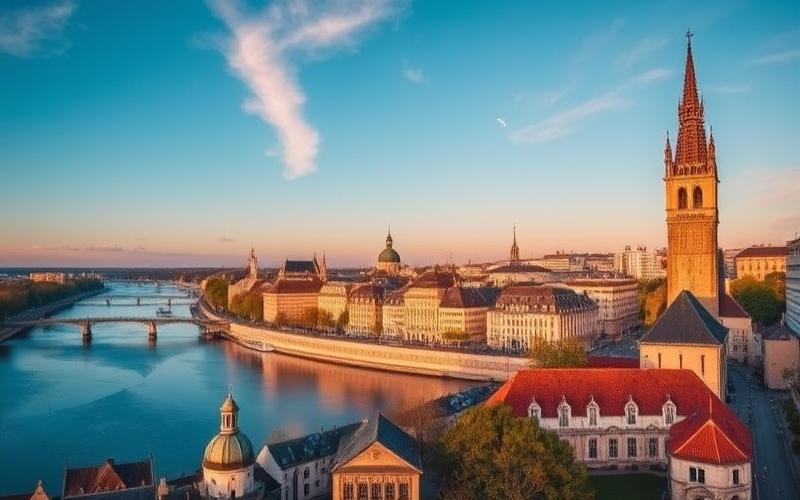
Attracting increasing international investments and talent, Luxembourg’s dynamism is reflected in growing real estate demand.
Emerging Cities as Hotspots
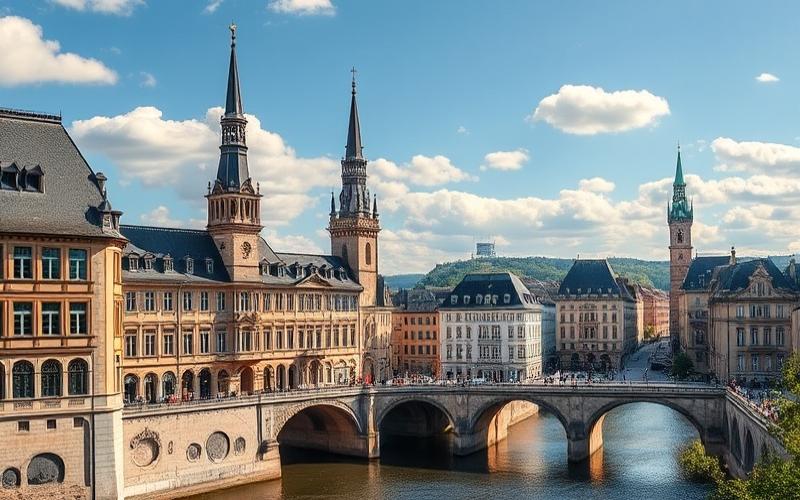
Certain Luxembourg cities stand out as hotspots where real estate prices are projected to skyrocket by 2030.
Why Invest in These Cities?
This article explores these promising cities, analyzes the factors driving this growth, and reveals why these locations could represent the next major investment opportunity in the country.
Promising Luxembourg Cities for Real Estate Investment
Recent Evolution of Luxembourg’s Real Estate Market
Since 2024, the Luxembourg real estate market has emerged from a slowdown period, characterized by overall price stabilization and slight recovery in activity, particularly in the new construction segment. This momentum is driven by declining interest rates, government support measures, and gradual return of investor confidence.
| Segment | Average Price Q1 2025 | Annual Change |
| Existing Apartments | €7,636/m² | -0.4% |
| New Apartments (VEFA) | €10,289/m² | +10.9% |
| Average New Apartment Price | €711,000 | -1.2% |
Rents continue to rise, reaching an average of €32.49/m²/month in July 2025 (+2.69% year-over-year), reflecting persistent pressure on the rental market.
Factors Influencing Price Growth
- Gradual decline in interest rates since 2024, improving credit accessibility and transaction revival.
- Reduction in average unit sizes in new construction, contributing to higher per-square-meter prices.
- New individual government assistance for rental and ownership, extending investment momentum.
- Attractive tax regime for real estate, with certain measures extended until mid-2025.
Promising Cities: Data, Outlook and Attractiveness
| City | Average Sale Price (€/m²) | Average Rental Price (€/m²/month) | 2030 Outlook | Investor Advantages |
| Luxembourg City | 11,095 | 32.91 | Moderate increase, strong demand, office and residential projects | Economic hub, transport infrastructure, international corporate headquarters, urban projects (Cloche d’Or, Ban de Gasperich) |
| Esch-sur-Alzette | 8,800* | 28* | Growth driven by university campus, Belval district development | University, cultural and scientific hubs, urban renewal, proximity to France |
| Differdange | 7,900* | 25* | Expected appreciation through residential projects and activity zones | Residential development, new educational and sports infrastructure, enhanced rail connection |
| Dudelange | 8,100* | 26* | Stability with potential for increase, ongoing urban modernization | Redevelopment projects, highway access, revitalized industrial dynamism |
*Estimates based on 2025 regional trends.
Specific Reasons for Attractiveness
- Infrastructure development: tram extensions, new railway lines, economic activity zones and urban parks.
- Increased housing demand: sustained demographic growth (+2.2%/year 2020-2025), influx of cross-border and international workers.
- Government initiatives: first-time buyer support, tax incentives for rental investment, expanded individual purchase or renovation assistance.
- Demographic and economic trends: population expected to exceed 750,000 by 2030, maintained economic growth rate above 2% annually, dynamic employment in finance, digital and science sectors.
Major Development Projects by 2030
- Mixed-use districts in Luxembourg City (Cloche d’Or, Hollerich)
- Belval campus expansion in Esch-sur-Alzette
- New residential zones and facilities in Differdange and Dudelange
- Transport infrastructure modernization (tram, rail, soft mobility)
Outlook for 2030 is driven by the combination of strong residential demand, proactive public policy and major urban projects, making these locations major real estate appreciation hubs in Luxembourg.
Good to Know:
Investing in Luxembourg real estate is particularly promising in cities like Luxembourg City, Esch-sur-Alzette, Differdange and Dudelange, where prices are expected to skyrocket by 2030. These locations benefit from significant real estate price growth due to ongoing infrastructure development, increased housing demand, and government initiatives supporting investments. Luxembourg City, as an economic center, attracts ambitious projects that enhance its appeal. Esch-sur-Alzette benefits from the Belval project transforming this former industrial area into a modern, dynamic district. Differdange sees growing potential with Luxembourg Institute of Science and Technology development, while Dudelange attracts through urban sustainability initiatives. Positive economic forecasts anticipate continued population growth, driven by stable economy and attractive job market, ensuring sustained housing demand. These prospects make the mentioned cities strategic choices for ambitious investors seeking to capitalize on real estate appreciation over the next decade.
Long-term Investment Trends in Luxembourg
Growing Economic Sectors Influencing Long-term Investment in Luxembourg:
- Financial Sector: Primary economic pillar, representing approximately 25% of GDP and 10% of employment. Its dynamism is supported by presence of international banks, insurance companies, and especially investment funds.
- Information and Communication Technology (ICT): Rapid growth fostered by national policy aiming to establish the country as a European digital hub.
- Renewable Energy and Eco-technologies: Increased public support for diversifying energy mix, particularly through European projects.
- Logistics and Transport: Strategic geographic position in Greater Region encouraging logistics investments.
Table – Key Sectors Contributing to Economic Growth
| Sector | Estimated GDP Share | Recent Trends |
|---|---|---|
| Financial | ~25% | Volatility but strong resilience |
| ICT | Direct impact on real estate/commercial credit costs |
- Regional/European political stability
Mitigates macroeconomic risks related to conflicts or trade wars
Luxembourg also benefits from its central position within the EU, providing easy access to European structural funds and abundant cross-border workforce.
Available/Developing Infrastructure Attracting Investors:
List – Strategic Luxembourg Infrastructure
- Dense road network connected with Germany/France/Belgium
- Modern multimodal logistics platforms (rail-air-road-waterway)
- Secure datacenters supporting growing fintech/ICT sector
- Energy infrastructure strengthened by EU projects/green transition
Past/Present Economic Trends Indicating Long-term Investor Success:
Despite recent slowdown (+0.3% projected for 2025), several elements confirm structural robustness:
- Resilience post-financial/health crises due to internationalized financial sector
- Maintained stable tax attractiveness despite progressive European harmonization
- Regular increase in public revenue primarily from corporate taxes/indirect taxes
The current slowdown is mainly cyclical (global tensions/high rates) without fundamental questioning of these advantages.
Financial Attractiveness & Tax Benefits
Luxembourg remains recognized as major global financial center thanks to:
- Competitive tax regime (low effective corporate tax compared to neighbors; specific fund/alternative investment exemptions)
- High legal security adapted to complex cross-border operations
- International reputation among active managers/sovereign funds
These elements should continue to massively encourage future investments in the Grand Duchy.
Good to Know:
Luxembourg is particularly attractive for long-term investments due to its solid and diversified economic dynamics, especially with continuous growth in financial, technological and logistics sectors. Government policies, such as attractive tax incentives and legislation favorable to foreign investment, reinforce this appeal. Furthermore, demographic forecasts predict population growth, likely to stimulate real estate market. Luxembourg’s central position in Europe, combined with its geopolitical stability, makes it a strategic crossroads positively influencing investor decisions. Continuous infrastructure improvements, from transport to information technology, also support this growth. Historically, the country has maintained resilient economy facing European challenges, strengthening its reputation as global financial center. Expat-friendly policies and logistics advantages could continue attracting capital, promising long-term success opportunities for investors.
Luxembourg’s unique positioning — political stability, advantageous tax framework, progressive sectoral diversification — continues to offer solid potential for long-term investment strategies despite some recent cyclical uncertainties.
Luxembourg Growth Areas for 2030
Luxembourg: Projected Growth Zones by 2030
Luxembourg anticipates marked growth dynamics through designation of new economic and residential zones, supported by strong demographic increase, massive infrastructure investments, and targeted public policies.
| Zone/Region | Specifics & Major Projects | Projected Demographic Growth | Expected Real Estate Impact |
| Luxembourg City | Kirchberg financial district development (extension), new technology hubs, major mobility projects (extended tramway, multimodal hubs) | Strong progression linked to attractiveness for expatriates and international executives; immigration = 80% of annual national growth (~2%) | Continuous price increases; increased pressure on high-end rental market |
| Esch-Belval / South | University and technology hub with Belval Plaza/University of Luxembourg; development of eco-districts and cultural infrastructure | Local population rising steadily supported by arrival of students/innovative professionals | Rapid revaluation of residential land around campus |
| North – Ettelbruck/Diekirch/Wiltz | Creation or extension of regional/national activity zones (light industry/logistics/ICT); improved rail axes | New dynamics through urban decentralization and attractive family programs | Progressive price catch-up relative to center – speculative potential |
| East – Grevenmacher/Junglinster/Remich | Planned increase in logistics/viticulture/agritourism infrastructure. Improved cross-border roads | Moderate but steady residential growth driven by proximity to Germany-France | Moderate but sustained increase |
Key Driving Factors:
- Major Infrastructure Projects
- Tram network extension to Cloche d’Or/Ban de Gasperich/Kirchberg.
- Strengthened North-South railway hubs (Ettelbruck-Luxembourg City).
- New road connections to France, Belgium, Germany.
- Massive deployment of electric charging stations/soft mobility.
- Strategic Commercial Developments
- National technology parks for ICT/logistics around Bettembourg-Dudelange-Wiltz.
- Potential construction of new national exhibition park.
- Strengthened tertiary hubs in Esch-Belval/Kirchberg.
- Factors Favoring Investment
- Immediate proximity to European decision-making centers/international financial institutions.
- Notable improvement in quality of life (green mobility, urban green spaces).
Effects on Real Estate Market:
Strong residential demand in these hubs combined with still limited supply increases pressure on real estate prices in both purchase and rental markets across all rapidly expanding regions.
Sectors near new structural facilities already show positive differential (+10% to +20%) compared to less connected or more remote neighborhoods.
- Luxembourg City: continuous rise in high-end sector
- Southern industrial/university: strong student-young professional potential
- North/Ettelbruck-Wiltz: new target for first-time buyers/families
- Eastern cross-border: stable market driven by logistics/agri-food
In summary
Sustained demographic expansion (+2%/year), combined with coordinated development of strategic economic/residential zones and major transport network improvements will favor persistent upward dynamics in local real estate market until 2030.
Good to Know:
By 2030, cities such as Esch-sur-Alzette, Differdange and Belval in Luxembourg are projected as dynamic economic hubs, with urban population growth estimated at 3% annually according to STATEC. These zones benefit from major infrastructure projects like tramway extension connecting Luxembourg City to Belval and development of “BelaV” district focused on green technologies. Moreover, thanks to their proximity to economic centers and technology hubs, these cities attract numerous investors, which could cause notable real estate price increases, anticipated at 20% by end of decade. Transport network improvements and multiplication of commercial projects herald vibrant real estate market and growing attractiveness of residential and commercial properties.
Disclaimer: The information provided on this website is for informational purposes only and does not constitute financial, legal, or professional advice. We encourage you to consult qualified experts before making any investment, real estate, or expatriation decisions. Although we strive to maintain up-to-date and accurate information, we do not guarantee the completeness, accuracy, or timeliness of the proposed content. As investment and expatriation involve risks, we disclaim any liability for potential losses or damages arising from the use of this site. Your use of this site confirms your acceptance of these terms and your understanding of the associated risks.

Cyril Jarnias is an independent expert in international wealth management with over 20 years of experience. As an expatriate himself, he is dedicated to helping individuals and business leaders build, protect, and pass on their wealth with complete peace of mind.
On his website, cyriljarnias.com, he shares his expertise on international real estate, offshore company formation, and expatriation.
Thanks to his expertise, he offers sound advice to optimize his clients' wealth management. Cyril Jarnias is also recognized for his appearances in many prestigious media outlets such as BFM Business, les Français de l’étranger, Le Figaro, Les Echos, and Mieux vivre votre argent, where he shares his knowledge and know-how in wealth management.