 Published on and written by Cyril Jarnias
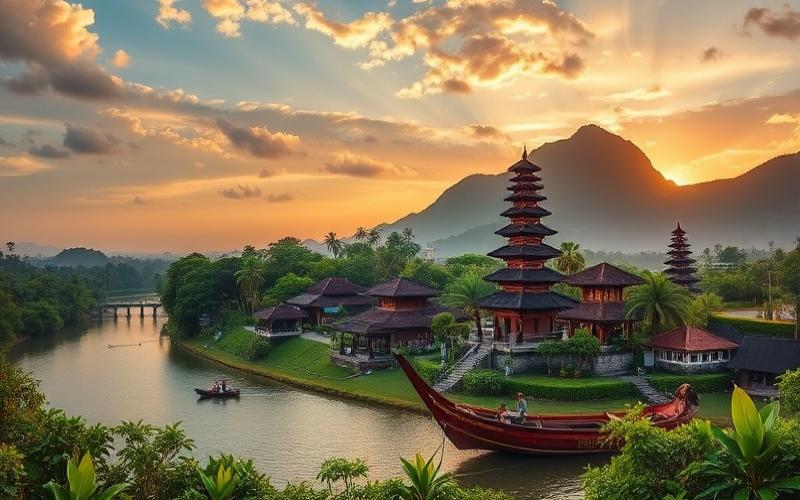
While Bali attracts millions of visitors each year seeking idyllic beaches and lush landscapes, this tropical paradise is about to undergo a major transformation. By 2030, several cities on this Indonesian island will see their prices skyrocket, driven by rapid development and growing demand for real estate and services.
From Denpasar, the administrative capital, to Ubud, the cultural and spiritual heart, these urban centers find themselves at the core of a frenetic economic and tourist dynamic, offering as many opportunities as challenges for residents and investors.
This evolution, fueled by the dual phenomena of urbanization and globalization, raises the crucial question of sustainability and the preservation of Balinese identity in the face of galloping modernity.
Promising Cities in Bali, Indonesia for Real Estate
| City | Real Estate Growth Potential | Main Reasons for Expected Price Increase by 2030 |
|---|---|---|
| Seminyak | Very High | Premium tourist appeal, high-end shops and restaurants, strong seasonal rental demand, proximity to renowned beaches |
| Canggu | High | Rapid transformation into a trendy hub for young professionals and expatriates, surfing popularity and coworking spaces, sustained urban development |
| Ubud | Stable to High | Cultural and spiritual capital of Bali, wellness/nature/yoga-focused tourism, unique accommodation offerings in rice fields/jungle |
Economic Factors
- Annual growth of the Balinese real estate market estimated at 15% with rental yields potentially reaching 12%.
- Indonesian market forecast: increase from $61 billion USD in 2023 to over $81 billion USD in 2028.
- Development of a national middle class and steady influx of international investors.
Tourism Factors
- Over 7 million international visitors welcomed in 2024; forecast: up to 10 million by 2027.
- Major hotel groups like Accor announce massive openings (40 new hotels planned) strengthening seasonal rental demand.
Infrastructure Factors
- Major projects: Bali International Airport City (new international airport), Nusa Dua Integrated Resort (multi-functional tourist hub), Benoa Bay Reclamation Project (coastal development).
- Transportation modernization to streamline traffic between key tourist areas.
Demographic Dynamics & Urbanization
Continuous population growth driven by internal/foreign immigration.
Rapid urbanization around major hubs with regular creation or expansion of urban infrastructure.
Recent/Planned Investments
- Launch or active construction of the major projects mentioned above.
- Recent multiplication of high-end hotel projects and modern residential complexes.
“Prices in areas affected by these developments have already started to climb, with increases ranging from +8% to +15% per year in some sectors.”
— Local Real Estate Analysis
“Bali is entering an unprecedented phase offering real estate investors a context favorable for rapid asset appreciation.”
— Independent Sector Study
Risks & Potential Issues
- Temporary overcrowding during tourist peaks potentially saturating existing infrastructure
- Growing land pressure on traditional agricultural lands
- Speculative risk linked to the accelerated pace of investment (possible “bubble” if growth doesn’t follow)
Red zone: southern Bali (Seminyak/Canggu) particularly exposed to environmental risks linked to excessive construction.
Some voices are already warning about the need for “reasoned urban planning” so that development remains sustainable to avoid degradation of the natural setting that is the very reason for Bali’s success.
Good to Know:
Among the cities in Bali with significant growth potential for the real estate market, Canggu stands out for its rapid development and constantly increasing tourist appeal. Its growing popularity among expatriates and digital nomads is driving increased demand for housing, favored by the creation of new infrastructure and coworking spaces. Ubud, with its rich cultural heritage and sustainability initiatives, also attracts significant investment, while Jimbaran benefits from a real estate boom thanks to its recent hotel and residential projects. Experts from Colliers International emphasize that the expanding demographics and public investments in transportation, such as road improvements and maritime access, reinforce this dynamic. However, concerns remain regarding overcrowding and a potential real estate bubble risk, particularly in Seminyak, where the price surge is raising questions.
Long-Term Investment: Which Cities to Choose in Bali?
Current economic trends indicate a sustained rise in real estate prices in Bali, driven by several structural and cyclical factors. Among the identified drivers:
- Growth in international tourism (+15% in 2024)
- Appeal to digital expatriates (Digital Nomad Visa)
- High rental demand in tourist and urban areas
- Rental yields above the Asian average (10 to 15% per year)
- Annual increase in real estate prices of 12% in 2024, with a forecast increase between 5 and 10% for 2025
Comparative Table of Cities with High Growth Potential:
| City/Area | Key Factors | Projects/Initiatives | Rental Occupancy Rate | Estimated Yield |
|---|---|---|---|---|
| Canggu/Berawa | Tourism development, nightlife, expatriate appeal, modern villas | Digital Nomad Visa | >85% | Up to 15% |
| Seminyak | Mature tourist sector | Tourism infrastructure improvements | >85% | Up to 15% |
| Umalas/Sanur | Quiet family neighborhoods near amenities | Residential development | High | Good yield |
| Ubud | Cultural/spiritual center, nature | Ecotourism & wellness projects | Growing | Good profitability |
List of Economic Dynamics and Projects Boosting Appeal:
- Public investments in road infrastructure linking the airport to main tourist hubs
- Government initiatives facilitating foreign investment through administrative simplification
- Growing popularity of remote work: increase in the number of digital expatriates seeking a pleasant living environment
Demographic Data:
- Young local population (median age lower than the Indonesian average), strong demographic growth linked to internal and international migratory flow
- Continuous trend of increase in the foreign resident or semi-resident population
Major Planned Projects:
- Extension of the road network around Denpasar-Canggu-Seminyak
- New commercial and recreational zones around Ubud and Berawa to meet international expectations
Regulatory Framework:
The Balinese regulatory framework remains favorable but demanding. Foreigners cannot directly own land in full ownership (“Hak Milik”), but benefit from mechanisms such as long-term lease (“Hak Sewa”) or right of use (“Hak Pakai”). Recent measures tend to simplify these processes while strengthening control over the legality of transactions. The recent granting of the Digital Nomad Visa also allows foreign investors an extended presence on site.
It is therefore essential for any foreign investor wishing to sustainably benefit from this positive economic dynamic:
- To be accompanied by local experts specialized in legal structuring.
- To prioritize sectors already benefiting or soon to benefit from significant public investments.
- To closely monitor any regulatory evolution likely to affect their rights or taxation.
Bali thus presents a particularly favorable environment for long-term real estate investments thanks to its continuous tourist growth, targeted government incentives, and a dynamic market driven by strong international demand.
Good to Know:
In Bali, cities like Canggu and Ubud are booming, thanks to sustained demographic growth and government initiatives aimed at attracting foreign investment. In Canggu, infrastructure improvements and the projected 6% annual tourism increase make it a sought-after destination for real estate investment. Ubud, with its unique cultural atmosphere, is experiencing a 4% growth rate in the tourism sector. Sanur and Nusa Dua benefit from road and airport expansion projects, increasing their connectivity and real estate value. The Indonesian regulatory framework favors foreign investments with more flexible property right laws, although some restrictions remain for foreigners. Investing long-term in these cities thus offers an opportunity to benefit from a likely increase in real estate prices by 2030.
Growth Areas in Bali: Forecasts Until 2030
The geographical areas of Bali likely to experience strong economic and demographic growth by 2030 are concentrated around evolving hubs, driven by infrastructure development, government and private projects, as well as the boom in tourism and investments.
Areas with High Growth Potential
| Geographical Area | Key Projects & Dynamics | Growth Factors |
|---|---|---|
| Kura Kura Bali (North) | Special Economic Zone (SEZ), Grand Outlet Bali, ACS Bali; 498 ha dedicated to tourist real estate development; advanced road and electrical infrastructure | Appeal to foreign investors, massive creation of local jobs, increase in tourist flow |
| Southwest: Seminyak & Canggu | Continuous urban modernization; multiplication of trendy cafes, creative spaces, and high-end residences; proximity to highly frequented beaches | Strong real estate demand driven by expatriates/digital nomads/long-term tourists |
| Nusa Dua & Benoa | Continuous international hotel development; hosting of global events | Stable high-end tourism attracting private capital |
Key Factors Stimulating Growth
- Massive investments in infrastructure: new international airport planned to facilitate access to the entire island; improvement of the road network allowing increased access to previously underutilized areas.
- Official SEZ status for Kura Kura Bali facilitating tax incentives/foreign direct investments.
- Government objective to welcome 10 million international visitors by 2027 (compared to over 7 million in 2024).
- Projected national Indonesian growth: Indonesia could become the tenth largest global economy by 2030.
Statistics & Economic Projections
- Annual increase in real estate prices in concerned sectors: between +8% and +15% depending on the area since the launch of major projects
- Over 60% of SEZ land ready for construction by mid-2024
- Progressive completion of the modern telecom network (fiber optic) over several kilometers in the North
Expected Effects on the Balinese Real Estate Market
- Modernized urban neighborhoods like Seminyak/Canggu are already seeing regular surges (+8–15%/year) in price per m².
- The full commissioning of the northern SEZ will open a new speculative cycle across the entire surrounding region. The gradual arrival of international investors will generate additional pressure on land and residential prices.
- Historically less sought-after areas could experience a snowball effect thanks to new infrastructure (road axes/airport), attracting innovative companies or hotel complexes.
To Watch Closely:
- Peripheral neighborhoods near the future airport or integrated into new road networks
- Secondary cities directly benefiting from better connectivity with Denpasar/Southwest or with the strategic North
The overall context creates a favorable environment for rapid appreciation of the Balinese real estate market until post-2030. The promising sectors are mainly those transformed by these structuring investments—both urban and tourist—while some rural villages will likely remain less impacted by this accelerated dynamic.
Good to Know:
Key areas like Canggu, Ubud, and Seminyak in Bali are projected as hubs of economic growth by 2030. Infrastructure development, with projects such as the Gilimanuk–Mengwi highway and the extension of Ngurah Rai International Airport, fuels this expansion. The government also promotes foreign investments through more attractive regulations. Canggu, for example, benefits from an influx of digital startups and coworking spaces, attracting expatriates and increasing real estate demand. The tourist potential particularly strengthens Ubud, with its ecological and cultural developments. Forecasts indicate an increase in real estate prices of 15 to 20% in these areas, influenced by an estimated demographic growth of 5% per year. Investing in these regions could be strategic given the economic opportunities and growing urbanization.
Disclaimer: The information provided on this website is for informational purposes only and does not constitute financial, legal, or professional advice. We encourage you to consult qualified experts before making any investment, real estate, or expatriation decisions. Although we strive to maintain up-to-date and accurate information, we do not guarantee the completeness, accuracy, or timeliness of the proposed content. As investment and expatriation involve risks, we disclaim any liability for potential losses or damages arising from the use of this site. Your use of this site confirms your acceptance of these terms and your understanding of the associated risks.

Cyril Jarnias is an independent expert in international wealth management with over 20 years of experience. As an expatriate himself, he is dedicated to helping individuals and business leaders build, protect, and pass on their wealth with complete peace of mind.
On his website, cyriljarnias.com, he shares his expertise on international real estate, offshore company formation, and expatriation.
Thanks to his expertise, he offers sound advice to optimize his clients' wealth management. Cyril Jarnias is also recognized for his appearances in many prestigious media outlets such as BFM Business, les Français de l’étranger, Le Figaro, Les Echos, and Mieux vivre votre argent, where he shares his knowledge and know-how in wealth management.